Soccer & Identities
Four humanities researchers—Christian Bromberger, Abderrahim Bourkia, Sébastien Louis, and Ljiljana Zeljkovic—sometimes accompanied by a curator —Florent Molle—and photographers—Giovanni Ambrosio and Yves Inchiermann—collected more than 400 objects, approximately 3,000 photographs, and over 6 hours of video footage. Upon their return from the field and after review, the collected objects and photographs will be presented to the Mucem’s acquisitions committees to determine whether they will be added to the public collections and made available to the public.
Soccer: A Reflection of Our Contemporary Societies
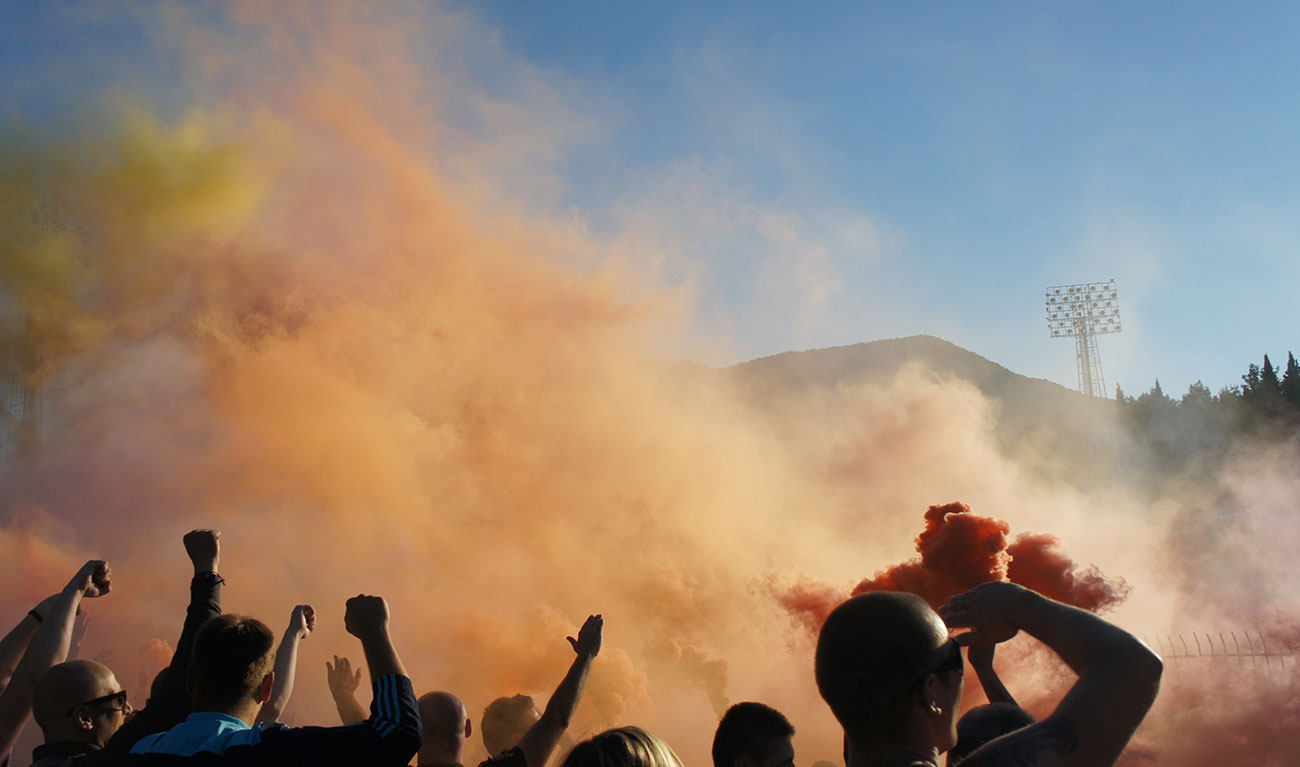
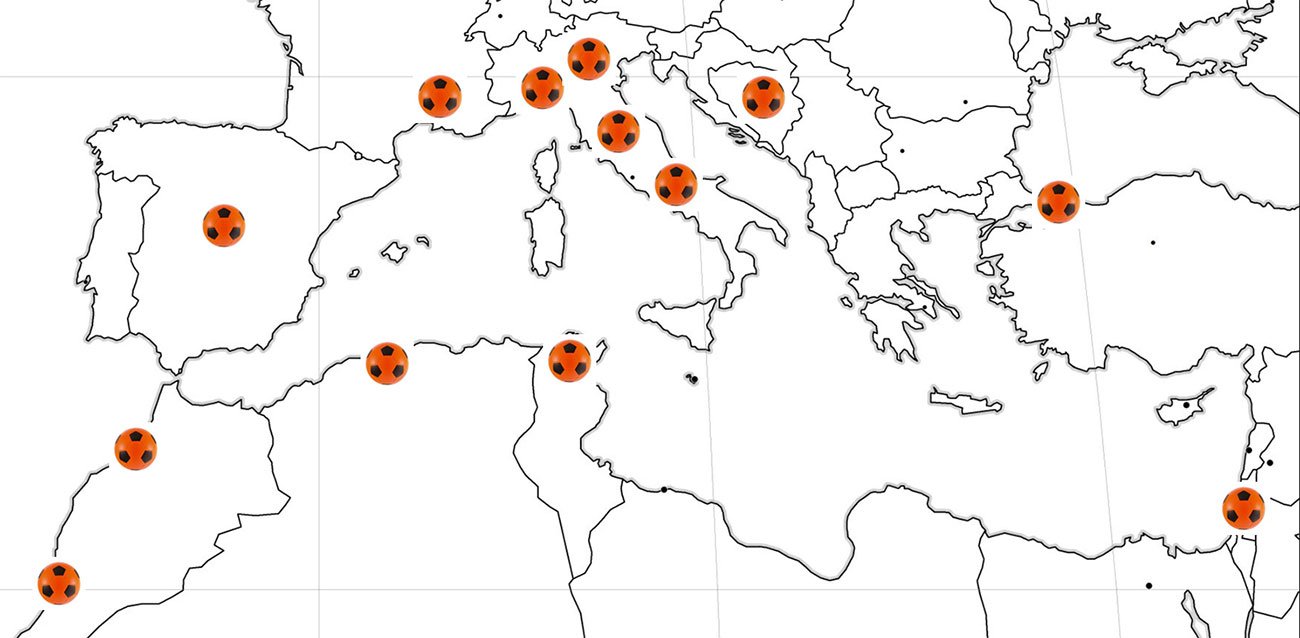
Soccer is more than just a game. It is at once the world’s most popular sport, a spectacle, a globalized economy, and a fairly accurate reflection of the contemporary societies in which it thrives. It was therefore almost natural for the Mucem, as a museum of society, to take an interest in this sociological phenomenon. An ethnographic study of the social identities expressed during soccer matches was first launched in 2014, notably through the study of “derbies”—matches in which two clubs from the same city compete (in Algiers, Mostar, Casablanca, Tunis, Istanbul, or Jerusalem). Subsequently, our focus shifted more specifically to the “Ultras” movement, a youth subculture present throughout Europe and the Mediterranean (with research conducted in Italy, Spain, Algeria, Morocco, Tunisia, Israel, the West Bank, and in Marseille, France).
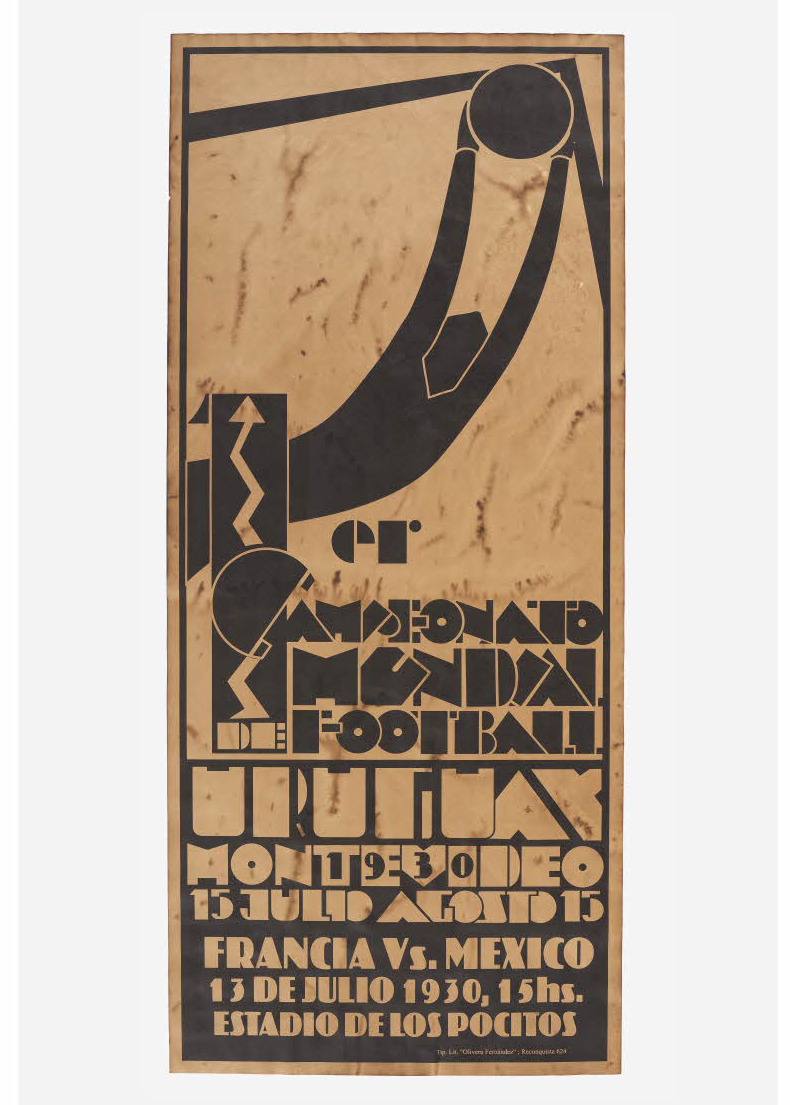
This research program, dedicated to the study of contemporary fan culture, complements efforts to expand the museum’s collections through the art market and private collectors, with the aim of more comprehensively documenting the history of Mediterranean soccer. Since 2015, the Mucem has acquired the official poster for the opening match of the 1930 World Cup between France and Mexico, several jerseys worn by legendary players (Alfredo di Stefano, Michel Platini, Diego Maradona, Zinédine Zidane, Cristiano Ronaldo), and items related to Marseille fan culture.
All of this research and these acquisitions have shaped the theme and narrative of the exhibition “Nous sommes Foot,” which the Mucem is presenting from October 11, 2017, to February 12, 2018, to mark the conclusion of the “Marseille, European Capital of Sport” event.
During the investigations, marketing materials distributed by the clubs, clothing (T-shirts, scarves, neckerchiefs, patches), and fan merchandise (pennants, flags, stickers) were collected, as well as archives and items created and used by ultras groups (banners, membership cards, fanzines, newspapers, DVDs, and game tickets).
All collections of objects are supplemented by recorded or filmed interviews, reports, and detailed records that the Mucem preserves in its archives and makes available to the public at the documentation center of the Conservation and Resources Center (CCR), located in the Belle-de-Mai neighborhood of Marseille.
Here, we would like to use two specific examples to illustrate the value of the research and data collection efforts of the “Football & Identities” program for a social history museum such as the Mucem.
The Origins and Spread of the “Ultras” Movement in Italy: The Examples of Genoa and Latina
Investigators: Sébastien Louis and Florent Molle
Dates: November 2014 and February 2016
Tifosi are flooding into soccer stadiums
Soccer arrived in Italy as early as 1880, brought by British sailors who played the sport in the ports where they stopped. In 1891, the Internazionale Foot-Ball Club Torino was founded by Eduardo Bosio, an Italian merchant who had specialized in the textile industry in Great Britain and had returned to settle in his native Turin. However, it wasn’t until after World War I that the sport truly took off across the peninsula, fueled by economic growth and an increase in leisure time. The “tifoso”—literally, “one afflicted with typhus”—began flooding into soccer stadiums. In the early 20th century, typhus was still a widespread disease, whose symptoms resembled the behavior of a passionate fan: a cyclical state of fever, headaches, drowsiness, and stupor. By extension, “tifo” refers to the overall atmosphere in the stadium, and “tifoseria” refers to the collective body of supporters of a single team.
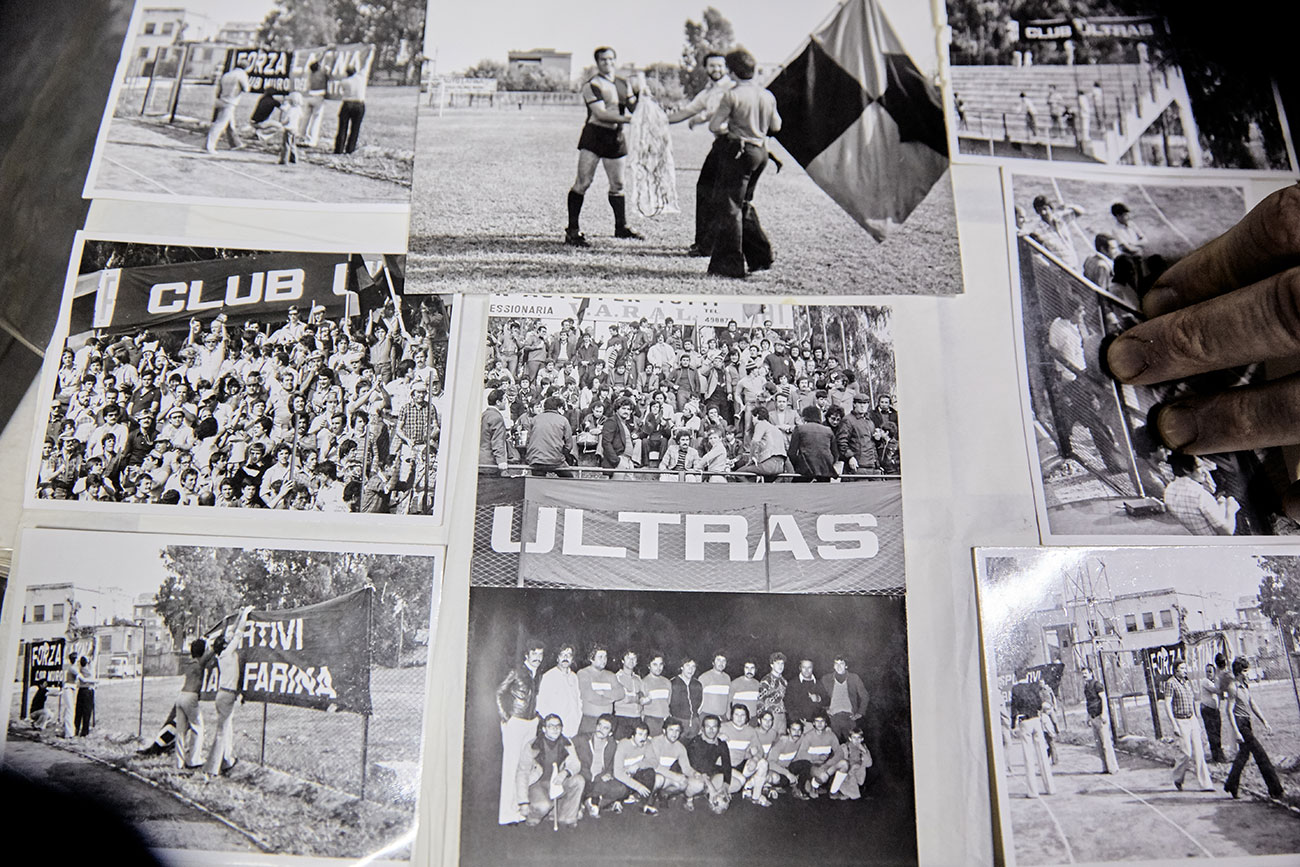
At that time, sometimes under pressure from political authorities, the various small city clubs joined forces and united under a single local identity. In major cities—such as Rome, Turin, and Milan—two teams divided the support of two rival fan factions, giving rise to derbies across the peninsula.
In Genoa, in 1946, the Società Ginnastica Comunale di Sampierdarena, founded in 1899, merged with the Società Ginnastica Andrea Doria, founded in 1895, to form Unione Calcio Sampdoria. This team became the rival of the Genoa Cricket and Football Club, founded in 1893 by British businessmen.
In smaller towns, only one soccer club remains. This is the case for Latina in the province of Lazio: founded at Mussolini’s instigation in 1932 under the name “Littoria,” the city was renamed “Latina” in 1946, one year after the founding of Unione Sportiva Latina Calcio, the city’s soccer club. A sporting rivalry then developed with the club from the neighboring city of Frosinone, located 40 km away.
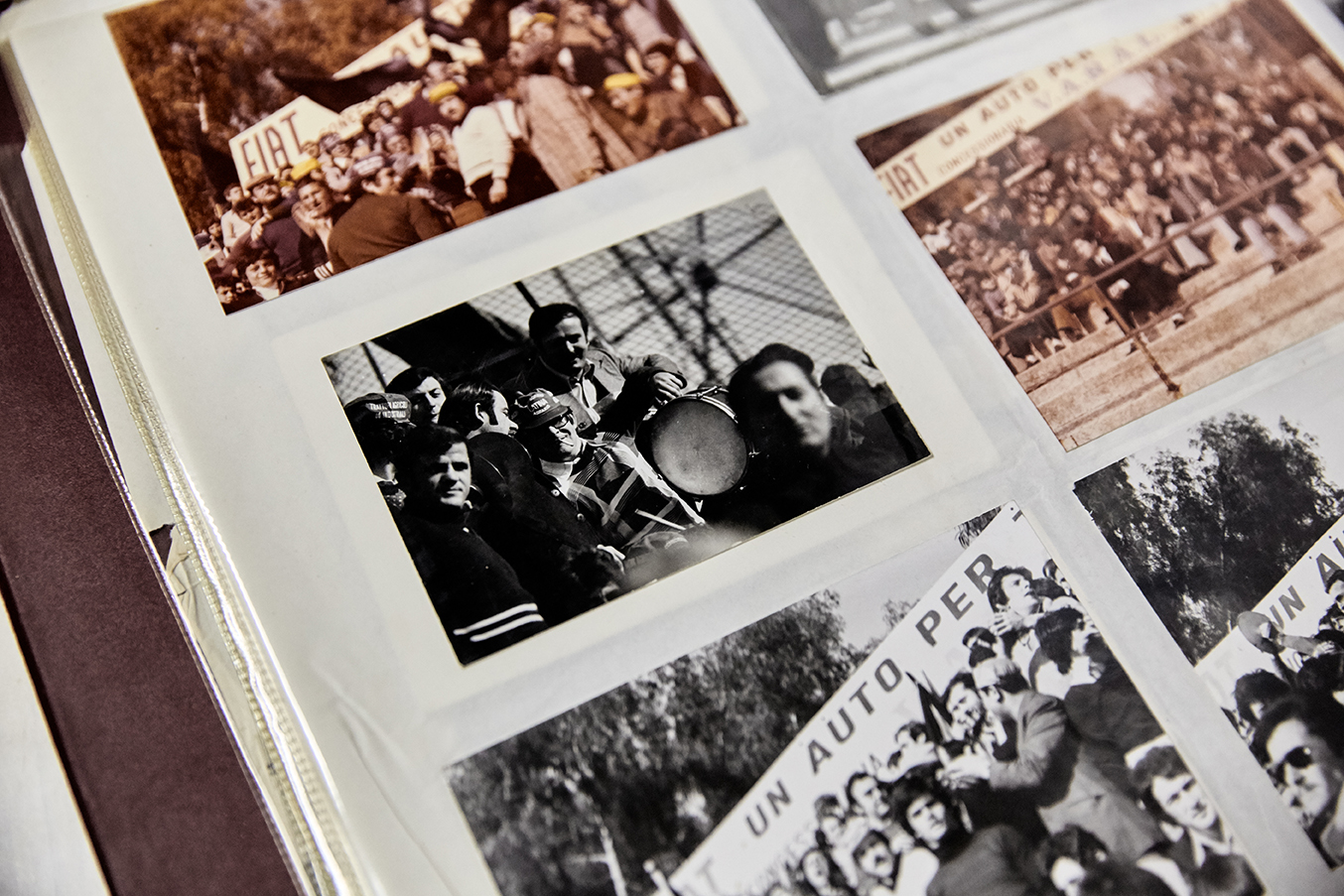
In Italy, the first fan clubs began to truly take shape in the 1950s, and their numbers grew considerably in the 1960s. These groups stood out for their more exuberant and active support, with their young members equipping themselves with pot lids, horns, flags, megaphones, and large drums to coordinate the chants and tifos from the stands.
In the Ultras Latina 1972 clubhouse, the yellowed photos help our hosts recall their history. As the conversation unfolds, they tell us about a box of horns, created in 1972 from recycled materials, which they will lend to the museum for the exhibition “Nous sommes Foot.”
A true age group
Across the country, the major socioeconomic changes of the 1960s were felt in every area. Young people were at the heart of these upheavals and, for the first time, emerged as a distinct age group, united by a shared culture expressed through music, clothing, and leisure activities, as consumer society began to take shape. Introduced to the ritual of soccer matches by their fathers, young tifosi soon broke free from this parental guidance during their teenage years and quickly banded together with their peers to support their favorite teams. In a conservative society like Italy at the time, going to the stadium with peers of the same age was viewed positively by parents, who saw soccer as a model of family-oriented consumption, far removed from the rebellious intensity of urban subcultures that were flourishing in Great Britain at the same time, such as the Teddy Boys, Mods, and Rockers. Yet Italian youth are transforming the way people experience soccer matches—not only by actively supporting their favorite team, but also by organizing the experience independently.
The Ultras Tito Cucchiaroni (UTC) group from Genoa is one of the oldest Ultras groups in Italy still active today. Its origins date back to the 1969–1970 season, when a group of friends from the Sestri Ponente neighborhood of Genoa founded the Ultras group to support the Genoa-based Sampdoria team. The group later adopted the name of left winger Ernesto Cucchiaroni, known as “Tito,” who played for Sampdoria from 1959 to 1963, after joining forces with a struggling supporters’ group from the Sampierdarena neighborhood, the Sampdoria Club Tito Cucchiaroni.
As Franck Berteau points out in his “dictionary of fans,” the UTC “even claim to have coined the term ‘ultra,’ which they say originated from a graffiti inscription dating back to the 1960s, still visible on Piazza della Vittoria in the center of Genoa: “Unitti Legneremo Tutti i Rossoblù A Sangue,” a phrase whose initials spell out the word “ultras” and which means: “Together, we will beat all the Rossoblù (red and blue, the nickname for their rivals at Genoa CFC) until they bleed.”
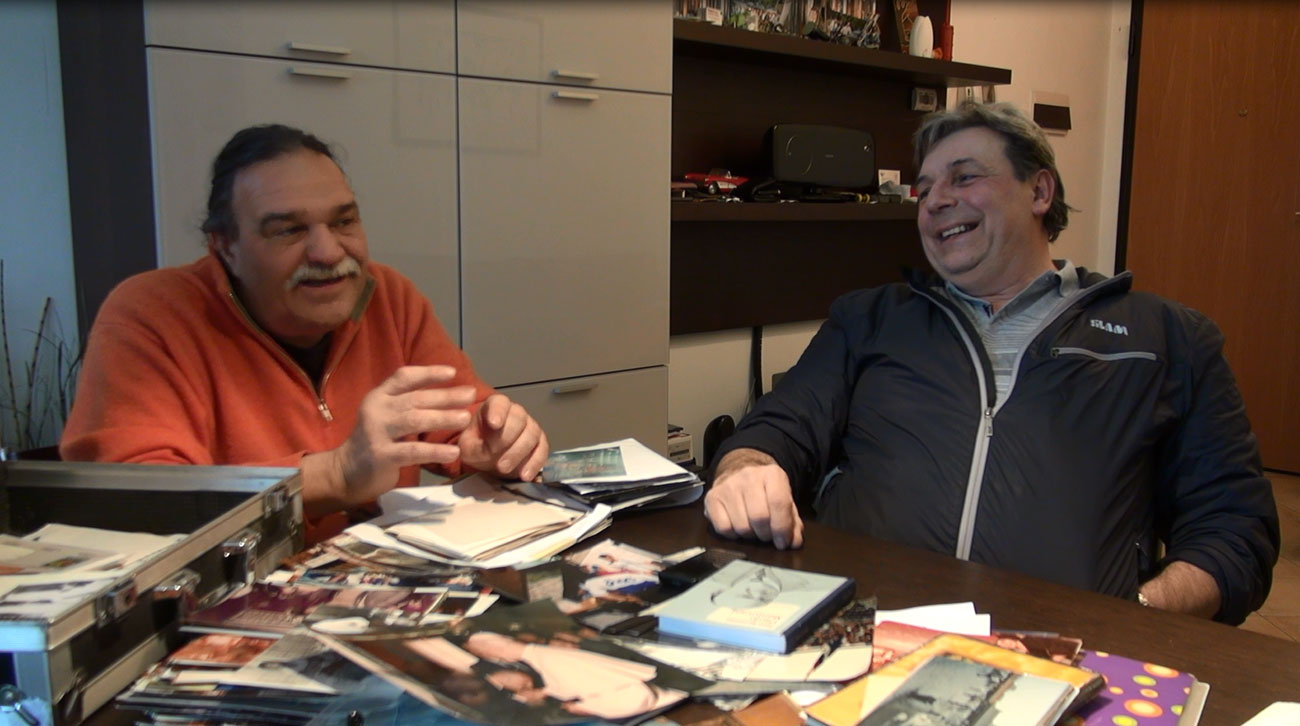
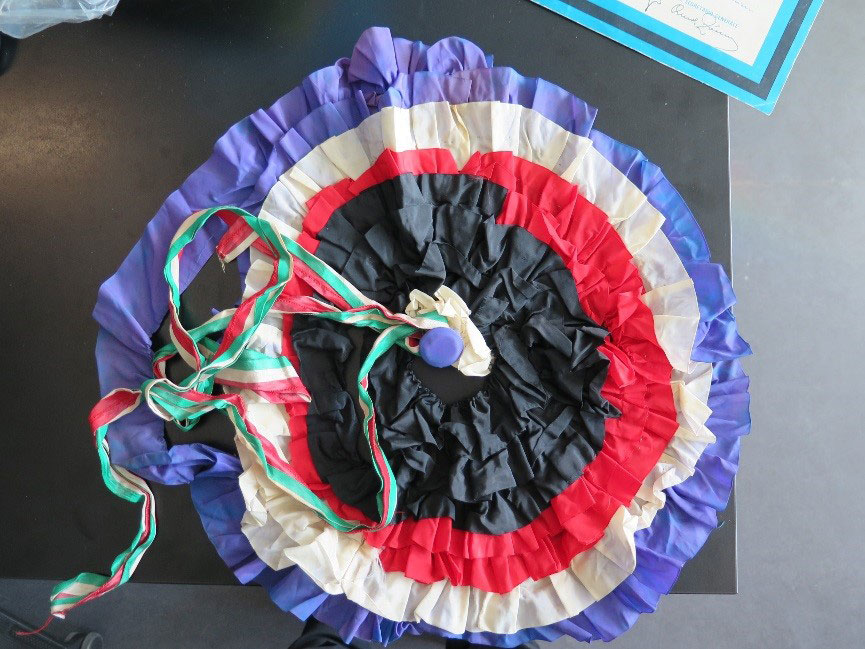
During our field research in Genoa, we met Claudio Bosotin and Walter Patrone, who founded one of Italy’s first ultras groups in the late 1960s, thereby—without really realizing it—sparking an entire cultural movement. Surrounded by photographs, Claudio and Walter recount their teenage years and the birth of this phenomenon. During this interview, Claudio Bosotin donated to the museum a Sampdoria-colored cockade, made by his mother for the 1972–1973 season, which he had attached to the largest hand-waved flag at the time— measuring 11 meters high by 7.40 meters long, which was unfurled starting in May 1973 during the Sampdoria-Napoli match.
The “Years of Lead”
Along with the emergence of the ultras movement as a social phenomenon in the 1960s, Italy entered a period of intense political conflict known as the “Years of Lead,” during which Italian youth became radicalized against a government they deemed too conservative. The students’ ideals of emancipation fueled a challenge to academic authoritarianism, which they extended by criticizing capitalism, the state, the nation, religion, and the family. The subversive spirit that erupted in the universities—true hotbeds of protest—quickly spread to the public sphere, and activists took to the streets and squares. Socially, the situation was marked by growing unrest and a deep political crisis. The country was also shaken by a wave of terrorism—the “strategy of tension”—which began in December 1969 with a bomb explosion in Milan’s Piazza Fontana that killed sixteen people.
The political and social context of those years influenced our young fans. They no longer wanted to join traditional fan clubs but aspired to create their own organizations. The pioneer ultras adopted characteristics inspired by the extra-parliamentary groups that were active across the peninsula: a sense of cohesion and camaraderie, a confrontational spirit, and a defiance of established authority. They are distinguished by provocative and violent behavior toward their political opponents or anything that might embody the state and its symbols. From public squares, this movement spread to the stadium stands, which became a new arena for expression.
From the early 1970s onward, names and symbols drawn from this sphere of extremist politics began to proliferate in the stands, although this was more a matter of inspiration and appropriation than a direct expression of a political culture: the terms “Brigades” and “Commandos,” for example, were adopted almost systematically by the ultras groups that formed throughout the country during the 1970s.


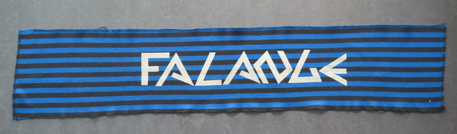
Alongside the term “commandos,” which has clearly caught on, military and political vocabulary is frequently used by groups that identify as far-left as well as far-right. In Latina, for example, the Falange group draws inspiration not only from the name but also from the emblem of the Spanish fascist-inspired paramilitary group.
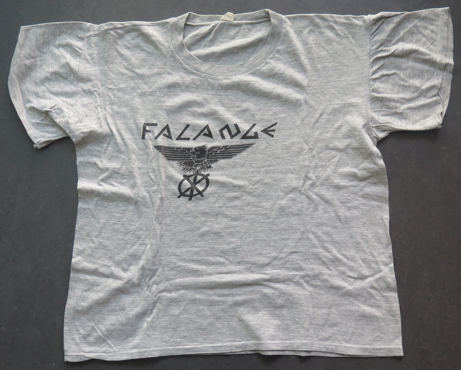
T-shirt donated by Falange supporters, Latina 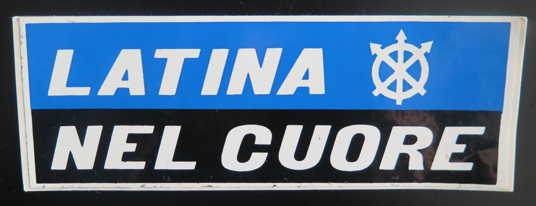
Steak dinner hosted by Falange supporters, Latina
Today, Between Political Apathy and Taking a Public Stand
Today, ultra fans most often claim to be apolitical, even though they sometimes take a public stand—particularly against police crackdowns or the tessera del tifoso, the “fan ID card” imposed by Italian authorities since 2009 to better identify fans and strengthen security measures and stadium access controls.
The Ultras Tito Cucchiaroni did just that recently, in 2013, through a symbolic act. A T-shirt produced by the group for its members featured a graffiti artist finishing up the word “ultras” on a wall—a common practice among these fans who seek to leave their mark on the urban landscape. Next to him is a poster bearing the inscription “Liberta’ per gli Ultras” (Freedom for the Ultras), a typical slogan of the ultras movement, which has been the target of severe repression. The authorities deemed the slogan violent, prompting the UTC to produce a second T-shirt, nearly identical to the first, with a “censored” stamp over the problematic slogan and Article 21 of the Italian Constitution printed on the back, affirming freedom of expression: “tutti hanno diritto di manifestare liberamente il proprio pensiero con la parola, lo scritto e ogni altro mezzo di diffusione” (everyone has the right to freely express their thoughts through speech, writing, and any other means of communication).
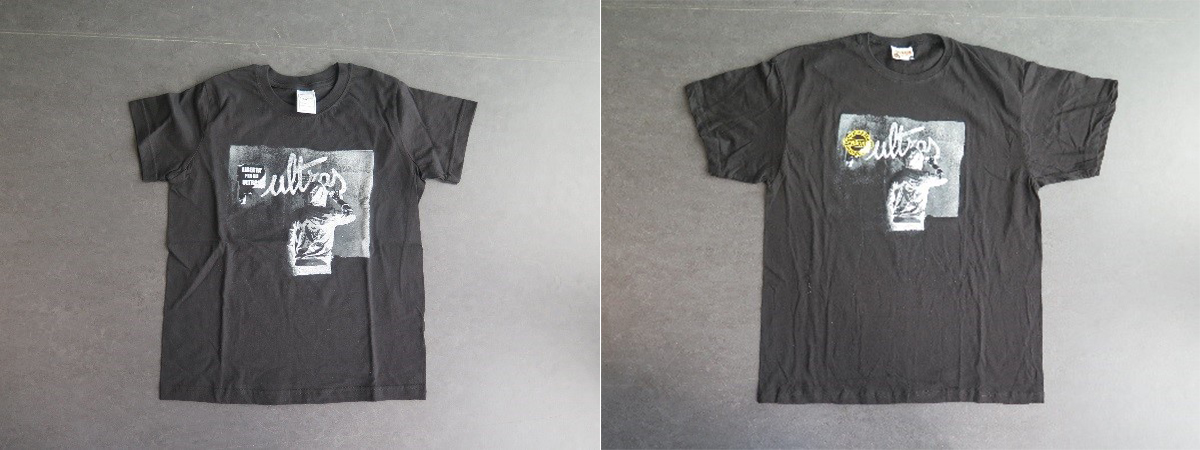
Jerseys produced by UTC 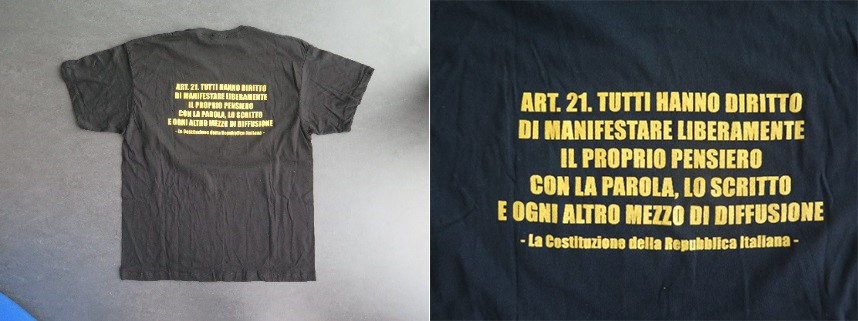
Jerseys produced by UTC
Is soccer in the Balkans still a battleground for ethno-nationalist tensions?
By Florent Molle
Soccer “condenses and dramatizes the core values of modern, industrial societies,” as Christian Bromberger¹ reminds us. In the territories of the former Socialist Republic of Yugoslavia, several soccer matches demonstrate this.
May 13, 1990, Dinamo Zagreb vs. Red Star Belgrade
This was the case with the match between the Croatian team Dinamo Zagreb and the Serbian team Red Star Belgrade on May 13, 1990, at Maksimir Stadium in Zagreb—a game that remains etched in everyone’s memory.
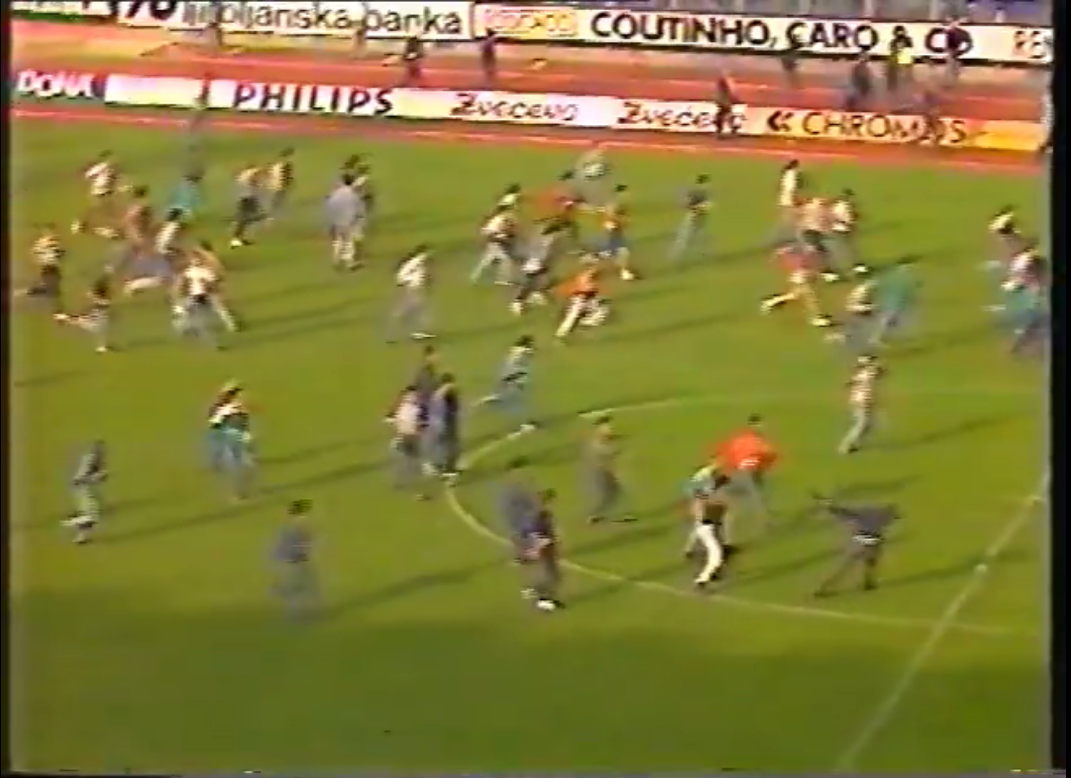
In the Croatian parliament, Franjo Tudjman has just been elected President of the Republic of Croatia in the first multiparty elections in the country’s history. His plan aims to create an independent Croatian nation-state within “natural and historical” borders, including, in particular, part of Bosnia and Herzegovina. On the Serbian side, Slobodan Milošević, who has been the country’s president since May 1989, opposes any breakup of Yugoslavia and wishes to maintain the state’s borders so that all Serbs can continue to live “under the same political roof.”
Although, at first, fan support for these nationalist projects was not a given, it gradually took hold over a relatively short period of time²: the Bad Blue Boys (BBB), Dinamo Zagreb’s largest ultra group founded in 1986, supported Tudjman, while the Delije (meaning “brave” or “valiant” in Serbian), supporters of Red Star Belgrade, rallied behind Milošević. Zeljko Raznatović, a common criminal, was co-opted by the secret services to lead Red Star’s ultras group, the Delije. Under the nickname Arkan, he would go on to lead a Serbian militia known as Arkan’s Tigers during the war in the former Yugoslavia, recruiting from among the supporters he had led.
On May 13, 1990, Maksimir Stadium became the tragic scene of this political clash, which manifested itself in the terrible brawl that broke out between the Croatian Bad Blue Boys and the Serbian Delije, symbolically marking the start of the Croatian War³.
¹ This text appeared in English under the title “Through the Looking Glass of Football” in the volume edited by Marion Demossier, *The European Puzzle: The Political Structuring of Cultural Identities at a Time of Transition*, pp. 119–140. New York & Oxford, Berghahn Books, 2007, 236 pp.
² For more details, see: Djordjevic, Ivan, 2012, “The War Did (Not) Begin at Maksimir: An Anthropological Analysis of the Media Narratives About a Never-Ending Soccer Game,” *Glasnik Etnografskog instituta SANU* 60 (2).
³ On August 17, 1990, thirteen municipalities in Croatia dominated by Serbs and the Serbian Democratic Party declared their autonomy under the name “Serbian Autonomous Region,” under the leadership of the Serbian National Council.
October 10, 2014, Serbia vs. Albania
Even today, soccer reflects the nationalist tensions that can exist in the Balkan region. On October 10, 2014, the Serbia-Albania match, played as part of the 2016 European Championship qualifiers, was halted before the end of the first half after a drone disrupted the game. The drone displayed a flag featuring the two-headed black eagle—the symbol of Albania—over a map of “Greater Albania,” which depicts all territories inhabited by Albanians as a single state, including parts of Montenegro, Kosovo, Serbia, Greece, and Macedonia. The face of Ismail Quemali, founder of the modern Albanian state, was depicted on the flag, as was a reproduction of a photograph of Isa Boletini, an Albanian nationalist and leader of the Albanian representatives in Kosovo in the early 20th century.
When the drone flew over the players, Serbian defender Stefan Mitrović tried to grab the flag. The Albanian players then tried to retrieve it, before Serbian fans stormed the field, leading to a scuffle with Albanian players, including captain Lorik Cana. The referee was then forced to stop the match.
Because soccer matches pit teams against each other that represent states or political forces that are sometimes at odds with one another, and because the sport has become, since the 1970s, a major media spectacle, these matches highlight the political tensions within societies that symbolically clash on the field.
In Bosnia and Herzegovina, the history of soccer governance reflects the nationalist tensions that have recently gripped the region, as revealed by a survey conducted in Mostar.
Mostar: From the Yugoslav Ideal to the Dayton Accords
Before the 1992–1995 war, Mostar was the city that symbolized the Titoist ideal: Bratstvo, Jedinstvo—“Brotherhood, Unity”—among the peoples and nations of Socialist Yugoslavia. According to the last Yugoslav census conducted in 1991, Mostar’s population consisted of one-third Bosniaks, one-third Croats, and one-fifth Serbs (there was also a very significant proportion of Yugoslavs: 15% in 1981 and 10% in 1991) out of a population of 126,600, and its residents prided themselves on having the highest rate of mixed marriages in the Republic. Yet it was precisely in Mostar that one of the bloodiest episodes of the war in Bosnia and Herzegovina took place.
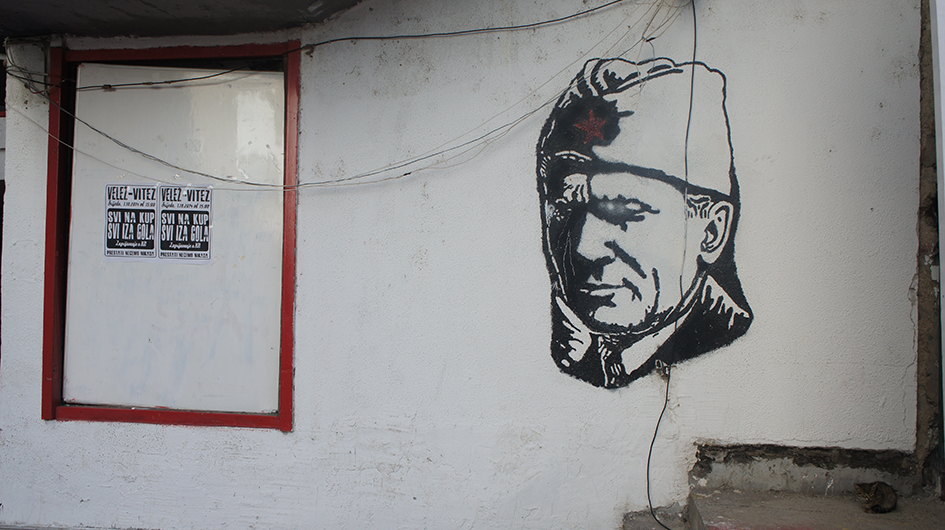
Following Marshal Tito’s death in 1980 and against a backdrop of economic crisis, the Yugoslav political scene became increasingly centered on ethnic and nationalist demands, which ultimately led to the breakup of the federation and the creation of new states. In Bosnia and Herzegovina, a referendum held in February 1992—which was boycotted by the Bosnian Serbs—saw 63% of voters cast their ballots in favor of the country’s independence, which was declared on April 6, 1992, while the following day, the independence of the Serbian Republic of Bosnia and Herzegovina was declared, plunging the country into full-scale conflict.
In Mostar, during the early stages of the war, Croatian and Bosniak forces joined forces to oppose the Yugoslav People’s Army (Jugoslovenska Narodna Armija – JNA), under Serbo-Montenegrin command (April 1992–May 1993), which bombarded the city from the surrounding hills. This alliance was subsequently broken after Croatian nationalist leaders in Bosnia and Herzegovina established an autonomous Croatian community with Mostar as its capital in August 1993. From that point on, a conflict broke out between the former allies, leading to the division of the city into two parts: the Croats in the west and the Bochniaques confined to the east of the city. One of the first outbreaks of violence between the two sides took place at the Bijeli Brijeg stadium when the Croatian army locked Bochniaq civilians and soldiers inside the stadium. Some people were executed, while others were taken to the Dretelj and Heliodrom camps. Since that time, the city has been divided into two parts: the west, populated mainly by Croats, and the east, by Bochniaks. The demarcation line runs along Bulevar Narodne revolucije (People’s Revolution Boulevard), just a few meters from the Neretva River. The destruction of the Stari most (Old Bridge), dating from the Ottoman era, by Croatian militiamen on November 9, 1993, remains a symbol of this division.
The signing of the Dayton Peace Accords in November 1995 ended the war between Bosniaks, Croats, and Serbs by dividing the Republic of Bosnia and Herzegovina into two autonomous political entities: the Republika Srpska and the Federation of Bosnia and Herzegovina.
The new Constitution of Bosnia and Herzegovina recognizes three “constituent” peoples: the Bosniaks (Bošnjaci), the Croats (Hrvati), and the Serbs (Srbi), as well as three languages: Bosnian (bosanski jezik), Croatian (hrvatski jezik), and Serbian (srpski jezik). It should be noted here that this is a single language that today bears three different names and was known, before the war, as Serbo-Croatian. The Bochniaques, referred to as “Muslims” (Muslimani) during the Yugoslav era, are said to be Bosnians of the Muslim faith, while the Croats are said to be of the Catholic faith and the Serbs of the Orthodox faith¹.
These political divisions in Bosnia and Herzegovina, cemented by the Dayton Peace Accords, were reflected in the organization of professional soccer. In the early years following the war, there were three separate national leagues, and it was not until 2000 that the clubs of the Croatian-Bosniak Federation merged into a single league. They were joined by clubs from the Serbian Republic in 2002, a date that marked the creation of a national championship and league for the entire country.
These changes had an impact on the city of Mostar, whose two clubs, Zrinjski and Velež, faced off for the first time since the war in 2000, in Sarajevo, when the Croatian and Bosnian leagues were unified.
¹ Stéphanie Rolland, “Foreign Indigenous People: Displaced Persons in Mostar After the War in Bosnia and Herzegovina,” Balkanologie [Online], Vol. VIII, No. 1 | June 2004
The Survey and Data Collection in Mostar
Interviewer: L. Zeljković
Date: September 2014
The Velež Soccer Club
Fudbalski klub Velež (Velež Football Club) was founded in 1922 under the name RSD Velež (Radnicko sportsko društvo—Workers’ Sports Association). The club took its name from one of the mountains overlooking the city of Mostar, thus becoming an integral part of its geographical landscape. During World War II, dozens of the club’s members died fighting alongside the partisans. During the era of the Second Yugoslavia (1945–1992), Velež became fully integrated into the Yugoslav revolutionary project, was one of the country’s top clubs, and enjoyed its greatest successes in the 1970s and 1980s. It was best known as one of the symbols of the city of Mostar and of the unity of its citizens, but it was loved and supported far beyond the city, throughout Herzegovina.
Velež’s original crest features a red star—a symbol of communism—bordered in yellow, bearing a soccer ball and the inscription “RSD Velež Mostar 1922.” Above this emblem is the silhouette of the Mostar Bridge. From 1995 to 2005, the red star was replaced by the bridge, which was depicted above a soccer ball; however, at the request of the Red Army supporters—a group founded in 1981—the star was restored to the crest in 2005. Since the war, the club has been regarded by some as a Bochnia-based club, and one of the goals of restoring the old crest was to clearly mark the continuity between the Yugoslav Velež and today’s Velež and to fully embed it within its heritage. Velež fans are also called Rodjeni (natives), but this name is also used to refer to the club’s players or the club itself.
In the 1970s, Velež began playing at the Bijeli Brijeg Municipal Stadium, which had been newly built by the citizens of Mostar as part of collective work campaigns (Radne akcije). Today, this stadium is the second-largest in Bosnia and Herzegovina, after the one in Sarajevo, with a capacity of 25,000, including 9,000 seats. The club ceased to exist in 1992 after being expelled from its stadium by the Croatian army during the ethnic cleansing operations in the western part of the city. The Croatian army used the stadium to detain the Bosniak population arrested at the start of the siege in May 1993. The club was reestablished in 1994 at a time when “its” country, Yugoslavia, no longer existed, in a Bosnia and Herzegovina where ethno-national divisions had prevailed over its (Yugoslav) motto of brotherhood and unity—a situation that would make the club a target for nationalist politicians¹. Today, Velež trains at the stadium in Vrapčići, a town north of Mostar.
¹ For more details, see Richard Mills (2010): “Velež Mostar Football Club and the Demise of ‘Brotherhood and Unity’ in Yugoslavia, 1922–2009,” *Europe-Asia Studies*, 62:7, 1107–1133
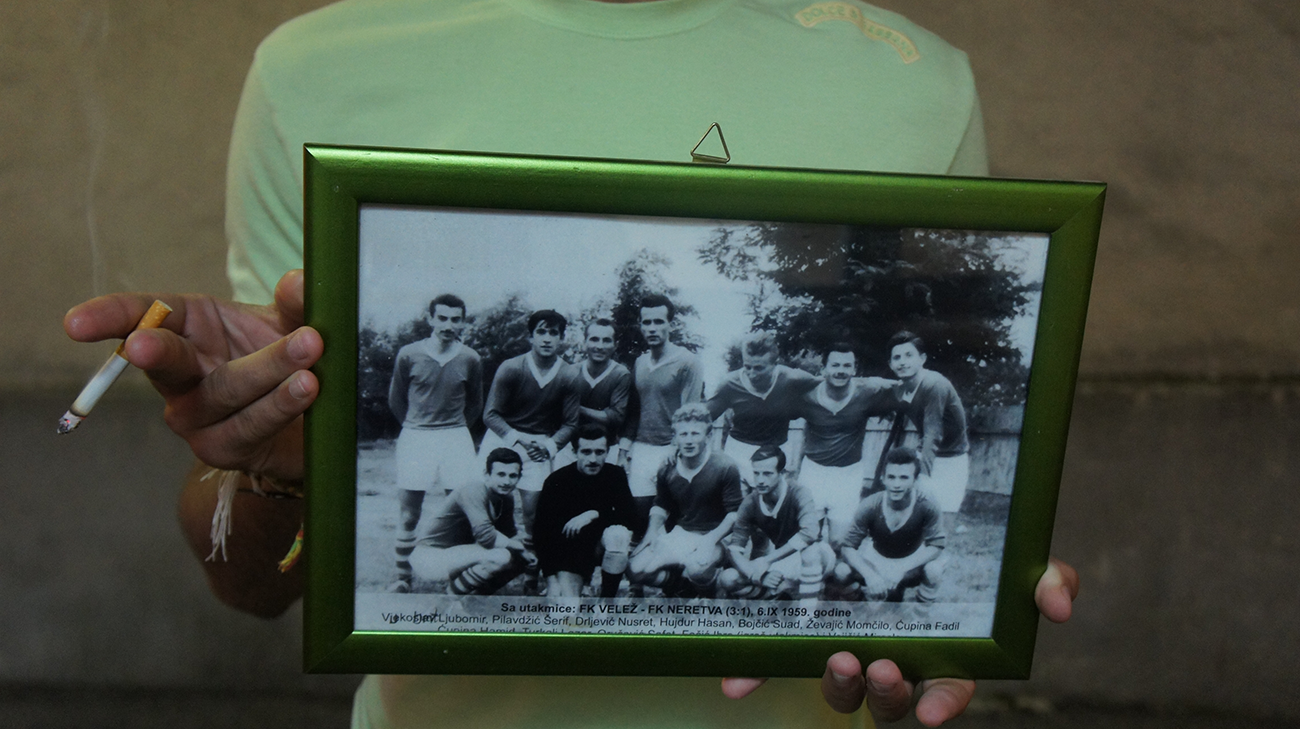
Memories of Alma's Old Photos © Ljiljana Zeljkovic, Mucem 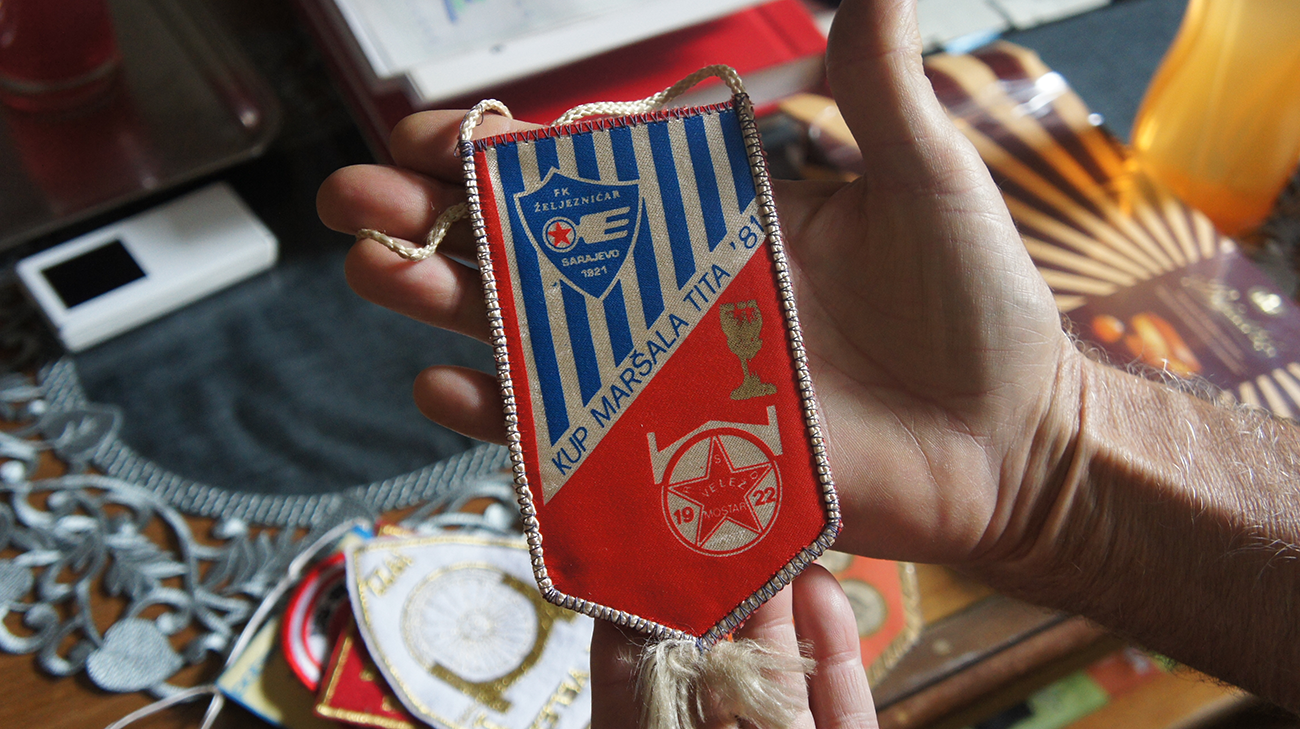
Enes Vukotic’s Old Pennants © Ljiljana Zeljkovic, Mucem 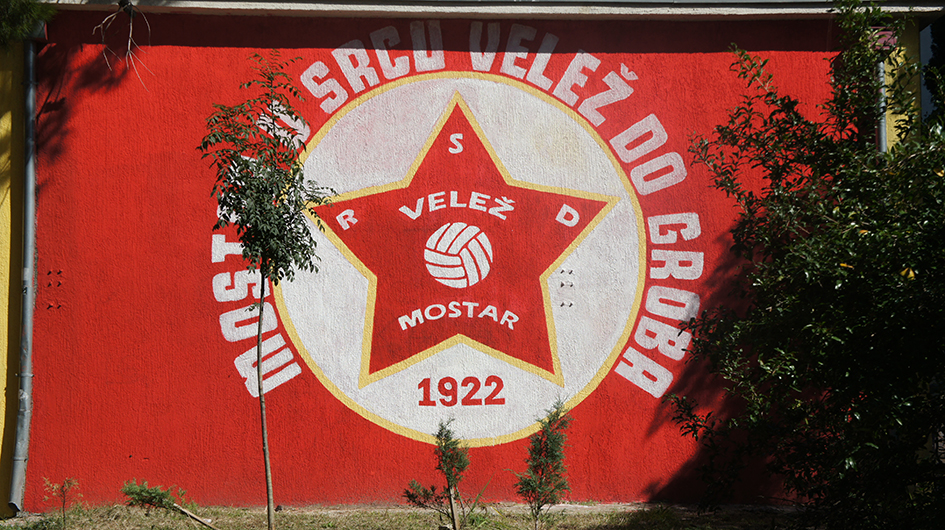
The red star, symbol of the Velež club in Mostar © Ljiljana Zeljkovic, Mucem
The Zrinjski Soccer Club
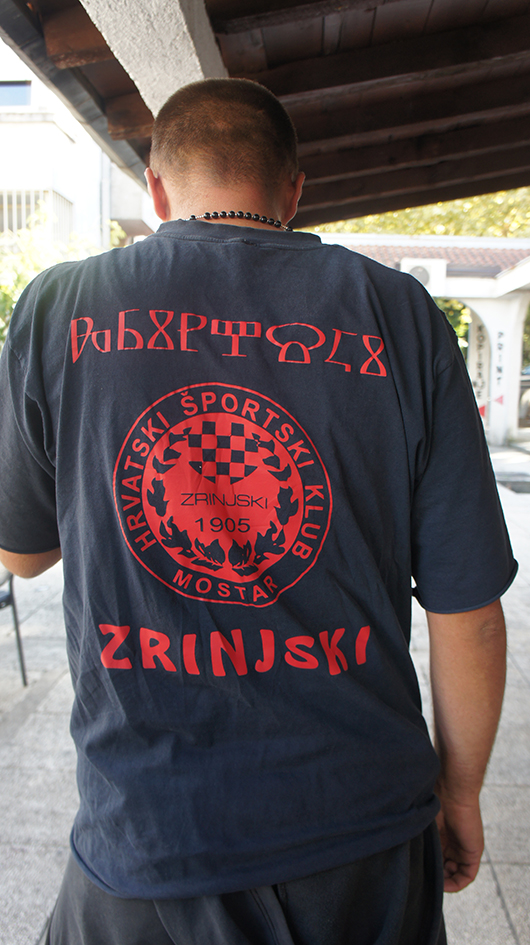
Shortly after the Velež club was evicted, the Bijeli Brijeg Stadium became home to the Hrvatski Sportski Klub Zrinjski (Croatian Sports Club Zrinjski) and took on that club’s name. The club’s management, composed entirely of Croatian nationals, signed a contract with the city government—which was controlled by a Croatian party—for a lease term of 110 years. Zrinjski is the surname of one of the most prominent noble families, which played a significant role during the Croatian battles against the Ottoman and Habsburg armies. According to the official history of HSK Zrinjski (which is disputed, however), the club was founded in 1905 under Austro-Hungarian occupation and continued until 1945 despite several interruptions. Since the club played during World War II as part of the Independent State of Croatia (Nezavisna Država Hrvatska)—an ally of Italy and Germany—and its officials and players were openly pro-Ustasha, the socialist authorities banned it after World War II. In 1992, the club was reestablished in Medjugorje, a small Croatian municipality near Mostar.
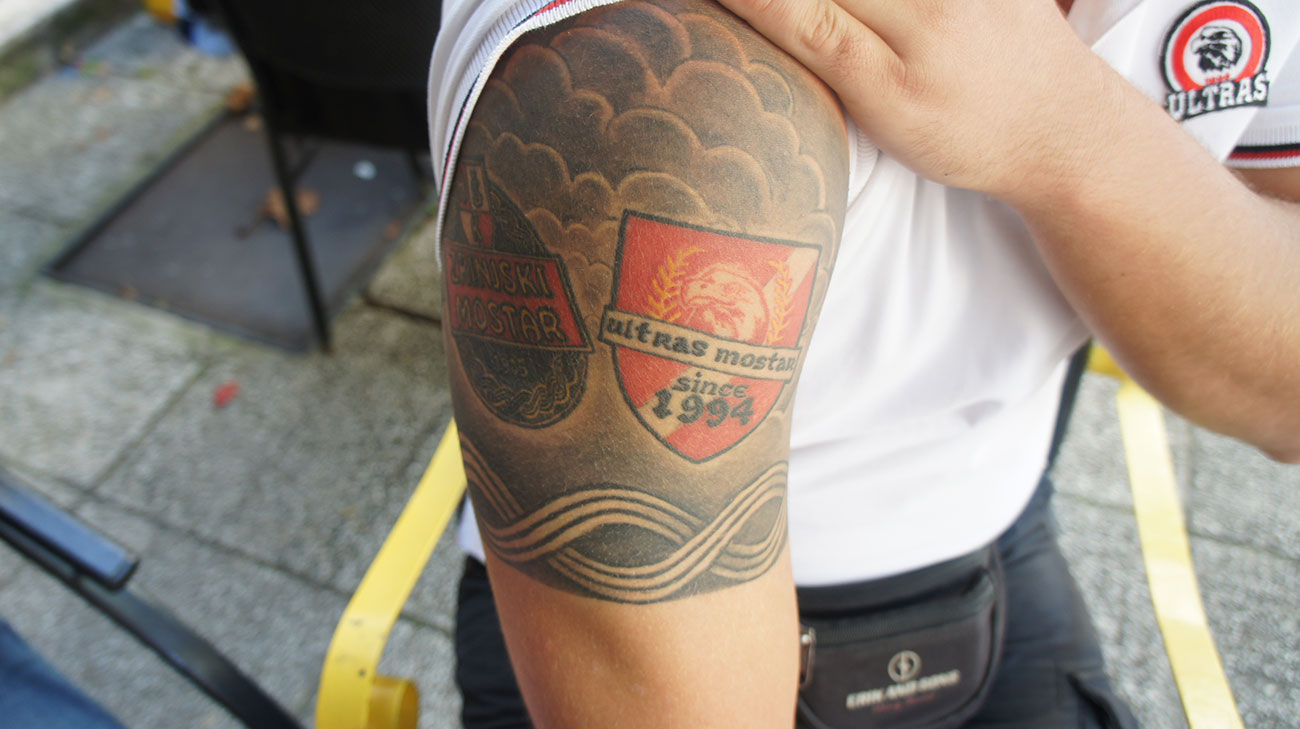
The Zrinjski crest consists of a blue circle containing a white laurel wreath, the red-and-white Croatian checkered pattern, and the inscription “Zrinjski 1905 Mostar.” The inclusion of the date reflects a desire to establish historical continuity and to gain legitimacy and representativeness by presenting itself as the city’s oldest club. This date is disputed by those who believe the club was founded in 1992 amid violence and war, as the result of an exclusionary and homogenizing Croatian nationalist project. The Zrinjski Ultras fan group was founded in 1994 and regularly makes headlines in Bosnian daily newspapers, which associate it with the Croatian far right. Zrinjski supporters, who have adopted the eagle as their emblem, refer to their players as Plemići (the nobles). All these elements attest to the importance that HSK Zrinjski’s supporters and leadership place on their Croatian identity¹.
¹For more details, see Stéphanie Rolland, 2013, “From Wartime Violence to Symbolic Confrontation: Sports Rivalry and Interethnic Communication in the Balkans,” *International Journal of Violence and Schools*, September 2013, 118–139. In her analysis, she notes that HŠK Zrinjski and its supporters defend “an ethno-national identity, a historical reference in the name of a national hero, symbolic revenge against the communist past for HŠK Zrinjski, a right-wing orientation, and the color black for the Ultras supporters, who demand an ethnically homogeneous territory (Croatian Herzeg-Bosnia).”
The Survey and Data Collection
During a six-day research and data-collection trip in September 2014, I met with several members of the Zrinjski Ultras during three interviews: The six people I met were among the Ultras’ “iconic figures,” but none of them wanted to take on the role of leader—a role that would be foreign to their group and to the principles of the “Ultras” movement. Three people held degrees from the public university (in computer science, engineering, and economics and public relations) and worked in public and private companies; two had a high school diploma; and one was still in high school. Thanks to a trusted referral, and because the study was commissioned by a museum (rather than by the media, to whom they would never grant an interview), they agreed to speak with me. During the interview, they acknowledged their poor reputation and expressed regret over the prejudices held against fans in general and against the Ultras in particular.
On two occasions, I also had the chance to meet some very active Velež ultras, members of the Red Army, where I was there at the same time as two teams of journalists, including one from France. I was also able to speak with former club employees, one of whom was a collector of items related to the club’s history and the author of a monograph on the club. I was granted another interview by a former member of Red Army and two by Velež supporters who were not part of the group but whose life stories were closely tied to the club’s history. They all lamented Velež’s poor standing in the league, which was clearly reflected in the dwindling number of fans in the stands, but they insisted that their passion and love for the club—which they “would never give up on”—remained intact. All of them emphasized the inseparable bond between Velež and the city of Mostar and held Velež up as a symbol of the city on par with the “Old Bridge.”
“It’s almost just another game”?
During the derby on September 27, 2014, which I attended, and the fan gathering that preceded it, there was a very heavy police presence around the stadium and even elsewhere in the city center, but both fans and residents emphasized that “things are much better today,” that the situation “has calmed down,” and that it “no longer has anything to do with the war-like atmosphere we had in the early years of the derby.” Even so, many residents feared a major incident because elections were coming up, and any incident that could be interpreted in “ethnic” terms (whether it actually was or not) would benefit nationalist parties on both sides. Apart from a few torn-out seats—which stadium management donated to the Mucem—and a large amount of smoke bombs in the stands, the derby went off without any major incidents. Many fans from both clubs made comments after the game that boiled down to this: “People expect there to be bloodshed during this match, and when they see that it’s almost just like any other game, they’re disappointed—they don’t show up.” Yet even when there is no “bloodshed” during the match, the tensions felt throughout the city and the property damage caused by fans outside the stadium—which recur every year—are precisely the reasons why many refuse to attend the derby, which they consider too closely tied to political conflicts and which still symbolizes the city’s political division.
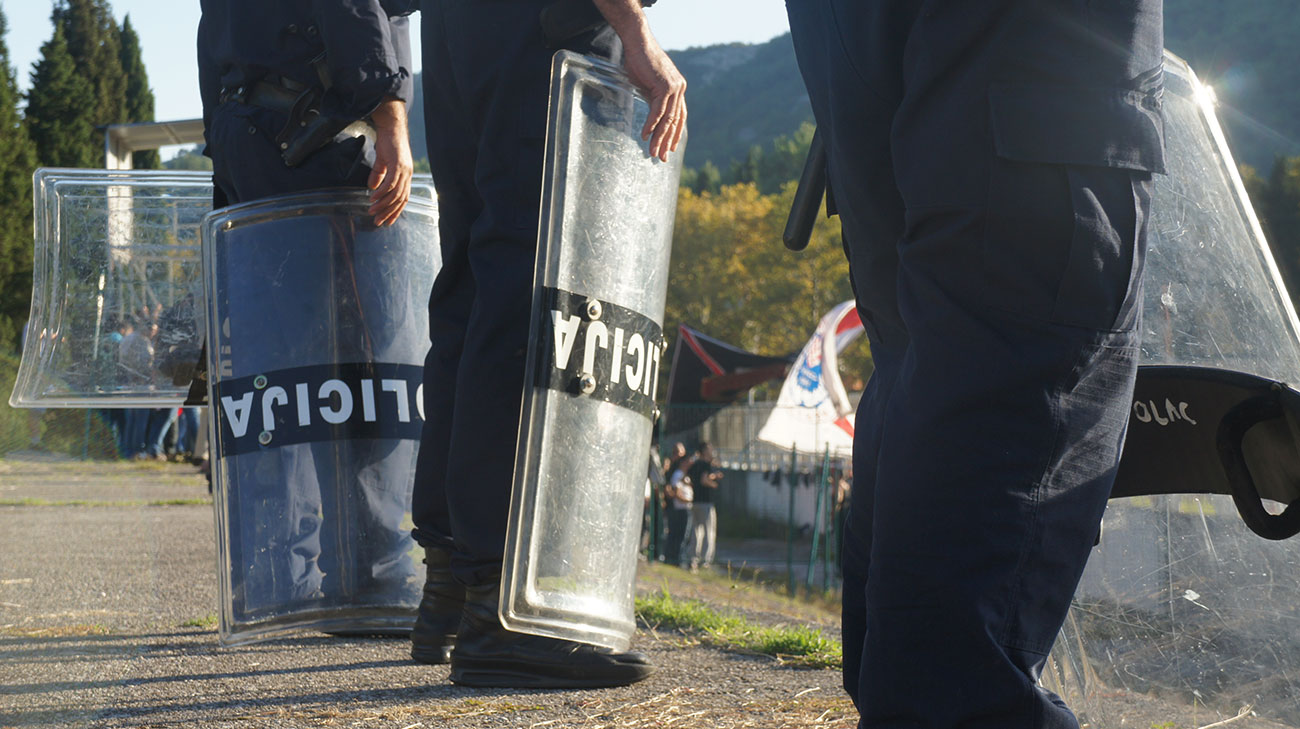
The atmosphere of the derby © Ljiljana Zeljkovic, Mucem The atmosphere of the derby © Ljiljana Zeljkovic, Mucem 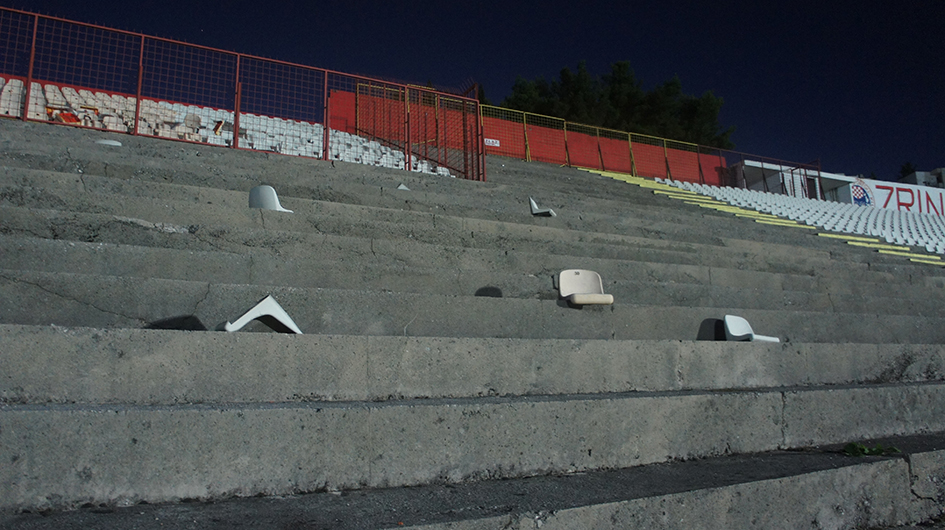
Post-Derby Nostalgia © Ljiljana Zeljkovic, Mucem
All the members of Ultras Zrinjski agreed that every match was equally important to them and that they had to give 100% of themselves in every match, “but we’re aware that people are only interested in us because of the derby”; “Come with us to Ljubuški in two days, and you’ll see—we’ll have just as many people, with the same flags, and the same smoke bombs.” While supporters of both clubs tried to downplay the importance of the derby—to emphasize their “love for the club” and to avoid drawing too much attention to the opposing team— soccer fans and ordinary citizens do not view this derby as “just a game” that they avoid attending because of the violence and political exploitation it entails.
However, the ethno-national tensions highlighted by the media nevertheless downplay other structural problems faced by fans on both sides. As the conversations unfolded, the topics discussed ultimately had little to do with issues of ethnicity; ordinary fans either expressed their love for soccer or for their club in a non-ethnic way, or they complained about the country’s economic situation, the lack of strategic and long-term investment in soccer, political manipulation, the premature and mass exodus of young talent—or young people in general—the lack of training programs, corruption, and so on. Active fans, members of the Red Army or the Ultras, spoke mainly of their “violated rights,” their poor relationship with the police, and the fact that they were sometimes barred from entering the stadium because “this damn government” doesn’t have the means to “guarantee our safety,” they say, and that being prevented from attending the match was the worst ordeal for them.
A six-day investigation, whose main objective was to acquire interesting items and conduct as many interviews as possible, cannot effectively establish the links between fan culture and political struggles; but in any case, that was not what the ultras I met wanted to reveal about themselves. With that in mind, some Zrinjski fans, along with one of their former members, suggested that I come to the stadium the day after the derby to watch the Hei League matches—a league for junior players from across the region. A young woman who runs this league told me that every Sunday, children from Velež and Zrinjski, as well as children from all the towns in Herzegovina, gather to play together while their parents chat and watch them: “Great things happen here, but nobody cares… Journalists come to film this stadium and take an interest in our clubs only if there’s a fight or ‘ethnic tensions,’ as they say.”
However, while the fans may wish to present themselves as independent of politics, it is undeniable—based on studies of both clubs—that politics has played a role in the affairs of both Zrinjski and Velež, and that Zrinjski’s strong results are not unrelated to the support of Croatia’s main nationalist party, just as Velež’s difficulties stem from a lack of political support: a club that, at the fans’ request, presents itself as a club “of workers, of the left (…) does not serve the cause of any official political agenda in this country”¹. If soccer offers “through its deep-seated fabric, the issues it crystallizes, and the behaviors it elicits, a uniquely rich vantage point for anthropological investigation ,”² the Mostar derby, the complex histories of the two clubs, Velež’s inability to return to the Bijeli Brijeg stadium, and its year-to-year struggle for survival, bear witness to the relentless efforts of the dominant political forces in Bosnia and Herzegovina over the past three decades to erase any linguistic, cultural, sporting, or political option that does not fit into ethno-national categories.
¹ http://www.tacno.net/novosti/prokletstvo-petokrake-zasto-je-velez-morao-skociti-dole/
² Christian Bromberger, 1998, *Football: The World’s Most Serious Trifle*, Paris, Fayard
Discover more features
Immerse yourself in the vastness of the Mucem’s collections and follow the surprising themes imagined by our curators. Discoveries and a change of scenery guaranteed!
 Discover
Tagging and Graffiti: “Illegal Art” at the Museum
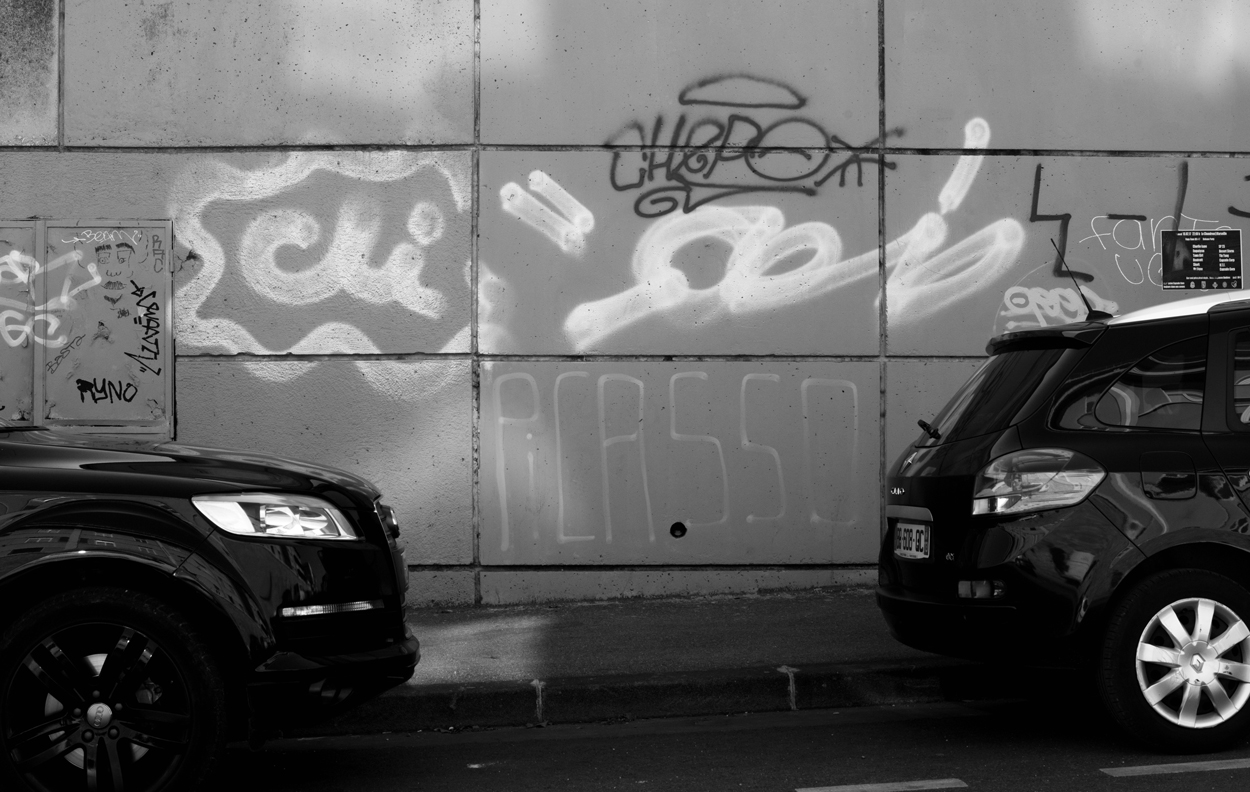
Between 2001 and 2006, Claire Calogirou, a research associate, conducted several field surveys on the topics of hip-hop, dance, tagging, and graffiti. As for graffiti, 958 items were added to the Mucem inventory, representing an impressive collection of graffitied signs, posters, stickers, markers, spray paint cans, magazines, sketches, photographs, videos, and more. This rich body of research offers insights into social relations in urban settings, the issue of the appropriation of public space, and its reclamation through practices rooted in street culture.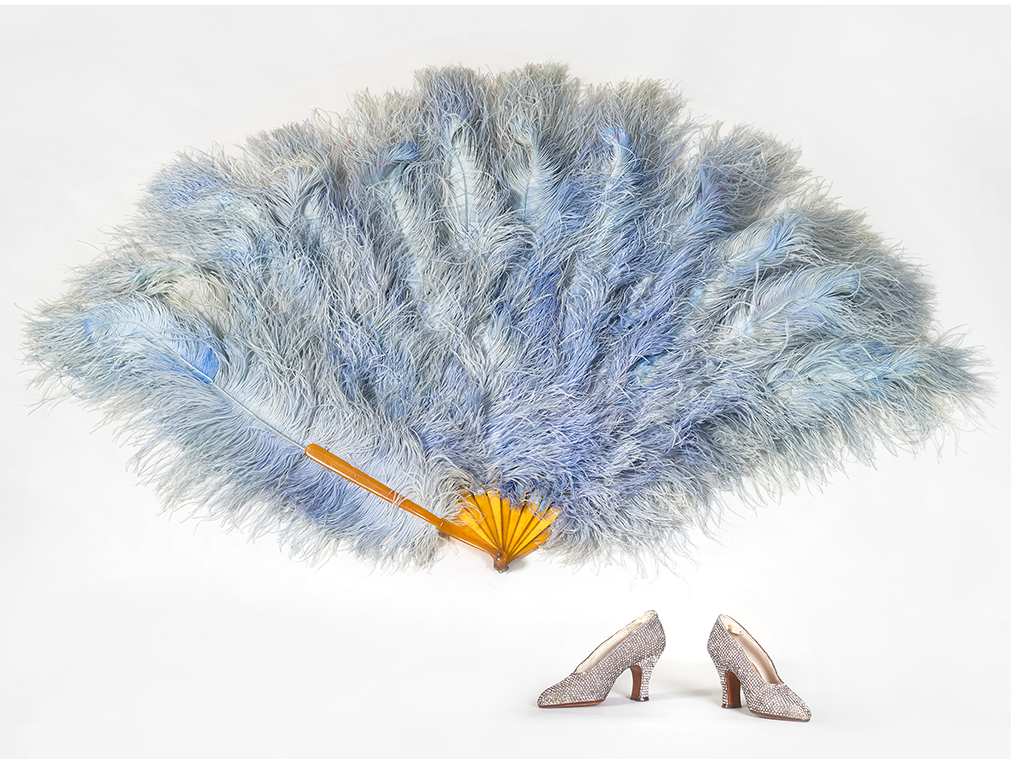 Discover
Celebrity!
Cult Objects and the Star System in the Mucem Collections
A dress, a console table, a belt buckle, a soccer jersey, a pair of shoes, a swimsuit, a radio: here is a list of simple everyday objects that bear witness to their era. This list would have a very different impact if we added the names of the people to whom they belonged: Edith Piaf’s dress, Pink Floyd’s mixing console, Saint Vincent Palotti’s belt buckle, Cristiano Ronaldo’s soccer jersey, Mistinguett’s shoes, Miss France’s swimsuit, Psykose’s “cataposte.” From being mundane, these objects take on power, sparkling with the glamour of fame. They become desirable and “magical.” But these relics come at a price that is, too, far from trivial…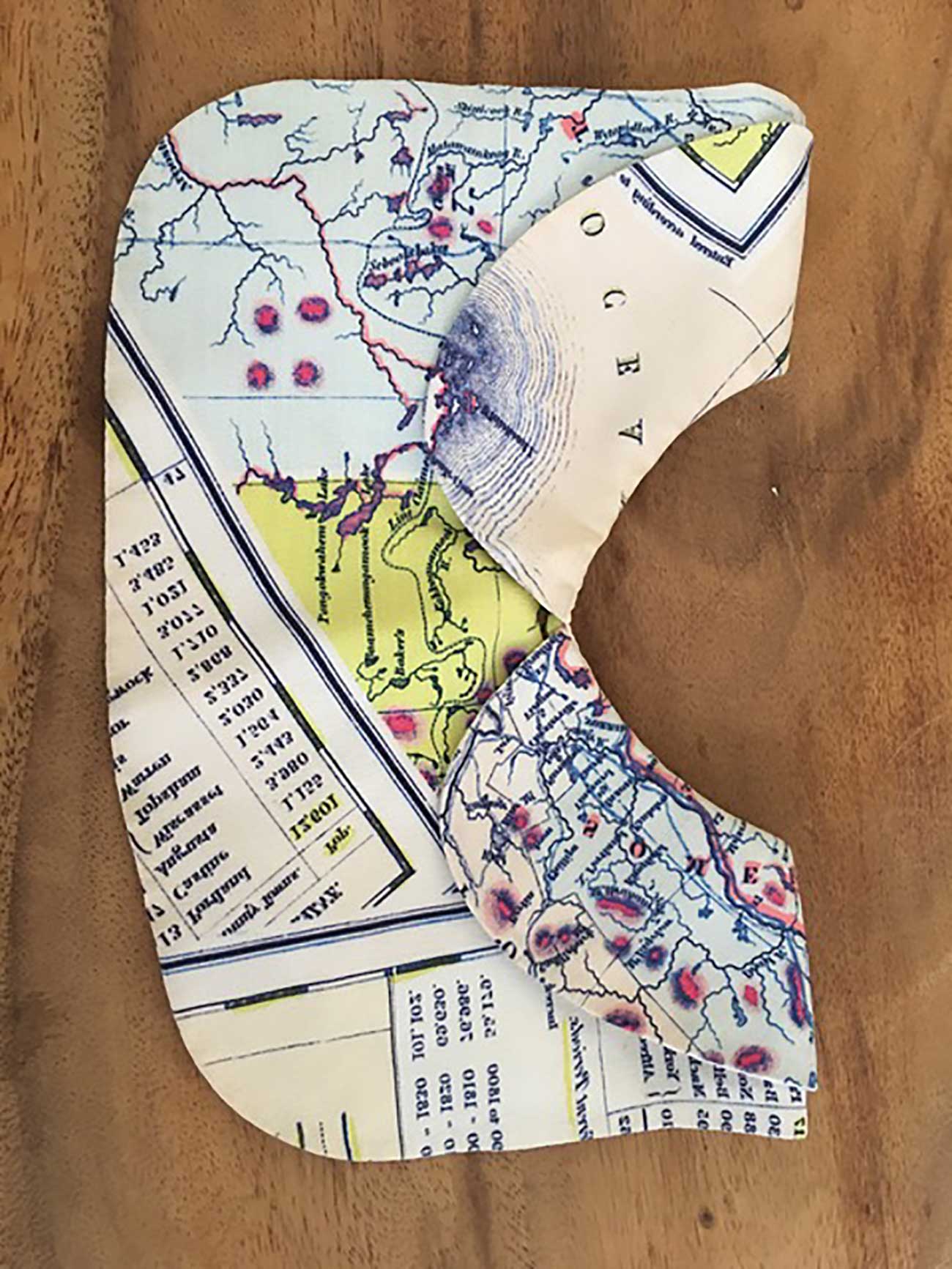 Discover
"Life During Lockdown," the collection
In April 2020, the Mucem launched a major participatory project focused on our lives during lockdown. Many of you took part.
The Mucem has received more than 600 proposals, which are still being reviewed, and some of which will be added to its collections once the review process is complete. A digital booklet lists all the proposals collected through this call for submissions, and here are a few examples: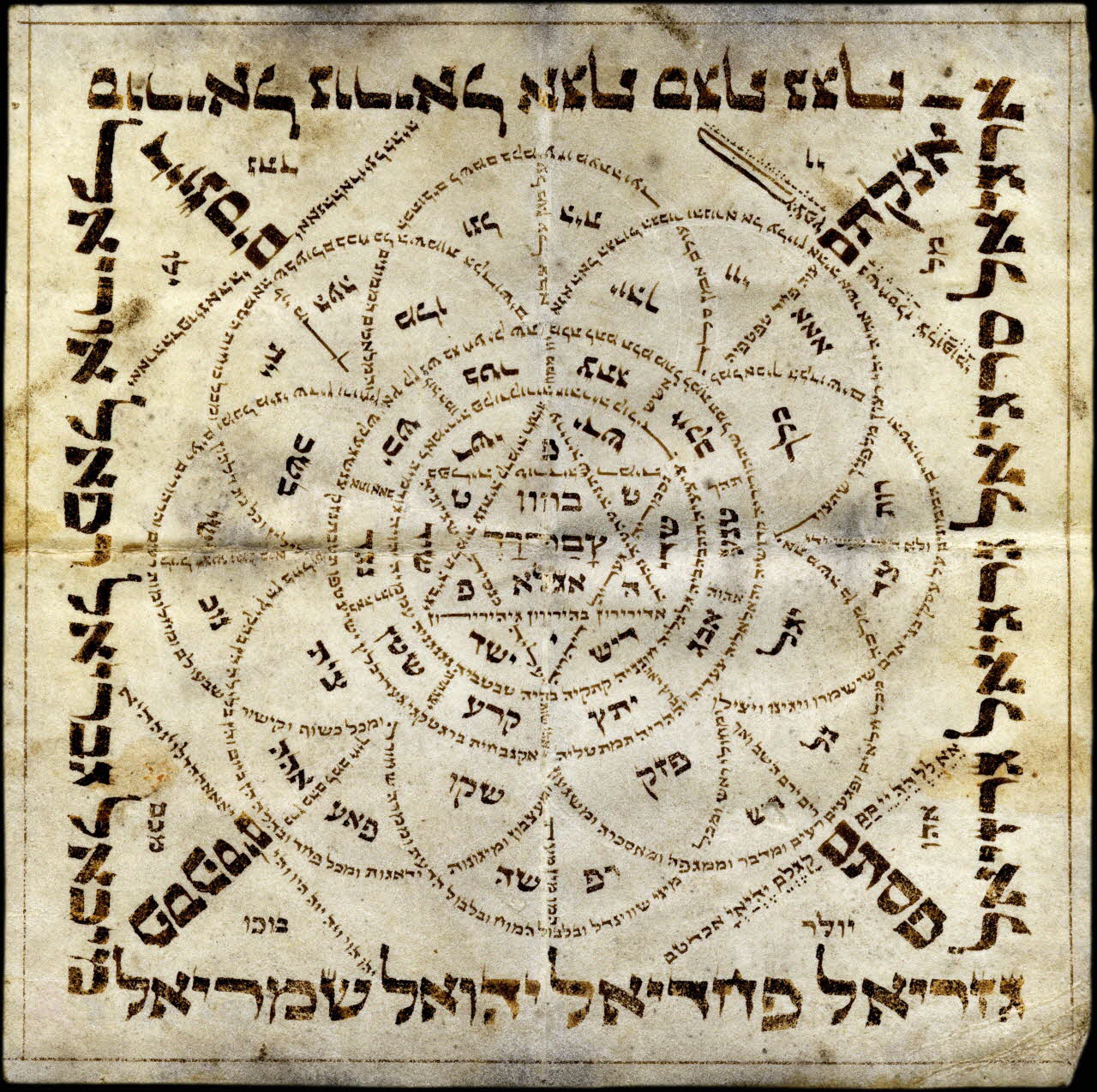 Discover
Watch out for wizards!
Magic and witchcraft: some of us consider them laughable superstitions, others believe in them, and many are undecided. But believing in them has a bad reputation among rational minds: such beliefs were fine for our ancestors—especially in rural areas—or are still acceptable in developing countries—but certainly not here, not today, and definitely not in the city. Yet observing the behavior of our contemporaries shows that scientific progress has not brought an end to mysteries and beliefs, neither in post-industrial France nor elsewhere. Often powerless in the face of misfortune, suffering, and anxiety, people are not satisfied with the answers provided by science. Science leaves a seemingly irreducible space for other principles and other ways of understanding the world.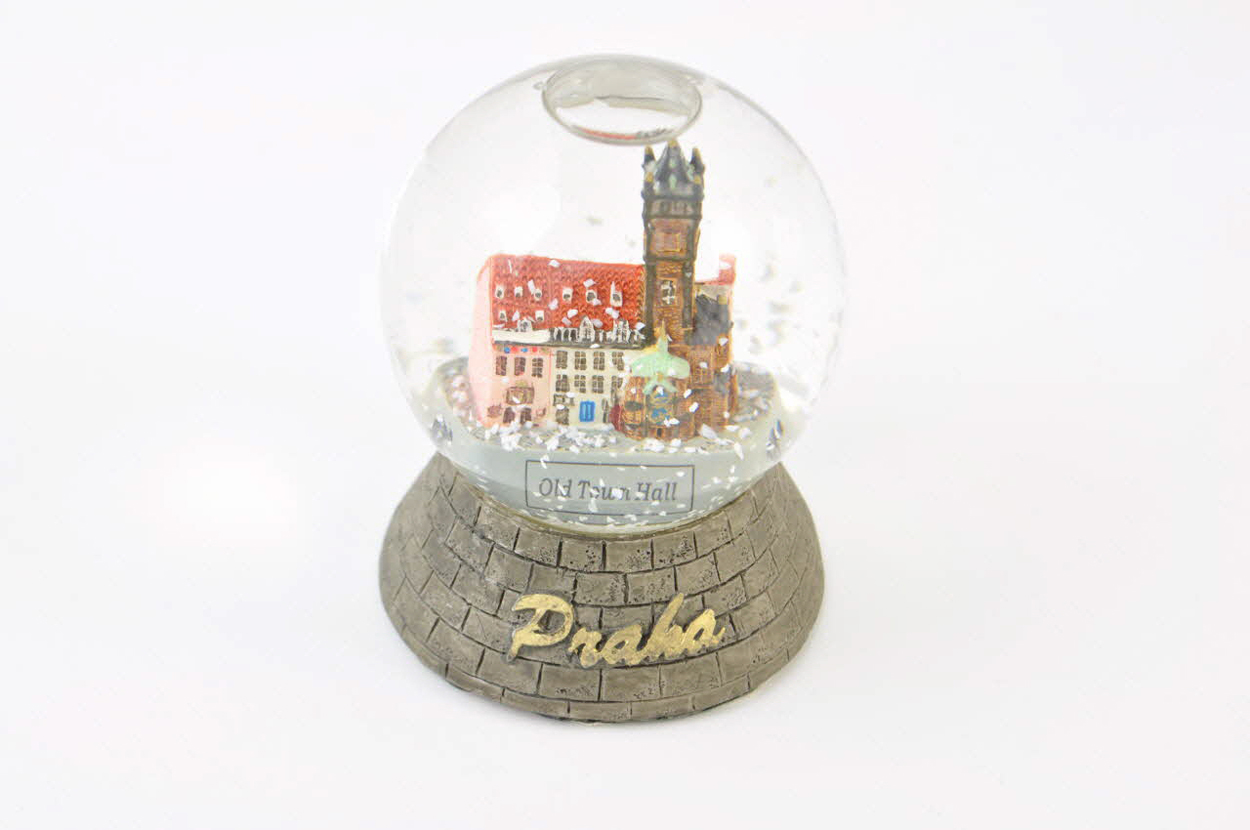 Discover
A Whimsical Alphabet Book!
What are these objects doing at the Mucem?
As its name suggests, the Mucem is a museum of civilizations. In other words, it focuses on everything produced and used by European and Mediterranean societies, from the dawn of humanity to the present day. In the museum’s view, a funerary sculpture from Ancient Egypt speaks just as much about the ritual practices surrounding death during the reign of the pharaohs as a wreath of glass-bead flowers reflects the attachment to the deceased in France during the first half of the 20th century.
Every object, no matter how humble or kitschy, thus bears witness to the society from which it originated. That is why, since its founding, the museum has made it its mission to seek out and preserve a wide variety of possible and imaginable artifacts in order to preserve their memory. In particular, it has worked systematically by organizing annual collection surveys. For a given theme, within a defined geographic area, Mucem researchers gather testimonies, images, and objects. This is how the artifacts below found their way into the national collections.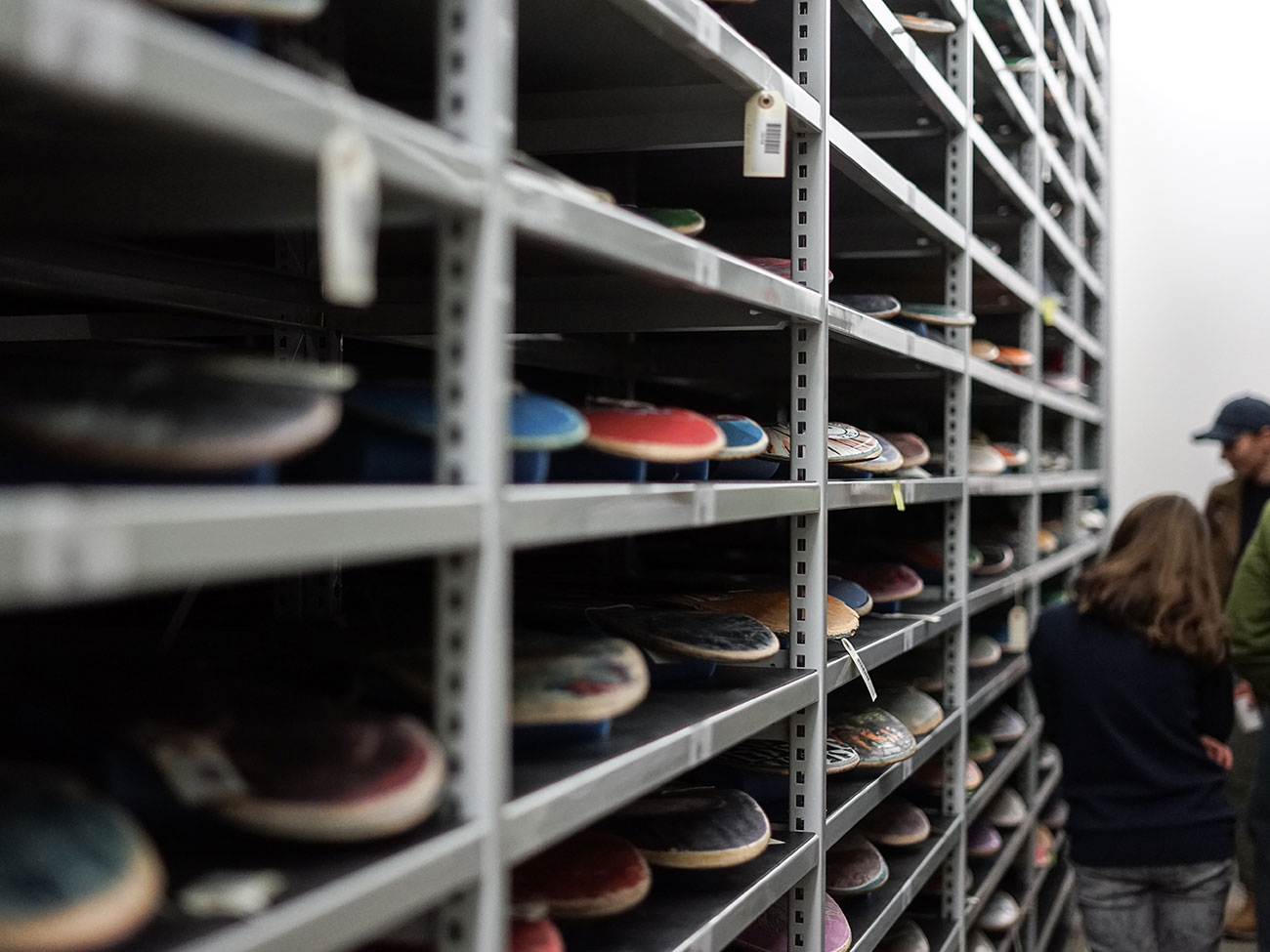 Discover
From California's Beaches to the Mucem: Skateboarding Culture at the Museum
José de Matos, Tony Hawk, Mark Gonzales… these names, which resonate with anyone who has ever skated, belong to legendary skateboarders whose legacies are represented in various forms in the Mucem’s collections. Some of them have donated skateboards, equipment, or memorabilia to the museum, while others are represented through skateboards bearing their names.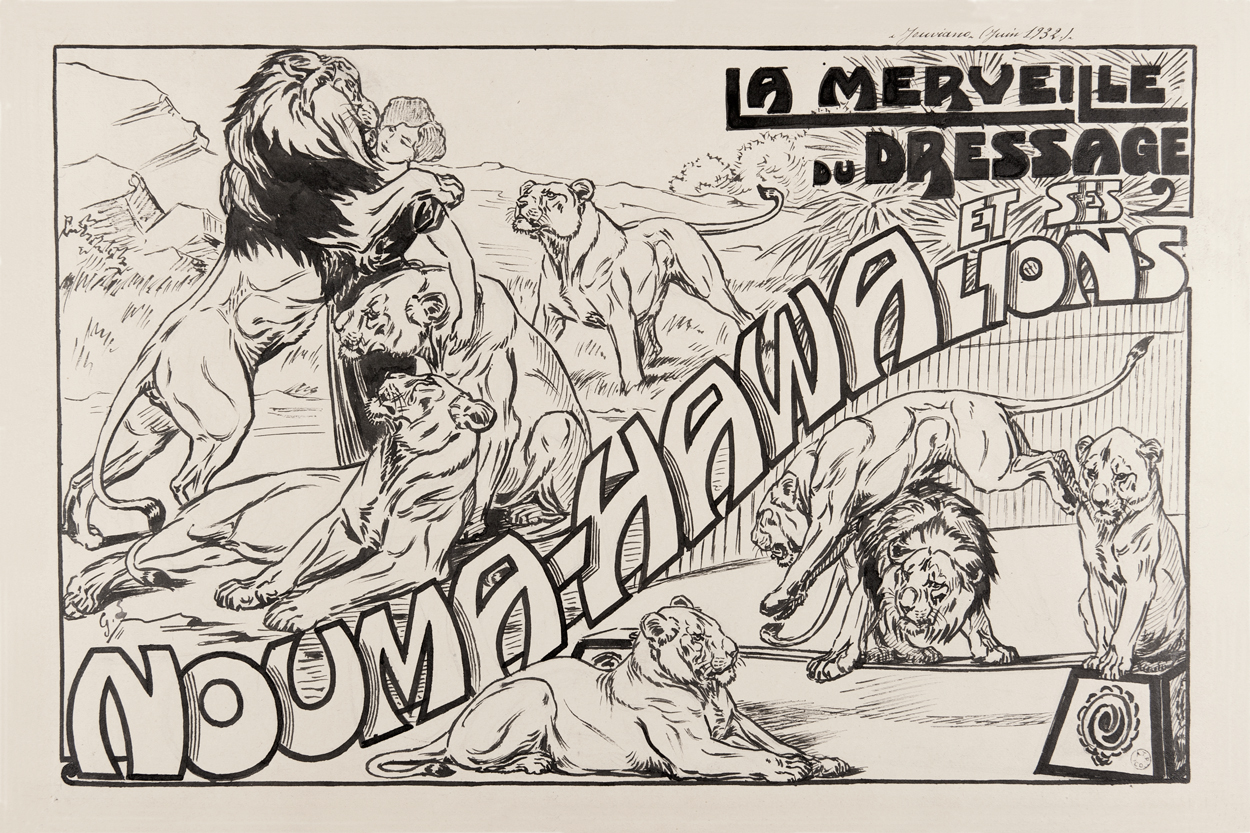 Discover
Draw Me a Lion
Gustave Soury's Animal Art
Gustave Soury (1844–1966) was an illustrator, painter, poster artist, and advertising artist who specialized in animal art for circuses and fairground menageries.
His vast and meticulous body of work, dominated by the figure of the big cats, reflects not only his passion but also our urban society’s fascination with exotic animals, their frightening wildness, and their endearing tenderness.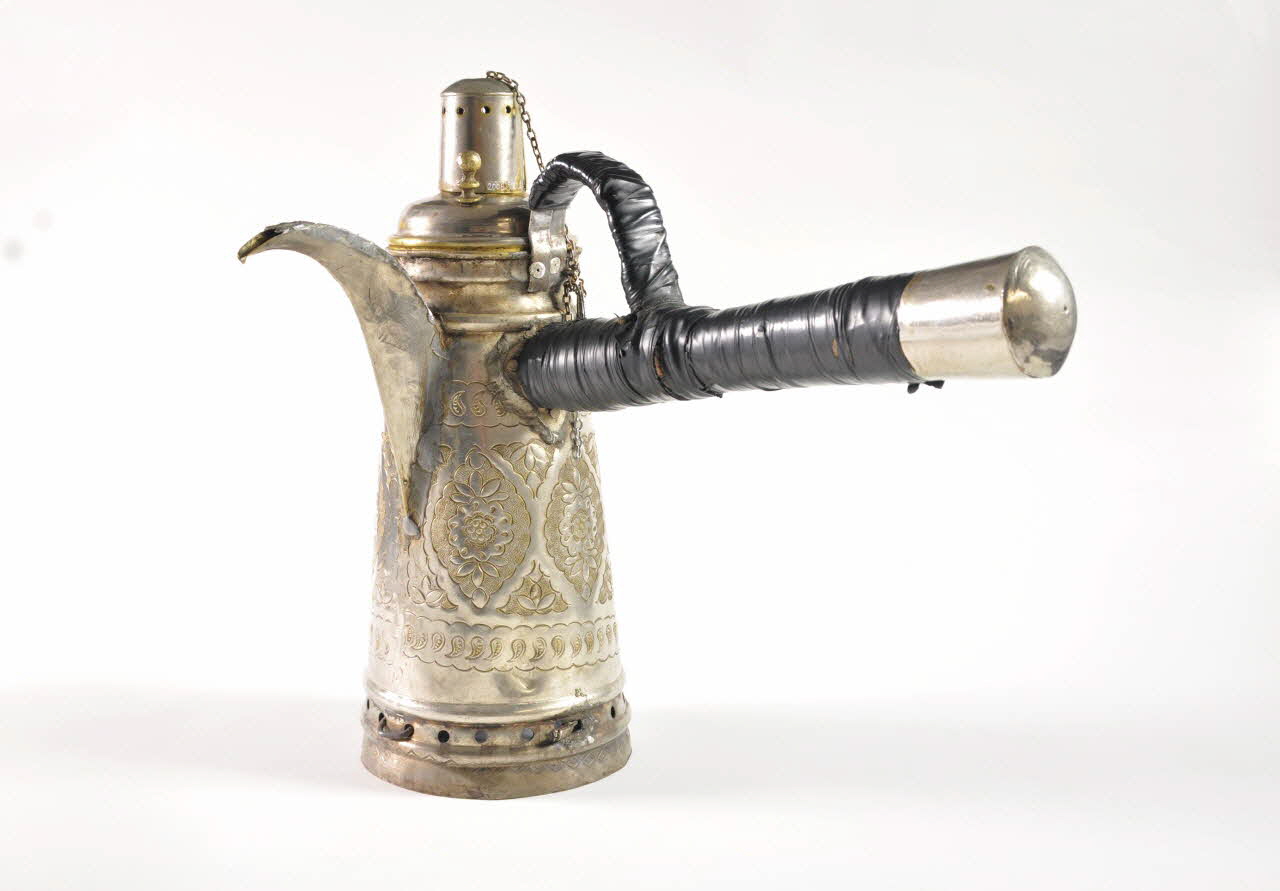 Discover
Coffee
Coffee (qahwa in Arabic, a term also used to refer to wine) reached us via the Arab and Ottoman worlds. From the highlands of Abyssinia, where coffee cultivation is documented as early as the 12th century, coffee crossed the Red Sea to be first cultivated along the coast of “Happy Arabia” (present-day Yemen) and then in the tropical climates of the territories of the great colonial empires beginning in the 17th century. Called the “devil’s drink” because of the black color of its grounds—in which people believed they could read the future—coffee was at times discredited by doctors for its harmful effects on health (it was considered an unnatural and addictive beverage).
Today, coffee is the second most widely consumed beverage in the world after water, but it still competes with tea.
The Mucem’s extensive collections related to coffee illustrate the various ways this beverage has been prepared and consumed since the 18th century, both at home and in public spaces. They also highlight how cafés have become places of social interaction.