Celebrity!
“Touch Me and You Will Be Happy”: The Power of the Relic
According to Bergson, man is a “god-making machine.” We need transcendence, the sacred, myths; we need to love, to admire, and to believe. Durkheim, Eliade, and numerous anthropologists and sociologists have elaborated on this need for religion within our societies. And as these societies become more secular, traditional religions are abandoned in favor of new forms of religiosity embodied in famous figures: movie and music stars, politicians, athletes, kings, and princesses… and in the objects that once belonged to them.
Faith and Healing: Relics of Saints
Relics (from the Latin *reliquae*, “remains”) are items left behind by a venerated figure upon their death. They may be a fragment of the body, such as the upper part of the skull of an 18th-century German saint, or an object that belonged to that person, such as the belt buckle worn by Saint Vincent Pallotti, a Roman priest who founded the Society of the Catholic Apostolate and was canonized in 1963. The veneration of these objects stems from the transfer of the saint’s sanctity to his “remains” and then to the devotee.
The veneration of relics is a common practice in many religions, particularly in the Catholic faith. They are believed to bestow grace upon those who contemplate and invoke them—and, more practically, healing and good fortune. In short, a happy life on earth. This is why the faithful who pray to Saint Emygdus hope to regain their sight. Indeed, the bishop of Ascoli Piceno, in the Marche region of Ancona, Italy, is the ideal patron for the blind: he lived in the Roman Empire at the very beginning of the 4th century and died a martyr for his faith after performing numerous miracles, notably curing blindness.
These sacred objects are generally kept in containers made of precious materials themselves, such as the medieval reliquary of Saint Foy of Conques, which is made of gold, glass, and precious stones. These receptacles often bear the likeness of the venerated saint, as in the case of the statuette of Saint Walpurga, a devout English abbess of the 8th century. A cavity carved into the back of the sculpture holds a liquid in a vial. This is “Saint Walpurga’s oil,” a miraculous water that flows from the saint’s tomb in Eichstätt, Germany, and is reputed to cure illnesses. Other reliquaries may take the form of the preserved bone fragment or be designed as a pendant to protect the wearer in daily life.
In 2019, the Mucem presented “Reliquaries from A to Z,” an alphabetical guide to the museum’s collections.
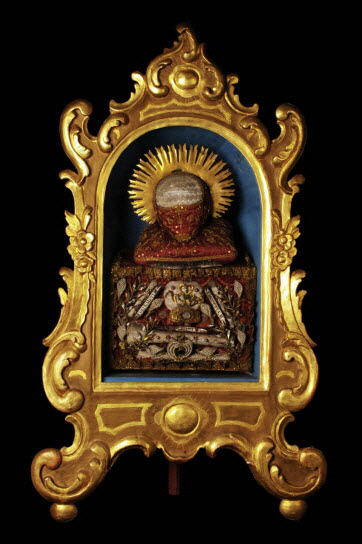
reliquary altarpiece 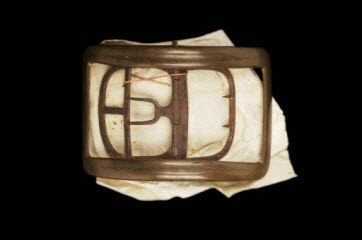
RELIC 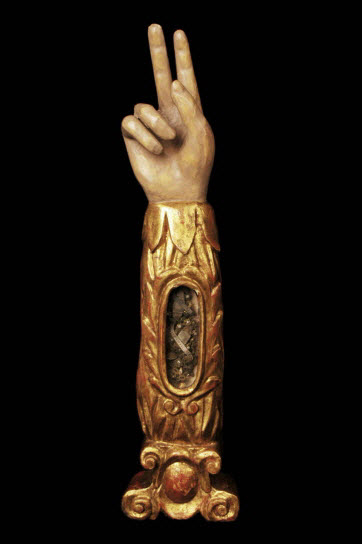
reliquary arm 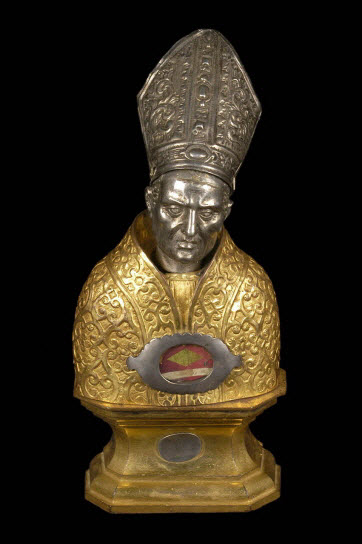
reliquary statue 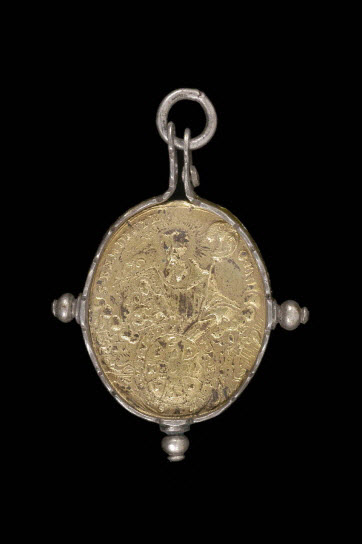
pendant 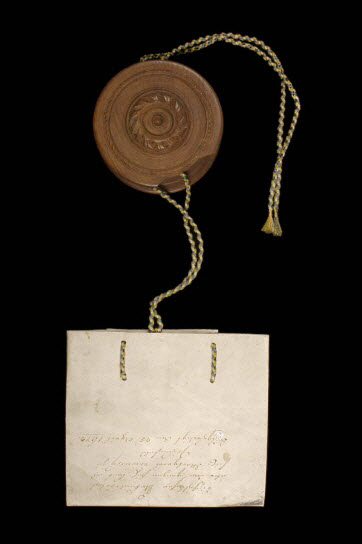
authentic reliquary
The protective and healing powers attributed to saints and their relics can also extend into the secular realm. The case of Lady Diana is a perfect example of this. During her lifetime, she was regarded by many as the “princess of hearts,” the “comforter of the sick,” and the “light of children with cancer,” as Gonzague Saint-Bris writes in his biography of Diana Spencer.
For many admirers, she possessed miraculous powers: meeting her or touching her was a guarantee of miraculous healing. Her death elevated her to sainthood, and the Alma Bridge—the site of her tragic death in 1997—became a true place of pilgrimage. This is evidenced by the many religious objects donated by the Princess of Wales’s “devotees,” such as this devotional image depicting Saint Roch, the healer, accompanied by the following dedication: “Diana, I loved you deeply, even though you didn’t know me. I admire your son William. Anne de Escandam, 59124, Nord.” Twenty years after her death, Lady Di’s personal effects continue to generate extraordinary public enthusiasm. An exhibition of her most beautiful dresses is sure to draw large crowds.
And when these same dresses are sold at auction—as was the case in 2014 with five of them—prices soar to over 100,000€ each. This is very similar to the phenomenon surrounding the relics of saints in the Middle Ages: they were so coveted that abbeys and religious centers paid considerable sums—or even commissioned their theft—to acquire them, and with them, their power, prestige, and the thousands of pilgrims drawn annually by their miraculous reputation.
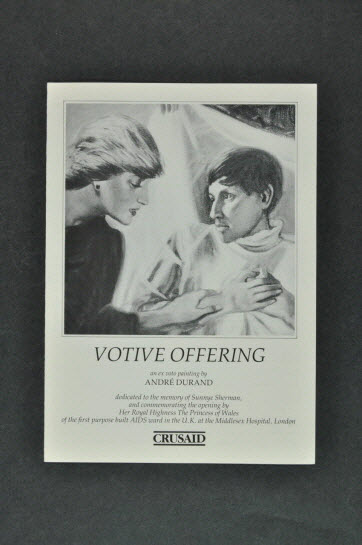
Brochure - "Votive Offering" 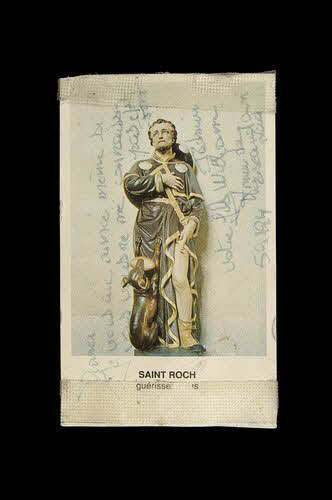
DEVOTIONAL IMAGE
From Saint to Idol: Divine Fame
The same process of worship is at work among those who revere a celebrity from the secular world. While one should not equate a passion for a star with devotion to a saint, all anthropologists studying the world of fans confirm this. Examples include Gabriel Segré’s work on the community of die-hard Elvis Presley fans in the late 1990s, the study conducted in 1979–1980 by the Center for French Ethnography on fans of Claude François, or Edgar Morin in his now-classic essay, *Les stars*, which has been reissued and updated numerous times since 1972.
Owning an object that once belonged to a beloved celebrity makes one happier. The owner feels as though they are sharing in the intimacy of its former owner, being closer to them, and capturing a part of their beauty, talent, and fame. Much like a saint’s relic, the “remnant” of a celebrity becomes a good-luck charm, a safeguard against life’s uncertainties. In a less macabre way than with the bodily remains of saints, this secular cult does not take the form of the same kind of relics, although a decayed molar belonging to John Lennon—given by the Beatles to one of his admirers after a dentist’s appointment—was sold in 2011 by one fan to another.
The Mucem itself owns casts of Edith Piaf’s two hands, but these are merely wax objects, not the singer’s actual metacarpals… Indeed, fans can direct their idolatrous fervor more toward artifacts emblematic of their beloved figure: stage outfits or musical instruments for musicians, movie costumes for stars of the big and small screens, jerseys or trophies and medals for sports legends and beauty queens, typewriters used by famous writers, painters’ palettes…
The history of the Mucem’s collections explains why and how certain types of celebrity memorabilia, rather than others, have become part of the nation’s cultural heritage.
Idols of the young (and not-so-young!)
Our museum houses a large number of objects that once belonged to famous figures in French popular music. Most of the items on display here come from acquisitions made for the Musée de la Chanson, an institution that never saw the light of day, but whose collections were eventually transferred to the Mucem. A great lover of jazz and French pop music, Georges Henri Rivière, founder of the National Museum of Popular Arts and Traditions, launched an initiative in 1962 with producer Louis Merlin to establish a museum of the chanson. Many prominent figures contributed to the effort. Bruno Coquatrix, director of the legendary Parisian venue the Olympia, for example, donated Edith Piaf’s final stage dress. The result of this collection is a series of moving mementos from 20th-century French music hall and variety stars: Joséphine Baker, Mistinguett, and Françoise Hardy, to name just a few.
Other artifacts from music stars—whose careers have been more international than those of our purely French celebrities—are also part of the Mucem’s collections. One such item is the mixing console used by Pink Floyd, the famous British progressive and psychedelic rock band, donated in 2002 by the sound company On/Off in Chelles (Seine-et-Marne).
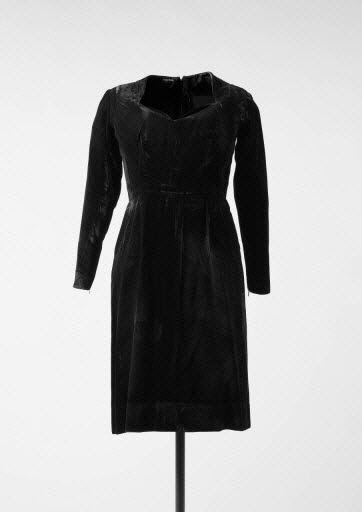
dress - Edith Piaf's dress 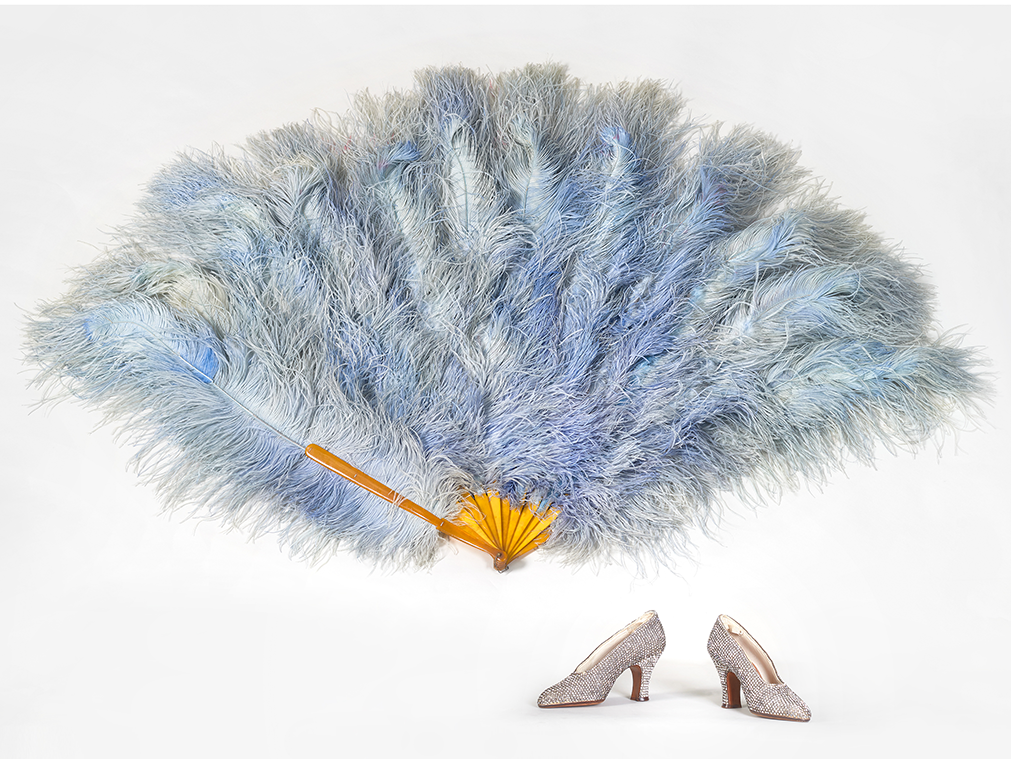
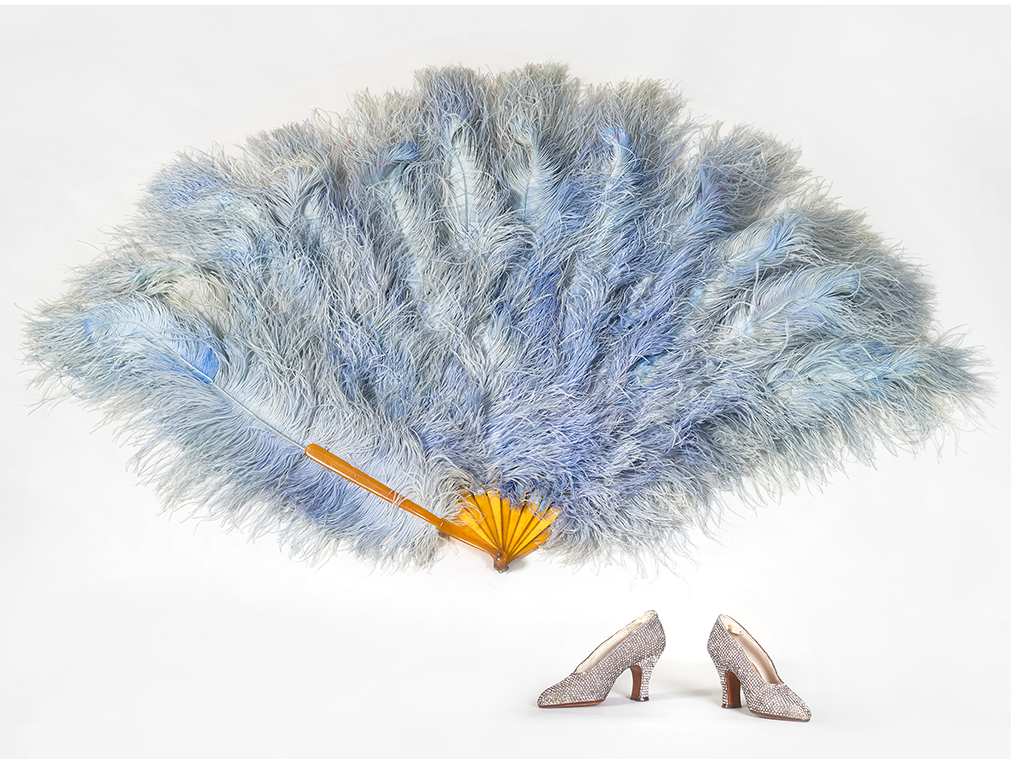
Eventail et chaussures de Mistinguett © Mucem Yves Inchierman 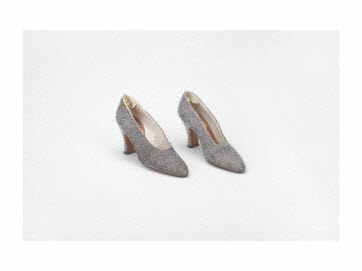
shoes - Mistinguett Shoes 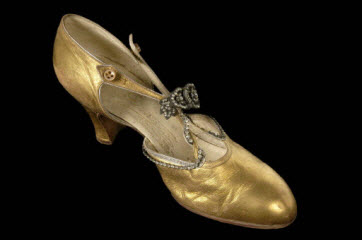
shoe 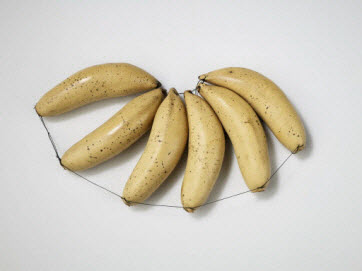
belt 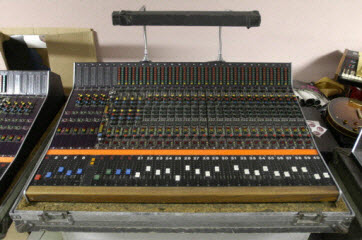
mixing console 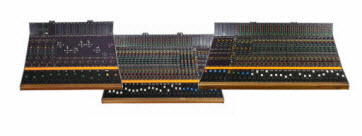
console 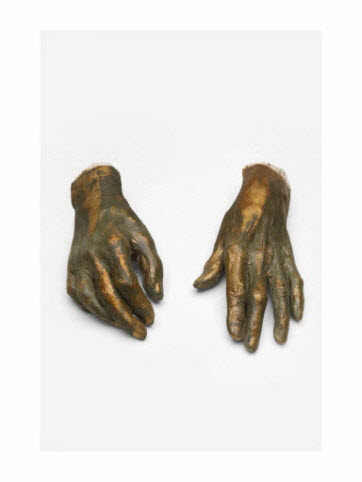
molding
Beauty Queens
In her book *On Celebrity: Excellence and Singularity in the Media Age* (2012), Nathalie Heinich, in reviewing the various types of celebrities, devotes special attention to beauty queens, supermodels, and other figures with perfect physiques. This relatively new profession owes its rise to the emergence and development of press photography, fashion houses, and ready-to-wear clothing. Just as the acting profession emerged with the birth of cinema, the modeling profession is a creation of the 20th century. Unlike actors on the big screen, who owe their fame to their talent, models clearly demonstrate the importance of beauty in our society. Beauty alone is enough to propel a person to the pinnacle of fame solely because of their attractive physical appearance.
Miss France, the winner of an annual pageant created in 1920 to crown “the most beautiful woman in France,” is an integral part of this category of celebrities, whose main virtue is being pleasing to the eye. Geneviève de Fontenay, the iconic patron of the pageant and longtime president of the competition, as well as Véronique Fagot, Miss France 1977, have both donated items representative of the beauty queen pageant to the museum: a crown, sash, and swimsuit (the swimsuit parade is one of the pageant’s must-see events).

swimsuit - Miss France swimsuit 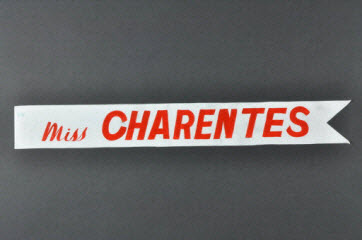
scarf 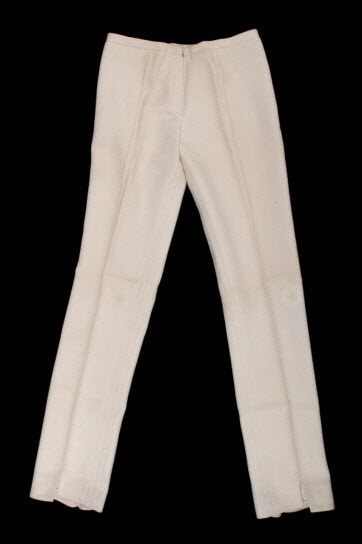
pants 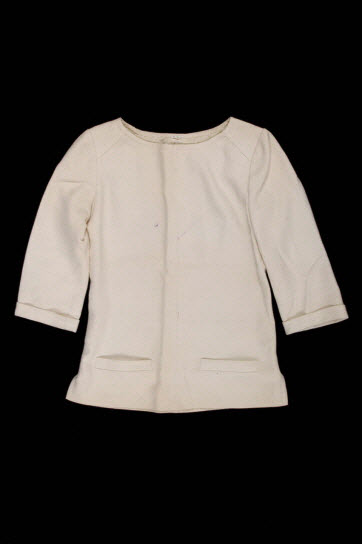
jacket
Gods of the Stadium
Top athletes have long since joined the ever-expanding ranks of celebrities. They even rank among the French public’s favorite personalities, as evidenced by judoka David Douillet’s first-place finish in 2016—his sixth consecutive year at the top.
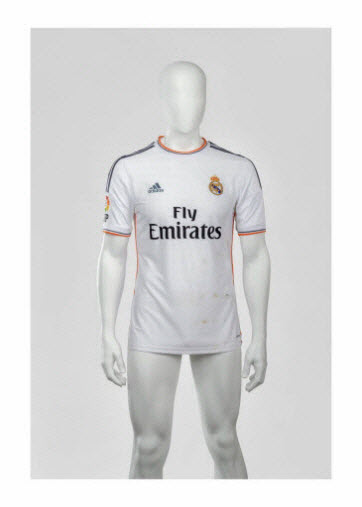
Professional soccer players, adored by fans, are gods in shorts and jerseys emblazoned with sponsors’ logos. In the eyes of fans, their personal belongings are as precious as saints’ relics. That is why, in 2015 and 2016, as part of a study on soccer fandom in Europe and the Mediterranean, the Mucem acquired five jerseys worn in competitions by legendary players: Cristiano Ronaldo, Alfredo Di Stefano, Diego Maradona, Michel Platini, and Zinédine Zidane. The latter jersey was reportedly even in Lilian Thuram’s possession before being resold by a specialist dealer. Items that once belonged to celebrities do not, in fact, hold only symbolic and “religious” value. Their financial value is far from negligible…
In 2017, this theme was explored in the exhibition “Nous sommes Foot,” presented by the Mucem.
You’ll love my merchandise, and you’ll empty your bank account: the value of the cult item
For the past twenty years or so, sociologist Gabriel Segré has been studying the world of fans. The monetary value of celebrity “relics” has not escaped his notice. In his book *Fans of… Sociology of New Contemporary Cults* (2014), he explains that while a celebrity is still alive, fans often seek out, acquire, and collect a multitude of objects, whose symbolic and sentimental value is sometimes priceless. As soon as the star’s death is announced, these items multiply and the market experiences strong growth: the number of items entering circulation increases, along with their market and symbolic value.
Market Economy and the Star System
In our consumer society, celebrities and their images are meant to be sold, bought, and consumed. Reproduced in the thousands, they give rise to “merchandise” in the truest sense of the word: derived from the star, yet lacking the aura of an authentic relic. These objects are nonetheless desirable. For a relatively modest sum, they allow us to bring celebrities into our daily lives. Doesn’t the British royal family have tea with us when we take a sip from a mug celebrating the wedding of Charles and Diana or that of William and Kate?Don’t we feel the presence of the Beatles in our car when the four mascots bearing their likenesses nod their heads to the beat of our car stereo?
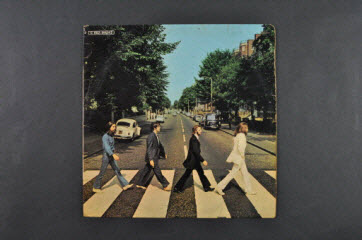
33 rpm record - Abbey Road / The Beatles 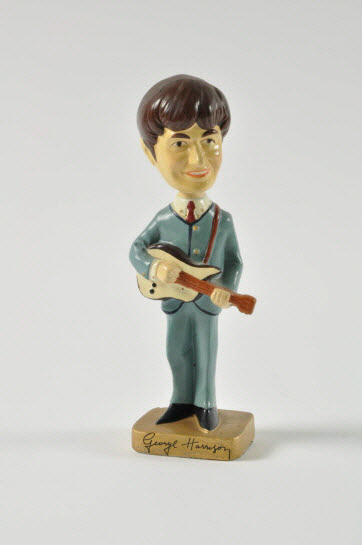
figurine 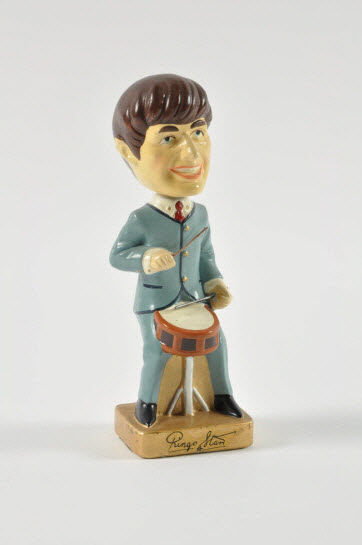
figurine 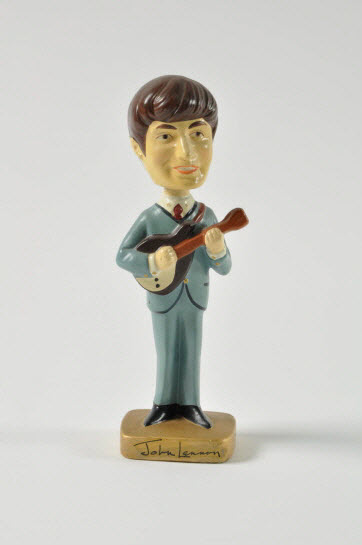
figurine 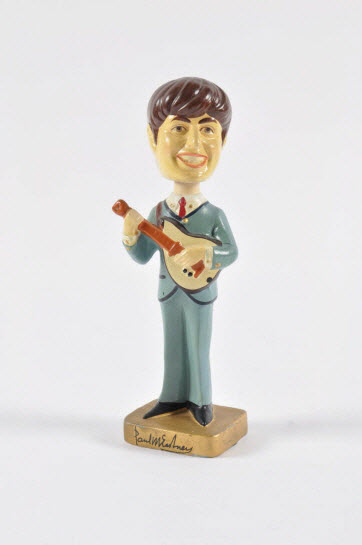
figurine
Some artists recognized the commercial power of their persona very early on. Claude François, who died in 1978, was among the first to tap into the celebrity market. As a result, every new member of the Claude François For Ever club received, along with their membership card, a small piece of fabric cut from one of his stage costumes. Cloclo’s voice still resonates, even after his death, in fans’ living rooms, thanks to the vinyl records and CDs that have been released continuously for nearly forty years. His captivating scent can create the illusion of his presence for anyone who buys “Eau noire,” a fragrance created by the singer and sold since 1976—well after his death. Just as Catholics carry medals of saints with them, Cloclo fans also have the opportunity to purchase a medallion bearing the image of their idol…
We could mention others (T-shirts, posters, plaster casts to decorate yourself…)—the Mucem’s collections are brimming with objects representing the artist, thanks to a survey conducted between 1979 and 1980 on behalf of the museum by the Center for French Ethnography among his grieving fans. The museum could even continue to expand its collection: the market for memorabilia and merchandise is so thriving! Not a year goes by in France without items bearing the Claude François name being offered for sale…
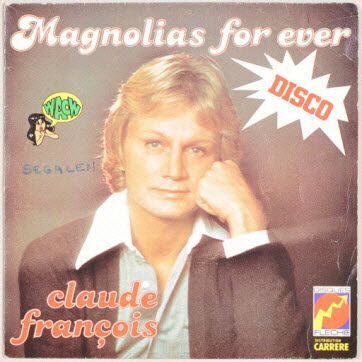
45 rpm record - Magnolias for Ever 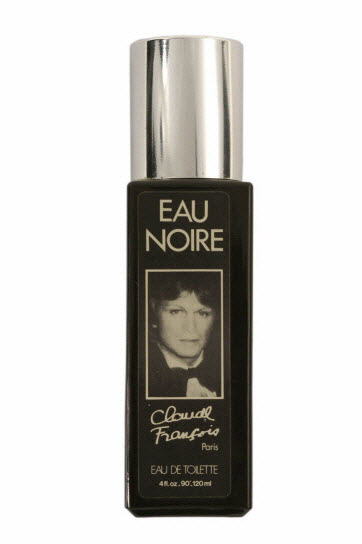
perfume bottle - Black Water 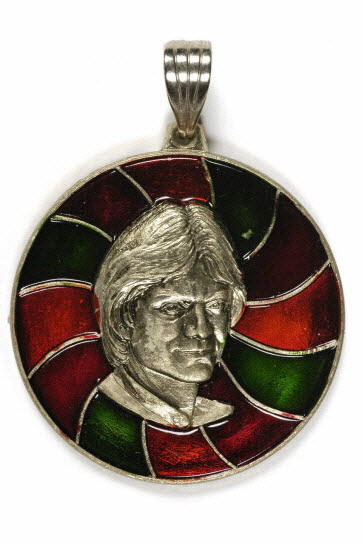
MEDAL 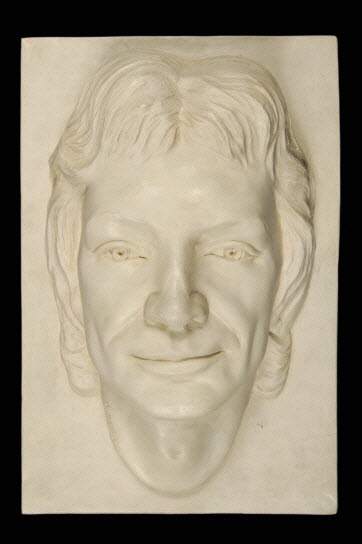
PROFILE
The Value of Authenticity
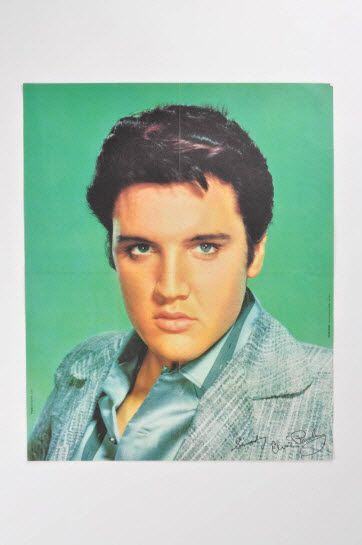
Hanging an Elvis Presley poster (2001.69.17.132) in your bedroom may certainly give you the illusion of waking up next to him every morning, but nothing beats—when it comes to imagining yourself embodying the power and aura of a celebrity— an object that once belonged to him, that he touched, “charged” with his power. And nothing better guarantees that authenticity than a signature. Such is the case with the jacket by New York graffiti artist JonOne, which also features the famous character in a top hat that has become his emblem. Or take the boater hat belonging to singer and actor Maurice Chevalier, signed and inscribed “To the Musée de la Chanson—With all my heart—Maurice Chevalier—1965.” This hat, in fact, carries profound symbolic value: the boater was the accessory that Maurice Chevalier never parted with throughout his entire career. A figure wearing a boater hat in a photograph or in a caricature was immediately recognized by everyone as that of the immortal performer of “Prosper (Yop la boum).”
Although the postcard and greeting card—each bearing the autograph of Johnny Hallyday and the other of Sheila, and sent to Henri Leproux, the owner of the Parisian venue Golfe Drouot—only briefly passed through the hands of the two yéyé singers, they nonetheless hold great power: that of having been chosen above all others to be sent to a friend. And the “Cataposte” by graffiti artist Psykoze—a “ghetto blaster” (the iconic cassette radio of the hip-hop movement, often seen with groups of street dancers) decorated by the artist in 1985—is doubly “loaded”: it bears the signatures of celebrities from the rap and graffiti scenes, including that of Joe Starr, the charismatic singer from NTM.
In the absence of a signature—which serves as a guarantee of authenticity—the fact that an item is given or sold directly by a celebrity attests to its “sacred” nature. This is the case with this architectural model, which was donated to the Mucem by producer Jean-Claude Camus and Johnny Hallyday. It depicts the stage set for the “stadium tour,” a series of concerts the singer performed in 2003 to mark his 60th birthday. Finally, if there is no proof from the celebrity himself that an object belonged to him, there is still the expert’s certificate. This practice, common in the world of fine arts, has a long history in the market for saints’ relics. Many Catholic objects are thus accompanied by a wax seal and a document certifying their authenticity. Tellingly, these documents are called “authentications.”
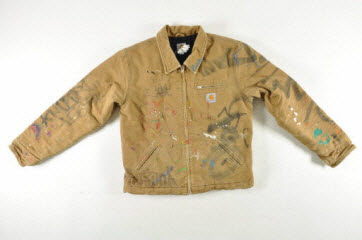
jacket - Multiple brands 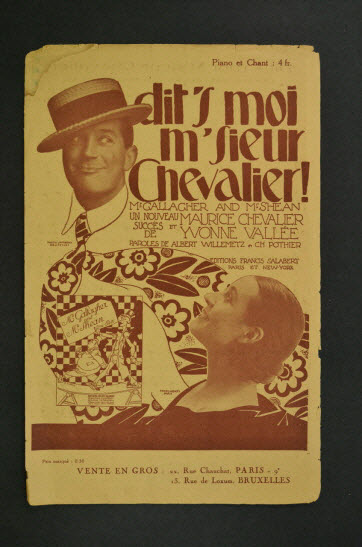
sheet music - Tell me, Mr. Chevalier! 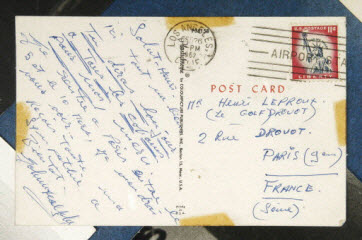
sign 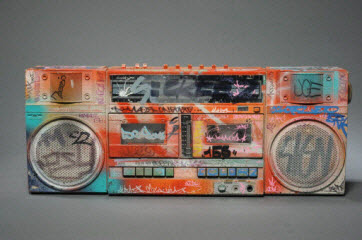
radio station - Cataposte 
architectural model authentic reliquary 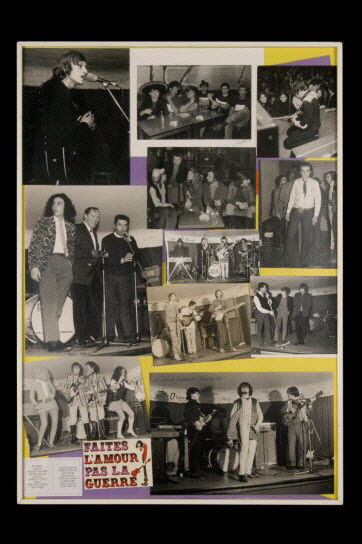
sign 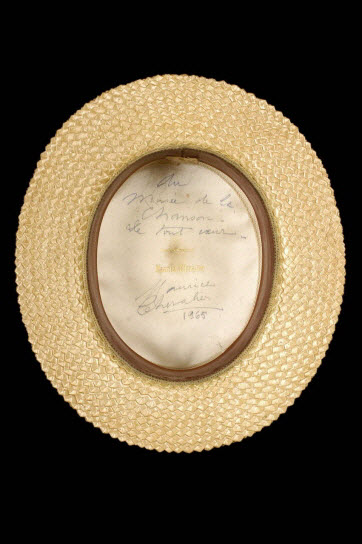
boating hat
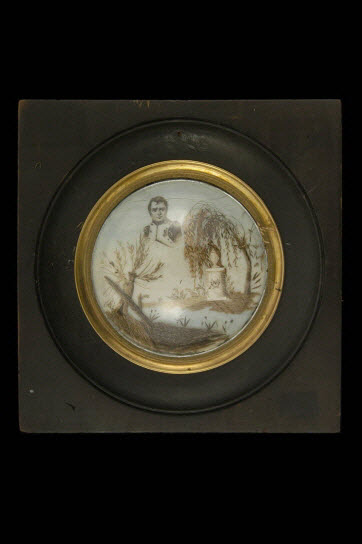
Ultimately, more than the proven authenticity of a relic, what gives it its power is the faith its worshipper has in it. There is no evidence that this commemorative portrait made of hair consists of Napoleon’s own hair (1986.18.8). On the reverse side of this portrait of the emperor is the inscription “DENOYEL relegae C, C, 1814 souvenir de l’île d’Elbe,” which seems like very weak evidence compared to a possible DNA test. But if its owner, with every glance cast upon it, felt happier, closer to the great man, protected by him from life’s vicissitudes, isn’t it this belief that, ultimately, gives it its aura, its magic, its power? And if this commemorative painting then finds its way into the collections of a museum like the Mucem, isn’t it thereby further sanctified? After all, designation as cultural heritage is a form of consecration like any other.
Discover more features
Immerse yourself in the vastness of the Mucem’s collections and follow the surprising themes imagined by our curators. Discoveries and a change of scenery guaranteed!
 Discover
Tagging and Graffiti: “Illegal Art” at the Museum
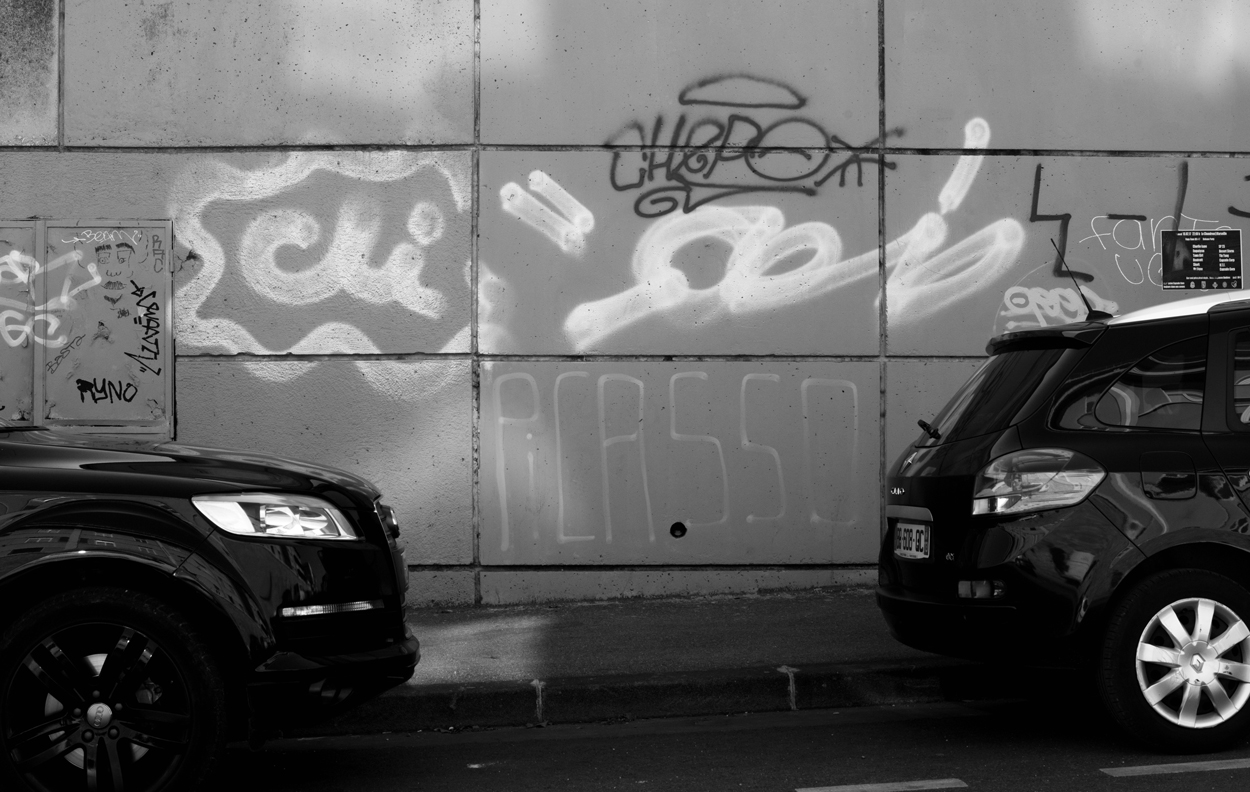
Between 2001 and 2006, Claire Calogirou, a research associate, conducted several field surveys on the topics of hip-hop, dance, tagging, and graffiti. As for graffiti, 958 items were added to the Mucem inventory, representing an impressive collection of graffitied signs, posters, stickers, markers, spray paint cans, magazines, sketches, photographs, videos, and more. This rich body of research offers insights into social relations in urban settings, the issue of the appropriation of public space, and its reclamation through practices rooted in street culture. Discover
Soccer & Identities
A Mediterranean Survey and Data Collection Project
The “Football & Identities” survey and data collection project represents three years of research, conducted from 2014 to 2016, in 10 countries in the Mediterranean region: Algeria, Bosnia and Herzegovina, Spain, France, Israel, Italy, Morocco, Palestine, Tunisia, and Turkey.
Four humanities researchers—Christian Bromberger, Abderrahim Bourkia, Sébastien Louis, and Ljiljana Zeljkovic—sometimes accompanied by a curator —Florent Molle—and photographers—Giovanni Ambrosio and Yves Inchiermann—collected more than 400 objects, approximately 3,000 photographs, and over 6 hours of video footage. Upon their return from the field and after review, the collected objects and photographs will be presented to the Mucem’s acquisitions committees to determine whether they will be added to the public collections and made available to the public. Discover
"Life During Lockdown," the collection
In April 2020, the Mucem launched a major participatory project focused on our lives during lockdown. Many of you took part.
The Mucem has received more than 600 proposals, which are still being reviewed, and some of which will be added to its collections once the review process is complete. A digital booklet lists all the proposals collected through this call for submissions, and here are a few examples: Discover
Watch out for wizards!
Magic and witchcraft: some of us consider them laughable superstitions, others believe in them, and many are undecided. But believing in them has a bad reputation among rational minds: such beliefs were fine for our ancestors—especially in rural areas—or are still acceptable in developing countries—but certainly not here, not today, and definitely not in the city. Yet observing the behavior of our contemporaries shows that scientific progress has not brought an end to mysteries and beliefs, neither in post-industrial France nor elsewhere. Often powerless in the face of misfortune, suffering, and anxiety, people are not satisfied with the answers provided by science. Science leaves a seemingly irreducible space for other principles and other ways of understanding the world.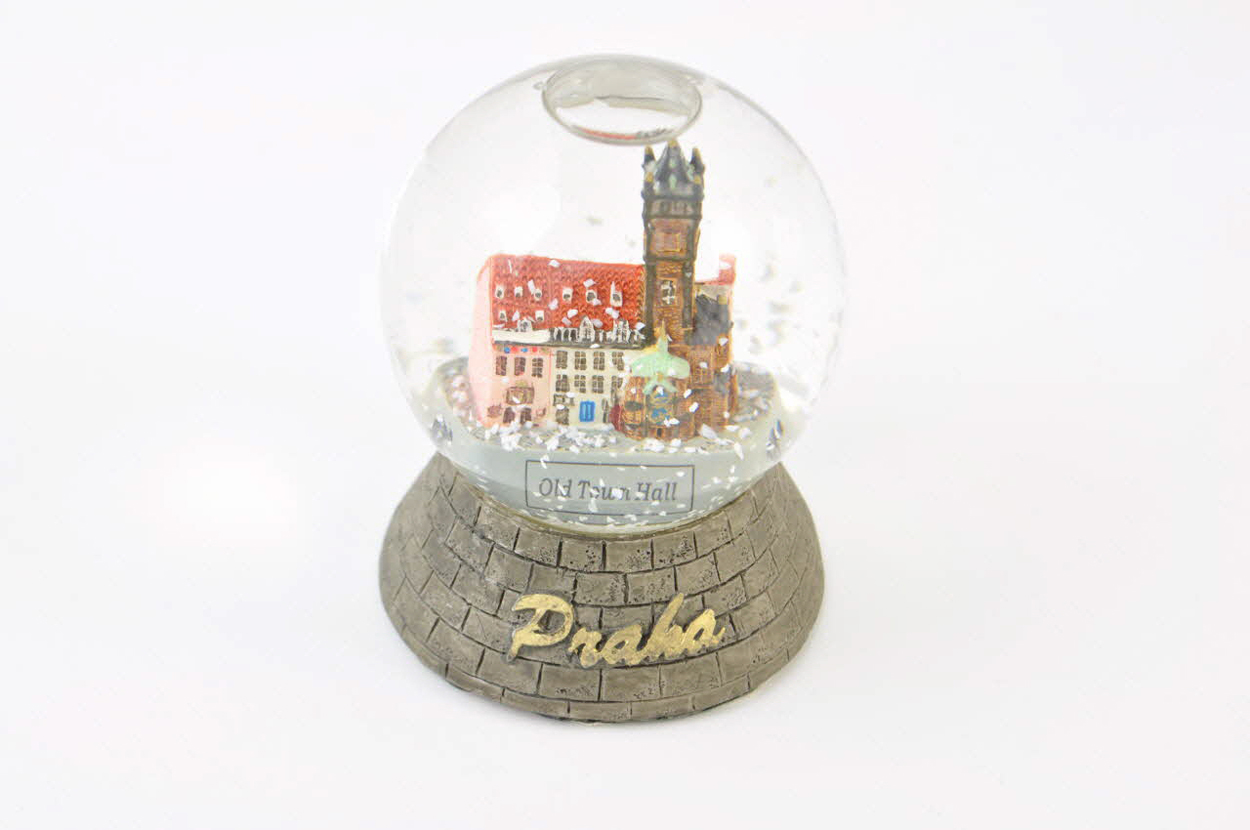 Discover
A Whimsical Alphabet Book!
What are these objects doing at the Mucem?
As its name suggests, the Mucem is a museum of civilizations. In other words, it focuses on everything produced and used by European and Mediterranean societies, from the dawn of humanity to the present day. In the museum’s view, a funerary sculpture from Ancient Egypt speaks just as much about the ritual practices surrounding death during the reign of the pharaohs as a wreath of glass-bead flowers reflects the attachment to the deceased in France during the first half of the 20th century.
Every object, no matter how humble or kitschy, thus bears witness to the society from which it originated. That is why, since its founding, the museum has made it its mission to seek out and preserve a wide variety of possible and imaginable artifacts in order to preserve their memory. In particular, it has worked systematically by organizing annual collection surveys. For a given theme, within a defined geographic area, Mucem researchers gather testimonies, images, and objects. This is how the artifacts below found their way into the national collections.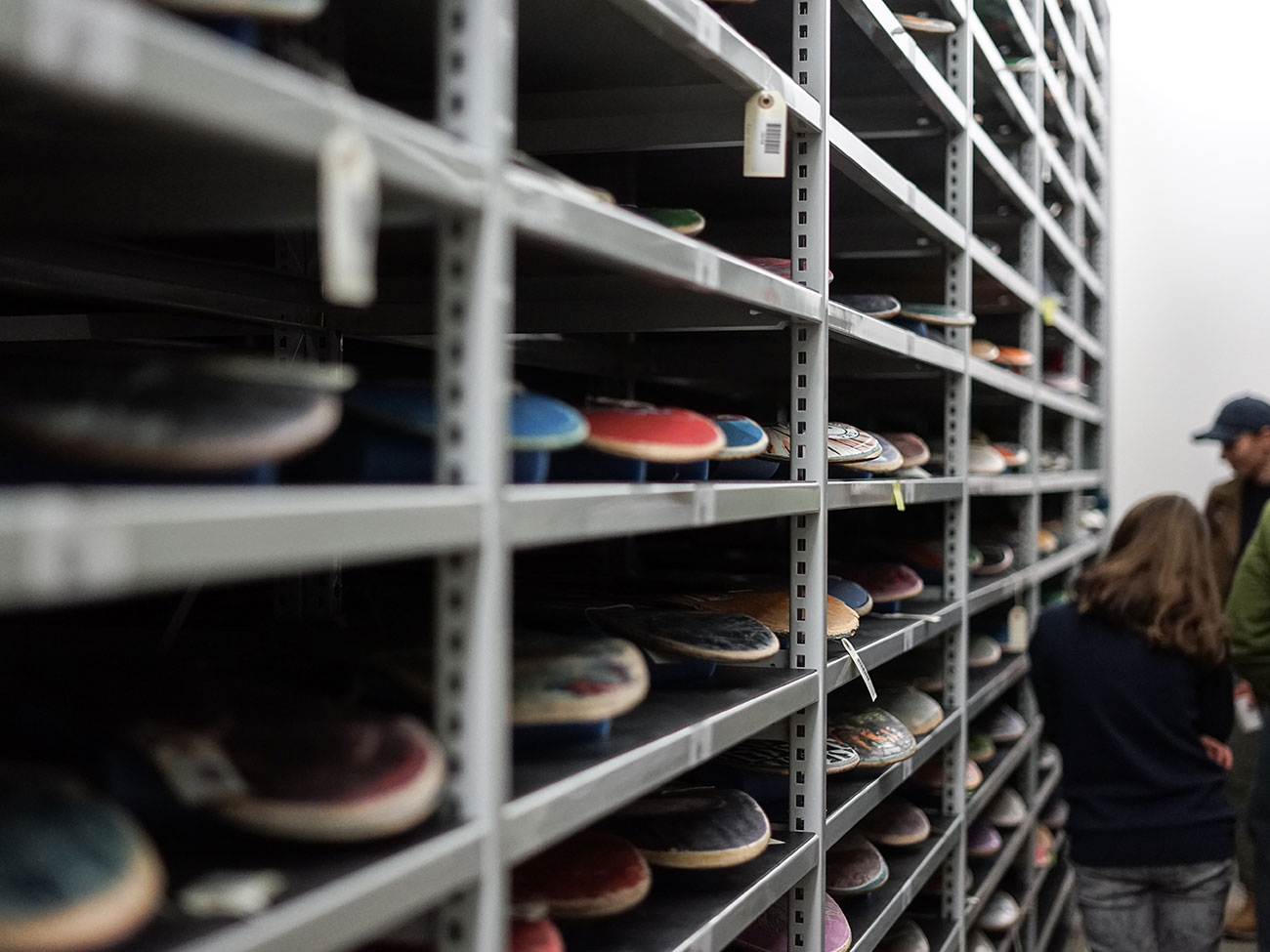 Discover
From California's Beaches to the Mucem: Skateboarding Culture at the Museum
José de Matos, Tony Hawk, Mark Gonzales… these names, which resonate with anyone who has ever skated, belong to legendary skateboarders whose legacies are represented in various forms in the Mucem’s collections. Some of them have donated skateboards, equipment, or memorabilia to the museum, while others are represented through skateboards bearing their names.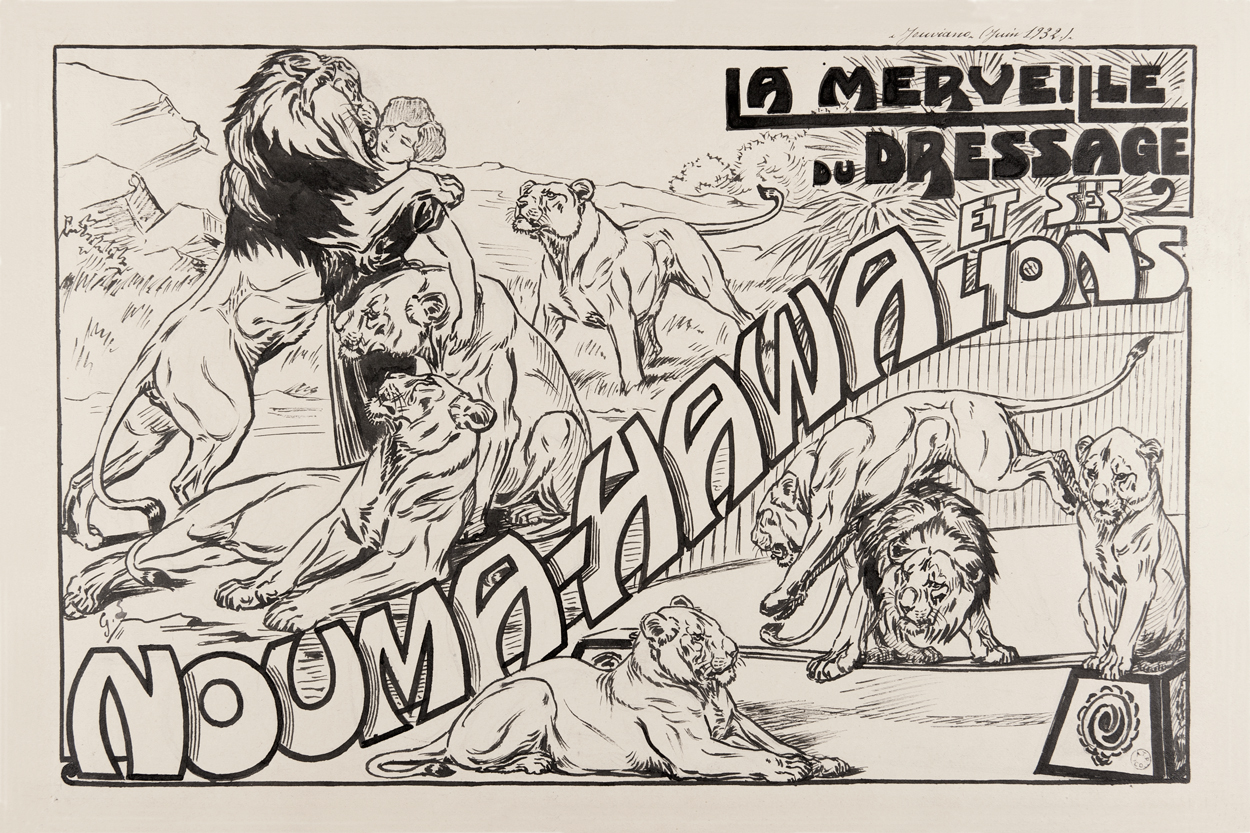 Discover
Draw Me a Lion
Gustave Soury's Animal Art
Gustave Soury (1844–1966) was an illustrator, painter, poster artist, and advertising artist who specialized in animal art for circuses and fairground menageries.
His vast and meticulous body of work, dominated by the figure of the big cats, reflects not only his passion but also our urban society’s fascination with exotic animals, their frightening wildness, and their endearing tenderness.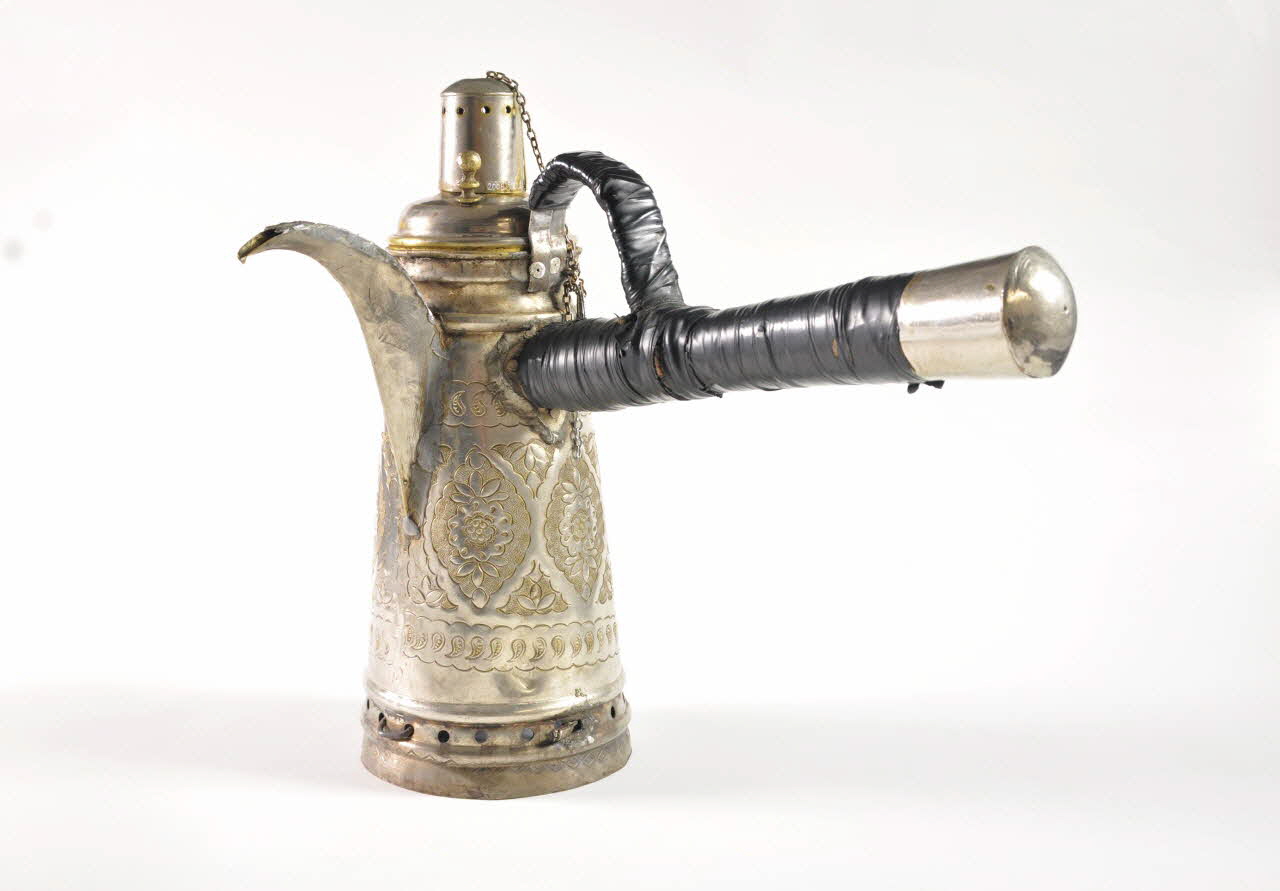 Discover
Coffee
Coffee (qahwa in Arabic, a term also used to refer to wine) reached us via the Arab and Ottoman worlds. From the highlands of Abyssinia, where coffee cultivation is documented as early as the 12th century, coffee crossed the Red Sea to be first cultivated along the coast of “Happy Arabia” (present-day Yemen) and then in the tropical climates of the territories of the great colonial empires beginning in the 17th century. Called the “devil’s drink” because of the black color of its grounds—in which people believed they could read the future—coffee was at times discredited by doctors for its harmful effects on health (it was considered an unnatural and addictive beverage).
Today, coffee is the second most widely consumed beverage in the world after water, but it still competes with tea.
The Mucem’s extensive collections related to coffee illustrate the various ways this beverage has been prepared and consumed since the 18th century, both at home and in public spaces. They also highlight how cafés have become places of social interaction.