Surveys and Data Collection
What is it?
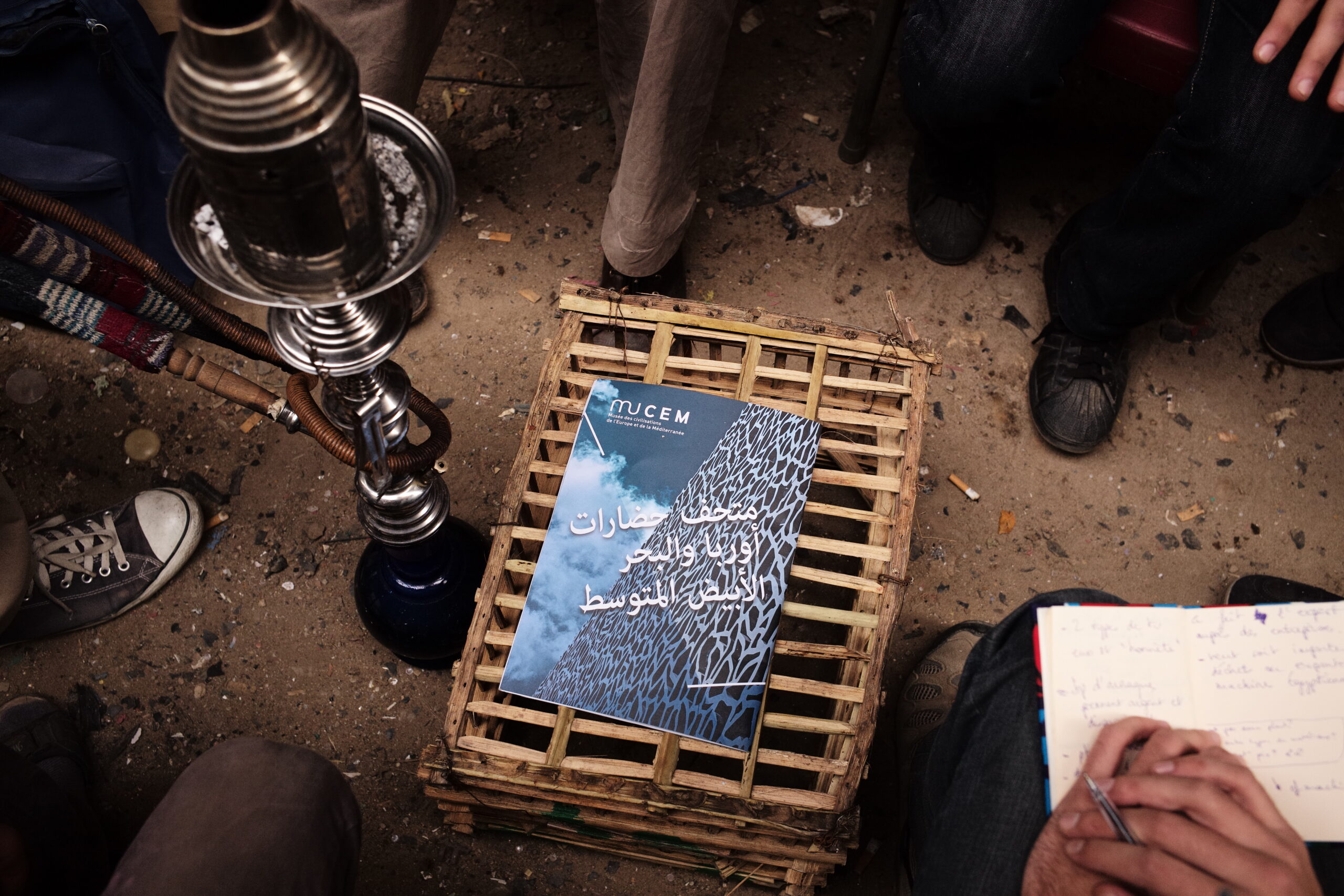
The collection of contemporary artifacts draws its methodology from ethnographic fieldwork. The process involves observing a social phenomenon and gathering objects and testimonies directly in the field, which—if appropriate—will be added to the museum’s collection after selection. The objects are thus contextualized through documentation that combines field collection materials (interviews, field notes, primary data), descriptions and analyses of the sources, and explanations of the research process and its objectives.
This approach is characteristic of social history museums, which aim to preserve works that are still underrepresented in the museum field but that can reflect the lives of communities as closely as possible from the perspective of those directly involved. In the 2000s, research and collection efforts contributed to the scientific foundation of the Mucem, then in its early stages, with the launch of new programs on a variety of themes such as carnivals in Europe, the history and memories of AIDS, changes in gender-related rituals, urban cultures of tagging and graffiti, skateboarding, amplified music, and more.
These initiatives have been ongoing since the Mucem opened in 2013, with the goal of updating and enriching the historical collections with a Mediterranean perspective, highlighting major contemporary issues (migration, the environment, gender, and issues of identity and heritage memory) and to describe movements and exchanges on a Euro-Mediterranean scale. These projects bring together experts in the field and on the subjects under study with the conservation team responsible for the museum’s collections.
The collection of this data is accompanied by a reflective analysis of the implementation of the collection process and post-collection processing:
- Research-Museum Center (Mucem-Idemec): Seminar on “Ethnographic Collection in Social History Museums ” (2015–2018)
- In 2023, launch of the Collectology Workshops at MucemLab
In the field, ongoing fundraising efforts
The Mucem continues its policy of conducting field research to help foster a better understanding of the world in which we live today. As such, it carries out several ethnographic research programs in Europe and the Mediterranean, sometimes in partnership with regional, French, or international research institutions.
These investigations are accompanied by the collection of contemporary cultural heritage; they gather and document sets of both tangible and intangible objects that bear witness to social phenomena. These objects—some of which may become part of the museum’s collections—never arrive on their own, but are accompanied by a full set of supporting materials (films, photographs, interviews, archival records) that make it possible to trace their history, production and consumption techniques, uses, and representations.
Past Surveys
2023–2024: “The Making of Visual Art ‘in Exile’”
This study examines the unique aspects of artistic creation in exile in France. It comprises three parts: the conditions under which artists at risk are received; the evolution of the creative process in practice and in the studio; and the question of evidence—or how art documents the injustices committed in the country of origin.
Research conducted by Adélie Chevée (Mucem/SoMuM-Mesopolhis).
2021–2023: “Objects of Resistance and Solidarity in Palestine”
Conducted as part of Marion Slitine’s (Mucem/EHESS) research project at the Mucem, “Urban Creativities in the Arab Mediterranean (Palestine, Morocco): An Ethnography of Artistic Practices in Public Space,” this data collection focuses, on the one hand, on the circulation of symbols of resistance in everyday objects and popular culture, and, on the other hand, on the processes of museification and commodification of street art and graffiti, as amplified by the political tourism phenomenon of “street art on the wall.”
2022: “Olive-Growing Heritage in Portugal”
Collection of olive-related artifacts in Portugal, particularly in the northern half of the country, where olive oil production has remained relatively traditional and where olive trees are not cultivated in an ultra-intensive manner, unlike in the southern part of the country.
Coordination: Édouard de Laubrie (Mucem). Fieldwork in Portugal with Clara Saraiva (University of Lisbon, Portuguese Anthropological Association).
2016–2023: “Migrant Returns in the Mediterranean”
Launched in 2016 with a series of surveys conducted in France and Algeria, drawing on the Mucem archives, the research was expanded to include a study of memorial journeys to the island of Procida, followed by fieldwork in Christian villages in Upper Galilee and Thessaloniki among individuals working to revitalize diasporic memories.
Coordinators: Camille Faucourt (Mucem) and Giulia Fabbiano (Idemec). Fieldwork conducted in Greece, Israel, Italy, and Macedonia by Guillaume Javourez (TELEMMe), Adoram Schneidleder, Lubja Scudieri, and Pierre Sintès (TELEMMe).
2020–2022: Crowdfunding Campaign “Life During Lockdown”
A direct call for submissions was launched, inviting residents to share a personal account of the lockdown related to the COVID-19 pandemic through an object accompanied by a description.
Coordination: Émilie Girard, Aude Fanlo, and Juliette Baud (Mucem). Post-data-collection sociological analysis by Simon Le Roulley (Mucem/SoMuM).
2019–2021: “Roma Traditions and Crafts”
An ethnographic study of Romani culture through the lens of trades and skills, their transmission, circulation, and reinvention. This research and data-collection project complements a collection of French and Romanian materials held by the Musée de l’Homme.
Coordinators: Julia Ferloni and Françoise Dallemagne (Mucem), Élise Olmedo (Mucem/LabexMed), Alina Maggiore (Mucem/Idemec). Fieldwork was conducted by members of the expert committee preparing the “Barvalo” exhibition: William Acker, Yahya Al Abdullah, Camo, Marina Csikos, Bénédicte Florin, Lise Foisneau, Pascal Garret, Gabi Jimenez, Jean-Pierre Liégeois, Valentin Merlin, Cristian Padure, Yoanna Rubio, and Sasha Zanko.
2020–2021: “Migrant Returns in the Mediterranean”
Thematic and Geographical Expansion of the Research Project “Returns: Politics, Poetics, and Practices”: Memorial Journeys to Procida, the Case of Christian Sites in Galilee, and the Case of Thessaloniki.
C. Faucourt (Mucem) and G. Fabbiano.
2019–2020: “Voices on the Walls” — “Protest Slogans and Graffiti: Voices on the Walls”
This study has two main components: one focuses on the poetics and material manifestations of protest slogans and graffiti (Tunisia, Marseille); the other examines prison graffiti in the historic Baumettes prison building in Marseille (in partnership with the Inventaire Région Sud).
Coordinated by: Jean-Fabien Philippy (Mucem).
Research conducted by Zoé Carle (Mucem/LabexMed).2019–2020: “Crossing the Alps: Figures of the Crossing, Past and Present”
A sociological study conducted in the Briançon region on contemporary border crossings by people who, at the time, were primarily coming from West Africa via Lampedusa and seeking to reach France to file an asylum claim.
Raphaël Botiveau (Mucem/EHESS-CNE).
2019: “URBAM—Legality and Illegality in Street Art”
Continuation of the “Tags and Graffiti” study in Italy and Marseille, focusing on the shifting boundaries between legality and illegality in street art.
Research project by Sabrina Dubbeld (AMU-LESA/Mucem).
Coordinator: Hélia Paukner (Mucem). Researchers: Loïc Le Bouar, Claire Calogirou, and Jean-Guy Solnon.2017–2019: “Pharaohs: Commercial Icons and National Heroes”
As part of the “Pharaohs Superstars” exhibition (2020)
Research conducted in Egypt to prepare for the “Pharaohs Superstars” exhibition, on how Egyptians popularly appropriate the Pharaonic past: the political, economic, and symbolic implications of the persistence of Pharaonic references in the urban landscape, heritage tourism, education, and everyday consumer products.
Coordination: Frédéric Mougenot (Mucem); fieldwork conducted in collaboration with Mohamed Alaa Sadek.
2017: “Traditional Fishing in the Mediterranean”
Revitalizing small-scale fishing techniques in the Mediterranean to address global challenges (ecological changes, declining fish stocks, the globalization of production chains, etc.).
Fieldwork conducted in Greece and Tunisia by Édouard de Laubrie, Yolande Padilla, and Laurent Martin (Mucem); Daniel Faget (AMU-TELEMMe); and Lassaad Dendani and Echi Nour (National Institute of Crafts and Heritage in Tunis).
2017–2020: “Ethnic Jewelry, Identity Jewelry: Contemporary Production and Use of Traditional Jewelry in the Mediterranean”
Expansion of a major jewelry collection (France, the Balkans, the Maghreb) by documenting the reappropriation and circulation of so-called traditional jewelry, as well as the reuse of techniques, forms, materials, and symbols for purposes related to identity or tourism (Tunisia, Egypt, Sicily, Sardinia, and Bulgaria).
Marie-Pascale Mallé, Françoise Dallemagne, and Julia Ferloni (Mucem); Sonia Hamzaoui, Iglika Mishkova, Rebecca Topakian, and Yves Inchierman.
2017–2018: “Late Season in the Mediterranean”
As part of the “Agriculture and Food” cluster and the developments in the semi-permanent exhibition “Ruralities,” this project focuses on the development of intensive agriculture in the Mediterranean region and migration linked to seasonal work. In this context, ethnographic studies of several families in the Gharb and Rif regions of Morocco reveal the effects of seasonal migration on housing, land use, and marital and family structures.
Emmanuelle Hellio (postdoctoral researcher at LabexMed-LEST/Mucem).
2015–2016: “The Imagery of Martyrs in a Violent Context”
Research conducted in southern Lebanon during commemorations organized by Hezbollah, as well as among cultural leaders—including museum directors, communications professionals, filmmakers, artisans, supporters, and Scout organizations. These studies document the construction and circulation of codes and references in the representation of the martyr, as seen in the staging of parades, through gestures and clothing, and in the religious and activist objects collected (pennants, banners, merchandise, etc.).
Kinda Chaib (postdoctoral researcher at LabexMed-Iremam/Mucem).
2014–2015: “The Economy of Leftovers in the Mediterranean”
Analysis of social processes related to waste management (sorting, collection, recovery, repurposing, recycling, etc.) and the associated forms of organization, values, and flows.
Coordinators: Denis Chevallier (Mucem) and Yann-Philippe Tastevin (Mucem-CNE).
Fieldwork in Egypt, Tunisia, Morocco, Italy, Turkey with researchers Bénédicte Florin and Pascal Garret, David Degner, Lucile Gruntz (Mucem/LabexMed-LPED), Stephanos Mangriotis, Natalia Duque, Philip Furniss, and Margaux Frasca, with the collaboration of artists Batchou and Franck Pourcel.2014–2016: “Soccer & Identities”
Representations and Practices of Fan Culture and Soccer in Europe and the Mediterranean. The aim is to observe how identity-based affiliations (cultural, urban, migrant, political, religious, gender-based, class-based, etc.) linked to soccer are formed and experienced, and to document their tangible and intangible manifestations.
Coordination: Florent Molle (Mucem). Fieldwork conducted in 10 countries in the Mediterranean region (Albania, Bosnia and Herzegovina, Spain, France, Israel, Italy, Morocco, Palestine, Tunisia, and Turkey) by Christian Bromberger, Abderrahim Bourkia, Sébastien Louis, Ljiljiana Zelkovic, Giovanni Ambrosio, and Yves Inchierman.
2014: “Tags and Graffiti”
Between 2001 and 2006, Claire Calogirou (Idemec/Mucem) conducted several research projects focused on hip-hop, dance, tagging, and graffiti.
As for graffiti, 958 items were added to the Mucem’s inventory (graffiti-covered panels, posters, stickers, markers, spray paint cans, magazines, sketches, photographs, videos, etc.).
2013–2015: “In Vivo In Vitro — The Mediterranean Cork Oak”
The cork oak, a species of Mediterranean-Atlantic origin, is found in one or more regions of France, Tunisia, Italy, Algeria, Spain, Morocco, and Portugal. The primary objective of this program is to study, in situ, the tool-based practices common to culturally diverse groups of cork harvesters, in order to identify the similarities and differences (consistencies and variations) in the cork harvesting process, and then to collect significant elements of cork-harvesting heritage.
Report by Narjys El Alaoui (Mucem).
2013–2014: “Shared Holy Sites: Crossroads Among the Monotheistic Religions”
In preparation for the exhibition *Shared Holy Places*, this study made it possible to observe and document the existence of places of worship that serve as venues for encounters, relationships, and exchanges among the Abrahamic religions in the Mediterranean.
Coordination and field research: Manoël Pénicaud and Dionigi Albera (Idemec).
Collection life
View all articles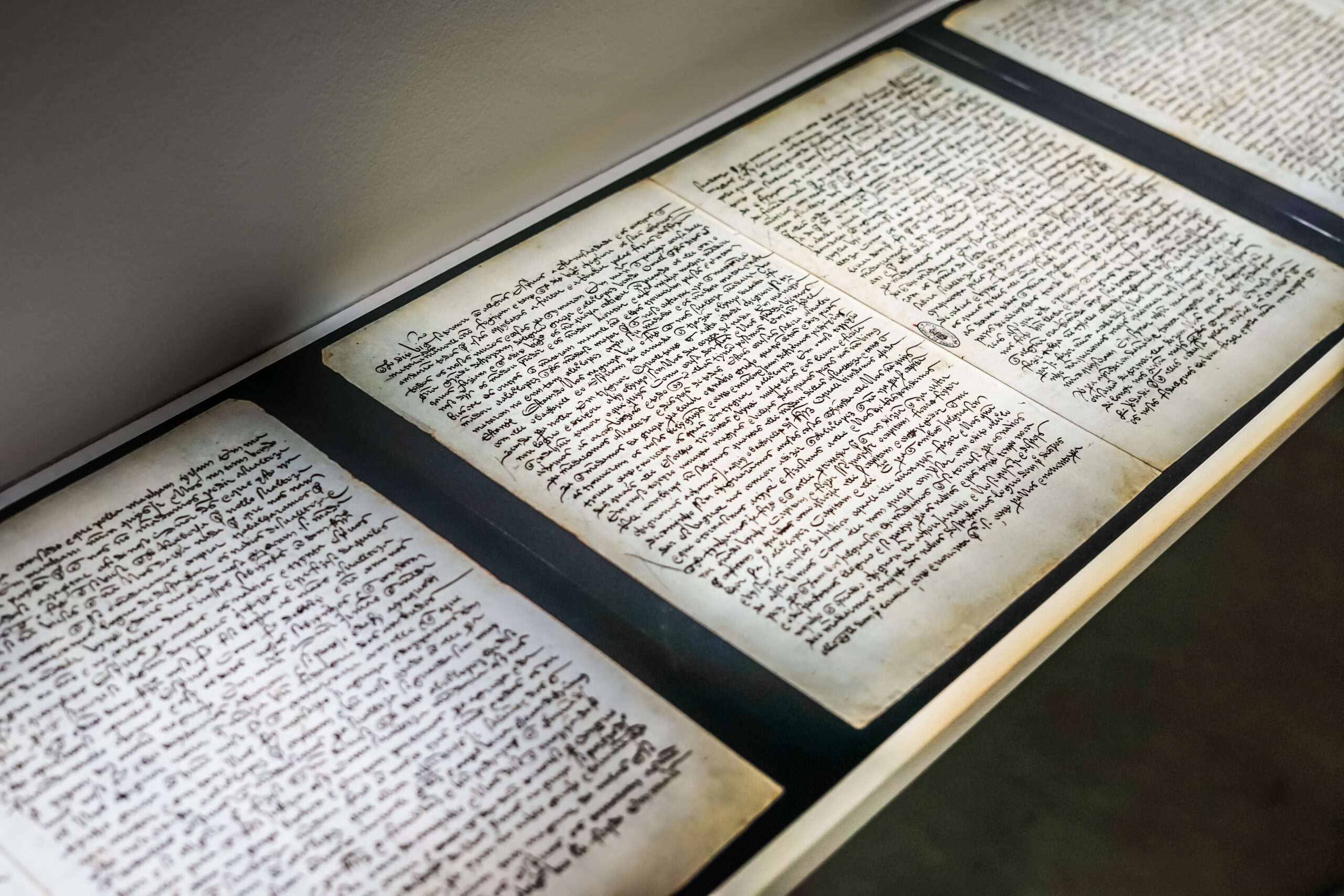
The Mucem Archives
The Mucem archives contain nearly one linear kilometer of paper documents, a collection of more than 100,000 postcards, 79,000 sound recordings, and nearly 4 TB of audiovisual recordings. These collections are divided between public and private archives. Here’s how to navigate them!
History of the Collections
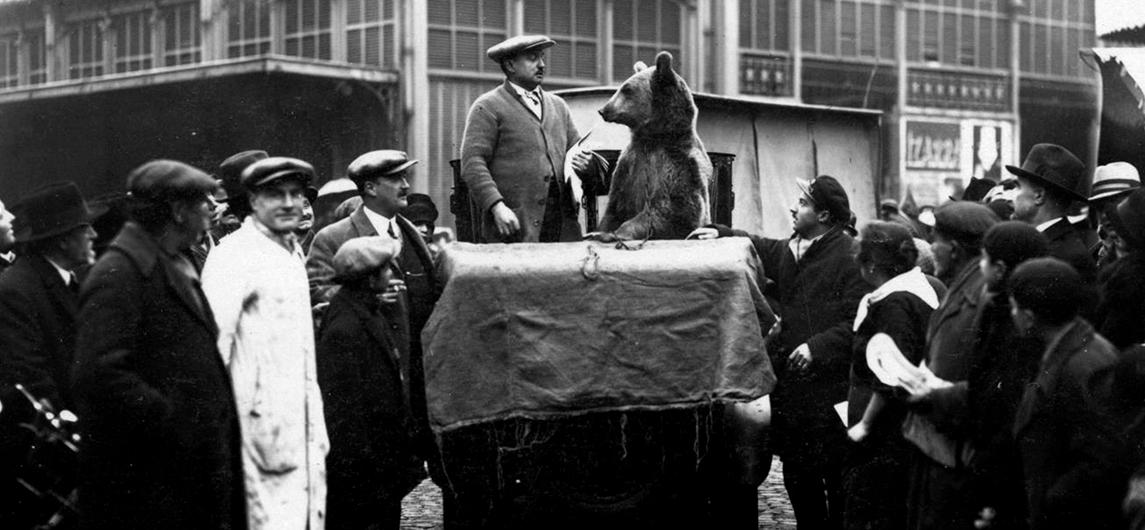
Although the Mucem opened in Marseille in 2013, its origins actually date back to the 19th century. Today, it manages a diverse and unique collection, comprising more than 250,000 objects, 350,000 photographs, 200,000 posters, prints, and postcards, and 150,000 books, which it continues to expand through an acquisition policy focused on Mediterranean themes, ranging from the Neolithic period to contemporary art.
Loan Request and Work Submission
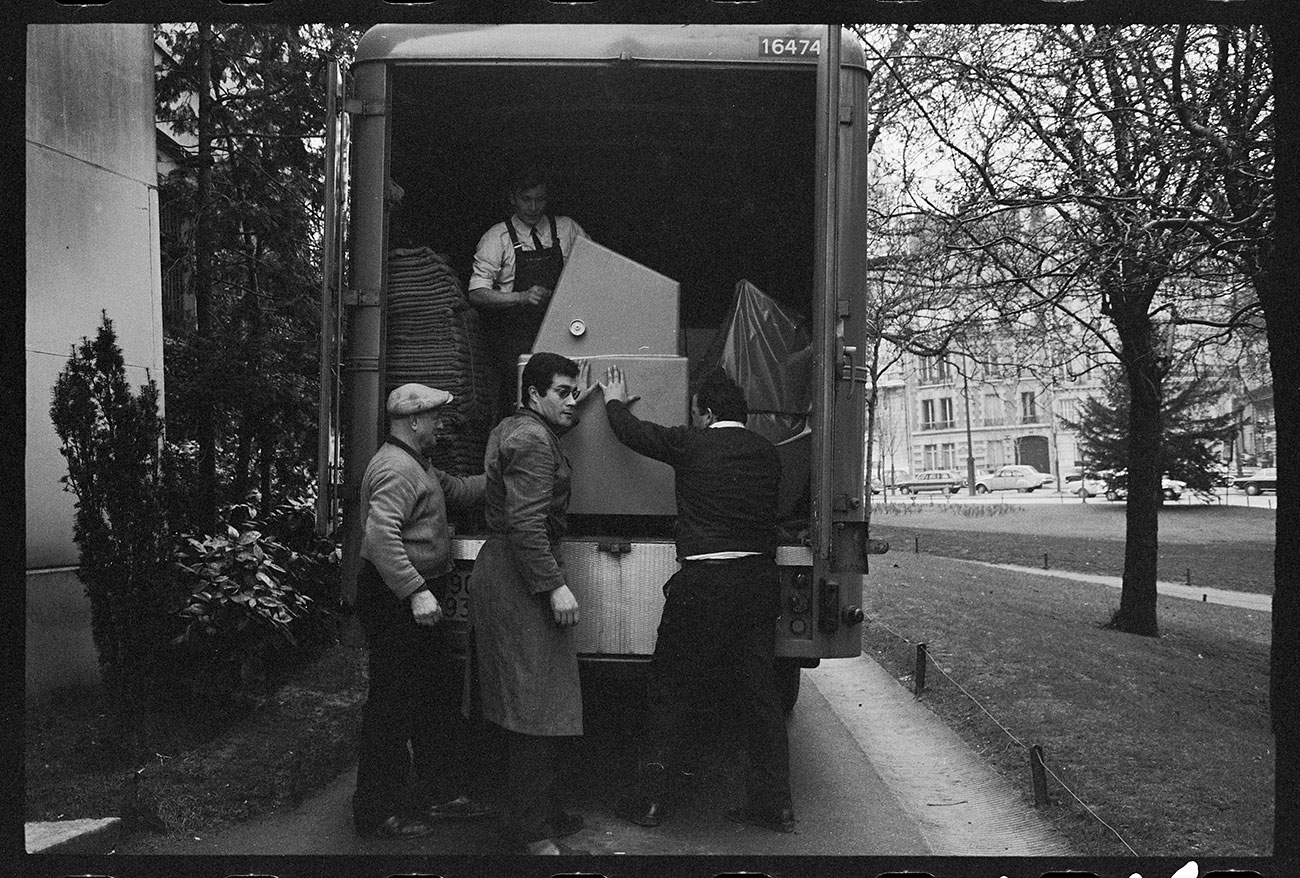
The Mucem holds more than 250,000 French and European ethnographic objects, 350,000 photographs, 100,000 posters and prints, 100,000 postcards, and 80,000 audio recordings covering a wide range of themes and fields. The Mucem provides access to information from its collection management databases, archives, and library through the portal lescollections.mucem.org.
You may contact the scientific directorate to clarify your inquiry before submitting any official loan request.