Restoration of Artifacts for the “Abd el-Kader” Exhibition
Monday, July 11, 2022Each exhibition provides an opportunity to take a closer look at the objects to ensure they are displayed under the best possible conditions.
To this end, the curatorial department of the Mucem’s Conservation and Resources Center enlists the services of conservators certified by the Ministry of Culture.
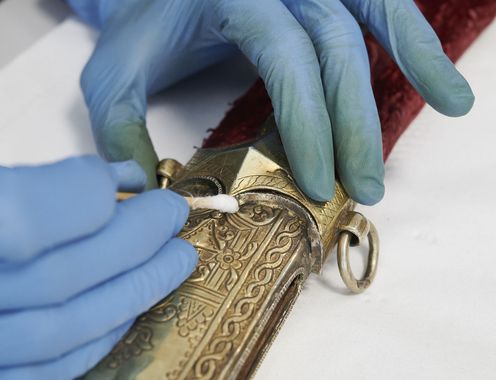
Metal objects are particularly affected by restoration work, as they are prone to soiling (dust clumped together by moisture), which can lead to corrosion (especially of the copper contained in silver). The process also involves removing traces of fingerprints and residues from old cleaning products.
Fanny Dallancourt is a metal conservator with a Master’s degree in Conservation and Restoration of Cultural Heritage (University of Paris 1 Panthéon-Sorbonne). Here, she is working on one of the iconic pieces from the “Abd el-Kader” exhibition, an Ottoman saber known as a “Quilidj” which, according to the tradition of the Count of Bourmont’s family, is said to have belonged to the Dey of Algiers and was presented to the count during the capture of Algiers in July 1830.
The flintlock pistols were first cleaned of dust by gently brushing them with a soft brush, and any old cleaning residue was removed by dry brushing. Corrosion products on the iron were then removed using a fiberglass pen and a micromotor fitted with a stainless steel brush. To protect the iron surfaces of the pistols, the restorer finished the process by applying a layer of microcrystalline wax, which was buffed to a shine with a soft brush after it had dried.
Residue left by previous cleaning products was removed by dry brushing with a metal-tipped brush. The surface was also degreased and cleaned using cotton swabs soaked in ethanol, with any remaining deposits removed mechanically with a scalpel.
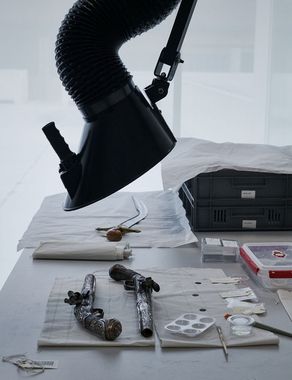
Flintlock pistols, inv. nos. MHFA2013.8.1.1 and 2013.8.1.3. "Quilidj" saber and scabbard, first half of the 19th century, Algeria, inv. no. 2002.82.2.1-2.
Collection news
View all news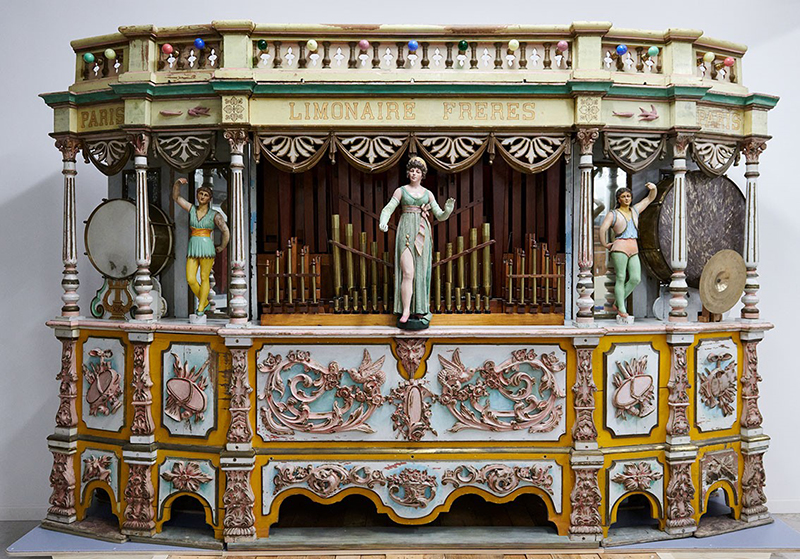
Restoration: Limonaire Orchestrophone
The Mucem houses a significant collection of fairground art that bears witness to the boom in fairs and carnivals during the 19th and 20th centuries, including this 60-key organ made in Paris in 1903 by Limonaire Frères. Restored in preparation for a loan to the Royal Saltworks of Arc-et-Senans for the exhibition *Destins de cirque* (October 24, 2020 – January 9, 2022), it can be (re)discovered in the public storage area of the Mucem’s Conservation and Resource Center during the upcoming European Heritage Days, or during the monthly tours offered free of charge to the public.
Restoration: Virgin of the Immaculate Conception
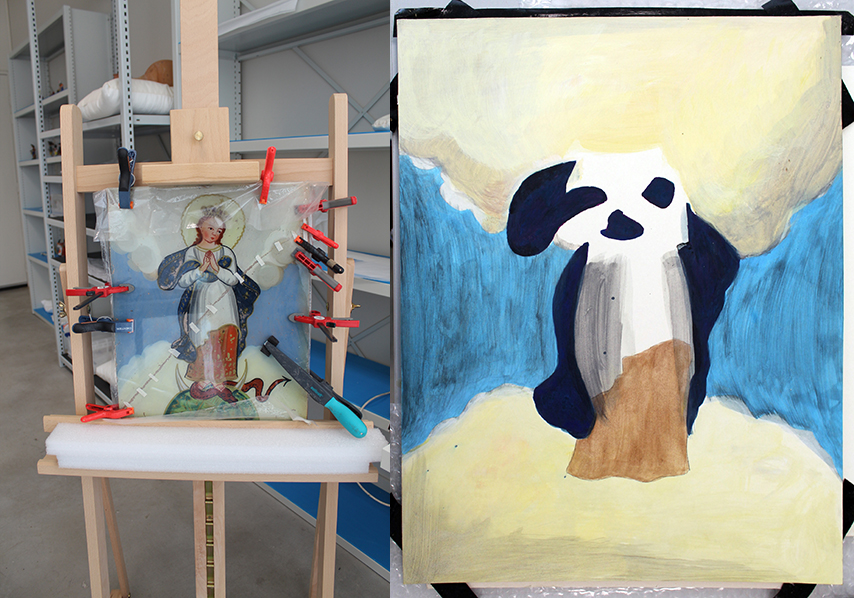
Restoration of a painting under glass for the exhibition “Another Italy”
Temporary exhibitions often provide an opportunity to restore works of art, either to stabilize them in preparation for transport or to make them more accessible to viewers. The painting under glass depicting the Immaculate Conception was thus restored for the exhibition “Another Italy” (Fort Saint-Jean, May 25–October 10, 2022), where it will be part of a collection dedicated to popular piety.
Acquisition: Graffiti Artist Sike
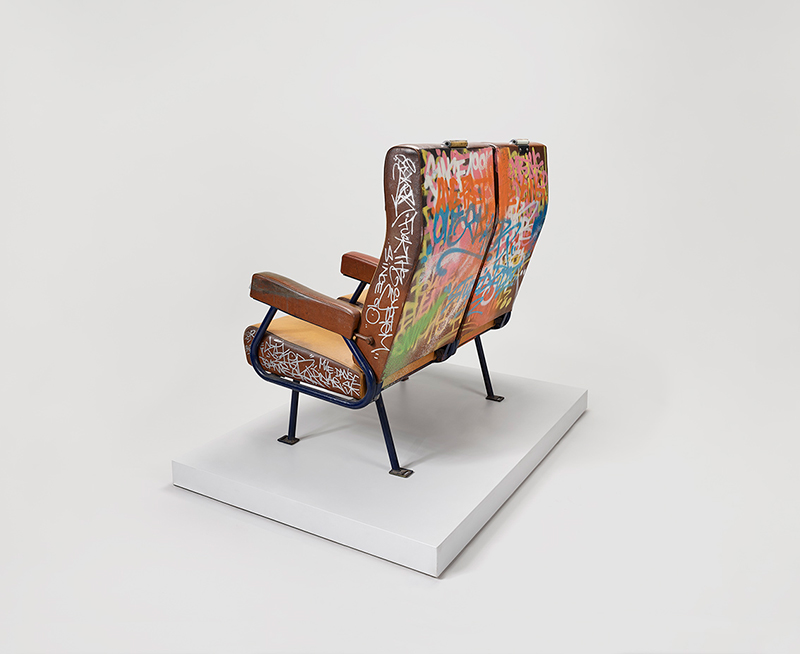
In 2022, the Mucem expanded its collections through the acquisition of works, creative tools, and photographic archives by the graffiti artist Sike. This acquisition builds on the “Graff & Hip-Hop” research and collection project, which has been conducted since the late 1990s by the National Museum of Popular Arts and Traditions, of which the Mucem is the successor.
Acquisition: "I danzatori del crepuscolo" (The Dancers of Twilight) Belt
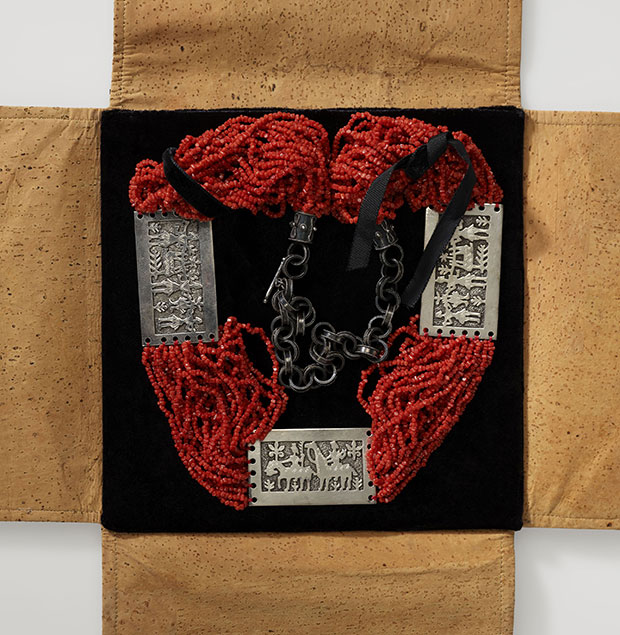
As a continuation of the research and collection project on Mediterranean jewelry conducted in 2018 in Sardinia—where goldsmithing is rich in diverse influences and artisans continue to craft traditional jewelry— the Mucem acquired a piece by Caterina Murino in 2022.
Interview with Pascal Laporte, Vezzoni Agency
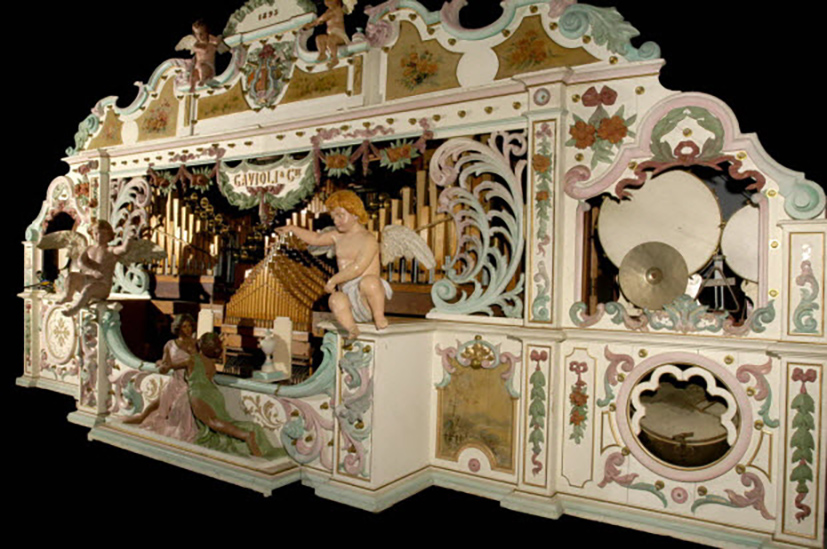
Pascal Laporte, an architect who graduated from the Marseille School of Architecture and the Duperré School of Applied Arts (with a degree in visual arts, specializing in surface design), is a co-founder of the firm Corinne Vezzoni & Associés.
In 2004, the firm was selected to design the Mucem’s storage facilities: the Conservation and Resource Center, located at 1 rue Clovis Hugues in Belle de Mai, opened its doors in 2012. Ten years later, Pascal Laporte reflects on the design of this building.

Acquisition: That Raoul LALA There
The Mucem and puppets share a long-standing love affair. The museum’s storage areas are brimming with them. Since 2021, thanks to the interactive tour created by M@riolab, Raoul Lala has been offering a fun way to explore the Mucem’s puppet collection.
To celebrate this wonderful collaboration between the museum and the famous Marseille puppet, the Mucem decided in 2022 to acquire Raoul Lala. Cyril Bourgois, Raoul Lala’s creator and puppeteer, crafted a replica of his own puppet during a five-day residency at the Mucem’s Conservation and Resource Center.
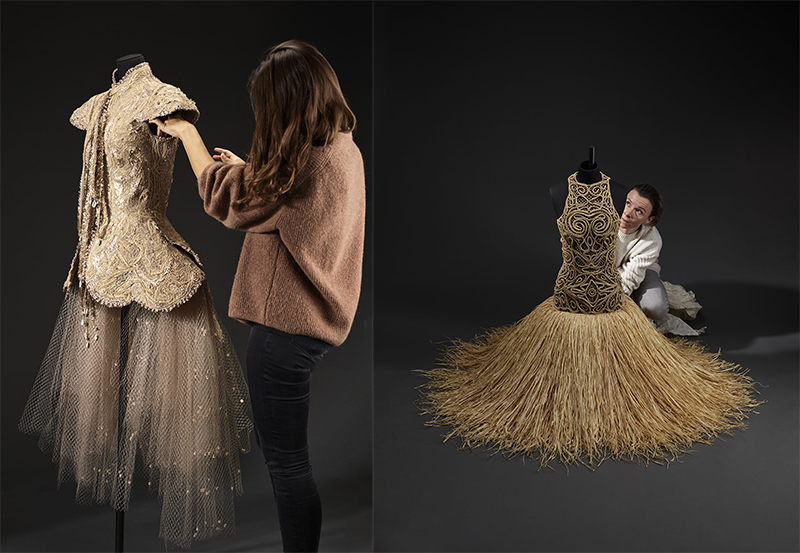
Costume modeling for the "Fashion Folklore" exhibition
The Mucem’s textile collections form the heart of the “Fashion Folklore” exhibition. Traditional folk costumes are juxtaposed with haute couture pieces and works by leading designers. To facilitate this dialogue, the process of dressing the mannequins—that is, placing the garments on mannequins for the exhibition—is an essential and meticulous step.
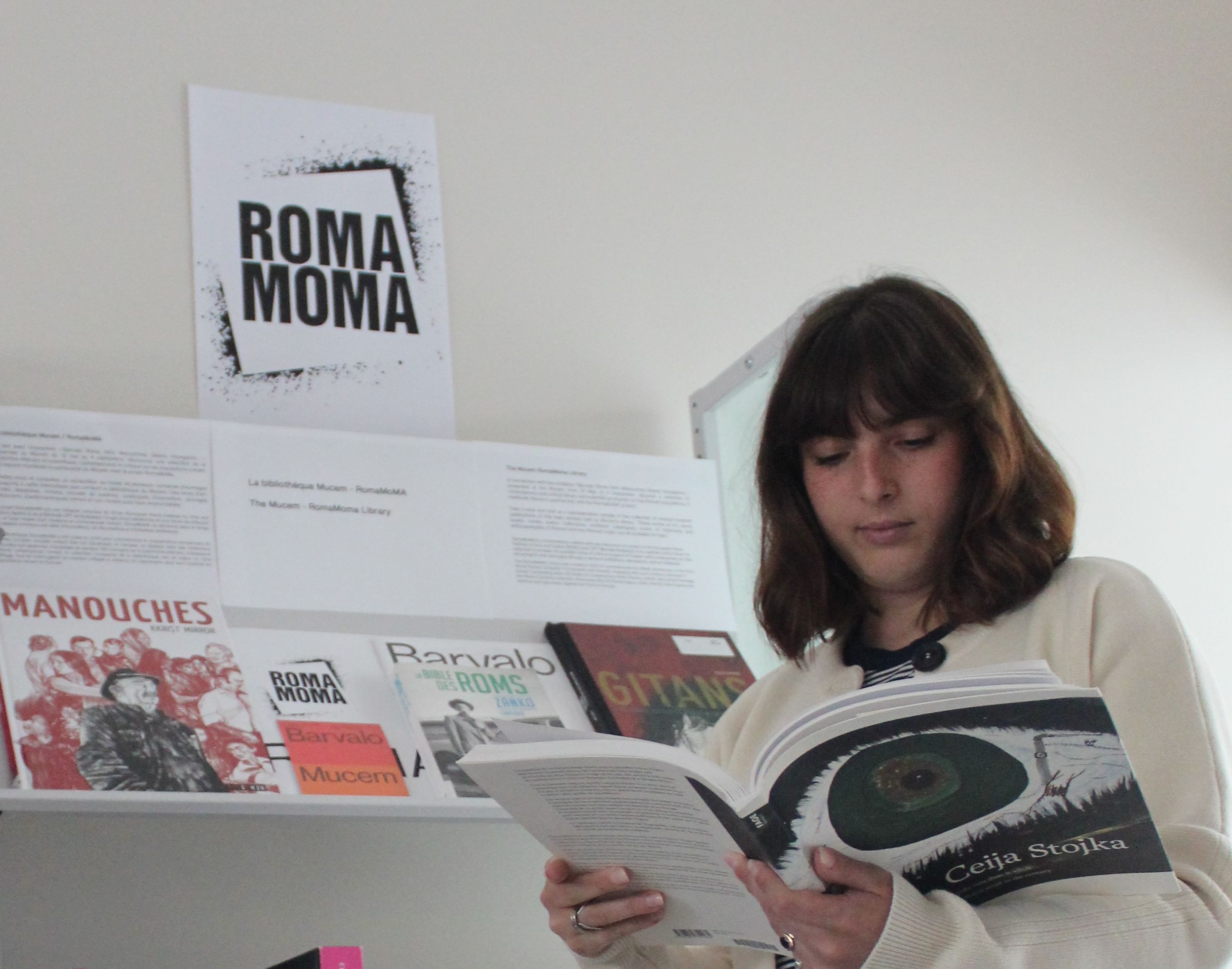
The Mucem / RomaMoMA Library
In conjunction with the exhibition “Barvalo. Roma, Sinti, Manouches, Gypsies, Travelers…” presented at the Mucem from May 10 to September 4, discover a selection of contemporary and critical literary and scholarly works on Romani communities. This space highlights the Mucem’s partnership with the RomaMoMa project.
The RomaMoMA project is a joint initiative of Eriac (European Roma Institute for Arts and Culture, Berlin) and the Budapest Biennale OFF. It serves as a platform and forum for reflection on a future museum of Romani modern and contemporary art. RomaMoMA will unfold over time and across different locations through a series of exhibitions, discussions, and artistic initiatives.
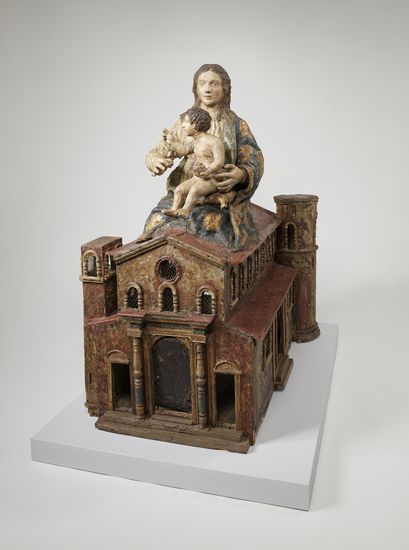
Acquisition: "The Virgin and Child Seated on the Holy House of Loreto"
The Holy House of Nazareth, where the Virgin Mary is said to have lived and where she is said to have received the Annunciation, was an important pilgrimage site in the Holy Land during the Middle Ages. At the end of the Crusades in 1291, it became more difficult for Western Christians to travel there; it was then that its miraculous transfer to Loreto, in the Italian region of the Marche, is said to have taken place.