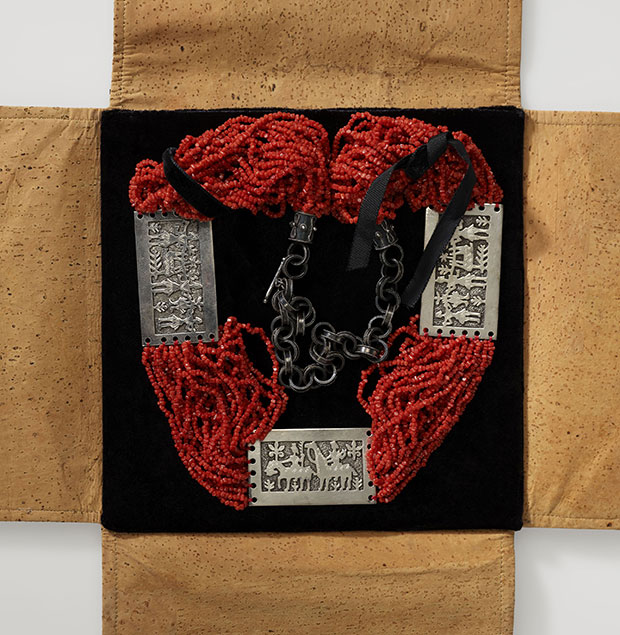
Acquisition: "I danzatori del crepuscolo" (The Dancers of Twilight) Belt
Friday, April 18, 2025As a continuation of the research and collection project on Mediterranean jewelry conducted in 2018 in Sardinia—where goldsmithing is rich in diverse influences and artisans continue to craft traditional jewelry— the Mucem acquired a piece by Caterina Murino in 2022.
Caterina Murino is a Sardinian actress, best known for her role alongside Daniel Craig—aka James Bond—in *Casino Royale* (2006), but she is also a jewelry designer and a passionate advocate for the craftsmanship of her island’s artisans. She has designed a belt made of filigree silver and coral that embodies the very essence of Sardinian silversmithing, blending tradition with contemporary design. To design the scenes on the belt’s three silver plates, Caterina Murino drew inspiration from the “bronzetti”—small statuettes from the Nuragic era discovered during excavations in Sardinia, some of which are housed at the Archaeological Museum of Cagliari. The animals and small figures depicted in these hunting scenes also echo those found on traditional Sardinian rugs, known as tapetti.
Antonio Marogna, a virtuoso self-taught goldsmith, then crafted this belt in his workshop in Alghero, a village in northwestern Sardinia renowned for its coral. In this village, which was long occupied by the Catalans, coral fishing is practiced in a sustainable and ethical manner under the supervision of the Region of Sardinia. Coral, known for its protective properties, continues to be crafted into jewelry and amulets. Together with the “Eye of Saint Lucy”—a seashell lid collected from Mediterranean beaches—it is said to ward off the evil eye and promote fertility. This belt also echoes the jewelry and other amulets collected in Sardinia in the 1960s by the Musée de l’Homme.
To hold the belt, a case was crafted in Tempio Pausania from the bark of a cork oak, a tree emblematic of Sardinia. The cork was first treated with sheep’s milk by two Sardinian craftswomen to soften it and give it a very smooth texture, before being sewn and lined with velvet.
Collection news
View all news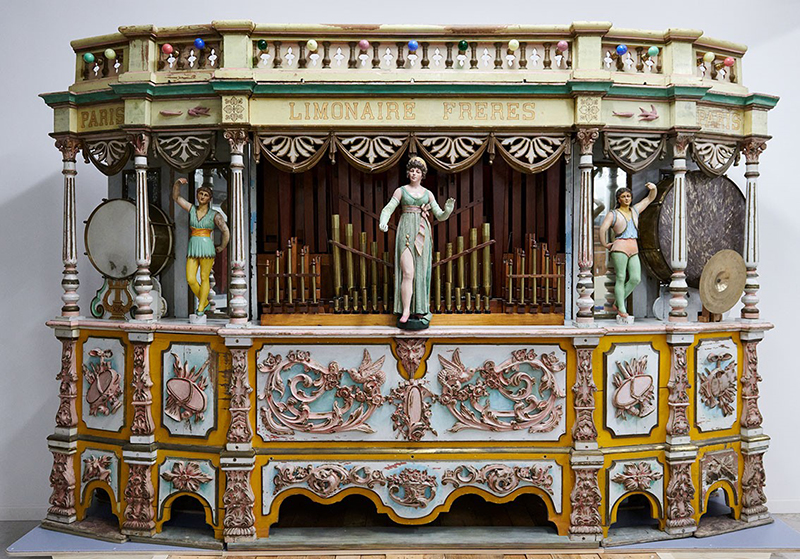
Restoration: Limonaire Orchestrophone
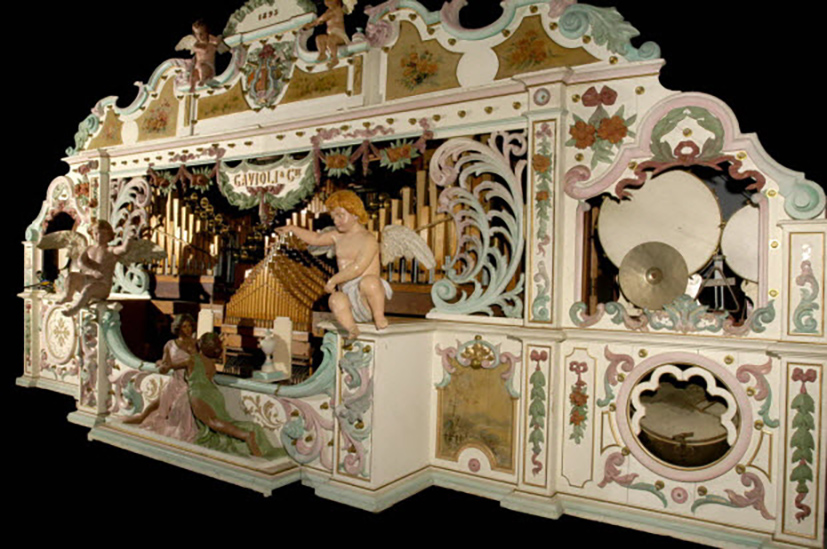
The Mucem houses a significant collection of fairground art that bears witness to the boom in fairs and carnivals during the 19th and 20th centuries, including this 60-key organ made in Paris in 1903 by Limonaire Frères. Restored in preparation for a loan to the Royal Saltworks of Arc-et-Senans for the exhibition *Destins de cirque* (October 24, 2020 – January 9, 2022), it can be (re)discovered in the public storage area of the Mucem’s Conservation and Resource Center during the upcoming European Heritage Days, or during the monthly tours offered free of charge to the public.
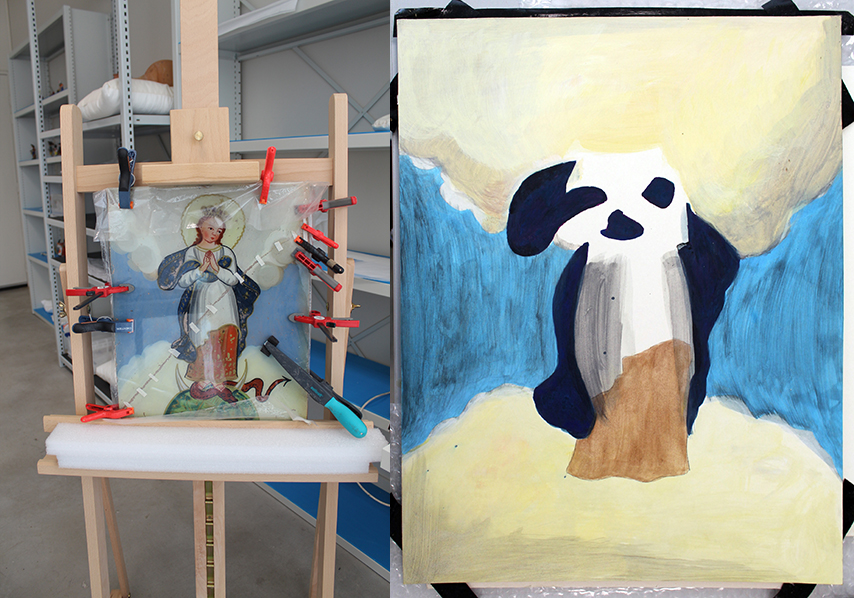
Restoration: Virgin of the Immaculate Conception
Restoration of a painting under glass for the exhibition “Another Italy”
Temporary exhibitions often provide an opportunity to restore works of art, either to stabilize them in preparation for transport or to make them more accessible to viewers. The painting under glass depicting the Immaculate Conception was thus restored for the exhibition “Another Italy” (Fort Saint-Jean, May 25–October 10, 2022), where it will be part of a collection dedicated to popular piety.
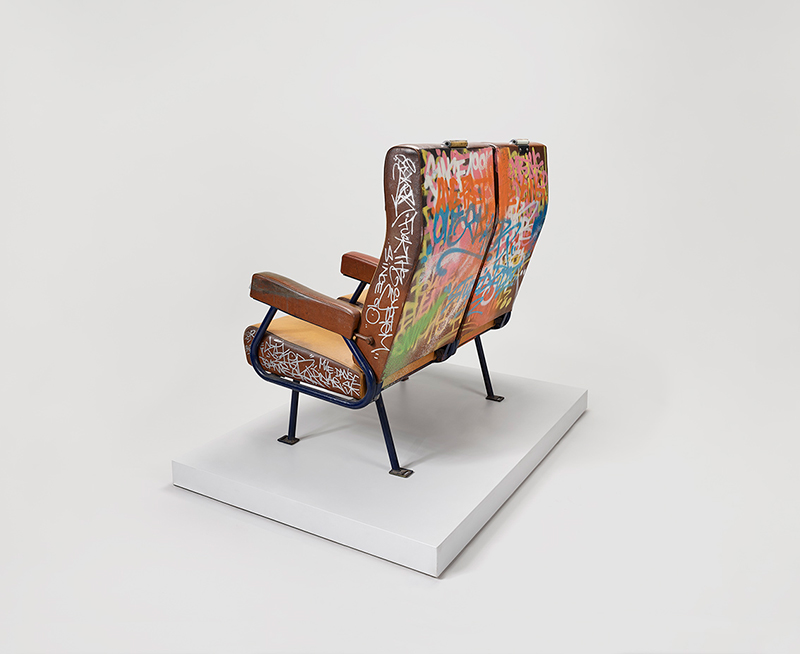
Acquisition: Graffiti Artist Sike
In 2022, the Mucem expanded its collections through the acquisition of works, creative tools, and photographic archives by the graffiti artist Sike. This acquisition builds on the “Graff & Hip-Hop” research and collection project, which has been conducted since the late 1990s by the National Museum of Popular Arts and Traditions, of which the Mucem is the successor.
Interview with Pascal Laporte, Vezzoni Agency
Pascal Laporte, an architect who graduated from the Marseille School of Architecture and the Duperré School of Applied Arts (with a degree in visual arts, specializing in surface design), is a co-founder of the firm Corinne Vezzoni & Associés.
In 2004, the firm was selected to design the Mucem’s storage facilities: the Conservation and Resource Center, located at 1 rue Clovis Hugues in Belle de Mai, opened its doors in 2012. Ten years later, Pascal Laporte reflects on the design of this building.

Acquisition: That Raoul LALA There
The Mucem and puppets share a long-standing love affair. The museum’s storage areas are brimming with them. Since 2021, thanks to the interactive tour created by M@riolab, Raoul Lala has been offering a fun way to explore the Mucem’s puppet collection.
To celebrate this wonderful collaboration between the museum and the famous Marseille puppet, the Mucem decided in 2022 to acquire Raoul Lala. Cyril Bourgois, Raoul Lala’s creator and puppeteer, crafted a replica of his own puppet during a five-day residency at the Mucem’s Conservation and Resource Center.
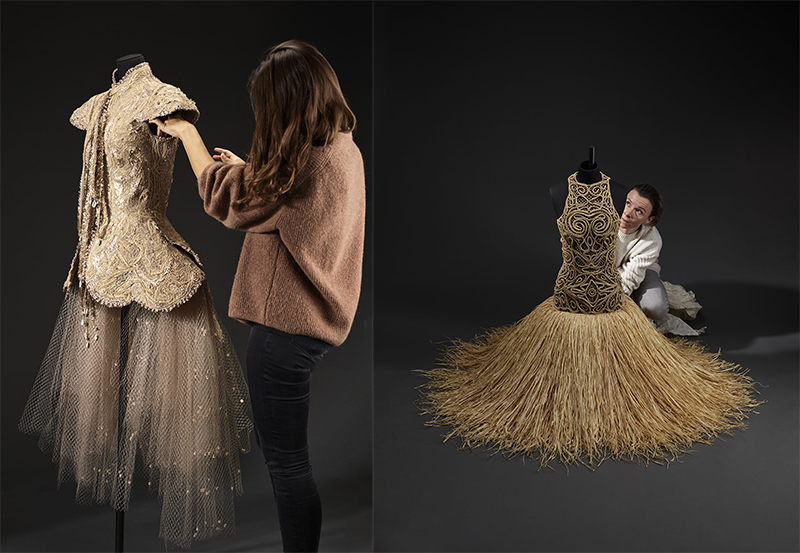
Costume modeling for the "Fashion Folklore" exhibition
The Mucem’s textile collections form the heart of the “Fashion Folklore” exhibition. Traditional folk costumes are juxtaposed with haute couture pieces and works by leading designers. To facilitate this dialogue, the process of dressing the mannequins—that is, placing the garments on mannequins for the exhibition—is an essential and meticulous step.
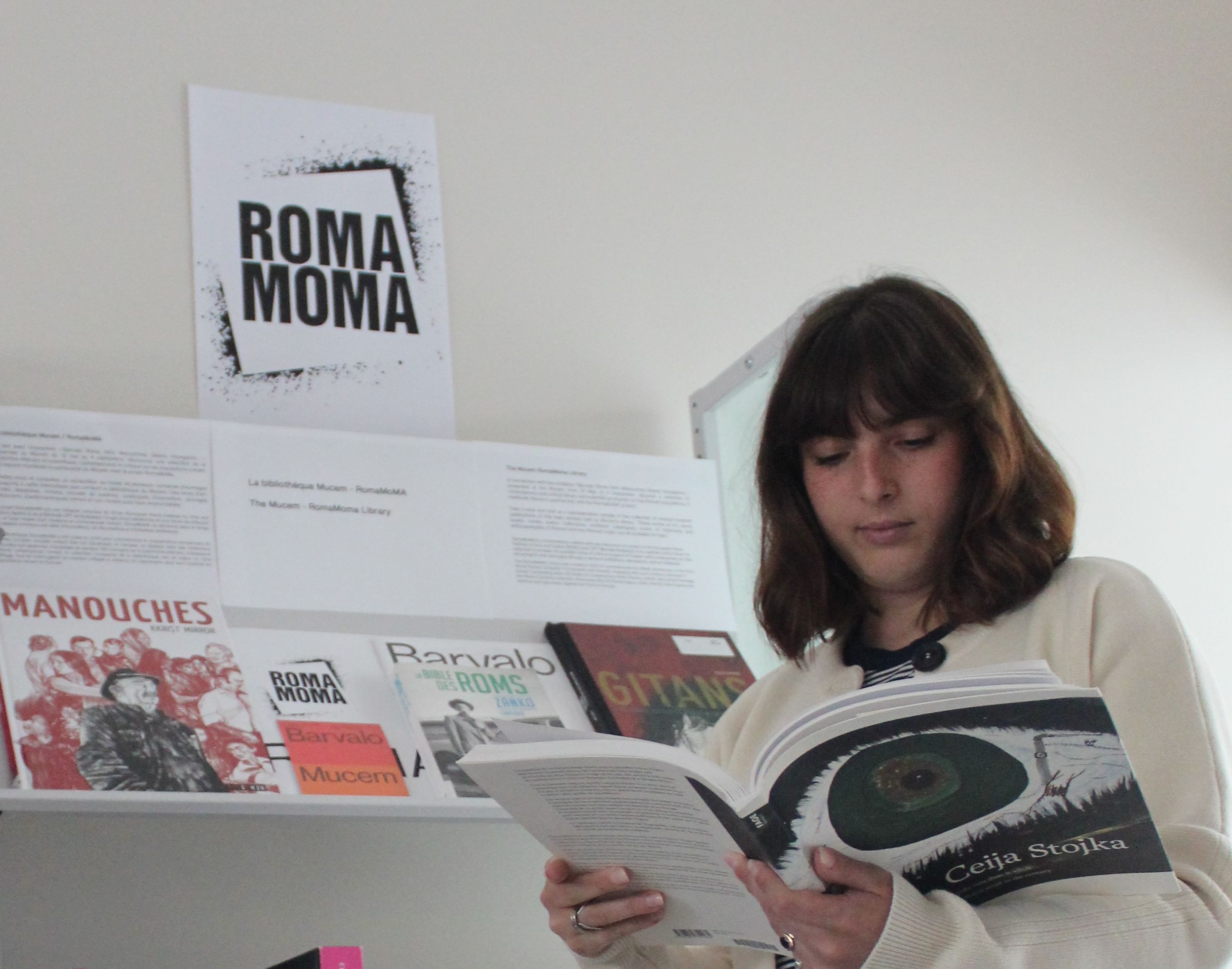
The Mucem / RomaMoMA Library
In conjunction with the exhibition “Barvalo. Roma, Sinti, Manouches, Gypsies, Travelers…” presented at the Mucem from May 10 to September 4, discover a selection of contemporary and critical literary and scholarly works on Romani communities. This space highlights the Mucem’s partnership with the RomaMoMa project.
The RomaMoMA project is a joint initiative of Eriac (European Roma Institute for Arts and Culture, Berlin) and the Budapest Biennale OFF. It serves as a platform and forum for reflection on a future museum of Romani modern and contemporary art. RomaMoMA will unfold over time and across different locations through a series of exhibitions, discussions, and artistic initiatives.
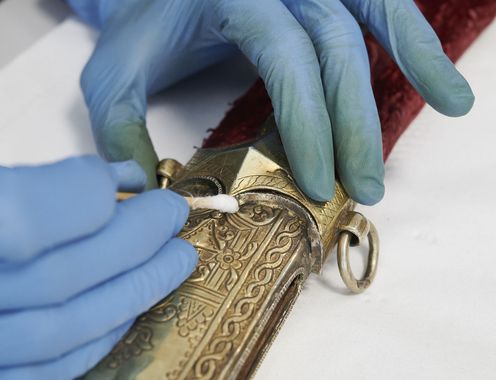
Restoration of Artifacts for the “Abd el-Kader” Exhibition
Each exhibition provides an opportunity to take a closer look at the objects to ensure they are displayed under the best possible conditions.
To this end, the curatorial department of the Mucem’s Conservation and Resources Center enlists the services of conservators certified by the Ministry of Culture.
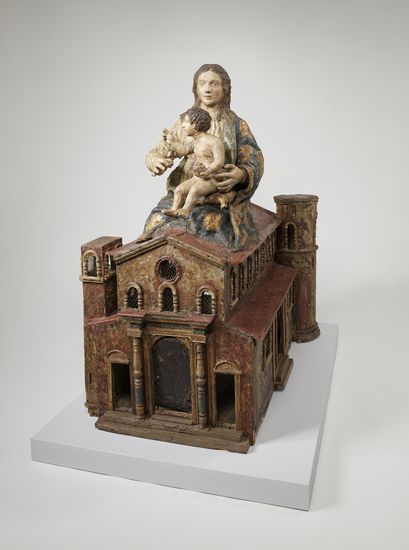
Acquisition: "The Virgin and Child Seated on the Holy House of Loreto"
The Holy House of Nazareth, where the Virgin Mary is said to have lived and where she is said to have received the Annunciation, was an important pilgrimage site in the Holy Land during the Middle Ages. At the end of the Crusades in 1291, it became more difficult for Western Christians to travel there; it was then that its miraculous transfer to Loreto, in the Italian region of the Marche, is said to have taken place.