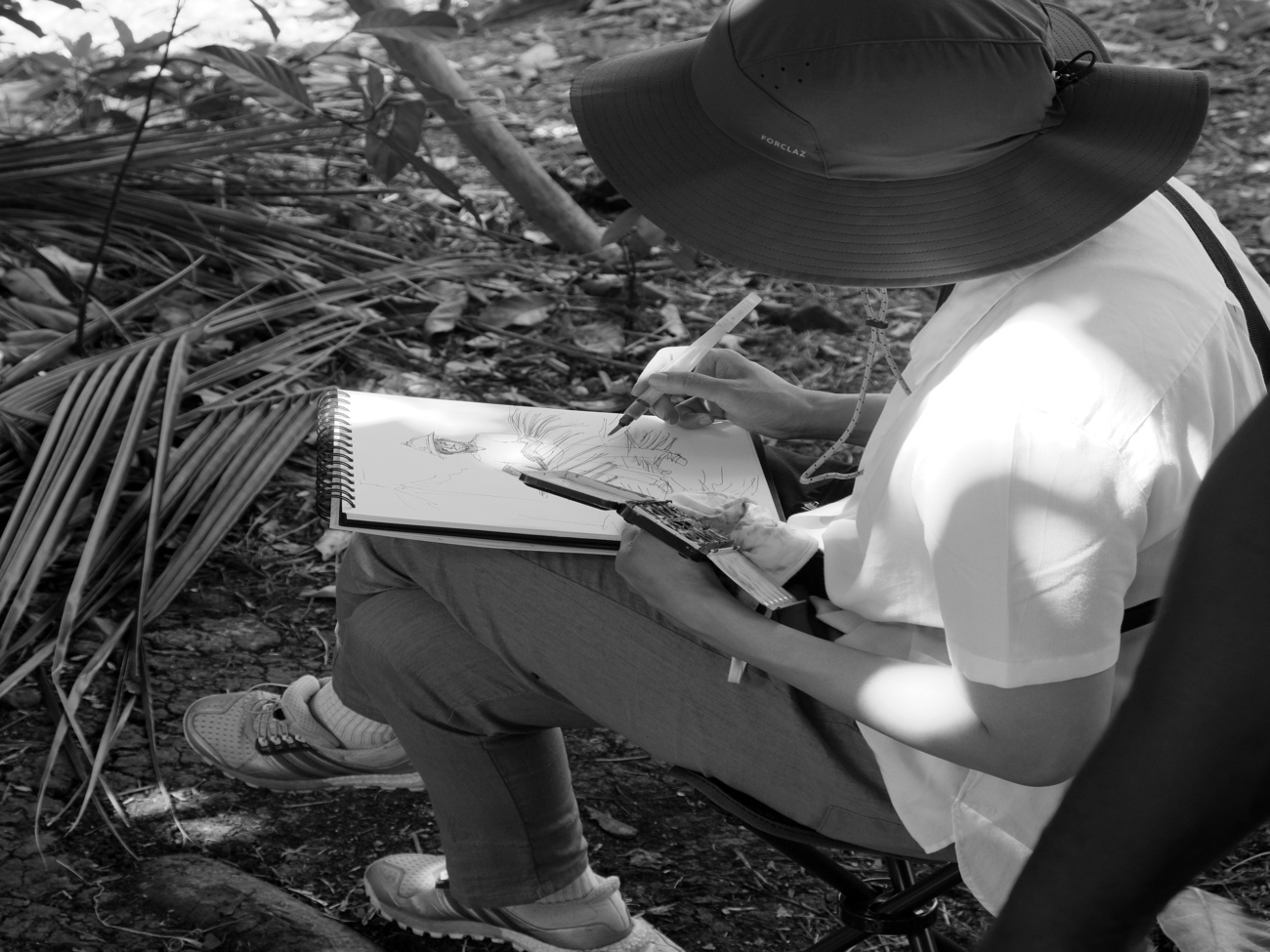
The 10-year anniversary of the “Une autre façon de raconter” workshop, which borrowed this programmatic title from John Berger, provides an opportunity to revisit the path we’ve travelled together with designers, publishers, researchers and curators, and to reflect on the progress of research at the crossroads of artistic and scientific writing.
More than 120 speakers at the Mucem contributed to the formulation of new forms of writing, in sequenced images in particular, with comics as the preferred integrating medium. The debates are based on various “art/science” collaborations and various books and exhibitions recently published and in production. A day to imagine, in images, writings and objects, new editorial and museographic avenues for the years to come.
Coordinated and moderated by Frédéric Joulian (EHESS-CREDO)
The program
09h00
Home
09:15-9:30 a.m.
Introduction to the meeting “Another way of telling stories”: what are the narrative challenges for Social Sciences and Museums?
Anne Faure (Mucem), Frédéric Joulian (Ehess-Credo)09:30-10:30 a.m.
Retrospective of “Another Way of Telling” and “Anthropographics” and presentation of the year’s six sessions: Anthropology and Comics. Frédéric Joulian (Anthropologist)
10:30-11:30 a.m.
Rencontres de dessin. When ethnography takes shape inside the lines. Maria Virginia Moratti (Artist-Anthropologist)
11:30 a.m.-12:00 p.m.
General discussion
1:30 pm – 2:30 pm
Performed objects, graphics and stories (on the creation of specific tools and methods). Juliette Nier (Graphic Designer)
2:30 pm – 3:30 pm
Creating models and stories to make sense of experiments with real phenomena. Ilan Chabay (Research Professor, Arizona State University School for the Global Future, Washington, DC Center; Co-Director, KLASICA International Research Alliance)
3:30 pm – 4:30 pm
General debate moderated by Suzanne De Cheveigne (DR emeritus at CNRS)
The speakers
Juliette Nier
Juliette Nier is developing a practice straddling visual didactics and object theater, which attempts to answer questions like these: how do you visually accompany oral explanations and narratives? How can we visualize and convey the complexity of certain facts, whether historical, geopolitical or scientific? How can we transform the information density of the world around us into stories and images? Can images and gestures tell what we can’t say?
The conference looks back at several projects carried out since 2018, where graphic design crosses writing, video and scenography to produce hybrid forms of storytelling and objects manipulated live.
Ilan Chabay
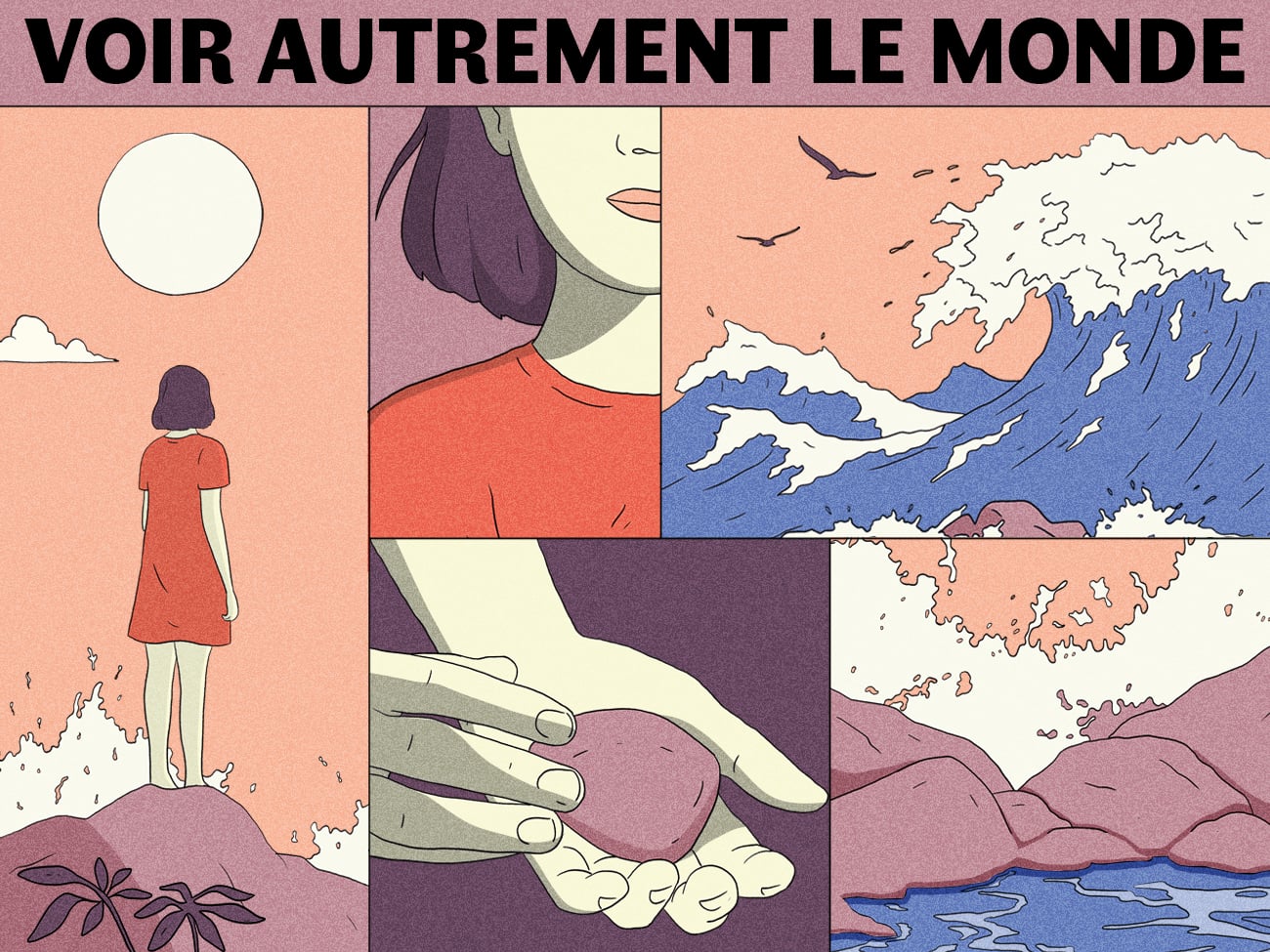
The development of the media and the evolution of means of dissemination (social media, cell phones, online games) have created new opportunities for linking real, physical exhibits with knowledge gained through virtual explorations. The combination of the physical and the virtual has two main aims: one is to provide a highly attractive means of exploring the relationship between direct experience of the real system and a virtual revelation of the invisible processes and dynamics of the real system. The second is to draw the visitor or player into a story that illustrates how the real system connects to society and life on Earth. During my time at EHESS with Prof. Frédéric Joulian, both of these elements will play a role. We’ll be exploring new ways of linking animated manga to Frozen Bubble Box to stimulate engagement with climate change issues.
The 10-year anniversary of the “Une autre façon de raconter” workshop, which borrowed this programmatic title from John Berger, provides an opportunity to revisit the path we’ve travelled together with designers, publishers, researchers and curators, and to reflect on the progress of research at the crossroads of artistic and scientific writing.
More than 120 speakers at the Mucem contributed to the formulation of new forms of writing, in sequenced images in particular, with comics as the preferred integrating medium. The debates are based on various “art/science” collaborations and various books and exhibitions recently published and in production. A day to imagine, in images, writings and objects, new editorial and museographic avenues for the years to come.
Coordinated and moderated by Frédéric Joulian (EHESS-CREDO)
The program
09h00
Home
09:15-9:30 a.m.
Introduction to the meeting “Another way of telling stories”: what are the narrative challenges for Social Sciences and Museums?
Anne Faure (Mucem), Frédéric Joulian (Ehess-Credo)09:30-10:30 a.m.
Retrospective of “Another Way of Telling” and “Anthropographics” and presentation of the year’s six sessions: Anthropology and Comics. Frédéric Joulian (Anthropologist)
10:30-11:30 a.m.
Rencontres de dessin. When ethnography takes shape inside the lines. Maria Virginia Moratti (Artist-Anthropologist)
11:30 a.m.-12:00 p.m.
General discussion
1:30 pm – 2:30 pm
Performed objects, graphics and stories (on the creation of specific tools and methods). Juliette Nier (Graphic Designer)
2:30 pm – 3:30 pm
Creating models and stories to make sense of experiments with real phenomena. Ilan Chabay (Research Professor, Arizona State University School for the Global Future, Washington, DC Center; Co-Director, KLASICA International Research Alliance)
3:30 pm – 4:30 pm
General debate moderated by Suzanne De Cheveigne (DR emeritus at CNRS)
The speakers
Juliette Nier
Juliette Nier is developing a practice straddling visual didactics and object theater, which attempts to answer questions like these: how do you visually accompany oral explanations and narratives? How can we visualize and convey the complexity of certain facts, whether historical, geopolitical or scientific? How can we transform the information density of the world around us into stories and images? Can images and gestures tell what we can’t say?
The conference looks back at several projects carried out since 2018, where graphic design crosses writing, video and scenography to produce hybrid forms of storytelling and objects manipulated live.
Ilan Chabay
The development of the media and the evolution of means of dissemination (social media, cell phones, online games) have created new opportunities for linking real, physical exhibits with knowledge gained through virtual explorations. The combination of the physical and the virtual has two main aims: one is to provide a highly attractive means of exploring the relationship between direct experience of the real system and a virtual revelation of the invisible processes and dynamics of the real system. The second is to draw the visitor or player into a story that illustrates how the real system connects to society and life on Earth. During my time at EHESS with Prof. Frédéric Joulian, both of these elements will play a role. We’ll be exploring new ways of linking animated manga to Frozen Bubble Box to stimulate engagement with climate change issues.