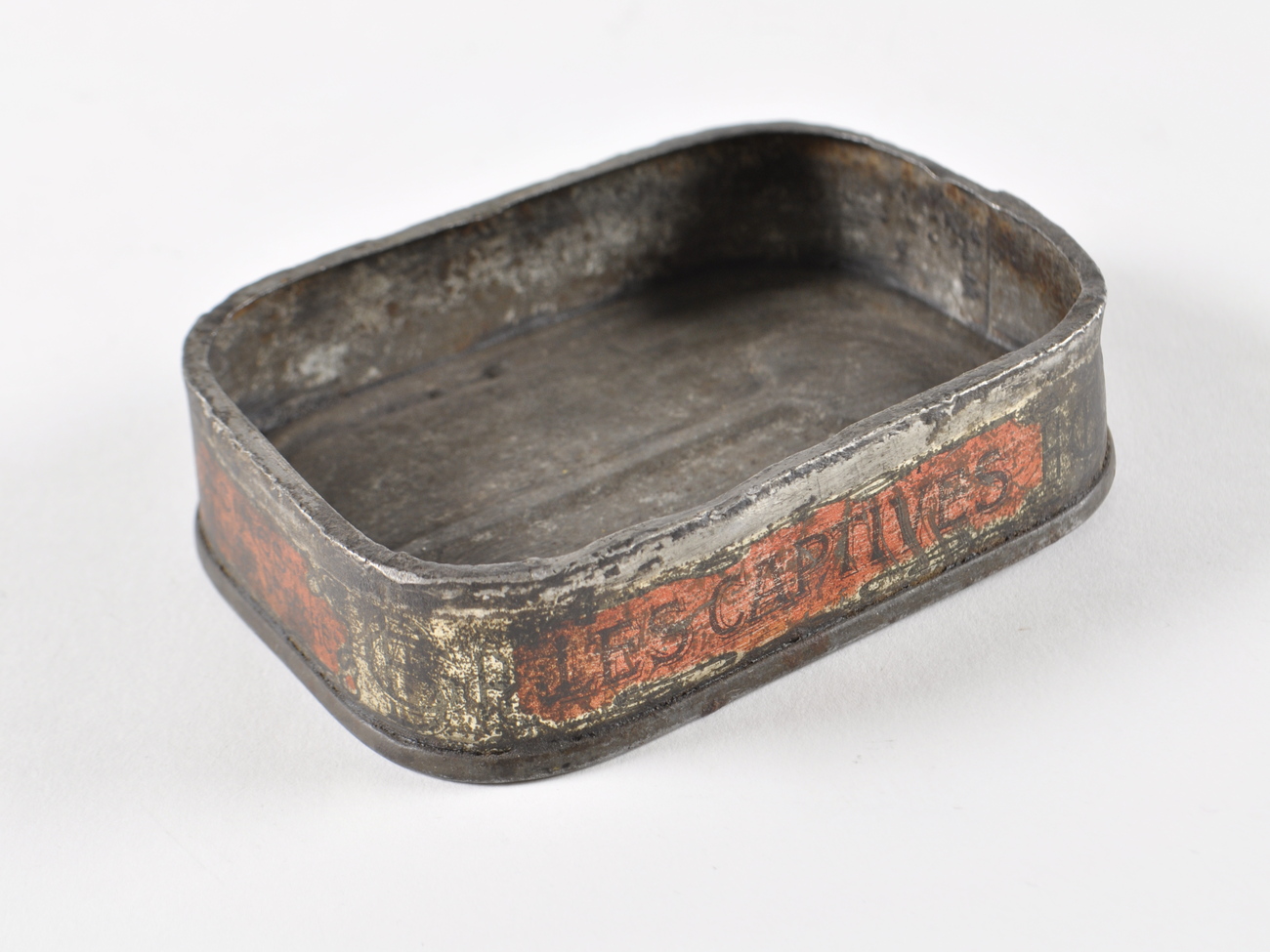
The construction of boxes meets a seemingly simple objective: to match a container to its contents. Yet behind this objective lie complex optimization problems. How do you maximize a container’s internal volume while minimizing its external footprint? What value should be placed on the unoccupied space inside the box? Should it be reduced for reasons of profitability or hygiene, as in a can? Or should it be preserved to facilitate, for example, the breathing or circulation of the living beings inside?
Depending on these calculations, the trade-offs evolve between two opposing situations: either the container imposes itself on the content to the point of redefining its format (think of the plan to produce square tomatoes), or the container adapts to the content because, like a work of art, the latter is highly valued.
Such considerations reach another level when containers have to be contained within other containers: the optimization effort then consists in imposing proportional ratios between all formats. The ultimate product of these considerations, folding carton, is standardized to fit on a pallet, which in turn is designed to fit inside a container. The preferred form of capitalism seems to be the quadrilateral. But as the history of over-packaging shows, this economic optimization can prove disastrous from an environmental point of view. This is what we’ll be examining through the history of the storage and transportation of goods and works of art.
A proposal by Samir Boumediene, teacher-researcher (IHRIM, UMR 5317, ENS de Lyon) in charge of the “Mises en boîtes: histoire, anthropologie et muséographie d’une pratique quotidienne” project at the Mucem.
The construction of boxes meets a seemingly simple objective: to match a container to its contents. Yet behind this objective lie complex optimization problems. How do you maximize a container’s internal volume while minimizing its external footprint? What value should be placed on the unoccupied space inside the box? Should it be reduced for reasons of profitability or hygiene, as in a can? Or should it be preserved to facilitate, for example, the breathing or circulation of the living beings inside?
Depending on these calculations, the trade-offs evolve between two opposing situations: either the container imposes itself on the content to the point of redefining its format (think of the plan to produce square tomatoes), or the container adapts to the content because, like a work of art, the latter is highly valued.
Such considerations reach another level when containers have to be contained within other containers: the optimization effort then consists in imposing proportional ratios between all formats. The ultimate product of these considerations, folding carton, is standardized to fit on a pallet, which in turn is designed to fit inside a container. The preferred form of capitalism seems to be the quadrilateral. But as the history of over-packaging shows, this economic optimization can prove disastrous from an environmental point of view. This is what we’ll be examining through the history of the storage and transportation of goods and works of art.
A proposal by Samir Boumediene, teacher-researcher (IHRIM, UMR 5317, ENS de Lyon) in charge of the “Mises en boîtes: histoire, anthropologie et muséographie d’une pratique quotidienne” project at the Mucem.
MucemLab highlights
Related activities or events
View full agenda- Free of charge
Session 1. Thinking boxes
Epistemology, taxonomy, topology
Conceived as a counterpoint, the first session of this seminar postulates that to better understand the materiality of the box, we must first look at its less material dimension. How does the box form extend to thought? To what extent, for example, does it shape the dialectic of container and content that lies at the heart of every classification and tree system? That’s what we’re going to ask ourselves by looking back at the long history of logic, rhetoric and the arts of memory,...
A proposal by Samir Boumediene, teacher-researcher (IHRIM, UMR 5317, ENS de Lyon) in charge of the “Mises en boîtes: histoire, anthropologie et muséographie d’une pratique quotidienne” project at the Mucem. With Ivan Bouchardeau (doctor of philosophy), Gilles Trédan (computer researcher), William Fujiwara (mathematician and philosopher), Naïs Virenque (history researcher), Sarah Dietz, Charles Riondet and Mathilde Nabarette (collections and documentary resources department, Mucem)On Wednesday, Apr 2, 2025
at 11h
Fort Saint-Jean / MucemLab
- Free of charge
Session 2. Optimization
Capitalism and the quadrilateral shape
The construction of boxes meets a seemingly simple objective: to match a container to its contents. Yet behind this objective lie complex optimization problems. How do you maximize a container’s internal volume while minimizing its external footprint? What value should be placed on the unoccupied space inside the box? Should it be reduced for reasons of profitability or hygiene, as in a can? Or should it be preserved to facilitate, for example, the breathing or circulation of the living...On Wednesday, Jun 11, 2025
at 14h
Fort Saint-Jean / MucemLab
- Free of charge
Session 3. Our logos
Consumption cans
In order to better grasp what is at stake in the practice of packaging and the growing importance it has assumed, the third session of the seminar starts from the premise that the container is not a neutral parameter in our relationship to objects. Not only does the box mediate the first contact with an artifact, it is also at the heart of the emotional, economic and social relationships we forge through the consumption or conservation of things. Taking a historical and comparative...
With Samir Boumediene, Researcher, IHRIM-MUCEM: “Pandorama. Boîtes, consommations, attachments” Françoise Dallemagne, Collections and Research Officer, Mucem: “Boîtes à bijoux, boîtes à secrets?” Anne-Valérie Dulac, Senior Lecturer in Elizabethan Studies – Sorbonne University: “‘Biscuits for travelling: the decorated boxes of Huntley & Palmers” (to be confirmed) Anne-Céline Callens, Senior Lecturer, University of Saint-Étienne:...On Wednesday, Oct 1, 2025
at 13h
Fort Saint-Jean / MucemLab
- Free of charge
Session 4. Boxes and images
After studying the role of images on boxes, the fourth session will focus on images produced in and by boxes. Once again, we’ll be taking a long-term approach, from the 15th century to the present day. Much of the history of Western painting, from Alberti to abstraction, from the camera obscura to Poussin’s maquettes, is indeed a matter of putting things in boxes, and this is even more obvious with photography and cinema. Echoing the exhibition devoted to Quixote, and comparing...On Wednesday, Nov 5, 2025
at 10h
Fort Saint-Jean / MucemLab
- Free of charge
Session 5. Tin cans
Life, death, time.
The fifth and final session will take up the questions raised in previous sessions through the museum practice of conservation.
More specifically, we’ll be looking at the technical and political challenges raised by organic realities. How do you keep an animal or plant alive in a collection or during a trip? When should the crate be closed or left open? When does opacity protect and when is transparency essential? How should we preserve dead bodies, whether in a museum, a cemetery, a funeral procession or at home? What should be done with the micro-organisms fermenting inside the cans? Should we leave them alone,...
Participants: Samir Boumediene, teacher-researcher (IHRIM, UMR 5317, ENS de Lyon) Antoine Duranton, PhD in modern history (EHESS) Astrid S. Klein, visual artist, researcher and curator Alice Le Roy, lecturer in film studies (Université Gustave Eiffel) Lotte Arndt, author, researcher, curator of exhibitions and art programs (Université Paris 1 Panthéon-Sorbonne) Fatima Naves Souhlal, PhD in soil mechanics, geologist and geotechnician Sophie Renault, gallery owner and collector Laura Brambilla,...On Wednesday, Dec 10, 2025
at 11h
Fort Saint-Jean / MucemLab