Residencies and research contracts
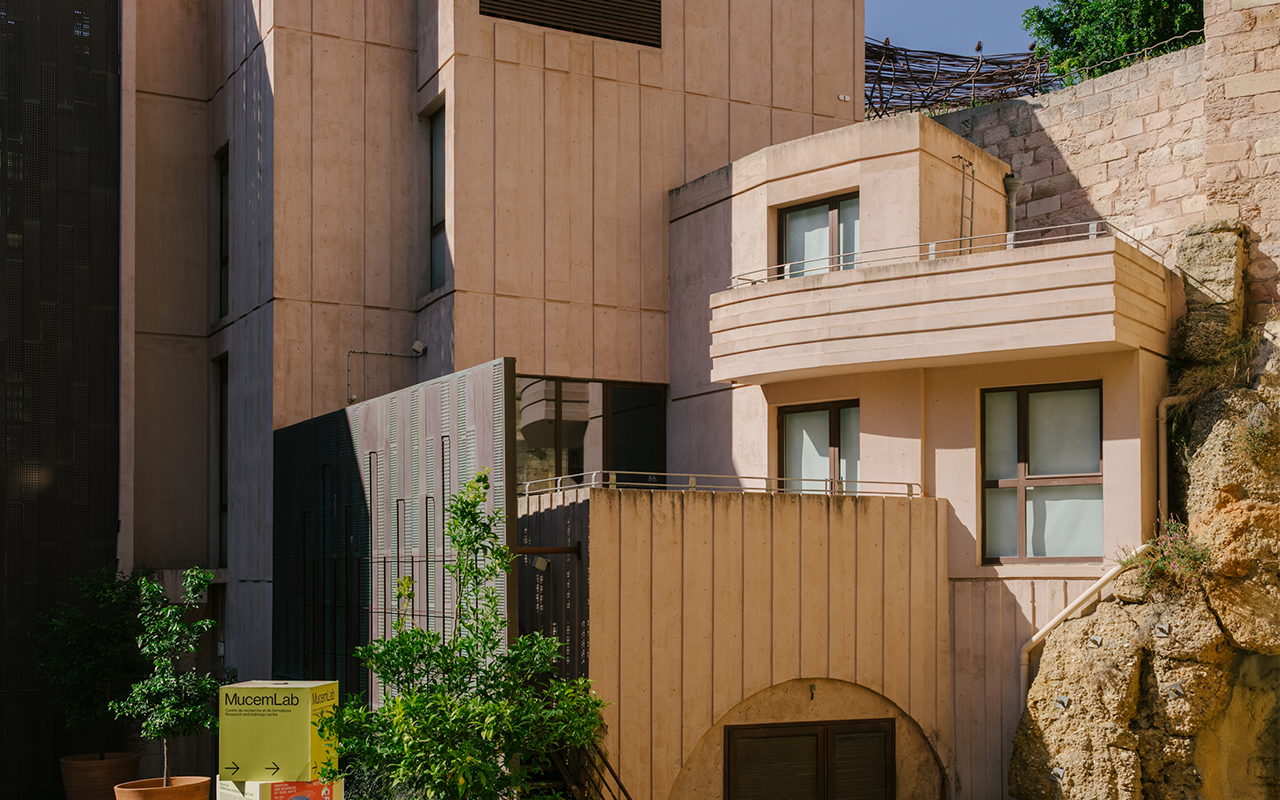
Through the immersion of researchers in the museum, Mucem develops research projects applied to the materiality of objects, the history or enrichment of collections, public relations, exhibition design and artistic creation.
This approach is supported by various types of programs: CIFRE doctorates, post-doctorates in partnership with EHESS and Aix-Marseille University’s SoMuM Institute, and temporary research missions and residencies for CNRS or university staff.
Mucem also works with the Camargo Foundation and the Institut méditerranéen de recherches avancées (IMéRA-Aix-Marseille Université) to organize exploratory artistic and museological research residencies.
Call in progress
Call for applications for a research writing residency with the Meyer Foundation
Until March 31, 2026
Current residencies and research contracts
Lola Soulier
2024-2025
Doctoral student at Sorbonne University, Doctoral School 0433 – Musicology – IReMus UMR 8223
Interactions between reeds and humans in the Mediterranean, past and present” project.
After completing a dual degree in literature and music, and working as a baroque oboist, Lola Soulier turned to musicology with the aim of studying the ancient and traditional techniques of instrument making for the oboe and other reed instruments (clarinet, saxophone, bassoon, bagpipes) whose sound is produced by a reed. As a professional oboist, she has encountered difficulties and constraints in playing reeds made from dry, rigid reed that is harvested, processed and shaped industrially, and currently the only one available for sale. These difficulties manifested themselves particularly in terms of playing flexibility and expressiveness. The poor vibratory quality of reeds produced from this reed is a major hindrance to the beauty and vitality of reed instrument playing, and more and more musicians are turning to plastic reeds in desperation. Yet, far from offering musicians a satisfactory alternative, synthetic reeds only aggravate the problem by distancing them from the very nature of their instruments. Disappointing both technically and aesthetically, they offer only the slight advantage of lasting longer than reeds made from industrial reed, which is particularly dry and fragile. Ultimately, only reeds made from supple, “living” reeds enable musicians to cultivate a vibrant, moving and expressive sound. In order to revive the ancestral skills of reed reed making, and to revalorize the cultivation and use of this exceptional plant that grows in profusion on the Mediterranean coast, Lola Soulier’s project proposes an innovative approach by bringing together organology, ethnomusicology and ethnobotany, as well as artistic and technical disciplines, from early music to contemporary art and design. Using an interdisciplinary approach, the study aims to highlight the technical as well as the spiritual, artistic and aesthetic dimensions of the relationship with reeds in Mediterranean cultures over the ages, and the urgent need for both scholarly and traditional practices to reconnect with the multiple artisanal, agronomic and musical uses that once enabled societies to live in harmony with this civilizing plant.
Samir Boumedienne - CNRS Culture Mission
2025-2027
Mises en boîte, Samir Boumedienne (historian, Ecole Normale Supérieure/CNRS-Mucem)
Samir Boumediene, a researcher specializing in the history of knowledge, proposes to explore the box object, from everyday life to museums, as a tool for historical and museological reflection. He defines the box as a transportable, partially closed container (crates, pots, trunks) and analyzes its role in the economy, thought and practices of museums.
Anne-Valérie Dulac - MESR Delegation: Sorbonne / Mucem
2024-2025
La carte-réclame et le théâtre de Shakespeare: culture populaire et discours publicitaire en France (1860-1914), Anne-Valérie Dulac (historian, Sorbonne Université-Mucem)
Anne-Valérie Dulac is a researcher specializing in the history of visual representations and cultural practices. She is particularly interested in the interactions between theater, advertising and popular culture. Her project focuses on advertising cards, popular advertising media in the 19th century, and their use to promote products through references to Shakespeare. By analyzing the Mucem collections, Anne-Valérie Dulac explores how these cards reflect the integration of Shakespeare into French culture, combining commercial, political and social issues. She aims to reveal how these hybrid objects, combining text and image, have influenced the perception of Shakespearean theater in France and beyond.
Frédéric Fruteau de Laclos (philosopher, Sorbonne University-Mucem) - Fieldwork and theories in survey-collections (1937-1980)
2024-2025
Frédéric Fruteau de Laclos, HDR lecturer at Université Paris 1 Panthéon-Sorbonne. This project explores the path taken by French ethnographers between fieldwork and theory, drawing on the archives of surveys carried out between 1937 and 1980. Using field notebooks, questionnaires, data sheets and collected objects, it analyzes how ethnographic concepts emerged in relation to collecting practices. The project focuses on a key period that saw folklore transformed into ethnographic science, under the impetus of figures such as Georges Henri Rivière. It sheds light on the empirical methodology developed by the first generations of French ethnographers, who often came from philosophical backgrounds. This diachronic work also revisits the links between theory and fieldwork, marked by constant adjustments and a growing professionalization of practices, notably through major collaborative surveys such as Recherches coopératives sur programme.
Emmanuel Botte (archaeologist, CNRS/CCJ -Mucem) - Traditional beekeeping in the Mediterranean
2024-2025
Archaeologist and historian, Emmanuel Botte is deputy director of the Centre Camille Jullian (CNRS, UMR 7299) and a CNRS researcher. After writing his thesis on fish salting and sauces in southern Italy and Sicily during Antiquity, he turned his attention to the study of the economy and artisanal practices of the ancient Mediterranean. With expertise in underwater and terrestrial archaeology, he directs interdisciplinary excavations and programs, in particular on the Roman villae of Dalmatia, while contributing to international projects such as the GlobalMed network.
Born of archaeological discoveries of Roman villae in Dalmatia, Emmanuel Botte’s APIMED project focuses on traditional beekeeping in the Mediterranean, from Antiquity to the Middle Ages. It reveals the widespread use of ceramic hives, despite the criticisms of ancient agronomists, and explores their role in the Mediterranean economy. In collaboration with chemists and palynologists, this interdisciplinary project studies beekeeping techniques in regions such as Croatia, Crete and Tunisia, and also includes an ethnographic component. Linked to the Mucem, it aims to enrich and enhance the collections linked to beekeeping, while raising awareness of the contemporary issues surrounding this ancestral practice.
Juliette Ronsin , Post-doctoral fellow in socio-history (Mucem, EHESS, CETOBaC) - "Collections on the move" project.
2025-2026
Project “Collections on the move. Objects, people and knowledge between France and Yugoslavia in the second twentieth century”.
This project focuses on the circulation of knowledge, objects and people between France and Yugoslavia, through the study of the fonds of Colette Jankovic (1898-1981) and Dušan Jankovic (1894-1950). Between 1947 and 1981, this artist and ethnologist couple acquired for the Musée de l’Homme six thousand objects, mainly from Yugoslavia, through purchases or donations, with the aim of building up a collection representative of the “traditional culture of the South Slavs”. The aim of this project is to reconstitute this collection, whose objects and archives are scattered across several institutions, and to examine how it fits into the institutionalization of a specialized field of research on Yugoslavia, and the Balkans more generally. Another aspect of this project is based on a survey at the crossroads between the history of work, the working classes and migration. This will be based on the circulation of stories and everyday objects relating to (post-) Yugoslav migration to France, particularly in the period 1960-1970.
Mohamed Abusal, Mucem /AMU - The Pause program
1.2 2024-2025
As part of the PAUSE program, a national initiative supported by the Collège de France and the French Ministry of Higher Education, the Mucem has stepped up its commitment to artists in exile. This program aims to protect and welcome researchers and artists forced to leave their countries of origin due to conflict or persecution, by offering them an environment conducive to the pursuit of their work. In 2022, the Mucem collaborated with the University of Aix-Marseille to welcome Palestinian artist Mohamed Abusal. Born in Gaza in 1976, Abusal is a visual artist whose work sheds light on the daily reality of Palestinians while proposing alternative, optimistic visions of a better future. During his residency, Abusal co-founded the HAWAF collective with artists Mohamed Bourouissa, Salman Nawati and architect Sondos Al-Nakhala. Together, they developed the project “SAHAB, Gaza’s Cloud Museum”, an online augmented reality virtual museum designed for an embargoed territory. The project aims to trace Gaza’s heritage and art, while imagining its future history. On June 1, 2022, the Mucem organized a day of artistic and scientific encounters dedicated to this project. The event brought together artists, filmmakers, researchers, curators and museologists to discuss and compare their perspectives on the “Museum of Gaza’s futures”. This initiative is in line with Musem’s mission to promote cultural diversity and support contemporary creation, by providing a platform for artistic voices from fragile contexts. This work, supported by residencies at the Camargo Foundation and Mucemlab, is part of a reflection on speculative museologies and their role in preserving heritage in exile.
Past residencies and research contracts
Salima Tenfiche - Project "Everyday objects and Berber traditions from Syphax to Takfarinas, or how to rehabilitate over 2000 years of shared history".
2023-2024
Post-doctoral fellow in cultural history and anthropology (Mucem, EHESS, Centre Norbert Elias)
This project refers on the one hand to Syphax, Numidian king of the 3rd century BC, and on the other to Takfarinas, a Kabyle singer of contemporary Algerian popular culture. The project aims to identify and collect everyday Berber objects from the Maghreb, both traditional (ceramics, cutlery, jewelry, textiles, clothing, hangings, etc.) and in common use today (plastic cans to anticipate regular water cuts, old women’s nylon flip-flops, T-shirts in the colors of the Berber flag, etc.), as well as photographs and films documenting these Berber objects and traditions of yesterday and today. Once collected and documented, these objects and images will be compared with ceramics and frescoes from Greco-Roman antiquity, with objects found on archaeological sites in the Maghreb, and with representations of everyday life in classical and Orientalist painting and sculpture. The aim is to highlight the formal similarities that bear witness to successive cultural transfers across the Mediterranean over the centuries.
Adélie Chevée - Project: "The making of visual creation 'in exile': places, identities and practices of creative engagement".
2023-2025
Post-doctoral fellow in political science and international relations (Museum, SoMuM, Mesopolhis)
From their studios to their encounters with the public, artists in exile attempt to redefine, both in their works and in their practices, an identity that cannot be essentialized to a given territory. Since exile is also the result of individual persecution, violence or catastrophe, many artists engage with the causes of uprootedness, while others resist the expectations of the public or art professionals. This project studies the singularities of artistic creation in exile situations in France, and aims to carry out a survey-collection targeted at two corpora: “places and identities” and “practices of creative engagement”.
Dominique Frère - Project: "Material culture of domestic and artisanal cheese production".
2022-2024
University Professor of Archaeology, Université Bretagne Sud, TEMOS laboratory. CNRS/Ministère de l’enseignement supérieur et de la recherche research residence
Dominique Frère offers a cultural and popular history of cheese, based on a technical heritage that is all too often forgotten: dairy crockery. Mucem boasts France’s richest collection of objects related to the production of milk and dairy products between the 1870s and 1960s. This unique collection lends itself to a scientific project based on methods applied to ceramology and the study of archaeological objects in metal and organic materials. The main objectives of this contemporary archaeological approach are to establish a functional typology and to discern technical know-how that differs greatly from one period to another, from one region to another, and from one farm to another (cows, sheep, goats). Cross-referencing with iconographic and written sources, as well as with oral testimonies for the most recent objects, will enable us to identify the players involved in domestic and artisanal cheese production, and to characterize social and cultural practices that are constantly evolving in the face of changes brought about by the industrialization of milk and the mass economy.
Marion Slitine - Project: "Urban creativity in revolt in the Arab Mediterranean".
2020-2024
Post-doctoral fellow in anthropology (Mucem, EHESS, Centre Norbert Elias).
The project looks at “making art” in public space (Palestine, Morocco) and how artistic practices reconfigure the city and reformulate “places of the political” in (post)colonial contexts. At the same time, her program explores artistic practices using futurisms as performative and political acts in contexts of crisis. Marion Slitine is also carrying out a survey-collection that offers a counterpoint to the Mucem’s Tags et Graffs collection, on the theme of “Objects of resistance and solidarity in Palestine”, and she coordinates several scientific events at the Mucem that combine research and contemporary creation.
International colloquia:
” Gaza unedited: contemporary artistic creations, between confinement and openness ” (2016)
” The artistic factory in the Arab world ” (November 2021)
” Around the museum of futures in Gaza. Futurisms and alternative museologies “(June 2022)
Palestine and the world” (2023)Cycles of meetings and seminars: ” Engagements artistiques et politiques ” (2022) and ” Alors on sort – Actualité des sciences sociales, entre recherche et création ” (2022-2023)
Melissa Moralli - Project: "The right to speech
2023-2024
Assistant Professor, Department of Sociology and Business Law, University of Bologna
Melissa Moralli is a cultural sociologist in the Department of Sociology at the University of Bologna, where she teaches “creative methods” and “social innovation and collective action”. She holds a PhD in Sociology and Social Research and has published over 40 books, articles and chapters on artivism, migration, social innovation and creative methods in social research. She is co-editor of the Edward Elgar Encyclopaedia of Global Migration: New Mobilities and Artivism, where she directs the section on artivism, with over 70 international researchers and artists. She has worked at CRISES (Centre de Recherche sur les Innovations Sociales, Université du Québec, Montréal), IPK (Institute for Public Knowledge, New York University), CRISES Redifined (University of Jyväskylä, Finland) and MESOPOLHIS (Centre Méditerranéen de Sociologie, de Science Politique et d’Histoire, AMU, Sciences Po Aix and CNRS). She is scientific coordinator of the “Collaborative imaginaries on territories in change across Europe” project. She was a post-doctoral fellow on the “Welcoming Spaces” (Horizon2020) and “Atlas of transitions. New Geographies for a Cross-Cultural Europe” (Creative Europe). She co-founded the research collective “Reimagining Mobilities”, which explores policies, practices and narratives related to climate justice and mobility regimes through creative methods.
Her project at Mucem focuses on the “right to discourse”, defined as both a physical and aesthetic right to reappropriate narratives about exile in order to challenge the processes of dehumanization and objectification implemented by the media and the dominant political rhetoric on the theme of migration. More specifically, she is collaborating with several artists in exile on an audiovisual creation that investigates the relationship between the politics and aesthetics of exile.Martina Magri
2023-2024
Doctoral student, University of Modena and Reggio Emilia, in cotutelle with Aix-Marseille University
After studying cinema at the Sorbonne (Paris I and Paris IV) and training as a camera operator at the École des Gobelins, she worked for the production company Idéale Audience, where she helped create the “idéaleaudience” DVD label (films by Johan Van Der Keuken, Yann Le Masson, Aleksandr Sokourov). After working as a scriptwriter, she turned to documentary and experimental filmmaking. La tentation de la forteresse, produced by G.R.E.C. in 2016 as part of a residency at the Musée de l’Histoire de l’Immigration, is her first film. It has been screened at several festivals and programmed in several museums and cinematheques.
In her professional career, she combines academic research with artistic practice.
From 2020 to 2022 she was in charge of research at the DISPOC of the University of Siena, where she worked on the creation of a digital platform for the valorization of the holdings of the Italian National Archive of Diaries; and from 2022 to 2023 at the DSLC of the University of Modena and Reggio Emilia, where she worked on the development of the LAMA laboratory (Laboratory of Audiovisual Materials), dedicated to transmedia narratives applied to research.
His current research project is concerned with the audiovisual device as a tool for analyzing the social and producing new sociality, and focuses in particular on archival images as a means of activating narratives and self-narratives produced by people of diasporic origin.Cyril Isnart (CNRS/Idemec-Mucem mission) - Project: "Singuliers. Minority objects in the Mediterranean".
2019-2024
Research fellow in anthropology, director of Idemec (Aix-Marseille University, CNRS, IDEMEC). Responsible for Idemec/Mucem collaboration.
A specialist in the anthropology of heritage, Cyril Isnart is developing a critical reflection on the culturalization of the self in Southern Europe and the Mediterranean. Combining an attentive reading of the temporal depth of heritage practices with an analysis of the current reconfigurations of alternative and minority cultures, his research enables us to better grasp what the mobilization of heritage tools and concepts reveals about the plurality and confrontation of contemporary identity constructions. His latest projects concern religious heritage and traditional music, combining an ethnographic view of Portugal with a comparative ambition on a Mediterranean scale. Together with Aude Fanlo, Florent Molle and Véronique Dassié, he led the “Ethnographic collecting in museums of society” seminar organized by the Pôle Recherche Musée ofIdemec and the Mucem, as well as the Ateliers Participation du Mucem(2020). He is proposing a research program on the representation of minority heritages in the Mediterranean (2021-2022), in partnership with the UMIFRE and the Écoles françaises du pourtour méditerranéen ( Singular. Objects of Minorities in Europe and the Mediterranean -Mucem) .
Ariane Fennetaux - Project: "Les nouveaux habits de l'Empire: écologie du vêtement à l'heure de la construction des empires (1600-1914)".
2022-2023
Associate Professor of British History at Université Paris Cité (LARCA UMR 8225). CNRS/Ministère de l’enseignement supérieur et de la recherche research residency.
Ariane Fennetaux’s residency at the Mucem is part of a wider research project to study the links between clothing, environmental history and imperial history between the 17th and late 19th centuries. Based on the study of the use of animal materials in clothing and accessories in collections, the project analyzes the links between the construction of colonial empires and the transformation of appearances in Europe. It places these phenomena in the context of the construction of scientific knowledge, its hierarchization and the emergence in the West of a certain relationship with the living. By analyzing the integration of elements such as fur, feathers, whalebone and ivory into the material culture of appearance, the project aims to make clothing a privileged terrain for understanding the intersecting dynamics of power and domination – whether colonial, racial, epistemological or specific.
Sarah Mekdjian - Project: "Working in exile, working exile
2022-202
Lecturer in geography at the University of Grenoble (PACTE laboratory), co-author of the Bureau des dépositions works, associated with the TELEMMe laboratory for the duration of her CNRS/Ministère de l’enseignement supérieur et de la recherche research residency.
This project is part of an epistemological and methodological reflection on Mucem’s “collection of the contemporary”. The aim is to extend a reflexive and pragmatic perspective on what it means to “investigate”, “collect” and “conserve” in a museum context and in relation to singular contexts of exile. In this instance, these approaches are set against the aesthetic processes of the Bureau des dépositions: Exercices de justice spéculative and Minen kolotori, sculpter le droit par le droit are two immaterial performances, which can only be activated in public in the physical co-presence of all 9 of their co-authors, while several of them are threatened with expulsion from the country. These performances are extended by contracts for the transfer of rights with artistic, cultural and museum institutions, which bring into play the material and legal conditions of their creation. What does it mean, from a legal standpoint, to strengthen the living links between performances through production, distribution and acquisition contracts?
Co-workers since 2018 in the Depositions Office: Mamadou Djouldé Baldé †, Ben Bangoura, Aliou Diallo, Pathé Diallo, Mamy Kaba, Ousmane Kouyaté, Laye Diakité, Sarah Mekdjian, Marie Moreau, Saâ Raphaël MoundekenoBertrand Tillier - Project: "Pierre Soulier et la collecte du populaire (années 1940-1960), Ethnologie et écritures photographiques" (Pierre Soulier and collecting the popular (1940s-1960s), Ethnology and photographic writing)
2022-2023
University professor of contemporary art history (Paris 1 Panthéon-Sorbonne, LI3S laboratory), associated with Idemec for the duration of his residency (CNRS/Ministère de l’enseignement supérieur et de la recherche research residency).
This project is in line with the Mucem’s scientific policy on the survey-collection of the contemporary and on “popular cultures”, as well as with the “Hétérographies des mondes contemporains” axis of Idemec (UMR 7307) devoted to non-academic writing, in which images play a major role. The residency involves an aesthetic study of Pierre Soulier’s ethnographic creations in the collections of the former Musée national des arts et traditions populaires (MNATP): traditional furniture, Parisian store decorations and signs, puppets, circus, small trades, ethnomusicology, Burgundy, Provence, Aubrac, Berry… The project is based on a detailed survey of Pierre Soulier’s missions in France as part of the MNATP, on the mapping of his fieldwork, his collaborations with ethnologists, his participation in collection operations, his work not only as a photographer (around 20,000 shots) but also as a producer of the documentary apparatus of the surveys, including plaster casts of furniture decors, surveys and tracings, pencil rubbings, travel diaries and administrative documents tracking the missions…
Alina Maggiore - "Romani crafts and know-how in the Mediterranean".
2020-2023
Doctoral student in European anthropology and ethnology under CIFRE contract (Mucem-Idemec)/Aix-Marseille Université/Albert-Ludwigs-Universität Freiburg.
The thesis focuses on the heritage and representation of Roma communities in European museum institutions, and develops an ethnography of collaborative creation implemented in the ” Barvalo ” (2023) exhibition on Romani populations. The doctoral student is a member of the curatorial team for the ” Métiers et savoir-faire romani en Méditerranée ” exhibition and survey.
Simon Le Roulley - Research project: "Living in times of crisis: an anthropology through objects".
2020-2022
Post-doctoral fellow in sociology (AMU, SoMuM, LEST/Mucem).
The project concerns a retrospective analysis of the participatory collection launched in 2020 by the Mucem ” Living in the time of confinement “. This research reverses the classic survey-collection dynamic in favor of a collection-inquiry. In fact, the participatory approach chosen by the Research and Teaching Department responds to the situation of confinement and the need to capture the times. The post-collection study provides a refined analysis of the sociological profiles of the participants, a methodological analysis grid for the selection of some of the objects collected prior to their entry into the collections, and a broader contextualization of the situation of confinement in working-class neighborhoods, which was poorly represented in the collection. Simon Le Roulley coordinated the presentation of this collection during the Aix-Marseille Université festival ” Tout un monde à l’arrêt ” (June 2020).
Zoé Carle - Project: "From voices to walls: protest slogans and graffiti in the Mediterranean".
2018-2020
PhD in comparative literature and political sociology (Centre Norbert Elias, IREMAM, Mucem, LabexMed).
This project is an extension of the “Tags and Graffs” survey, with a particular focus on political performances and inscriptions in public spaces, where streets, squares and walls are now saturated with writing and signs. Beyond the content itself, the aim is to pay attention to the materialization of messages in public and urban spaces: choral performances, inscriptions… but also to take into account the processes of patrimonialization of these minor poetic forms by literary or museum institutions. This three-part study consists of a survey of political graffiti in Marseille, and research into the presence of slogans and graffiti in museum collections and archives, as part of a wider reflection on the archiving and patrimonialization of protest productions. Two surveys were also carried out in Marseille: a photographic survey of urban protest writings around the Plaine wall (artists, graffiti artists, political players), and “prison graffiti at Les Baumettes”, based on a collaboration with the Provence-Alpes-Côte d’Azur region’s Heritage, Traditions and Inventory Department (photographic survey of the various forms of writing on prison walls and furniture, collection of objects made by inmates).
Patrimonialisation du graff et du hip-hop enjeux et questionnements ” symposium on May 3, 2019.
En mal d’archives ” symposium on June 6 and 7, 2019.
Colloquium ” Ecritures urbaines, écritures exposées ” on October 18, 2019.
Raphaël Botiveau - "Crossing the Alps. Figures of crossing yesterday and today".
2018-2020
Filmmaker and post-doctoral fellow in political anthropology (Mucem, EHESS, Centre Norbert Elias).
Entitled “Le passage des Alpes. Figures du franchissement d’hier et d’aujourd’hui”, his project looks at the relationship of a mountain territory – the Briançonnais – to the border and its crossing. Whether punctual or pendular, this crossing is a historical constant, now called into question by the return of police controls between France and Italy, two countries of the European Union. Drawing in particular on collections carried out by the MNATP in the Hautes-Alpes region, this project today reworks emblematic figures of migration – such as the shepherd and the Piedmontese seasonal workers in the province of Cuneo.
Renaud Chantraine - Thesis topic: The Patrimonialization of Sexual Minorities. Comparative approaches: France, Netherlands, Germany.
2017-2020
Doctoral student in heritage ethnology (Mucem/ EHESS).
This thesis is based, through immersion at the Mucem, on the study of a large collection resulting from the ” Mémoires et luttes contre le Sida ” survey-collection, and on the preparation of the collaborative exhibition ” VIH/sida, l’épidémie n’est pas finie!” (2017) and participation in its curating. More broadly, the research carried out at the Mucem has also fed into deontological reflection on the representation of gender communities and the relationship they have with institutions for safeguarding their memory and associated struggles.
Coordination of the ” Collecting, preserving and exhibiting the social history of HIV-AIDS ” 2017-2019 cycle of meetings.
Sabrina Dubbeld - "Graffiti in the Mediterranean, between illegality, legality and tolerance" project
2018-2019
Post-doc in art history, as part of the URBAM program (Mucem, A*MIDEX, LESA).
The project involves a detailed analytical classification of the Tags et Graffs collection, the drawing up of proposals for enriching this collection, and the carrying out of two fieldwork projects, in Marseille and Italy, to document the techniques, actors and contexts of creative practices in urban space, on the borders between legality and illegality, protest practices and institutionalization.
Patrimonialisation du graff et du hip-hop enjeux et questionnements ” symposium on May 3, 2019.
Colloquium ” Ecritures urbaines, écritures exposées ” on October 18, 2019.
Élise Olmedo - Research projects on survey writing based on sensitive cartography.
2017-2019
Post-doctoral fellow in geography, Musem, LabexMed, Centre Norbert Elias.
A geographer, her social science research focuses on sensitive research writing, micro-geography and the individual approach. At Mucem, she is developing her work on sensitive cartography as part of surveys and collections carried out in parallel with exhibitions, and is interested in how these documents can be mobilized and disseminated in the museum context. As part of the preparations for the ” Island Time ” exhibition and the ” Barvalo ” exhibition scheduled for 2023, she is carrying out field surveys on the island of Mali Losinj in Croatia, in collaboration with travelers in the Toulon and Marseille regions.
Romani crafts and know-how in Europe and the Mediterranean ” seminar series
Le temps de l’île ” seminar series, in partnership with the Fabrique des écritures en sciences sociales of the Centre Norbert Elias (UMR 8562 CNRS).
Study day ” Describing the island landscape “, in partnership with the Fabrique des écritures en sciences sociales of the Centre Norbert Elias (UMR 8562 CNRS).
Emmanuelle Hellio - Project: "From the invention of agriculture to the new gods of food globalization".
2017-2018
Post-doctoral fellow in sociology (Musem, LabexMed, LEST).
The project focuses on the development of intensive agriculture in the Mediterranean, and migration linked to seasonal work. In this context, her ethnography of several families in the Gharb and Rif regions of Morocco shows the effects of seasonal migration on housing, land use and marital and family configurations.
Symposium ” Migrations and agriculture in the Mediterranean – Working, producing and living in the globalized agri-food system “, Mucem, 15-16/03 :2018
Mediterranean food” seminar : historical analysis and museological questioning (2nd session)
Giulia Fabbiano - Project: "Retour(s): politiques, poétiques, pratiques" (Return(s): politics, poetics, practices)
2016-2017
Post-doctoral fellow in anthropology (Musem, LabexMed, Idemec).
The project looks at mobility from the original angle of returning “home”, based on a series of surveys carried out in Algeria and the Mucem archives. The first field surveys were carried out in Tiaret and Algiers. At the same time, a qualitative survey was conducted among 10 groups of visitors to the “Made in Algeria” exhibition. The post-doctorate also initiated the “Retours migratoires en Méditerranée” survey-collection, to be implemented in 2023 in order to extend this theme to other fields. She was also co-curator of the Algérie-France showcase exhibited during the multi-year cycle “Algérie-France, la voix des objets”, and in 2015, she collaborated with artist Rima Djahnnine as part of a Camargo-Mucem grant.
Espace(s) du revenir ” study day, December 8-9, 2016, in partnership with Idemec and Labexmed.
Multidisciplinary workshop ” 1962 today: memorial performances and heritage challenges “, as part of the “Algérie-france, la voix des objets ” cycle.
Saker El Nour - Project: "Socio-ecological transformations in rural Egypt".
2016-2017
Post-doctoral fellow in anthropology, Mucem, EHESS, Centre Norbert Elias.
The project combines ethnographic data with quantitative analyses of environmental sciences, based on fieldwork carried out in Upper Egypt (Aswan). Its work contributes to the development of the ” Agriculture and Food ” cluster (particularly on the theme of the Mediterranean diet).
Study day ” Mediterranean food: historical analyses and museological questioning ” on June 8 and 9, 2017.
Nicolas Doduik - the relationship between culture and leisure in museums
2016-2019
CIFRE doctoral student (Mucem, Aix-Marseille University, CNRS, LAMES)
Nicolas Doduik is doing a sociology thesis at the Musem under the supervision of Sylvia Girel, on the relationship between culture and leisure in museums. He is developing an analysis of digital projects within the Cultural Development and Audience Department.
Kinda Chaib - Project: "Imagery of martyrs in a violent context" in South Lebanon
2015-2016
Post-doctoral researcher in contemporary history (Musem, LabexMed, Iremam).
The project is based on field research carried out during commemorations organized by Hezbollah or with cultural leaders, notably from museums, communicators, film and object manufacturers, sympathizers and scout associations. This research documents the construction and circulation of codes and references in the figuration of the martyr, visible in the dramaturgy of parades, through the gestures and clothing worn, and in both religious and militant objects collected (pennants, banners, derivative objects, etc.).
Study day ” Exposer et s’exposer: Martyrs staged in the public space (Lebanon, Iran) ” on November 4 and 5, 2016, in partnership with Iremam and Labexmed.
Monthly seminar ” La fabrique de l’image dans les mondes arabes et musulmans ” in 2016-2017.
Lucile Gruntz - preparing the "Vies d'Ordures" exhibition
2015
Post-doctoral anthropologist (Musem, LabexMed, LPED).
As part of the preparations for the ” Vies d’Ordures ” exhibition, she and photographer Stefanos Mangriotis carried out fieldwork in Tunisia and Morocco on the worldwide recycling and reuse of second-hand clothes, documenting the gestures, know-how, imaginaries and representations associated with this activity.
Yann-Philippe Tastevin -
2014
Post-doctoral fellow in anthropology of technology (Musem, LabexMed, Centre Norbert Elias).
Associate curator of the ” Vie d’Ordures ” exhibition, he coordinated with Denis Chevallier, general curator, the ” Le grand atelier des déchets ” survey and preparatory research seminars. In particular, he led the survey in Cairo, on waste recycling in that city.
Waste and recycling economy in the Mediterranean ” seminar in 2015.
Restes et innovation ” seminar in 2016, in partnership with EHESS and the journal Technique et cultures.
Manoël Penicaud
2013-2014
Associate researcher in the anthropology of religions (Mucem, LabexMed, Idemec).
As associate curator of the ” Lieux saints partagés ” exhibition, he and Dionigi Albera, the exhibition’s general curator, coordinated and led preparatory surveys of devotional sites around the Mediterranean, frequented by pilgrims from several Book faiths. The aim was to study the votive and often tourist practices that coexist, and the ways in which these often little-known inter-religious crossroads manifest themselves. Field observation was accompanied by the production of several films, during surveys carried out in Tunisia, Morocco, Turkey and Israel-Palestine.
International artistic or museological research residencies
In partnership with Camargo Foundation
In 2022, the Mucem partnered the “If there were a There, it would be…” program of the Mahmoud Darwish Chair (created by the Wallonie-Bruxelles Foundation) to support two residencies at the Camargo Foundation, in partnership with Bozart and the Quattan Foundation: one by Sary Zananiri, artist and historian of religions, on representations of the sky in Palestinian visual culture (“Talking back to the Sky”), and the other by performance artist Raeda Sa’adeh, who invokes mythological or stereotypically feminine figures in urban stagings, ironically hijacking gender imaginaries (“Who will make me real”).
In partnership with the Institut Méditerranéen de Recherches Avancées (IMéRA), each year Mucem welcomes leading figures from the world of heritage, museums and artistic creation, as part of an Art/Science/Society research residency.
Laure Astourian - Project: "The MNATP audiovisual archives, post-war cinema and television".
2024
Senior Lecturer in French, Bentley University
Laure Astourian is a specialist in post-war French cinema. Her first book, ” The Ethnographic Optic: Jean Rouch, Chris Marker, Alain Resnais, and the Turn Inward in 1960s French Cinema ” (forthcoming June 2024 from Indiana University Press), highlights a strong ethnographic dimension present in French cinema of this period. His work establishes an essential link between French colonial ethnography and post-war French cinema.
Laure Astourian’s research project links post-war cinema and television with the ethnographic tradition of the MNATP (Musée national des arts et traditions populaires). She establishes a link between the ethnography of provincial and rural France and the audiovisual productions of this period (Agnès Varda, Mario Ruspoli, Jean Eustache…). By linking creative films to the visual anthropology represented by collective survey rushes, Astourian aims to shed light on the MNATP collections by exploring their “narrative potential” (Côté, Calafat). In-depth research in the archives of Mucem and INA will highlight the links between ethnographic archives and audiovisual productions, enriching the Jean Rouch Festival program. Read more
Sébastien Robert - Project: "Rise and Fall
2023
Artist and interdisciplinary researcher.
Sébastien Robert is an interdisciplinary artist and researcher who combines visual and sound arts, technology, science and ethnography. His practice explores vanishing sound rituals and indigenous cosmologies. As part of his Mucem/IMéRA residency, Sébastien turned his attention to a musical instrument he heard a lot when he was growing up in Nantes: the bagpipes. Perhaps naively, he had always thought that this instrument had Celtic origins, before learning that it is a trans-Mediterranean sound practice whose origins are still debated. Drawing on the Mucem bagpipe collection, associated audiovisual archives and the museum’s network of experts (collectors, musicians, anthropologists, etc.), Sébastien was able to answer many of the questions he had initially posed about the instrument’s organological evolution in time and space. This research led him to an idea: to clone part of the museum’s collection in 3D and integrate it into a plastic and sound work to be developed at a later date. This work will offer the public a moment of experience, embodiment and reflection on the interconnection of cultures around the Mediterranean through one of its most symbolic instruments. It will take a critical look at the notion of traditions, which we are (too) often tempted to consider as unique and static entities, whereas they are often a blend of different cultures, in perpetual motion and continually transmitted and transformed over time.
Rania Stephan - Project: "Lebanon - Archives of the future
2022
Director, editor and visual artist, associate artist at Cesor.
Rania Stefan explores science fiction in literature, cinema and the visual and contemporary arts in the Arab countries around the Mediterranean. This includes theoretical research on this genre in general, produced by the social sciences, new technologies and philosophy in recent years, in order to apprehend the specificity of this popular genre in these countries, whose measurable rise in artistic productions and theoretical research testifies to its ability to express the realities and challenges of our societies. By bringing together literary, visual, film and sound archives on science fiction from the Arab countries around the Mediterranean, she is seeking an innovative conceptual, formal and aesthetic approach, at the crossroads of the narrative forms of inquiry and dystopia.
Coline Houssais - "Ceci n'est pas un voile - evolutions & representations du couvre-chef féminin en France et en Méditerranée : approches comparées" project
2021
Author, curator and independent researcher, lecturer at Sciences Po, for the project “Ceci n’est pas un voile – évolutions & représentations du couvre-chef féminin en France et en Méditerranée : approches comparées” (This is not a veil – changes & representations of women’s headgear in France and the Mediterranean: comparative approaches), which examines the extremely powerful social and political role played by the representation – through what is covered or uncovered – of women’s bodies in France, Algeria and Italy, by comparing scientific texts, popular culture and material elements of the clothing heritage.
Emilie Sitzia
2020
Art historian of literature at Maastricht University, specialist in museum audiences, for research articulating participatory practices in the elaboration of exhibition narratives and the impact on the public of different types of narration in the Mucem exhibitions.
Marta Jecu
2019
Researcher and curator. Her Exodus Station project, developed since 2012 in several European museums, examines curators’ archiving and documentation practices around collected objects. For this stopover at the Mucem, she has invited artist Vincent Chevillon to create a new reading of the ” Ruralités ” exhibition, in close collaboration with its curator Edouard de Laubrie. This mutual influence between the curator’s extensive fieldwork and archiving and the artist’s reference material, at the crossroads of artistic and ethnographic sources, generated several works introduced into the permanent exhibition under the title ” Et in Arcadia…”. A Mucem publication accompanies the exhibition: “Exodus Station 5”.
David Gabriele Gandolfo - "We are here/Nous sommes ici" (We are here/We are here)
2018
Artist and designer, in partnership with IMéRA, David Gabriele Gandolfo works around the concepts of land art and urban art, which he develops through a collaborative approach involving local people.
In 2017 he presented the installation ” We are here/Nous sommes ici ” on the terrace of the Roy René tower at Fort Saint-Jean.
In residence at IMéRA/Mucem to create “La Maison du pain” with young migrants, a four-stage journey opening bread-making workshops with associations around the Mediterranean, he also took part in the 2018 meeting ” Art participatif et rituels contemporains ” ( Participatory art and contemporary rituals ), which proposed to apprehend the role of participatory art in the field of contemporary art, faced with the cultural challenges of contemporary societies.Aramis Lopez - "Love in Mediterranean cities".
2017
Researcher and curator, investigating “Love in Mediterranean cities”.
Franz Fischnaller - "New Generation Interaction in Cultural Heritage" project
2015
His “New Generation Interaction in Cultural Heritage” project gave rise to the ” Museums as cultural, urban, creative interface ” seminar in 2015.