Découvrir l'exposition permanente "Méditerranées"
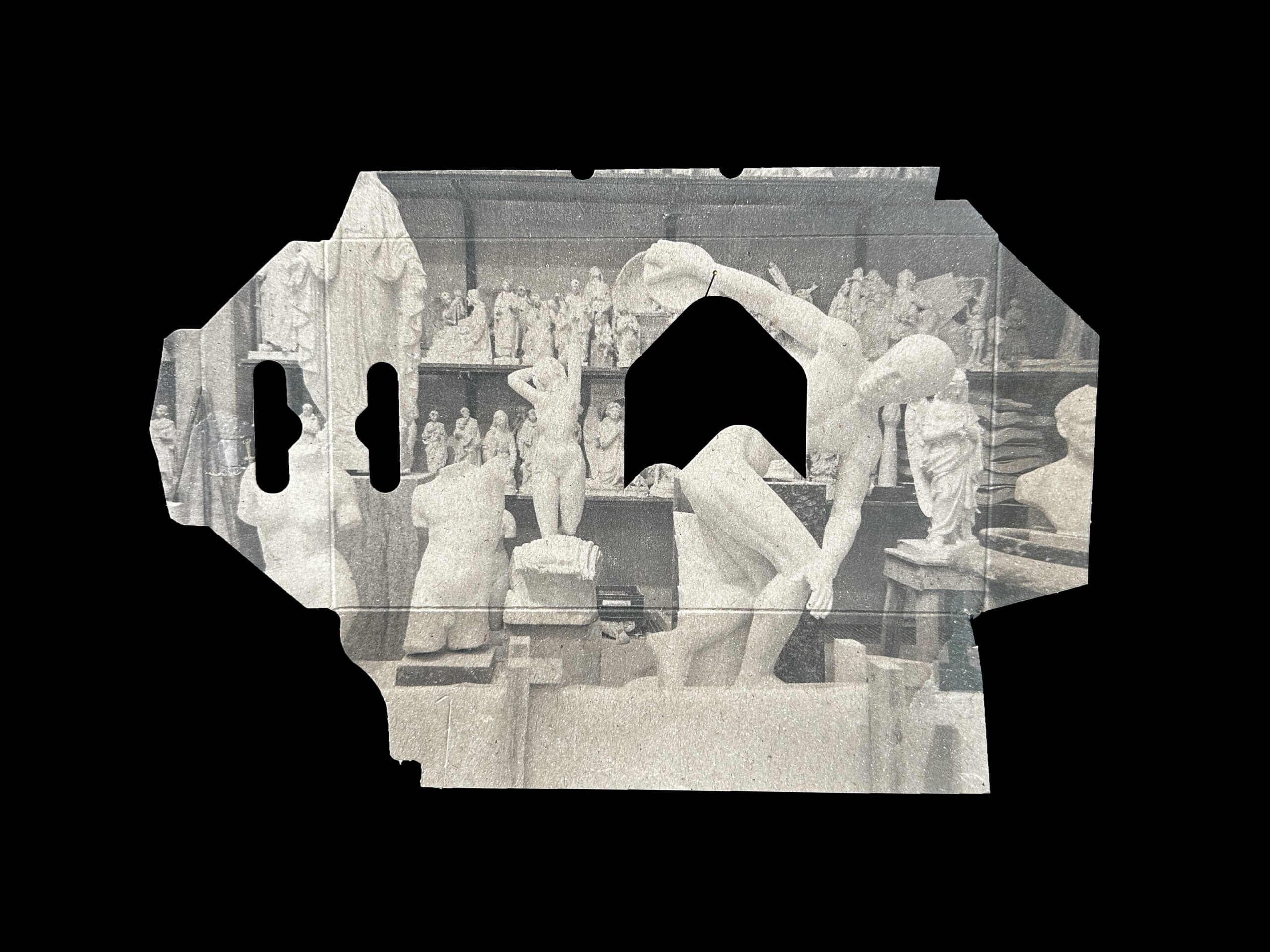
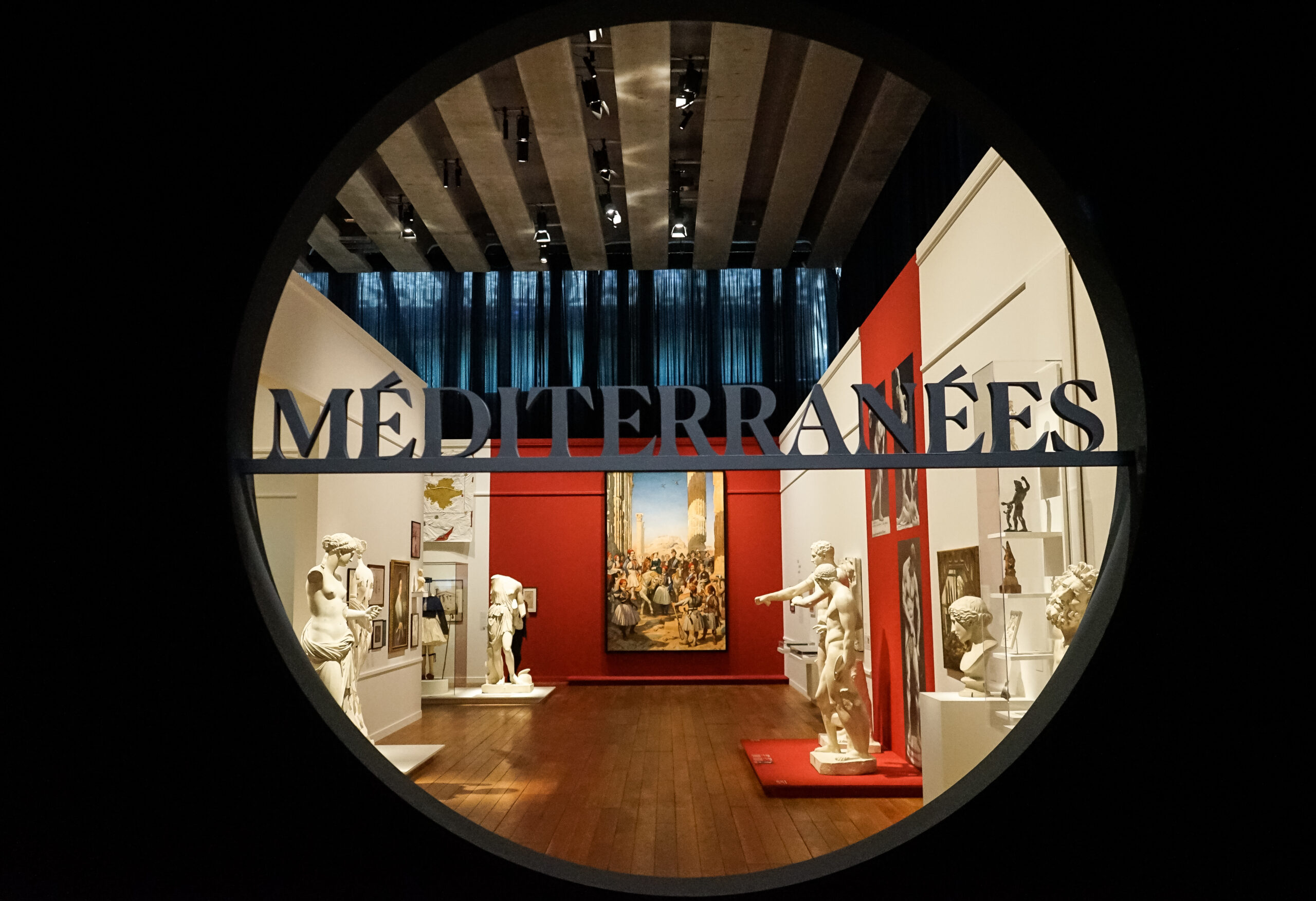
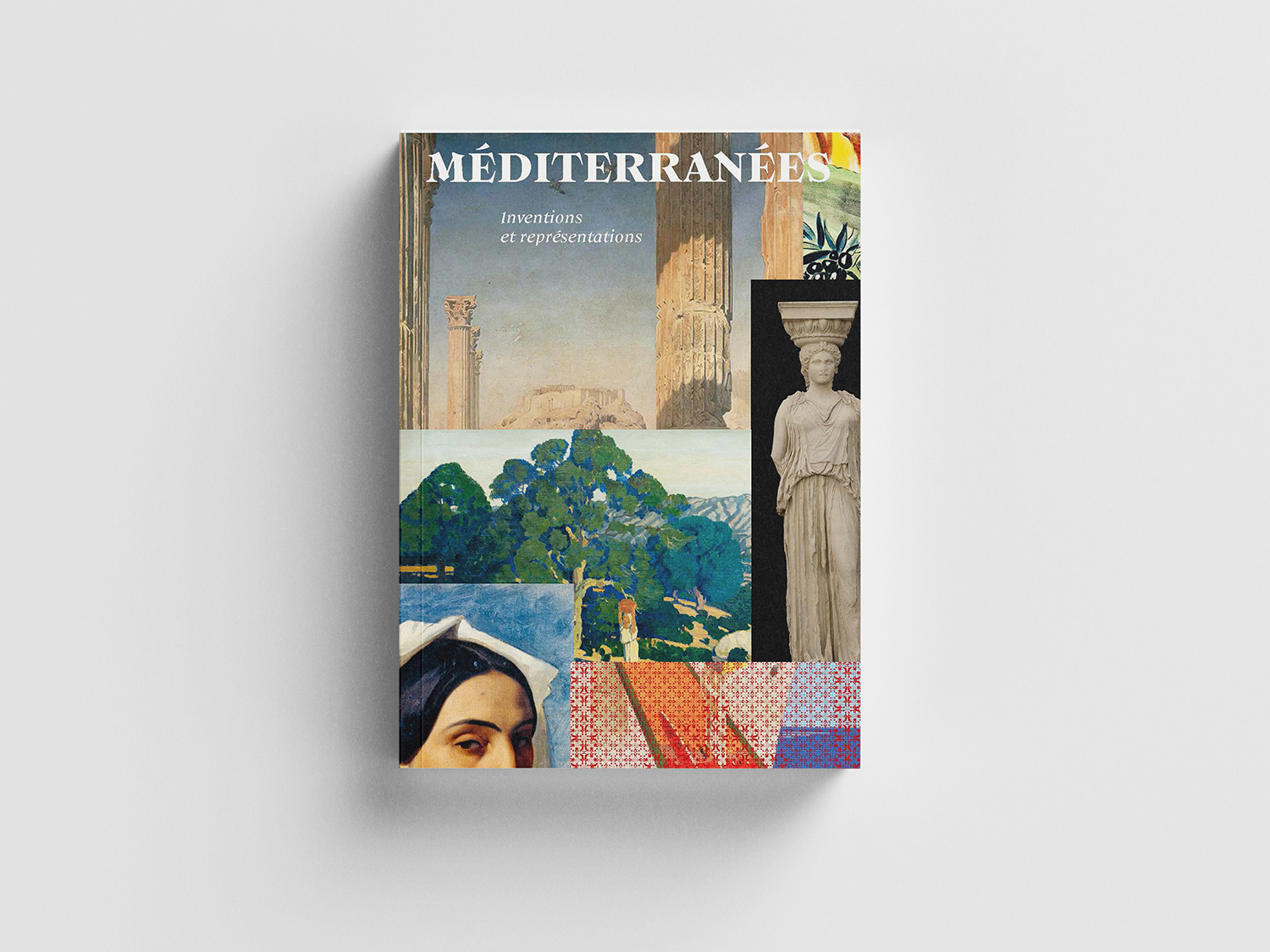
Mucem is the only social museum whose scientific project is fully dedicated to the cultures of the Mediterranean. To mark its 10th anniversary, the museum invites us to discover the wealth of its European and Mediterranean collections through a new permanent exhibition. From Greco-Latin antiquity through the colonial period to the present day, this exhibition plunges us into the history of the plural and fantasized “Mediterranean”.
This permanent exhibition is divided into several episodes, each of which will renew its presentation until 2030: “Méditerranées” will be regularly enriched with new masterpieces from the history of art, new treasures from the collections and new rare pieces, recently acquired or on loan, opening up new paths and new horizons for embracing the Mediterranean. Indeed, the imaginations of the Mediterranean are manifold, and not all of them can be shown in a single exhibition. “Mediterranees” examines the ways in which these imaginations have been formed and disseminated, and in particular the role of museums, by discovering how art history and ethnology have contributed to creating “images” of the Mediterranean, all relative and all constructed.
In fine art museums, it’s the civilizations of the past, particularly those of antiquity, that are the first to be showcased, building a Mediterranean of dreams nourished by Homer’s Odyssey, Greek temples and tales of Rome and Palmyra.
Museums of ethnography, which appeared during the colonial period, took an interest in societies that were geographically or culturally “distant”. The sincerity of scientific and human interest in the Other rubs shoulders with the interests and enterprises of the colonial powers.
The distinction between museums of fine art and museums of ethnography has created boundaries between the objects they preserve and the disciplines that study them. Today, Mucem wishes to transcend these boundaries and highlight the parallels and mutual influences that exist between these two types of museum. In line with this idea, “Méditerranées” blends different historical museographic models, from the dense display of fine art museums of the late 18th and 19th centuries, to the different forms of presentation used throughout history by museums of ethnography.
Around the exhibition
Interview with Raphaël Bories, Marie-Charlotte Calafat, Camille Faucourt, Enguerrand Lascols and Hélia Paukner, exhibition curators
Mucem
How does this new permanent exhibition tie in with the other permanent exhibition, “Populaire”, which opened last December?
Marie-Charlotte Calafat.
The two exhibitions are complementary: “Populaire?” showcases the museum’s collections, while “Méditerranées” addresses the complex and elusive subject of the Mediterranean world, which is what the public expects from Mucem. Both exhibitions place the collections at the heart of the museum, in all their diversity. Mucem is 10 years old, but has inherited French objects from the Musée des Arts et Traditions Populaires and European objects from the Musée de l’Homme. With the museum’s move to Marseille, new acquisitions have turned towards the Mediterranean. So we started with the Mucem’s “historical” collections, to show what they have to say about the Mediterranean. To make them easier to understand, we have supplemented, compared and contrasted them with recent acquisitions and deposits from other museums. This also allows us to question, in the Mediterranean context, the boundary between so-called “artistic” and “popular” objects, which is another point in common between the two permanent exhibitions. In the scenography, this idea is reflected in the evocation of historical museographic models, from the dense hanging of fine art museums in the late 18th and 19th centuries, to the different displays used in the history of ethnographic museums.
Mucem
The exhibition focuses on the construction of imaginary images of the Mediterranean: why did you choose to approach the project from this angle?
Raphaël Bories
Because that’s what struck us when we looked at our Mediterranean collections: for many of them, the image of the Mediterranean is not only very partial, but also highly influenced by fantasy and the imaginary. These sometimes stereotyped representations, the construction of which we have been showing since the 18th century, have not disappeared and still influence our view today. By showing these imaginations, we try to understand them, but above all to explain that they are inventions, not fixed realities. This is all the more important as they have been the subject of abuse and instrumentalization: the exhibition talks about this and strives to deconstruct them. These imaginaries have also influenced generations of artists and ethnologists, who have in turn helped to publicize and disseminate them, but also sometimes to call them into question. All of this is closely linked to a context in which European nations claimed the heritage of Greco-Roman antiquity, and embarked on the colonial conquest of the Mediterranean basin.
Mucem
Mucem’s collections are the heirs to this history, which combines fantasized antiquity and colonial domination?
Enguerrand Lascols
Not only, but to a large extent, for those relating to the Mediterranean. The folk art in Mucem’s collections is notably marked by the ancient model, central to artistic creation in Europe, as well as to the birth of national identities. Some of the objects collected around the Mediterranean by ethnologists, charged with studying human cultures in all their diversity, were collected in the context of colonization and the taste for the exoticism of the “Orient”. Of course, Mucem is not the only museum to preserve collections linked to these complex heritages: most do! What makes our approach so unique is that it questions and explains this context, with all its grey areas, and to do so, brings together collections that are not usually exhibited together: those of the museums formerly known as “fine arts” and “ethnography”. The aim is to show how the imaginations and heritages of the Mediterranean, which museums and their collections have helped to build, intersect, mix and influence each other.
Mucem
What do you consider to be the most outstanding works and objects on the tour?
Camille Faucourt
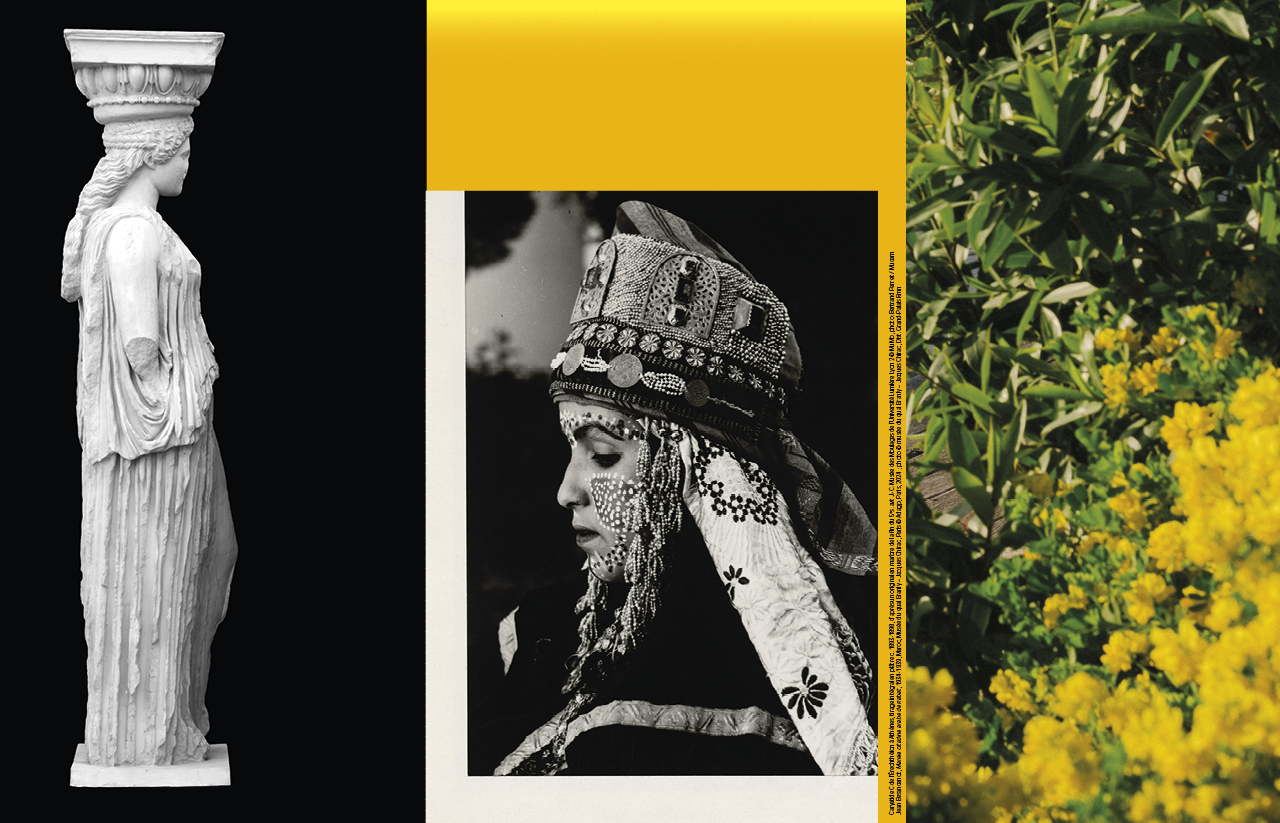
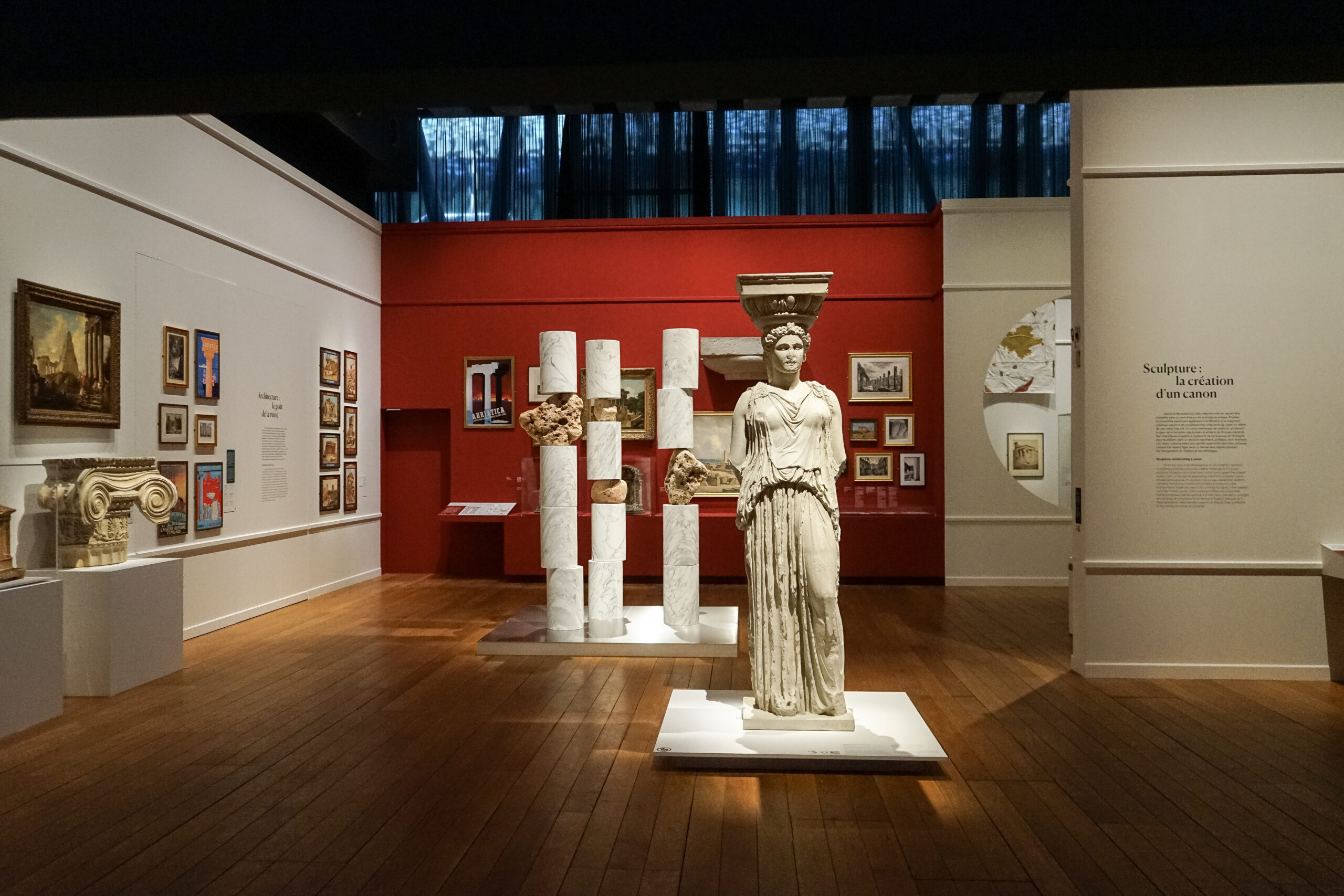
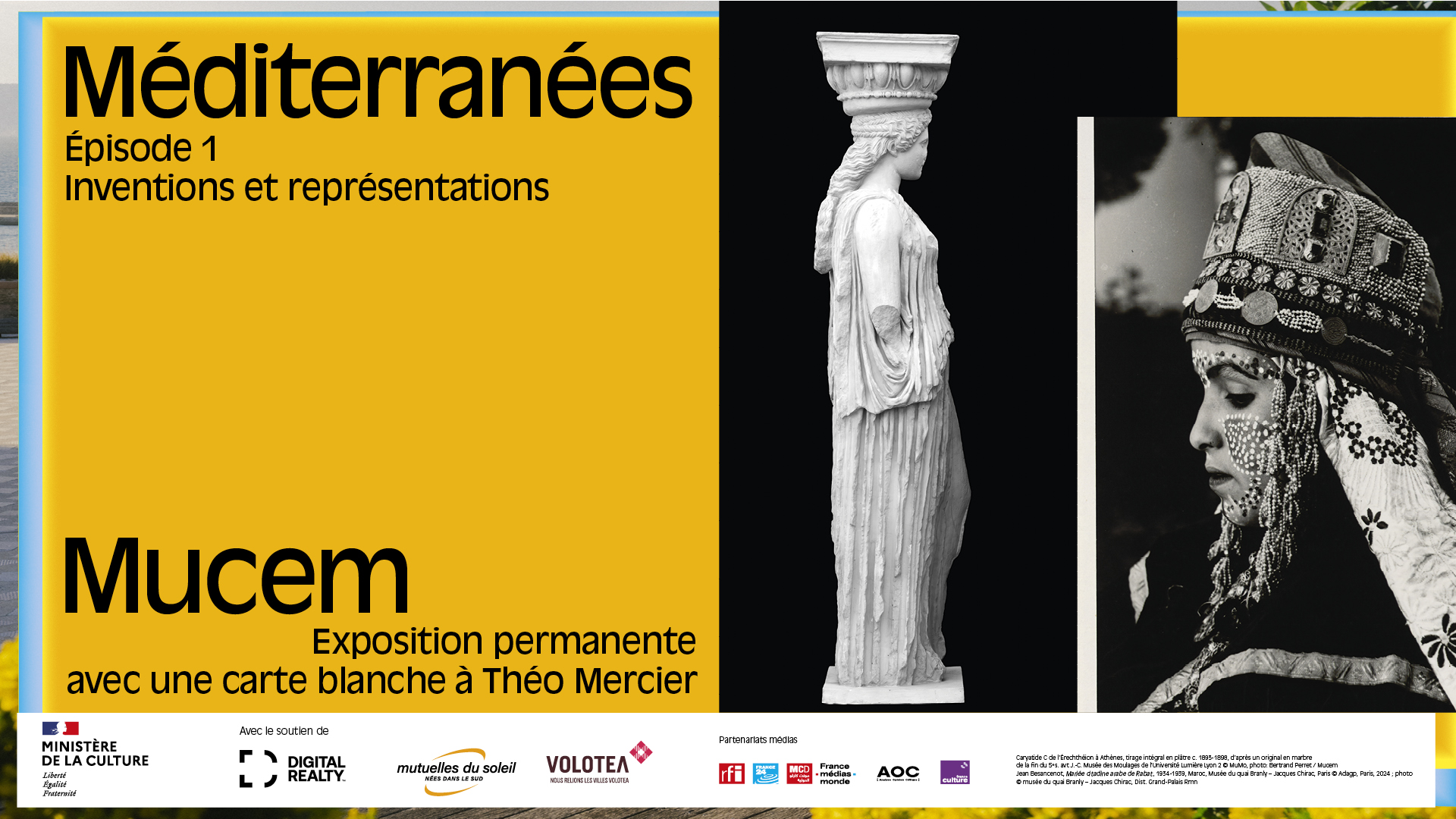
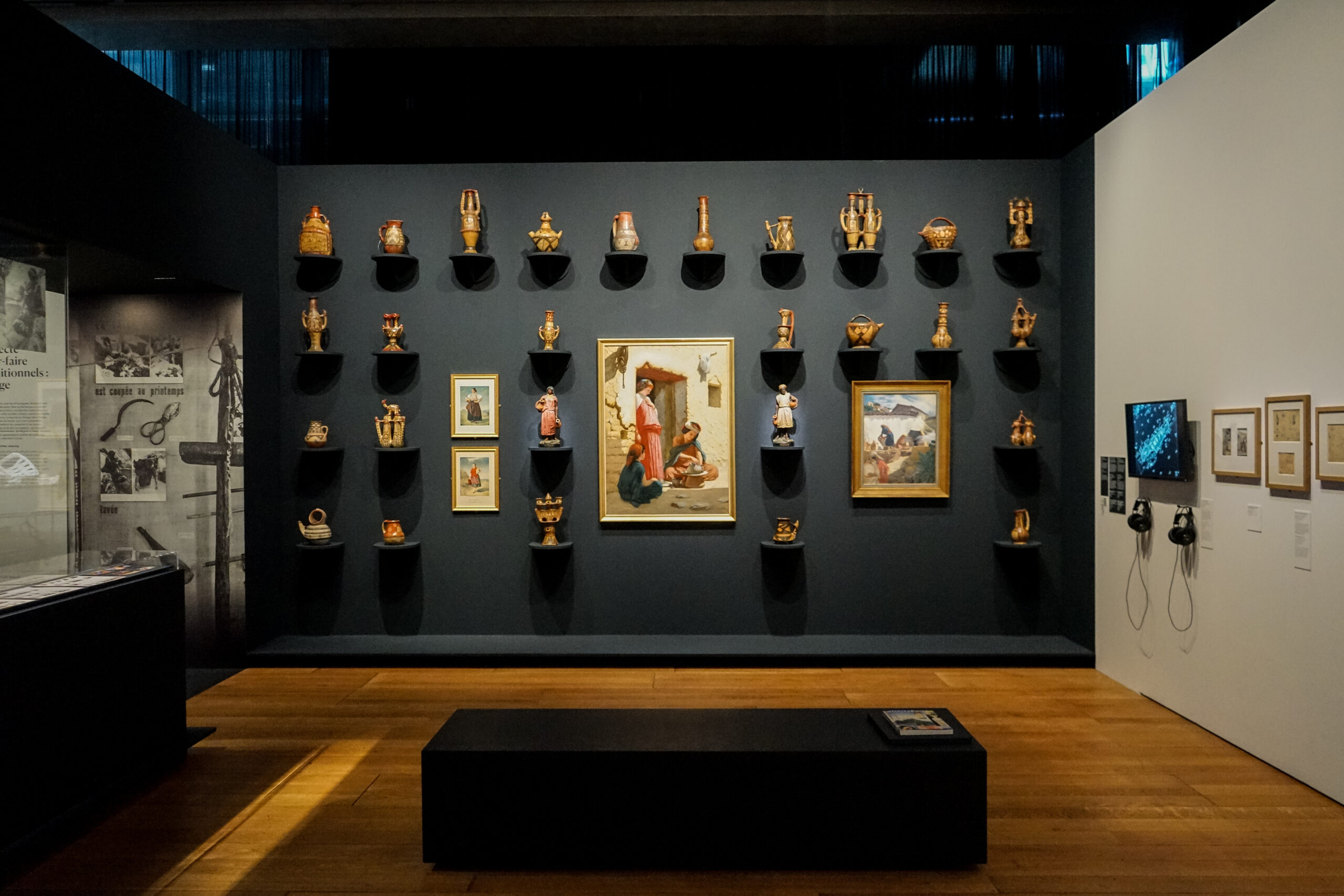
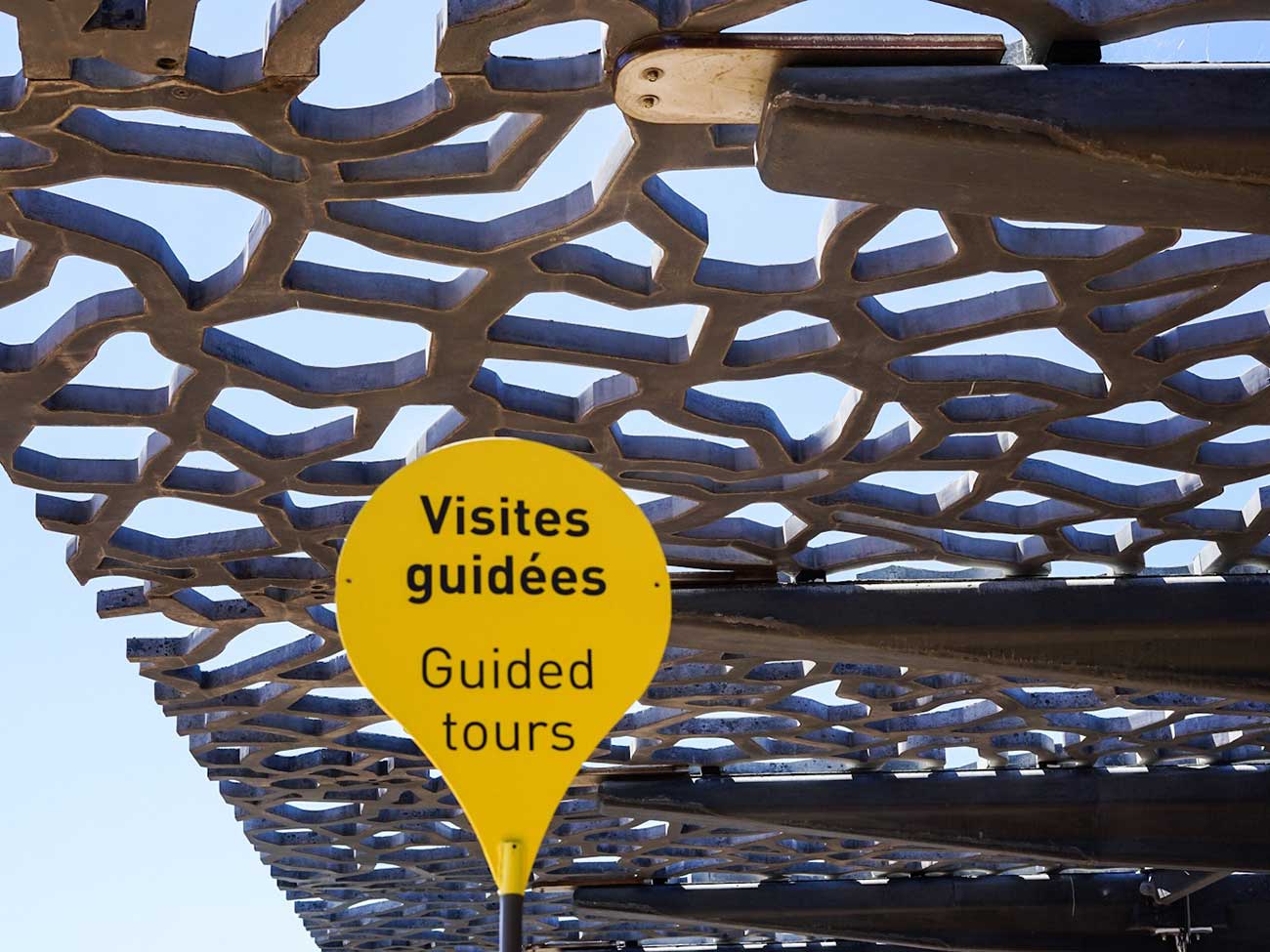
The exhibition features several life-size casts of important antique statues. They show how the artistic model of Antiquity was disseminated to artists and the general public alike. The cast of the caryatid from the Erechtheion in Athens, in addition to its monumental character, also bears witness to the appropriation of ancient heritage by nations and museums: the original is now in the British Museum. A large painting by Marseille-based painter Dominique Papety shows how 19th-century Greeks portrayed themselves as heirs to classical Greece, notably through the wearing of the fustanelle, a type of skirt inspired by ancient costume. The photographs and film of ethnologist Thérèse Rivière, taken in the Aurès region in the 1930s, are an exceptional testimony to the lives of the local people, to whom she was sincerely attached. For “Méditerranées”, we have acquired a painting by Jules Migonney depicting Algerian potters at work. It is exhibited alongside ceramics from our collections, collected in the field: the most remarkable works are each time linked to others, providing a better understanding of their context.
Mucem
Alongside historical objects, the exhibition also features works of contemporary art, notably by Théo Mercier… What do they tell us about today’s Mediterranean?
Hélia Paukner
First of all, they tell us that the imaginary worlds and heritage of the Mediterranean that are the subject of the exhibition continue to inspire artists, who continue to make use of them. In addition to their sensitive, aesthetic approach, their works also take a critical look at the ambiguities and tensions associated with the representations we have inherited. Théo Mercier has created several works for the exhibition around the themes of the manufacture of the gaze and heritage, whether ancient or ethnological. The artists’ work also gives voice to a plurality of current voices on the Mediterranean and its contemporary issues: the environment, migration, identities, colonial heritage, resource exploitation, gender. Throughout the exhibition, visitors can also hear the views of experts from all over the Mediterranean basin, as well as young people and eyewitnesses, on these contemporary phenomena. This multiplicity of approaches enables visitors to better grasp the plural and elusive nature of the Mediterranean, which is constructed above all through the eyes of those who imagine it.
Interview by Sandro Piscopo Reguieg (March 2024)
The exhibition features over 300 objects and documents, half of which are from the Mucem collections. Throughout the exhibition, contemporary artworks evoke today’s challenges in the Mediterranean. They were created by artists Francis Alÿs, Ziad Antar, Hélène Bellenger, Nidhal Chamekh, Joseph Eid (AFP), Nina Fischer & Maroan el Sani, Mouna Karray, Fatima Mazmouz, Selma and Sofiane Ouissi, Maria Varela, as well as Théo Mercier, who was invited to “infiltrate” the exhibition route with the kind participation of the Département des recherches archéologiques subaquatiques et sous-marines (DRASSM).
The deposits come from some twenty institutions: musée du Quai Branly – Jacques Chirac, musée d’Orsay, musée du Louvre, Bibliothèque nationale de France, Médiathèque du patrimoine, École des beaux-arts de Paris, musée du château de Versailles, conseil général de Seine-Saint-Denis, musée d’Archéologie nationale, musée des Beaux-Arts de Marseille, museon Arlaten, musée des Beaux-Arts de Bordeaux, musée des Beaux-Arts de Valenciennes, musée des Beaux-Arts d’Angers, musée des Beaux-Arts de Laval, musée Denys-Puech de Rodez, musée d’Art et d’Histoire de L’Isle-Adam, musée des moulages de l’université Lumière Lyon 2, Lugdunum Musée et théâtres romains, Ateliers d’art, moulages et chalcographie de la Réunion des musées nationaux – Grand Palais, musée Bénaki d’Athènes, musée de la Photographie de Thessalonique, musée de l’histoire du costume grec à Athènes, la galerie mor charpentier.
General Commissioner :
Marie-Charlotte Calafat, Chief Curator of Heritage and Scientific and Collections Director, Mucem
Commissioners :
Justine Bohbote, Raphaël Bories, Camille Faucourt, Enguerrand Lascols, Hélia Paukner, curators at Mucem
Set designer :
Pascal Rodriguez
Graphic designer :
Nicolas Journé, CL Design
Mucem is the only social museum whose scientific project is fully dedicated to the cultures of the Mediterranean. To mark its 10th anniversary, the museum invites us to discover the wealth of its European and Mediterranean collections through a new permanent exhibition. From Greco-Latin antiquity through the colonial period to the present day, this exhibition plunges us into the history of the plural and fantasized “Mediterranean”.
This permanent exhibition is divided into several episodes, each of which will renew its presentation until 2030: “Méditerranées” will be regularly enriched with new masterpieces from the history of art, new treasures from the collections and new rare pieces, recently acquired or on loan, opening up new paths and new horizons for embracing the Mediterranean. Indeed, the imaginations of the Mediterranean are manifold, and not all of them can be shown in a single exhibition. “Mediterranees” examines the ways in which these imaginations have been formed and disseminated, and in particular the role of museums, by discovering how art history and ethnology have contributed to creating “images” of the Mediterranean, all relative and all constructed.
In fine art museums, it’s the civilizations of the past, particularly those of antiquity, that are the first to be showcased, building a Mediterranean of dreams nourished by Homer’s Odyssey, Greek temples and tales of Rome and Palmyra.
Museums of ethnography, which appeared during the colonial period, took an interest in societies that were geographically or culturally “distant”. The sincerity of scientific and human interest in the Other rubs shoulders with the interests and enterprises of the colonial powers.
The distinction between museums of fine art and museums of ethnography has created boundaries between the objects they preserve and the disciplines that study them. Today, Mucem wishes to transcend these boundaries and highlight the parallels and mutual influences that exist between these two types of museum. In line with this idea, “Méditerranées” blends different historical museographic models, from the dense display of fine art museums of the late 18th and 19th centuries, to the different forms of presentation used throughout history by museums of ethnography.
Around the exhibition
Interview with Raphaël Bories, Marie-Charlotte Calafat, Camille Faucourt, Enguerrand Lascols and Hélia Paukner, exhibition curators
Mucem
How does this new permanent exhibition tie in with the other permanent exhibition, “Populaire”, which opened last December?
Marie-Charlotte Calafat.
The two exhibitions are complementary: “Populaire?” showcases the museum’s collections, while “Méditerranées” addresses the complex and elusive subject of the Mediterranean world, which is what the public expects from Mucem. Both exhibitions place the collections at the heart of the museum, in all their diversity. Mucem is 10 years old, but has inherited French objects from the Musée des Arts et Traditions Populaires and European objects from the Musée de l’Homme. With the museum’s move to Marseille, new acquisitions have turned towards the Mediterranean. So we started with the Mucem’s “historical” collections, to show what they have to say about the Mediterranean. To make them easier to understand, we have supplemented, compared and contrasted them with recent acquisitions and deposits from other museums. This also allows us to question, in the Mediterranean context, the boundary between so-called “artistic” and “popular” objects, which is another point in common between the two permanent exhibitions. In the scenography, this idea is reflected in the evocation of historical museographic models, from the dense hanging of fine art museums in the late 18th and 19th centuries, to the different displays used in the history of ethnographic museums.
Mucem
The exhibition focuses on the construction of imaginary images of the Mediterranean: why did you choose to approach the project from this angle?
Raphaël Bories
Because that’s what struck us when we looked at our Mediterranean collections: for many of them, the image of the Mediterranean is not only very partial, but also highly influenced by fantasy and the imaginary. These sometimes stereotyped representations, the construction of which we have been showing since the 18th century, have not disappeared and still influence our view today. By showing these imaginations, we try to understand them, but above all to explain that they are inventions, not fixed realities. This is all the more important as they have been the subject of abuse and instrumentalization: the exhibition talks about this and strives to deconstruct them. These imaginaries have also influenced generations of artists and ethnologists, who have in turn helped to publicize and disseminate them, but also sometimes to call them into question. All of this is closely linked to a context in which European nations claimed the heritage of Greco-Roman antiquity, and embarked on the colonial conquest of the Mediterranean basin.
Mucem
Mucem’s collections are the heirs to this history, which combines fantasized antiquity and colonial domination?
Enguerrand Lascols
Not only, but to a large extent, for those relating to the Mediterranean. The folk art in Mucem’s collections is notably marked by the ancient model, central to artistic creation in Europe, as well as to the birth of national identities. Some of the objects collected around the Mediterranean by ethnologists, charged with studying human cultures in all their diversity, were collected in the context of colonization and the taste for the exoticism of the “Orient”. Of course, Mucem is not the only museum to preserve collections linked to these complex heritages: most do! What makes our approach so unique is that it questions and explains this context, with all its grey areas, and to do so, brings together collections that are not usually exhibited together: those of the museums formerly known as “fine arts” and “ethnography”. The aim is to show how the imaginations and heritages of the Mediterranean, which museums and their collections have helped to build, intersect, mix and influence each other.
Mucem
What do you consider to be the most outstanding works and objects on the tour?
Camille Faucourt
The exhibition features several life-size casts of important antique statues. They show how the artistic model of Antiquity was disseminated to artists and the general public alike. The cast of the caryatid from the Erechtheion in Athens, in addition to its monumental character, also bears witness to the appropriation of ancient heritage by nations and museums: the original is now in the British Museum. A large painting by Marseille-based painter Dominique Papety shows how 19th-century Greeks portrayed themselves as heirs to classical Greece, notably through the wearing of the fustanelle, a type of skirt inspired by ancient costume. The photographs and film of ethnologist Thérèse Rivière, taken in the Aurès region in the 1930s, are an exceptional testimony to the lives of the local people, to whom she was sincerely attached. For “Méditerranées”, we have acquired a painting by Jules Migonney depicting Algerian potters at work. It is exhibited alongside ceramics from our collections, collected in the field: the most remarkable works are each time linked to others, providing a better understanding of their context.
Mucem
Alongside historical objects, the exhibition also features works of contemporary art, notably by Théo Mercier… What do they tell us about today’s Mediterranean?
Hélia Paukner
First of all, they tell us that the imaginary worlds and heritage of the Mediterranean that are the subject of the exhibition continue to inspire artists, who continue to make use of them. In addition to their sensitive, aesthetic approach, their works also take a critical look at the ambiguities and tensions associated with the representations we have inherited. Théo Mercier has created several works for the exhibition around the themes of the manufacture of the gaze and heritage, whether ancient or ethnological. The artists’ work also gives voice to a plurality of current voices on the Mediterranean and its contemporary issues: the environment, migration, identities, colonial heritage, resource exploitation, gender. Throughout the exhibition, visitors can also hear the views of experts from all over the Mediterranean basin, as well as young people and eyewitnesses, on these contemporary phenomena. This multiplicity of approaches enables visitors to better grasp the plural and elusive nature of the Mediterranean, which is constructed above all through the eyes of those who imagine it.
Interview by Sandro Piscopo Reguieg (March 2024)
Découvrir l'exposition permanente "Méditerranées"
The exhibition features over 300 objects and documents, half of which are from the Mucem collections. Throughout the exhibition, contemporary artworks evoke today’s challenges in the Mediterranean. They were created by artists Francis Alÿs, Ziad Antar, Hélène Bellenger, Nidhal Chamekh, Joseph Eid (AFP), Nina Fischer & Maroan el Sani, Mouna Karray, Fatima Mazmouz, Selma and Sofiane Ouissi, Maria Varela, as well as Théo Mercier, who was invited to “infiltrate” the exhibition route with the kind participation of the Département des recherches archéologiques subaquatiques et sous-marines (DRASSM).
The deposits come from some twenty institutions: musée du Quai Branly – Jacques Chirac, musée d’Orsay, musée du Louvre, Bibliothèque nationale de France, Médiathèque du patrimoine, École des beaux-arts de Paris, musée du château de Versailles, conseil général de Seine-Saint-Denis, musée d’Archéologie nationale, musée des Beaux-Arts de Marseille, museon Arlaten, musée des Beaux-Arts de Bordeaux, musée des Beaux-Arts de Valenciennes, musée des Beaux-Arts d’Angers, musée des Beaux-Arts de Laval, musée Denys-Puech de Rodez, musée d’Art et d’Histoire de L’Isle-Adam, musée des moulages de l’université Lumière Lyon 2, Lugdunum Musée et théâtres romains, Ateliers d’art, moulages et chalcographie de la Réunion des musées nationaux – Grand Palais, musée Bénaki d’Athènes, musée de la Photographie de Thessalonique, musée de l’histoire du costume grec à Athènes, la galerie mor charpentier.
General Commissioner :
Marie-Charlotte Calafat, Chief Curator of Heritage and Scientific and Collections Director, Mucem
Commissioners :
Justine Bohbote, Raphaël Bories, Camille Faucourt, Enguerrand Lascols, Hélia Paukner, curators at Mucem
Set designer :
Pascal Rodriguez
Graphic designer :
Nicolas Journé, CL Design
Related activities or events
View full agenda
Dreaming the Mediterranean
Workshop tour for ages 6 to 11
In the permanent “Mediterranean” exhibition, children discover how works of art, objects and stories have created dream images of the Mediterranean. Between ancient temples, mythological heroes and vanished cities, they explore these imaginary worlds before creating their own Mediterranean vision in a workshop.Le Monday, Apr 6, 2026
Jusqu'au Saturday, May 23, 2026at 16h
J4 / Island workshop
- Free of charge
Flash Tours
Our mediators welcome you for free flash visits, on presentation of your exhibition ticket, to discover Mucem's exhibitions in a different way.
February Every Saturday and Sunday, then every day (except Tuesday) during Zone B school vacations from Monday February 16th to Sunday March 1st. – Mediterranean: 2 p.m. and 2:30 p.m. – Don Quixote: 3 p.m. and 3:30 p.m.
March Every Saturday and Sunday until Sunday, March 15 – Mediterranean: 2 p.m. and 2:30 p.m. – Don Quixote: 3 p.m. and 3:30 p.m. Every Saturday and Sunday from Saturday, March 21 – Bonnes Mères: 2 p.m. and 2:30 p.m. – Don Quixote: 3 p.m. and 3:30 p.m.Le Saturday, Mar 28, 2026
Jusqu'au Sunday, Apr 26, 2026at 14h
J4
Guided tour and discovery of a tactile trail
Mediterranean" exhibition
From Greco-Latin Antiquity to the present day, this new permanent exhibition plunges us into the history of plural and fantasized “Mediterraneas”. It presents multiple perspectives on Mediterranean spaces: those of artists, ethnologists, curators and researchers from the Mediterranean basin, as well as those of young Marseilles residents. Designed to meet the needs of visually-impaired and blind visitors, this tour is integrated into the exhibition and accessible to all visitors....On Saturday, Oct 26, 2024 and on Saturday, Aug 2, 2025
at 11h
J4
Guided tours in LSF
Mediterranean" exhibition
Mucem offers guided tours in LSF (French Sign Language). Come and discover the Mucem exhibitions with your family or friends. Mucem is the only social museum whose scientific project is fully dedicated to the cultures of the Mediterranean. To mark its 10th anniversary, the museum invites us to discover the wealth of its European and Mediterranean collections through a new permanent exhibition. From Greco-Latin antiquity through the colonial period to the present day, this exhibition plunges us...On Saturday, Feb 8, 2025 and on Saturday, Aug 30, 2025
J4 / Hall