Bande-annonce de l'exposition « Hervé Di Rosa, Un air de famille »
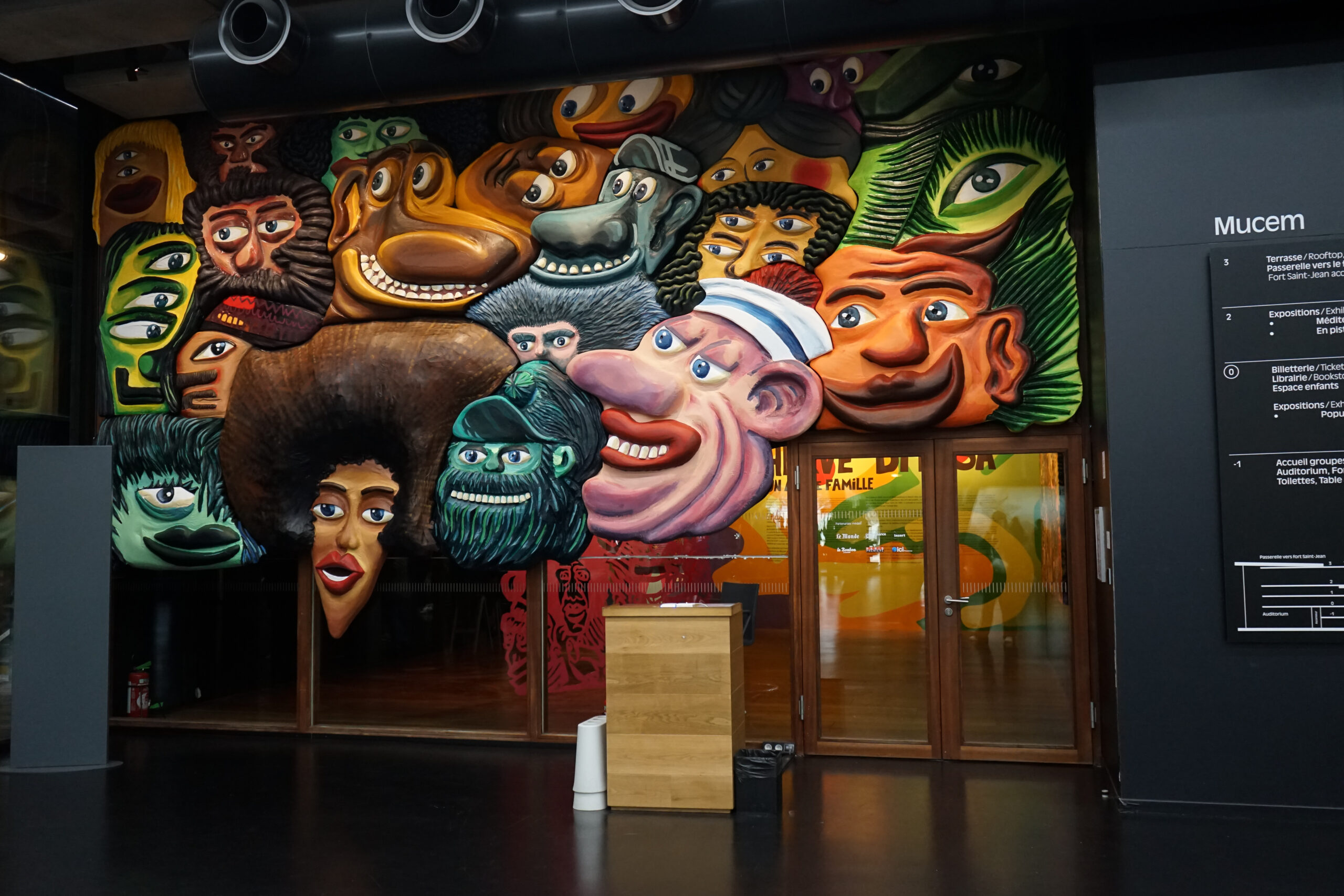
With total freedom, Hervé Di Rosa has chosen works from the Mucem's collections that appeal to his sensibility, to create a complementary piece around each of them.
Just as a ring is designed for a diamond, so a reliquary is built to highlight what is sacred. The artist felt that there was a family resemblance between his works and the folk art objects at the Mucem.
Three sculpted panels by Hervé Di Rosa, created in the Amadoua highlands of the Noun region (western Cameroon), stand alongside a fish-shaped merry-go-round. At the other end of the room, a ladder made of ox yokes collected in the French regions by the museum’s ethnographers seems to escape (or give wings?) to a resin cow painted by the artist. A long hunting rifle (3.70m!), once used for waterfowl, is presented amid a myriad of wooden birds, carved years ago by Marius Di Rosa. This collection of hunting decoys is all the more important as it is undoubtedly a founding element in the artist’s career: his father, an SNCF employee, spent much of his spare time carving and coloring decoys for duck hunting. From an early age, Hervé Di Rosa watched his father work wood, sculpting and painting it. These sculptures were not destined for the museum: created on the kitchen table, they were displayed on the water, in the ponds.
About the artist
Hervé Di Rosa
Hervé Di Rosa was born in Sète in 1959. In 1981, he co-founded the Figuration Libre movement. He is the author or subject of over 150 art books and publications. Conceiver of Art Modeste, he founded the Musée International des Arts Modestes (MIAM) in Sète in 2000. Since 1981, his work has been the subject of over 200 solo exhibitions. He currently lives and works in Lisbon, Portugal. He was elected to the Académie des Beaux-Arts in December 2022.
To present the beautiful and patient work of embedding Hervé Di Rosa’s custom-made works in the Mucem collections, an inventive and joyful itinerary was needed. Artistic director Jean Seisser, a long-standing accomplice of Hervé Di Rosa, imagined the exhibition as an archipelago made up of some fifteen islets. Each of these islands brings together some of the objects in the Mucem collections with a creation by Hervé Di Rosa. Each island tells its own story, freely interpretable by the visitor.
Around the works in the exhibition
Works by Hervé Di Rosa
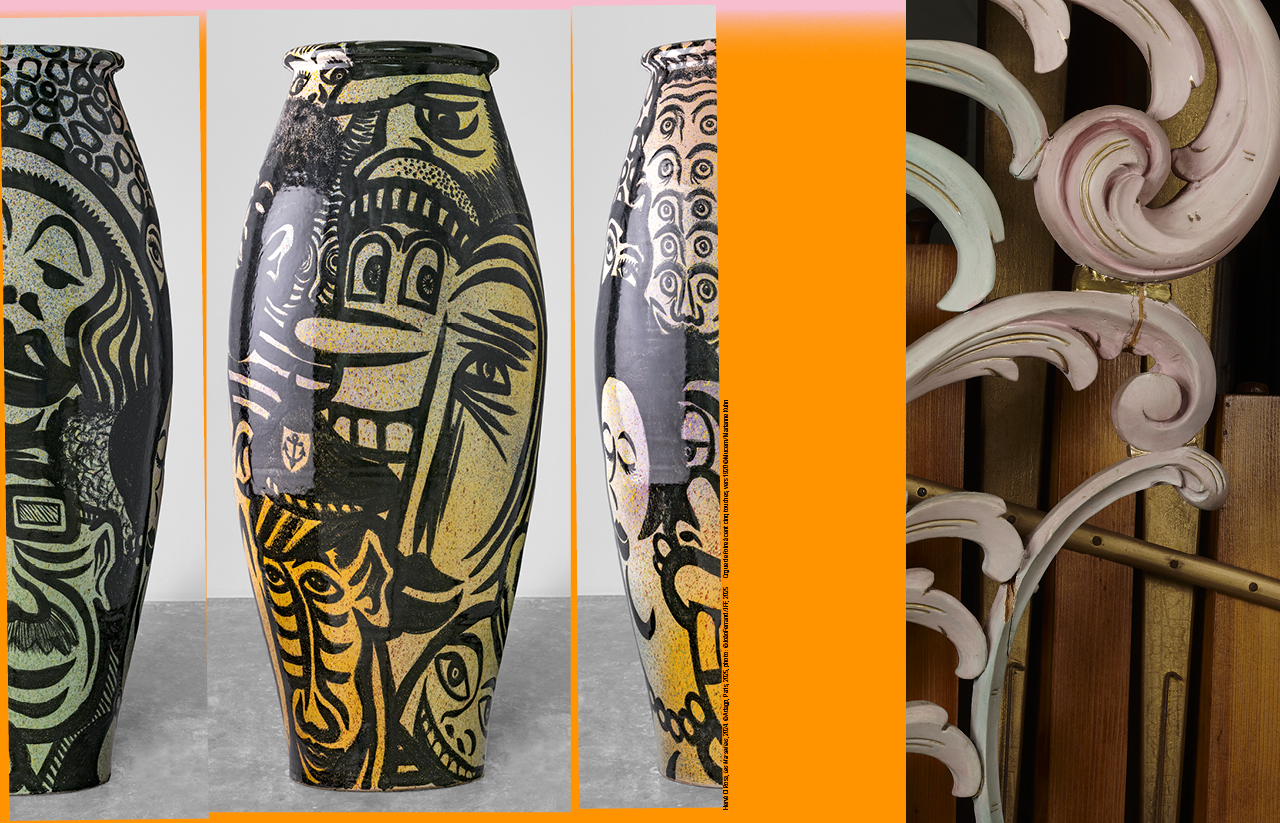
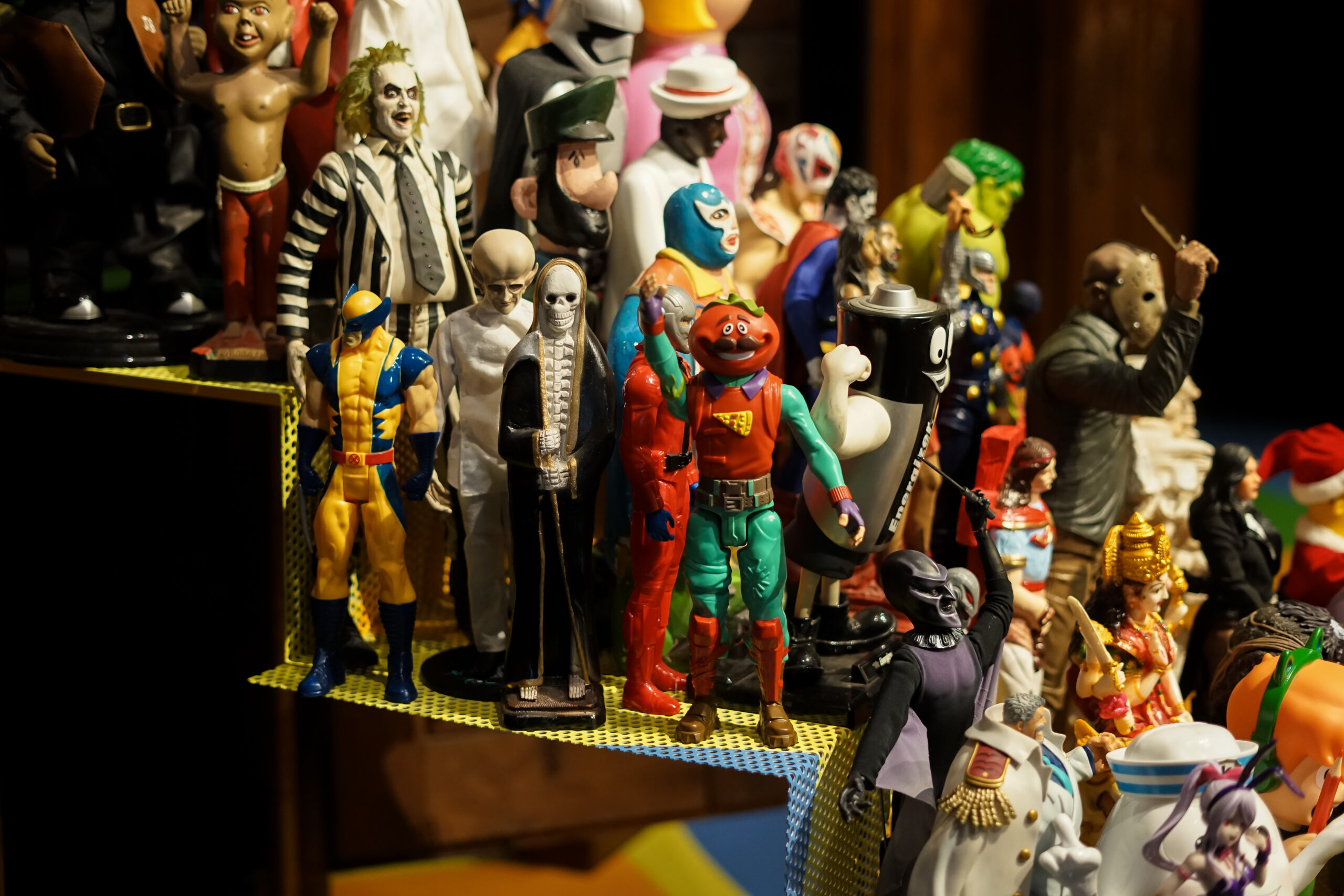
Some sixty works by Hervé Di Rosa are on show, along with numerous figurines from his personal collection, and wooden hunting decoys carved and painted by his father, Marius Di Rosa. Hervé Di Rosa’s works at the Mucem range from ceramics, created for this exhibition, to sculptures in wood (ronde-bosse, bas-relief), bronze, papier-mâché and resin, as well as paintings (acrylic on canvas). Some of the artist’s works were created especially for this exhibition.
Works in the collections
More than 120 works from the Mucem collections are featured in this exhibition. The main works presented are a Norman wardrobe (early 19th century), a Breton wardrobe (early 19th century), a West Indian wardrobe (early 20th century), a Lorraine dresser (18th century), a hunting rifle (1st half of the 19th century), French ox yokes (20th century), a monumental fairground organ (early 20th century), a model mine made by a miner (late 20th century), two merry-go-rounds (20th century), some twenty Sicilian puppets (mid-20th century), a mechanical laundry (early 20th century), bowling balls (20th century) and a large number of whistles, statuettes and water whistles (19th-20th centuries), most of them in ceramic.
Curious about everything and driven by a strong desire to travel the world, immediately after graduating from high school he enrolled at the École Nationale Supérieure des Arts Décoratifs (Paris). Wherever and whenever he goes, Hervé Di Rosa works with local artisans. Those who, throughout the world, know how to update their know-how with each new generation, to create works for the places where they appear, and the people who live there.
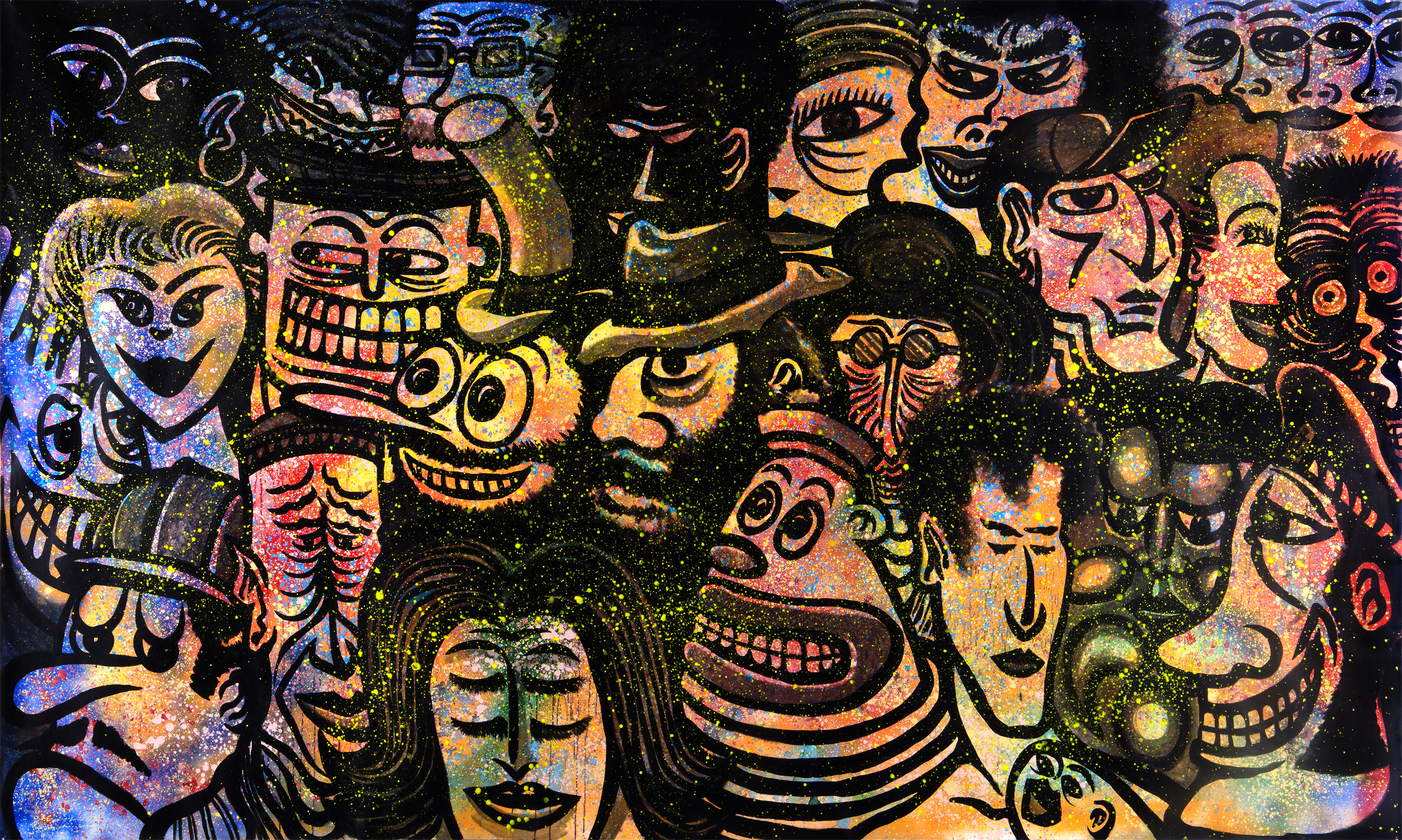
A large painting on canvas depicts the “Marseillais”, and their portraits also form the backdrop for the suspended claustras that punctuate the exhibition.
Art Direction
Jean Seisser, art critic
Police station
Vincent Giovannoni, Chief Curator, Head of the Performing Arts Department, Mucem
Scenography
Gabrielle Laurin Mercury and Studio Mash
With total freedom, Hervé Di Rosa has chosen works from the Mucem's collections that appeal to his sensibility, to create a complementary piece around each of them.
Just as a ring is designed for a diamond, so a reliquary is built to highlight what is sacred. The artist felt that there was a family resemblance between his works and the folk art objects at the Mucem.
Three sculpted panels by Hervé Di Rosa, created in the Amadoua highlands of the Noun region (western Cameroon), stand alongside a fish-shaped merry-go-round. At the other end of the room, a ladder made of ox yokes collected in the French regions by the museum’s ethnographers seems to escape (or give wings?) to a resin cow painted by the artist. A long hunting rifle (3.70m!), once used for waterfowl, is presented amid a myriad of wooden birds, carved years ago by Marius Di Rosa. This collection of hunting decoys is all the more important as it is undoubtedly a founding element in the artist’s career: his father, an SNCF employee, spent much of his spare time carving and coloring decoys for duck hunting. From an early age, Hervé Di Rosa watched his father work wood, sculpting and painting it. These sculptures were not destined for the museum: created on the kitchen table, they were displayed on the water, in the ponds.
Bande-annonce de l'exposition « Hervé Di Rosa, Un air de famille »
About the artist
Hervé Di Rosa
Hervé Di Rosa was born in Sète in 1959. In 1981, he co-founded the Figuration Libre movement. He is the author or subject of over 150 art books and publications. Conceiver of Art Modeste, he founded the Musée International des Arts Modestes (MIAM) in Sète in 2000. Since 1981, his work has been the subject of over 200 solo exhibitions. He currently lives and works in Lisbon, Portugal. He was elected to the Académie des Beaux-Arts in December 2022.
To present the beautiful and patient work of embedding Hervé Di Rosa’s custom-made works in the Mucem collections, an inventive and joyful itinerary was needed. Artistic director Jean Seisser, a long-standing accomplice of Hervé Di Rosa, imagined the exhibition as an archipelago made up of some fifteen islets. Each of these islands brings together some of the objects in the Mucem collections with a creation by Hervé Di Rosa. Each island tells its own story, freely interpretable by the visitor.
Around the works in the exhibition
Works by Hervé Di Rosa
Some sixty works by Hervé Di Rosa are on show, along with numerous figurines from his personal collection, and wooden hunting decoys carved and painted by his father, Marius Di Rosa. Hervé Di Rosa’s works at the Mucem range from ceramics, created for this exhibition, to sculptures in wood (ronde-bosse, bas-relief), bronze, papier-mâché and resin, as well as paintings (acrylic on canvas). Some of the artist’s works were created especially for this exhibition.
Works in the collections
More than 120 works from the Mucem collections are featured in this exhibition. The main works presented are a Norman wardrobe (early 19th century), a Breton wardrobe (early 19th century), a West Indian wardrobe (early 20th century), a Lorraine dresser (18th century), a hunting rifle (1st half of the 19th century), French ox yokes (20th century), a monumental fairground organ (early 20th century), a model mine made by a miner (late 20th century), two merry-go-rounds (20th century), some twenty Sicilian puppets (mid-20th century), a mechanical laundry (early 20th century), bowling balls (20th century) and a large number of whistles, statuettes and water whistles (19th-20th centuries), most of them in ceramic.
Curious about everything and driven by a strong desire to travel the world, immediately after graduating from high school he enrolled at the École Nationale Supérieure des Arts Décoratifs (Paris). Wherever and whenever he goes, Hervé Di Rosa works with local artisans. Those who, throughout the world, know how to update their know-how with each new generation, to create works for the places where they appear, and the people who live there.
A large painting on canvas depicts the “Marseillais”, and their portraits also form the backdrop for the suspended claustras that punctuate the exhibition.
Art Direction
Jean Seisser, art critic
Police station
Vincent Giovannoni, Chief Curator, Head of the Performing Arts Department, Mucem
Scenography
Gabrielle Laurin Mercury and Studio Mash
Related activities or events
View full agenda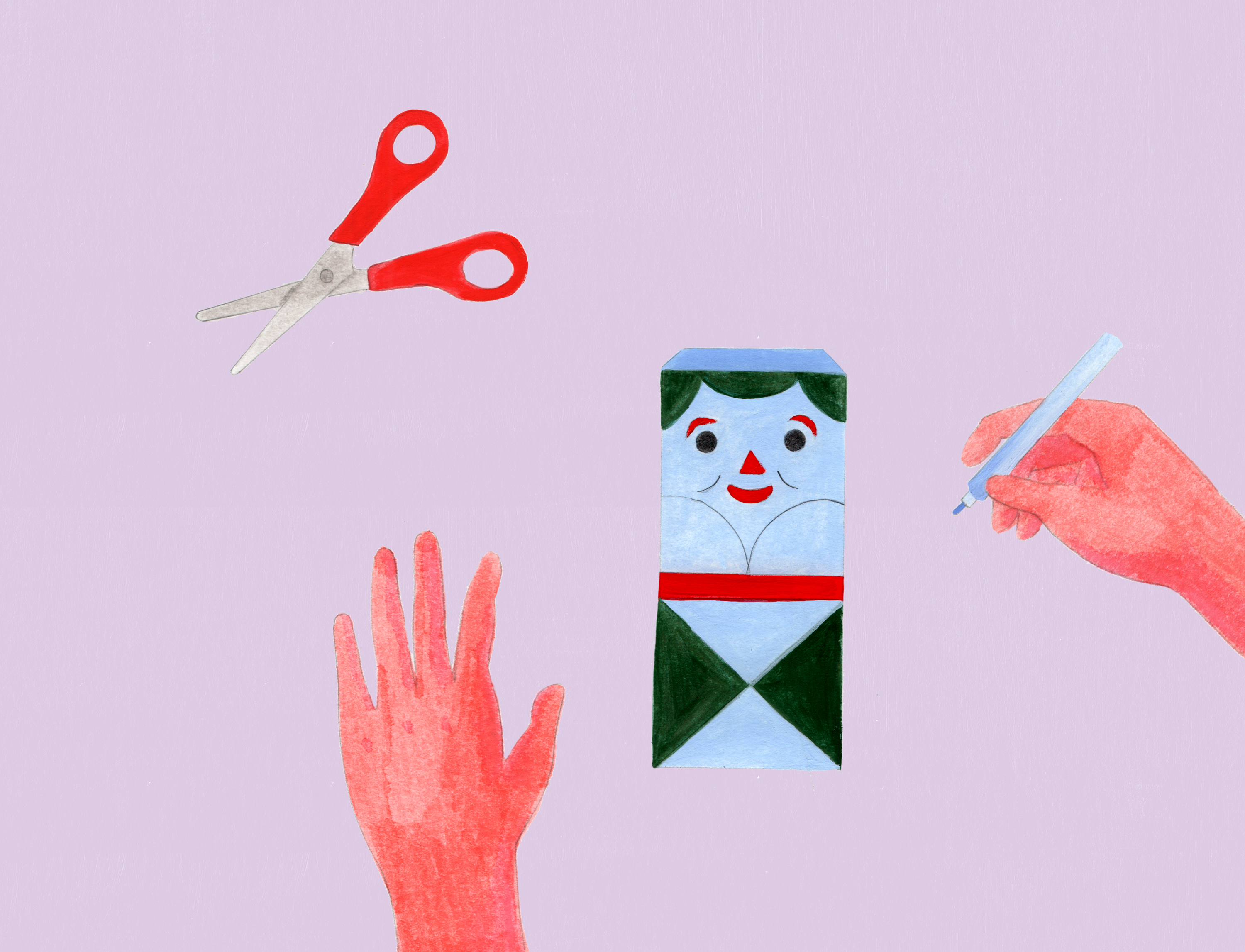
All art
Workshop-visit in connection with the exhibition “Hervé Di Rosa, Un air de famille”. (ages 6 and up) In collaboration with Association Mobile Hervé Di Rosa is a multi-faceted artist whose practice lies somewhere between folk art, modest art and contemporary art. After a visit to the exhibition, this hands-on art workshop lets you create your own totemic character, in a nod to the artist’s colorful pop universe. Workshops for children are conducted in French.From Sunday, Jul 13, 2025
to Sunday, Aug 17, 2025at 16h30
J4
- Free of charge
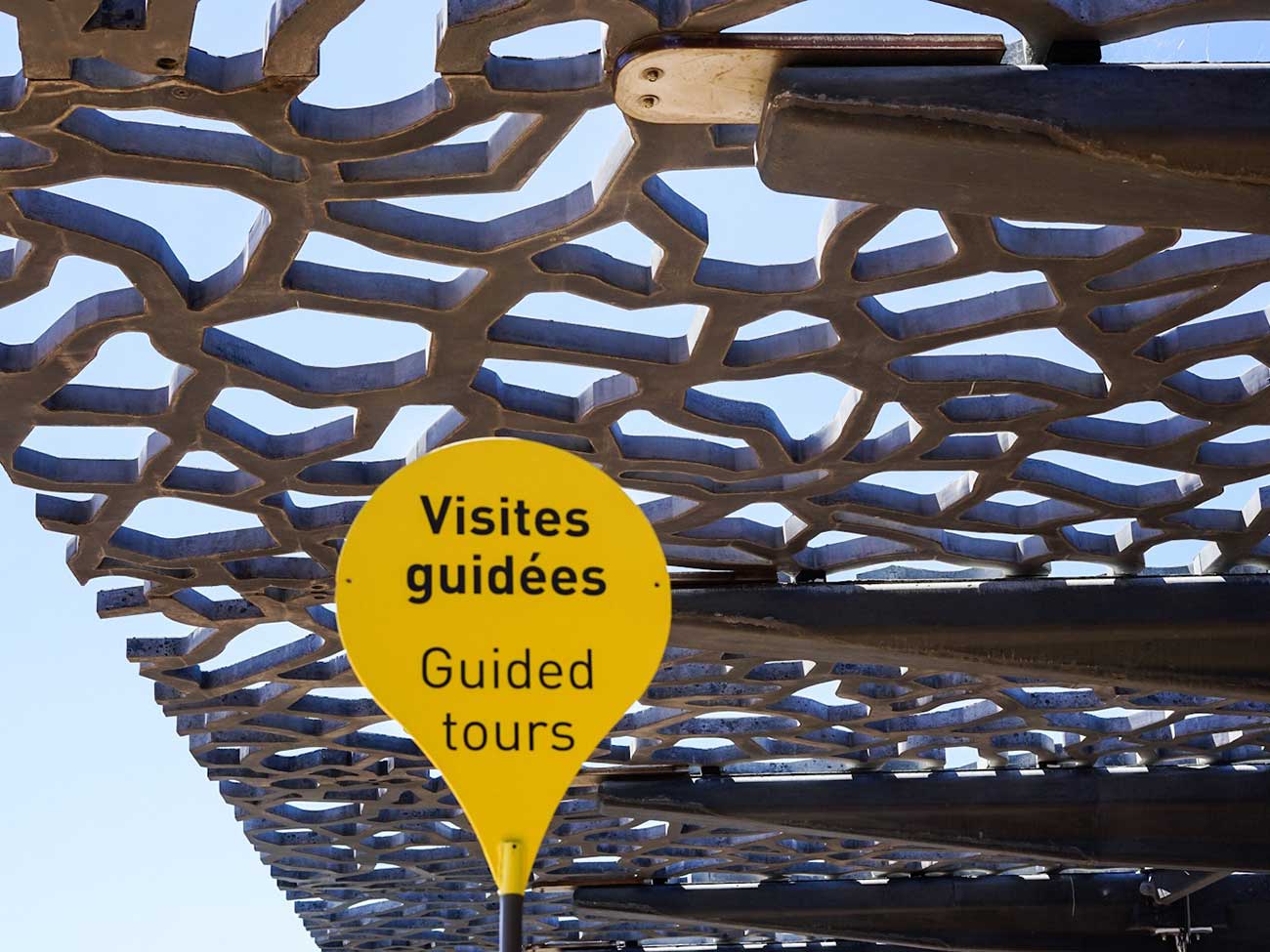
Flash Tours
Our mediators welcome you for free flash visits, on presentation of your exhibition ticket, to discover Mucem's exhibitions in a different way.
February Every Saturday and Sunday, then every day (except Tuesday) during Zone B school vacations from Monday February 16th to Sunday March 1st. – Mediterranean: 2 p.m. and 2:30 p.m. – Don Quixote: 3 p.m. and 3:30 p.m.
March Every Saturday and Sunday until Sunday, March 15 – Mediterranean: 2 p.m. and 2:30 p.m. – Don Quixote: 3 p.m. and 3:30 p.m. Every Saturday and Sunday from Saturday, March 21 – Bonnes Mères: 2 p.m. and 2:30 p.m. – Don Quixote: 3 p.m. and 3:30 p.m.Le Saturday, Mar 14, 2026
Jusqu'au Sunday, Mar 29, 2026at 14h
J4
- Free of charge
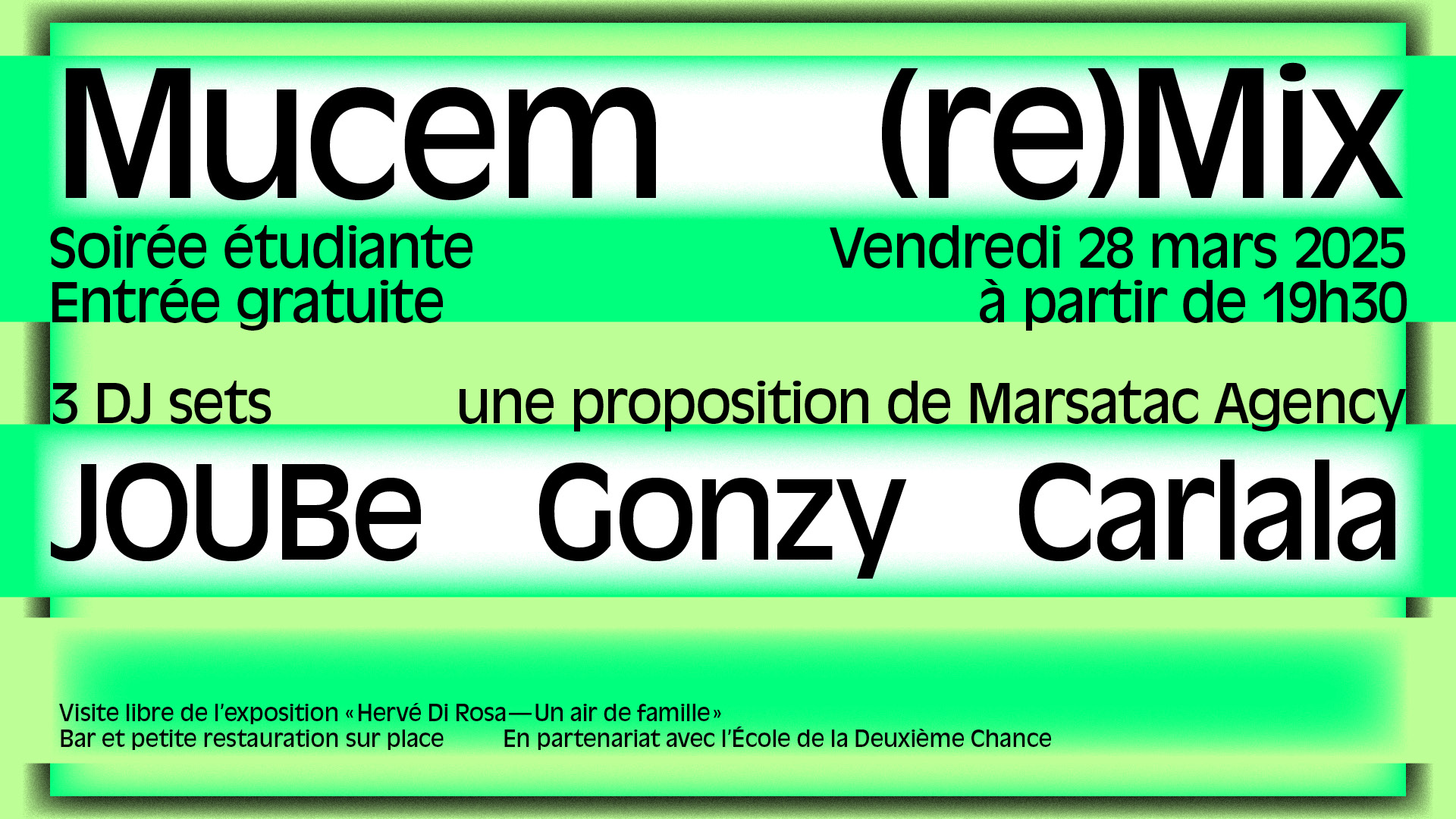
Mucem (Re)Mix
An evening combining offbeat mediation in the exhibition rooms and musical sets in the Mucem lobby and forum! On the Program 3 Dj sets, in partnership with Marsatac agency : JOUBe Live electro bike JOUBe TOUR 2024 © Emmanuelle Rosso He travels the length and breadth of France on his bicycle, which once on stage becomes a hybrid musical instrument. Gonzy hip hop/ new style Gonzy © DR His tool of choice, the BeAPad, designed to perform his productions on stage while dancing, is a veritable...On Friday, Mar 28, 2025
at 20h
J4 / Hall
- Free of charge
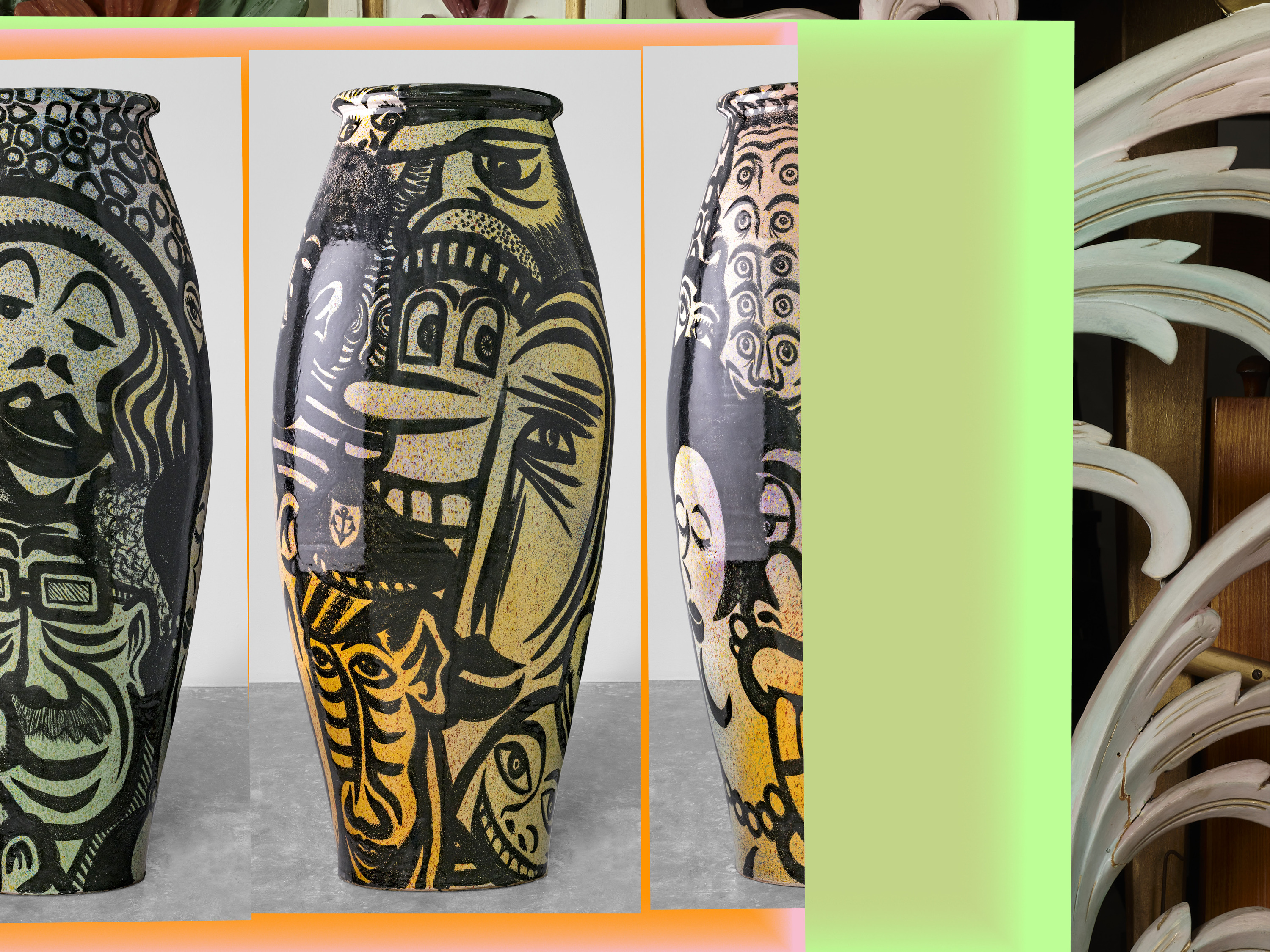
Open house for the "Hervé Di Rosa, Un air de famille" exhibition
Mucem invites you to a musical evening with live concerts and a presentation of the exhibition by its curators. Come and celebrate the world of Hervé Di Rosa with us! On the program: The program for this festive opening includes guided tours by Hervé Di Rosa and curator Vincent Giovannoni, as well as two concerts: Théo Ould, virtuoso accordionist and revelation at the 2023 Victoires de la musique classique awards, and Pleasures, an inspired and energetic band from Marseilles, whose timeless...On Wednesday, Mar 12, 2025
at 17h
J4
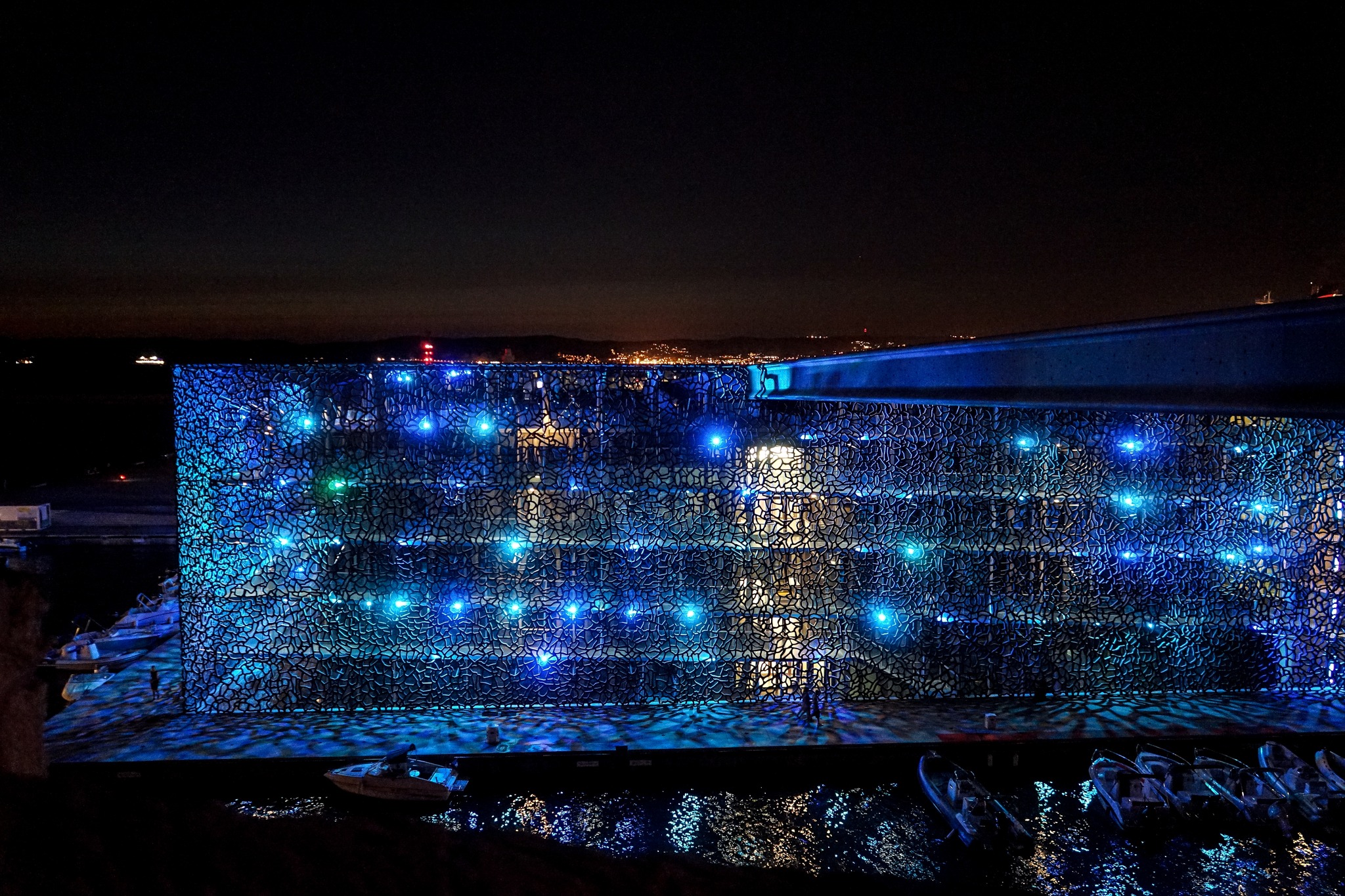
European Museum Night
As part of the “La classe, l’œuvre” program, a class from collège Longchamp takes over the exhibition islets to share their favorite discoveries with us, to an original composition by Thibault Cohade.On Saturday, May 17, 2025
at 19h
Fort Saint-Jean
Multisensory tour of the "Hervé Di Rosa" exhibition
Mucem offers visually impaired visitors the chance to discover temporary exhibitions during audio-description guided tours, which can be accompanied by multi-sensory devices. With total freedom, Hervé Di Rosa has chosen works from the Mucem collections that touch his sensibility, to create around each one a complementary piece. Just as a ring is designed for a diamond, so a reliquary is built to highlight what is sacred. The artist felt that there was a family resemblance between his works and...Le Saturday, Jun 21, 2025
Le Saturday, Jul 12, 2025at 11h
J4
LSF guided tours of the “Hervé di Rosa” exhibition
Discover the exhibition “Hervé di Rosa : un air de famille” in French Sign Language with the help of an interpreter. With total freedom, Hervé Di Rosa has chosen works from the Mucem collections that touch his sensibility, to create around each one a complementary piece. Just as a ring is designed for a diamond, so a reliquary is built to highlight what is sacred. The artist felt that there was a family resemblance between his works and the Mucem’s folk art objects.Le Saturday, Jun 14, 2025
Le Saturday, Jul 5, 2025at 11h
J4