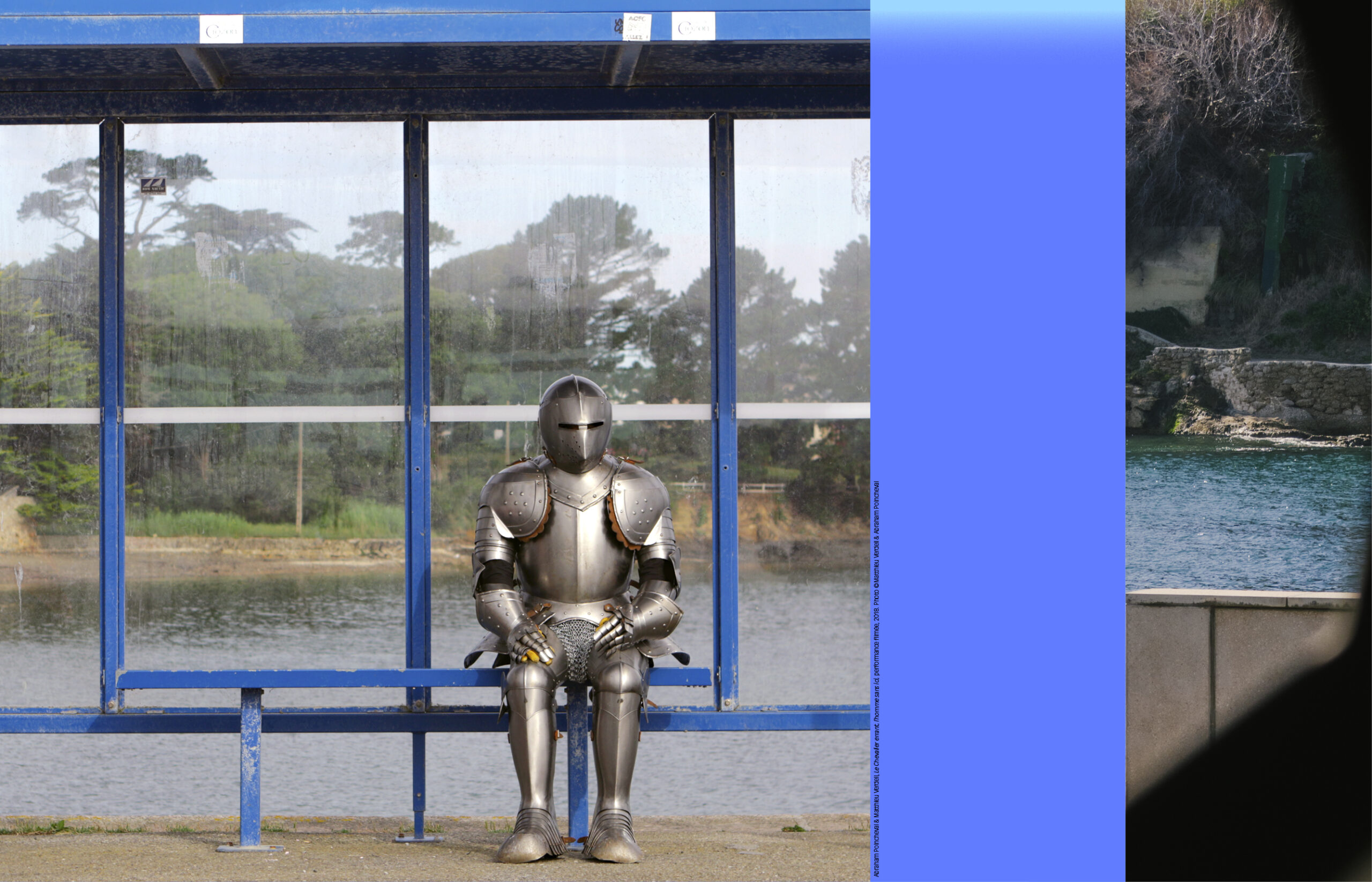
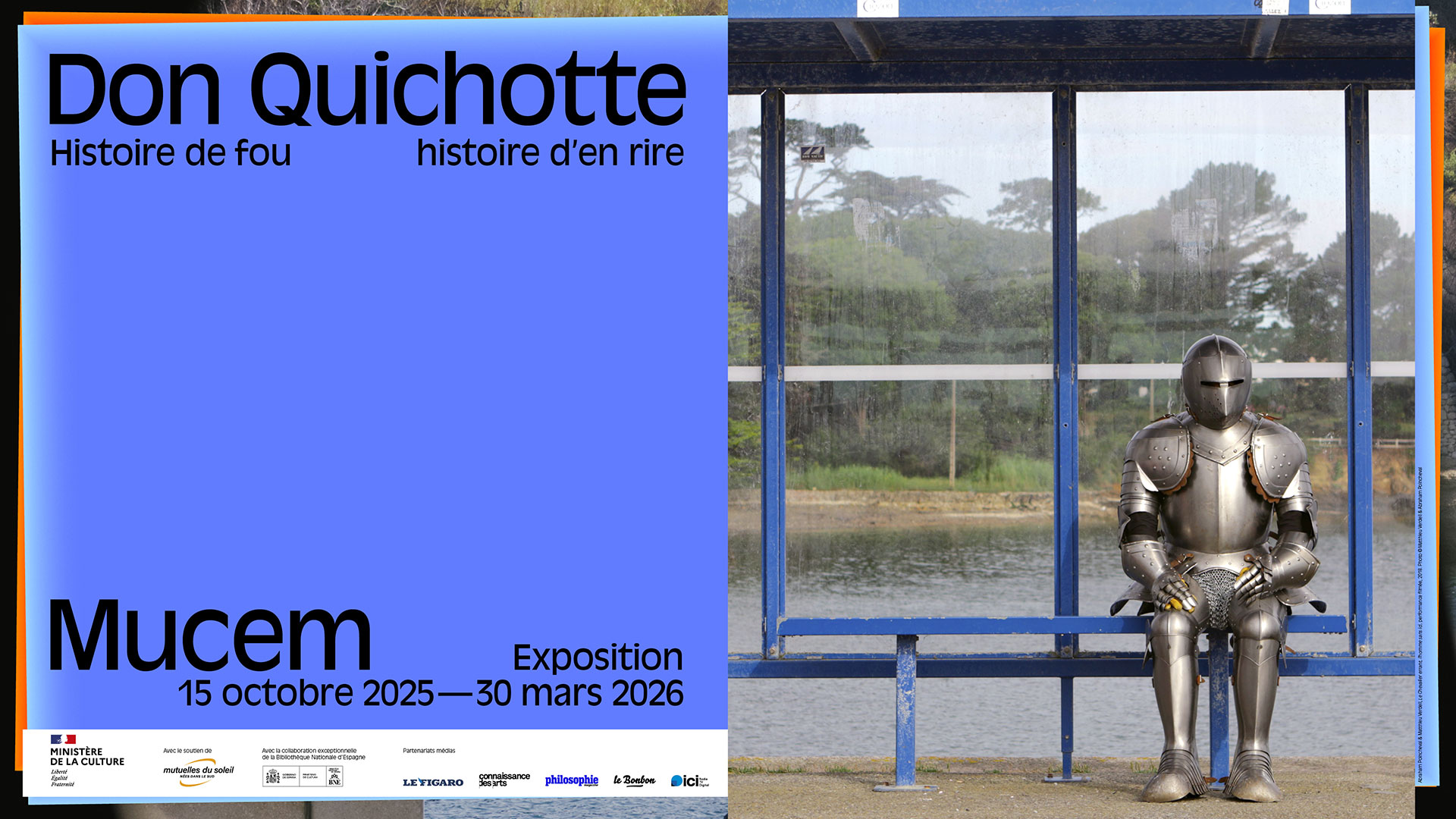
Bande annonce de l’exposition «Don Quichotte. Histoire de fou, histoire d’en rire»
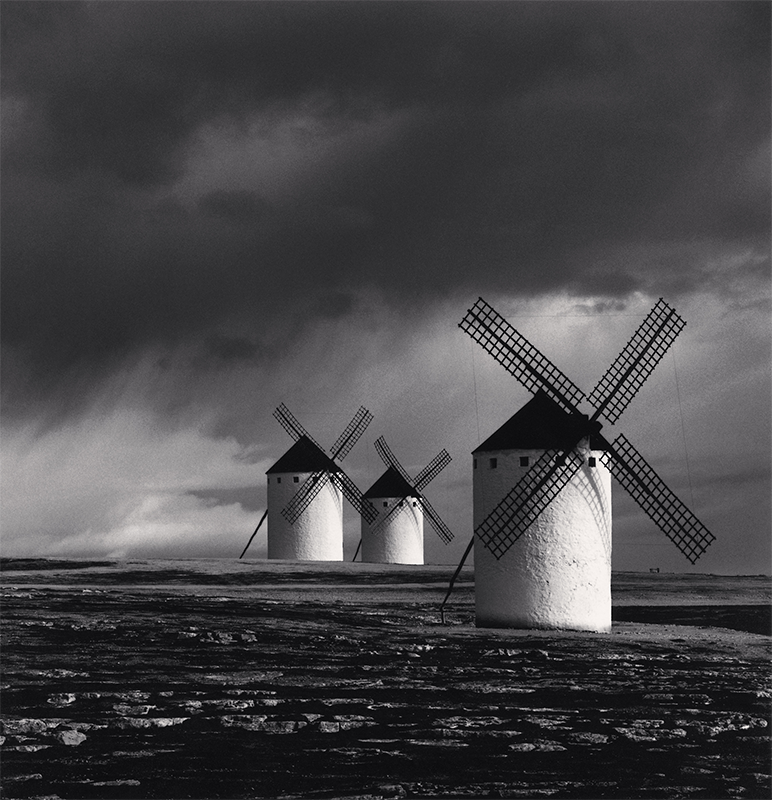
After honouring Jean Genet, Jean Giono and Gustave Flaubert, the Mucem continues its literary journey by celebrating a hero born in Spain, whose tale travelled far and wide until it became a legend: Don Quixote
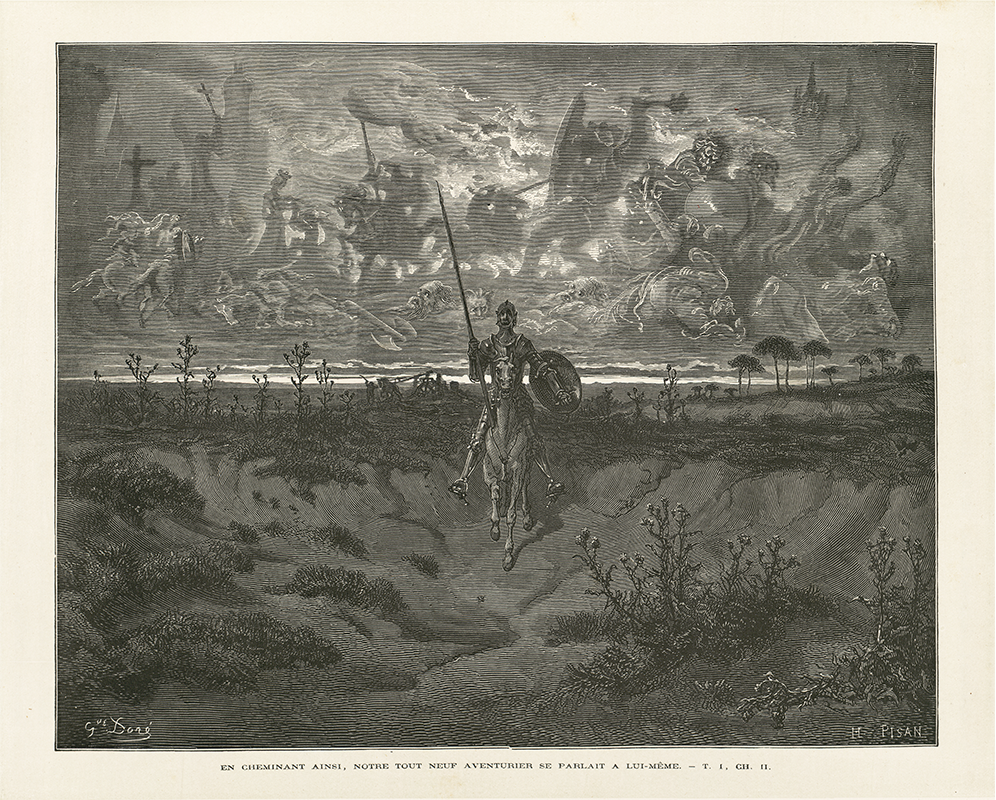
In 1605, Miguel de Cervantes created a character who believes himself a knight-errant in a book where he is little more than an antihero. Like an old man returned to childhood, he acts out the tales born of his imagination both “for real” and “for fun”. With his loyal Sancho by his side, he sets out to rescue the oppressed who never called for help and princesses no one else can see. One declaims lofty, antiquated speeches, the other answers with endless chains of proverbs. Together they ride into parodic battles, while the author revels in clever reflections on fiction and on himself.
After honouring Jean Genet, Jean Giono and Gustave Flaubert, the Mucem continues its literary journey by celebrating a hero born in Spain, whose tale travelled far and wide until it became a legend: Don Quixote
In 1605, Miguel de Cervantes created a character who believes himself a knight-errant in a book where he is little more than an antihero. Like an old man returned to childhood, he acts out the tales born of his imagination both “for real” and “for fun”. With his loyal Sancho by his side, he sets out to rescue the oppressed who never called for help and princesses no one else can see. One declaims lofty, antiquated speeches, the other answers with endless chains of proverbs. Together they ride into parodic battles, while the author revels in clever reflections on fiction and on himself.
Bande annonce de l’exposition «Don Quichotte. Histoire de fou, histoire d’en rire»
Related activities or events
View full agenda- Free of charge
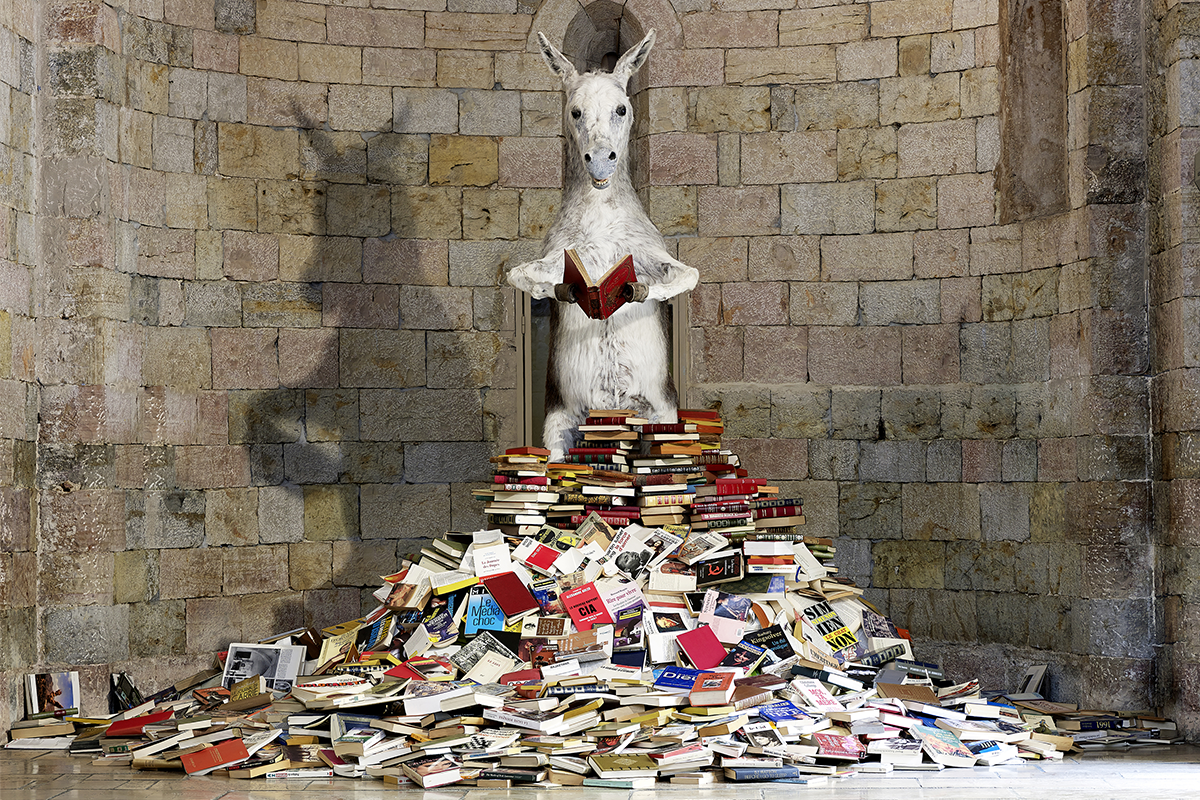
Change the world?
Don Quixote's way of seeing
This cultural and scientific event brings together personalities from the worlds of literature, art, cinema and social sciences to discuss the "sad figure" of Don Quixote, as funny as he is moving.
We’ll walk through the exhibition together, following some of the paths it takes, before a literary evening where we’ll dream on our feet in the company of writer Lydie Salvayre and all the day’s participants. 9:30am to 10:00am Don Quixote invites himself to the Mucem: exhibition presentation Welcome by Marie-Charlotte CALAFAT, Scientific Director of the Mucem, and presentation of the exhibition by curators Aude FANLO and Hélia PAUKNER. Aude Fanlo is in charge of Mucem’s...
2:00 to 3:45 p.m. – To be a donkey or to become a goat? Don Quixote is funny, which means he’s both hilarious and bizarre. The laughter provoked by the knight’s extravagant illusions is complex, engaging and caustic: let’s laugh at him, let’s laugh with him, let’s laugh at ourselves and at the intelligence of being “stupid”!
4:00 pm to 6:00 pm – The author, between reality and fiction World Copyright Day has been set for April 23, in homage to Cervantes. Yet no one has been more translated, plagiarized, hijacked and reinvented. We look back at the concrete and sometimes unexpected questions that the author’s authority poses for us, from the ingenuity of our hidalgo to the Artificial Intelligence of the 21st century.
6:00 p.m. to 7:00 p.m. – Meet the authors in the Forum Get together and sign books with the day’s authors and artists, authors from the Don Quichotte catalog and Lydie Salvayre.
In partnership with EHESS, IMERA and Université d’Aix-MarseilleOn Wednesday, Jan 28, 2026
at 09h30
J4 / Auditorium, Forum
- Free of charge
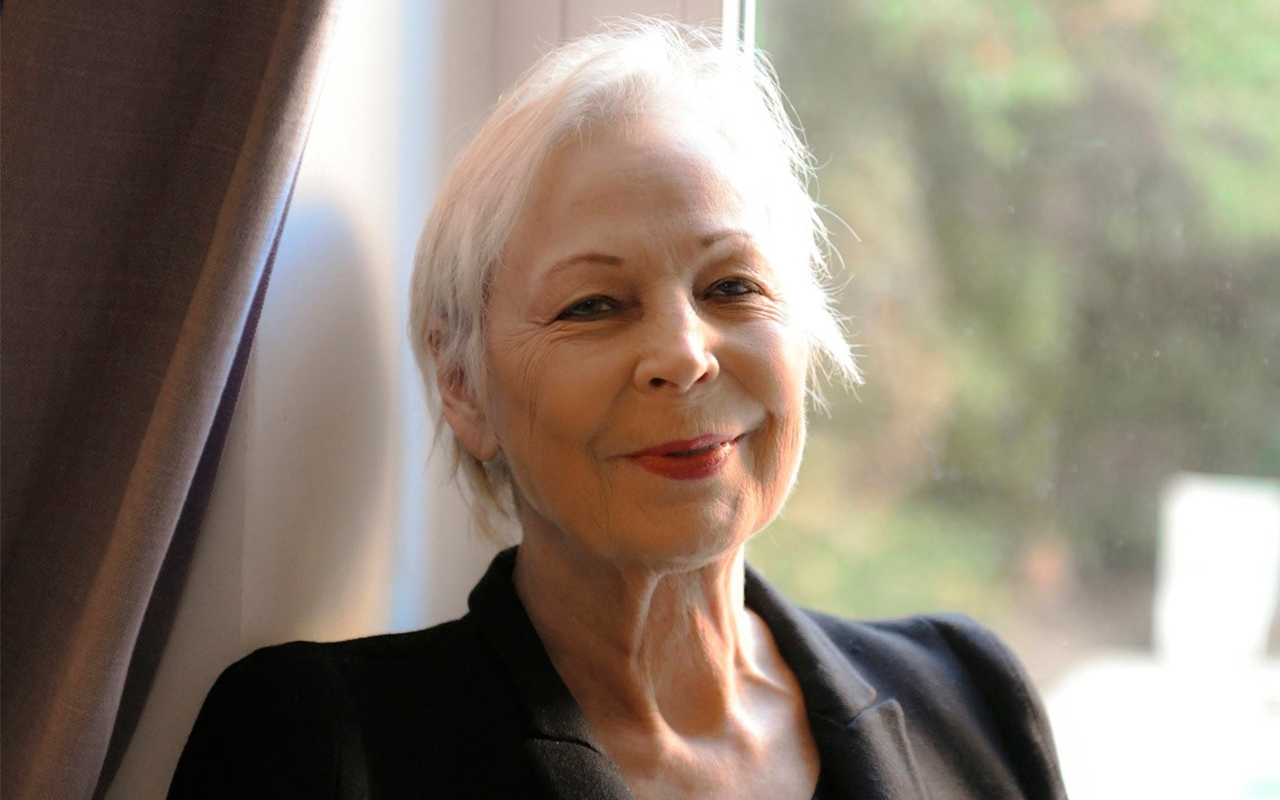
Dream on your feet
Signing session followed by carte blanche with Lydie Salvayre
Always defeated, always standing: ridiculous or admirable, what do don Quixote’s battles against the windmills that grind in a world that doesn’t go round tell us? This literary evening, closing the “Changing the world? don Quixote’s way of seeing”, invites us to dream upright rather than walk upright, in the company of writer Lydie Salvayre.
Detailed program 6.15pm-7pm Signing session in the forum Signing session and convivial discussion with Lydie SALVAYRE and the authors and artists taking part in the “Changing the world? Don Quixote’s way of seeing”. 19h-20h30 Lecture-debate with Lydie Salvayre Debate with writer Lydie Salvayre in dialogue with Danielle Perrot-Corpet. The discussion will be punctuated by readings of excerpts, by Daphné Proisy and Sophie Gourdin, from Scènes d’histoire, Rêver debout, by...On Wednesday, Jan 28, 2026
at 18h15
J4 / Auditorium
LSF guided tours of "Don Quixote".
Exhibition tours in French Sign Language
Mucem offers guided tours in LSF (French Sign Language). Come and discover the Mucem exhibitions with your family or friends.
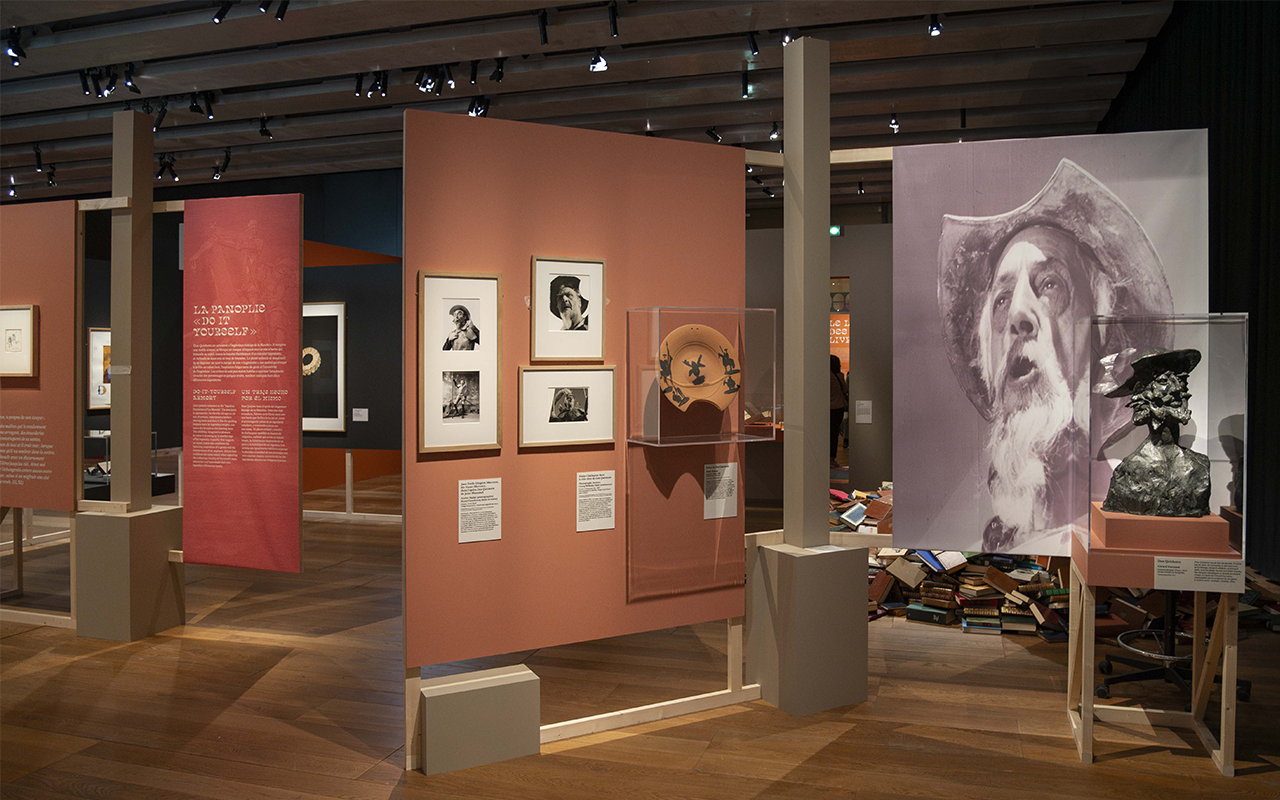
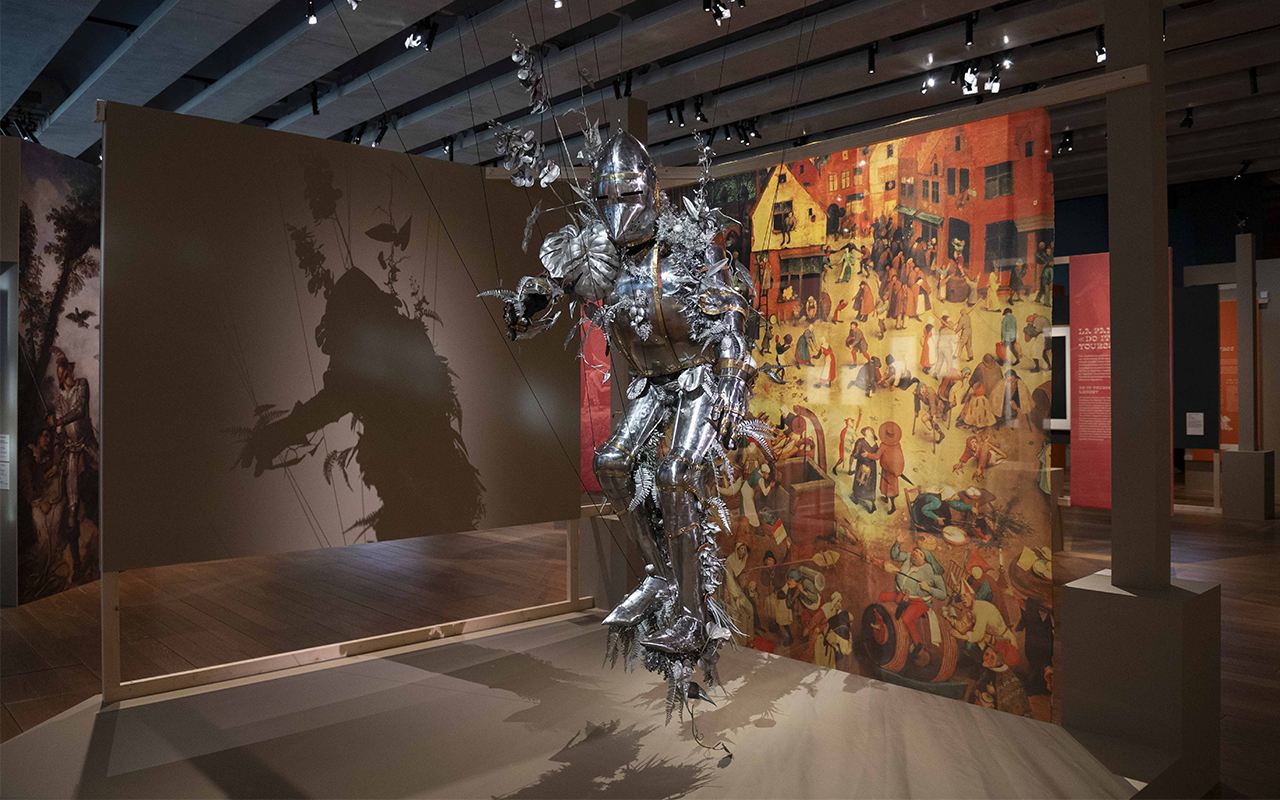
Don Quixote is a two-volume book written by Miguel de Cervantes in the early 1600s. The title of the book is named after the main character. He is a whimsical, anachronistic anti-hero. His adventures between reality and fiction are an inexhaustible source of inspiration for the visual and performing arts. The exhibition features 200 works illustrating the book’s best-known characters and episodes.From Saturday, Jan 10, 2026
to Saturday, Mar 21, 2026at 11h
J4 / Showroom - Ground floor
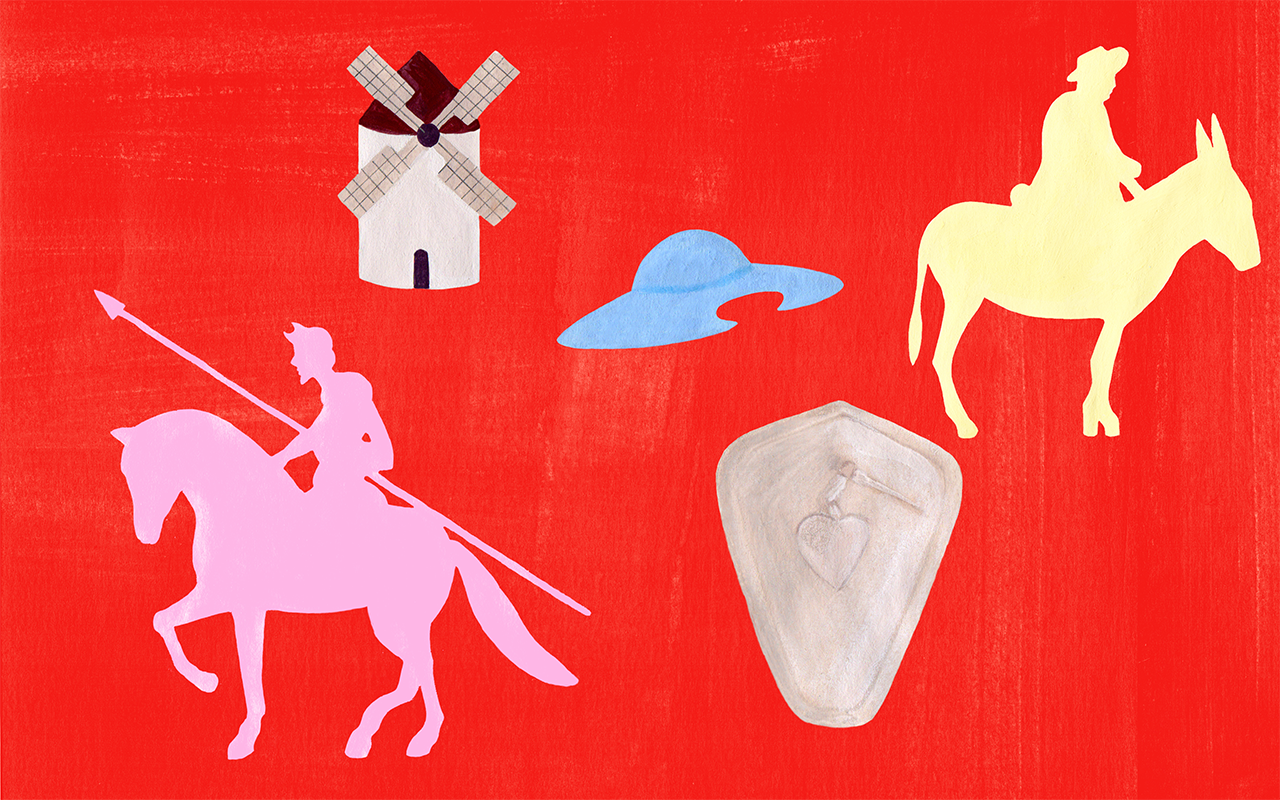
In the footsteps of Don Quixote
Dramatized tour for families aged 6 to 10
Welcome to the world of Don Quixote, the dreamy, crazy knight! Armed with all his courage, he sets off on an adventure with his faithful Rossinante and his squire Sancho. During this theatrical tour, in conjunction with the exhibition “Don Quixote. Histoire de fou, histoire d’en rire” exhibition, children meet Dulcinea, confront windmills, puppets and other enemies. Get ready for a unique adventure!On Saturday, Mar 28, 2026
J4
Multisensory tour of "Don Quixote
Audio-description exhibition tours
Mucem offers visually impaired visitors the chance to discover temporary exhibitions during audio-description guided tours, which can be accompanied by multi-sensory devices.
Don Quixote is a two-volume book written by Miguel de Cervantes in the early 1600s. The title of the book is named after the main character. He is a whimsical, anachronistic anti-hero. His adventures between reality and fiction are an inexhaustible source of inspiration for the visual and performing arts. The exhibition features 200 works illustrating the book’s best-known characters and episodes.
Multisensory tours of temporary exhibitions are organized in partnership with IRSAM Arc-en-ciel.From Saturday, Jan 17, 2026
to Saturday, Mar 14, 2026at 11h
J4 / Hall
- Free of charge
Flash Tours
Our mediators welcome you for free flash visits, on presentation of your exhibition ticket, to discover Mucem's exhibitions in a different way.
February Every Saturday and Sunday, then every day (except Tuesday) during Zone B school vacations from Monday February 16th to Sunday March 1st. – Mediterranean: 2 p.m. and 2:30 p.m. – Don Quixote: 3 p.m. and 3:30 p.m.
March Every Saturday and Sunday until Sunday, March 15 – Mediterranean: 2 p.m. and 2:30 p.m. – Don Quixote: 3 p.m. and 3:30 p.m. Every Saturday and Sunday from Saturday, March 21 – Bonnes Mères: 2 p.m. and 2:30 p.m. – Don Quixote: 3 p.m. and 3:30 p.m.Le Saturday, Mar 28, 2026
Jusqu'au Sunday, Apr 26, 2026at 14h
J4
With the support of

Media partners





In partnership with

The "Don Quichotte" exhibition can be seen at the Paris Gare de Lyon station from October 15 to December 10, 2025.
A subsidiary of SNCF Réseau, SNCF Gares & Connexions specializes in railway stations, from design to operation and marketing. With its 3,000 French stations, it is committed to constantly improving the quality of its operations, inventing new services and modernizing its assets on behalf of its 10 million daily passengers and visitors. Every year, nearly 300 exhibitions, interventions and artistic events are designed specifically for stations throughout France, in partnership with leading institutions.