Extrait du documentaire Nos mères, nos daronnes
As part of the Biennale des écritures du réel, which for the past 8 years has brought art, politics and society into dialogue, the Mucem is hosting a show and screening of the documentary.
In conjunction with the “Bonnes Mères” exhibition, the Mucem is hosting two events: the show Passports to freedom. Samira’s story by the Passeurs de Mémoires company, retracing the “ordinary integration journey” of Samira Belhoumi, who arrived from Algeria with her family at the age of 7, and the documentary film Nos mères, nos daronnes by Bouchera Azzouz.
The program
From 3pm to 4:15pm - Show Passports to freedom. Samira's story
A show by the Passeurs de Mémoires company, for all audiences.
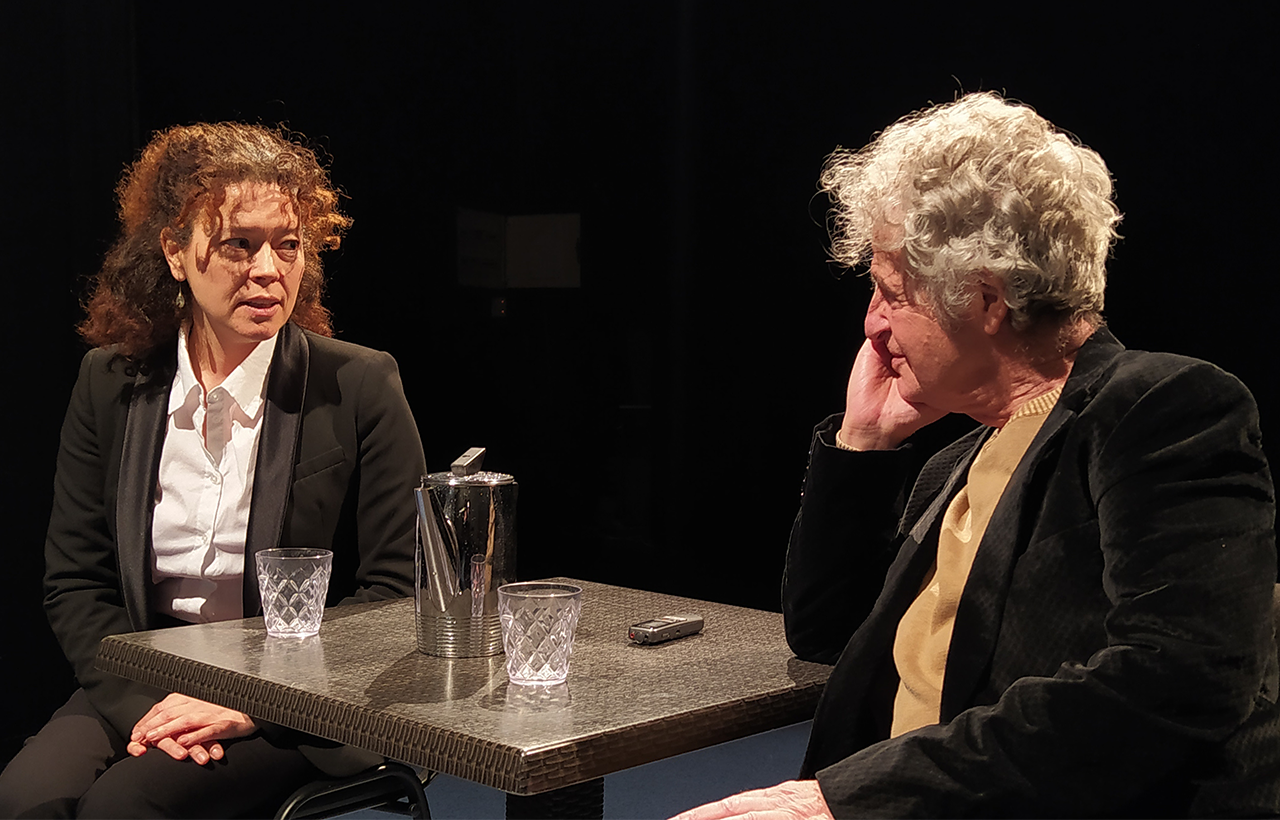
At the heart of this book is one of those “extraordinary stories of ordinary people” (Joyce Carol Oates). A life story. In the summer of 2012, Samira Belhoumi, 42 at the time, confided in Stéphane Beaud, a social scientist, during several interviews, the first steps in the 5-year investigation that would lead to the publication, in 2018, of La France des Belhoumi: a woman’s path to freedom, punctuated by obstacles of all kinds; a story of circumventions, to arrive, as Samira puts it, “little by little closer to herself”.
But this book is also an account, in several voices, of an adventure that is exceptional in terms of its network, its scope, its relational strength and, in the unanimous opinion of its participants, its effects. An adventure shared by hundreds of teachers and over ten thousand high school students from all over France: since January 2021, Stéphane Beaud and Dominique Lurcel have met with an extremely diverse range of high school audiences, one with his lectures and questionnaires
The other is the adaptation he made of the first two interviews with Samira Belhoumi (over 150 performances): debates, offstage confidences, feedback from teachers and testimonials from pupils. Discovering the other here, mirroring effects there: the impressively rich corpus of material gathered here provides a view far removed from the dramatic discourse on “schools in ruins” and “the failure of integration”, a view radically at odds with the hateful, simplistic vision disseminated all day long by extreme right-wing discourse and certain media on a loop.
4:15pm to 4:45pm - Coffee break
4:45pm to 5:45pm - Screening of the documentary film Nos mères, nos daronnes
A documentary written and directed by Bouchera Azzouz and Marion Stalens, France, 2014. 52 minutes
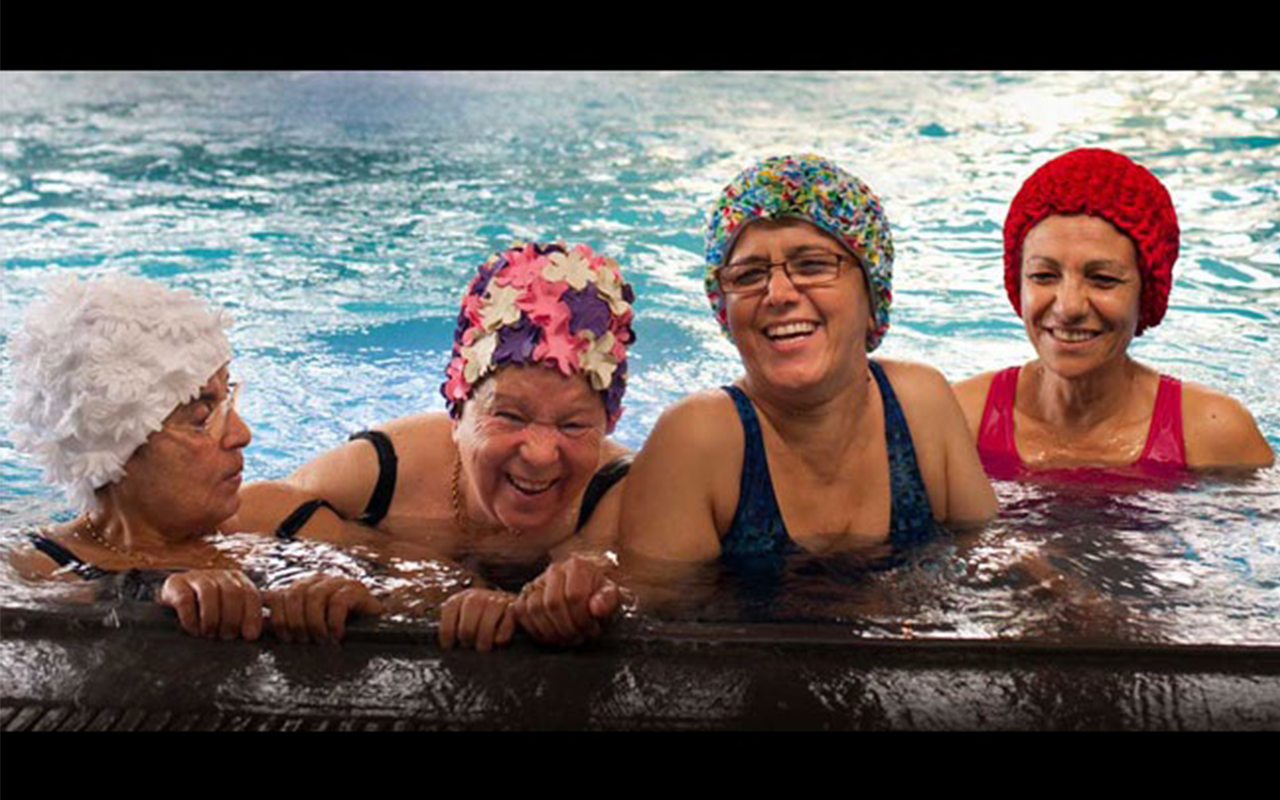
The “daronne”, in Old French slang, is the mother, the boss. In our working-class neighborhoods, daronne are the women on whom everything – or almost everything – depends. Sentinels who never let their guard down. This film is a tribute to all those who embody grassroots feminism. Mothers of families, often housewives, but also schoolteachers or social workers, they’ve managed to shake up traditions and win their independence bit by bit, without making a fuss, drifting from the well-trodden paths to which they were destined.
As part of the Biennale des écritures du réel, which for the past 8 years has brought art, politics and society into dialogue, the Mucem is hosting a show and screening of the documentary.
Extrait du documentaire Nos mères, nos daronnes
In conjunction with the “Bonnes Mères” exhibition, the Mucem is hosting two events: the show Passports to freedom. Samira’s story by the Passeurs de Mémoires company, retracing the “ordinary integration journey” of Samira Belhoumi, who arrived from Algeria with her family at the age of 7, and the documentary film Nos mères, nos daronnes by Bouchera Azzouz.
The program
From 3pm to 4:15pm - Show Passports to freedom. Samira's story
A show by the Passeurs de Mémoires company, for all audiences.
At the heart of this book is one of those “extraordinary stories of ordinary people” (Joyce Carol Oates). A life story. In the summer of 2012, Samira Belhoumi, 42 at the time, confided in Stéphane Beaud, a social scientist, during several interviews, the first steps in the 5-year investigation that would lead to the publication, in 2018, of La France des Belhoumi: a woman’s path to freedom, punctuated by obstacles of all kinds; a story of circumventions, to arrive, as Samira puts it, “little by little closer to herself”.
But this book is also an account, in several voices, of an adventure that is exceptional in terms of its network, its scope, its relational strength and, in the unanimous opinion of its participants, its effects. An adventure shared by hundreds of teachers and over ten thousand high school students from all over France: since January 2021, Stéphane Beaud and Dominique Lurcel have met with an extremely diverse range of high school audiences, one with his lectures and questionnaires
The other is the adaptation he made of the first two interviews with Samira Belhoumi (over 150 performances): debates, offstage confidences, feedback from teachers and testimonials from pupils. Discovering the other here, mirroring effects there: the impressively rich corpus of material gathered here provides a view far removed from the dramatic discourse on “schools in ruins” and “the failure of integration”, a view radically at odds with the hateful, simplistic vision disseminated all day long by extreme right-wing discourse and certain media on a loop.
4:15pm to 4:45pm - Coffee break
4:45pm to 5:45pm - Screening of the documentary film Nos mères, nos daronnes
A documentary written and directed by Bouchera Azzouz and Marion Stalens, France, 2014. 52 minutes
The “daronne”, in Old French slang, is the mother, the boss. In our working-class neighborhoods, daronne are the women on whom everything – or almost everything – depends. Sentinels who never let their guard down. This film is a tribute to all those who embody grassroots feminism. Mothers of families, often housewives, but also schoolteachers or social workers, they’ve managed to shake up traditions and win their independence bit by bit, without making a fuss, drifting from the well-trodden paths to which they were destined.