A session dedicated to Kurdish cinema, exploring memory, history, and representation.
Kurdish film production in Syrian Kurdistan, or Rojava, emerged in the early 2000s, when Kurdish filmmakers such as Ekrem Heydo began shooting on location, with little or no financial resources, and out of sight of the central authorities. His feature-length documentary, *Mein Paradies* (2016), marks a milestone in the transnational history of Kurdish cinema for two reasons.
The first is structural in nature, as it documents the mechanisms of co-production and cooperation between production companies and Kurdish institutions, which are themselves linked to foreign—that is, non-Kurdish—organizations and support funds. The second reason is symbolic. His film serves as an archive. By portraying his hometown, Serêkaniyê, and its inhabitants, he rewrites a political and human history of the past by situating it within the contemporary context of the Syrian civil war and the recent declaration of Kurdish autonomy.
A program presented and discussed by Pauline Tucoulet. Featuring Ekrem Heydo.
Screening preceded by *Archive Katsakh – Restaurant* (home movie, date unknown, 2’25”, color. Collection: Challoub. Original 8 mm).
My Paradise
By Ekrem Heydo (Syria, Germany, 2016, 1 hr 44 min) – Documentary
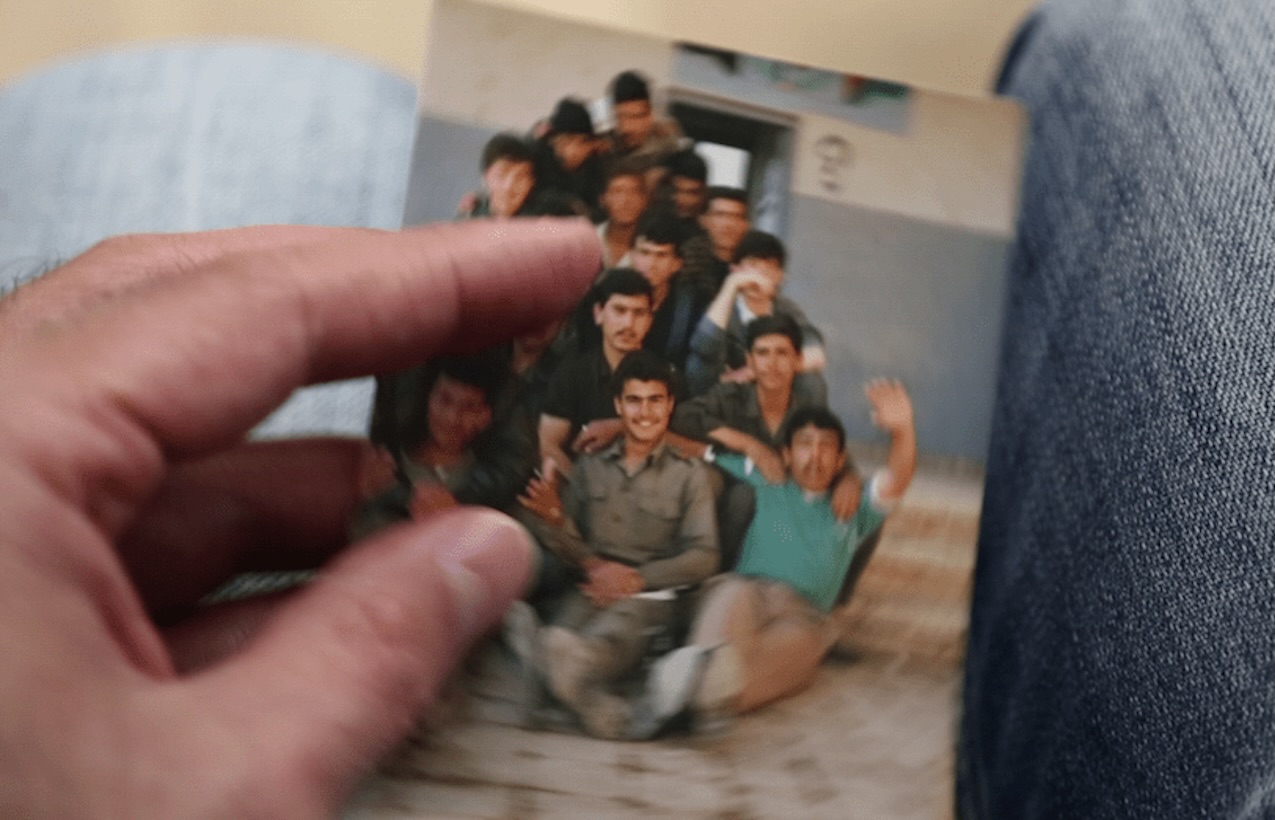
Ever since the Arab Spring reached Syria, a relentless civil war has devastated the city of Serêkaniyê, located on the border between Syria and Turkey. Based on a photograph taken twenty-five years earlier, depicting a few former classmates, the film traces the emergence of the Syrian revolution and the profound impact it has had on their lives and on the country’s history.
Learn more about ...
Pauline Tucoulet, Ph.D. in Film Studies.
Pauline Tucoulet holds a Ph.D. in film studies. Her research focuses on the transnational history of “Kurdish films” since the 1960s. She is affiliated with the Institute for Research on Cinema and Audiovisual Media (Ircav), a research associate at the French Institute for the Near East (Ifpo), and secretary general of the Ethnographic Film Committee.
A session dedicated to Kurdish cinema, exploring memory, history, and representation.
Kurdish film production in Syrian Kurdistan, or Rojava, emerged in the early 2000s, when Kurdish filmmakers such as Ekrem Heydo began shooting on location, with little or no financial resources, and out of sight of the central authorities. His feature-length documentary, *Mein Paradies* (2016), marks a milestone in the transnational history of Kurdish cinema for two reasons.
The first is structural in nature, as it documents the mechanisms of co-production and cooperation between production companies and Kurdish institutions, which are themselves linked to foreign—that is, non-Kurdish—organizations and support funds. The second reason is symbolic. His film serves as an archive. By portraying his hometown, Serêkaniyê, and its inhabitants, he rewrites a political and human history of the past by situating it within the contemporary context of the Syrian civil war and the recent declaration of Kurdish autonomy.
A program presented and discussed by Pauline Tucoulet. Featuring Ekrem Heydo.
Screening preceded by *Archive Katsakh – Restaurant* (home movie, date unknown, 2’25”, color. Collection: Challoub. Original 8 mm).
My Paradise
By Ekrem Heydo (Syria, Germany, 2016, 1 hr 44 min) – Documentary
Ever since the Arab Spring reached Syria, a relentless civil war has devastated the city of Serêkaniyê, located on the border between Syria and Turkey. Based on a photograph taken twenty-five years earlier, depicting a few former classmates, the film traces the emergence of the Syrian revolution and the profound impact it has had on their lives and on the country’s history.
Learn more about ...
Pauline Tucoulet, Ph.D. in Film Studies.
Pauline Tucoulet holds a Ph.D. in film studies. Her research focuses on the transnational history of “Kurdish films” since the 1960s. She is affiliated with the Institute for Research on Cinema and Audiovisual Media (Ircav), a research associate at the French Institute for the Near East (Ifpo), and secretary general of the Ethnographic Film Committee.
An event organized as part of the Mediterranean 2026 season