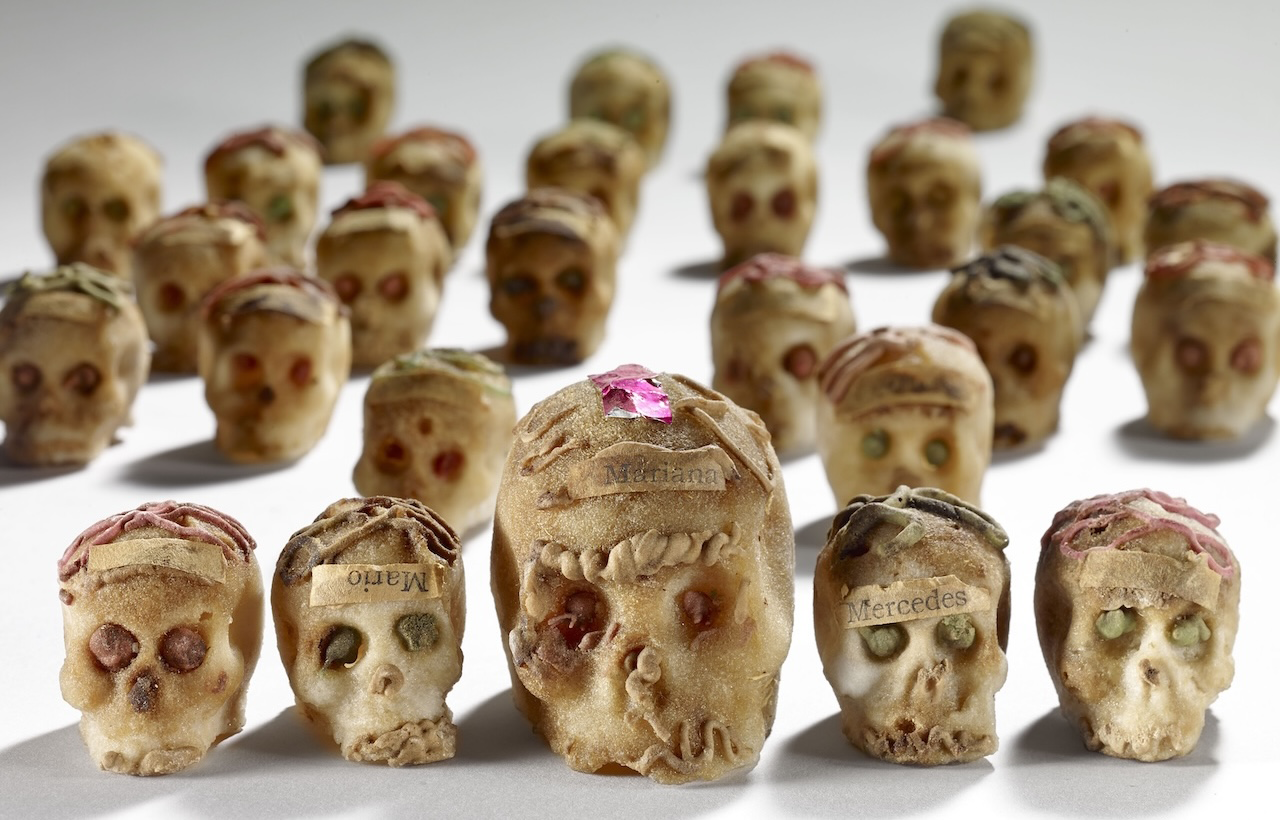
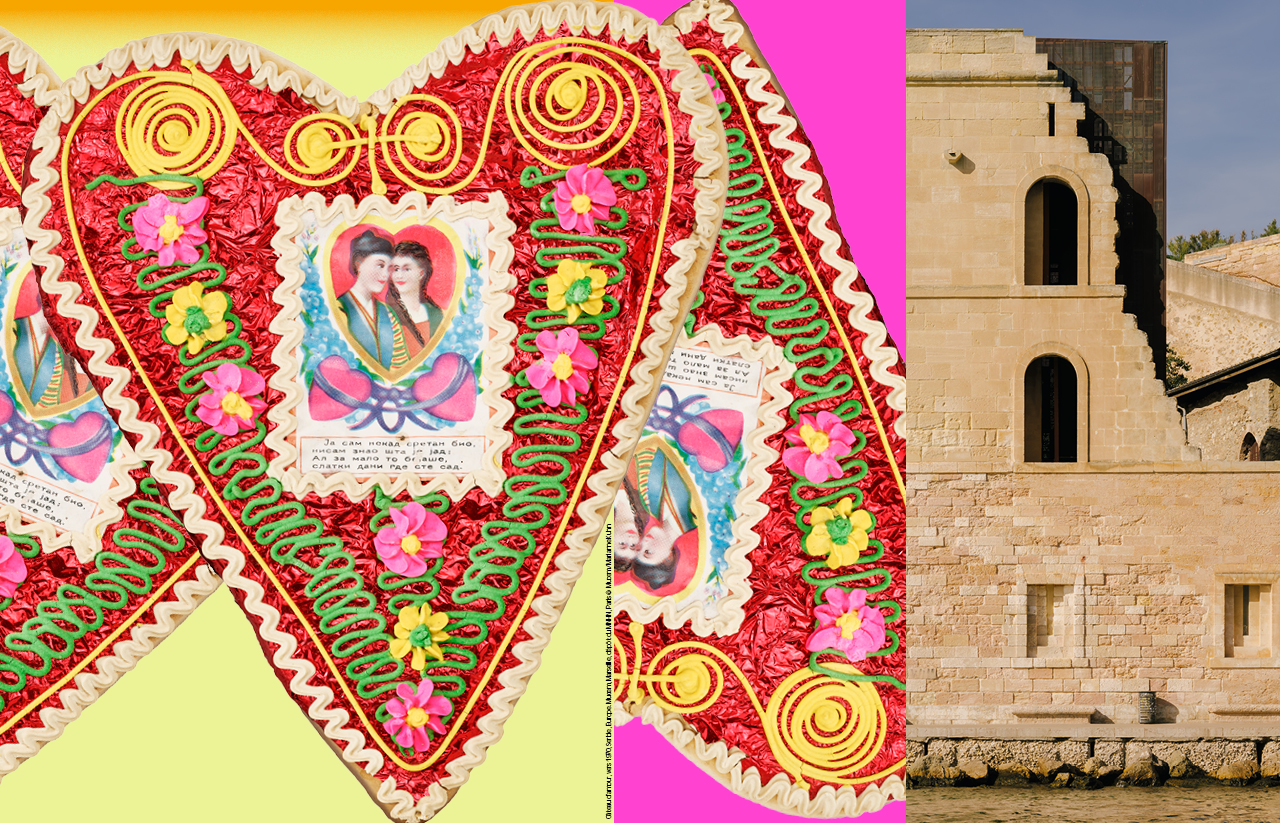
To mark the opening of “Manger les images,” the exhibition curators are offering a guided tour followed by a panel discussion featuring several of the contemporary artists featured in the exhibition.
Eating a picture—now that’s a strange idea! And yet, this phenomenon has been observed in many societies since the earliest days of antiquity. Ingesting a figurative object allows one to harbor within oneself a supposed active force, capable of healing, protecting, and transforming the person who uses it, but also to provide the means to learn, to persevere, to play, to dream, and thus to participate in the life of dedicated communities.
While this phenomenon is relatively well known in societies across Europe and the Mediterranean region, the same cannot be said beyond this geographic area. The symposium “Manger les images” therefore aims to expand the scope of the Mucem exhibition to include other continents.
Why incorporate an image—at the risk of destroying it—rather than simply observing it from a distance? What functions can be attributed to this very particular experience of images? What does such behavior reveal about ourselves and human societies? These are the questions we wish to explore at the symposium “Eating Images: New Horizons.”