The architecture of the Mucem
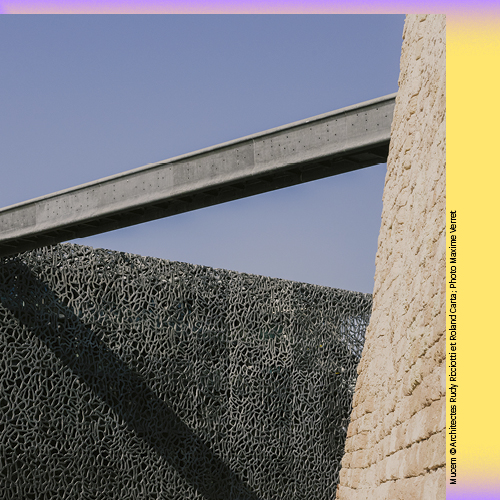
Facing the sea, on the former J4 dock, the building designed by Rudy Ricciotti (in association with Roland Carta) is the heart of Mucem. This is where the museum’s major exhibitions and artistic and cultural events take place.
The J4 building houses the museum’s major exhibitions on two levels:
- On level 0, the semi-permanent exhibition: the Galerie de la Méditerranée (1,600 m2).
- This thematic gallery is modular in its presentation, and will change every three to five years.
- Level 2: temporary exhibitions (2,000 m2).
The flexibility of the spaces means that each exhibition can be given the surface area it requires (between 300 m2 and 2,000 m2).
It also features a 335-seat auditorium (for conferences, shows, concerts and film cycles), an audiovisual projection area (“La Médinathèque“, in collaboration with INA), a children’s area (“l’Ile aux trésors“), a bookshop-boutique, and a brasserie and restaurant with a panoramic terrace.
Finally, it incorporates the “behind-the-scenes” facilities that are essential for a facility of this type: workshops, storage areas, offices, conservation and research areas, etc.
J4 in figures
16,500 m² including 3,690 m² of exhibition space
1,600 m² of modular space for the Mediterranean Gallery
2,000 m² of exhibition space (possibility of several temporary exhibitions simultaneously)
90 m² for the “Médinathèque”
3,694 m² of workshop and storage space
2,415 m² for administration, conservation and research
15,000 m² of UHPC mesh
Architecture combining technical prowess and aesthetic power
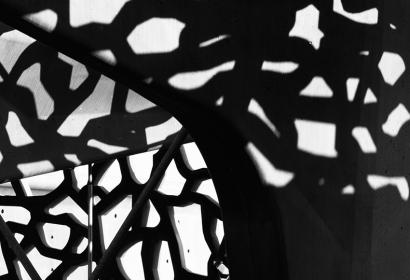
Inaugurated in 2013, the J4 building is already world-renowned for its architecture, combining technical prowess and aesthetic power. This cube of elegant concrete lace forms a perfect 72-metre square. It is held up by 309 arborescent posts, which surround the exhibition halls, freeing the center of the building from any load-bearing function. The pillars are made of BFUP (Béton Fibré Ultra-Performant), a state-of-the-art material that is as flexible as it is resistant.
Freely accessible from the first floor, two outdoor ramps wind their way up to the roof terrace, inviting visitors to experience a fascinating ascending stroll, multiplying the panoramas of Fort Saint-Jean, the open sea and the horizon, visible through the fine concrete mesh that delicately envelops the building.
From the terrace, an aerial walkway leads to Fort Saint-Jean. There are no arches or guy wires here, just a simple line of black concrete suspended 19 metres above the ground. A technical challenge made possible by the exceptional properties of UHPC.
When night falls, the building comes alive with soft lights imagined by artist Yann Kersalé, like a new lighthouse at the gateway to Marseille.
The conceptual bias of Rudy Ricciotti and Roland Carta’s architectural project
Views, sea, sun, minerality are instrumentalized by a program that has become federative and cognitive. First of all, a perfect square measuring 72 metres on each side, a classical, Latin plan under the control of Pythagoras. Within this square is another 52-metre square, containing the exhibition and conference rooms identified as the heart of the museum.
Surrounding, below and above are the service spaces. But between the heart of the building and the service spaces, gaps completely encircle the central square, forming connecting spaces. More interested in the view towards the fort, the sea or the harbour, the culturally distracted visitor chooses this route. Along two intertwined ramps, they plunge into the imaginary world of the Tower of Babel or a ziggurat, climbing to the roof and up to Fort Saint-Jean. This peripheral rift is a demure breath of iodine, with the proximity of a seawater moat to dispel any doubts we might have about the use of our civilizations’ history. The Mucem is a vertical casbah.
The tectonic choice of an exceptional concrete, the result of the latest research by French industry, reducing dimensions to nothing more than skin and bones, asserts a mineral writing beneath the high ramparts of Fort Saint-Jean. A single material with the color of matte dust crushed by light, out of sight of technological brilliance and consumerism, praises the dense and the fragile. The Mucem is evanescent in a stone landscape and orientalist in its shadows on the figure. In the sky, crossing the dock, a flying carpet sails towards the fort.
Building lighting by Yann Kersalé
For Yann Kersalé, the Mucem should be a cultural sounding board for the Mediterranean, enlivened by the sea. This night-time edifice becomes the memory of the Blues: a transition between all the cultures it exhibits, and this mythical sea with its strong character. A perpetual pulsation of light that makes its lacy facades quiver. The sea is there, embedded in the walls to assert its importance in the design of the interior exhibits.
At night, the Mucem reproduces the vibrancy of the Mediterranean in the form of a colored light installation. Yann Kersalé’s lighting scheme highlights all the building’s facades, giving it a maritime and terrestrial visibility, acting as a signal in the night.
The south and west facades are the matrix of the project, where light plays the role of multiple skins present in a cameo of blue and turquoise, giving the impression of an aquatic thrill.
This artistic project benefited from the 1% artistic grant.
Read more
Corinne Vezzoni
Corinne Vezzoni, born May 21, 1964 in Arles, is an architect from Marseilles (École d’architecture de Marseille Luminy-Atelier Perrachon, Sbriglio).

Located on the sixth floor of Le Corbusier’s Cité radieuse, the “Corinne Vezzoni et Associés” agency plays with light. The light that the architect loves so much is that of Marseille and its coastline, so particular, intense and sometimes disturbing. A light that inspires her work and reflection.
Corinne Vezzoni’s major projects include the Palais des Festivals in Cannes, the Marseille tramway and the Bouches-du-Rhône Archives and Loan Library. She regularly takes part in national and international conferences, debates and symposia, and teaches as a guest at various events.
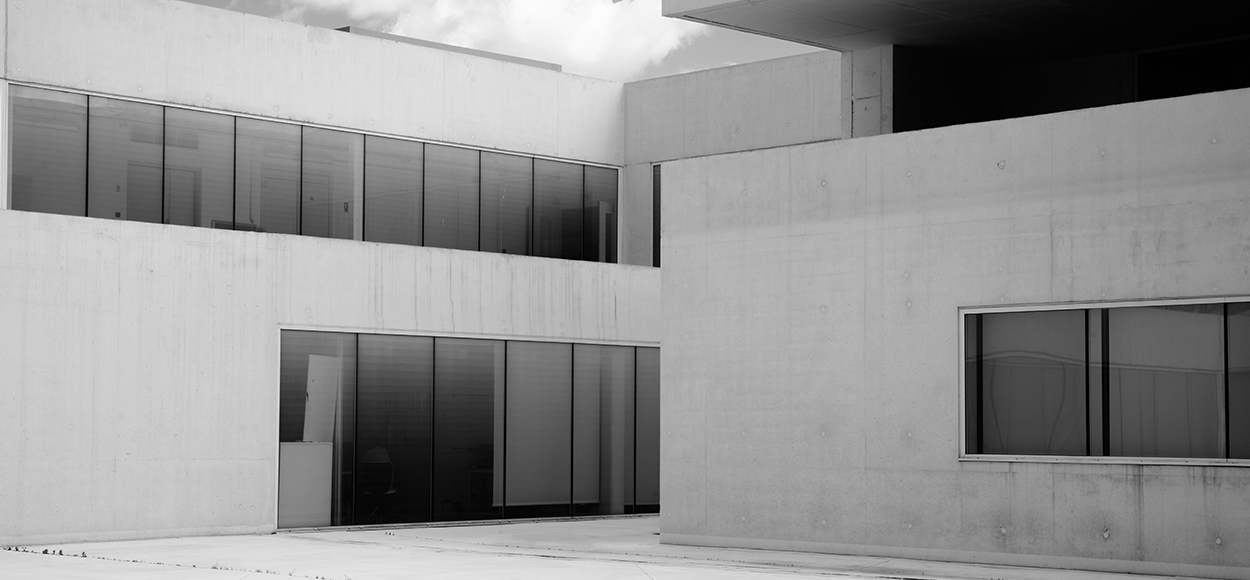
Mucem, CCR, Corrine Vezzoni Roland Carta
Born in 1951, Roland Carta trained and graduated (1976) from the École nationale supérieure d’architecture de Marseille, where he still lives and works today.
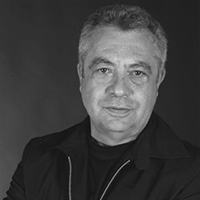
His Carta-Associés agency employs some thirty people, who work with him on major public-sector projects (CHU Pasteur in Nice, Musée d’Histoire de Marseille) and private-sector projects (BPPC headquarters, La Mondiale). He works mainly in France, but also in Italy (Lycée français de Milan), Morocco (Fondation Cheik Zayed in Rabat) and Africa.
He sits on the boards of designer insurance companies in France, Spain, Germany and Brazil.
He is a national correspondent member of the Académie d’architecture.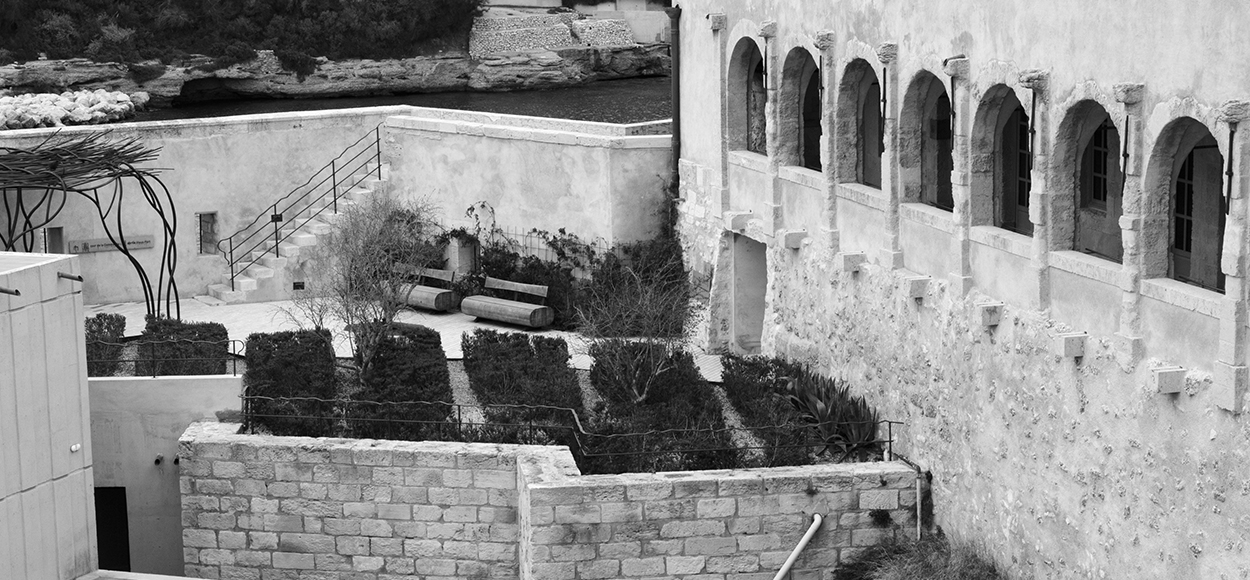
Rudy Ricciotti
Born in Algiers on August 22, 1952, Rudy Ricciotti is an architect (École nationale supérieure d’architecture de Marseille) and engineer (École d’ingénieurs de Genève), and winner of the Grand Prix national de l’architecture. He is representative of a generation of architects who combine creative power with a genuine constructive culture.
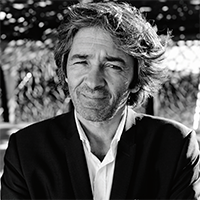
Author of landmark projects in France, including the Centre chorégraphique national d’Aix-en-Provence, he has also gained international stature with projects such as the Passerelle pour la Paix in Seoul, the Nikolaisaal in Potsdam, Germany, and the Centre international d’art contemporain in Liège.
President of Editions Al Dante (poetry, poetic and experimental prose, theoretical essays, etc.), he is also on the editorial board of the magazine L’Architecture d’aujourd’hui.
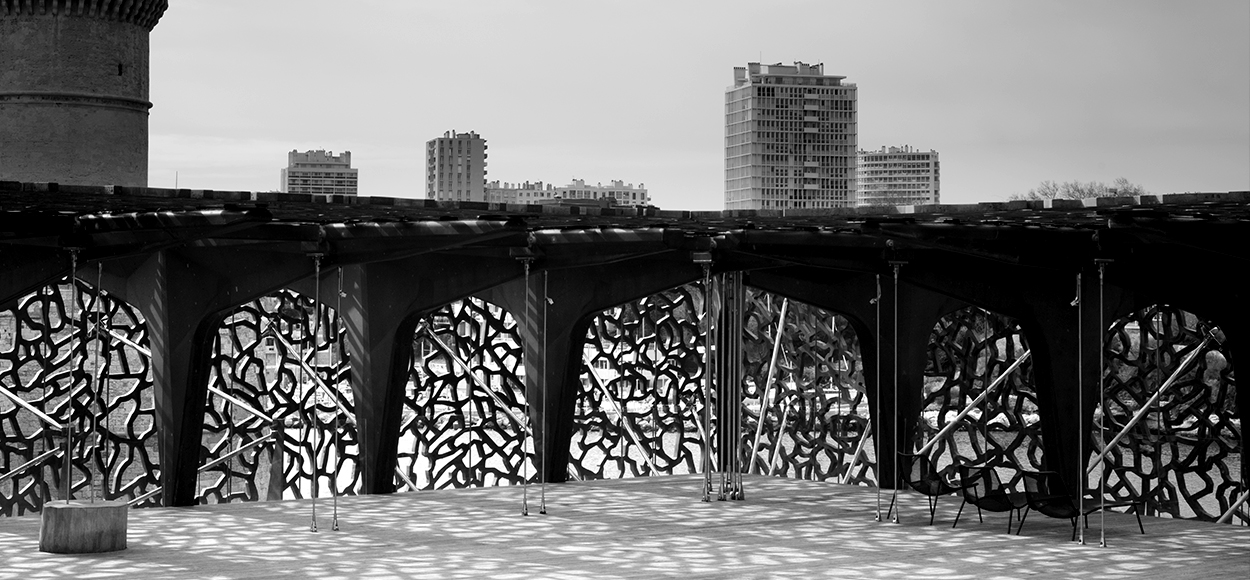
Mucem, Rudy Ricciotti APS Agency
Based in Valence, France, APS is a team of landscape architects, urban planners and architects, founded in 1997 around three partners, all graduates of the École Nationale Supérieure de Versailles: Jean-Louis Knidel, Gilles Ottou and Hubert Guichard. Today, the agency employs a team of nine.
Committed to a diversity of intentions, the APS agency is involved in a wide range of experiences and applications of know-how, and in studies and projects on a variety of scales, with a deliberate focus on the geographical area of south-eastern France. Large landscapes and territories, emblematic natural, urban or heritage sites, urban projects and town planning, gardens/parks/plazas and public spaces are all areas that structure and shape the agency’s vision and thinking.
Mucem, Agence APS Yann Kersalé
Born in 1955 and a graduate of the École des Beaux Arts de Quimper, Yann Kersalé is an artist who uses light as others use earth or paint: he has chosen the night as his field of experimentation. Since then, with extraordinary creative vitality, Yann Kersalé has developed over a hundred In Situ projects and Light Expeditions: luminous encephalograms of the ocean, hijackings of high-tech objects, interventions on works of art or mythical architecture.
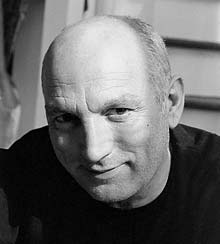
The greatest architects call on him, including Jean Nouvel, for whom he designed the red pulsations of the glass roof at the Opéra de Lyon, the lighting for the Musée du Quai Branly in Paris and the Agbar Tower in Barcelona. Protesting against the brutal sodium illumination that disfigures monuments, he created luminous fictions in Nantes, Rennes and for the port installations in Saint-Nazaire, a narrative work on the soul and memory of cities.
This work is not without the invention of new lighting concepts and light-objects, light objects that play on scansion, on appearance, poetic projects with multiple references, in which Yann Kersalé’s spirit of freedom and provocation is always perceptible. Among other projects, the studio created an architecture of light for the Grand-Place in Brussels as part of the European Cultural Season, illuminated the Docks in Paris with Jakob and Mac Farlane, or the Copenhagen Opera House, and designed the artistic direction for Jean Nouvel’s Louvre Abu Dhabi.
Mucem, Yann Kersalé