Mobilité, métissage et communication
Other themes
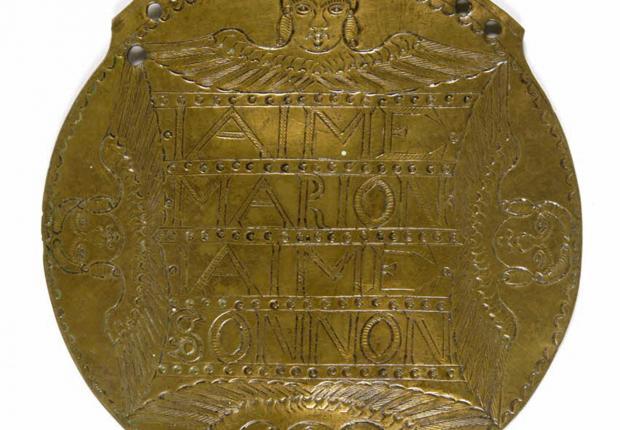
Mule plate
Inventory number: 1888.27.6
Situated between the Rhône and Loire rivers, and between the Mediterranean Sea and the Atlantic Ocean, the Vivarais and Velay regions are transit areas. People and goods used to travel here on horseback or mules, as the roads were so difficult to cross. Although this mode of transport was gradually abandoned with the development of the road network and the rise of the railroads from the mid-19th century onwards, it remained very active and organized in guilds of conveyors, notably for the transport of wine. The mule plate is one of the symbols of this ancient guild. It plays both a functional and symbolic role.
Often paired, they serve as blinkers for the equine. They are generally made of copper or brass and measure between 15 and 18 cm in diameter. They are embellished with engraved or repoussé decoration. The motifs are varied, but often include prophylactic signs. Muleteers attached great importance to their plates, and a mule was never sold without its harness.
These mule plates are linked to the ornamentation of animals found in most civilizations, either permanently or temporarily, for a particular moment when the risk is great, such as transhumance. Bunches of multicolored flowers on the most beautiful cows during the ascent to summer pastures in Aubrac, cow or sheep bells, frontal ornamentation for horses or donkeys in Greece… these objects or amulets, colored or sounding, ensure the animal’s protection.
Gypsy dance
Inventory number: 1961.51.25.60
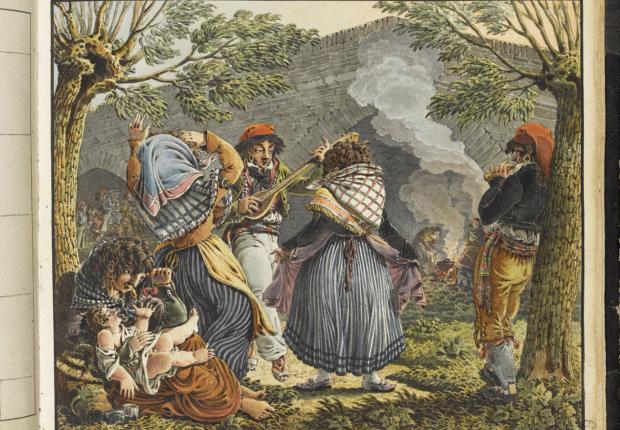
Charles Stanislas l’Eveillé (1772-1833) was chief engineer at Ponts et Chaussées. He took part in the work on the Ourcq canal and supplied several studies on suspension bridges. Nevertheless, his curiosity and drawing skills went far beyond the scope of his profession. He made a trip to the south of France, to Languedoc Roussillon and the Basses Alpes (today’s Alpes-de-Haute-Provence). This was a little-studied region, and during his peregrinations he took care to sketch what seemed remarkable or specific. The themes ranged from architectural surveys to studies of traditional costumes and reproductions of botanical elements. All his work is compiled in a Souvenir de voyage album, kept at the Mucem. It’s interesting to note that he devoted several of his watercolors to the daily life, customs and clothing of gypsies. These are the most sophisticated watercolor drawings in the album. Even if his style remains somewhat romantic, Charles-Stanislas l’Eveillé works here as an ethnologist-folklorist intent on immortalizing hitherto little-known themes.
Labrie Île d’amour journeyman carpenter’s field of conduct
Inventory number: 1961.66.64
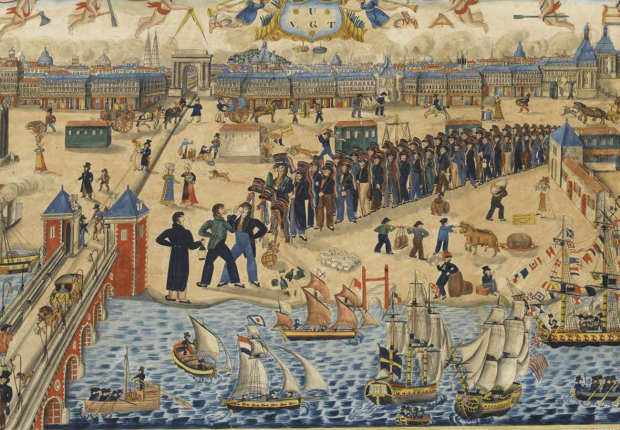
The Tour de France, made up of stages in different cities, is the ultimate moment in a young journeyman’s training, both to perfect his skills and as an initiation rite of incorporation. This drawing is the “field of conduct” given to journeyman carpenter Labrie Île d’amour when he left Bordeaux for Paris in 1826. It is both proof of his passage into the city and a reminder of the departure ceremony, which enabled the carpenter to take leave of his peers and protect himself from the dangers of the road ahead. The departure rite brought all the companions together outside the city, in a “field”, often near a bridge, a symbol of the crossing but also of the bond uniting all the companions of France. The departing companion then toasts the Rouleur or First Companion of the town, who is also the first to whom he or she spoke on arrival. This is the ceremony depicted in the drawing, with the city of Bordeaux, recognizable by its monuments (Saint-André Cathedral, Saint-Michel Basilica, Porte de Bourgogne), in the background. The procession of companions is on the quay, now the Quai Richelieu, on the banks of the Garonne, near the stone bridge. In the foreground, the many boats are a reminder of the economic vitality of Bordeaux’s port in the early 19th century, including the first steamboat, which arrived in Bordeaux in 1821.
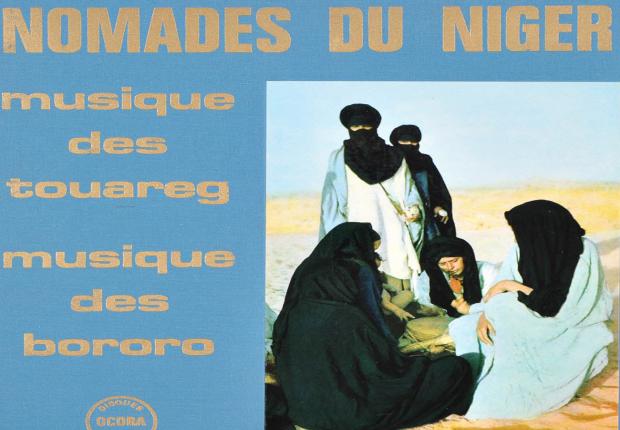
Nomades du Niger disc
Inventory number: MUS1966.39.5-13
The dissolution of Afrique Occidentale Française in 1958, followed by the independence of its seven successor states (Côte d’Ivoire, Senegal, Guinea, Mauritania, Upper Volta, Dahomey and Mali) between 1958 and 1960, officially put an end to the French colonial period in sub-Saharan Africa. During the latter period, between the end of the 19th century and the middle of the 20th century, a certain interest in the peoples and civilizations of West Africa developed, ranging from ethnographic surveys to colonial exhibitions, combining scientific and cultural study. This disc, acquired in 1966, was recorded by the Office français de Coopération Radiophonique, founded in 1959, and illustrates a new aspect of relations between France and its former African colonies. Political and economic relations between independent states and France remain close, and the Office de Coopération Radiophonique represents the visible side of cooperation, in particular through projects for the cultural valorization of independent countries, a fine example of which we have here. This 33 rpm vinyl record was recorded in Agadez, Niger, and is devoted to the music of the Tuareg and Bororo peoples. The sleeve features a photograph of veiled Tuareg nomads in traditional costume; the names of the musicians are mentioned, and a booklet illustrated with photographs explains each of the songs. The album is aimed at French-speaking listeners, and is intended as a musical discovery.
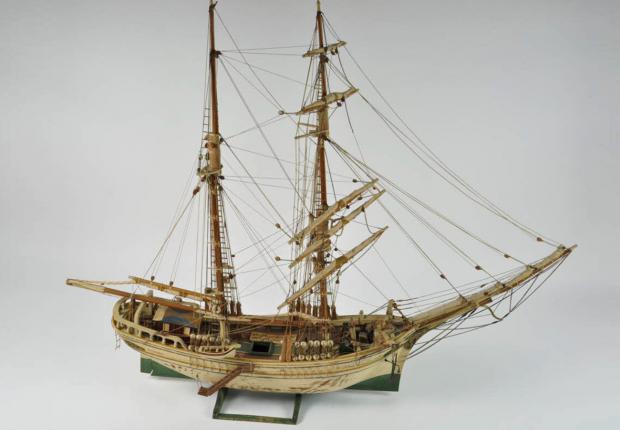
Skuna or brick-and-mortar
This model was created for the Reverend Father Charles of the Tanaïl convent in the Lebanese Bekaa. During the Second World War, he was a naval officer in charge of defending the Syrian-Lebanese coast. An enthusiast of ships and maritime history, he commissioned artist Soleyman Abd el-Majyd to produce two scale models: a traditional fishing boat and the skuna (or brick-goelette) shown here, which bears the name Kawssar painted on the hull. A brick schooner is a sailboat with two masts, the foremast and the aft mainmast. In keeping with the schooner principle, the aft mast is higher than the foremast. The bowsprit mast, which extends long into the bow of the ship, gives it a streamlined appearance. Fast and relatively maneuverable, these ships were widely used for trade and piracy in the Mediterranean. Their golden age was between the end of the 18th and the end of the 19th centuries.
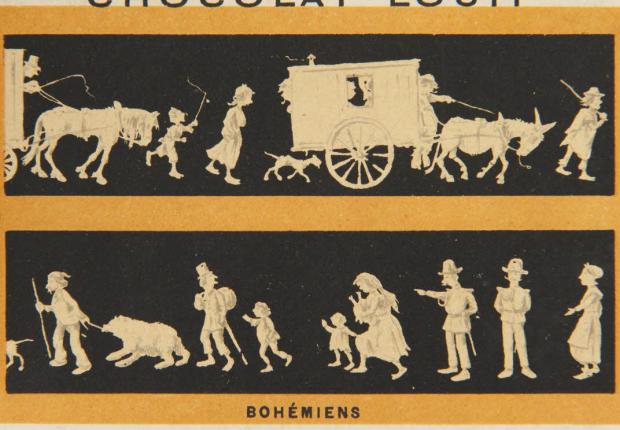
Advertising card
Inventory number: 1996.40.771.8
This chromolithographic card, printed in Paris in 1900 for “Chocolat-Louit”, depicts two superimposed scenes: in the first, “bohemians”, as the caption indicates, are shown on their way with their caravans. In the scene in the lower register, the same people, on foot, are being chased away by the gendarmes, while a woman, a witness to the scene, looks on. This is a widespread view of gypsies and their treatment. They’re nomads, they don’t fit into the framework of French society; their mobility, the fact that they don’t settle anywhere for long, makes them suspect in the eyes of both the population and the authorities. In the countryside, they were accused of theft and witchcraft, and their mobility made them difficult for the state to control. This map reflects the way a sedentary society views its nomadic minority, a way of life that doesn’t share its values, and the resulting rejection. The judgment is thus socially accepted, and widely disseminated through advertising. The latter not only reflects, but also disseminates the judgment of the majority group on a minority that does not share its social codes. These prejudices have a long history: they began over a hundred years ago and are still with us today, renewing themselves by targeting new communities, in particular the Roma.
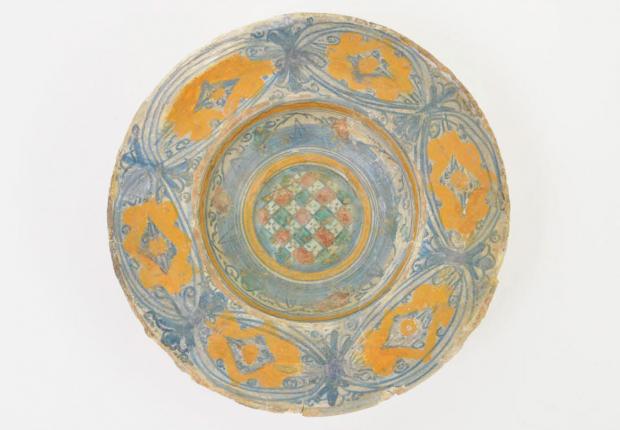
La Lomellina soup plate
Inventory number: 2000.1.24
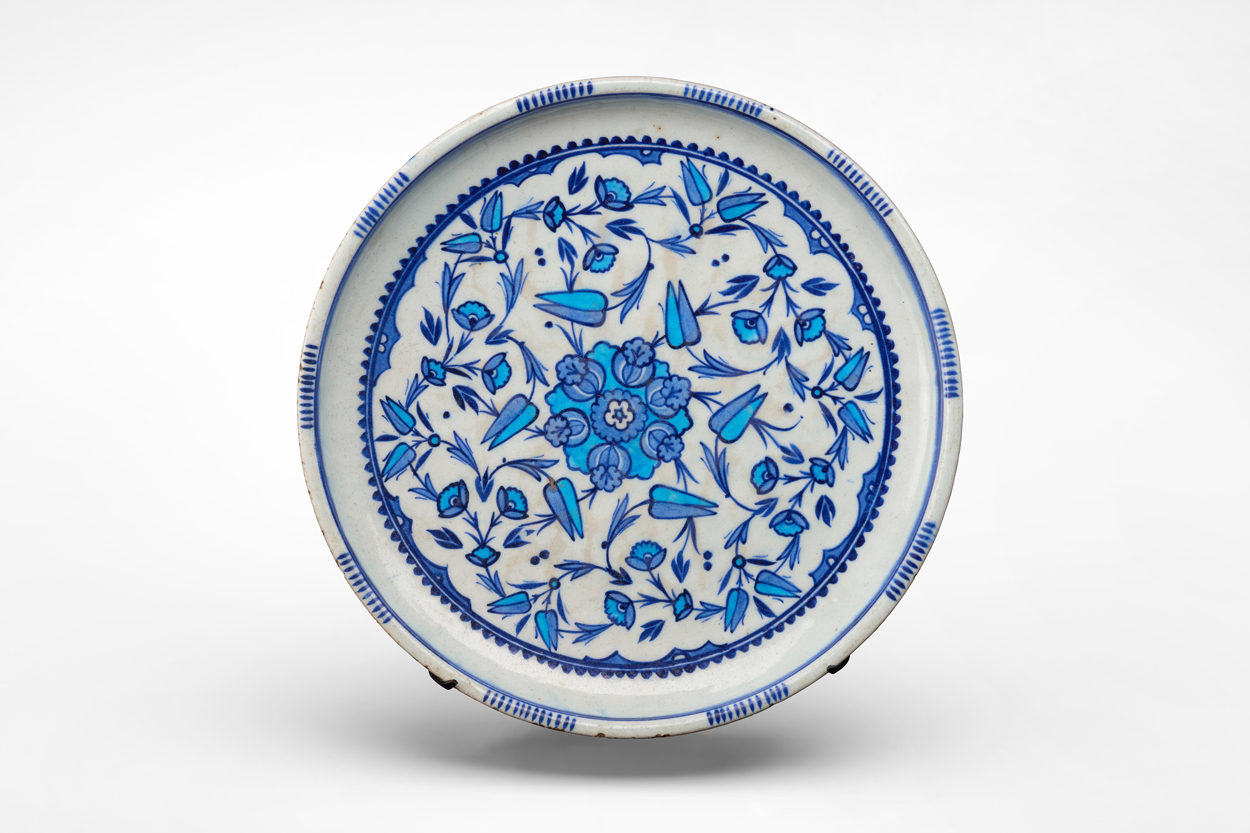
Off the coast of Villefranche-sur-mer (Alpes-Maritimes), the wreck of the Genoese ship La Lomellina has been the subject of underwater archaeological research since the 1980s. Among the objects found in the wreck is this plate, which has entered the collections like the rest of the remains brought to the surface. It’s a soup plate in majolica, an Italian ceramic with a metallic lustre, decorated with a checkerboard pattern of green, red and white squares and a garland of blue foliage and three red flowers, on a grey and blue background.
This plate has made a major contribution to the study of the wreck, particularly in terms of its identification. This type of decorated plate is relatively rare. The only known examples are preserved in Paris and London. They all date from the years 1490-1530, and come from northern Italy, in particular from the Montelupo workshop (Tuscany). Among other things, this rare plate identified the Villefranche wreck as the Lomellina, sunk in 1516.
La Lomellina cannonball
Inventory number: 2000.1.86
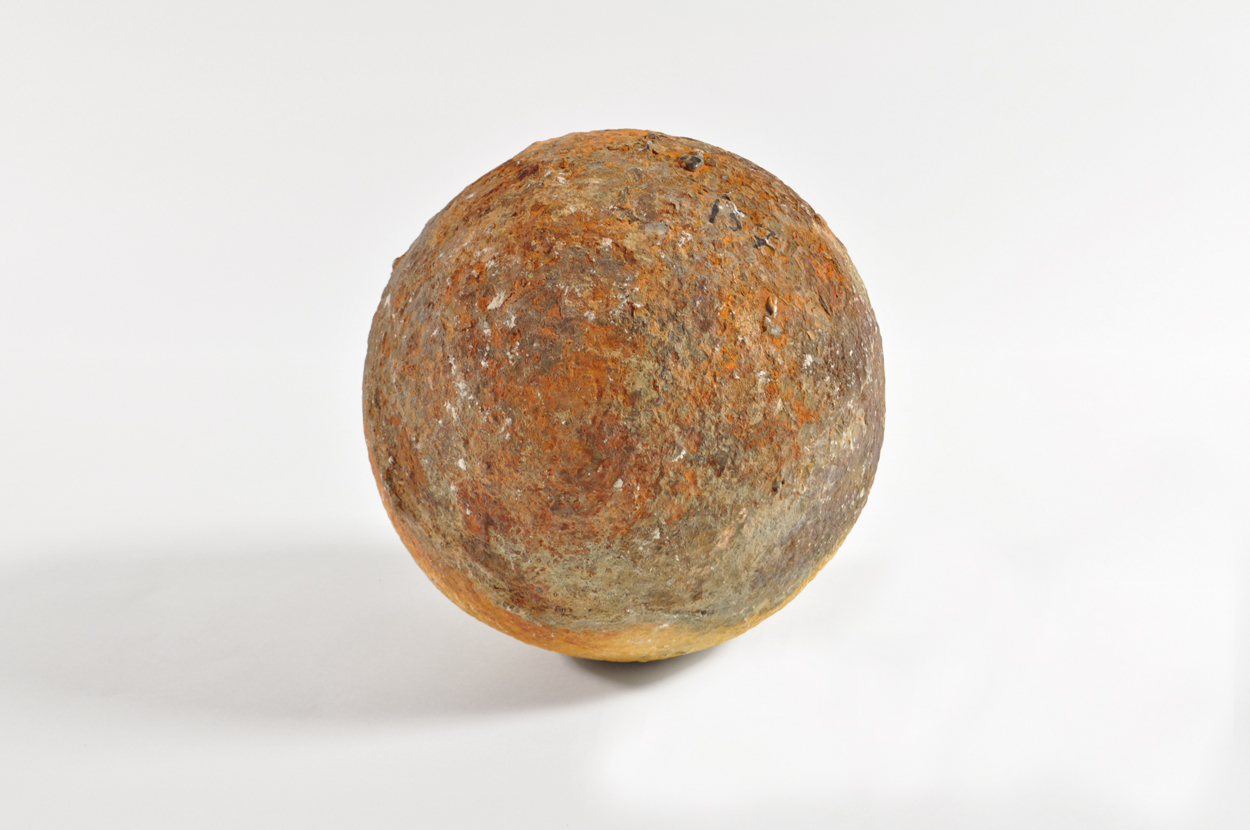
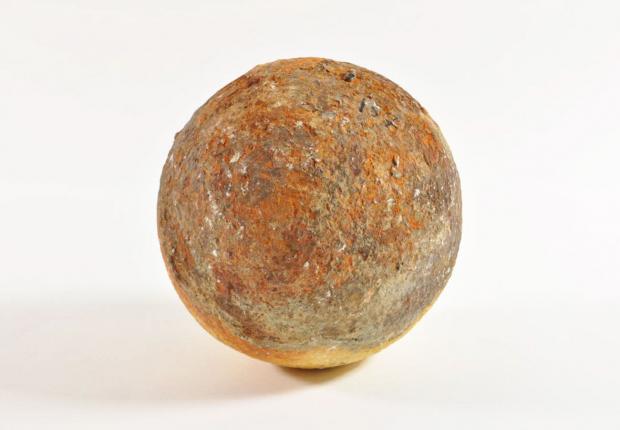
This almost spherical stone ball, weighing over 12 kg and measuring 21 cm in diameter, was found in the wreck of the Lomellina, a Genoese ship sunk in the early 16th century off Villefranche-sur-Mer (Alpes-Maritimes) and excavated since the 1980s. It testifies to the military equipment of this ship, equipped with a relatively large artillery, some fifteen cannons, also found during the excavation. This type of cannonball was made directly on the ship, as evidenced by the discovery of other cannonballs whose shaping had not been completed by the crew before the shipwreck, as well as contemporary archival documents that mention stones taken on board ships to make cannonballs. The ship’s defenses also included clay grenades that could be filled with quicklime or other corrosive material, fire pots, rifles and hollowed-out pine cones filled with gunpowder for use as incendiary projectiles. Such military equipment on a merchant ship is explained by the insecurity of the maritime routes where Christian and Barbary pirates roamed.
Poster for a shipping company
Inventory number: 2001.4.21
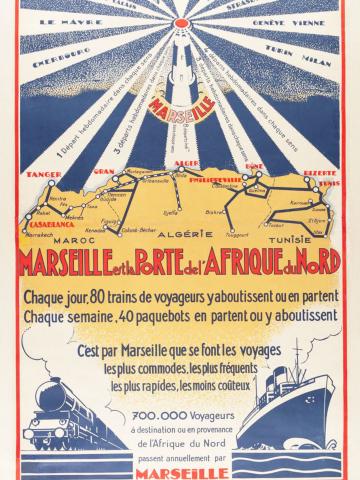
Marseilles has always had close links with the rest of the Mediterranean basin, particularly with the northern shores of Africa, a privileged position that has been widely glorified throughout its history. This relationship took a new turn after the conquest of Algeria between 1830 and 1870, and the establishment of protectorates in Tunisia and Morocco in 1881 and 1912 respectively. This poster praises Marseille’s privileged maritime links with North Africa, and the modern transport, trains and steamships that linked the city to the Maghreb. Marseille became France’s leading colonial port, and the first port of departure for settlers and travelers to North Africa: the poster speaks of 700,000 travelers to and from the Maghreb every year. In addition to the colonial backdrop, here we see the triumphant economic power of French industry and steam transport, in the service of speed and modernity, in Europe and North Africa, as shown by the various destinations offered from Marseille. More than a gateway, Lucien Serre symbolizes the city in this poster as a lighthouse that both guides and illuminates.
Travel souvenir
Inventory number: 2004.295.1
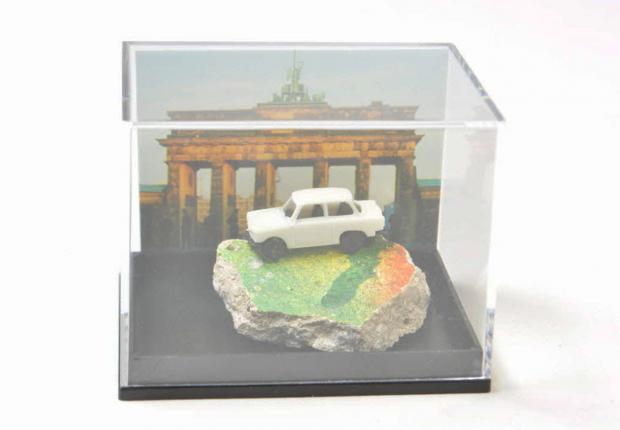
This small souvenir object was acquired in a Berlin hotel during a survey-collection carried out by the Mucem team on graffiti in Europe and the Mediterranean, in 2004. Inside a rectangular Plexiglas box is a piece of the Berlin Wall, with a miniature car resting on it. The Brandenburg Gate is silk-screened on one side of the box.
Fragment of the wall, Trabant, public monument – all have become symbols, even clichés, of the German Democratic Republic or East Germany. The fall of the Berlin Wall on November 9, 1989, and the reunification of Germany were major historical events. This type of souvenir refers to a bygone era, and seems to combine an affirmation of the past with a certain nostalgia for it. It’s interesting to note, however, that the part of the wall highlighted in this object is the graffitied part. Graffiti was mainly concentrated on the western part of the wall, which had become a place of free expression, while the eastern part was isolated from the rest of the city by a guarded zone.
Wedding procession in southern Algeria
Inventory number: 2005.3.1
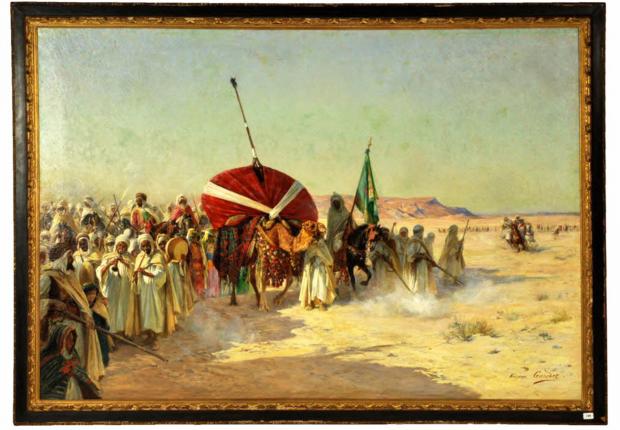
This painting depicts a procession, with musicians in the foreground, adorned women behind a palanquin, and armed horsemen in the background, who look as if they’ve just stepped out of a fantasia. The palanquin (hannoun), which carries the bride hidden from view, is set on a carpet with motifs characteristic of Djebel Ammour, a mountain range in central Algeria.
Eugène Girardet belonged to a family of artists of Swiss origin, marked by Algeria; his father, Paul Girardet, had engraved Horace Vernet’s paintings of the conquest of 1830. An artist-traveler, this Orientalist painter visited Spain, Morocco and Algeria as early as 1874; he tended to focus on the south of the country, considering the north too Europeanized to really interest him. His attachment to the Biskra, el-Kantara and Bou-Saada regions led to a close friendship with Etienne Dinet, an Orientalist painter who lived in Algeria.
Girardet took part in numerous Paris salons from 1878 onwards, as well as in the first Colonial Exhibition organized in Marseille in 1906, alongside other painters from this Orientalist movement.
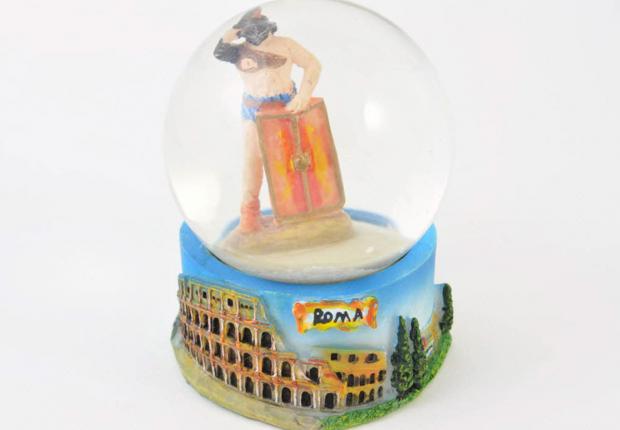
Rome souvenir snow globe
Inventory number: 2006.151.1
The first references to snow globes are to be found in a report written by Charles Cole, a member of the Glass Commission at the 1878 Universal Exhibition in Paris. In it, he describes small ball-shaped paperweights containing water and a white powder. The ball contains small figures.
The craze for this new product was immediate, but its popularity with a wide public and its tourist appeal were confirmed from the 1950s onwards, with the development of the plastics industry. Inexpensive, fun, easy to transport, uniform in shape and varied in subject, snow globes became prized souvenirs and collectors’ items for chionospherophiles. Having them at home is like having trophies from your travels. The destination must be identifiable at a glance, which is why the name of the town often appears on the base and the choice of scene is symbolic. Here, a gladiator stands proudly above the Colosseum, a fitting allusion to the wealth and grandeur of Rome’s ancient past.
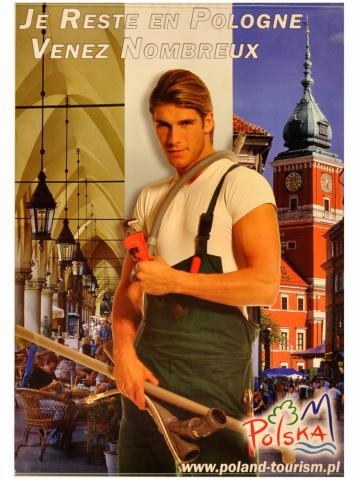
Poster for the Polish Tourist Board
Inventory number: 2007.84.1
Many people in France still remember the famous expression: the “Polish plumber”, a symbol of cheap European workers and the social dumping that would be brought about by the European open market. It appeared in the French press in 2005, at the time of the debate on the European Constitutional Treaty, which would have liberalized conditions for the movement and hiring of workers in the European Union. The Polish plumber became a symbol of this debate, but also the subject of a verbal escalation sometimes bordering on xenophobia.
This poster, specially produced for France by the Polish Tourist Board, turns the cliché on its head. Model Piotr Adamski portrays an attractive Polish plumber, inviting French tourists to visit the country, which is now easily accessible to European citizens. The campaign was a success, with French tourists visiting Poland in the summer of 2005 significantly higher than in other countries.
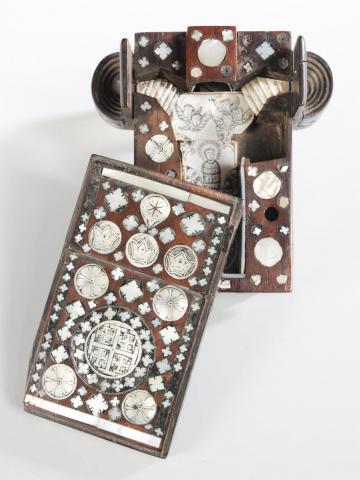
Pilgrimage souvenir model, Grotto of the Nativity
Inventory number: 2010.7.6.1-2
This small model of ebony and olive wood inlaid with mother-of-pearl represents the Grotto of the Nativity in Bethlehem, an important Christian pilgrimage site. In the 4th century, Emperor Constantine erected the first basilica on the supposed site of Jesus’ birth. The church was rebuilt under Justinian (525-575). Two staircases, visible on either side of the model, lead down into the grotto, now transformed into a crypt. The exact location of the Nativity is indicated by a 14-pointed star, shown here incised in mother-of-pearl near a representation of the swaddled Child.
The product of a luxury craft practiced by Syrian-Lebanese artisans in Franciscan monasteries, this type of object was made for Western Christian pilgrims who brought it back as a souvenir of their journey to the Holy Land. This model is part of a larger set of eight scale models representing the ideal Catholic pilgrim’s itinerary. An explanatory booklet, no longer available, was supplied with the models, contributing to the memorial function of these objects.