Vie domestique
Other themes
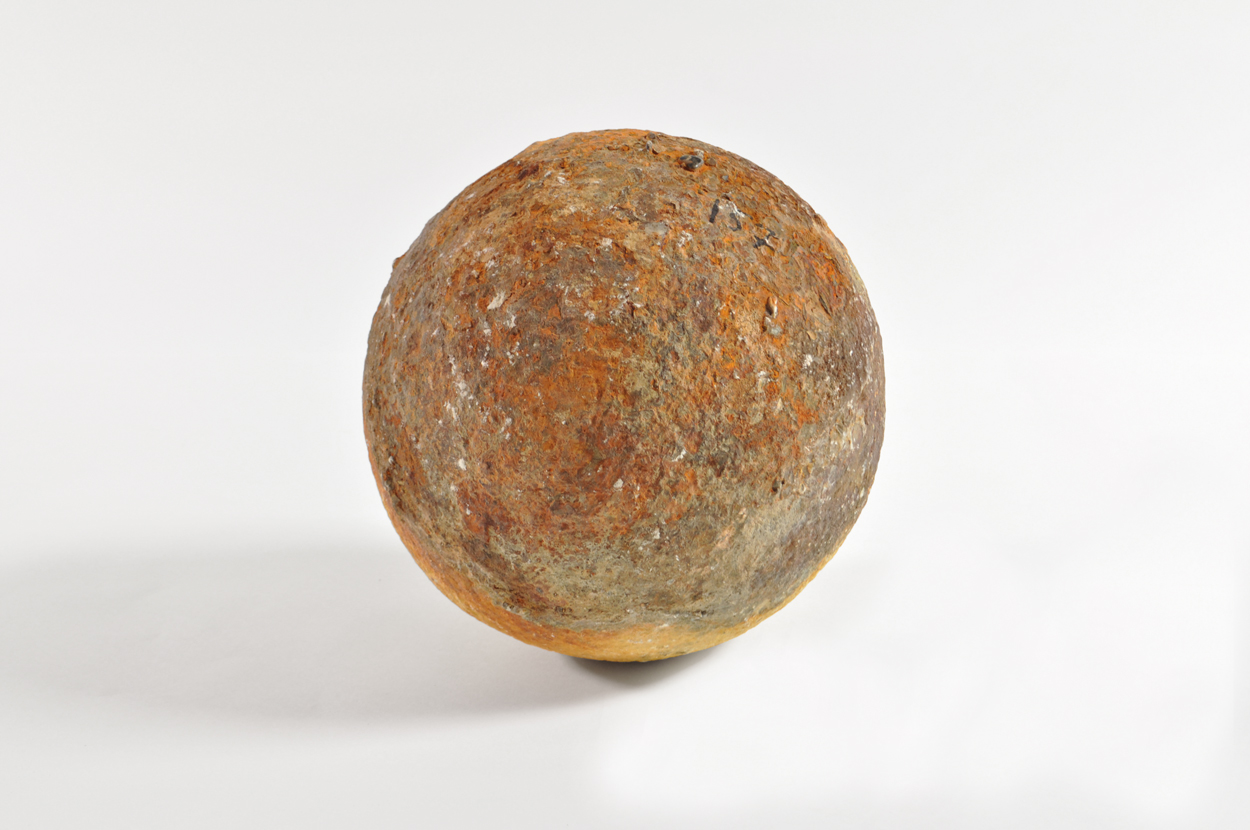
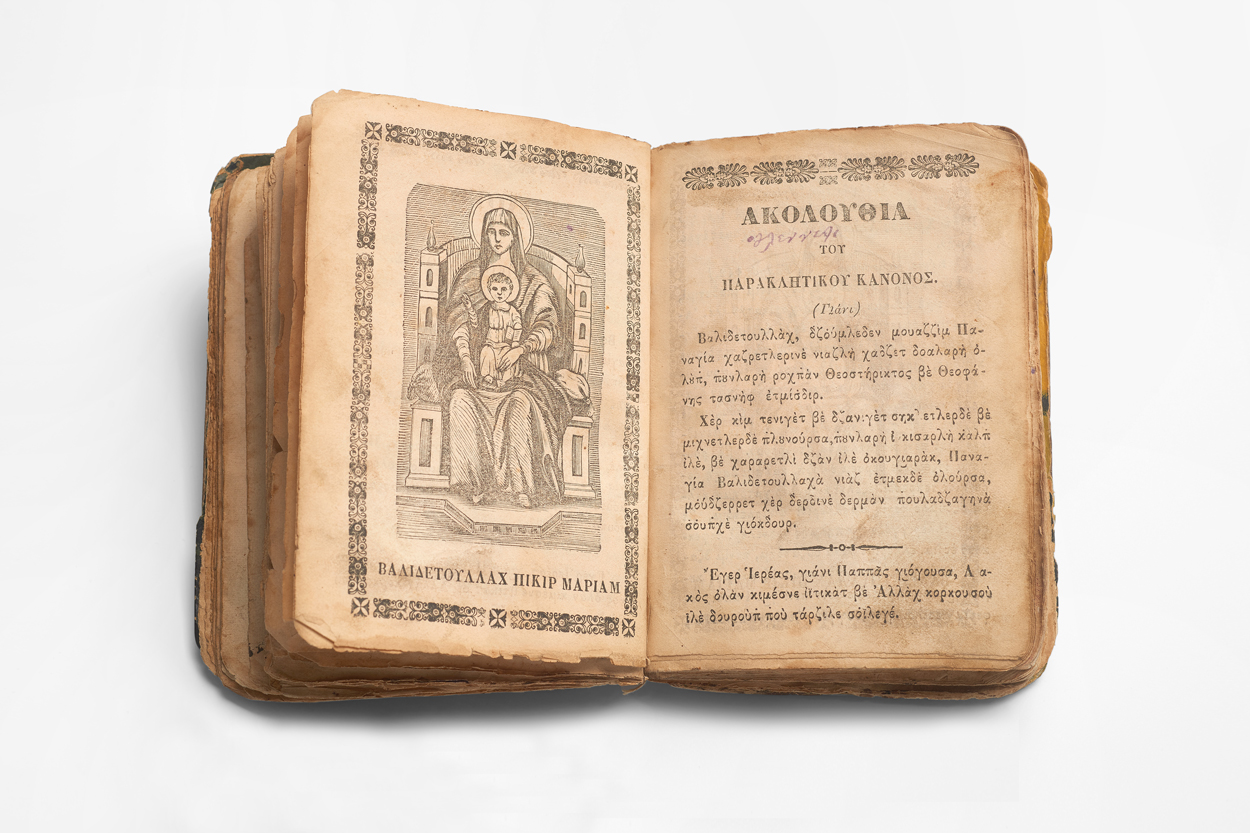
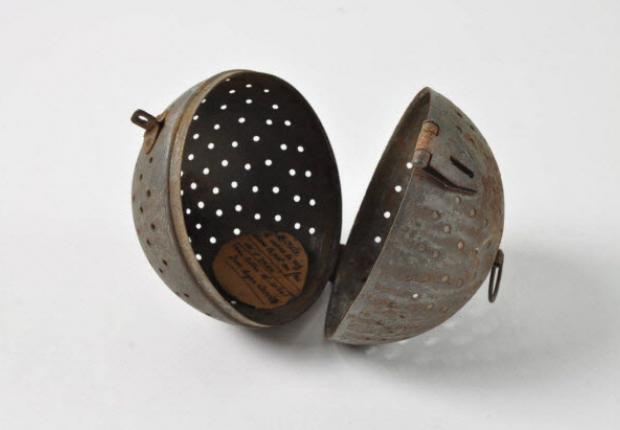
Rice cooking bowl, Oise, 1st half 20th century
Inventory number: 1941.6.4
Pot-au-feu is undoubtedly one of the most representative dishes of popular French cuisine. Known since the 17th or 18th century, it always consists of chunks of meat, usually beef, and vegetables cooked for a very long time over a low heat in a broth in a single pot. Sometimes this “pot” remained permanently on the fireplace or stovetop, and the broth was extended with new ingredients as meals were drawn from it.
This openwork ball introduces a somewhat unexpected dose of exoticism to this reputedly traditional dish: it was used to cook rice in the broth inside the pot, without mixing it with the other ingredients. As the cooking time for the rice was not the same as for the rest of the pot-au-feu, the ball could be removed at any time by means of a string attached to it. Rice thus sometimes replaces bread as a hearty accompaniment to pot-au-feu.
Rice was first grown in the Mediterranean by the Arabs and Turks in the Middle Ages, but it wasn’t until the 17th century that it became an official crop in France. The grain gradually found its way into the French diet, and even into the heart of a dish with such a strong identity as pot-au-feu, testifying to the continuous interpenetration of local traditions and exotic influences in European and Mediterranean civilizations.
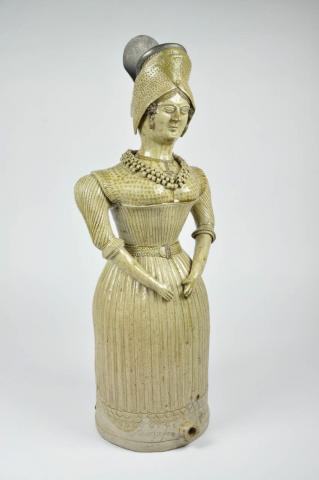
Cleanliness fountain by Marie Talbot, Cher, circa 1830
Inventory number: 1942.153.1.1-2
This fountain takes the form of a statuette of a woman in Restoration costume, whose clothing, finery and headdress are detailed with almost ethnographic precision. Her large bonnet matches the shape of the concealed pewter spout used to fill the reservoir. In addition to its plastic qualities, this fountain is remarkable for the craftsman’s signature, which is quite rare in 19th-century French folk art. At the feet of the dress, on either side of the drainage channel, we read “fait par Marie Talbot” (made by Marie Talbot). Marie Talbot (1814-1874), heiress to a dynasty of famous Cher potters, was one of the few female potters known at the time. Her abundant production of bottles, jugs, fountains and inkwells, often signed, ranks among the masterpieces of French ceramic art.
Water storage and distribution devices have always been an important aspect of domestic comfort and a means of social distinction. Water fountains in metal or, like this one, in glazed earth, became widespread among the bourgeoisie from the second half of the 18th century onwards. Keeping a small supply of clean water close at hand, they were used for a fundamental daily ritual: washing hands before meals. Ceramic models, less expensive than those made of copper or zinc, are more accessible, just as watertight and highly effective at keeping water fresh. Terracotta also offers almost infinite formal possibilities, enabling potters to create unique, personalized pieces.
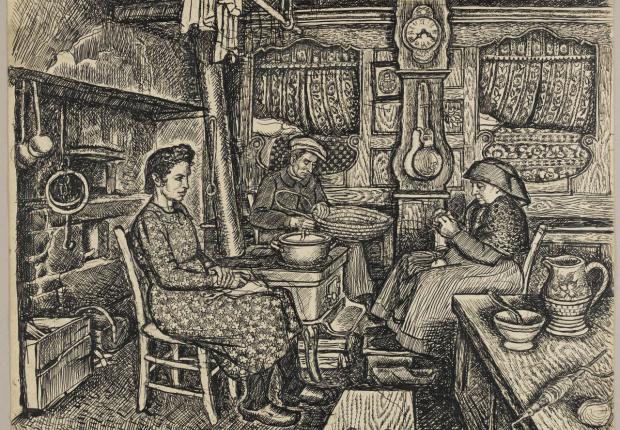
Jean Amblard, Meeting in a common room at Champ-Laurent, Puy-de-Dôme, 1944
Inventory number: 1944.3.5
Jean Amblard (1911-1989) was one of a handful of artists employed by the Musée National des Arts et Traditions Populaires during the Second World War to take part in its surveys of rural housing in France. A graduate of the Ecole Nationale Supérieure des Arts Décoratifs, he joined the Front National des Arts contre le Fascisme in 1939-1940. The museum commissioned him to work as a painter-ethnographer on its “intellectual worksites”, in particular to provide him with a cover. Jean Amblard settled in the Rochefort-Montagne region of the Puy-de-Dôme, where he produced a large number of views of rural interiors, such as this one.
This Reunion in a common room at Champ-Laurent is packed with details that reveal the conditions of rural life in the mid-1940s. The half-closed beds that occupy an entire wall of the common room, the prominent place of the clock, the crockery and distaff placed on the table are representative of so-called traditional furniture. The stove in front of the hearth, which it has supplanted as the place for cooking, bears witness to the gradual modernization of French homes since the turn of the century. In this work, Jean Amblard has succeeded in rendering the furniture and domestic activities in the same way as a scientific survey or photograph. But his composition and dense brushstrokes, which leave no room for emptiness, also suggest an impression of clutter that captures the atmosphere of a common room in the Auvergne region of France.
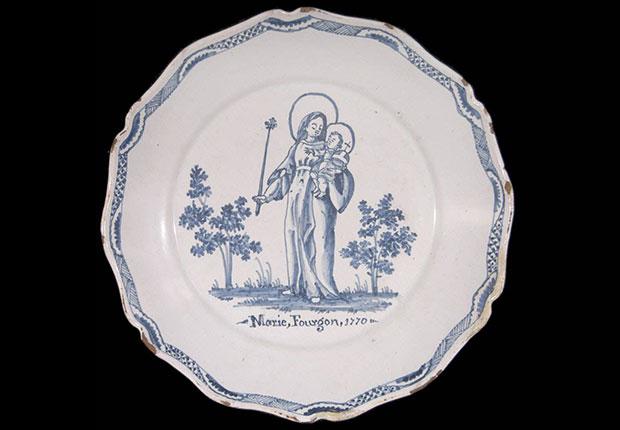
Plate in the name of Marie Fourgon, Yonne, 1770
Inventory number: 1946.112.5
A “patronymic” is an earthenware piece bearing the name of its owner and a date. In most cases, the piece is decorated with the image of a saint, generally chosen according to the name of the recipient, as here the Virgin Mary, patron saint of a certain Marie Fourgon. Introduced in the 18th century, these personalized earthenware pieces celebrate the triumph of the individual in an increasingly bourgeois society. Endowed with such commemorative and decorative potential, they were not intended for everyday use, but were to be displayed prominently, notably on a china cabinet.
In the 18th century, earthenware ceased to be a luxury item and became a common consumer good, accessible to the wealthy bourgeoisie and peasants. Paradoxically, patronymic pieces appeared in reaction to this democratization: individualized by a proper name, they stood out in the midst of increasingly abundant production and elevated their owner above the mass of common earthenware buyers. In imitation of the nobility, who decorated their chattels with their coats of arms, the bourgeoisie sought to display their personal success on their crockery. Yet patronymic earthenware remained somewhere between mass production and one-off orders.
The use of a poncif (a sheet of paper in which the lines of the design are punched with holes, enabling a dotted sketch to be drawn on the surface to be decorated) for the figures of the saints produces identical images on plates destined for different people, sometimes over more than ten years. Thus, several plates were produced by the same workshop as Marie Fourgon’s in the 1770s, featuring the same image of the Virgin, but for different Marys (two examples can be seen at the Musée de l’Abbaye Sainte-Croix in Les Sables d’Olonne).
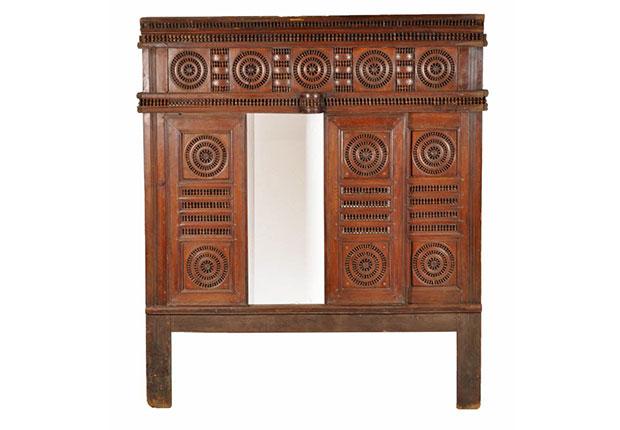
Closed bed facade, Basse-Bretagne, 19th century
Inventory number: 1949.6.5.1-3
In communal housing, where several generations live under the same roof, and even in the same room, the enclosed bed has been a widespread solution for isolating oneself and preserving a little privacy, while preserving the warmth of the bed against the night-time chill. Usually, several beds are lined up along one wall of the common room, forming a long wall of woodwork. They are raised to provide insulation from the cold, damp floor, and are accessed by chests in front, which also serve as benches during the day. Often in Brittany, a place is reserved in the front of the bed for a statuette of the Virgin, as here a small balcony protrudes from the center of the cornice overhanging the entrance. Two sliding doors close off the bed, but never completely: vents in the doors and openwork partitions ventilate this confined space, but also provide the opportunity for intricate decorations. For example, the enclosed beds of Basse-Bretagne, like this one, are characterized by the use of small turned ornaments called “fuseaux”, lined up in balustrades or arranged in rosettes.
The “lit clos” (closed bed) is an essential part of Breton folklore, or at least of the traditional image of Brittany since the 19th century, as evidenced by the many old postcards in the Mucem collection. In reality, this type of bed also existed in many rural areas, in the Alps, the Massif Central and the Pyrenees. But it was probably less long-lived there than in Brittany, where it was still frequently seen at the beginning of the 20th century.
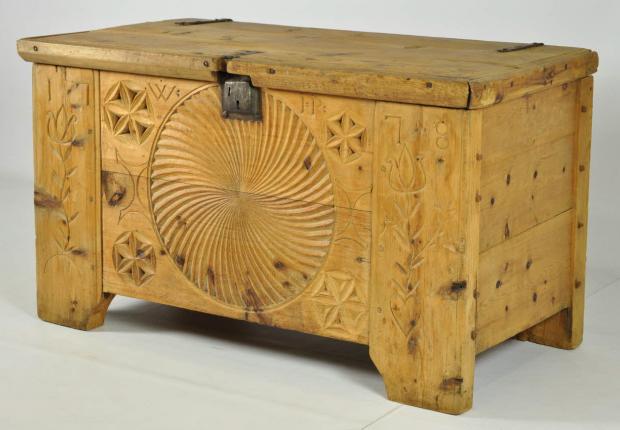
Bridal chest, Hautes-Alpes, 18th century
Inventory number: 1949.7.51
While in wealthy French households the wardrobe took over from the mid-18th century onwards, in the Alps the chest remained the fundamental piece of furniture until the 19th century. As in many societies, it could be used to store all household goods: grain, flour, bread, salt, sheets and clothes, archives and documents… In this example, the chest is divided into three compartments for easy storage.
The flowers engraved on the jambs, particularly the one protruding from a heart, suggest that this is a bridal chest, an indispensable part of the dowry that remained the property of the bride until her death, and was used to store her personal belongings. It is undoubtedly the bride who is referred to here by the inscription on the front, where the W is a contraction of the exclamation “Vive…!”, followed by the young woman’s initials.
The rest of the facade is almost entirely taken up by an exceptionally large rose window, whose fine rays undulate with great regularity. The soft softwoods used in the Queyras region, such as pine, lend themselves easily to bevelled motifs that play with light and shadow, giving this chest an almost hypnotic power. This rosette and those around it are widespread decorations on wooden furniture throughout Europe and on all shores of the Mediterranean. Folklorists in the early 20th century saw it as a solar motif designed to protect the furniture’s contents, especially as protective religious images are still found under the lids of many chests. A more down-to-earth explanation would have it that rosettes are the simplest motif to create, anywhere and at any time, using a ruler and a compass. Whatever the case may be, they testify to a common taste for geometric decoration that transcends cultural frontiers and makes light of geographical obstacles.
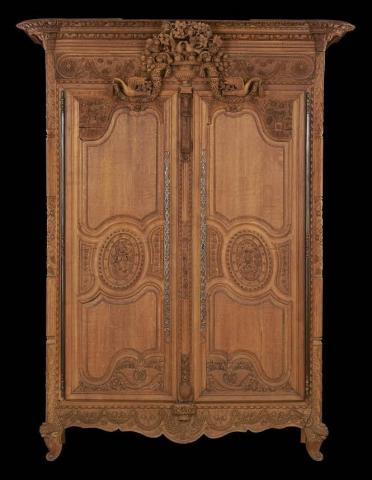
Wedding armoire, Lower Normandy, 4th quarter 18th century 1st quarter 19th century
Inventory number: 1964.22.1
This cabinet is an exceptional example of French rural furniture, thanks to the quality and exuberance of its decoration. It testifies to the enrichment of part of the peasantry in the late 18th and 19th centuries, particularly in Normandy, where they benefited from the proximity of Paris. At this time, the armoire was a prestigious piece of furniture, borrowed from the upper social classes, the bourgeoisie and lower nobility. Commissioned from specialized craftsmen, it featured motifs chosen from a limited repertoire of subjects: birds, garlands and plant motifs. On the other hand, the trophy motifs carved in slight relief in the medallions at the center of the doors are an opportunity to commission a more personal piece of furniture from the carpenter: farm implements, objects evoking wine and the grape harvest, and even representations of the bride and groom. As is often the case, this example mixes elements of the Louis XV (floral basket, scalloped legs) and Louis XVI (symmetry, garland, fluting, beaded motifs) styles, with a certain gap between the Court and the bourgeoisie. By 1800, the latter had already abandoned the styles of the Ancien Régime and adopted the Empire style.
The wardrobe is often part of the wife’s dowry, and is therefore frequently adorned with symbols of marital bliss and household prosperity. Here, doves are depicted pecking each other, surrounded by a sheaf and garlands of flowers. This image is very common in this type of furniture, but here it is carved in exceptionally high relief and seems to spill out abundantly from the pediment onto the doors.
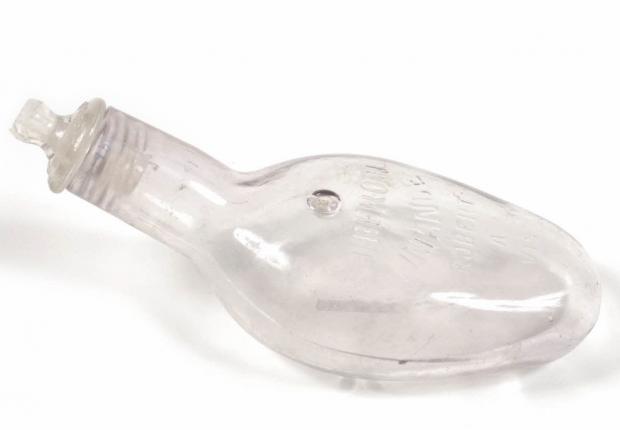
Dab bottle by Robert, Paris, 4th quarter 19th century 1st quarter 20th century
Inventory number: 1996.48.1-2
Feeding bottles have been available in a variety of materials since ancient times, because in predominantly peasant societies, mothers and nannies rarely had the time and leisure to breastfeed their children, as they were responsible for a large proportion of the household and farm chores. However, artificial breastfeeding only really developed and spread in France during the 19th century, at the same time as hygienic concepts aimed at preserving children’s lives and combating the falling birth rate. This is illustrated by this baby bottle from the Robert brand, created in Dijon in 1869. Established in Paris in the 1880s, this company offered feeding bottles and teats in a variety of shapes and advantages, and by the early 20th century was boasting sales of two million bottles a year. Robert’s bottles were so famous in those days that their name became a slang term for a woman’s breasts.
The first model to make Robert’s name was the bottle with a soft rubber tube, which enabled the child to feed himself without having to hold a glass bottle that was too heavy for him. However, this model was eventually banned in France in 1910, as it was impossible to clean the tube, which harbored a number of microbes deadly to toddlers. This screw-top “dab”, on the other hand, could be cleaned without difficulty using the brush supplied with the bottle, at least since 1910. Its shape ensured great stability when set down, while the upturned neck prevented milk from accidentally spilling out.
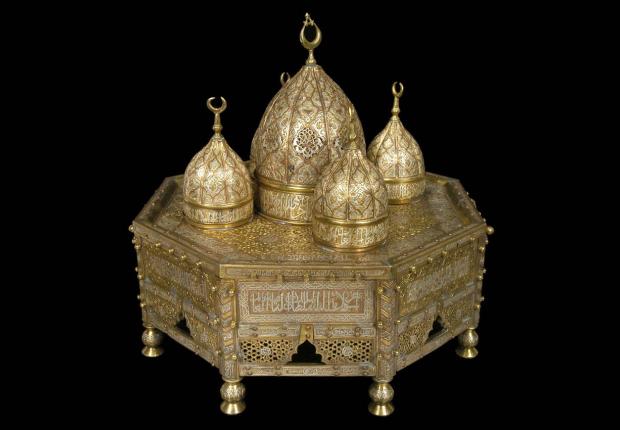
Food display stand, Egypt or Syria, 1st half 20th century
Inventory number: 2002.83.2
This food display unit takes the form of a low table with handles, which can be set up and removed like a tray at mealtimes. In the Arab-Muslim world, people traditionally eat seated on cushions, around a table set for meals. It’s also customary for all dishes to be presented at the same time. In this case, the main course, usually a meat dish, occupied the compartment in the tray under the central dome, surrounded by the side dishes presented under four smaller domes. All these lids served to protect the food from dust and flies, and to maintain the temperature of the dishes.
Towards the end of the 19th century, goldsmithing and coppersmithing experienced a new boom in the Near East, in response to demand from a prosperous Syrian bourgeoisie and European elites eager to furnish their interiors “à l’orientale”. The products of this period make frequent stylistic allusions to the Mamluk art tradition of the 13th-15th centuries. This Ottoman-era tray, for example, is inspired in its inscriptions by a small hexagonal table made in the early 14th century for the Egyptian sultan al-Nasir Muhammad and now in the Islamic Museum in Cairo. Here, the craftsman has blended features of this table with other elements inspired by Mamluk goldsmithing, such as compartments and lids. These, with their crescent-topped domes and octagonal table top, also evoke the monumental Mamluk architecture of mosques and mausoleums.
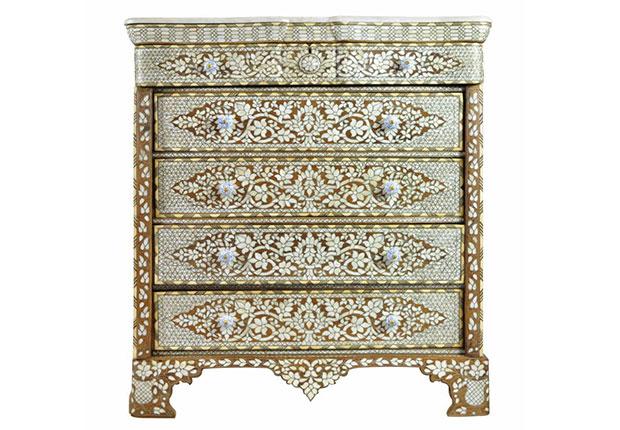
Chest of drawers, Syria, 2nd half 19th century
Inventory number: 2002.83.3.1-7
This Syrian chest of drawers is an example of the reciprocal influences between East and West. Its decoration and the materials used are part of a long tradition of Syrian craftsmanship, that of wooden furniture inlaid with mother-of-pearl and ivory. Here, plant motifs stand out against a geometric background. The clarity and iridescence of the ivory and mother-of-pearl contrast with the matt softness of the wood. Yet the drawer chest is not a traditional piece of furniture in the Near East, where linen and other household items were usually stored in chests. With its curved profiles, this piece of furniture is more inspired by European secretaries. Indeed, the drawers only open when the side hinges are moved. This commode was undoubtedly intended for Europe, where a certain taste for the Orient was all the rage in the 19th century. Many pieces of furniture, silverware and ceramics were created in the Ottoman Empire specifically to satisfy the Western luxury market.
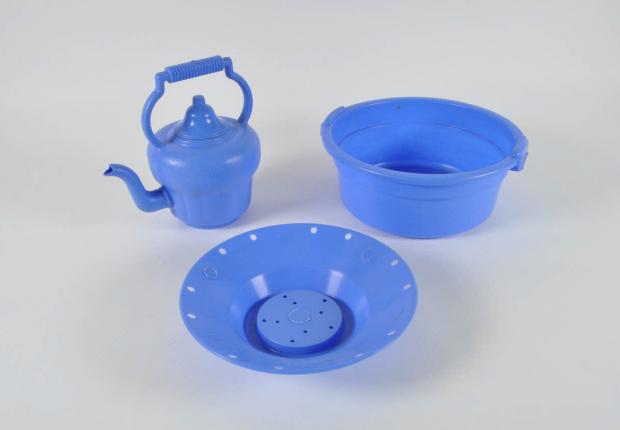
Hand-washing unit, Morocco, 2006
Inventory number: 2006.260.8.1-3
This set, comprising a pourer, a basin and a cover forming a strainer, is the modern version of utensils widely used for ablutions in the Maghreb and the Near East. Since ancient times, rural households have possessed the equivalent in terracotta, while the wealthiest families had services in precious metals. Today, however, there are industrially-produced examples in stainless steel or, like this one, plastic. In this model, the pourer takes on a shape closer to modern metal kettles than to the traditional “abariq” ewers of Islamic culture.
In many civilizations, ablutions or hand-washing before a meal is a codified ritual that cannot be avoided. It is certainly a sign of good manners and hygienic concerns, particularly in societies where all guests serve themselves by hand from a common dish. But above all, as a reminder of a subsistence economy where food can run short, it marks the almost sacred respect paid to the meal, a moment of eating and sharing. In the Maghreb and Morocco in particular, it’s usually the children, from the age of five or six, who are in charge of bringing water to each of the adults. They must respect a strict order: first the oldest men, then the youngest and finally the women.
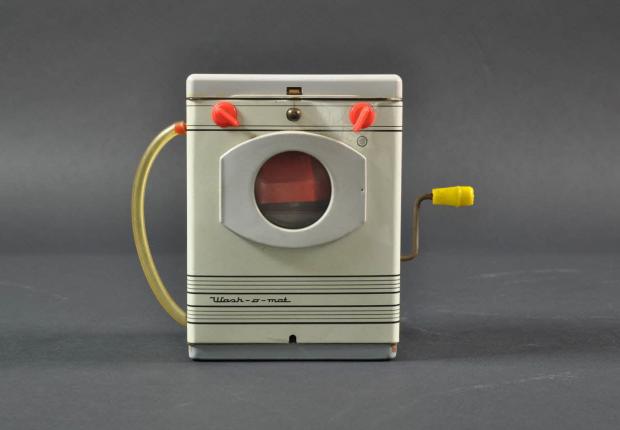
Toy washing machine, FRG, 1960s
Inventory number: 2007.83.5.1-2
This Wash-o-mat toy “really washes”, as its original box informs us, on which a blonde girl is hanging out white washing. Fitted with a hose for water inlet and outlet, the washing machine has an alternately rotating drum that the child can operate by cranking the handle on the side. For the fun of the game – but also for learning the household tasks that await the little girl in her future life as a housewife – it reproduces the first models of automatic washing machines from the 1960s, with all functions integrated: prewash, heating, washing, rinsing and spinning.
The Wash-o-mat is a good example of the transformation of women’s household tasks thanks to the empowerment of the washing system, which was part of a more global improvement in domestic comfort in Europe in the 20th century. The scarcity of domesticity in middle-class homes after the First World War, women’s emancipation and access to the world of work, and the affirmation of the leisure society, accelerated the spread of household appliances that reduced the time spent on domestic labor, supported by the technical advances of the second twentieth century. This miniature washing machine bears witness to the German toy industry’s tradition of exporting.
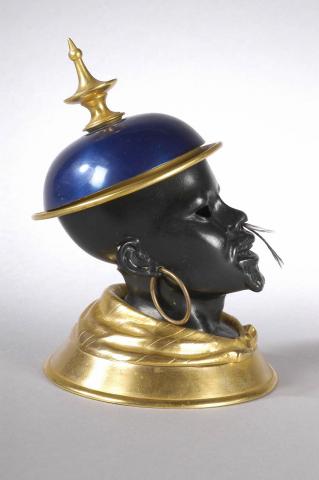
Bell or table stamp, late 19th century
Inventory number: 2008.29.152
The table bell, which appeared in Europe in the mid-19th century and was supplanted by the electric doorbell in the early 20th, is a symbol of the bourgeois interior during the Belle Epoque. Placed on the dining table, a pedestal table in the living room, the study or the dressing table, it served to summon the servants, without whom the grand homes could not function properly. What’s more, through its decoration or mechanism, it also bears witness to the tastes, imagination and sometimes humor of the master of the house.
This exotic-looking copy is a good example. It depicts a smiling, dark-skinned man with a blunt nose, short moustache and goatee. The character’s exoticism is further underlined by his attire: golden coat tied around his neck, large rings in his ears and a round blue metal hat that constitutes the bell itself. These accessories and his complexion characterize this individual as a foreigner from a faraway land, indefinable indeed, but evocative of the natives who populated the European colonial empires of the same period. This table bell thus conveys a certain taste for the exotic, tinged with the ordinary racism inherent in the society that used it: to ring the bell, in an irreverent and mocking gesture, you had to pull on a cotton cord that protruded from the nostrils of this debonair black man.
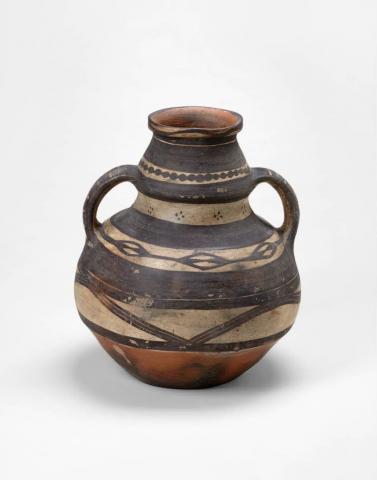
Kabyle jar, Jijel, Algeria, circa 1910-1960
Inventory number: 2014.2.9
This jar, like all Berber modeled pottery found throughout North Africa, was made from local clay collected in Jijel, then shaped by hand with a scraper. This method of manufacture allows great freedom of variation in the shape of the jar, successively truncated, domed or convex, with several breaks in profile and edges, a flexibility not possible with wheel-mounted ceramics. Berber pottery is made and decorated exclusively by women, following age-old technical traditions and decorative repertoires. Their production is intended for domestic use (food preservation, preparation and serving), which is relatively ephemeral given the fragility of the pottery. This is partly due to the way they are fired: first, the pottery is simply dried in the open air, then piled up and covered with fuel (slabs of dried dung and plants).
This jar belongs to a collection built up over the years by a French doctor who worked in and around Jijel and regularly received pottery as a thank-you from the women he delivered, and an urban architect who appreciated the plastic and aesthetic qualities of Kabylian pottery. Brought back to France when Algeria was decolonized, this collection remained for a long time in the family’s Paris apartment, where it preserved the memory of a history of passages and exchanges from one side of the Mediterranean to the other during the 20th century.
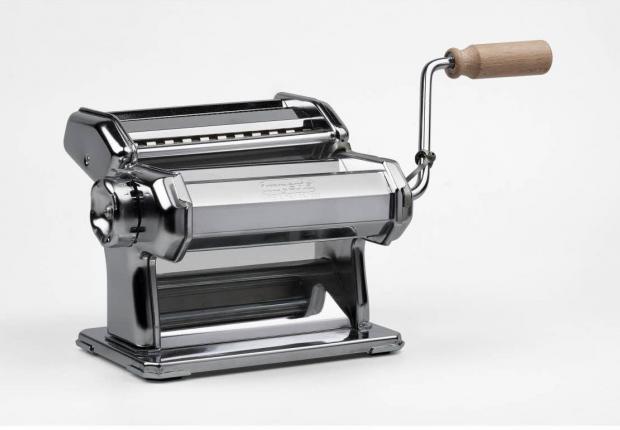
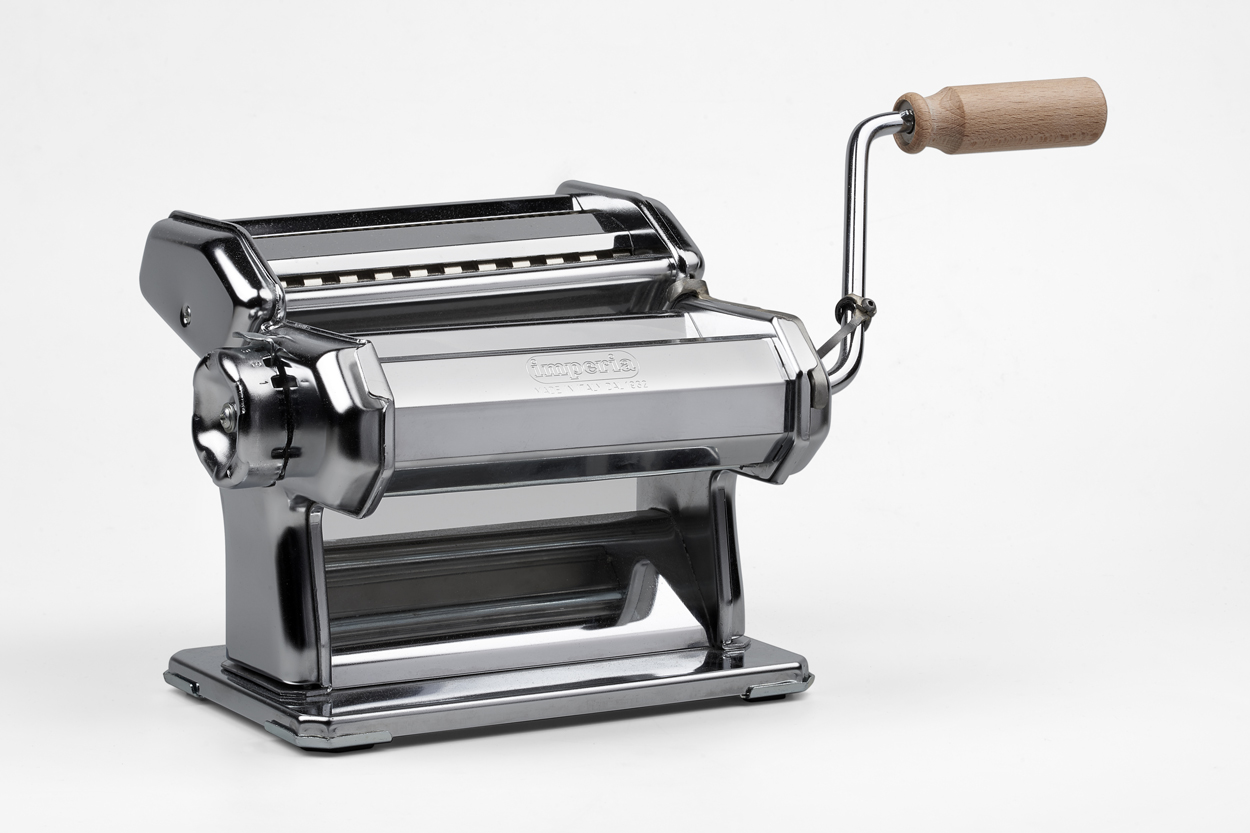
Sfogliatrice, pasta machine, Italy, 1961
Inventory number: 2014.4.2
This tool is used to flatten the dough into tagliatelle (2mm), fettuccine (6.5mm) or tagliolini. The dough, made from soft wheat flour or hard wheat semolina, eggs and possibly a little water, is kneaded by hand or by machine, then “pulled” to make it fine, either by hand with the help of a rolling pin or by means of a machine like this one. The machine is securely fixed to the work surface with a vice. The ball of dough is cut into quarters, which are lightly floured and then flattened before being passed between the machine’s two rollers using the hand crank. The flattened dough is then folded on itself, and fed back into the machine. The operation is repeated two or three times, reducing the distance between the rollers. The dough is rolled out according to the final preparation and/or sauce to be served with it. This appliance, still in common use today, bears witness to the traditionally domestic production of wheat-based pasta in Italy.