Artisanat, commerce, industrie
Other themes
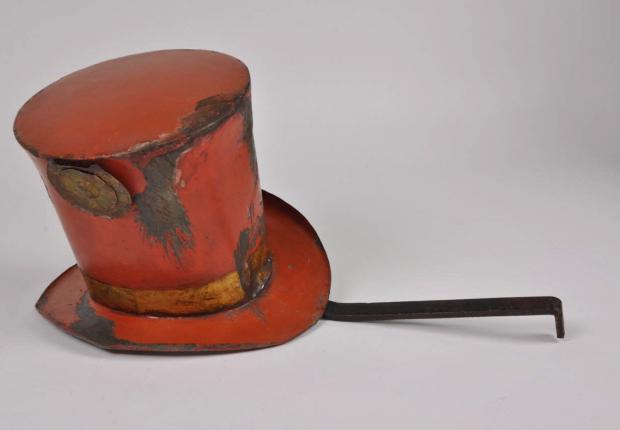
Hatter’s sign
Inventory number: 1939.11.2.1
In the early Middle Ages, if a craftsman wanted to sell his wares, he had to display a few samples in front of his store door to explain his craft and demonstrate the quality of his workmanship. Eventually, only a representation of the object to be sold was displayed, hanging high above the ground so the merchant didn’t have to take his wares out every day. The sign was born. Very quickly, wrought iron was adopted for its construction, as a guarantee against the rigors of time.
To indicate the trade it evokes, a sign must represent a clear symbol: a key for the locksmith, a pair of spectacles for the spectacle maker, a clog for the clogmaker, a hat for the hatter… like this hatter’s sign. It consists of two top hats in red-painted sheet metal adorned with a gold band and a buckle at the front. Each hat is fitted with a roundel and an iron bar for wall mounting.
Mucem’s collections include almost 130 signs, mainly from French businesses, from the 18th century to the present day.
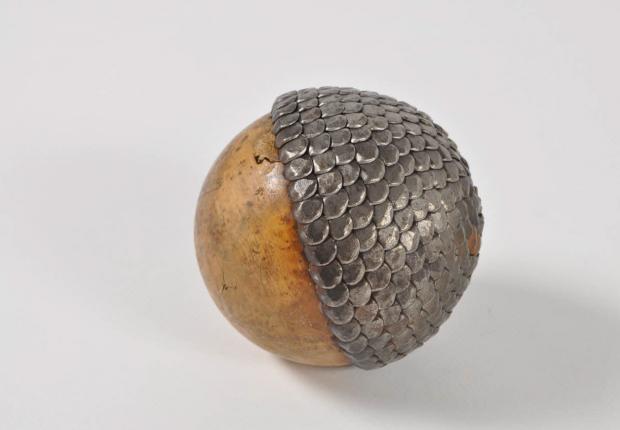
Sequence for making a pétanque ball
Inventory number: 1946.62.12
Since its creation, the museum has preserved various sequences of object manufacture (glass beads from Murano in Italy, hookahs from the Czech Republic, panpipes from the Pyrenees, ivory figurines from Dieppe…) in order to bear witness to modes of manufacture that have sometimes disappeared. Among these sequences is one of seventeen pétanque balls in various stages of shaping, from a piece of unturned boxwood to a fully studded sphere, illustrating the different techniques used (flake studding, side-by-side studding, for example).
The game of “boule lyonnaise” was first played in the Lyon region in the 18th century, when players placed as many balls as possible as close as possible to a small wooden sphere serving as a goal. But the origins of the game date back to the Gauls, before reaching its apogee during the Renaissance, when it was played by the nobility. Its Provençal variant is known as pétanque, from the Provençal pèd (feet), and tanca (planted).
For centuries, people played with wooden balls. Then, at the end of the 19th century, it was realized that their performance and, above all, durability could be improved by adorning them with nails. The Var town of Aiguines specialized in making studded boules on boxwood cores, as the region abounds in these shrubs. It was Marcel Carbonel, an Aiguines craftsman, who donated several sequences of boules to the museum. In 1923, Vincent Mille and Paul Courtieu invented the metal ball, made from a bronze-aluminium alloy, sounding the death knell for studded balls.
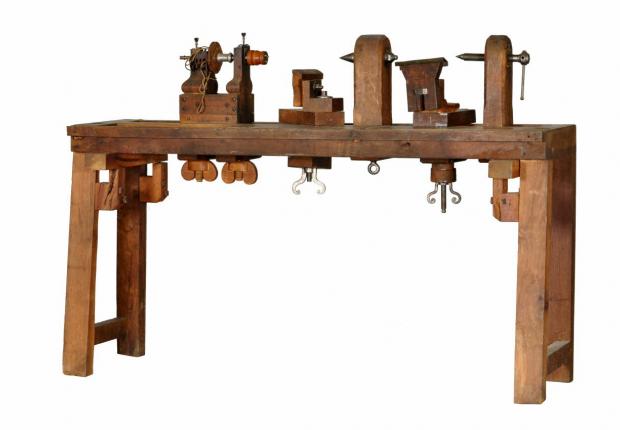
Wood lathe bench
Inventory number: 1959.76.16
The turner is a specialist who works by hand on pieces of wood fixed on a lathe, to give them their final shape. He creates or reproduces balustrade or staircase railings, furniture legs, objects such as billiard sticks or checkers pawns… He can also restore old pieces. In addition to the wood lathe used to carve an object in rotation, he uses specific tools to carve the material, such as the gouge or the chisel.
Although the craft has existed since ancient times, the Industrial Revolution, with the invention of the motorized lathe, enabled objects to be made more quickly, while significantly improving their quality. Today, industrial woodturning is carried out by numerically controlled machines. However, since the 1990s, there has been a revival of the craft, notably with art turners, whose creations are sold in contemporary art galleries.
Mucem possesses numerous woodturning tools, and even has a complete workshop, which entered the collections in 1965.
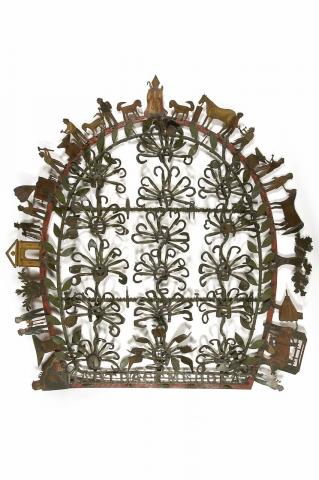
Saint Eloi’s bouquet
Inventory number: 1964.5.1
The dissolution of guilds during the French Revolution gave rise to the Compagnonnage movement in the 19th century. These societies of craftsmen, divided into different “devoirs”, were schools for different trades. Apprentice journeymen are required to complete a “Tour de France” in duty towns such as Tours, Bordeaux, Nantes or Avignon. At the end of their training, they produce a masterpiece. Its assessment and approval by a jury marks the apprentice’s definitive entry into a “devoir” with the title of compagnon.
For each trade, there are different types of masterpieces, such as screw staircases for carpenters, or multi-covered house models for slate quarrymen. Blacksmiths, for their part, compose bouquets of various types of iron for horses, donkeys or mules, all under the protection of their patron saint, Saint Eloi. The bouquet of Saint Eloi can later be affixed as a sign in front of the workshop.
The blacksmith’s bouquet presented here takes the form of a gigantic horseshoe. Saint Eloi stands atop the masterpiece. On the outside of the composition, the various stages of the author’s Tour de France can be seen, including a companion greeting by figures wearing top hats and holding canes with ribbons (the companions’ ceremonial costume), and a scene of horseshoes being attached to a horse’s hooves. Inside the large horseshoe, and in keeping with tradition, all the types of horseshoes the craftsman is likely to make are presented in bunches of eight. Finally, the work is signed and dated by initials: “Dédié au Devoir (par) Tourangeau Difficile à Connaître, Compagnon maréchal Ferrant du Devoir Fait à Tours”.

Artificial flowers workshop
Inventory number: 1972.150.945.256
This bouquet of fabric buttercups was created by Maison Francou, a Paris-based company specializing in the manufacture and sale of artificial flowers for the fashion industry. Founded in 1885 by Charles Francou, it was taken over by his son, also named Charles. Located in the 10th arrondissement, Francou’s business consisted of two rooms: a street-facing boutique and a workshop. On the death of Francou fils, the store’s furniture, dating from the very end of the 19th century, and the workshop’s collection were donated to the museum.
Today, the Mucem has a cash register, a sales counter and two large drawer cabinets filled with flowers ready for purchase: camellias, primroses, edelweiss, buttercups and roses of all kinds. The workshop contains two presses, two tables for making flowers, a metal dryer, racks for small tools, around six hundred tools for cutting, dyeing and embossing flowers, including almost four hundred cookie cutters (used to cut petals from fabric by striking them with a mallet) and two shelves containing around forty boxes. The latter contain the raw materials: fabrics (satin, silk, nansouk, pongee, velvet…), leathers (lizard, snake, galucha…), fur, mother-of-pearl, paper, seeds for the flower hearts, pearls and ceps (metal wires) for the stems.
This acquisition was accompanied by archives on Francou’s business activities (account books, invoices, directories of artificial flower manufacturers, etc.), making this collection a comprehensive record of the life of a twentieth-century Parisian company.
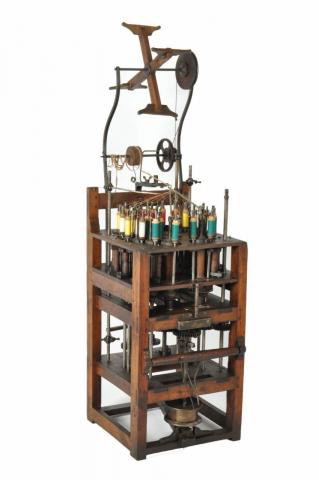
Trimmings or ribbon maker
Inventory number: 1979.28.1
The term “passementerie” comes from the word “passement”, which refers to a ribbon edging clothing. Initially created for aesthetic purposes, passementerie evolved over time, adorning royal and military garments as well as carriages. Costly decoration, it was mainly reserved for the elite.
In the 19th century, Saint-Etienne was considered the ribbon capital of France. It was here that the highest concentration of ribbon-makers was to be found. Today, the passementier works for haute couture, decorating uniforms and show costumes… His preferred market is furniture.
In addition to this loom for making braids, the Mucem also houses some sixty items of passementerie (braids, tassels, brandebourgs, ribbons, cords, etc.), mainly from France, Hungary, Bulgaria and Russia.
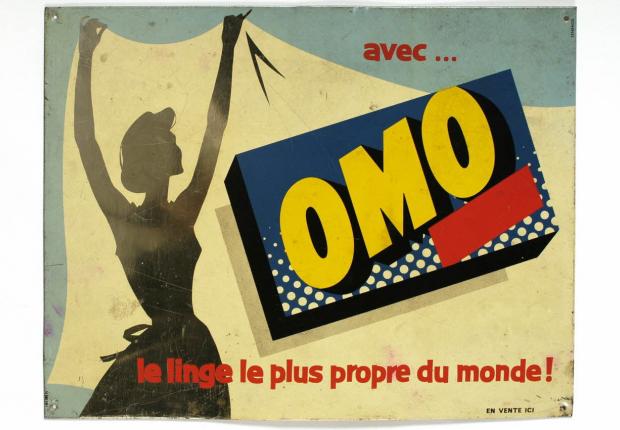
Advertising plaque
Inventory number: 1990.1.35
When washing powder manufacturers vied with each other to impose their products on the market after the widespread introduction of the washing machine in the 20th century, they used all the resources of advertising: the absolute superlative of cleanliness, the visual presence of the brand and packaging, and the image of an elegant, slim, transparent woman, symbolizing forgetfulness of the drudgery of household chores.
The first advertising enamel plates date back to the late 19th century. But it wasn’t until the 1920s that the golden age of this medium began, disappearing in the 1950s. It wasn’t until the 1980s that collectors began to take an interest. Museums in turn began to take an interest in these advertising media.
It is difficult to date these plates, as they are not often signed, although some were made from posters by well-known designers (Cappielo, Cassandre, Jean d’Ylen).
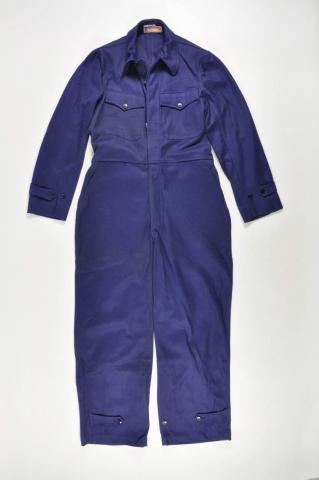
Work overalls
Inventory number: 1990.42.149
In 1989-1990, the Duthilleul et Minart company, which had been established on rue de Turbigo in Paris for a century and a half and specialized in professional clothing, donated two hundred pieces to the museum. Covering a period from 1900 to the 1960s, the garments are representative of a wide range of professions, mainly in the food trade: grocers, fruit growers, cream-makers, cellarmen, distillers, butchers and charcutiers, bakers, pastry-makers and cooks, but also hairdressers, chemists, mechanics, garage mechanics, painters, plasterers and surgeons.
From the late 18th century to the mid-20th century, festive dress reflected local particularities, while workwear was similar from one region to another. On the other hand, a distinction is made between professions: blue overalls distinguish mechanics or construction workers, white aprons on black dresses, domestic or hotel workers, and white coats, doctors or dentists.
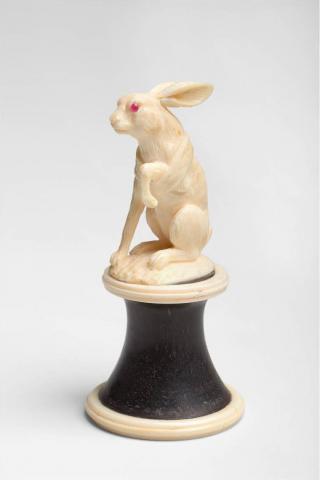
Statuette – Love’s spite
Inventory number: 1997.52.1
Philippe Ragault’s work is full of winks that divert from the ivory tradition or take a satirical and tender look at it. Animal sculpture is summoned here to deliver a dual message. This rabbit with its scarfed leg and red eye evokes the difficulties of the ivory trade, confronted with the opprobrium that condemns it as a predator of nature in general and elephants in particular. It also evokes, according to its author, the penalties of love, the effects of which are as devastating as the Washington Convention.
Ratified by France in 1978, the Washington Convention (or CITES) on International Trade in Endangered Species of Wild Fauna and Flora has had a major impact on craft industries using raw materials to which access is now strictly regulated. It was against this backdrop that, between 1997 and 1998, the museum launched a survey of craftsmen themselves threatened with extinction: ivory-makers, scale-makers, plumbers, paruriers and corailleurs.
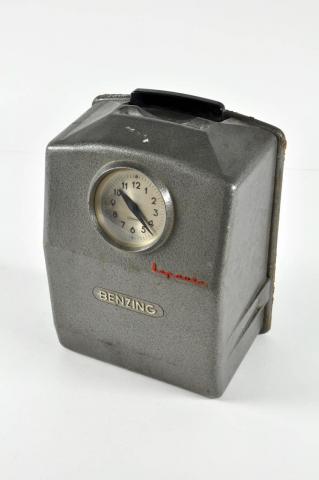
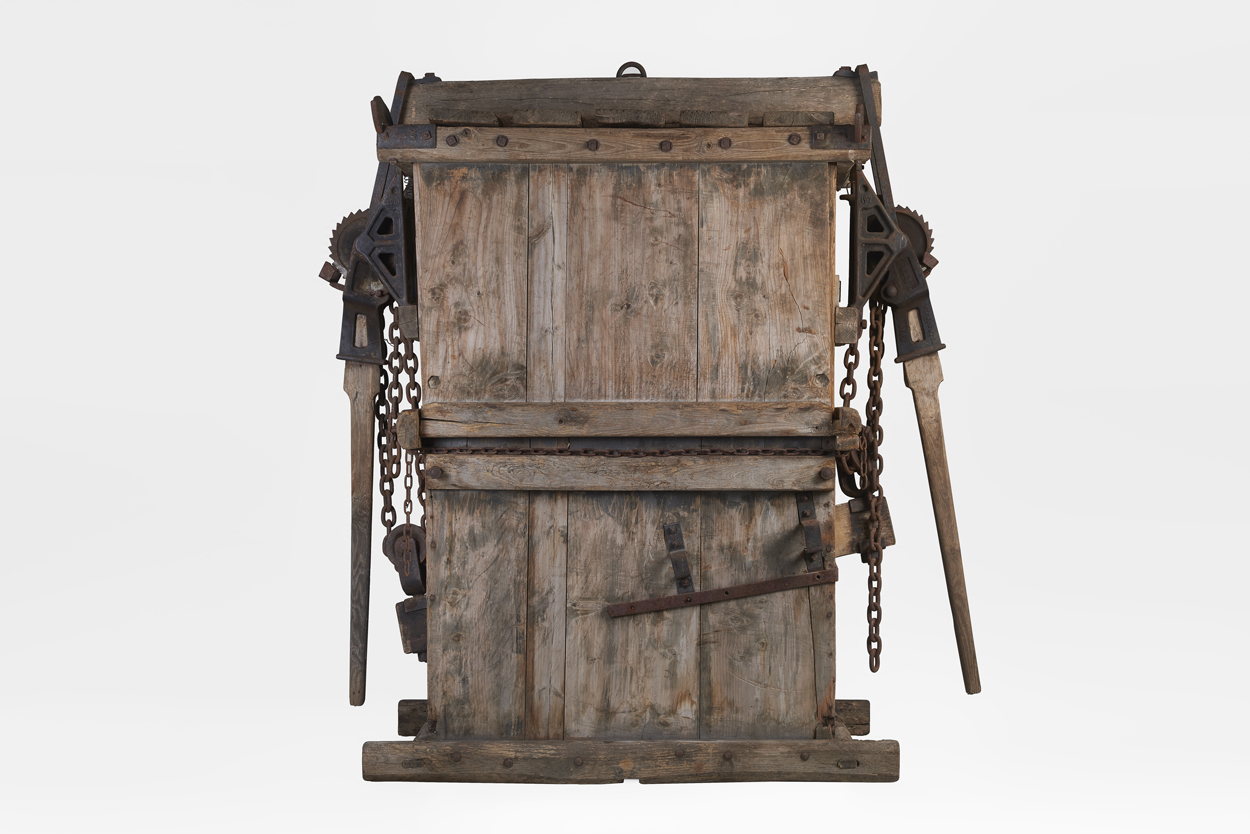
Time clock
Inventory number: 1999.82.6
The time-clock is a tool that records working hours and prints them out on a material medium (paper or cardboard) or immaterial medium, as data digitization is now the norm. Workers must “clock in”, i.e. record their presence when they arrive at and leave the factory. Introduced at the end of the 19th century, as part of the rationalization of work, the time clock initially consisted solely of a mechanical clock. In the era of the Industrial Revolution, the aim was to control workers’ productivity more easily, so that they could be paid according to the time they worked.
Since then, the tool has evolved considerably, so much so that the term “time clock” can now refer to very different tools.
This German Benzing punching machine was used by Forges de Lavieu, in Saint-Chamond (Auvergne-Rhône-Alpes). Active from 1975 until its closure in 1998, this company specialized in the manufacture of garden tools for metal cutting, rolling, stamping, oil quenching, painting and metal treatment. The clock used to keep track of workers’ hours is fitted with a dial showing the time, a slot for the time card and a black latch to activate the time clock.
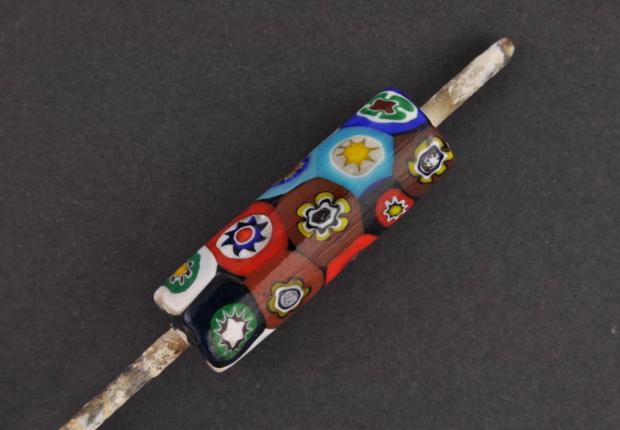
Bead-making sequence
Inventory number: 2003.49.34.1
Alongside the glass-blowing craft for which Venetian production is renowned, another industry has been perpetuated on the island of Murano for seven centuries: the manufacture of glass beads. Already widely available, these beads, now imitated by Indian and Chinese producers, are flooding markets the world over, including Africa and America. Available in solid colors or in mosaics (millefiori), these beads are made from long cylindrical rods, obtained by stretching glass paste, cut and slit, then worked with a flashlight flame. Different shapes can be created by rolling or pressing the still-warm glass. The resulting bead is then acid-polished and stripped of its wire “core” (the millefiori sample shown here awaits this final stage), leaving a threading hole. Originally carried out by men, this craft soon became feminine with the spread of home-based work. Today, in family-run businesses, women are still in charge of production and men of the technical and commercial aspects.
As part of a three-year survey of master glassmakers’ skills in Europe and the Mediterranean, in 2003-2004 the museum collected samples of its production over several decades from Ercole et Moretti, the oldest Italian glassworks producing pearls, as well as the tools used at a pearl-maker’s workstation.

Advertising plastic bag
Inventory number: 2005.18.191
In 2005, the Mucem took a daring gamble when it accepted as a donation a large collection of over 600 plastic bags. A strange idea at the time, but one that makes perfect sense now that since July 1, 2016, plastic bags have been banned at checkouts.
With this collection, patiently amassed by an enthusiast since the 1970s, the museum retains an instructive sample of a ubiquitous but much maligned object in early 21st-century society. Through their shapes, materials, logos and slogans, and signs relating to national and European standards, these bags reveal a bulimic and polluting consumer society. They tell the story of brands and commercial design, but also of the multiplication of waste and ecological reaction (notably with the appearance of logos indicating the recyclable nature of certain plastics).
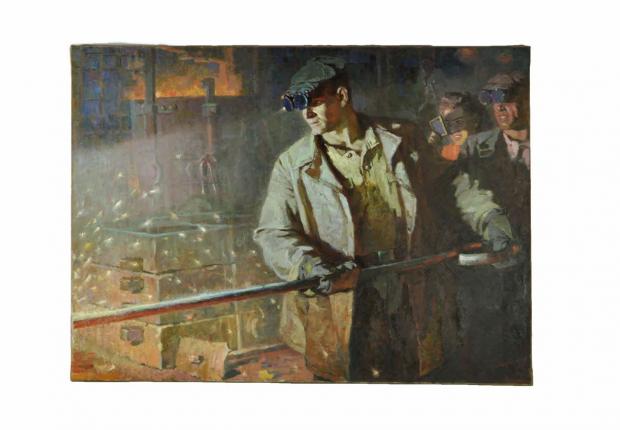
Joltikov, the best foundry worker, donates his work to the Cause of Peace
Inventory number: 2006.47.1
This foundry scene illustrates a theme dear to Russian socialism: work and its heroism. The worker, caught in the effort, is shown from the front, illuminated by the glow of molten metal. In the background, a distinguished visitor watches the scene, shielding her eyes with a mica plate. Is she a political authority saluting the foundryman’s dedication? The work’s title alone places it in its time, in the aftermath of the 20th Congress of the Communist Party of the Soviet Union, when Nikita Khrushchev, having disavowed the methods of Stalinism, strove to breathe new life into the construction of an acceptable Soviet model, galvanizing militants and the population alike.
The painting is part of a history of images of work. While representations of forges can already be found in the work of Le Nain in the 17th century and Joseph Whrigt of Derby in the 18th century, the painting of factory work scenes developed in the 19th century with François Bonhommé. After 1850, in England, France and Belgium, dozens of forge and rolling scenes, interiors of glassworks, earthenware factories and various workshops were exhibited at art fairs, as part of a trend towards naturalism exemplified by Jules Adler, Léon Frédéric and sculptor Constantin Meunier, to name the best-known artists. The question of realism was at the heart of debates in the 1930s, marked by a return to socialist figuration, in line with Soviet socialism.
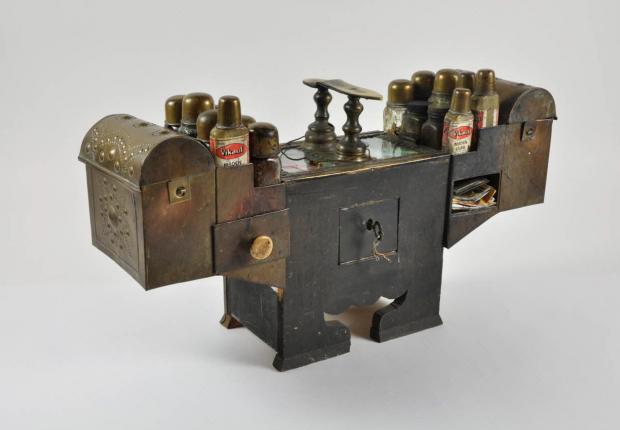
Street shoeshine box
Inventory number: 2008.100.1.1-29
Shoe shining is traditionally a male profession, carried out by a child or an elderly man. Equipped with all the tools of the trade – at least a brush and shoe polish – and a stool on which to place the customer’s foot, the shoeshine boy can also offer minor repairs. While the trade has all but disappeared in the north-western Mediterranean, elsewhere it can provide a much-needed supplement to a family’s income.
The Lebanese waxer’s chest acquired by the Mucem in 2008 consists of a main wooden box with a drawer. It is fitted with a footrest on top and, on the sides, two small hammered copper boxes in which the shoe-shiner’s necessities are stored: sponges, cloths, pieces of cotton, black and brown shoe polish boxes, dye bottles, bottles containing wax, a pair of scissors, a skein of shoelaces… The bottoms of the drawers are lined with clippings from local newspapers, advertisements for a pizza delivery company and Lebanese national lottery tickets. A bottle contains a few coins from Jordan, Lebanon and Korea, as well as euros and Canadian dollars.
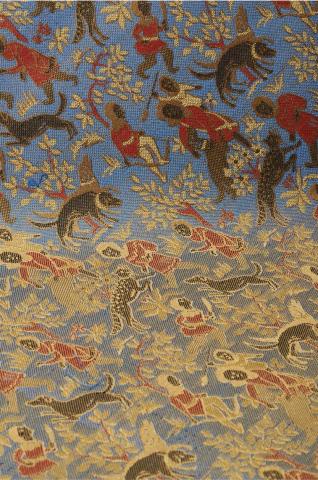
Detail of an upholstery fabric
Inventory number: 2014.8.40
In 2014, the Mucem acquired a batch of textiles from Syria. These objects, made in various factories, are representative of a silk craft that is in the process of disappearing, due to the competition exerted since 1920 by artificial silk, which has gradually supplanted natural silk. The civil war hastened this decline. The Mezannar brothers’ workshop, where the piece presented here was woven, closed its doors for good in 2011.
The Mezannar silk brocade factory was founded in the 1940s. Antoine Mezannar, a hand weaver, installed twenty-four Jacquard looms in a new building in the Damascene district of Bab Charqi. Beautiful silk fabrics embroidered in gold and silver, woven with motifs whose poetic names matched their finesse of execution (“The doves, the love bird”, “The flower and the bird”, “Omar el-Khayyâm smoking the hookah”, “Poppy flower”, “The pomegranates”) passed through the doors of the establishment. After Antoine’s death, his two sons Marcel and Hubert (the latter having studied at the Lyon School of Weaving) ensured the continuity of the manufacture of the precious brocades until its closure.
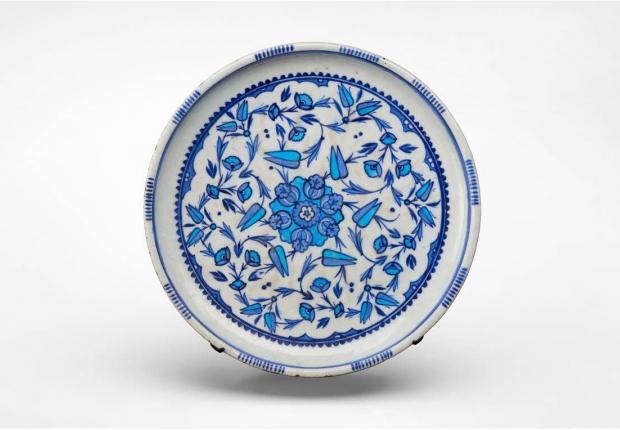
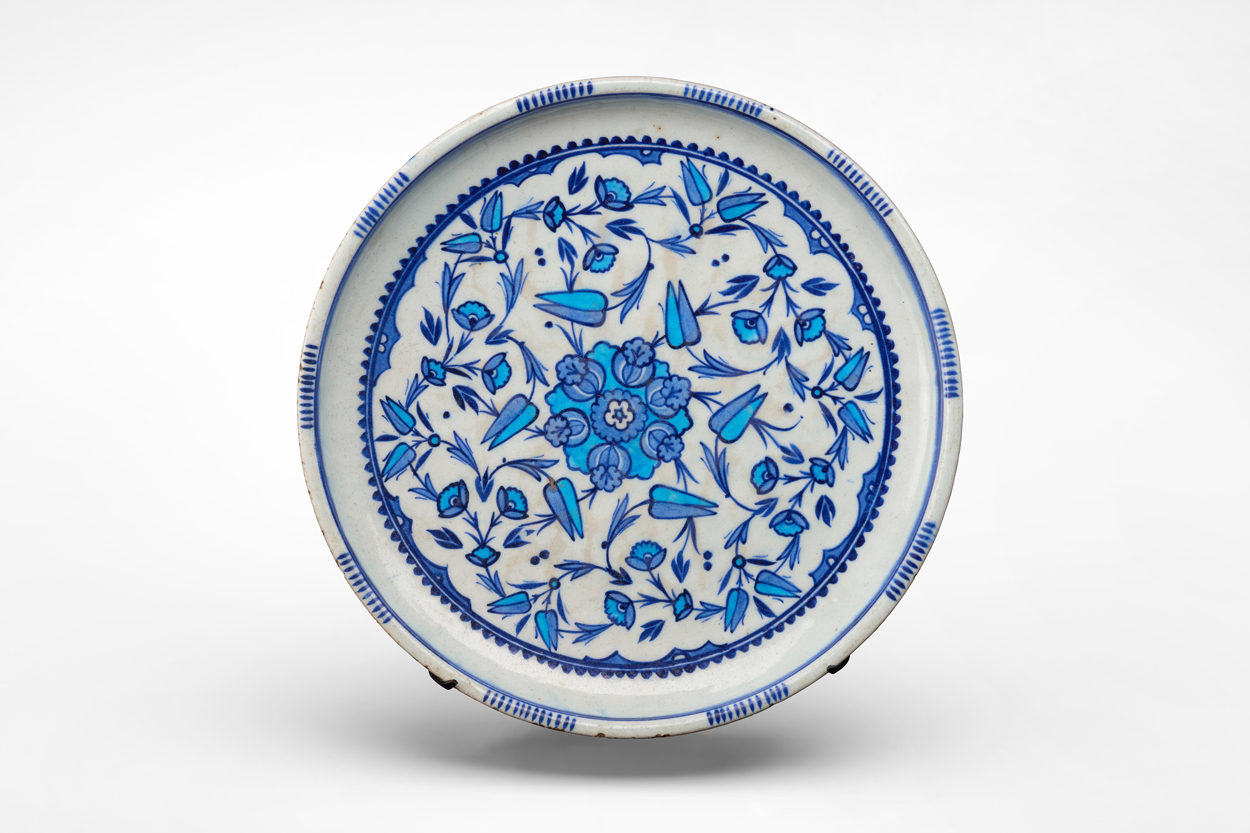
Dish decorated with tulips
Inventory number: 2015.7.1
This dish (sahan), decorated in cobalt and turquoise blue on a cream background, is an essential milestone in the history of exchanges between the Asian world and the Mediterranean basin. Its shape is reminiscent of Islamic copper tableware from the early 15th century, but it is contemporary with the reign of the Ottoman Turkish sultan Suleyman the Magnificent (Süleyman Kanuni, 1520-1566). The Istanbul court was so fond of the blue and white porcelain imported from China, so precious that it was reserved for the sultan, that the Iznik workshops began to produce pieces inspired by oriental creations. Unfamiliar with the secrets of porcelain’s luminous whiteness, they covered their siliceous paste with a coating containing tin oxide, which gives a white glaze when fired, and a transparent, shiny glaze.
The decoration of this dish also shows the influence of the Orient, adapted to the tastes of the Ottoman elite. The “waves and rocks” border is inspired by Chinese ceramics, but the stylized plant motifs radiating from the center are typical of the Islamic world. This dish bears witness to the Mediterranean elite’s taste for luxury goods imported via the silk routes, which influenced local craftsmen and led them to develop new techniques.
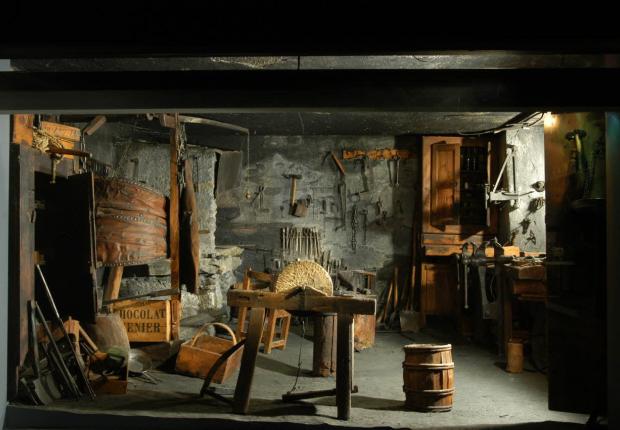
Ecological unit of a Queyras forge
Inventory number: PHP.2005.3.181
When the Musée National des Arts et Traditions Populaires moved from the hill of Chaillot to the Bois de Boulogne in 1972, it presented its collections in a landmark manner. Following on from dioramas (more or less rigorous reconstructions of habitats or natural environments), the “ecological units” designed by Claude Lévi-Strauss and Georges-Henri Rivière, the museum’s founder, spearheaded a museography focused on ethnographic truth. Interior presentations of a workshop, a common room or a buron are achieved by scrupulously replacing all the elements of a whole in the exact place they occupied in their original environment. The Queyras forge is emblematic of this innovative approach.
In pre-1950 France, the blacksmith was at the heart of rural life: he made and repaired farmers’ tools, as well as certain household utensils, and cared for and shod the animals needed for transport and certain jobs.
Abraham Isnel’s forge was purchased in its entirety by the museum following a field survey carried out in 1963 and 1965 in the Queyras massif, in the village of Saint-Véran, known as the highest commune in France. A total of 1062 objects were collected. Several items, including the bellows, are over a hundred years old. After a meticulous architectural survey and a methodical inventory of all the objects and tools found there, the forge was completely reconstructed and installed in the museum’s cultural gallery, which opened in 1975.
Between 2001 and 2002, the museum continued to examine a profession that has undergone profound change over the past fifty years. The institution’s researchers set out to meet French, Polish and Italian farriers in order to understand the evolution of their trade and collect objects and tools illustrating it.