Agriculture et alimentation
Other themes


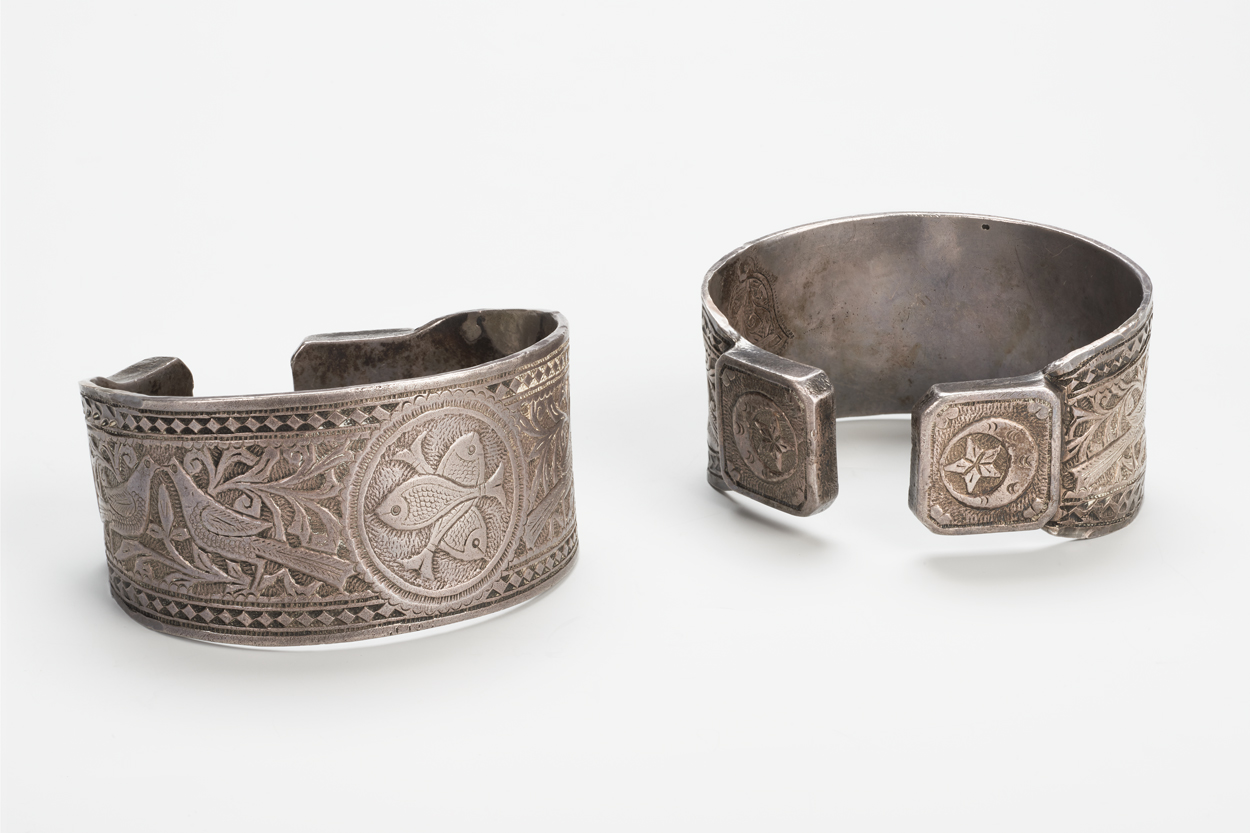
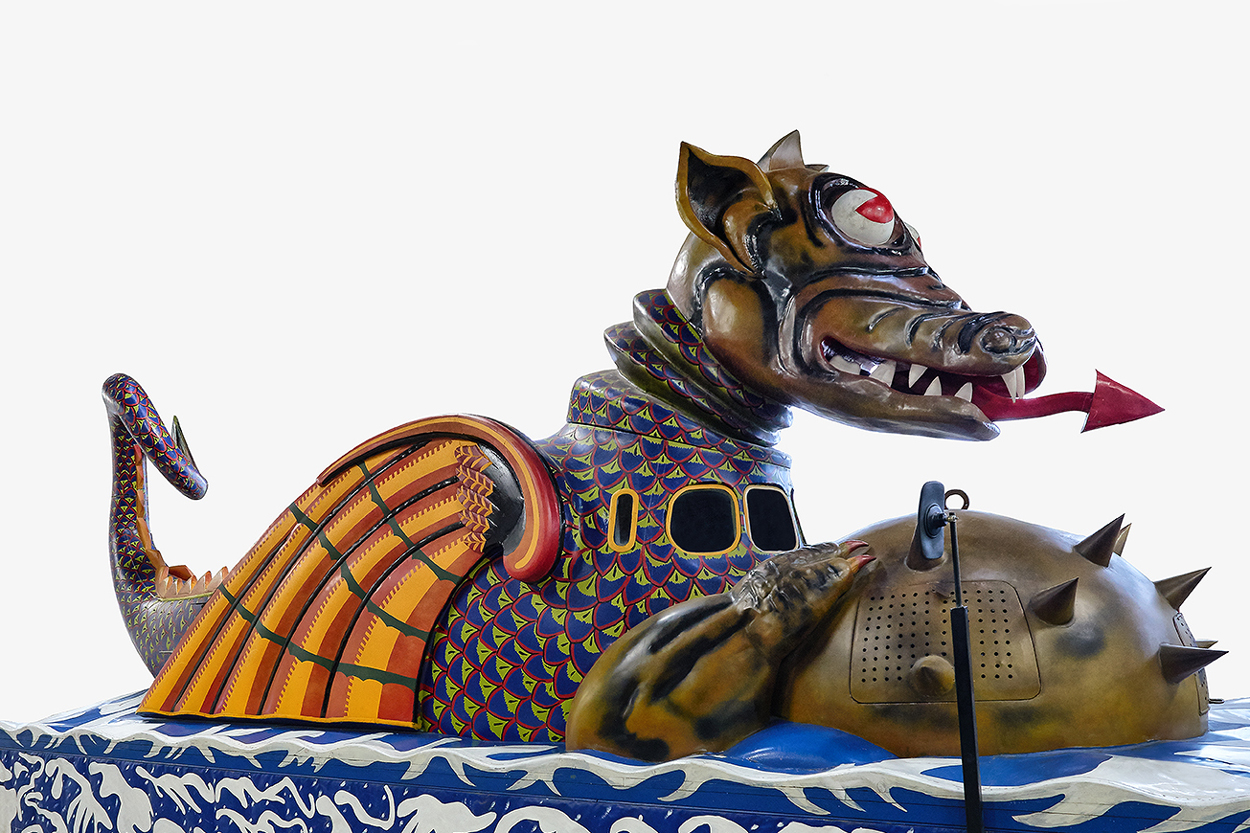
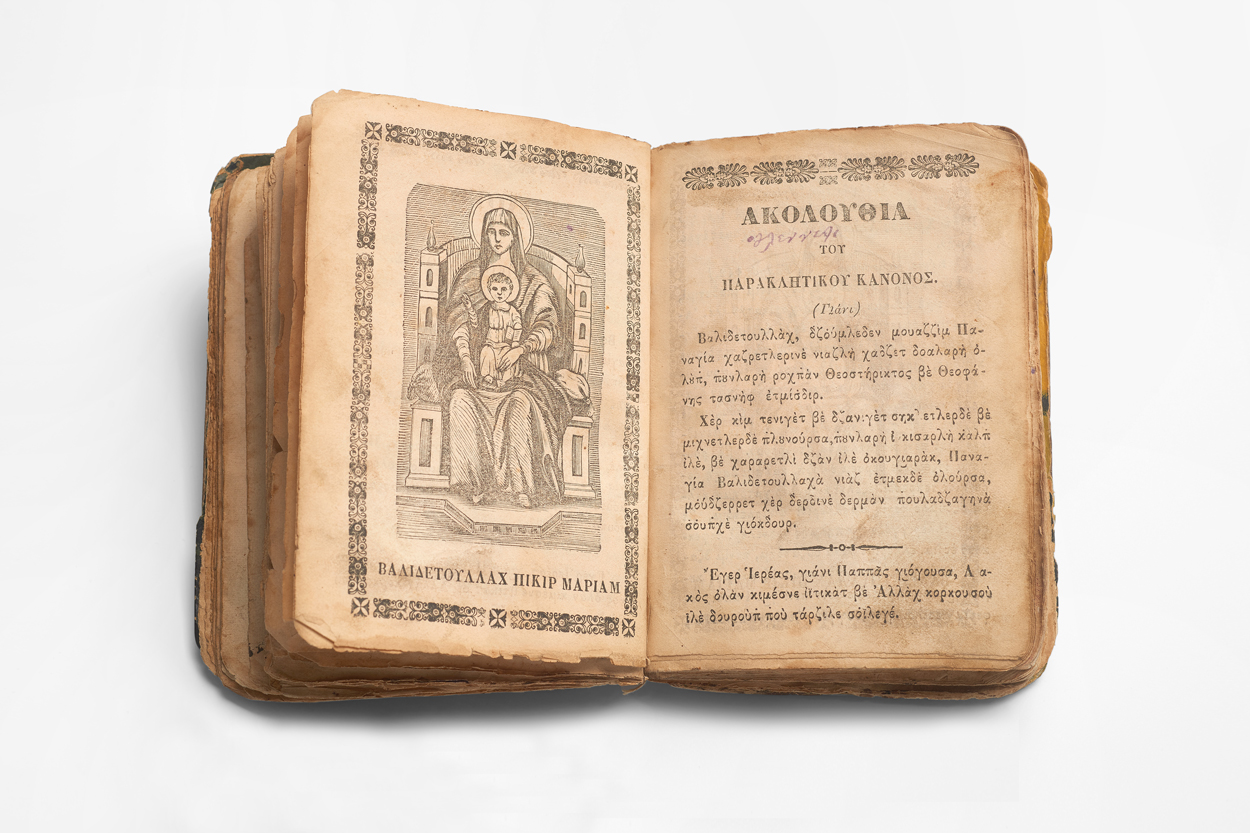
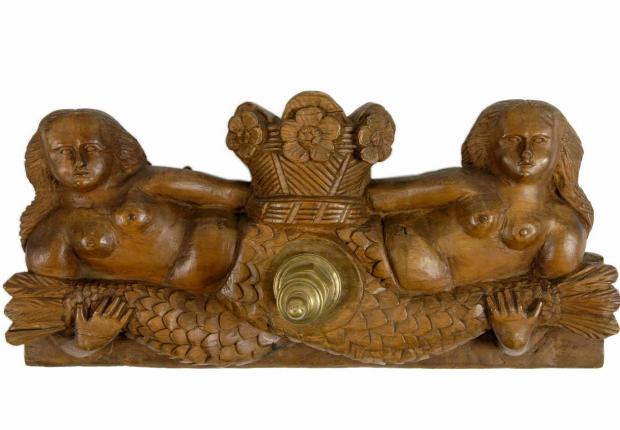
Barrel decorated with mermaids
Inventory number: 1960.4.7.1-2
The use of large barrels is one of the hallmarks of Alsace winegrowing, and barrels can be up to two meters in diameter. The front of the barrel has a wicket door at the bottom, through which one of the winemaker’s children enters the barrel to clean it. This door has a rounded, bevelled top that slopes towards the inside of the barrel, so that when the barrel is full, the wine presses against the door, which in turn presses against the front of the barrel. On the outside, the gate is held in place by a transverse wooden bar, protruding from each side of the gate and known as the “barrel lock”. This represents two elongated mermaids, a recurring image on barrel bars in Alsace. When this bar, which is held to the gate by a bolt, screw and nut, is removed, the gate necessarily falls inside the barrel.
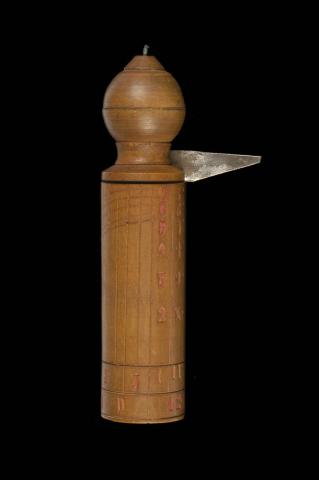
Shepherd’s watch
Inventory number: 1953.85.96
Shepherds in the mountains were accustomed to observing nature and the movements of the stars. Known since the Middle Ages, pocket dials were commonly used from the 17th to the early 20th century by shepherds in the Pyrenees. The dial consists of a wooden cylinder, often made of boxwood, engraved or covered with printed paper, and a steel blade that fits inside the cylinder, the style. This small cylinder is engraved with the succession of months, days (in decades) and hours.
This sundial is based on variations in the sun’s height, as the sun’s elevation on the horizon enables the length of the style’s shadow on a cylinder to be estimated.
To read the time, unscrew the upper part and pull the style out of the body. Then replace the cap, and screw the top ring back on without locking it. The cap must be rotated with the style so that it coincides with the measurement date. Then, at the base of the shaft, the initials of the months are read, followed by the days, resulting in eighteen equal parts, each representing a decade. This annual division covers six months twice over, the same vertical being used twice at symmetrical dates in relation to the summer and winter solstices.
The ring is held between thumb and forefinger, and the dial is left to dangle. Alternatively, attach the dial to a wire such as a plumb bob and let it dangle. Point it at the sun to obtain a vertical shadow.
The sundial complemented the village church, and the hours could be heard ringing in the distance, especially on cloudy days.
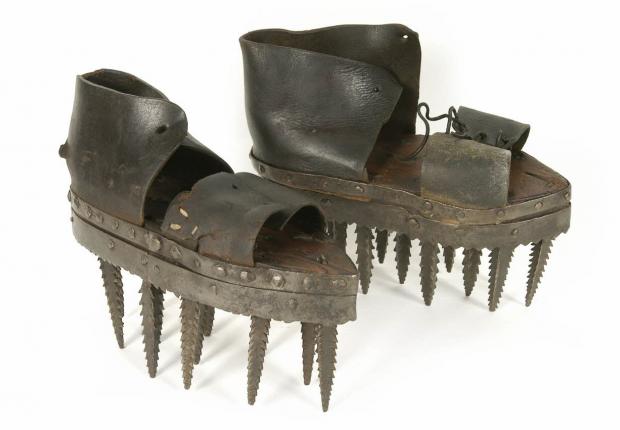
Chestnut peeling shoes
Inventory number: 1958.71.3.1
These shoes, known as “soles”, were used in the Cévennes between the 19th century and the 1950s. The metal spikes under the soles were forged by the village blacksmith and assembled by the galosh maker or chestnut grower. Chestnuts were harvested in September and October: the fruits, naturally detached from their bogues, were collected from the ground. The bogues and leaves remained in the chestnut grove before being piled up. The chestnuts were then dried in a special wood-fired dryer called “la clède” or “clèda”.
Hulling followed immediately after drying. This involved removing the pericarp, the chestnut’s brown rind, and the tan, the small, brown, hairy skin that surrounds each fruit. This work was often carried out outside, outside the door of the clède. Wearing soles, five or six people trampled the chestnuts into a sort of trapezoidal chestnut trough known as a “pastière”. About 20 kg of chestnuts were poured into each compartment, and each man set about trampling them. First, each man had his soles drowned by the chestnuts, and lifted his feet up and down. This action turned the chestnuts over and removed the pericarp from the fruit. Each man kept his balance by leaning on two ropes or a wooden bar. The work was very dusty and arduous. Due to fuel shortages during the Second World War, soles were used again until the early 1950s.
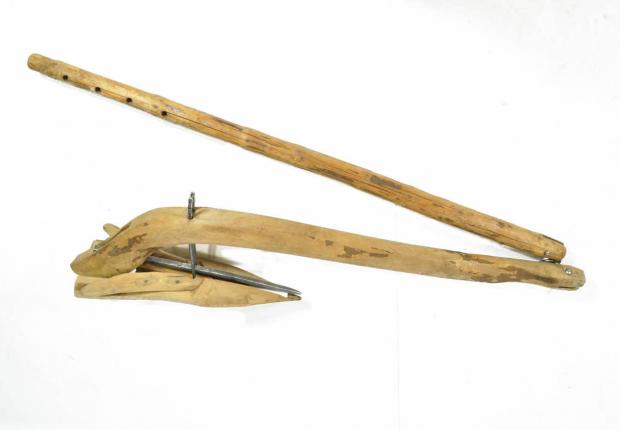
Araire
Inventory number: 1966.66.89
Among all animal-powered farming implements, we distinguish between the spider and the plough. While the spider throws the soil back on either side of the sep (the part of the tool that digs into the soil), the plough throws it back on one side only, and turns it over using a mouldboard. Of the two, the ploughshare is the more ancient instrument, dating back to the 4th millennium BC. In some regions of France, it remained in use until the 20th century, while the plough did not really come into its own until the 19th century. The plough cannot work deep (15 to 20 cm), and the nature of the soil and climatic conditions largely explain why it is confined to poor soils (mountain regions in particular).
This plow was collected by the museum during its extensive Aubrac survey in the hamlet of Les Fajoux (commune of La Trinitat, Cantal), at 1245 m altitude. It was used by Laurent Girbal, who made it himself, until 1965, when cereal growing was abandoned at Les Fajoux. Attached to a yoke pulled by a pair of oxen or cows, and held at the rear by the ploughman, it was used for ploughing in preparation for sowing and for turning over meadows.
In addition to southern France, this type of spider has been planted in large parts of Spain, northern Germany, northern Greece, southern and central Bulgaria and Lebanon.
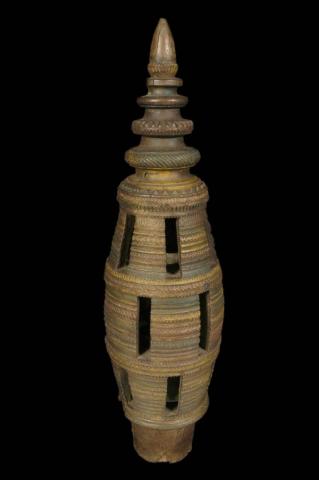
Surjoug
Inventory number: 1983.7.1
Surjougs are beautiful, shell-shaped folk art objects that were placed above and in the center of the yoke by means of a metal pin attached to the yoke. This is a hitching piece, as the base of the object, in the shape of a spool, was used to support the hitching ring. These colorful turned wooden objects were fitted with bells that tinkled as the carriage moved. Located in a restricted geographical area of the Garonne valleys around Toulouse (Isle-Jourdain region, western Haute-Garonne and northern tip of Ariège), they reached their peak in the 19th century.
Above all, it’s a symbol of social prestige, with everyone vying with each other for height, complex shape, bright colors and an increasing number of bells. Made on the lathe from elm or sycamore, some surjougs have very distinctive shapes and homogeneous decorations. Even if we can’t speak of schools, some craftsmen must have specialized in a particular creation, which was sold locally within a radius of a few dozen kilometers. The surjoug, which, with its heart motifs, could have been a wedding gift, disappeared in the 1930s.
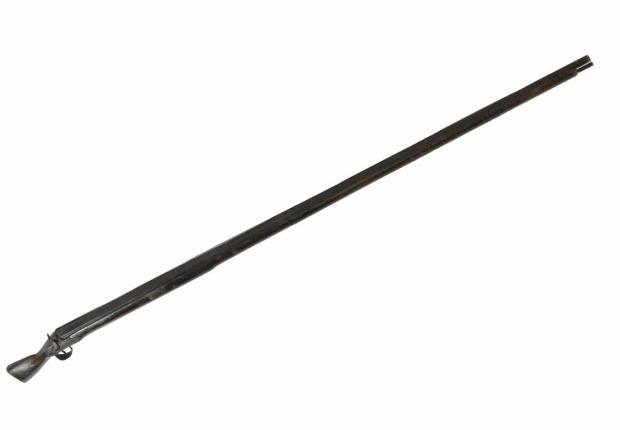
Canardière rifle
Inventory number: 1992.30.1.1-3
The “canardière” refers to the part of a pond or marsh set aside for catching wild ducks in traps or nets, but also to the hut from which hunters shoot at the birds while lying in wait, and finally to the long, long-range gun used to hunt wild ducks and other hard-to-reach birds. The canardière is a piston-operated or breech-operated rifle (in the 1920s) that was mounted on a light, single-seater, flat-bottomed canoe specifically designed for hunting waterfowl, called a “petit canardier” or “harlequin”. The boat was moved by small oars, with the hunter lying on the bottom. The articulated rudder was operated by foot. As soon as a group of ten to twenty ducks had been attracted by the decoys and had landed on the water, the hunter fired a single shot with his left hand to trigger the birds to take flight, then fired the duck-barrel with his right hand just as the birds spread their wings and began to rise out of the water. Hunters fired up to five shots a day, returning to the lodge between each shot. But it seems that hitting the birds was quite random. This type of hunting could be carried out in any weather, rain, shine or snow. It was carried out professionally, notably on the Saône around Marnay, Allériot and La Colonne, and the ducks were sold at markets or to restaurateurs. The use of the canardière was banned in 1951.
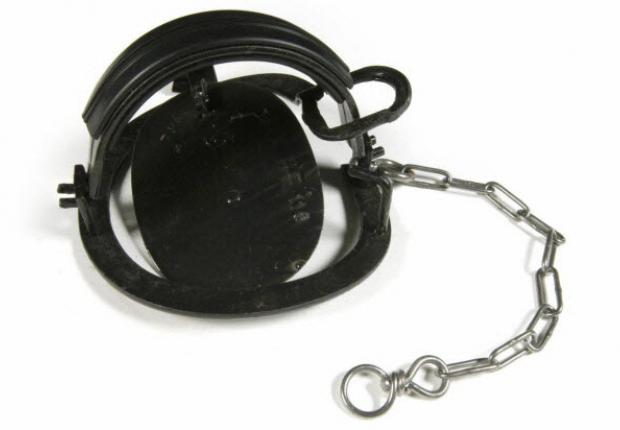
Leghold trap
Inventory number: 1994.7.4
The most emblematic of the extremely diverse traps is the jaw trap. Made entirely of metal, it consists of a flat spring on which are fixed two movable jaws fitted with spikes, and a removable paddle used to actuate the jaws. Bait can also be placed inside. The bait is placed by the trapper on a route that the animal is accustomed to following, hidden under dead leaves, blades of grass, small twigs or bark. As soon as the animal (not necessarily the one expected) exerts pressure on the paddle with its paw or snout, the rod holding the trap open lifts and the jaws close. The animal thus captured is usually mutilated and soon dies.
This type of trap, known as a wolf trap, although not specifically designed for wolves, was placed by shepherds close to the sheep pens to capture animals that were enemies of the flock.
In 1994, the museum carried out an acquisition campaign on trapping, bringing the collections up to date on this theme. At the time, the law required that trap jaws be smooth and lined with rubber bands, so as not to injure the captured animal. This trap was made in the last factory still in operation at the time, Maison Fouré in Sourdeval (Manche), which also produced gardening tools. Today, the use of leghold traps is prohibited.
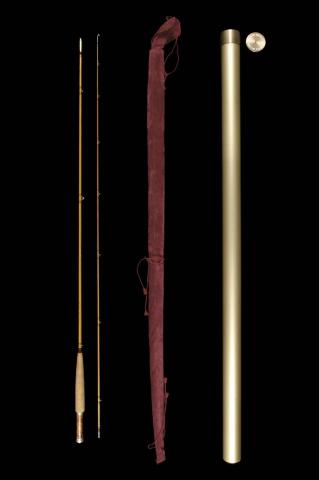
Split bamboo fly rod
Inventory number: 1997.21.1.1-4
From the beginning of the 20th century, angling tackle was generally manufactured, as shown by the catalog of the Manufacture française d’armes et de cycles de Saint-Etienne. Most of these items were distributed throughout France, and even exported. The use of these items is more closely linked to a particular type of ecosystem (pond, river, stream or stream fishing) and to the choice of fish sought.
The oldest French fishing rod manufacturer was Pezon et Michel, established in Amboise in the 1860s. This company manufactured all ranges of fishing rods, from reed models to the luxurious split bamboo models that appeared at the end of the 1930s and enjoyed worldwide success until the 1950s. After the Second World War, hollow fiberglass rods became widespread, as they were much lighter, more flexible and resistant. Then came the carbon-fiber cane that dominates today.
After a long period away from split bamboo, fishing enthusiast Alain Ourtilani decided to bring the split bamboo rod back into fashion in 1992. He made his first split bamboo rod using a planer and jigs based on a principle similar to that used by Pezon and Michel. After much experimentation, in 1992 he developed a robotized machine that automatically calculates the rod’s curve during the fishing action. To make the rod even lighter, the inside of the tip rods is hollowed out with a razor blade. This specific manufacturing process combines lightness and fishing efficiency, thanks to the work carried out on the bamboo, with the luxury of the materials used.
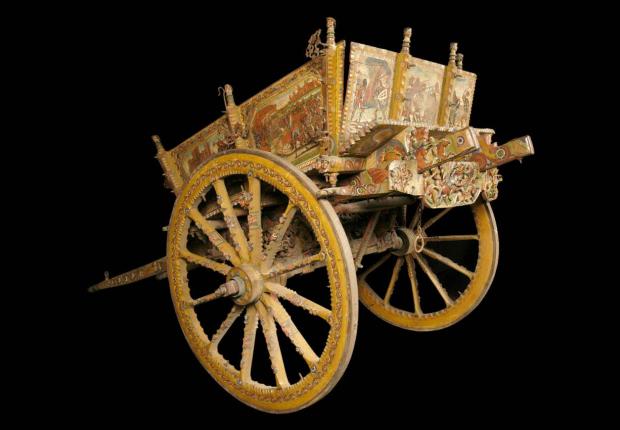
Parade wagon
Inventory number: 2003.1.1
Polychrome wooden carts have been a major feature of Sicilian folk art, as well as a symbol of the island’s identity, since the 19th century and still today. Mainly used for transporting agricultural produce (fruit or vegetables), manure or charcoal, the richly decorated carriages went beyond their simple utilitarian function and took their place at local patron saint festivals. In Palermo, this type of decorated cart was also used for the palio festival, a competition between districts of a city or between neighbouring territorial entities, usually contested with horses or other animals. Since the early 20th century, tourist imagery has made it an emblematic element of Sicilian heritage.
A source of pride or a symbol of social prestige, these carts could be painted by specialized craftsmen with geometric or floral motifs, or with narrative scenes inspired by oral or written, religious or historical literature. This fine example is decorated on all sides with motifs depicting the battle between the Moors and the Christians. The repertoire of scenes depicted refers to the great texts of the Italian Renaissance: Tasso’s Jerusalem Delivered, Ariosto’s Roland furieux and Boiardo’s Roland amoureux.
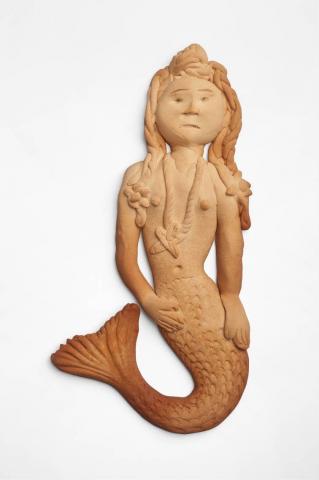
Mermaid-shaped bread
Inventory number: 2004.9.578
The Mucem’s collections are rich in objects relating to the chain of operations that leads from wheat to bread, and the utensils necessary for the various stages of its production, from kneading the dough to baking and consumption. This pretty mermaid was acquired in 2004, along with over 1,000 other breads, from a collector who spent 15 years criss-crossing Europe in search of figurative breads.
The place in the European diet of preparations made from flour-based dough, kneaded raw and baked dry, breads and cakes, a legacy of Near Eastern and Aegean civilizations, is central. A necessary foodstuff whose presence guarantees social peace, but whose lack is a source of despair and revolt, bread is omnipresent, accompanying every moment of life, at the heart of the religious rites of sedentary peoples long before Christianity, which nonetheless included in its liturgical calendar the major dates of festivals corresponding to the sowing and harvesting seasons. Sometimes zoomorphic, often anthropomorphic, braided or intertwined, molded or sculpted, star-shaped or crown-shaped, breads and cakes are at the heart of traditions relating to fertility, death and faith.
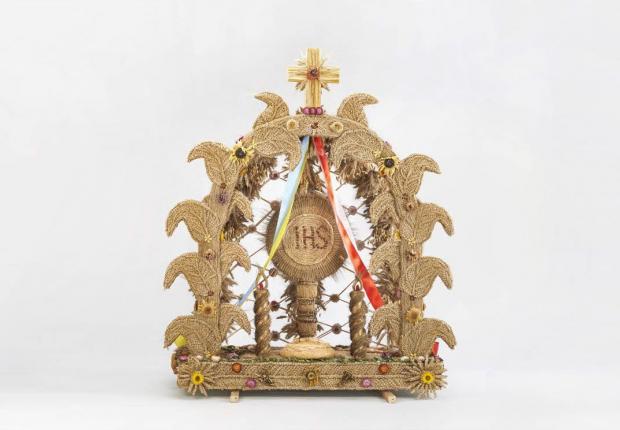
Harvest bouquet
Inventory number: 2014.3.1
Harvest bouquets made by harvesters are more or less complex assemblies of wheat ears. They were traditionally displayed in church during harvest mass, or given to the lady of the house who prepared the harvesters’ meal at the end of this important chore. Sometimes affixed to barn doors, the bouquet was a symbol of protection for the harvest.
During the Communist era in Poland, the land was not collectivized, and harvest festivals were sometimes held. Very popular today, these festivities illustrate the osmosis between religious festivity and secular celebration with a fair. Bouquets become sophisticated constructions, and competitions are organized all over the country. This bouquet is inspired by motifs found in an almanac: altar and monstrance, bread, dried flowers and bunches of grapes. It took a group of neighbors a month to make it. The bouquet won first prize in Lubaczów’s harvest bouquet competition in 2013. Today, once the competition is over, the bouquets are usually destroyed, and no protective virtue is bestowed on them. All that matters is aesthetic performance and the dynamic of solidarity between friends and neighbors.
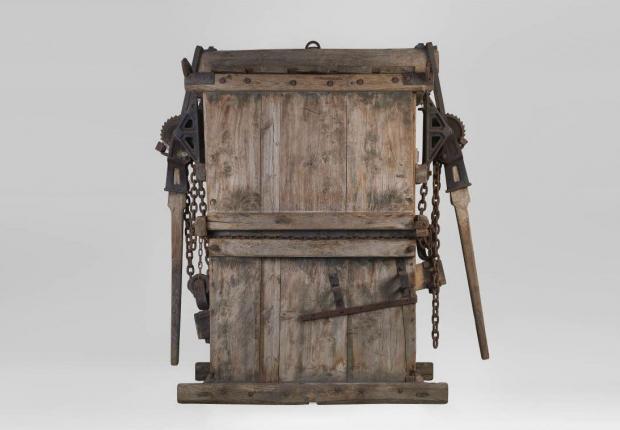
Forage press
Inventory number: 2014.5.1
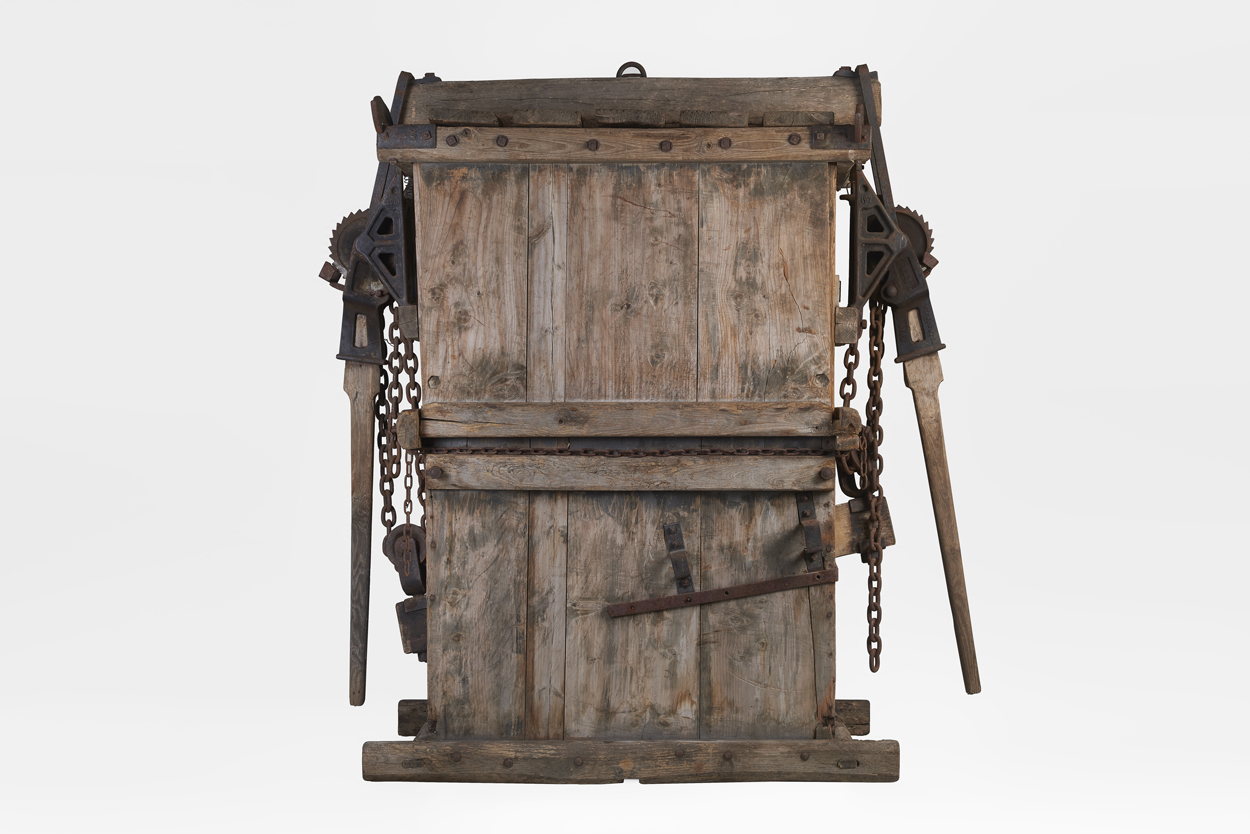
This hay baler was designed to make bales of hay. From a technical point of view, it marks the beginnings of the mechanization of certain agricultural tasks, a transitional stage between completely manual haymaking, when hay was stored loose in granaries or in haystacks, and the time when hay bales were made directly in the meadows with a towed baler. The baler could be mobile. It required the presence of two men who operated the machine’s two side levers to raise a tray inside and compress the hay on the sides of the machine. Bales were tied manually, by opening the two side doors, using wire or binder twine. In the end, this work was still very much manual, requiring a great deal of human energy and time. Nevertheless, this machine represents a step towards the rationalization of agricultural tasks.
Originally based in Saône-et-Loire, the Plissonnier farm equipment factory moved to Lyon around 1847, where it flourished thanks to Simon Plissonnier (1847-1931), an important figure in the farming world and member of parliament for Isère. The company manufactured a wide range of equipment, participated in the development of mechanization, and took part in numerous agricultural competitions in France and Paris. At the Valence competition in 1897, Plissonnier won a silver medal for its forage baler, inspired by an English model by Waite Burnell that appeared in France around 1877.
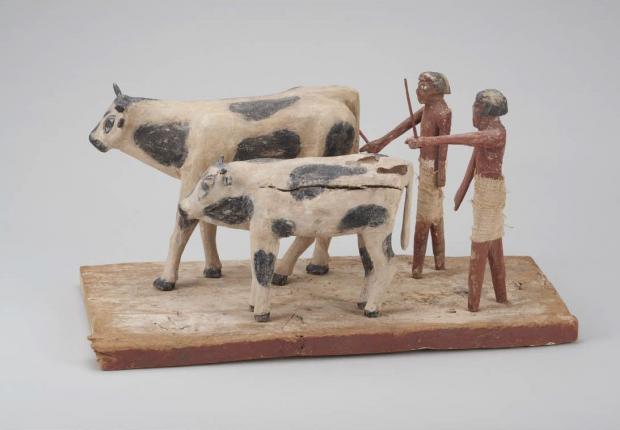
Funeral model
Inventory number: 2014.7.1
This piece is an example of what are known as “funerary models”, small sculpted groups that were placed in the tombs of Egypt’s elites between the 23rd and 19th centuries B.C. Like the reliefs and paintings on the walls of aristocratic tombs in other periods, but in three dimensions, these models depict scenes from daily life in the Nile valley: fishing, workshop work, ploughing, harvesting and counting flocks.
Although not obvious to the modern observer, the realism of these compositions is essential. In this case, the layer of stucco covering the wooden figurines allows us to model the characteristic shapes of the bovids (their broad necks, cut-out rumps and silhouetted legs) with a great sense of observation, while the color and addition of real cloth loincloths – if authentic – reinforce the desired authenticity. The aim is not to give the illusion of life, but to capture the essence of the characters portrayed, so that they can be viable in the other world. Through the magic of the image, the models must replace the reality we know here on earth in the afterlife. So it is that these two bovines, under the watchful eye of their herdsmen, have the mission of eternally guaranteeing the deceased all the advantages of cattle breeding: milk, meat, leather, horn and social prestige.
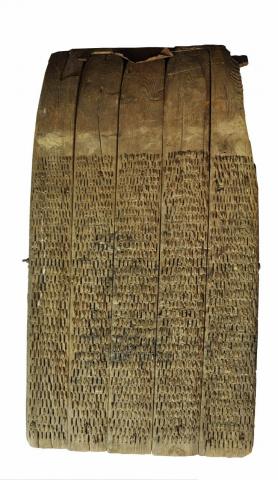
Tribulum for grain removal
Inventory number: DMH1975.112.30
Rectangular or trapezoidal in shape, the trillo or tribulum consists of two wooden planks placed side by side and joined by three crosspieces. The inside of the instrument is lined with several rows of stone flakes, often cut flints, placed in staggered rows. The tribulum is used simultaneously to remove the grain from the cobs and to chop the straw. The study of flint wear (tribology) dates the use of tribulums to at least the 4th millennium BC, in Mesopotamia. This instrument was remarkably long-lived, even into the 1980s, in Spain and Syria.
The harvested cereal stalks are spread out in a thick layer on a hard-packed earthen surface. Incurved at the front and fitted with a ring, the tribulum is pulled by one animal (mule, horse, ox) or even two, while its driver usually stands at the rear of the board, weighing it down even further. With repeated rotations, the tribulum’s flints chop the straw and cobs, an action combined with the trampling of the animals. The chopped straw is ejected backwards, while repeated rotations are required to chop the grain layer completely.
This is followed by the winnowing process, which uses the natural force of the wind combined with certain tools (different kinds of shovels, forks, etc.), essential for separating grain, husks, straw and dust. Finally, the grains are sifted for perfect cleaning.
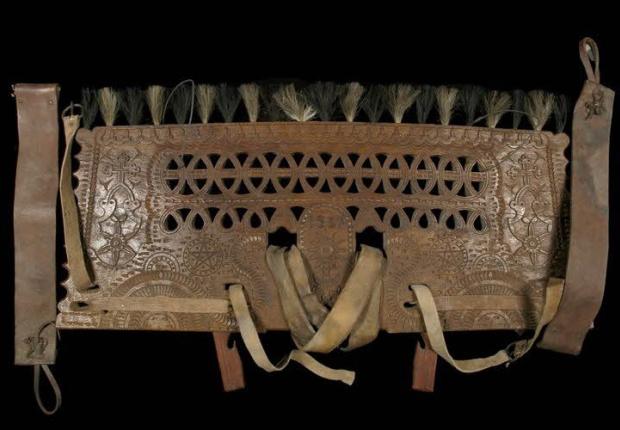
Withers yoke
Inventory number: DMH1937.61.16
Some of the finest withers yokes in the world can be found in the coastal regions of north-west Portugal, on either side of Porto and the Douro valley. A yoke is a piece of wood used to harness a pair of draught animals. Made from ash, walnut or cork oak, the yoke is very tall but almost flat. The large Portuguese yokes are carved and often openworked, sometimes painted, and offer an extremely rich decorative program: plant motifs, rosettes and other geometric patterns, but also religious motifs such as crosses and monstrances designed to protect animals and perhaps people too. These yokes, placed on the neck of the animals, are also attached to the horns by straps: they are therefore both horn and withers yokes, and are therefore more stable. The yoke and withers are linked by movable rings.
These exceptional yokes have been known on the Portuguese coast since the mid-19th century, and are also found in Central America. Although richly ornamented, these yokes are used for everyday work, pulling vehicles and agricultural implements.
Although agronomists have long debated the superiority of the horn yoke or the withers yoke, the latter has many advantages: it does not require extensive training of the cattle, it allows two animals of different breeds – cow and donkey, for example – to be combined, and it can be easily adapted to animals with large horns, such as the yak and zebu. The withers yoke is in fact the world’s most widespread traction system, found on every continent.