Graphic Design: David Poullard
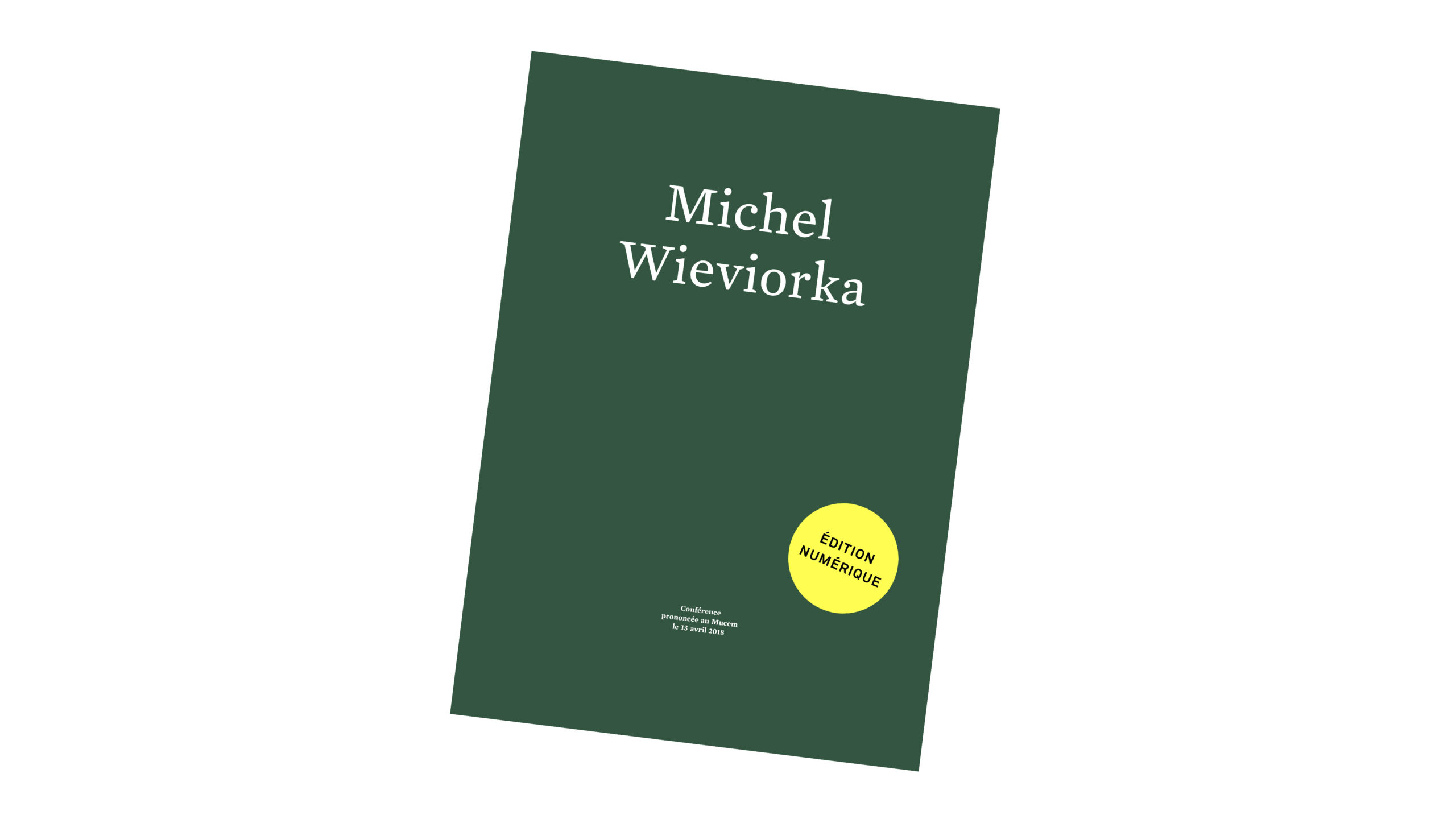
Putting an End to the Concept of “Post-Conflict” – Lecture in the “New Critiques of Violence” Series
In his *Critique of Violence* (1921), the philosopher Walter Benjamin examined the states, forms, means, and ends of violence as they relate to “moral relations.” Is violence justifiable? What justifies it? How does it manifest itself? And yet: “Is it, in general, possible to resolve conflicts without resorting to violence?” “Undoubtedly,” he himself replied. Building on Walter Benjamin’s reflections, the Mucem and Alphabetville invite three thinkers (Bernard Stiegler, François Cusset, Michel Wieviorka) to develop critiques of violence in our time and for the society to come. Toward new critiques of violence. What does the term “violence” signify? What is its cause? Can we—and should we—envision a social or moral contract that excludes violence? Against barbarism, and for life in common.
Michel Wieviorka, who holds a doctorate in Letters and the Humanities and serves as a director of studies at the École des hautes études en sciences sociales, is the Chairman of the Board of Directors of the Fondation de la Maison des Sciences de l’Homme (FMSH). His research has focused and continues to focus on conflict, terrorism, and violence; racism and antisemitism; social movements and democracy; as well as phenomena related to cultural difference.
His most recent books: *The Jews, the Muslims, and the Republic* and *Anti-Racists*, published in 2017 by Éditions Robert Laffont.
Violence is the opposite of conflict—at least of institutionalized conflict. We do not escape social or political violence by believing we can put an end to all conflict; we escape it by transforming the dynamics of crisis and rupture—which are rife with violence—into nonviolent debates and conflicts. The idea of a unified and harmonious society is utopian, mythical, or ideological; the goal of fostering social cohesion, national unity, or republican values is not enough to ensure a world without violence. It is better to conceive of society in terms of its divisions and its capacity to address these divisions democratically through negotiation and dialogue.
Graphic Design: David Poullard