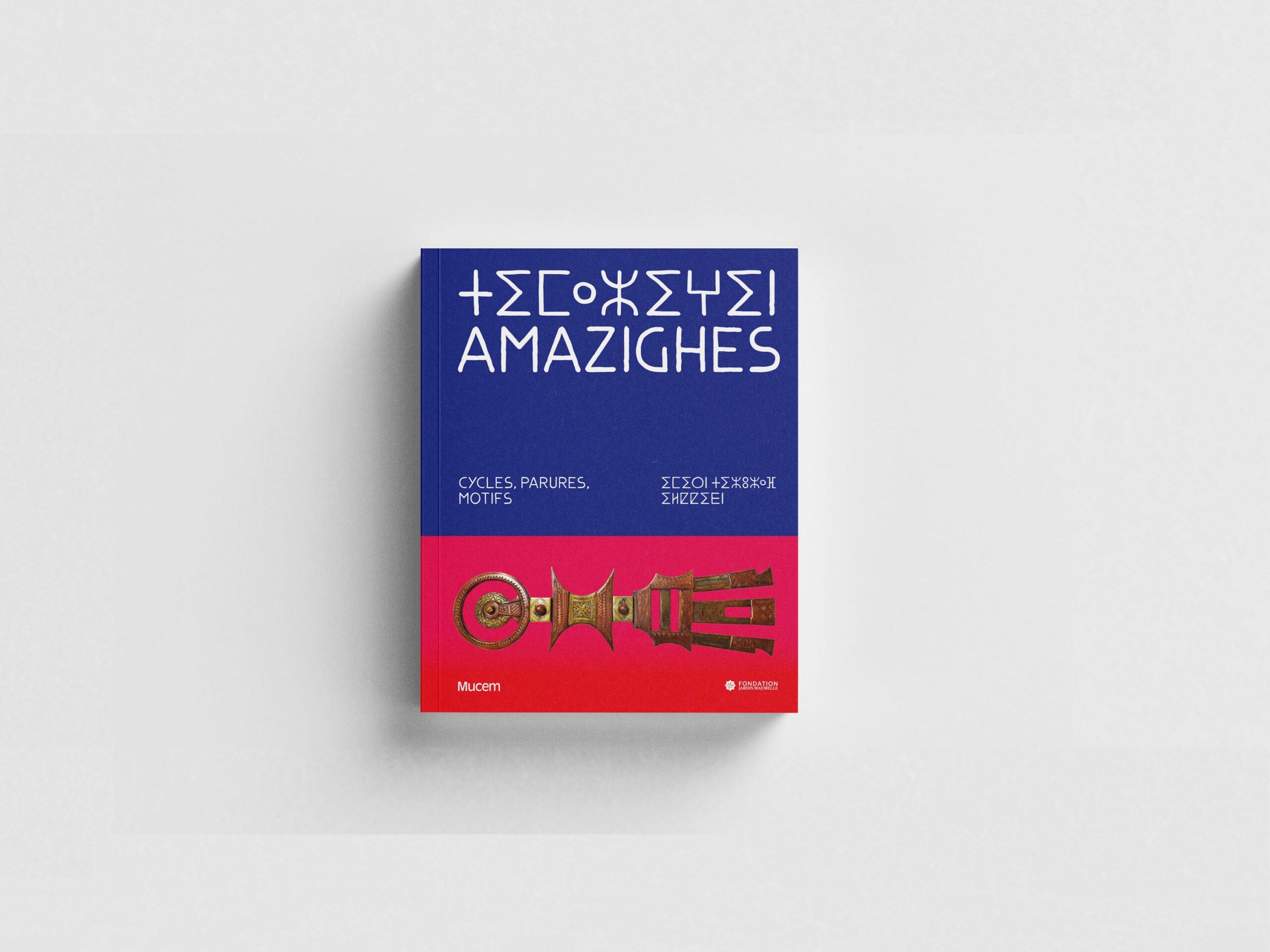
Amazighs
Published by Mucem / Jardin Majorelle Foundation
Paperback
160 pages
17 x 21 cm
ISBN 979-10-92708-28-8
Edited by:
Salima Naji and Alexis Sornin
With contributions from
Meriem Berrada, Marc Breviglieri, Marie-Charlotte Calafat, David Goeury, Mohamed Mouskite, Myriem Naji, Salima Naji, Ahmed Skounti, and Alexis Sornin.
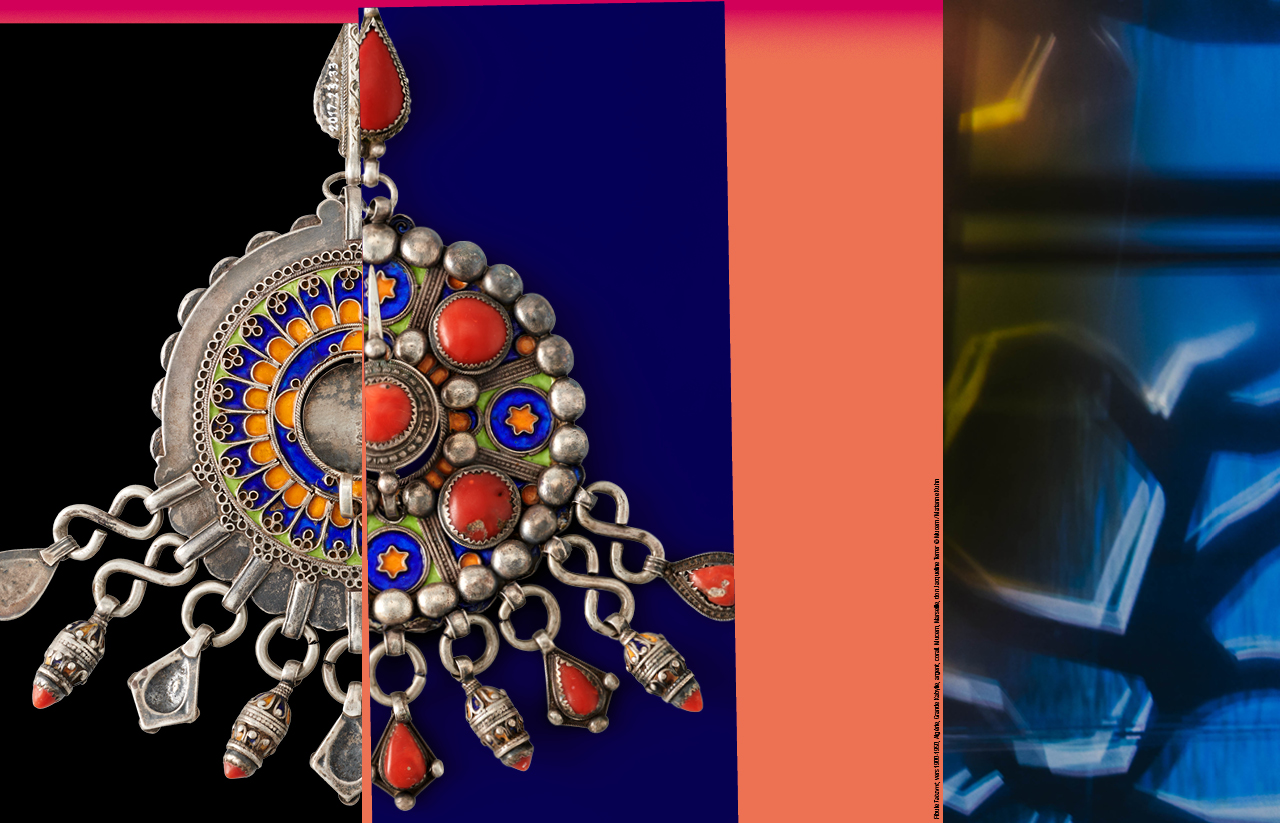
In Amazigh culture, any act of adornment—whether it involves decorating the body, clothing, or a home—reflects a concern for belonging, protection, and connection to the cycle of life. These acts are never trivial: they embody a collective memory, a symbolic or magical filter that connects the body, the home, and the community.
Since the earliest myths, the matrix from which the birth of Amazigh culture is conceived has been feminine.
Tattoos, jewelry, ceramics, and textiles all follow the same grammar of forms and symbols. Whether aesthetic, therapeutic, or apotropaic, these motifs also serve as markers of social and gender identity.
This book explores these protective circles—these visible and invisible thresholds—through the objects, surfaces, and narratives in which they take shape. It highlights the often female-led craft traditions—from weaving to practices tied to lunar cycles—while paying tribute to male artisans, such as goldsmiths. Drawing on research and contemporary perspectives, it examines the concept of “Berber permanence,” the dynamics of transmission within the Amazigh diaspora, and the cultural appropriations to which this “matrimoine”/heritage is sometimes subject today.