Travel Travel
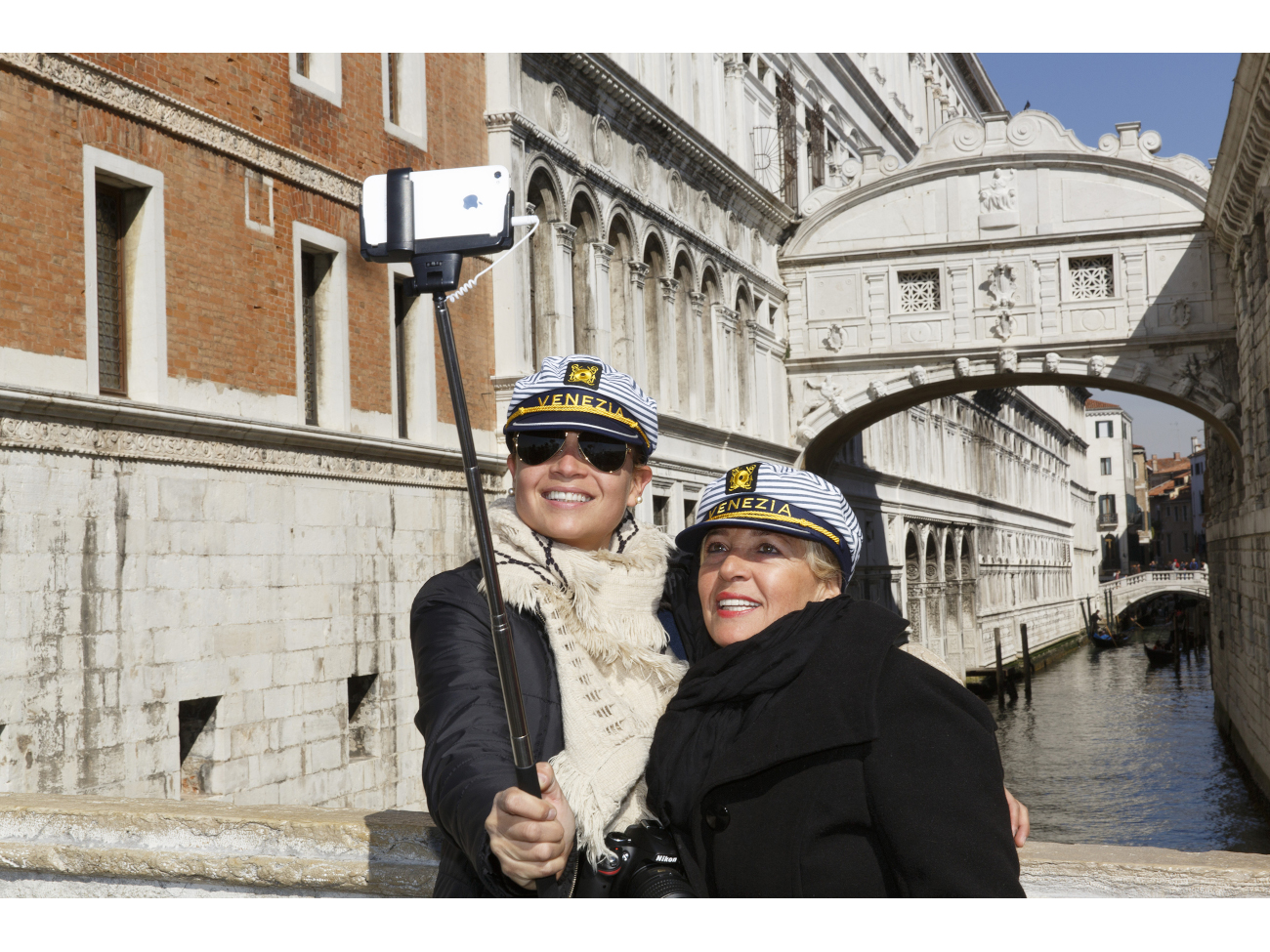
Voyage voyages” exhibition reopens… online. (Re)discover new artistic horizons from the comfort of your own home.
#Culturecheznous #LeMucemchezvous
Augmented content
Audio tours Interview with the curators Excerpts from the exhibition catalog
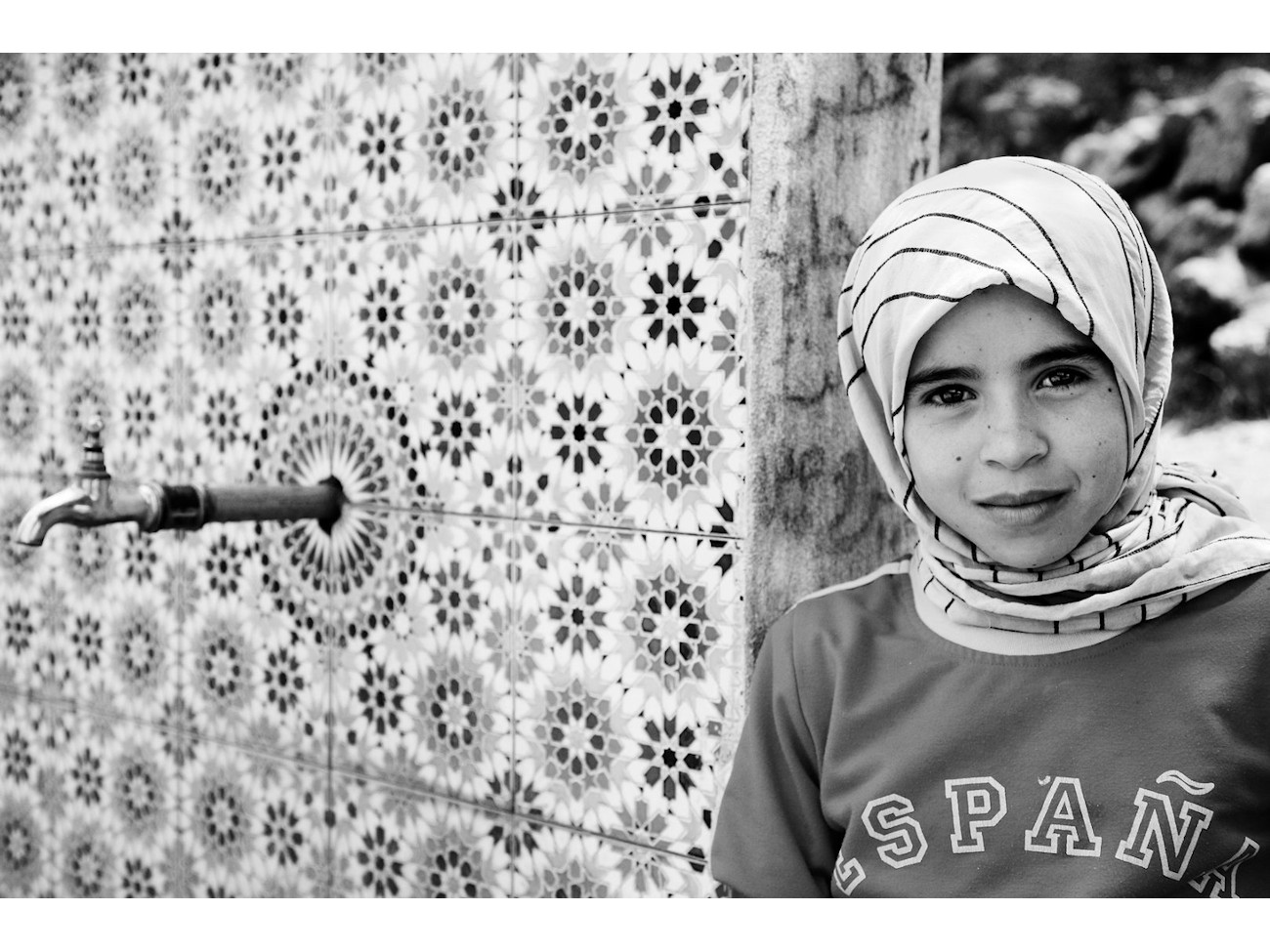
Portfolio “Voyage émoi” by Pascal Messaoudi
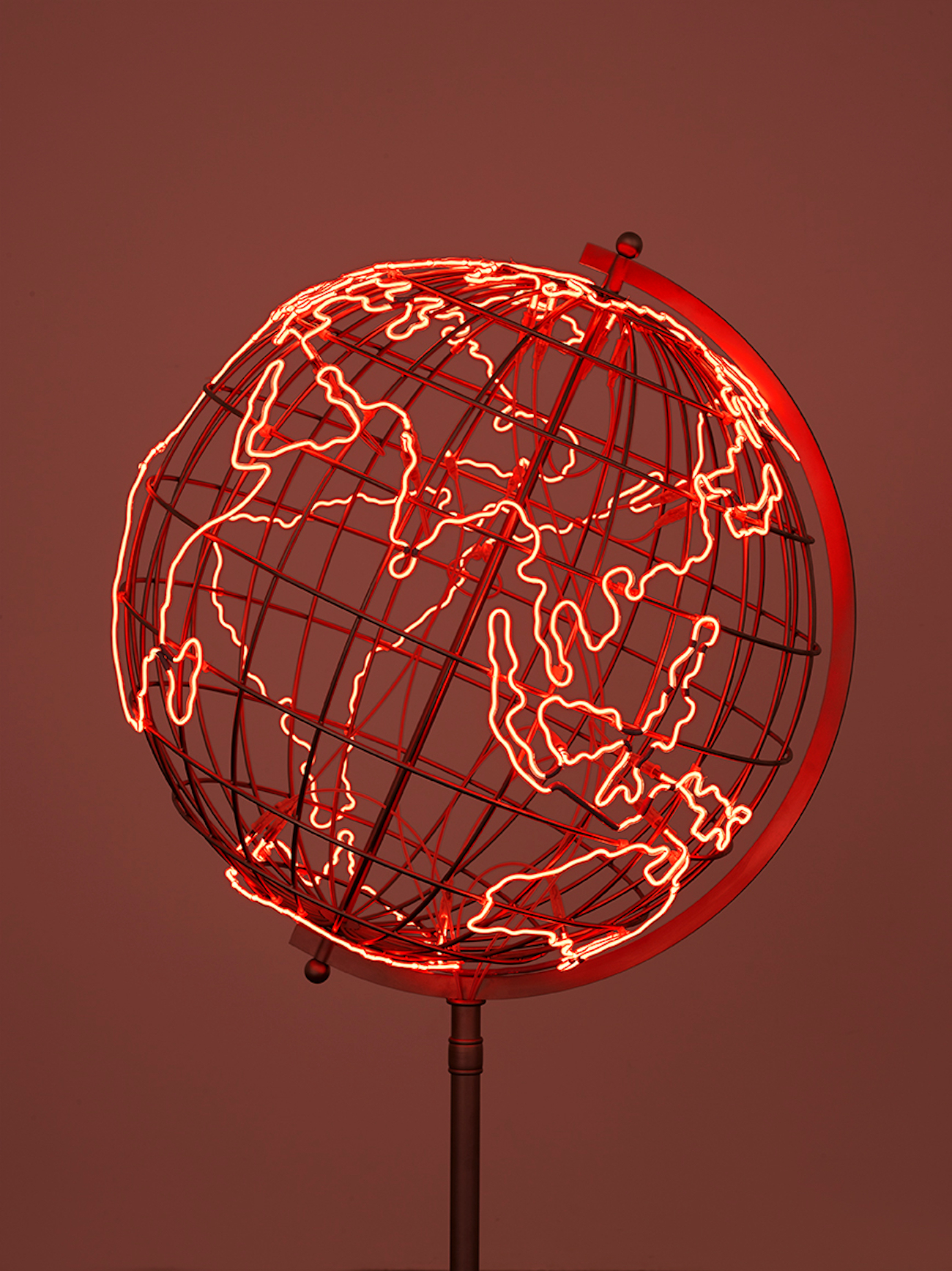
With Chiharu Shiota, Henri Matisse, Marcel Duchamp, Andy Warhol, Mona Hatoum, Richard Baquié…
A voyage of discovery into new artistic worlds!
Whatever the idea (or point) of departure – a desire for sunshine or escape, flight, wandering or exile – travel has always been a source of inspiration, influence and exchange for artists. The “Voyage Voyages” exhibition takes us on a journey through these movements and their histories, with over a hundred works (paintings, sculptures, installations, drawings, photographs and videos) taking us to as many real or imaginary horizons.
Thus, following in the footsteps of Paul Gauguin who, driven by a terrible need for the unknown, set sail for Tahiti in 1891, we discover the inspirations that so many artists – from Kandinsky to Warhol, from Duchamp to Gursky – have drawn from this attraction for an elsewhere that leads them to renew their way of perceiving the other and representing the world.
Borders, migrations, mass tourism… The question of travel, exile and circulation is a recurring theme in today’s art.
The “Voyage Voyages” exhibition invites us to experience this creative immensity, which finds a natural home at the Mucem, which has been fostering dialogue between cultures since its opening. The exhibition features some one hundred works (paintings, sculptures, installations, drawings, photographs, videos) from public and private collections, in particular the holdings of the Centre Pompidou / Musée national d’art moderne and the modern and contemporary collections of Marseille’s museums.
The title of the exhibition is freely inspired by the song “Voyage, Voyage” (sung by Desireless in 1986).
We would like to thank its author, Jean-Michel Rivat, who kindly agreed to its use.
-Curated by Christine Poullain, Honorary Director of the Marseilles Museums, and Pierre-Nicolas Bounakoff, art historian and exhibition curator.
-Scenography: Floriane Pic and Joris Lipsch-Studio Matters
Publications
Éditions du Mucem is offering two extracts from the exhibition catalog for free access.
Richard Baquié, starry skies, summer nights
Essay by Jean François Chougnet (president of the Mucem) on Richard Baquié, whose monumental work, Le Cockpit (1987), is presented at the Mucem as part of the “Voyage Voyages” exhibition.
© Editions du Mucem/Hazan, 2020 © photos Yves Gallois
Feuilleter
The 19th century as luggage
For “Voyage, voyages”, historian Sylvain Venayre has written an original text for the exhibition catalog, bringing an original and enlightening point of view to the subject of the exhibition.
Download
Exhibition catalog
Edited by Christine Poullain and Pierre-Nicolas Bounakoff
With contributions from Dominique Dupuis-Labbé, Jean-François Chougnet, Guillaume Theulière and Sylvain Venayre.
Coédition Mucem/Hazan
27 x 19 cm, 160 pages
140 illustrations including all the works shown in the exhibition
32 €
ISBN 978-2-7541-1129-4
Publication January 2020
Order
The Mucem bookshop selection
Discover the Mucem bookshop’s selection of digital books for the “Voyage voyages” exhibition.
Available for sale online.
Discover
Interview with Christine Poullain and Pierre-Nicolas Bounakoff, exhibition curators
Mucem (M.)
Why did you choose to explore the history of art through the theme of travel?
Christine Poullain (C.P.)
It’s fascinating to show how a theme has inspired artists, and what forms and interpretations this subject has offered them. Travel has always been a source of influence, exchange and artistic evolution. The first and most influential of these in Western art was the Grand Tour of Italy by the Norse, French and Spanish in the 16th century, which had a profound impact on artistic movements throughout Europe. In the twentieth century, the considerable development of means of communication, the two world wars, migratory phenomena and globalization have transformed the notion of travel and displacement, making them a central issue in the artistic gesture.
Our aim is to study how, from the crossing of the Mediterranean to North Africa at the beginning of the last century by Matisse, Klee, Kandinsky and many others, to recent migratory phenomena, the 20th century and the beginning of the 21st century have been marked by multiple displacements driven by very diverse motives. They led artists to invent a new conception of art, a different vision of the world, to explore all possible techniques and to metamorphose the artistic landscape.Pierre-Nicolas Bounakoff (P.-N. B.)
Today, there are many ways to travel, from business trips to pure tourism, and travel is seen as an important part of globalization. Against this backdrop, we thought it appropriate to pause for a moment to consider what artists of the last century had to say about travel, and what contemporary artists have to say about it today. In our collective image, it’s quite common to associate an artist with a studio, in which he or she is imagined working alone and locked away. Our exhibition aims to show a very different reality.
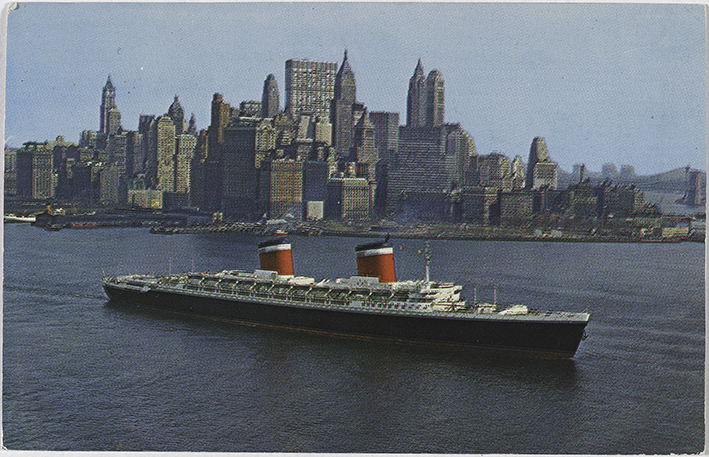
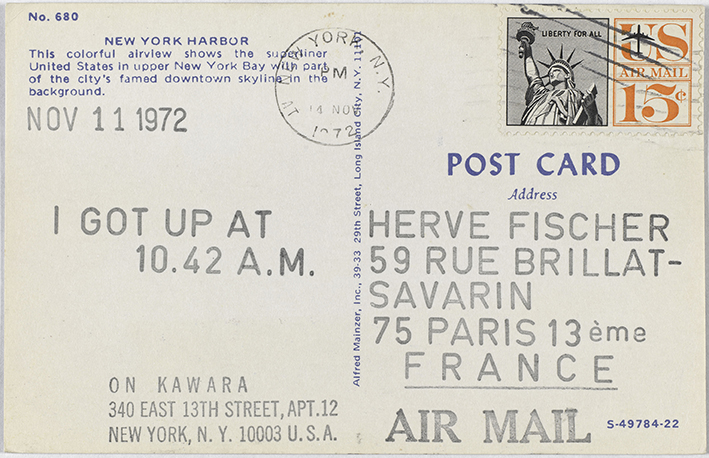
When Matisse set out to discover Polynesia, it was above all with the need to renew his work by seeking out new sources of inspiration. The idea of an exhibition on the voyage came from this story, among many others. We wanted to seek out and show what tells the story of travel beyond the simple biography of the artists. While it’s interesting to know that Marcel Duchamp left for New York in 1915, and that On Kawara was there in 1972, what we wanted to capture here are the tangible works that resulted from these journeys: for On Kawara, daily postcards that follow the rhythm of a life, for Marcel Duchamp provocative works for American circles.
By following these works, it becomes clear that the travels that inspire artists are at the root of great advances in modern and contemporary art, which would never have taken place if artists had remained quietly at home.M.
From Matisse to Zineb Sedira, the exhibition features works produced from the late 19th century to the present day. How has the perception of travel evolved over this period?
C.P.
Is it a question of evolution? Or is it a matter of transformation, linked to a wide range of reflections and the historical upheavals that the 20th century has seen? Gauguin, in his fascination with Polynesia, then the French Fauve artists and the German founders of the Blaue Reiter (Klee, Kandinsky, Macke…), who crossed the Mediterranean in search of other forms and a different light, were driven by their desire to overturn classical pictorial codes and invent a different kind of representation. The mirror journey from North Africa to France at the end of the last century was driven by the need to escape misery, poverty, lack of freedom and political instability, in the hope of finding an elsewhere, a possible future, a new and acceptable life.
The Second World War forced many artists and intellectuals to flee the German invasion of southern France for the United States, where the shared influences of the Surrealists and young American painting played a decisive role on both sides of the Atlantic, the theme of the suitcase, a symbolic attribute of travel, became a source of metaphorical inspiration for artists such as Marcel Duchamp and his Boîte-en-valise, conceived as a portable museum around the condensed universe of the surrealist box or cabinet of curiosities. Japan’s Chiharu Shiota, for her part, has seized on this banal material to create a moving, poetic wave made up of a hundred second-hand suitcases suspended in space, which poses a recurring question in her work: do the memories we retain of the past build us up or prevent us from moving forward (From where we come and what we are)?
Wandering became an artistic posture in search of a “nowhere” (“Toujours aller là où les routes s’arrêtent sur les cartes, là où il n’y a plus rien”, Bernard Plossu) in the 1960s-1970s, probably intended to find paths other than those of utilitarianism, prompting many artists to defend an art in which the concept of displacement without a precise goal or destination was in itself synonymous with an asserted freedom of artistic expression.Later, motivated by the political and economic situation in their countries of origin, some artists like Barthélémy Toguo took refuge in an endless exile based on the idea of transit, of ceaseless movement, open and altruistic about man’s destiny and the course of the world.
P.-N. B.
For artists, as for all of us, it seems to me that the perception of travel has evolved in parallel with the perception of the planet in general. And this evolution follows two opposite directions. On the one hand, the possibility of discovering the world has expanded, through transport that can reach any point on the globe on a daily basis, through news that tells us about both fires in the Amazon and diplomatic problems in Korea, and on the other hand, the many distances have shrunk, with Internet networks that can instantly circle the globe. It’s the ambiguity of a world that’s becoming both bigger and smaller at the same time.
Umberto Eco used to tell his students that, whereas research at the beginning of the century consisted in searching libraries for texts that would be useful to them, today texts are available everywhere in large quantities, and research consists above all in sorting through them. It seems to me that this advice corresponds fairly well to the evolution of artists’ work. Whereas at the turn of the century, travel meant exploring other places and cultures, and the works of Klee and Kandinsky were a record of their discoveries, today Camille Henrot’s videos show the enormous influx of information available everywhere, and demonstrate the way she sorts and combines it to derive her own vision of our times.
What inspires artists and nourishes their work has become an increasingly complex mix of views, people and places, thanks in no small part to travel.M.
What surprised and questioned you the most during your research for this exhibition?
C.P.
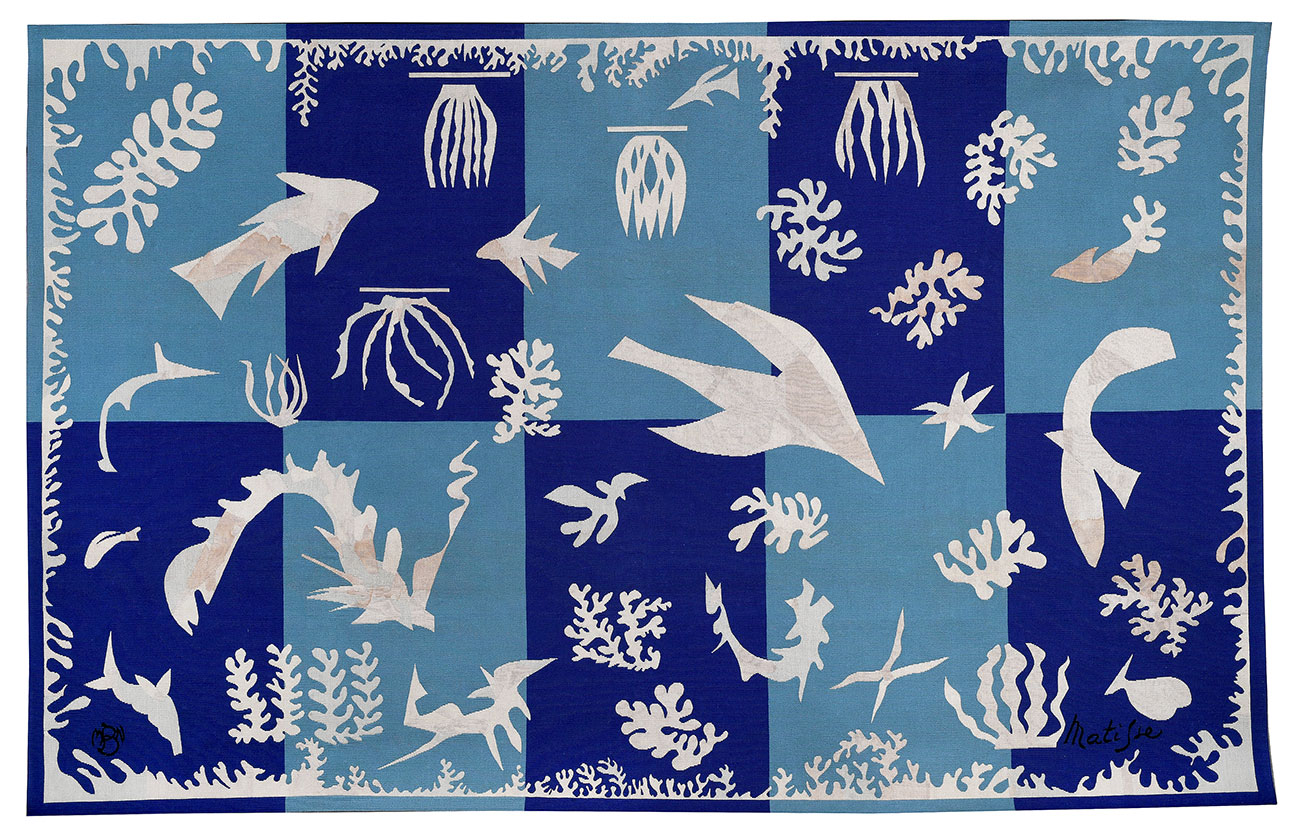
The most astonishing thing about this exhibition, even if this is often the case when researching a theme, is the incredible diversity of the works on display. It’s true that the subject and the period open up particularly rich historical, geographical and artistic perspectives, and offer an abundance of metaphorical evocations that show us the extent to which travel, in whatever form it may have taken, has become a central issue in our civilization. Artists have interpreted it in a thousand different ways: what is the relationship between Marcel Duchamp’s Air de Paris and Henri Matisse’s Polynésie – between a pharmaceutical ampoule emptied of its contents and filled with the light, joyous air of the French capital, and these tapestries where large white birds surrounded by seaweed and coral symbolize the poetry of the Pacific archipelago – if not two visions, two versions of the concept of displacement and travel?
It was these very different symbolisations and inspirations that piqued our interest and often prompted our questions. From the outset, our idea was to take visitors on a journey through time and space, through artistic creation. The geographical position of the Mucem in Marseilles, built at the entrance to one of the Mediterranean’s largest ports, played a decisive role in our approach.P.-N. B.
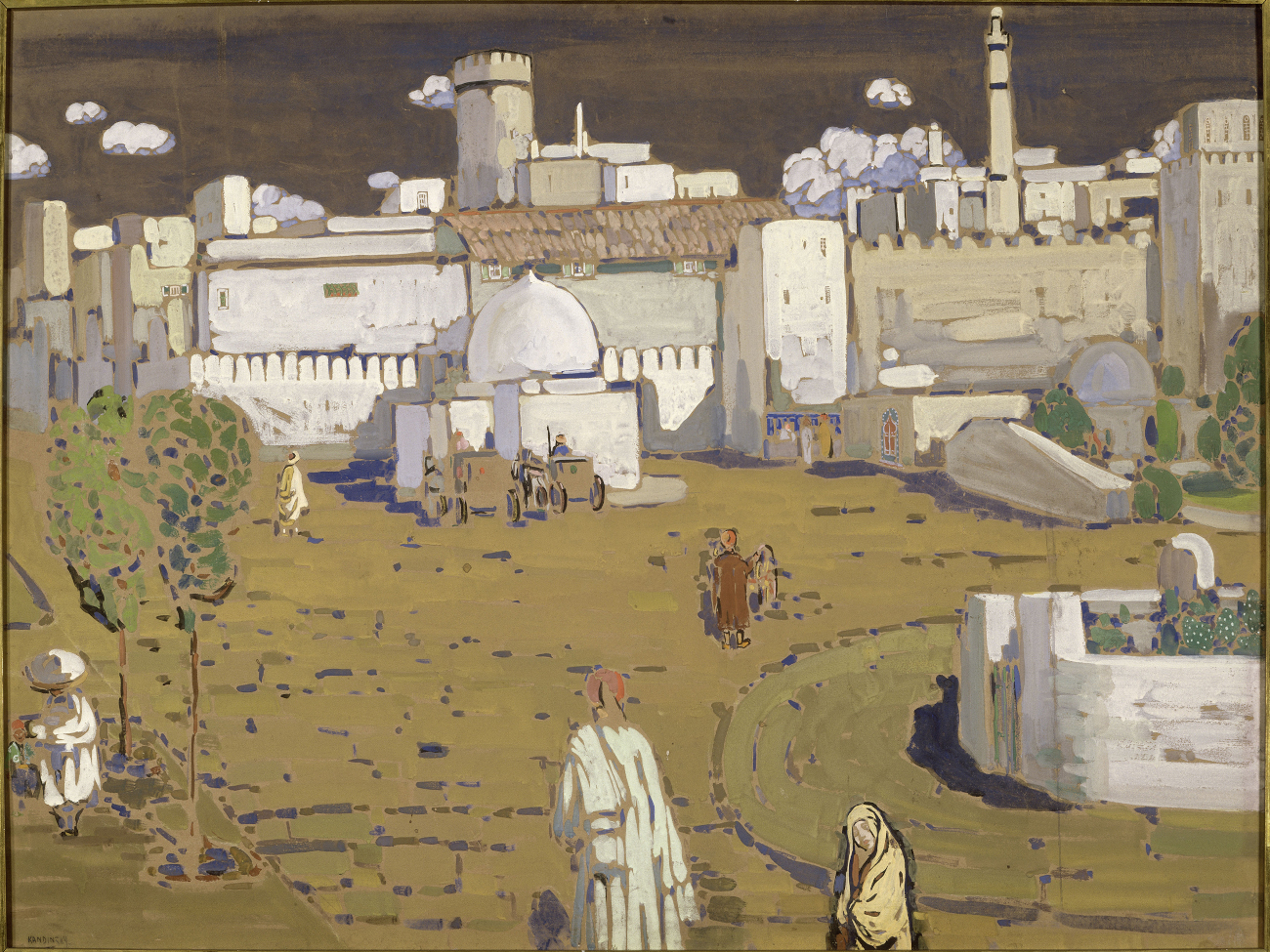
More than an astonishment in the strict sense of the word, the installation of this important suite of works that spans more than a century across seas and continents reveals a form of observation of the world that it is now possible to study in retrospect. At a time when cultural appropriation is the subject of much debate, the travel movement adds many new elements to this broad question. For example, how can we define the culture of a figure like Kandinsky, who came from Moscow’s law faculty, became a committed Bauhaus artist in Germany and produced his late works in Paris? His work in Tunisia shows a wide-eyed artist, inspired and influenced by everything he discovers, wherever he goes.
And Kandinsky is by no means alone among the artists represented in this exhibition in having blended several bases into his artistic culture. Before Polynesia, Gauguin was largely inspired by the discovery of Brittany and then Martinique. Barthélémy Toguo, who studied in Abidjan, Grenoble and Düsseldorf, now works with one foot in Paris and the other in Bandjoun. Rather than appropriation, which is now violently criticized, it seems to me that this is a form of open sharing between all those who inhabit the same planet.
M.
What are the most remarkable works among the hundred or so on display?
C.P.
The reunion of Henri Matisse’s two tapestries Polynésie le ciel and Polynésie la mer, which to my knowledge has never taken place before, is one of the remarkable events we are delighted to offer visitors to the exhibition. The cartoons for these late-woven works were inspired by the artist 18 years after his trip to Tahiti, and reveal the freedom of pure fantasy and joie de vivre that Matisse always tried to convey.
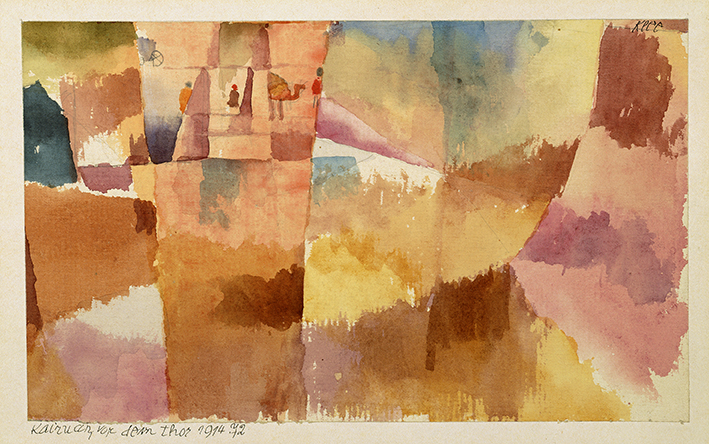
Paintings by Vassily Kandinsky (Arabische Stadt), Paul Klee (Kairouan devant la porte, Dünenlandschaft) and Henri Matisse (La Baie de Tanger) show the tremendous inspiration that travel to North Africa brought to these artists, enriching their pictorial vocabulary.
Last but not least, Japanese artist Chiharu Shiota’s impressive, theatrical Accumulation Searching for Destination inhabits a space in the Mucem by means of a network of intertwined red wires, from which she suspends a hundred or so suitcases animated by a stormy wave.P.-N. B.
All these works are remarkable! They all correspond to real reflections that bring them together under the theme of travel. Then there are the more personal attractions, specific to each individual. Victor Brauner’s Le Dernier Voyage, for example, despite its small size, leaves me deeply pensive. Brauner often worked with the image of the isolated or deformed eye – as seen here – before actually losing his left eye in a fight in 1938. As a result, he was considered a premonitory artist, and Le Dernier Voyage, made just before the Second World War, seems to confirm this idea. It depicts a straight road into an uncertain sunset, a barren land where only a factory chimney remains, and a traveler who no longer knows where to go. Brauner produced a stark but lucid image of what was threatening the world in his time. In the age of climate change, it seems to have taken on new meaning.
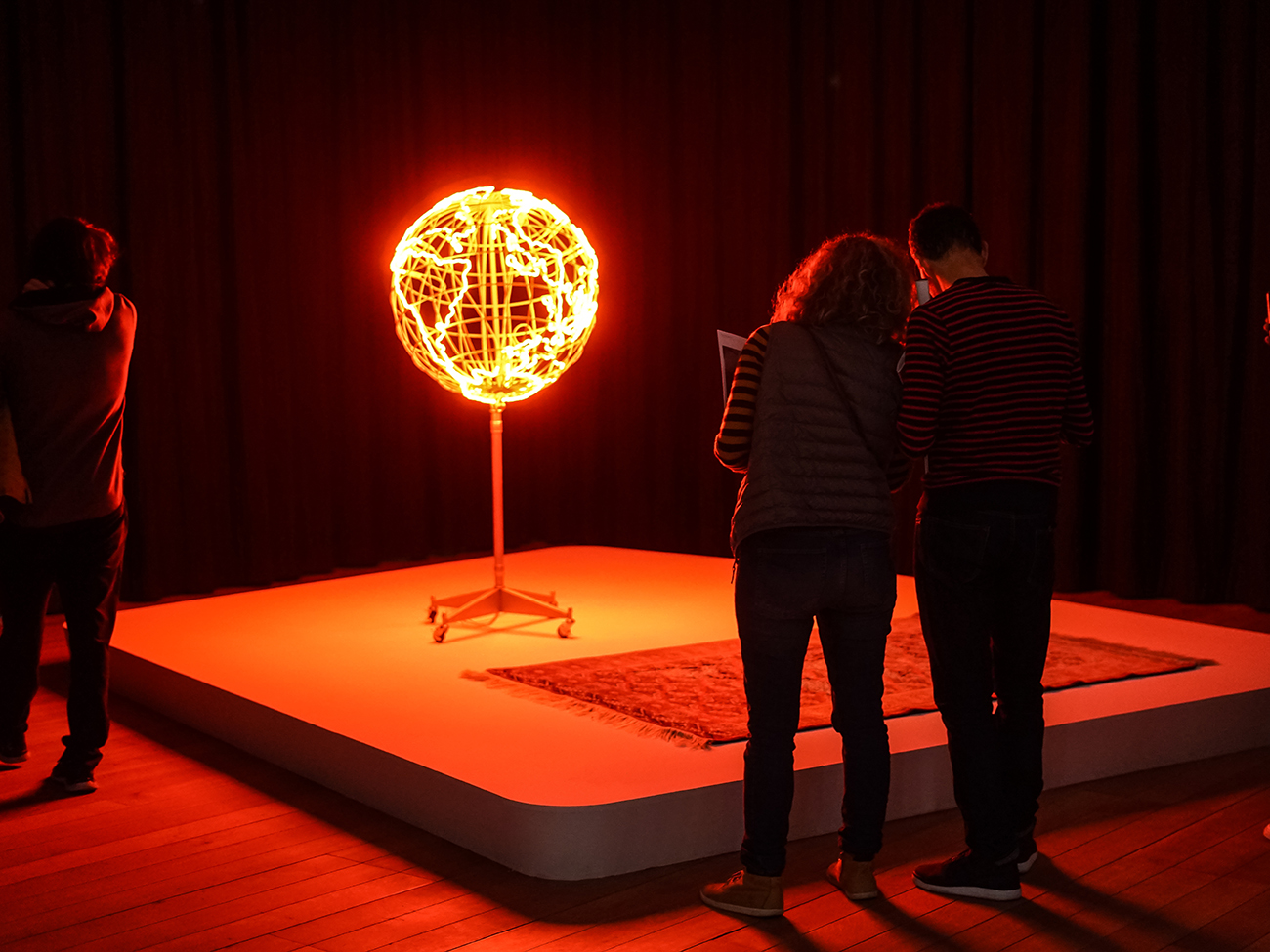
But you don’t always have to be pessimistic, and fortunately there are much more cheerful works in this exhibition, such as Richard Baquié’s Cockpit, which invites us to let our thoughts fly through the air, or Giorgio De Chirico’s Le Retour d’Ulysse, which seems to gently mock both Homer’s Odyssey and his own journey as an artist, both of which seem to stagnate on the living-room carpet.
Voyage voyages” exhibition reopens… online. (Re)discover new artistic horizons from the comfort of your own home.
#Culturecheznous #LeMucemchezvous
Augmented content
Audio tours Interview with the curators Excerpts from the exhibition catalog
Portfolio “Voyage émoi” by Pascal Messaoudi
With Chiharu Shiota, Henri Matisse, Marcel Duchamp, Andy Warhol, Mona Hatoum, Richard Baquié…
A voyage of discovery into new artistic worlds!
Whatever the idea (or point) of departure – a desire for sunshine or escape, flight, wandering or exile – travel has always been a source of inspiration, influence and exchange for artists. The “Voyage Voyages” exhibition takes us on a journey through these movements and their histories, with over a hundred works (paintings, sculptures, installations, drawings, photographs and videos) taking us to as many real or imaginary horizons.
Thus, following in the footsteps of Paul Gauguin who, driven by a terrible need for the unknown, set sail for Tahiti in 1891, we discover the inspirations that so many artists – from Kandinsky to Warhol, from Duchamp to Gursky – have drawn from this attraction for an elsewhere that leads them to renew their way of perceiving the other and representing the world.
Borders, migrations, mass tourism… The question of travel, exile and circulation is a recurring theme in today’s art.
The “Voyage Voyages” exhibition invites us to experience this creative immensity, which finds a natural home at the Mucem, which has been fostering dialogue between cultures since its opening. The exhibition features some one hundred works (paintings, sculptures, installations, drawings, photographs, videos) from public and private collections, in particular the holdings of the Centre Pompidou / Musée national d’art moderne and the modern and contemporary collections of Marseille’s museums.
The title of the exhibition is freely inspired by the song “Voyage, Voyage” (sung by Desireless in 1986).
We would like to thank its author, Jean-Michel Rivat, who kindly agreed to its use.
-Curated by Christine Poullain, Honorary Director of the Marseilles Museums, and Pierre-Nicolas Bounakoff, art historian and exhibition curator.
-Scenography: Floriane Pic and Joris Lipsch-Studio Matters
Publications
Éditions du Mucem is offering two extracts from the exhibition catalog for free access.
Richard Baquié, starry skies, summer nights
Essay by Jean François Chougnet (president of the Mucem) on Richard Baquié, whose monumental work, Le Cockpit (1987), is presented at the Mucem as part of the “Voyage Voyages” exhibition.
© Editions du Mucem/Hazan, 2020 © photos Yves Gallois
Feuilleter
The 19th century as luggage
For “Voyage, voyages”, historian Sylvain Venayre has written an original text for the exhibition catalog, bringing an original and enlightening point of view to the subject of the exhibition.
Download
Exhibition catalog
Edited by Christine Poullain and Pierre-Nicolas Bounakoff
With contributions from Dominique Dupuis-Labbé, Jean-François Chougnet, Guillaume Theulière and Sylvain Venayre.
Coédition Mucem/Hazan
27 x 19 cm, 160 pages
140 illustrations including all the works shown in the exhibition
32 €
ISBN 978-2-7541-1129-4
Publication January 2020
Order
The Mucem bookshop selection
Discover the Mucem bookshop’s selection of digital books for the “Voyage voyages” exhibition.
Available for sale online.
Discover
Interview with Christine Poullain and Pierre-Nicolas Bounakoff, exhibition curators
Mucem (M.)
Why did you choose to explore the history of art through the theme of travel?
Christine Poullain (C.P.)
It’s fascinating to show how a theme has inspired artists, and what forms and interpretations this subject has offered them. Travel has always been a source of influence, exchange and artistic evolution. The first and most influential of these in Western art was the Grand Tour of Italy by the Norse, French and Spanish in the 16th century, which had a profound impact on artistic movements throughout Europe. In the twentieth century, the considerable development of means of communication, the two world wars, migratory phenomena and globalization have transformed the notion of travel and displacement, making them a central issue in the artistic gesture.
Our aim is to study how, from the crossing of the Mediterranean to North Africa at the beginning of the last century by Matisse, Klee, Kandinsky and many others, to recent migratory phenomena, the 20th century and the beginning of the 21st century have been marked by multiple displacements driven by very diverse motives. They led artists to invent a new conception of art, a different vision of the world, to explore all possible techniques and to metamorphose the artistic landscape.Pierre-Nicolas Bounakoff (P.-N. B.)
Today, there are many ways to travel, from business trips to pure tourism, and travel is seen as an important part of globalization. Against this backdrop, we thought it appropriate to pause for a moment to consider what artists of the last century had to say about travel, and what contemporary artists have to say about it today. In our collective image, it’s quite common to associate an artist with a studio, in which he or she is imagined working alone and locked away. Our exhibition aims to show a very different reality.
When Matisse set out to discover Polynesia, it was above all with the need to renew his work by seeking out new sources of inspiration. The idea of an exhibition on the voyage came from this story, among many others. We wanted to seek out and show what tells the story of travel beyond the simple biography of the artists. While it’s interesting to know that Marcel Duchamp left for New York in 1915, and that On Kawara was there in 1972, what we wanted to capture here are the tangible works that resulted from these journeys: for On Kawara, daily postcards that follow the rhythm of a life, for Marcel Duchamp provocative works for American circles.
By following these works, it becomes clear that the travels that inspire artists are at the root of great advances in modern and contemporary art, which would never have taken place if artists had remained quietly at home.M.
From Matisse to Zineb Sedira, the exhibition features works produced from the late 19th century to the present day. How has the perception of travel evolved over this period?
C.P.
Is it a question of evolution? Or is it a matter of transformation, linked to a wide range of reflections and the historical upheavals that the 20th century has seen? Gauguin, in his fascination with Polynesia, then the French Fauve artists and the German founders of the Blaue Reiter (Klee, Kandinsky, Macke…), who crossed the Mediterranean in search of other forms and a different light, were driven by their desire to overturn classical pictorial codes and invent a different kind of representation. The mirror journey from North Africa to France at the end of the last century was driven by the need to escape misery, poverty, lack of freedom and political instability, in the hope of finding an elsewhere, a possible future, a new and acceptable life.
The Second World War forced many artists and intellectuals to flee the German invasion of southern France for the United States, where the shared influences of the Surrealists and young American painting played a decisive role on both sides of the Atlantic, the theme of the suitcase, a symbolic attribute of travel, became a source of metaphorical inspiration for artists such as Marcel Duchamp and his Boîte-en-valise, conceived as a portable museum around the condensed universe of the surrealist box or cabinet of curiosities. Japan’s Chiharu Shiota, for her part, has seized on this banal material to create a moving, poetic wave made up of a hundred second-hand suitcases suspended in space, which poses a recurring question in her work: do the memories we retain of the past build us up or prevent us from moving forward (From where we come and what we are)?
Wandering became an artistic posture in search of a “nowhere” (“Toujours aller là où les routes s’arrêtent sur les cartes, là où il n’y a plus rien”, Bernard Plossu) in the 1960s-1970s, probably intended to find paths other than those of utilitarianism, prompting many artists to defend an art in which the concept of displacement without a precise goal or destination was in itself synonymous with an asserted freedom of artistic expression.Later, motivated by the political and economic situation in their countries of origin, some artists like Barthélémy Toguo took refuge in an endless exile based on the idea of transit, of ceaseless movement, open and altruistic about man’s destiny and the course of the world.
P.-N. B.
For artists, as for all of us, it seems to me that the perception of travel has evolved in parallel with the perception of the planet in general. And this evolution follows two opposite directions. On the one hand, the possibility of discovering the world has expanded, through transport that can reach any point on the globe on a daily basis, through news that tells us about both fires in the Amazon and diplomatic problems in Korea, and on the other hand, the many distances have shrunk, with Internet networks that can instantly circle the globe. It’s the ambiguity of a world that’s becoming both bigger and smaller at the same time.
Umberto Eco used to tell his students that, whereas research at the beginning of the century consisted in searching libraries for texts that would be useful to them, today texts are available everywhere in large quantities, and research consists above all in sorting through them. It seems to me that this advice corresponds fairly well to the evolution of artists’ work. Whereas at the turn of the century, travel meant exploring other places and cultures, and the works of Klee and Kandinsky were a record of their discoveries, today Camille Henrot’s videos show the enormous influx of information available everywhere, and demonstrate the way she sorts and combines it to derive her own vision of our times.
What inspires artists and nourishes their work has become an increasingly complex mix of views, people and places, thanks in no small part to travel.M.
What surprised and questioned you the most during your research for this exhibition?
C.P.
The most astonishing thing about this exhibition, even if this is often the case when researching a theme, is the incredible diversity of the works on display. It’s true that the subject and the period open up particularly rich historical, geographical and artistic perspectives, and offer an abundance of metaphorical evocations that show us the extent to which travel, in whatever form it may have taken, has become a central issue in our civilization. Artists have interpreted it in a thousand different ways: what is the relationship between Marcel Duchamp’s Air de Paris and Henri Matisse’s Polynésie – between a pharmaceutical ampoule emptied of its contents and filled with the light, joyous air of the French capital, and these tapestries where large white birds surrounded by seaweed and coral symbolize the poetry of the Pacific archipelago – if not two visions, two versions of the concept of displacement and travel?
It was these very different symbolisations and inspirations that piqued our interest and often prompted our questions. From the outset, our idea was to take visitors on a journey through time and space, through artistic creation. The geographical position of the Mucem in Marseilles, built at the entrance to one of the Mediterranean’s largest ports, played a decisive role in our approach.P.-N. B.
More than an astonishment in the strict sense of the word, the installation of this important suite of works that spans more than a century across seas and continents reveals a form of observation of the world that it is now possible to study in retrospect. At a time when cultural appropriation is the subject of much debate, the travel movement adds many new elements to this broad question. For example, how can we define the culture of a figure like Kandinsky, who came from Moscow’s law faculty, became a committed Bauhaus artist in Germany and produced his late works in Paris? His work in Tunisia shows a wide-eyed artist, inspired and influenced by everything he discovers, wherever he goes.
And Kandinsky is by no means alone among the artists represented in this exhibition in having blended several bases into his artistic culture. Before Polynesia, Gauguin was largely inspired by the discovery of Brittany and then Martinique. Barthélémy Toguo, who studied in Abidjan, Grenoble and Düsseldorf, now works with one foot in Paris and the other in Bandjoun. Rather than appropriation, which is now violently criticized, it seems to me that this is a form of open sharing between all those who inhabit the same planet.
M.
What are the most remarkable works among the hundred or so on display?
C.P.
The reunion of Henri Matisse’s two tapestries Polynésie le ciel and Polynésie la mer, which to my knowledge has never taken place before, is one of the remarkable events we are delighted to offer visitors to the exhibition. The cartoons for these late-woven works were inspired by the artist 18 years after his trip to Tahiti, and reveal the freedom of pure fantasy and joie de vivre that Matisse always tried to convey.
Paintings by Vassily Kandinsky (Arabische Stadt), Paul Klee (Kairouan devant la porte, Dünenlandschaft) and Henri Matisse (La Baie de Tanger) show the tremendous inspiration that travel to North Africa brought to these artists, enriching their pictorial vocabulary.
Last but not least, Japanese artist Chiharu Shiota’s impressive, theatrical Accumulation Searching for Destination inhabits a space in the Mucem by means of a network of intertwined red wires, from which she suspends a hundred or so suitcases animated by a stormy wave.P.-N. B.
All these works are remarkable! They all correspond to real reflections that bring them together under the theme of travel. Then there are the more personal attractions, specific to each individual. Victor Brauner’s Le Dernier Voyage, for example, despite its small size, leaves me deeply pensive. Brauner often worked with the image of the isolated or deformed eye – as seen here – before actually losing his left eye in a fight in 1938. As a result, he was considered a premonitory artist, and Le Dernier Voyage, made just before the Second World War, seems to confirm this idea. It depicts a straight road into an uncertain sunset, a barren land where only a factory chimney remains, and a traveler who no longer knows where to go. Brauner produced a stark but lucid image of what was threatening the world in his time. In the age of climate change, it seems to have taken on new meaning.
But you don’t always have to be pessimistic, and fortunately there are much more cheerful works in this exhibition, such as Richard Baquié’s Cockpit, which invites us to let our thoughts fly through the air, or Giorgio De Chirico’s Le Retour d’Ulysse, which seems to gently mock both Homer’s Odyssey and his own journey as an artist, both of which seem to stagnate on the living-room carpet.