Voyage Voyages
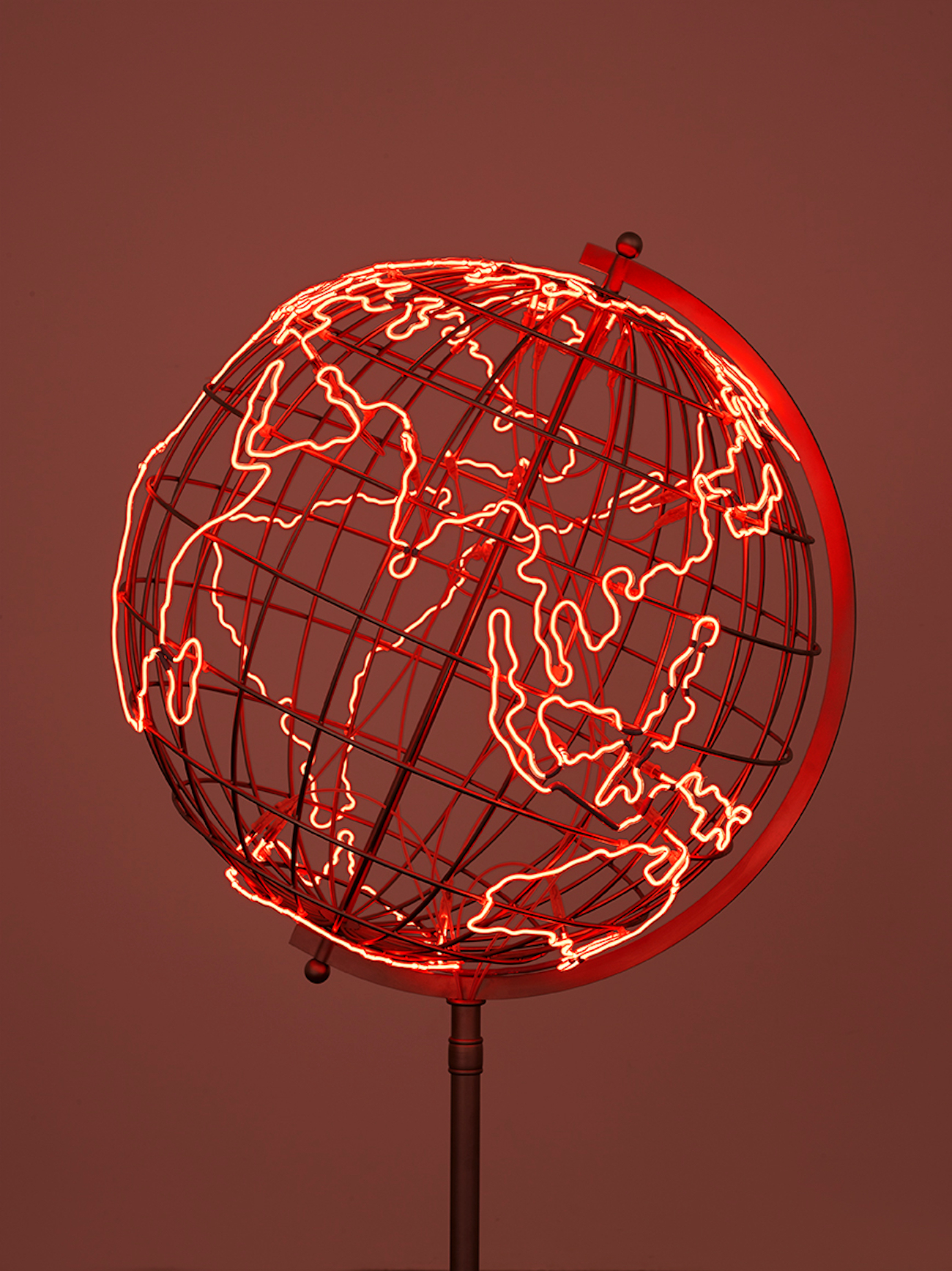
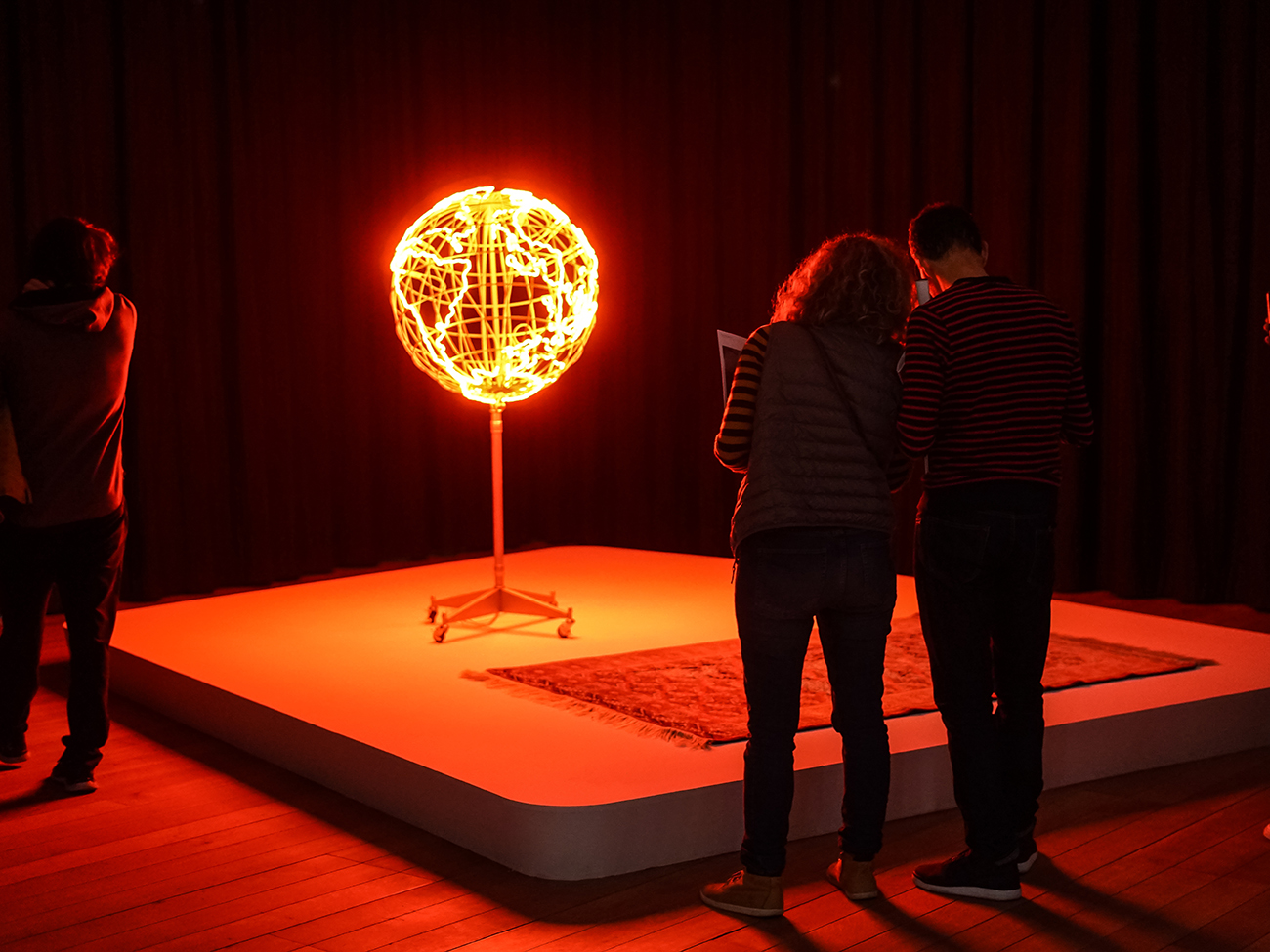
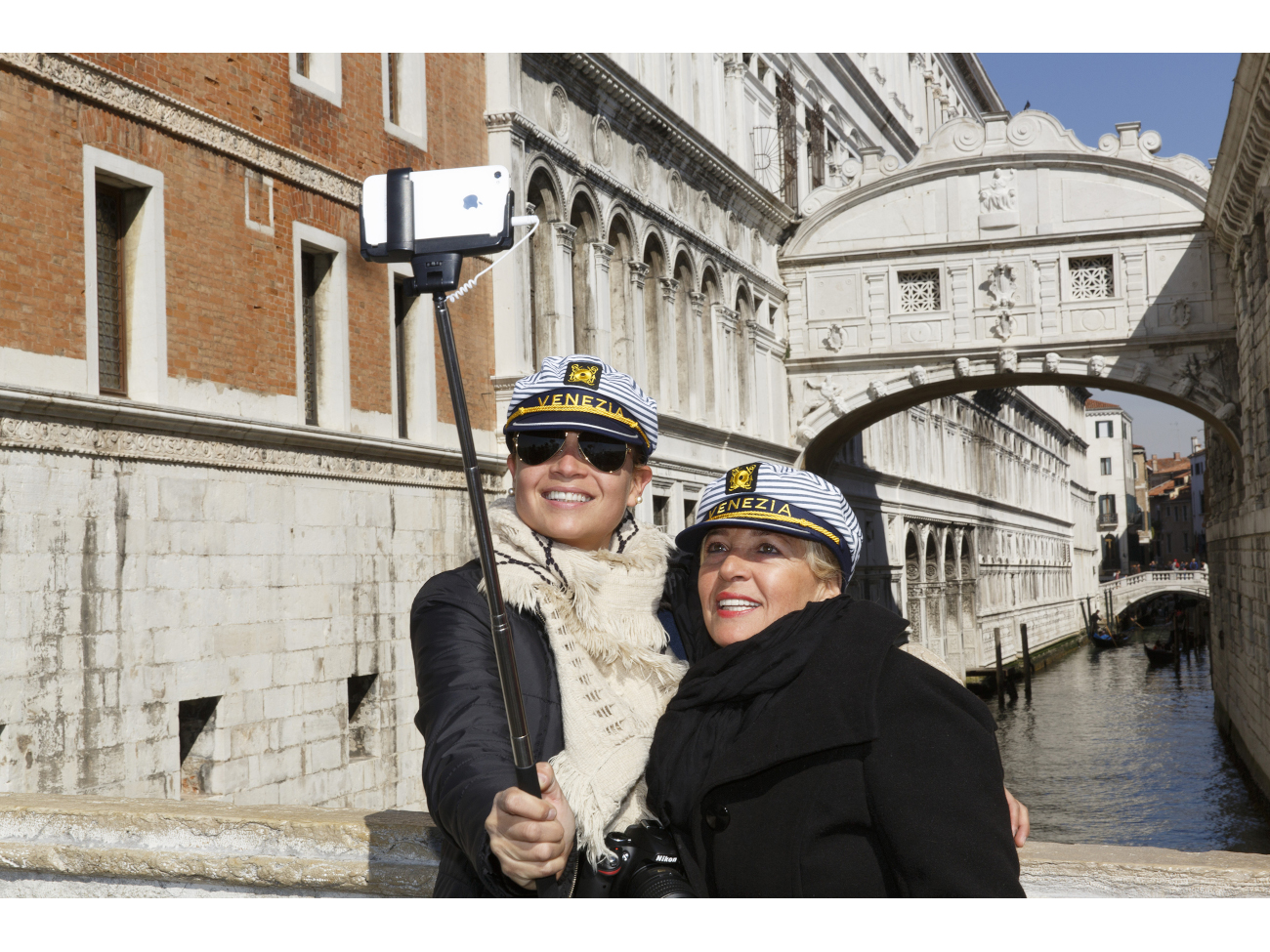
With Henri Matisse, Marcel Duchamp, Andy Warhol, Richard Baquié… A voyage of discovery to new artistic worlds!
Whatever its starting idea (or point), whether that be a desire for sunshine or a wish for escape, flight, wandering, or exile, travel has always been a source of inspiration, influence and exchange for artists. The exhibition “Voyage
Voyages” offers a journey through these movements and their stories.
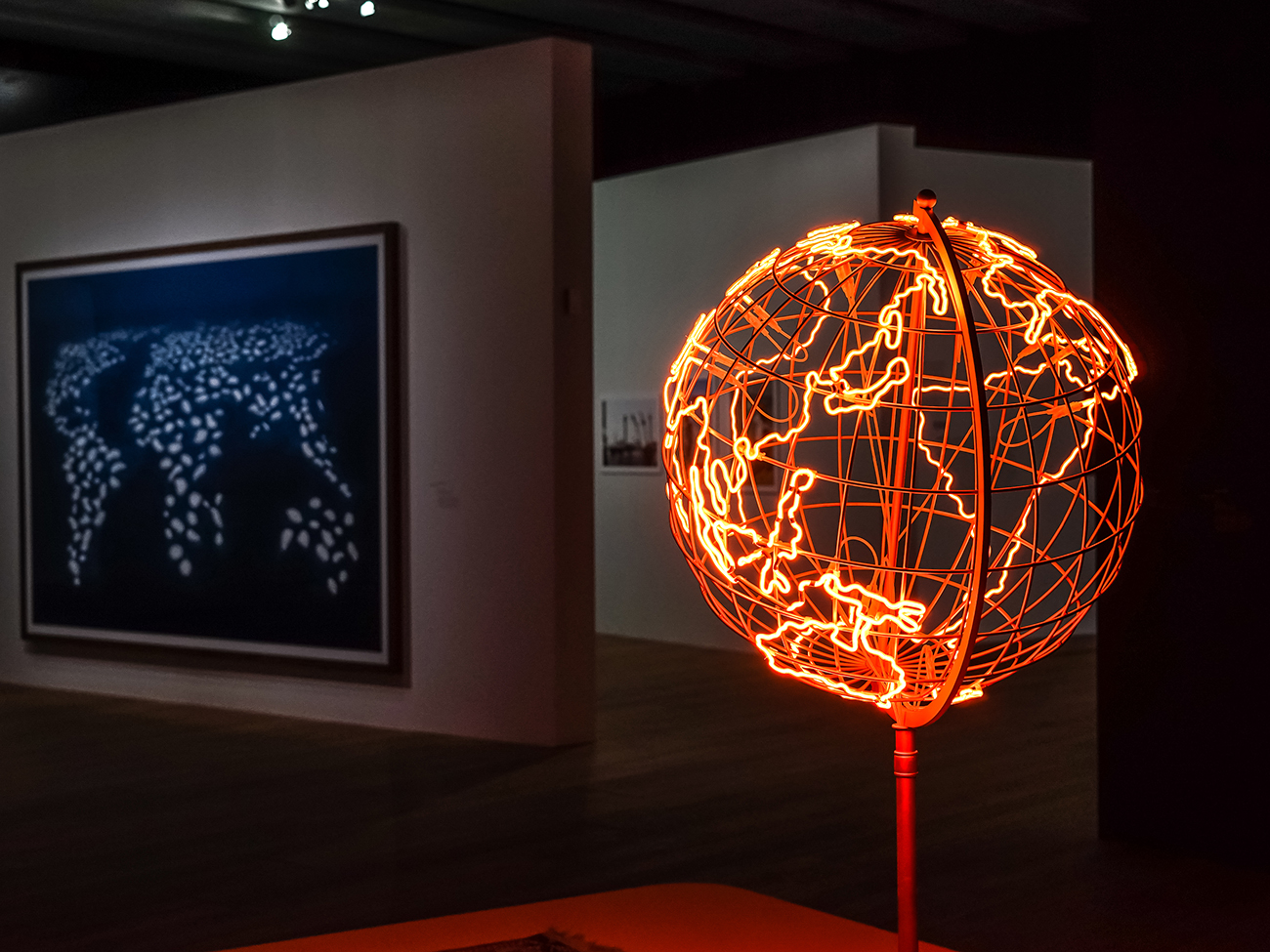
In this way and following in the footsteps of Paul Gauguin who, driven by a terrible need for the unknown, embarked on a voyage to Tahiti in 1891, we discover the inspiration that so many artists, including Wassily Kandinsky, Camille Henrot, Marcel Duchamp and Andreas Gursky have taken from this attraction for the unknown and the elsewhere that led them to renew their way of seeing the other and of representing the world.
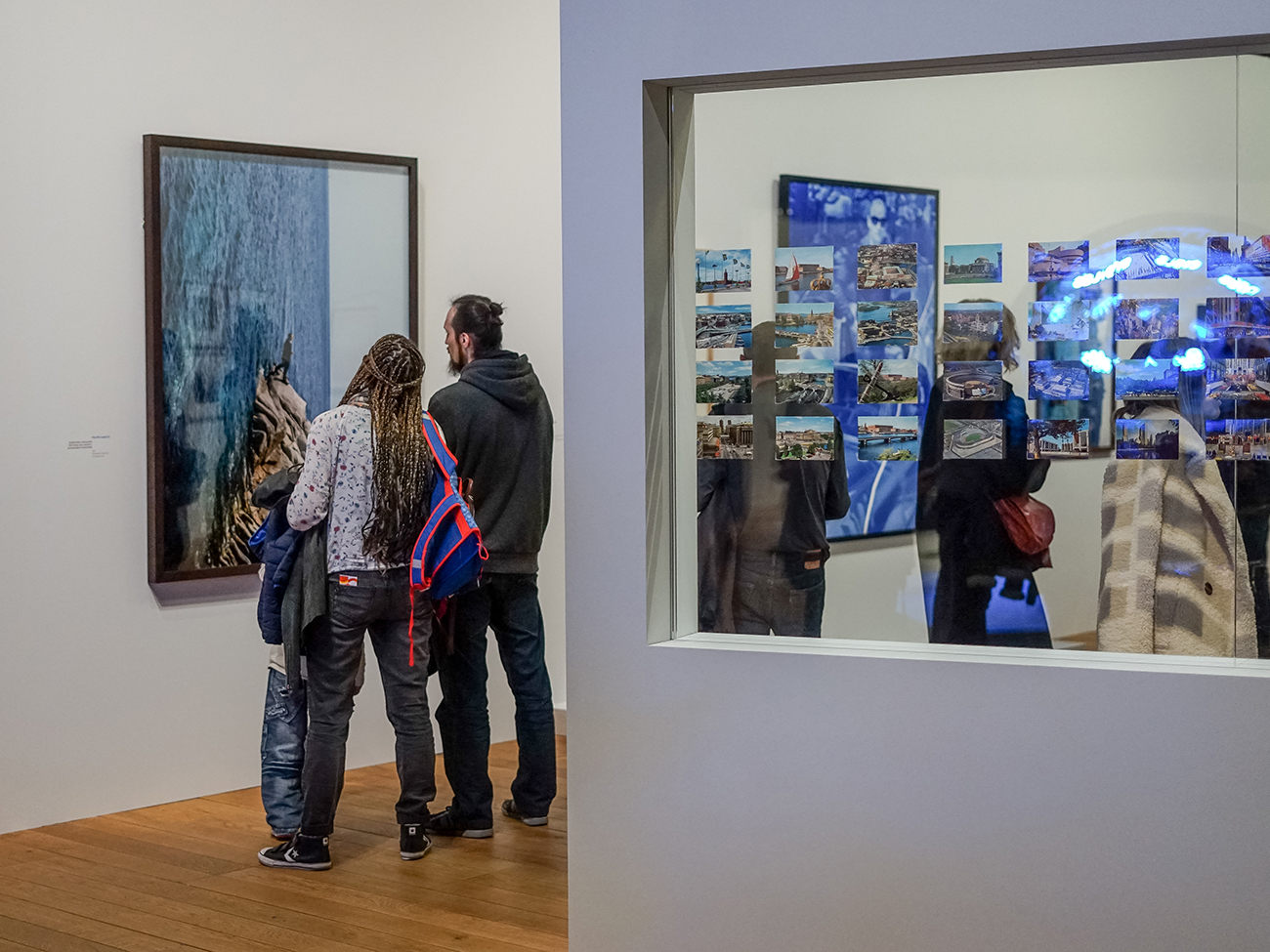
Borders, migration, mass tourism… these days, questions about travel, exile and getting from one place to another are recurring themes in the act of creating art. The exhibition “Voyage Voyages” invites us to feel the creative immensity that finds a natural home at the Mucem and which, since it opened, has favoured a dialogue between cultures.
The exhibition presents some hundred works (paintings, sculptures, installations, drawings, photographs, videos) from private and public collections, in particular from those of the Centre Pompidou / Musée national d’art moderne and the modern and contemporary collections of the museums of Marseille.
The title of the exhibition is freely inspired by the song “Voyage, Voyage” (performed by Desireless in 1986). We thank its author, Jean-Michel Rivat, who kindly authorised its use.
—Curation :
Christine Poullain, Honorary director of Marseille museums
Pierre-Nicolas Bounakoff, Art historian and exhibition curator
—Scenography :
Floriane Pic and Joris Lipsch—Studio Matters
Interview with Christine Poullain and Pierre-Nicolas Bounakoff, exhibition curators
Mucem (M.)
Why did you choose to explore art history through the theme of travel?
Christine Poullain (C.P.)
It is exciting to show how a theme has inspired artists, and what forms and interpretations it has given them. Travel has always been a source of influences, exchanges and artistic developments. From the 16th century onwards, the Grand Tour of Italy was the first and most decisive in Western art. Made by travellers from Northern Europe, France and Spain, it had a profound impact on artistic movements throughout Europe. In the 20th century, the massive development of media, two world wars, migration and globalisation have transformed the notion of travel and the journey, thus becoming a central issue in the act of creative artistry.
From the crossing of the Mediterranean Sea to North Africa at the beginning of the last century by the likes of Matisse, Klee, Kandinsky and many others, to recent migratory phenomena, our aim is to study how the 20th and beginning of the 21st centuries have been marked by multiple movements brought about for very different reasons. These have led artists to invent a new conception of art and a new vision of the world, exploring all possible techniques and transforming the artistic landscape.Pierre-Nicolas Bounakoff (P.-N. B.)
There are many ways of travelling today, ranging from business travel to straightforward tourism, and these trips are seen as an important part of globalisation. In this context, it seemed pertinent to us to pause for a moment and consider what last century’s artists said about travel and what their contemporaries say of it today. In the collective image we have of it, it is quite common to associate an artist with a studio, in which we imagine them working alone and shut away. Our exhibition aims to show a very different reality.
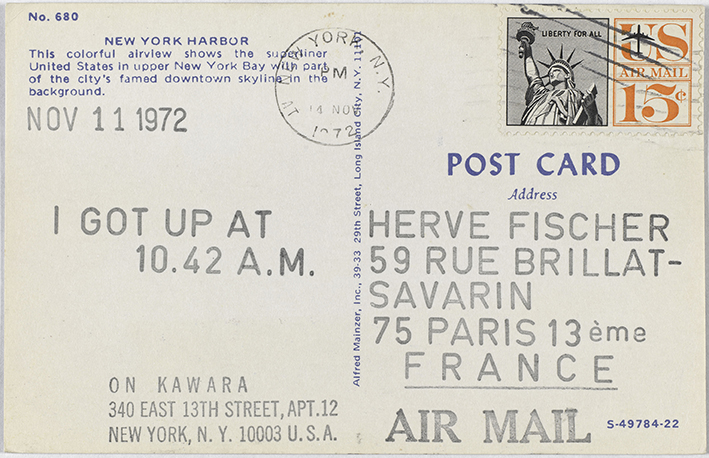
When Matisse set off to discover Polynesia, it was above all because of a need to renew his work by seeking out new sources of inspiration. The idea of an exhibition on travel comes from this story, among many others. We wanted to research and show what the journey informs beyond the unvarnished biography of artists. If it is interesting to know that Marcel Duchamp left for New York in 1915, and that On Kawara was there in 1972, what we wanted to take up here is above all the tangible works that resulted from these travels. For On Kawara, these were daily postcards that followed the rhythm of life, while for Marcel Duchamp, they were provocative works for US social circles.
In following these works, it becomes clear that the travels that inspired artists are at the origin of great advances in modern and contemporary art, which would never have taken place had they quietly stayed at home.M.
From Matisse to Zineb Sedira, the exhibition presents works created between the late 19th century to the present day. How has the perception of travel changed over this period?
C.P.
Is it a question of evolution? Or rather one of transformation, linked to very diverse ways of thinking, as well as the historical upheavals that took place during the 20th century? Gauguin, in his fascination for Polynesia, then the French Fauvist artists and the German founders of the Blaue Reiter (Klee, Kandinsky, Macke, etc.), who crossed the Mediterranean in search of other forms and a different kind of light, were driven by their desire to disrupt classical pictorial codes and to invent other ways of representation. Meanwhile, travel in the opposite direction from North Africa to France in the late 20th century was a response to a need to escape misery, poverty, lack of freedom, and political instability, in the hope of finding a different place, a future with opportunity, briefly a new and acceptable life.
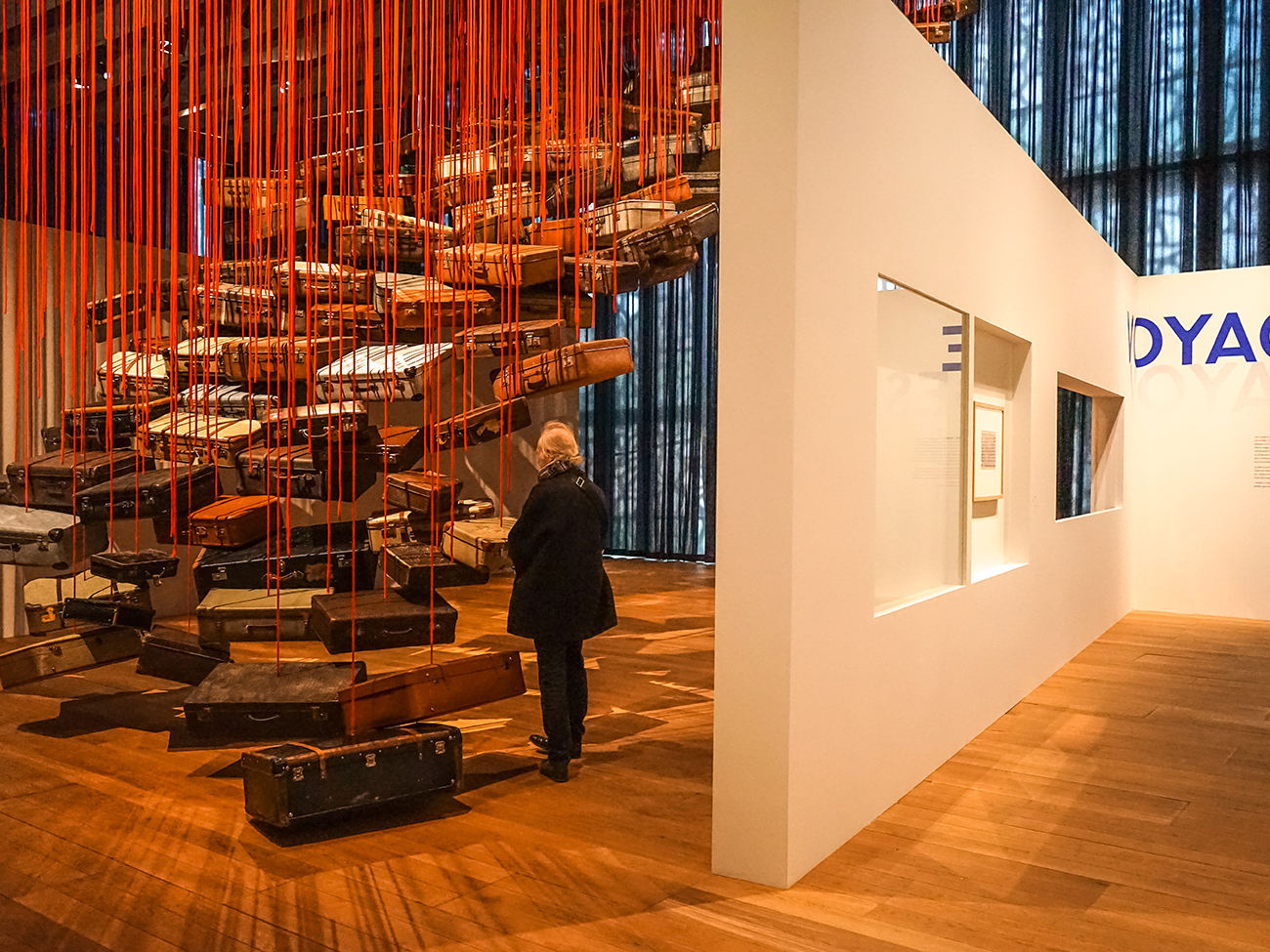
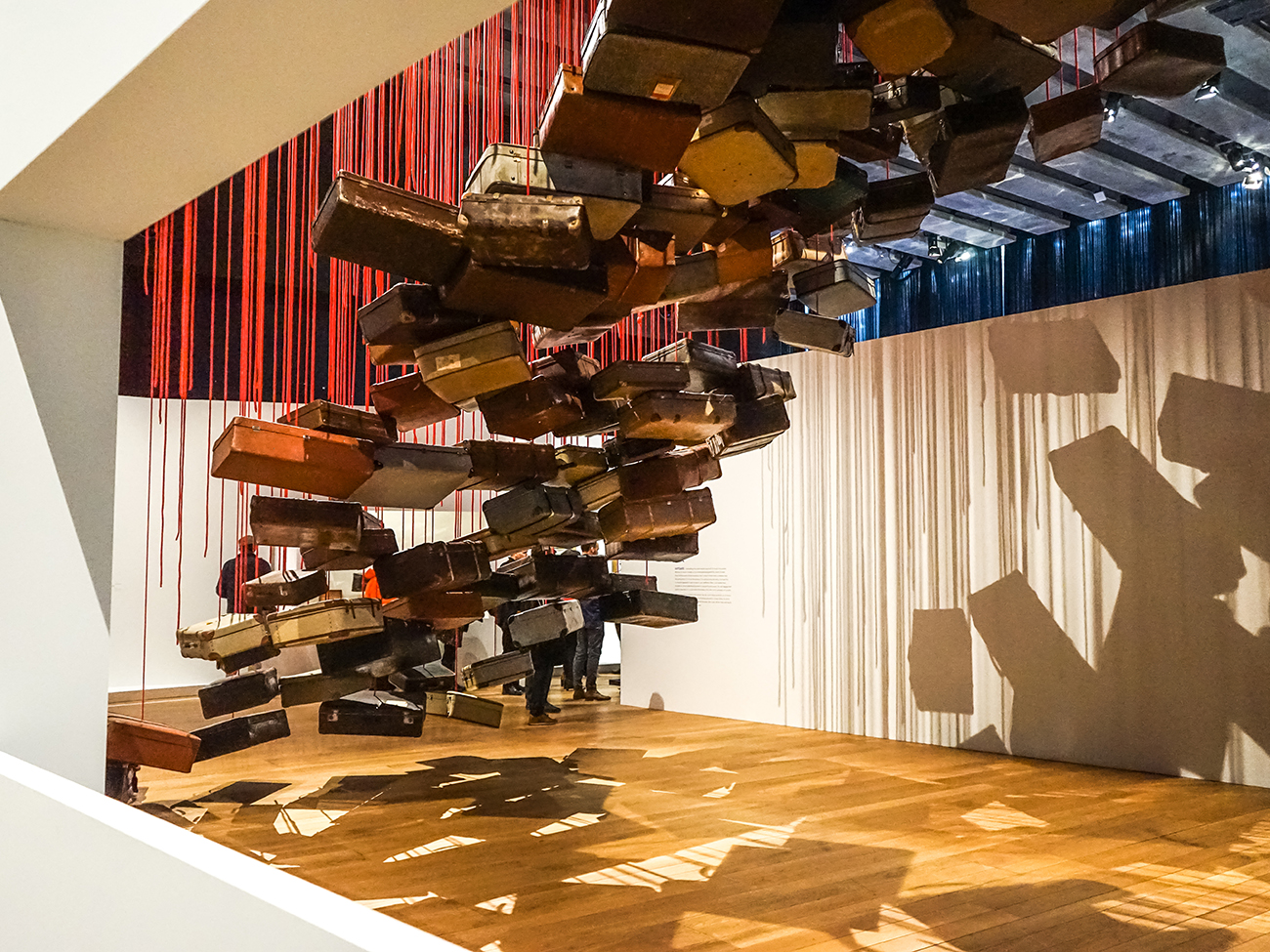
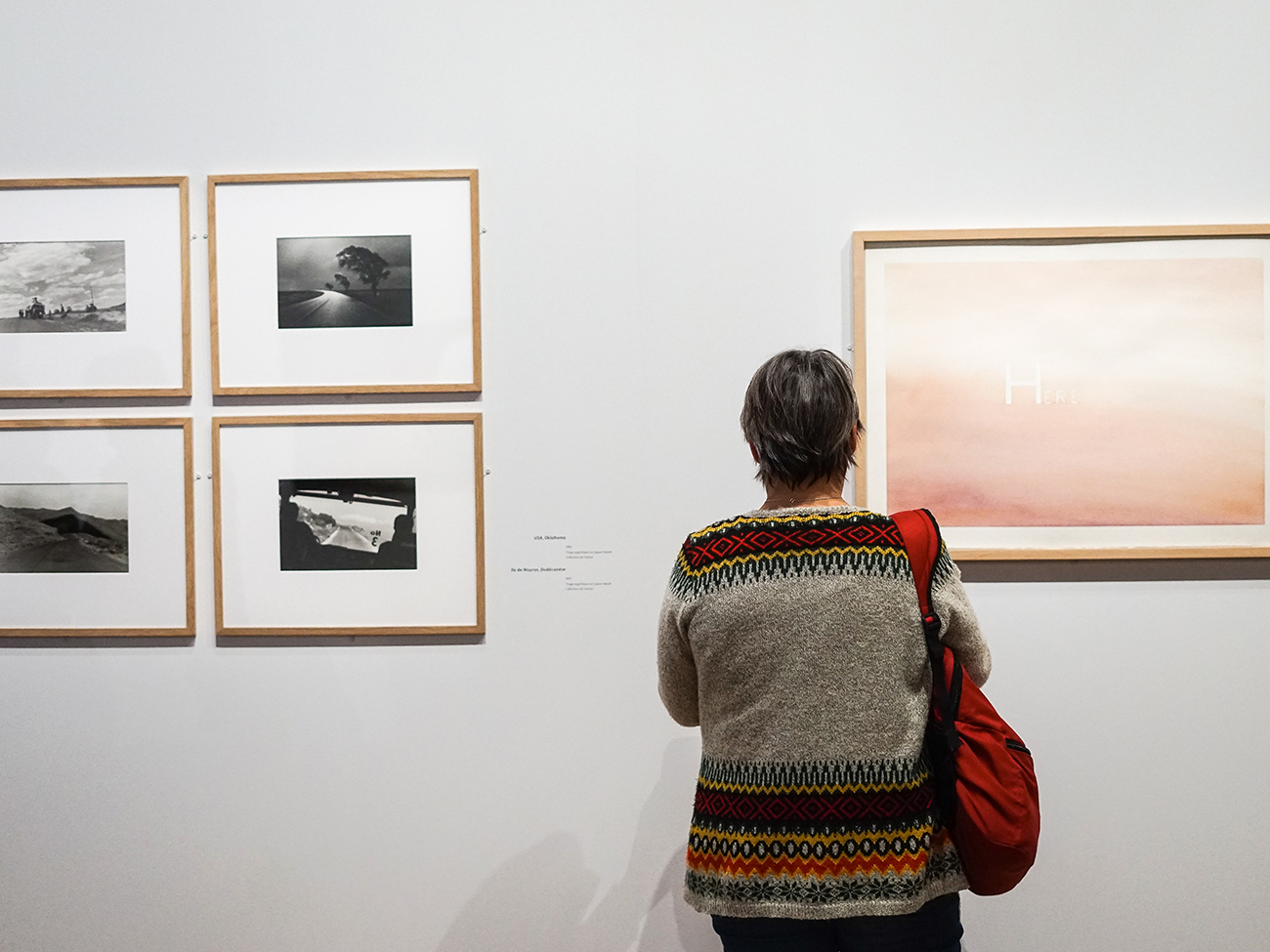
The Second World War forced many artists and intellectuals, who had sought refuge in the south of France, to flee the German invasion and head for the United States. There, the shared influences of surrealists and young American painting played a decisive role on both sides of the Atlantic, with the theme of the suitcase, a symbolic attribute of travel, becoming a source of metaphorical inspiration for certain artists such as Marcel Duchamp and his Box in a suitcase, designed as a portable museum around the condensed universe of the surrealist box or a cabinet of curiosities. Meanwhile, for her part, the Japanese artist Chiharu Shiota has seized this banal material to create a moving and poetic wave composed of a hundred second-hand suitcases suspended in space, which raises a recurring question in her work: do the memories we keep of the past build us up or rather do they prevent us from moving forward (From where we come and what we are)?The wandering, which became an artistic posture in the 1960s and 1970s and that was searching for a “nowhere” (“Always go where the roads on maps stop, where there is nothing left” – Bernard Plossu), was probably intended to find other avenues beyond utilitarianism. It inspired many artists to defend a type of art, where the concept of travel without purpose or precise destination, was in itself synonymous with an asserted freedom of artistic expression.
Later, and motivated by migratory reasons linked to the political and economic situation in their countries of origin, some artists such as Barthélémy Toguo took refuge in an endless exile – one founded on the idea of transit, an unceasing, open and altruistic movement; the fate of man; and the world marching forward.P.-N. B.
For artists, as for us all, it seems to me that the perception of travel has evolved in parallel with the perception of the planet in general. And this evolution follows two opposite directions. On the one hand, we have the possibility of discovering a world that has become bigger thanks to modes of transport capable of reaching anywhere, anytime. Plus, we have information that tells us of fires in the Amazon and diplomatic problems in Korea. And on the other, many distances have shrunk thanks to Internet networks that can instantly circumnavigate the globe. This is the ambiguity of a world that is becoming both larger and smaller.
Umberto Eco would say to his students that whereas research at the beginning of the last century consisted in searching libraries to find texts that would be useful to them, nowadays these are available everywhere in large quantities and that research today mainly involves sorting them. It seems to me that this advice corresponds quite well to the evolution of the artists’ work. While at the beginning of the century, travel was about exploring other places and cultures, and that the works of Klee and Kandinsky formed a part of their discoveries, today, Camille Henrot’s videos show the enormous influx of information available everywhere, testifying to the way in which she sorts and combines them to establish her own vision of our epoch.
What inspires artists and feeds their works has become an increasingly complex mix of views, people and places, thanks in part to travel.M.
What surprised and questioned you the most during your research for this exhibition?
C.P.
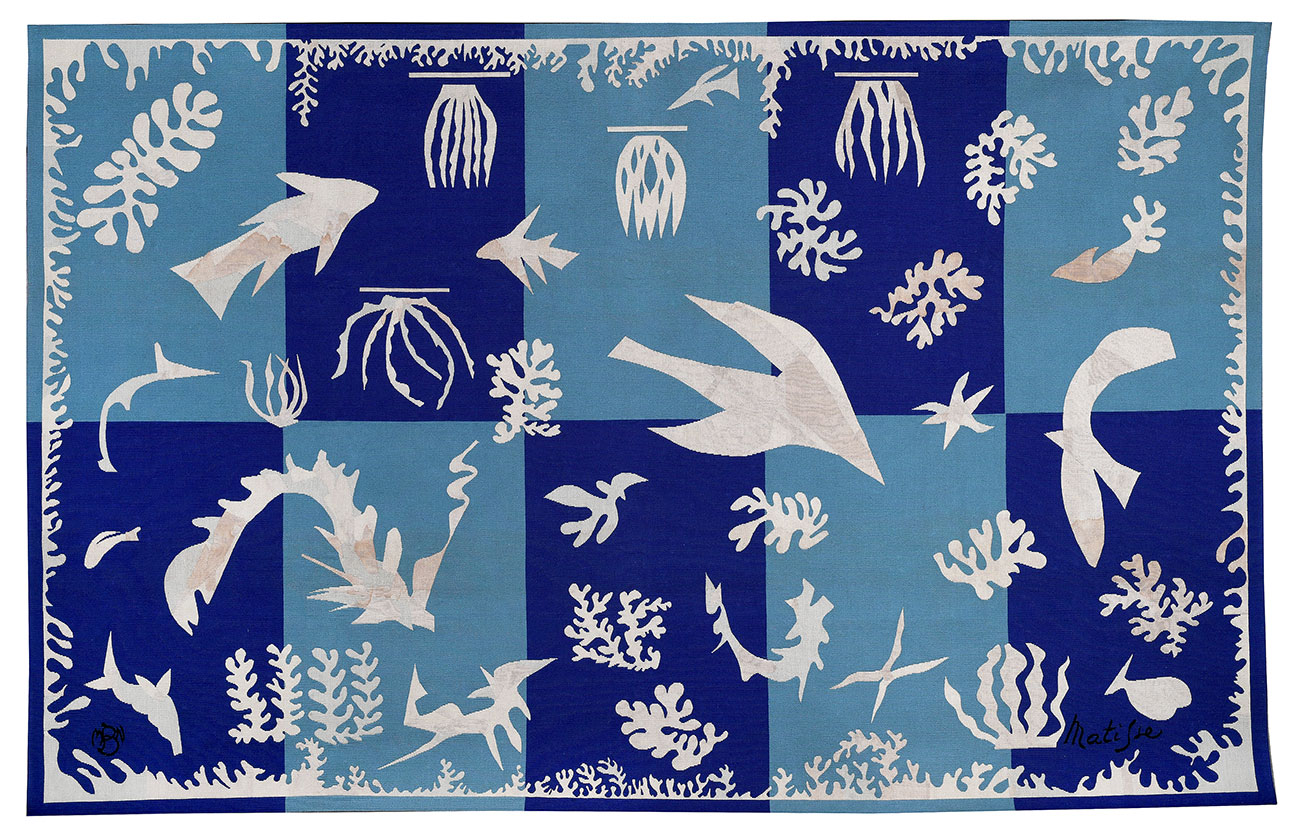
Even if this is often the case during research carried out around a theme, the most surprising thing about this exhibition is the incredible diversity of its visit route and the works that are exhibited along it. It is true that the subject and the period open up onto particularly rich historical, geographical and artistic perspectives. These offer an abundance of metaphorical evocations that show us to what extent travel in all of its forms has become a central issue in our civilisation. Artists have interpreted it in a thousand ways: what is the relationship between Marcel Duchamp’s Air de Paris and Henri Matisse’s Polynesia – between a pharmaceutical ampoule emptied of its contents and filled with the light and joyful air of the French capital, and these tapestries where large white birds surrounded by algae and corals symbolise the poetry of the Pacific archipelago? What are these if not two visions, two versions of the concept of the journey and of travel?
It is these symbolisations and inspirations that are so different from each other, which aroused our interest and often raised questions for us. From the beginning, our idea was to make visitors travel in space and time via artistic creativity. And undoubtedly, the geographical location of the Mucem in Marseille, built at the entrance to one of the largest ports of the Mediterranean, played a decisive role in the ideas we are aiming to convey.P.-N. B.
More than a surprise in the strict sense of the word, the setting up of this important series of works, which span over a century, across seas and continents, reveals a form of observation of the world, which can now be studied in retrospect. At a time when reflection on cultural appropriation is widely debated, the journeying in travel makes it possible to add many elements to this broad question. For example, how can we define the culture of a person such as Kandinsky, a graduate of Moscow’s Law School, who became an artist involved in Bauhaus in Germany and produced his later works in Paris? His work in Tunisia shows an artist with eyes wide open, who was inspired and influenced by everything he discovered wherever he went.
And Kandinsky is by no means the only one of the artists represented in this exhibition to have mixed several bases with his artistic culture. Before Polynesia, Gauguin was largely inspired by the discovery of Brittany and then Martinique. Barthélémy Toguo, who studied in Abidjan, Grenoble and Düsseldorf, now works half the time in Paris and the other in Bandjoun. Rather than appropriation, which is now violently criticised, it seems to me that this is a form of open sharing between all those who inhabit the same planet.
M.
What are the most remarkable works among the hundred or so pieces presented?
C.P.
The bringing together of the two tapestries by Henri Matisse – Polynésie le ciel and Polynésie la mer, which has never taken place to my knowledge, is one of the remarkable events that we are delighted to offer visitors to the exhibition. The artist was inspired to create the cardboard boxes of these late woven works 18 years after his trip to Tahiti They reveal the freedom of pure fantasy and happiness in life that Matisse always endeavoured to convey.
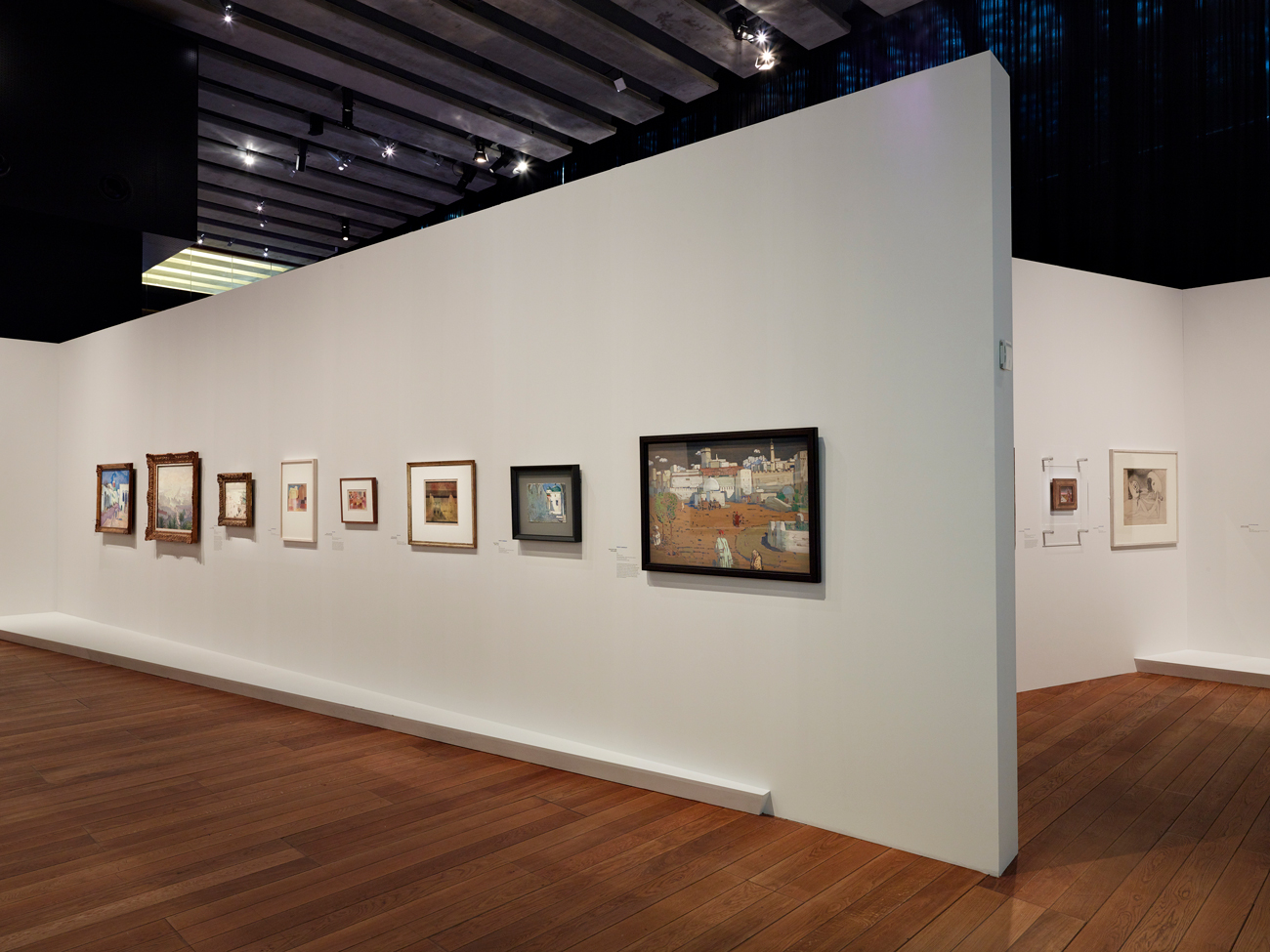
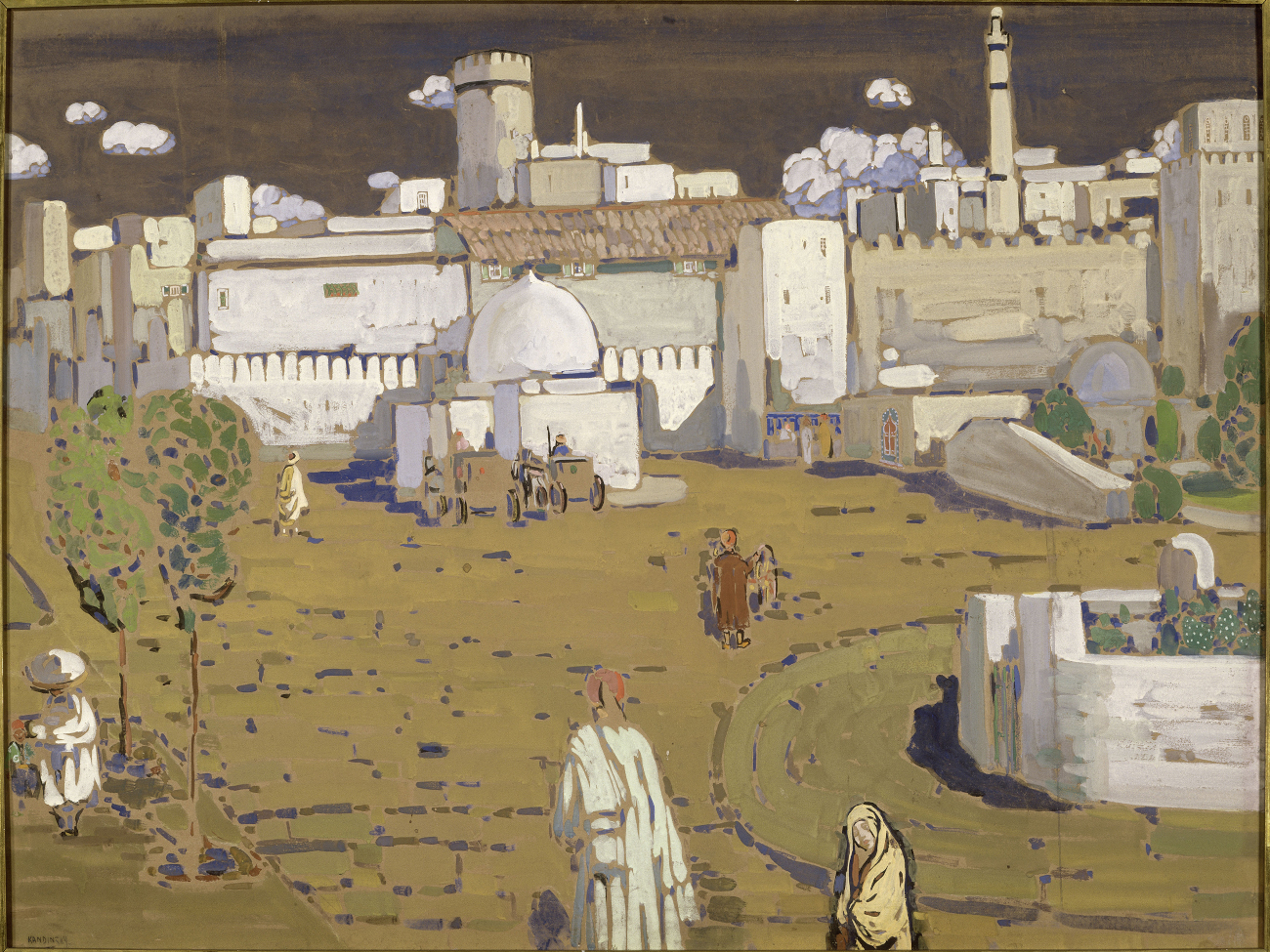
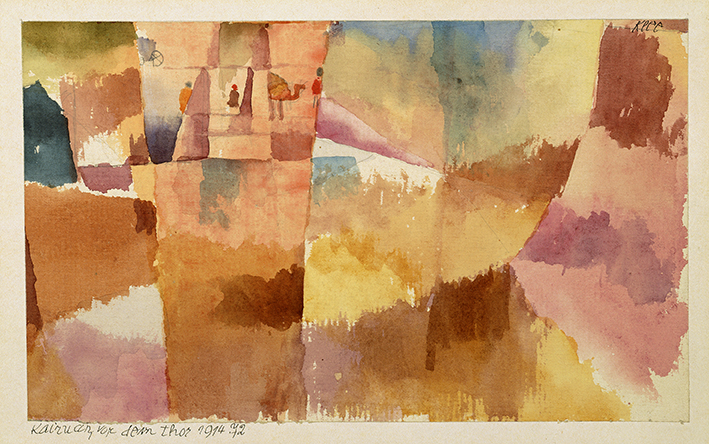
The paintings by Wassily Kandinsky (Arabische Stadt), Paul Klee (Before the Gates of Kairouan, Dünenlandschaft) and Henri Matisse (The Bay of Tangier) show the tremendous inspiration that travel in North Africa gave these artists, thus enriching their pictorial vocabulary.
Finally, mention must be made of the impressive and theatrical work of the Japanese artist Chiharu Shiota (Accumulation – Searching for the Destination), which occupies a space at the Mucem thanks to a network of intertwined red threads from which she hangs a hundred suitcases that are animated by a stormy wave.P.-N. B.
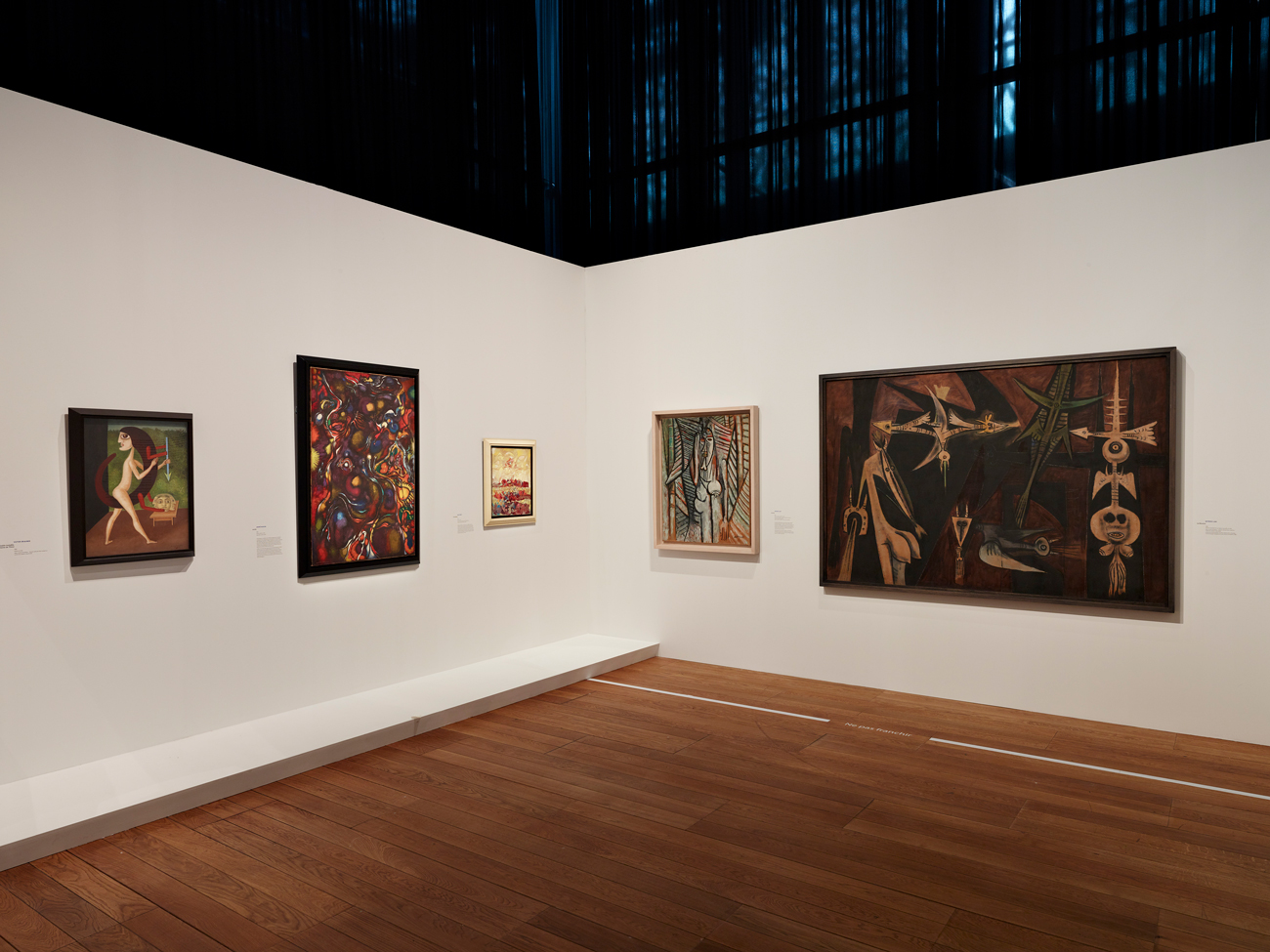
All these works are truly remarkable! They all correspond to genuine types of reflections, brought together under the theme of travel. Then, there are items that speak of what is personally attractive and specific to each artist. For instance, Victor Brauner’s work, Le Dernier Voyage, despite its small size, leaves me feeling deeply pensive. Brauner often worked on the image of the isolated or distorted eye, found here, before actually losing his left eye in a fight in 1938. He was therefore considered a premonitory artist and Le Dernier Voyage, produced just before the Second World War, seems to confirm this idea. There is a straight road towards an uncertain sunset, a barren land where only a factory chimney remains, and a traveller no longer knowing where to go. Brauner produces a hard, yet lucid, image of what threatens the world of his time. In a period of climate change, it seems to have found a new meaning.
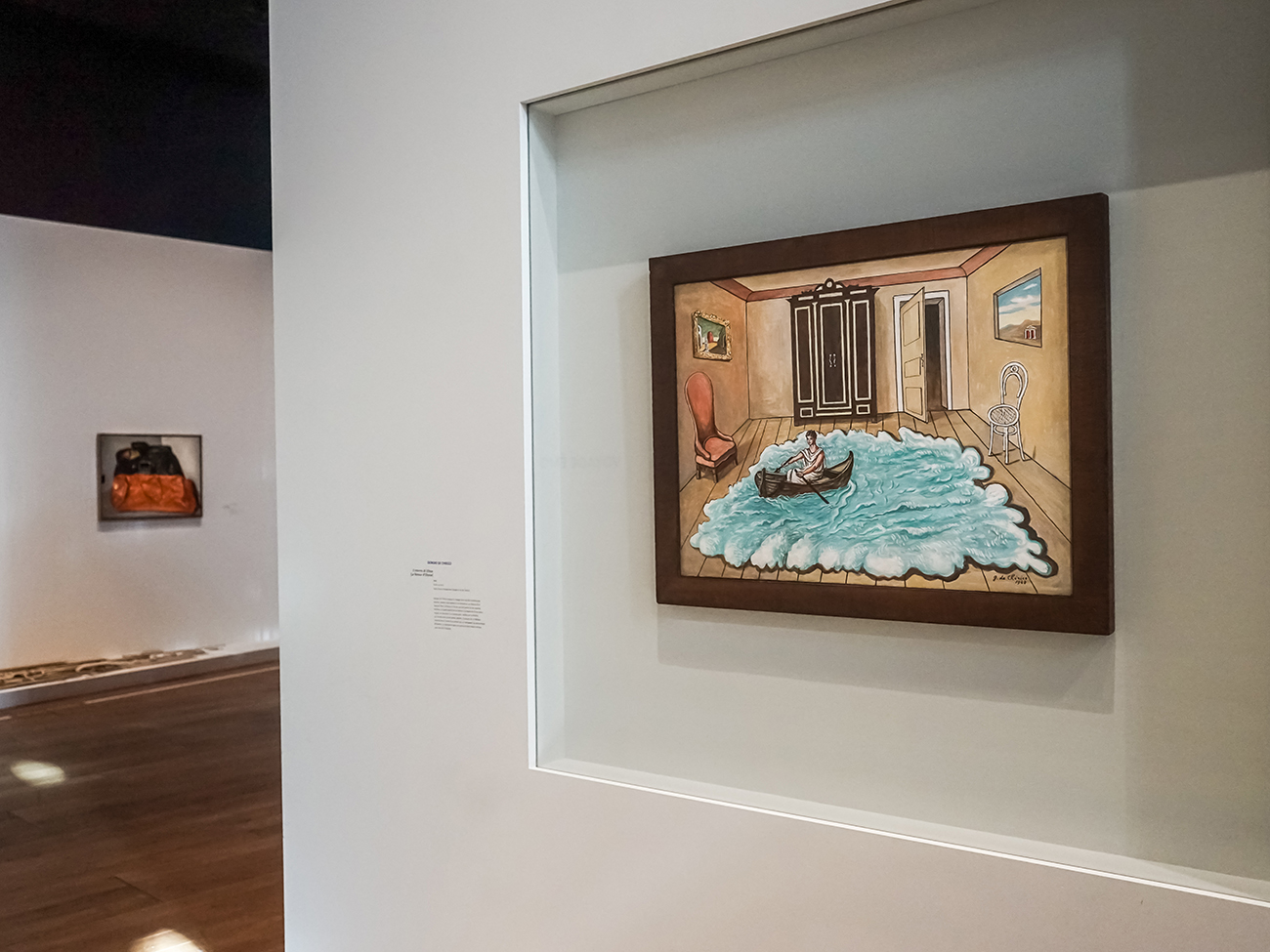
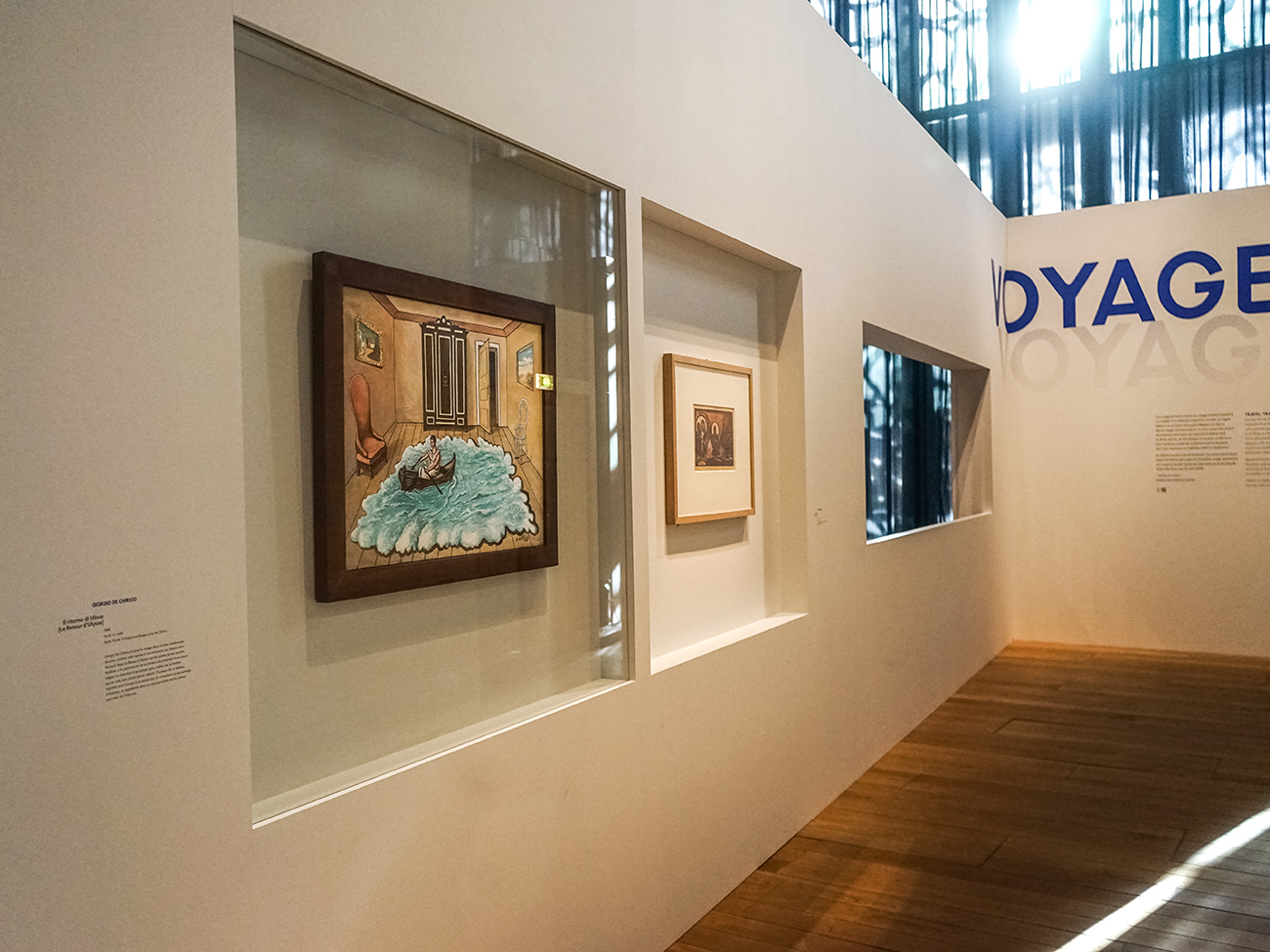
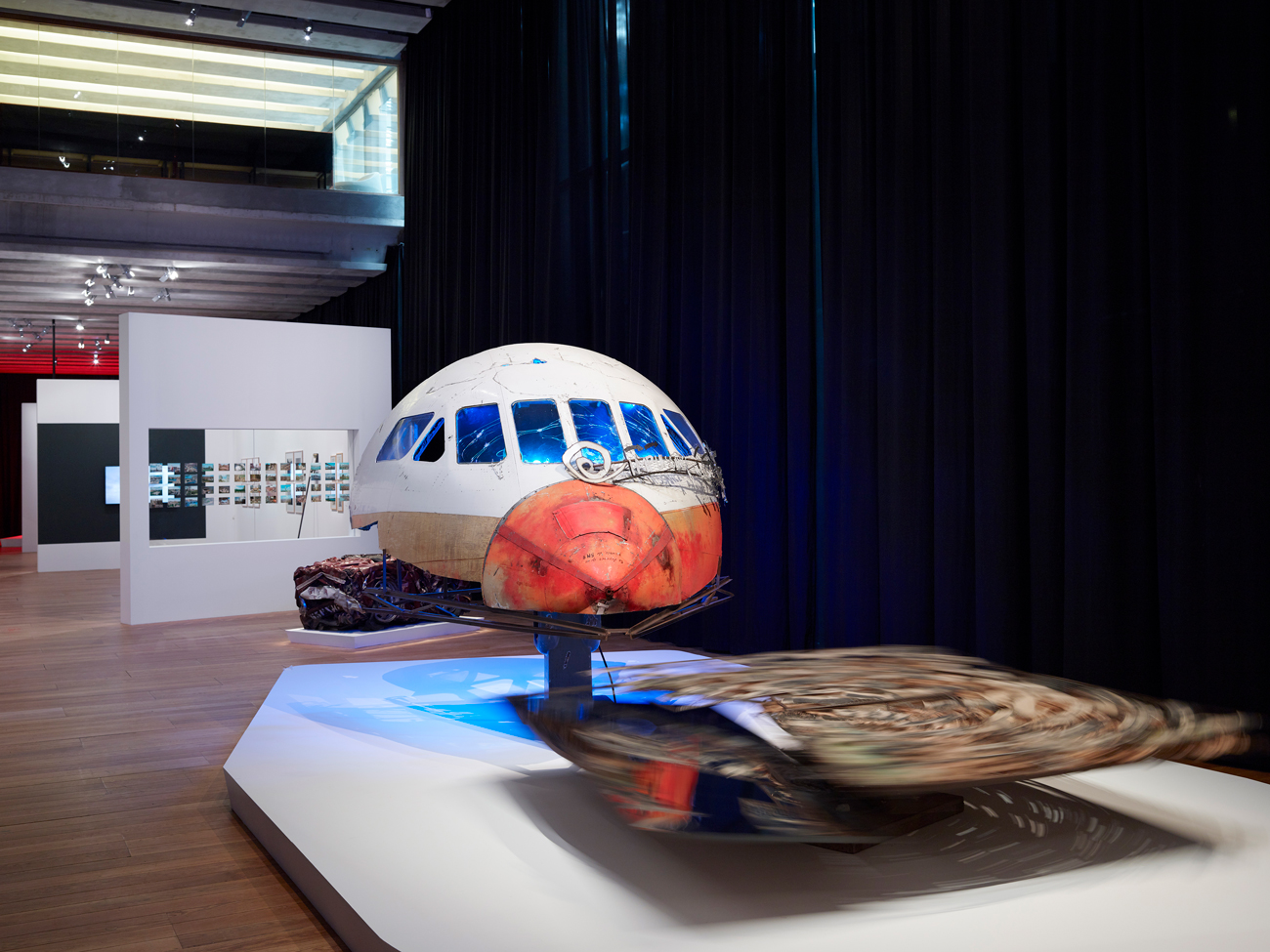
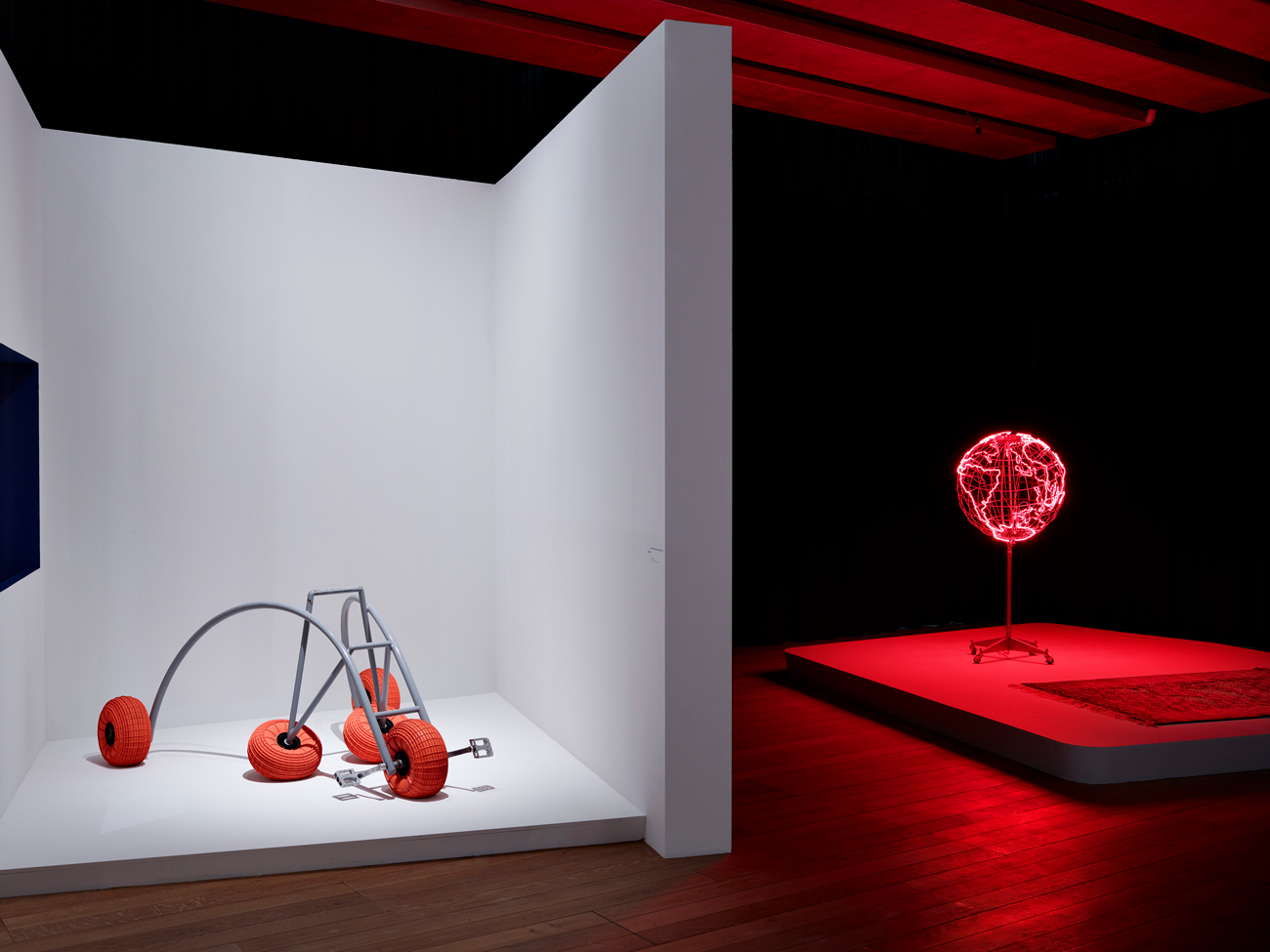
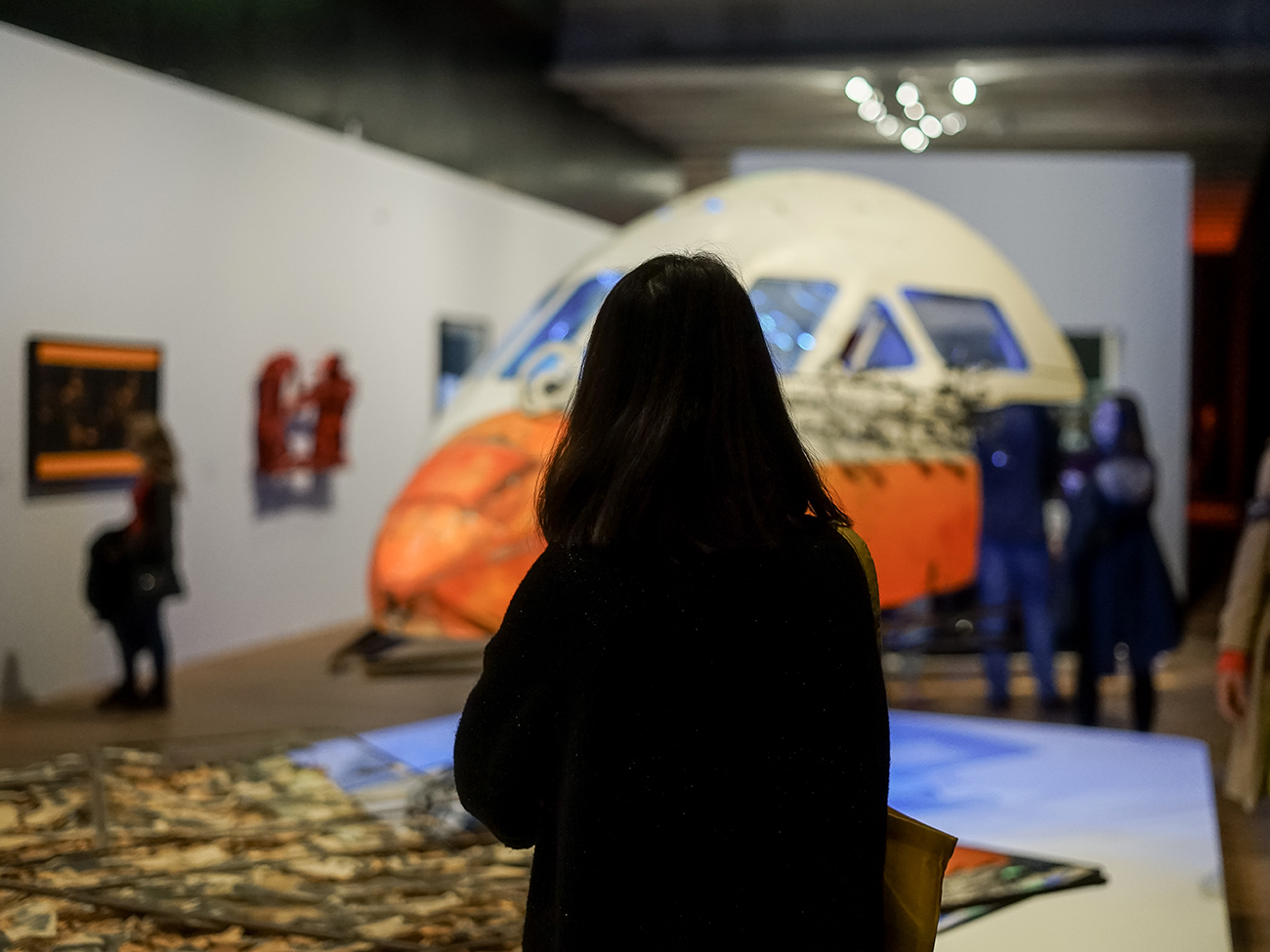
But one needn’t always be pessimistic, and fortunately there are many more happy works in this exhibition, such as Richard Baquié’s Cockpit, which invites us to let our thoughts fly in the air, or Giorgio De Chirico’s The Return of Ulysses, which seems to make fun of both Homer’s Odyssey and his own artistic journey – both seemingly stagnating on the living room floor.
With Henri Matisse, Marcel Duchamp, Andy Warhol, Richard Baquié… A voyage of discovery to new artistic worlds!
Whatever its starting idea (or point), whether that be a desire for sunshine or a wish for escape, flight, wandering, or exile, travel has always been a source of inspiration, influence and exchange for artists. The exhibition “Voyage
Voyages” offers a journey through these movements and their stories.
In this way and following in the footsteps of Paul Gauguin who, driven by a terrible need for the unknown, embarked on a voyage to Tahiti in 1891, we discover the inspiration that so many artists, including Wassily Kandinsky, Camille Henrot, Marcel Duchamp and Andreas Gursky have taken from this attraction for the unknown and the elsewhere that led them to renew their way of seeing the other and of representing the world.
Borders, migration, mass tourism… these days, questions about travel, exile and getting from one place to another are recurring themes in the act of creating art. The exhibition “Voyage Voyages” invites us to feel the creative immensity that finds a natural home at the Mucem and which, since it opened, has favoured a dialogue between cultures.
The exhibition presents some hundred works (paintings, sculptures, installations, drawings, photographs, videos) from private and public collections, in particular from those of the Centre Pompidou / Musée national d’art moderne and the modern and contemporary collections of the museums of Marseille.
The title of the exhibition is freely inspired by the song “Voyage, Voyage” (performed by Desireless in 1986). We thank its author, Jean-Michel Rivat, who kindly authorised its use.
—Curation :
Christine Poullain, Honorary director of Marseille museums
Pierre-Nicolas Bounakoff, Art historian and exhibition curator
—Scenography :
Floriane Pic and Joris Lipsch—Studio Matters
Interview with Christine Poullain and Pierre-Nicolas Bounakoff, exhibition curators
Mucem (M.)
Why did you choose to explore art history through the theme of travel?
Christine Poullain (C.P.)
It is exciting to show how a theme has inspired artists, and what forms and interpretations it has given them. Travel has always been a source of influences, exchanges and artistic developments. From the 16th century onwards, the Grand Tour of Italy was the first and most decisive in Western art. Made by travellers from Northern Europe, France and Spain, it had a profound impact on artistic movements throughout Europe. In the 20th century, the massive development of media, two world wars, migration and globalisation have transformed the notion of travel and the journey, thus becoming a central issue in the act of creative artistry.
From the crossing of the Mediterranean Sea to North Africa at the beginning of the last century by the likes of Matisse, Klee, Kandinsky and many others, to recent migratory phenomena, our aim is to study how the 20th and beginning of the 21st centuries have been marked by multiple movements brought about for very different reasons. These have led artists to invent a new conception of art and a new vision of the world, exploring all possible techniques and transforming the artistic landscape.Pierre-Nicolas Bounakoff (P.-N. B.)
There are many ways of travelling today, ranging from business travel to straightforward tourism, and these trips are seen as an important part of globalisation. In this context, it seemed pertinent to us to pause for a moment and consider what last century’s artists said about travel and what their contemporaries say of it today. In the collective image we have of it, it is quite common to associate an artist with a studio, in which we imagine them working alone and shut away. Our exhibition aims to show a very different reality.
When Matisse set off to discover Polynesia, it was above all because of a need to renew his work by seeking out new sources of inspiration. The idea of an exhibition on travel comes from this story, among many others. We wanted to research and show what the journey informs beyond the unvarnished biography of artists. If it is interesting to know that Marcel Duchamp left for New York in 1915, and that On Kawara was there in 1972, what we wanted to take up here is above all the tangible works that resulted from these travels. For On Kawara, these were daily postcards that followed the rhythm of life, while for Marcel Duchamp, they were provocative works for US social circles.
In following these works, it becomes clear that the travels that inspired artists are at the origin of great advances in modern and contemporary art, which would never have taken place had they quietly stayed at home.M.
From Matisse to Zineb Sedira, the exhibition presents works created between the late 19th century to the present day. How has the perception of travel changed over this period?
C.P.
Is it a question of evolution? Or rather one of transformation, linked to very diverse ways of thinking, as well as the historical upheavals that took place during the 20th century? Gauguin, in his fascination for Polynesia, then the French Fauvist artists and the German founders of the Blaue Reiter (Klee, Kandinsky, Macke, etc.), who crossed the Mediterranean in search of other forms and a different kind of light, were driven by their desire to disrupt classical pictorial codes and to invent other ways of representation. Meanwhile, travel in the opposite direction from North Africa to France in the late 20th century was a response to a need to escape misery, poverty, lack of freedom, and political instability, in the hope of finding a different place, a future with opportunity, briefly a new and acceptable life.
The Second World War forced many artists and intellectuals, who had sought refuge in the south of France, to flee the German invasion and head for the United States. There, the shared influences of surrealists and young American painting played a decisive role on both sides of the Atlantic, with the theme of the suitcase, a symbolic attribute of travel, becoming a source of metaphorical inspiration for certain artists such as Marcel Duchamp and his Box in a suitcase, designed as a portable museum around the condensed universe of the surrealist box or a cabinet of curiosities. Meanwhile, for her part, the Japanese artist Chiharu Shiota has seized this banal material to create a moving and poetic wave composed of a hundred second-hand suitcases suspended in space, which raises a recurring question in her work: do the memories we keep of the past build us up or rather do they prevent us from moving forward (From where we come and what we are)?The wandering, which became an artistic posture in the 1960s and 1970s and that was searching for a “nowhere” (“Always go where the roads on maps stop, where there is nothing left” – Bernard Plossu), was probably intended to find other avenues beyond utilitarianism. It inspired many artists to defend a type of art, where the concept of travel without purpose or precise destination, was in itself synonymous with an asserted freedom of artistic expression.
Later, and motivated by migratory reasons linked to the political and economic situation in their countries of origin, some artists such as Barthélémy Toguo took refuge in an endless exile – one founded on the idea of transit, an unceasing, open and altruistic movement; the fate of man; and the world marching forward.P.-N. B.
For artists, as for us all, it seems to me that the perception of travel has evolved in parallel with the perception of the planet in general. And this evolution follows two opposite directions. On the one hand, we have the possibility of discovering a world that has become bigger thanks to modes of transport capable of reaching anywhere, anytime. Plus, we have information that tells us of fires in the Amazon and diplomatic problems in Korea. And on the other, many distances have shrunk thanks to Internet networks that can instantly circumnavigate the globe. This is the ambiguity of a world that is becoming both larger and smaller.
Umberto Eco would say to his students that whereas research at the beginning of the last century consisted in searching libraries to find texts that would be useful to them, nowadays these are available everywhere in large quantities and that research today mainly involves sorting them. It seems to me that this advice corresponds quite well to the evolution of the artists’ work. While at the beginning of the century, travel was about exploring other places and cultures, and that the works of Klee and Kandinsky formed a part of their discoveries, today, Camille Henrot’s videos show the enormous influx of information available everywhere, testifying to the way in which she sorts and combines them to establish her own vision of our epoch.
What inspires artists and feeds their works has become an increasingly complex mix of views, people and places, thanks in part to travel.M.
What surprised and questioned you the most during your research for this exhibition?
C.P.
Even if this is often the case during research carried out around a theme, the most surprising thing about this exhibition is the incredible diversity of its visit route and the works that are exhibited along it. It is true that the subject and the period open up onto particularly rich historical, geographical and artistic perspectives. These offer an abundance of metaphorical evocations that show us to what extent travel in all of its forms has become a central issue in our civilisation. Artists have interpreted it in a thousand ways: what is the relationship between Marcel Duchamp’s Air de Paris and Henri Matisse’s Polynesia – between a pharmaceutical ampoule emptied of its contents and filled with the light and joyful air of the French capital, and these tapestries where large white birds surrounded by algae and corals symbolise the poetry of the Pacific archipelago? What are these if not two visions, two versions of the concept of the journey and of travel?
It is these symbolisations and inspirations that are so different from each other, which aroused our interest and often raised questions for us. From the beginning, our idea was to make visitors travel in space and time via artistic creativity. And undoubtedly, the geographical location of the Mucem in Marseille, built at the entrance to one of the largest ports of the Mediterranean, played a decisive role in the ideas we are aiming to convey.P.-N. B.
More than a surprise in the strict sense of the word, the setting up of this important series of works, which span over a century, across seas and continents, reveals a form of observation of the world, which can now be studied in retrospect. At a time when reflection on cultural appropriation is widely debated, the journeying in travel makes it possible to add many elements to this broad question. For example, how can we define the culture of a person such as Kandinsky, a graduate of Moscow’s Law School, who became an artist involved in Bauhaus in Germany and produced his later works in Paris? His work in Tunisia shows an artist with eyes wide open, who was inspired and influenced by everything he discovered wherever he went.
And Kandinsky is by no means the only one of the artists represented in this exhibition to have mixed several bases with his artistic culture. Before Polynesia, Gauguin was largely inspired by the discovery of Brittany and then Martinique. Barthélémy Toguo, who studied in Abidjan, Grenoble and Düsseldorf, now works half the time in Paris and the other in Bandjoun. Rather than appropriation, which is now violently criticised, it seems to me that this is a form of open sharing between all those who inhabit the same planet.
M.
What are the most remarkable works among the hundred or so pieces presented?
C.P.
The bringing together of the two tapestries by Henri Matisse – Polynésie le ciel and Polynésie la mer, which has never taken place to my knowledge, is one of the remarkable events that we are delighted to offer visitors to the exhibition. The artist was inspired to create the cardboard boxes of these late woven works 18 years after his trip to Tahiti They reveal the freedom of pure fantasy and happiness in life that Matisse always endeavoured to convey.
The paintings by Wassily Kandinsky (Arabische Stadt), Paul Klee (Before the Gates of Kairouan, Dünenlandschaft) and Henri Matisse (The Bay of Tangier) show the tremendous inspiration that travel in North Africa gave these artists, thus enriching their pictorial vocabulary.
Finally, mention must be made of the impressive and theatrical work of the Japanese artist Chiharu Shiota (Accumulation – Searching for the Destination), which occupies a space at the Mucem thanks to a network of intertwined red threads from which she hangs a hundred suitcases that are animated by a stormy wave.P.-N. B.
All these works are truly remarkable! They all correspond to genuine types of reflections, brought together under the theme of travel. Then, there are items that speak of what is personally attractive and specific to each artist. For instance, Victor Brauner’s work, Le Dernier Voyage, despite its small size, leaves me feeling deeply pensive. Brauner often worked on the image of the isolated or distorted eye, found here, before actually losing his left eye in a fight in 1938. He was therefore considered a premonitory artist and Le Dernier Voyage, produced just before the Second World War, seems to confirm this idea. There is a straight road towards an uncertain sunset, a barren land where only a factory chimney remains, and a traveller no longer knowing where to go. Brauner produces a hard, yet lucid, image of what threatens the world of his time. In a period of climate change, it seems to have found a new meaning.
But one needn’t always be pessimistic, and fortunately there are many more happy works in this exhibition, such as Richard Baquié’s Cockpit, which invites us to let our thoughts fly in the air, or Giorgio De Chirico’s The Return of Ulysses, which seems to make fun of both Homer’s Odyssey and his own artistic journey – both seemingly stagnating on the living room floor.