La Fabrique des illusions
Collection Fouad Debbas et commentaires contemporains
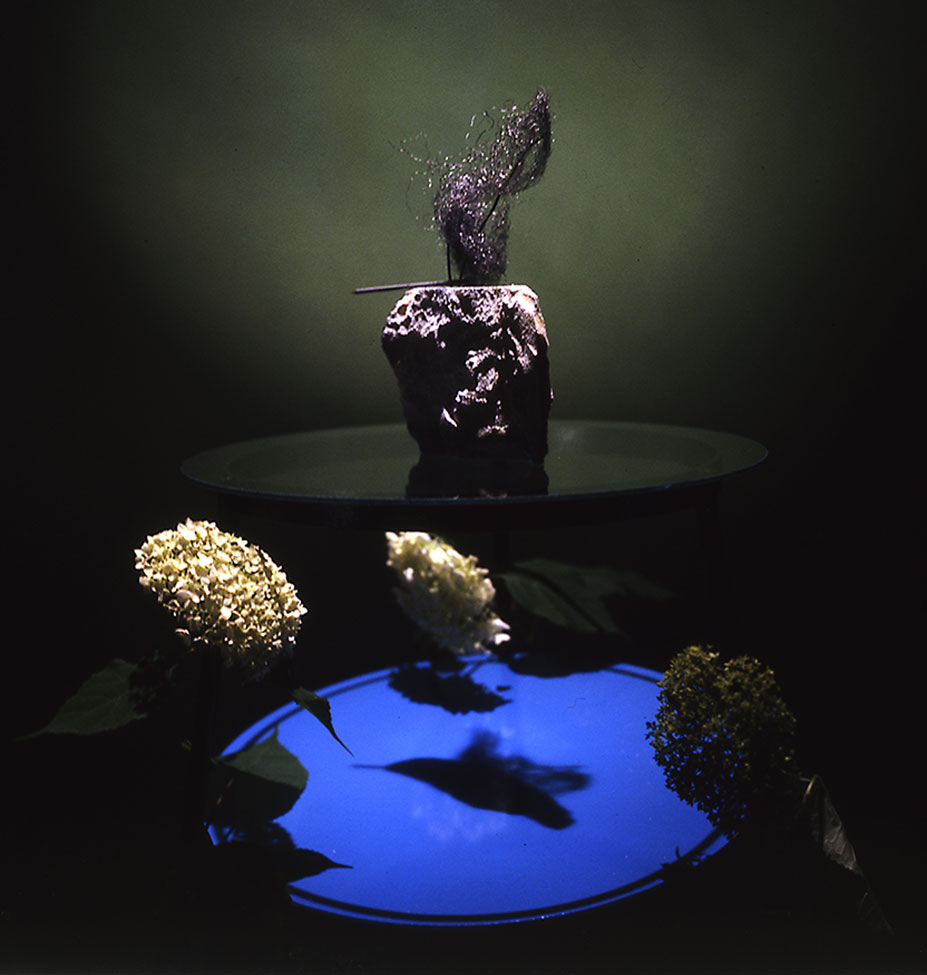
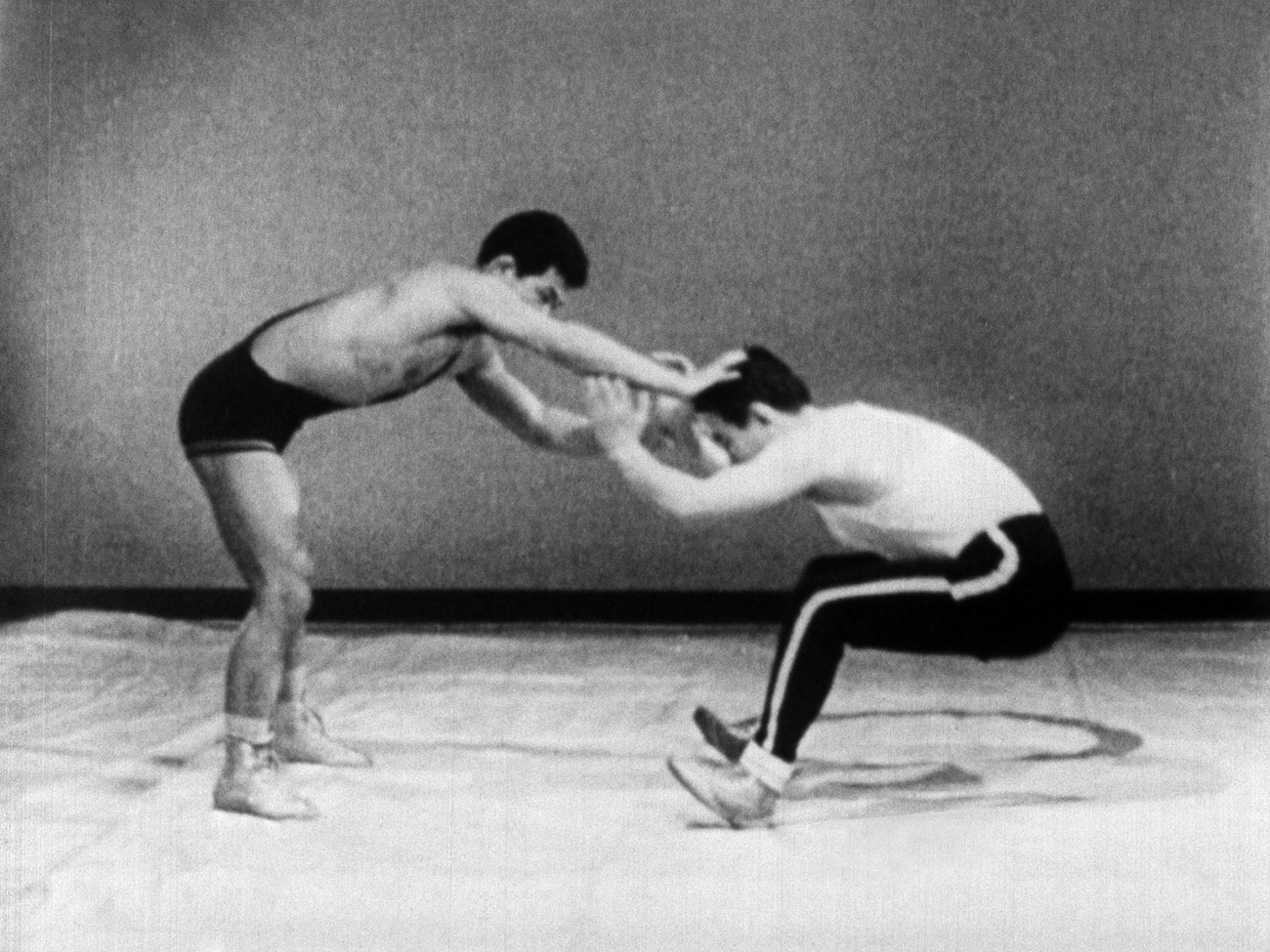
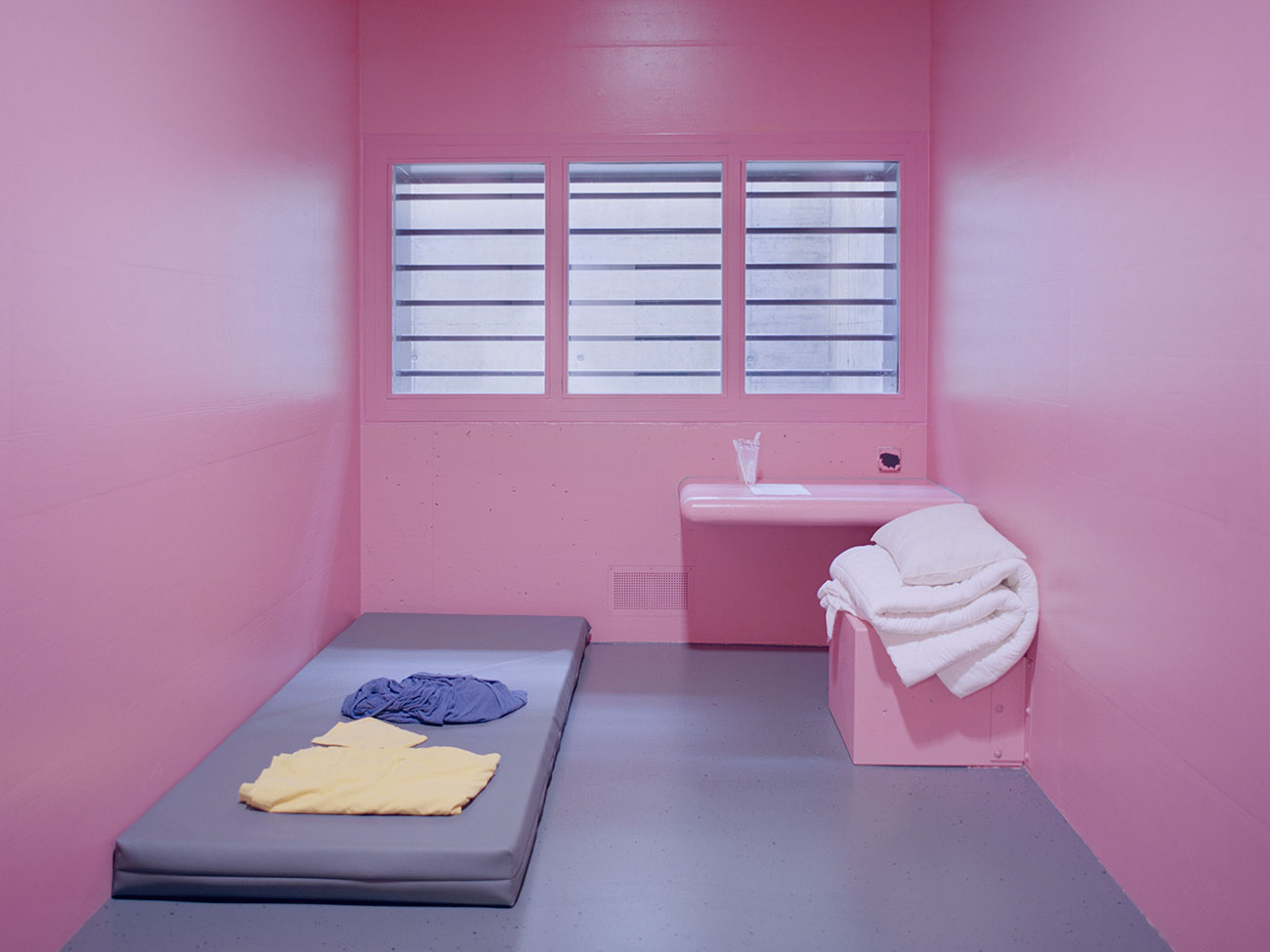
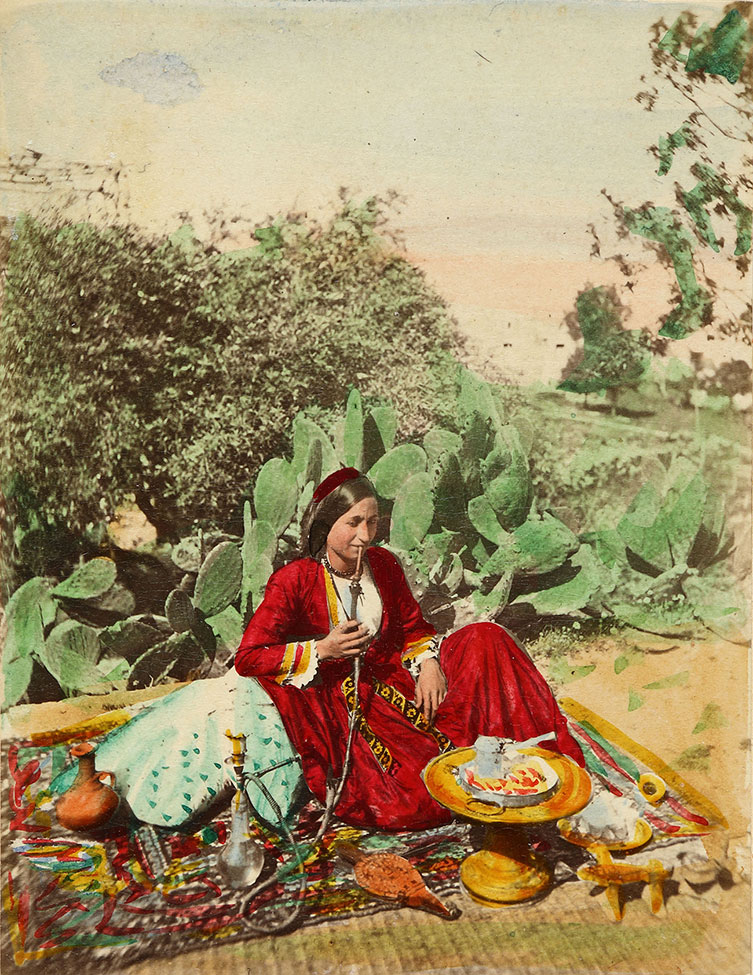
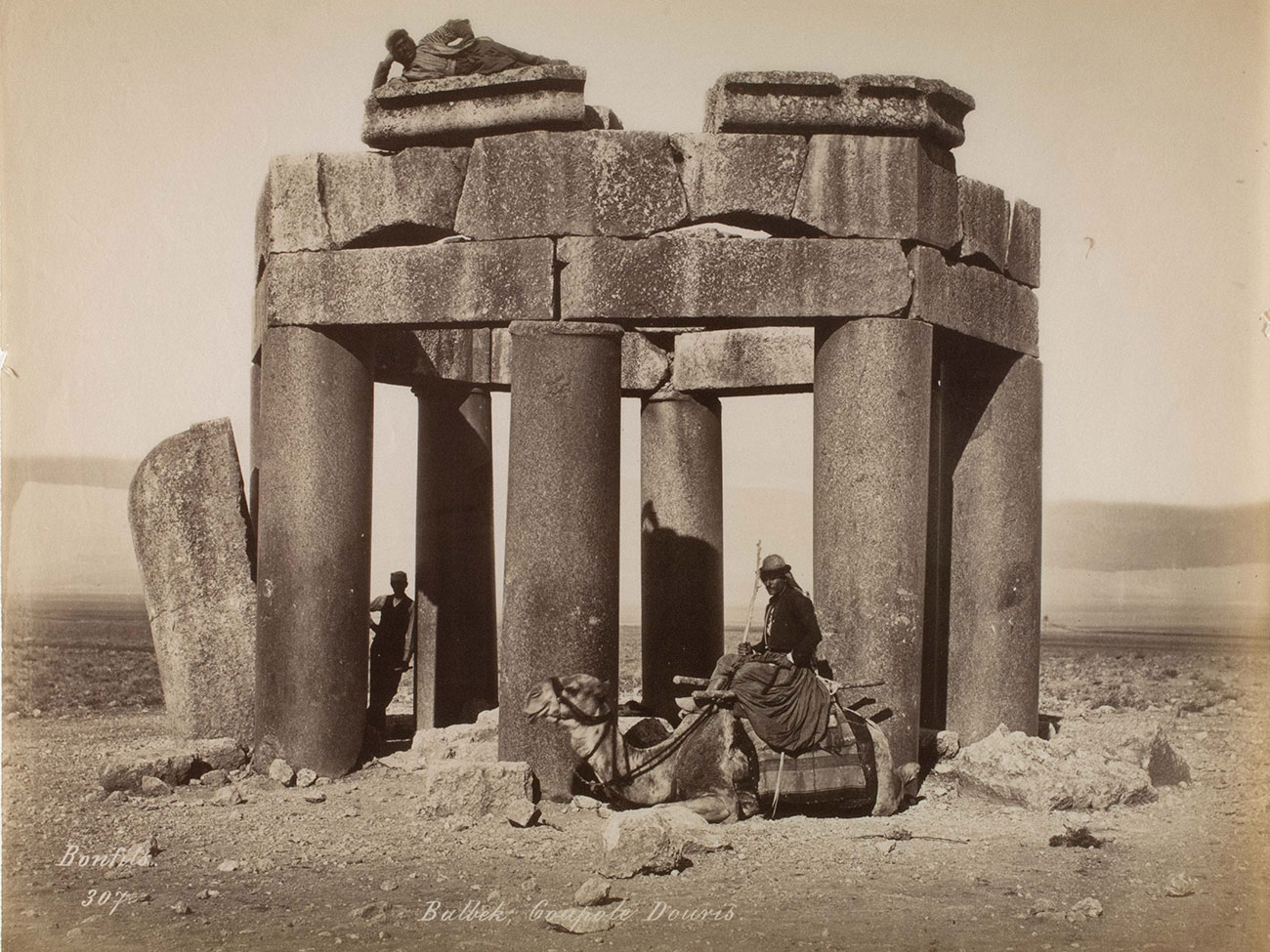
Photography and its history have only ever been questioned from a point of view that has been distorted by painting or, more broadly, the graphic arts. “La Fabrique des illusions” suggests a different way of thinking about the origins of this medium, particularly in its relations to theatre and the performing arts.
“Orientalist” photography can be just that special place for such a necessary overhaul, the latter having always functioned in the mode of simulation. In the 19th century, photography and theatre introduced new modes of representation. This was the time when “visual spectacle” was invented—a complex scenography with special effects and a mass of new images.
The perspective of photography in all visual performances during the 19th century, especially in theatre, is based on common codes and references that are understood by all. What is sought above all else is the illusion of life, best embodied by the scene and its effects. Photography is a theatrical space.
“La Fabrique des illusions” confronts the “Orientalist” photographs in the Fouad Debbas Collection with works by ten international contemporary artists: Mac Adams, Nadim Asfar, Vartan Avakian, Elina Brotherus, Daniele Genadry, Randa Mirza, Louis Quail, Angélique Stehli, Wiktoria Wojciechowska and Ali Zanjani. Overall, the exhibition presents some 300 pieces.
Since the 1970s, contemporary photography has offered an alternative to illusion.
It is well versed in gimmicks so as to be able to spot a ruse. The challenge of this exhibition thus lies in confronting deceptive beauty with true lies. In fact, “La Fabrique des illusions” sketches the picture of another history of photography—contradictory and, in short, illegitimate.
—Curation : François Cheval, Exhibition curator, co-founder and co-director of the Lianzhou Museum of Photography in China, co-founder of The Red Eye in charge of artistic direction of the Circulation(s) festival.
Yasmine Chemali, Head of modern and contemporary art collections at the Sursock Museum in Beirut, in charge of the Fouad Debbas Collection.
—Scenography : Jacques Aboukhaled
Interview with Yasmine Chemali and François Cheval, exhibition curators
Mucem (M.)
This exhibition proposes a new way of approaching the history of photography, in particular by highlighting its links to the theatre in the 19th century…
Yasmine Chemali and François Cheval (Y.C and F.C.)
It is a mistake to consider the history of photography as having been definitively written. For several reasons. First, given that its invention only dates back to 1816-1822, we are still far from being able to assess the full effects of such a complex medium, which is only two centuries old, yet has made itself universally accepted.
Secondly, for reasons that cannot be explained here, the official history was written by institutions and businesspeople—mostly Anglo-Saxon. All shared the idea of photography as the “legitimate daughter” of painting. This is, no more and no less, an exercise in the revision of the nature of the medium, the transformation of a multiple into a rare good—unique, even.
By linking photography and theatre, we propose another way to understand, not just the history of photography, but the establishment of the “society of spectacles”—a world seen as a perspective scenic space, a place of the representation of the absent, a belief in the totality…
M.
Why the choice to confront the Orientalist photographs in the Fouad Debbas Collection with contemporary works?
Y.C and F.C.
The Fouad Debbas funds alone can provide the elements needed for a reflection on the photographic object. However, thanks to contemporary works, we wanted to demonstrate that the questioning of the medium is more relevant than ever. One of the qualities of contemporary photography is to precisely question the medium and determine its limits and to position it in a world that determines modern representations.
Contemporary artists are better than legends at clarifying the demonstration of “curators”.M.
Which pieces from the Fouad Debbas Collection have particularly caught your attention, and how did you choose their contemporary “partner”?
Y.C and F.C.
No piece was selected for its “remarkable” character. One of the aims of the exhibition is to challenge the notions of “iconic” and “vintage”.
19th century photography, through its aesthetics, the choice of subjects, etc., has been able to establish its reputation on criteria of “beauty” that allow it to hide its real, ideological meanings. The Fouad Debbas fund can be analysed in terms of significant series. Authors’ “beautiful” sets are treated in the same way as the “chromos” considered vulgar by the history of photography.
What is important to understand through the 30,000 images collected by Fouad Debbas is the idea of seriality. Repeatable capture—offered by the mechanical image—goes hand in hand with the reproducibility of the medium—the logic of printing. It is a business logic. In direct link with the catalogue of views taken by the Maison Bonfils for example, the client then collects a series of images, a real one, that he believes he owns. Albumen prints, their enlargements, then their derivatives in the form of postcards or stereoscopic views, are all practices that bring 19th century photography closer to the contemporary. For us, there are no pairs, only confrontations, subjects of discussion between, for example, an Elina Brotherus and the figure of the cabotin that is Adrien Bonfils.
Photography and its history have only ever been questioned from a point of view that has been distorted by painting or, more broadly, the graphic arts. “La Fabrique des illusions” suggests a different way of thinking about the origins of this medium, particularly in its relations to theatre and the performing arts.
“Orientalist” photography can be just that special place for such a necessary overhaul, the latter having always functioned in the mode of simulation. In the 19th century, photography and theatre introduced new modes of representation. This was the time when “visual spectacle” was invented—a complex scenography with special effects and a mass of new images.
The perspective of photography in all visual performances during the 19th century, especially in theatre, is based on common codes and references that are understood by all. What is sought above all else is the illusion of life, best embodied by the scene and its effects. Photography is a theatrical space.
“La Fabrique des illusions” confronts the “Orientalist” photographs in the Fouad Debbas Collection with works by ten international contemporary artists: Mac Adams, Nadim Asfar, Vartan Avakian, Elina Brotherus, Daniele Genadry, Randa Mirza, Louis Quail, Angélique Stehli, Wiktoria Wojciechowska and Ali Zanjani. Overall, the exhibition presents some 300 pieces.
Since the 1970s, contemporary photography has offered an alternative to illusion.
It is well versed in gimmicks so as to be able to spot a ruse. The challenge of this exhibition thus lies in confronting deceptive beauty with true lies. In fact, “La Fabrique des illusions” sketches the picture of another history of photography—contradictory and, in short, illegitimate.
—Curation : François Cheval, Exhibition curator, co-founder and co-director of the Lianzhou Museum of Photography in China, co-founder of The Red Eye in charge of artistic direction of the Circulation(s) festival.
Yasmine Chemali, Head of modern and contemporary art collections at the Sursock Museum in Beirut, in charge of the Fouad Debbas Collection.
—Scenography : Jacques Aboukhaled
Interview with Yasmine Chemali and François Cheval, exhibition curators
Mucem (M.)
This exhibition proposes a new way of approaching the history of photography, in particular by highlighting its links to the theatre in the 19th century…
Yasmine Chemali and François Cheval (Y.C and F.C.)
It is a mistake to consider the history of photography as having been definitively written. For several reasons. First, given that its invention only dates back to 1816-1822, we are still far from being able to assess the full effects of such a complex medium, which is only two centuries old, yet has made itself universally accepted.
Secondly, for reasons that cannot be explained here, the official history was written by institutions and businesspeople—mostly Anglo-Saxon. All shared the idea of photography as the “legitimate daughter” of painting. This is, no more and no less, an exercise in the revision of the nature of the medium, the transformation of a multiple into a rare good—unique, even.
By linking photography and theatre, we propose another way to understand, not just the history of photography, but the establishment of the “society of spectacles”—a world seen as a perspective scenic space, a place of the representation of the absent, a belief in the totality…
M.
Why the choice to confront the Orientalist photographs in the Fouad Debbas Collection with contemporary works?
Y.C and F.C.
The Fouad Debbas funds alone can provide the elements needed for a reflection on the photographic object. However, thanks to contemporary works, we wanted to demonstrate that the questioning of the medium is more relevant than ever. One of the qualities of contemporary photography is to precisely question the medium and determine its limits and to position it in a world that determines modern representations.
Contemporary artists are better than legends at clarifying the demonstration of “curators”.M.
Which pieces from the Fouad Debbas Collection have particularly caught your attention, and how did you choose their contemporary “partner”?
Y.C and F.C.
No piece was selected for its “remarkable” character. One of the aims of the exhibition is to challenge the notions of “iconic” and “vintage”.
19th century photography, through its aesthetics, the choice of subjects, etc., has been able to establish its reputation on criteria of “beauty” that allow it to hide its real, ideological meanings. The Fouad Debbas fund can be analysed in terms of significant series. Authors’ “beautiful” sets are treated in the same way as the “chromos” considered vulgar by the history of photography.
What is important to understand through the 30,000 images collected by Fouad Debbas is the idea of seriality. Repeatable capture—offered by the mechanical image—goes hand in hand with the reproducibility of the medium—the logic of printing. It is a business logic. In direct link with the catalogue of views taken by the Maison Bonfils for example, the client then collects a series of images, a real one, that he believes he owns. Albumen prints, their enlargements, then their derivatives in the form of postcards or stereoscopic views, are all practices that bring 19th century photography closer to the contemporary. For us, there are no pairs, only confrontations, subjects of discussion between, for example, an Elina Brotherus and the figure of the cabotin that is Adrien Bonfils.