Anne-Marie Filaire
Temporary security zone



The possibility of images
For more than twenty years Anne-Marie Filaire has been building a body of work that is dense, engaged, rigorous, and monumental. Her first series, made in the 90s in her native region of Auvergne, opened her to the subject of landscapes, leading her on a longterm personal and photographic quest.
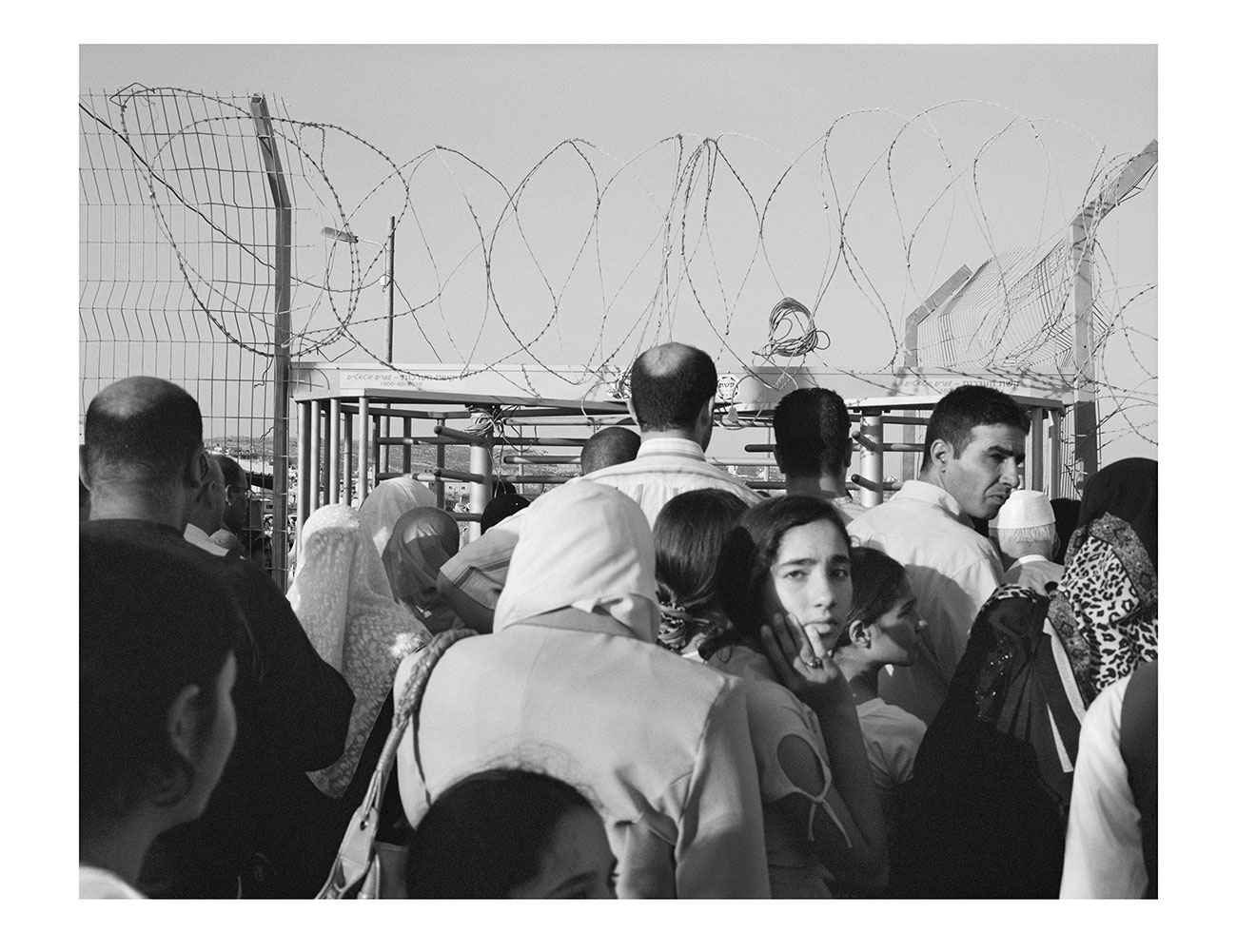
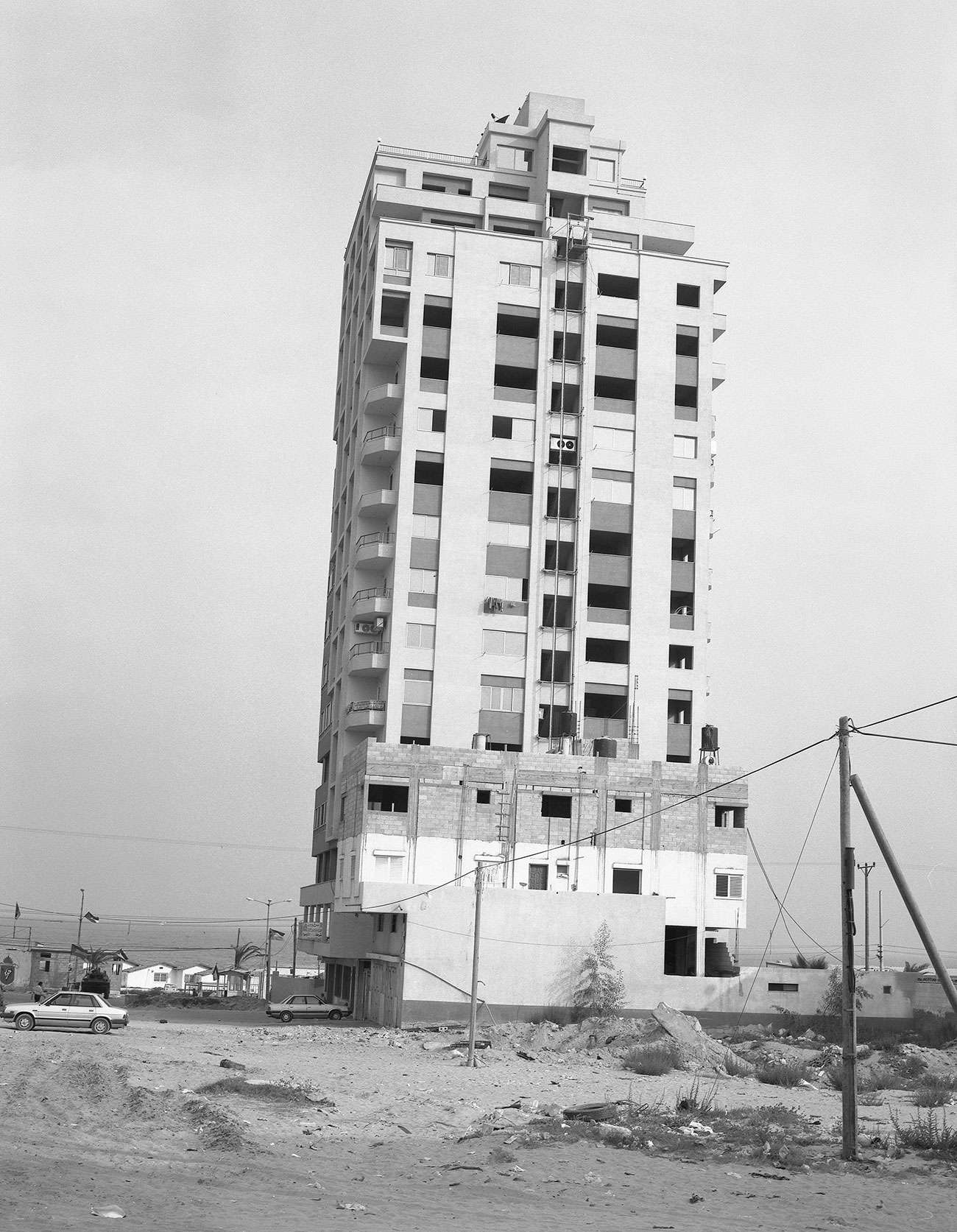
In 1999, she headed to the Near East and East Africa. Israel-Palestine, Lebanon, Eritrea, and Yemen would be the terrain of her investigations for more than ten years. By moving through the most remote areas, she turns her gaze on the universal enormity of territories charged with history. Attentive to the scars and ravages of infinite time, she collects the signs searching for hints inscribed in the hollows. The missing images that she brings back call into question the possibility of representing un-representable spaces, borders, zones of contact and separation, between which she delivers the memory and the trace.
But how can we represent the reality of a landscape, when it is battered by the upheavals of interminable identity, territorial, and economic wars? How can we grasp the stigma of the past in the face of a contemporary history that is just being written?
Anne-Marie Filaire is not just an observer of the territories that concern her. Engaged in fieldwork, without ever backing away from the risks such an undertaking implies, she brings this experience to the limits of her intimate relationship with the landscape. Through the very act of taking the shot, the position and the rigor she imposes on her images, the perspective is constructed in all its severity and truth.
In this permanent movement between time and space, between history and the present, sounds an underlying violence. Far from the blinding moments of conflict, the distant horizons encounter the confinement of inextricable political situations.
Thus Anne-Marie Filaire offers us her own currency: that of the possibility of images, and with it a possibility of existence in invisible territories.
Fannie Escoulen Exhibition curator
My experience with landscapes began in the early 90s in Auvergne. I was subsequently involved in a major mission that the Ministry of the Environment implemented in 1992: a photographic observatory of the landscape, whose goal (documentary aim) was to record the evolution of landscapes over time, and to set up archives for the national territory. In an informal manner, I have taken this process of observation and documentation to a Middle East and the Red Sea troubled by history and violence.
Anne-Marie Filaire
Interview with Anne-Marie Filaire
Mucem (M)
How does your work differ from that of a photojournalist or war correspondent?
Anne-Marie Filaire (AMF)
I did not go looking for situations in countries at war. I went to see landscapes, desert countries that spoke to me, that seemed to respond to the questions I was asking myself about the meaning of my life. A sort of blank page for understanding, aside from the people, conflicts, and everything that troubled me. I am an artist and sometimes I traverse the same terrain as the media—in war zones—but I do not work in the same timeframe. I settle-in long-term while the journalists relay information instantaneously. I have no obligation to return. While the approach is different, it was nonetheless the press, Libération, which first disseminated my work because the political dimension interested them. Before going into the field, there is work to do, preparations, and the images that I produce are highly constructed. The light and the violence are the beauty that I came looking for.
M
Beauty… in these hostile places?
AMF
If beauty exorcises violence, that’s what I wanted to photograph. Time is a fundamental aspect of your work. Evident, especially, in your series photographed between 2004 and 2007 in Jerusalem… During the construction of the wall in Jerusalem, I came regularly over three years, to do field surveys, to photograph the sites in a reoccurring manner, and to document this period when the space was closed. I settled-in over time. Remember, I was already doing this technical observation work on the landscape in France for the Mission de l’Observatoire Photographique du Paysage (photographic observatory of the landscape). The construction of the wall was a measure of the suffering, an indelible mark.
M
Why this fascination with borders?
AMF
The border- this is to know what belongs to me, what does not belong to me, where my place is and where it is not.
The possibility of images
For more than twenty years Anne-Marie Filaire has been building a body of work that is dense, engaged, rigorous, and monumental. Her first series, made in the 90s in her native region of Auvergne, opened her to the subject of landscapes, leading her on a longterm personal and photographic quest.
In 1999, she headed to the Near East and East Africa. Israel-Palestine, Lebanon, Eritrea, and Yemen would be the terrain of her investigations for more than ten years. By moving through the most remote areas, she turns her gaze on the universal enormity of territories charged with history. Attentive to the scars and ravages of infinite time, she collects the signs searching for hints inscribed in the hollows. The missing images that she brings back call into question the possibility of representing un-representable spaces, borders, zones of contact and separation, between which she delivers the memory and the trace.
But how can we represent the reality of a landscape, when it is battered by the upheavals of interminable identity, territorial, and economic wars? How can we grasp the stigma of the past in the face of a contemporary history that is just being written?
Anne-Marie Filaire is not just an observer of the territories that concern her. Engaged in fieldwork, without ever backing away from the risks such an undertaking implies, she brings this experience to the limits of her intimate relationship with the landscape. Through the very act of taking the shot, the position and the rigor she imposes on her images, the perspective is constructed in all its severity and truth.
In this permanent movement between time and space, between history and the present, sounds an underlying violence. Far from the blinding moments of conflict, the distant horizons encounter the confinement of inextricable political situations.
Thus Anne-Marie Filaire offers us her own currency: that of the possibility of images, and with it a possibility of existence in invisible territories.
Fannie Escoulen Exhibition curator
My experience with landscapes began in the early 90s in Auvergne. I was subsequently involved in a major mission that the Ministry of the Environment implemented in 1992: a photographic observatory of the landscape, whose goal (documentary aim) was to record the evolution of landscapes over time, and to set up archives for the national territory. In an informal manner, I have taken this process of observation and documentation to a Middle East and the Red Sea troubled by history and violence.
Anne-Marie Filaire
Interview with Anne-Marie Filaire
Mucem (M)
How does your work differ from that of a photojournalist or war correspondent?
Anne-Marie Filaire (AMF)
I did not go looking for situations in countries at war. I went to see landscapes, desert countries that spoke to me, that seemed to respond to the questions I was asking myself about the meaning of my life. A sort of blank page for understanding, aside from the people, conflicts, and everything that troubled me. I am an artist and sometimes I traverse the same terrain as the media—in war zones—but I do not work in the same timeframe. I settle-in long-term while the journalists relay information instantaneously. I have no obligation to return. While the approach is different, it was nonetheless the press, Libération, which first disseminated my work because the political dimension interested them. Before going into the field, there is work to do, preparations, and the images that I produce are highly constructed. The light and the violence are the beauty that I came looking for.
M
Beauty… in these hostile places?
AMF
If beauty exorcises violence, that’s what I wanted to photograph. Time is a fundamental aspect of your work. Evident, especially, in your series photographed between 2004 and 2007 in Jerusalem… During the construction of the wall in Jerusalem, I came regularly over three years, to do field surveys, to photograph the sites in a reoccurring manner, and to document this period when the space was closed. I settled-in over time. Remember, I was already doing this technical observation work on the landscape in France for the Mission de l’Observatoire Photographique du Paysage (photographic observatory of the landscape). The construction of the wall was a measure of the suffering, an indelible mark.
M
Why this fascination with borders?
AMF
The border- this is to know what belongs to me, what does not belong to me, where my place is and where it is not.