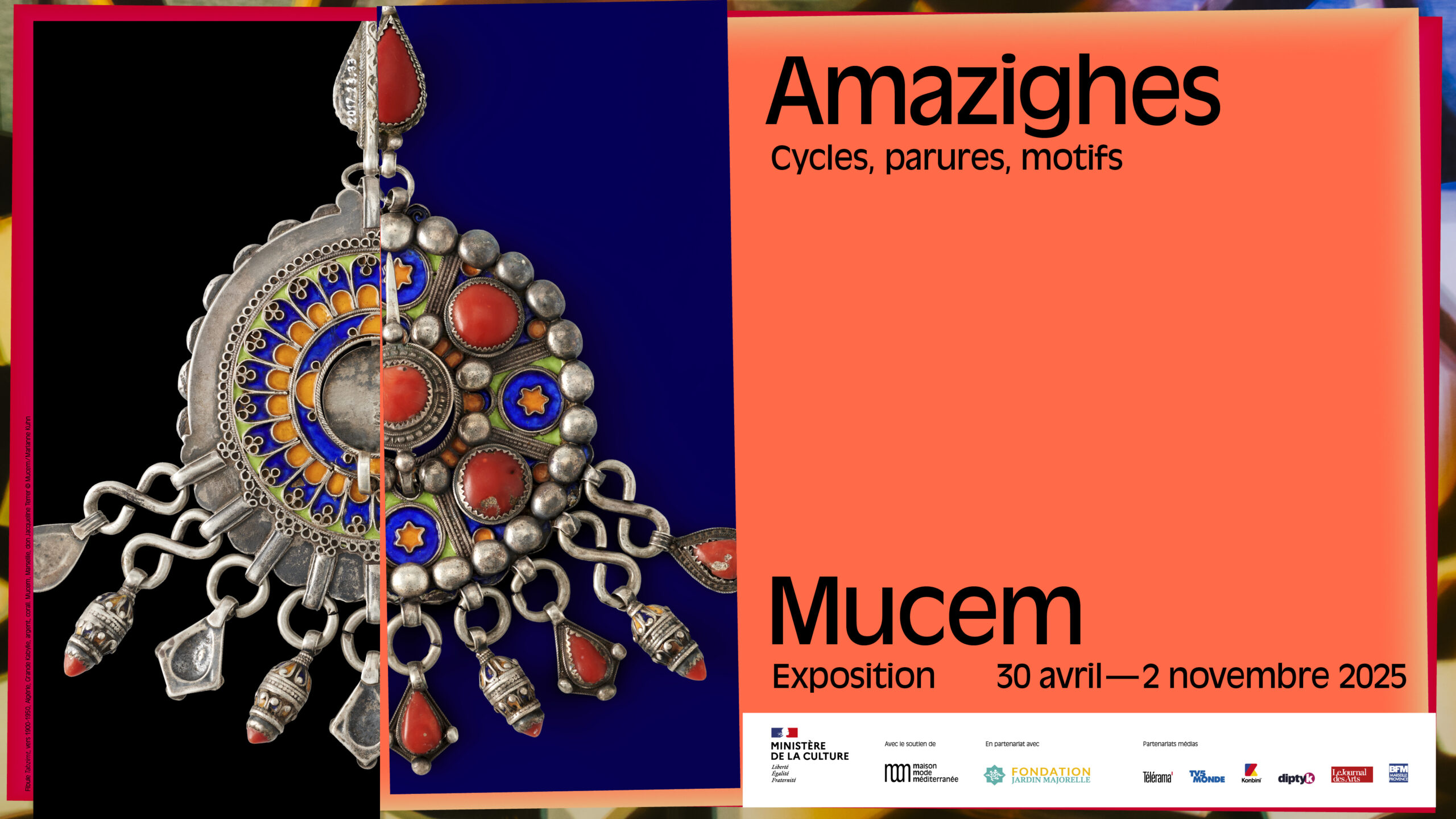
Bande Annonce de l'exposition "Amazighes"
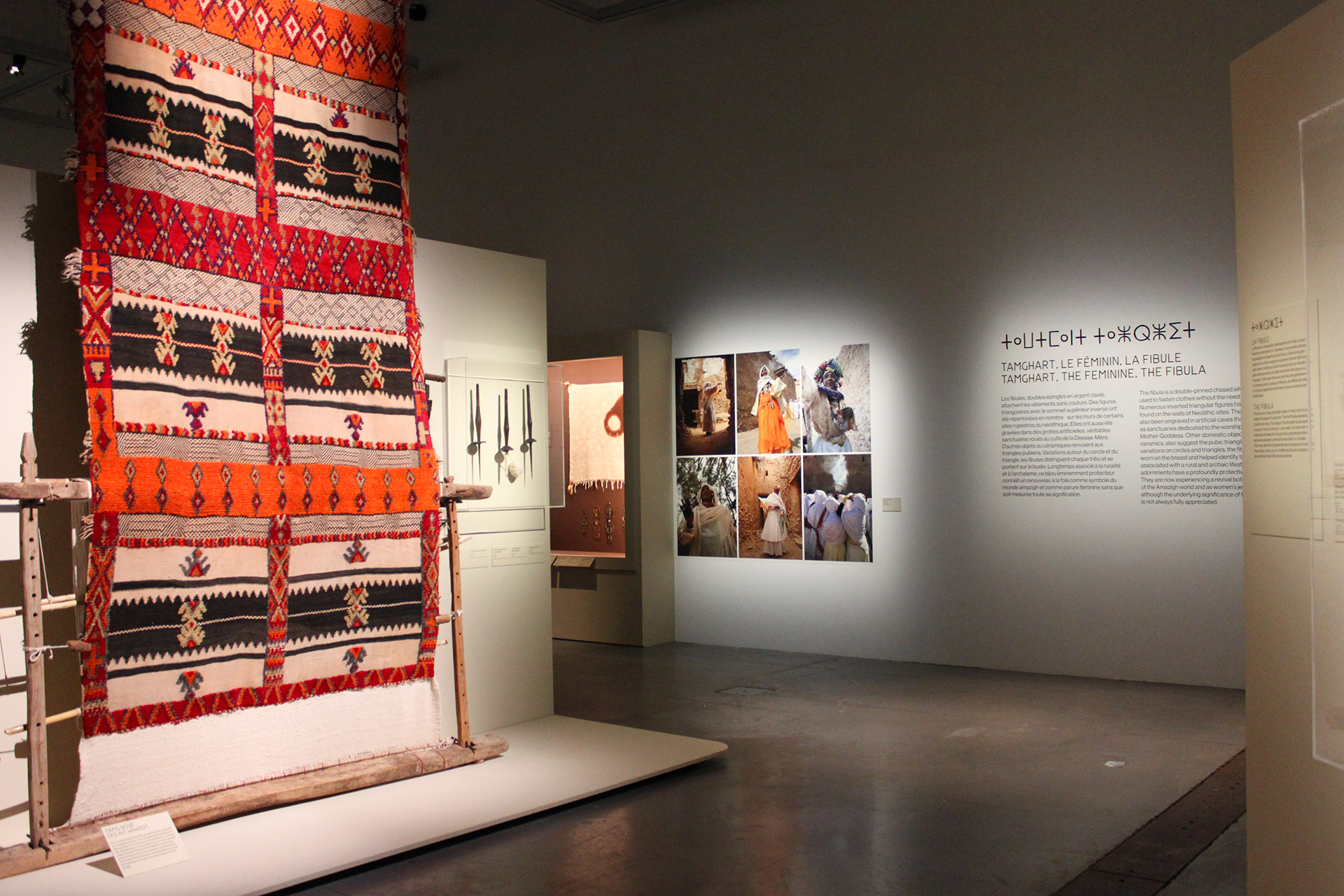
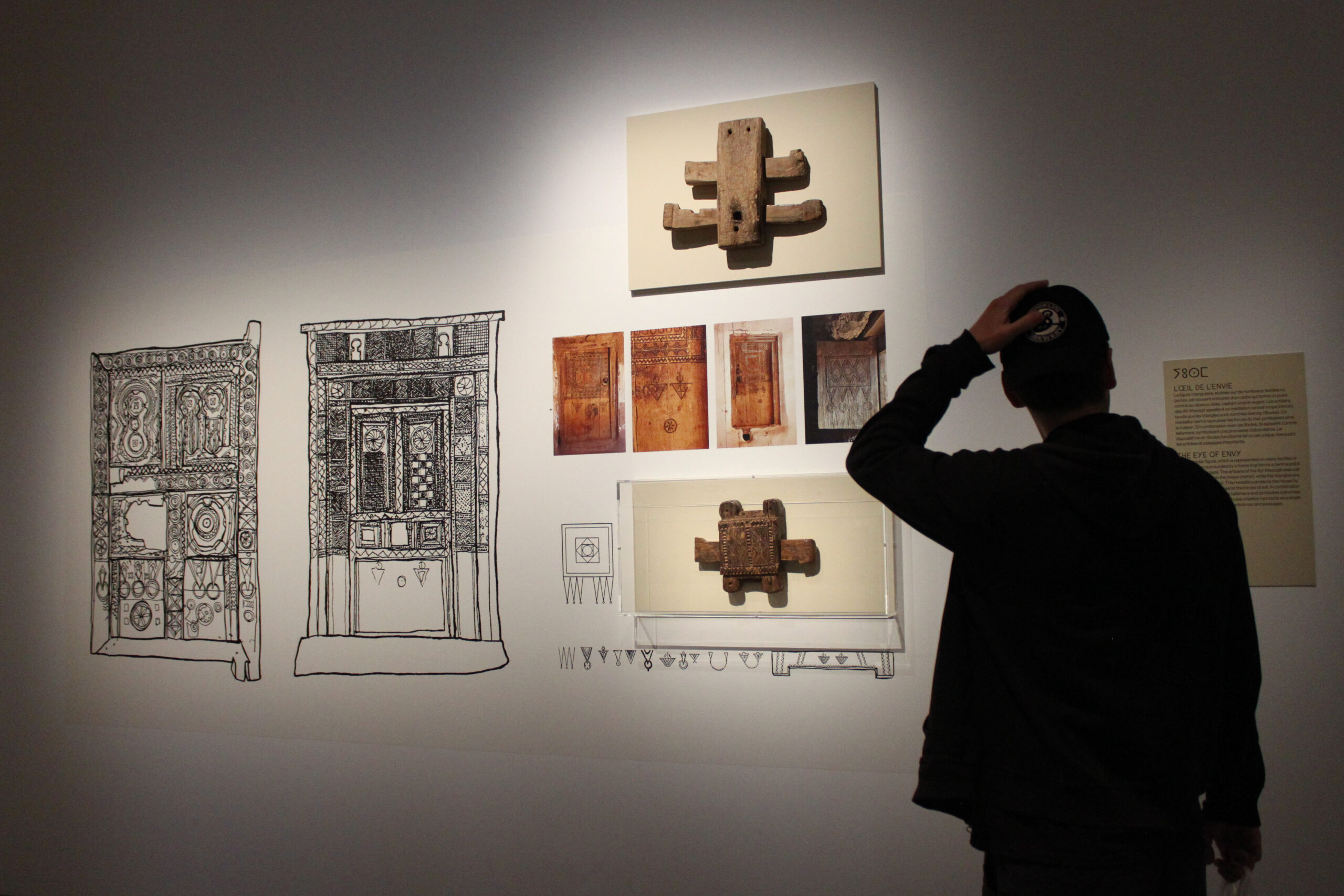
The Amazigh world, whose origins are diverse and still the subject of debate in the scientific community, has spread, since at least the Neolithic period, over a wide territory from Egypt to Morocco and even the Canary Islands, including the north of Niger, Mali and Mauritania. It shares a linguistic identity with Tamazight and a common script, tifinagh.
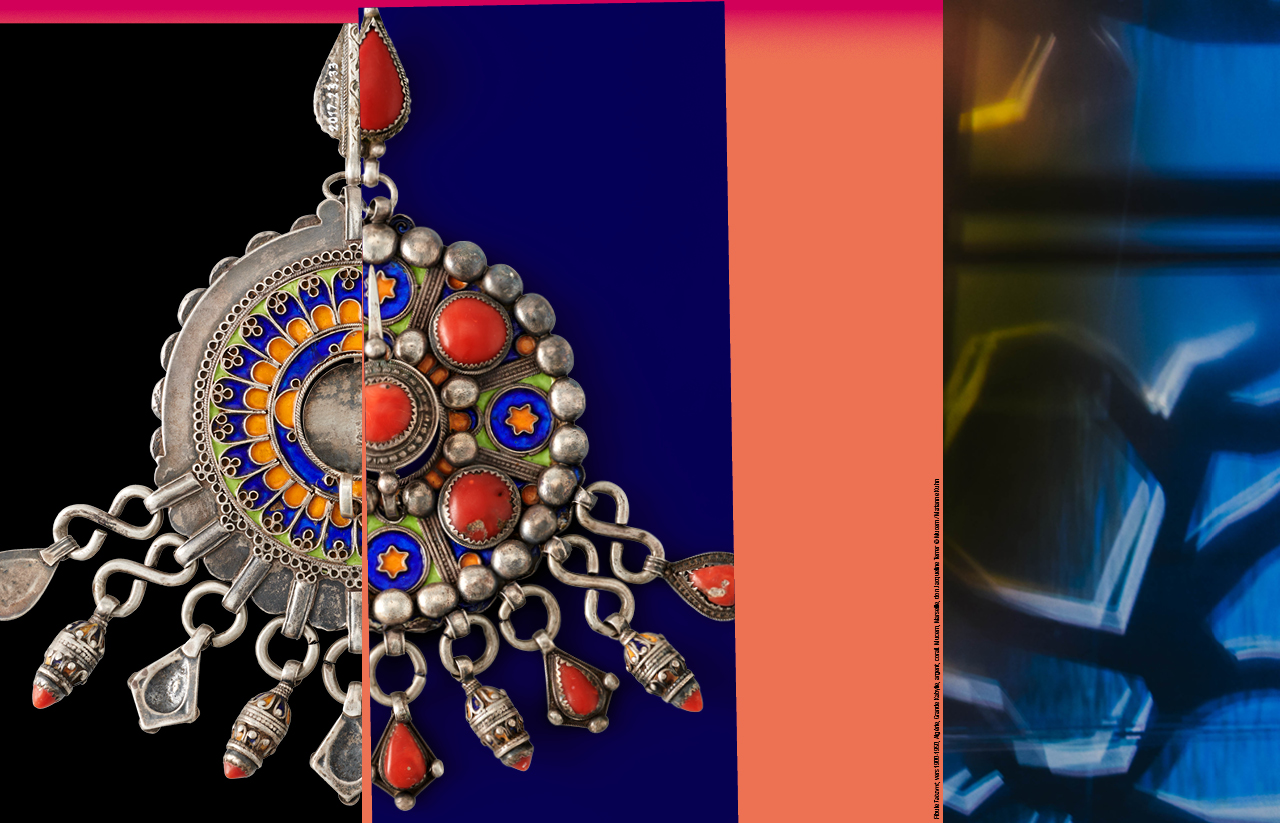
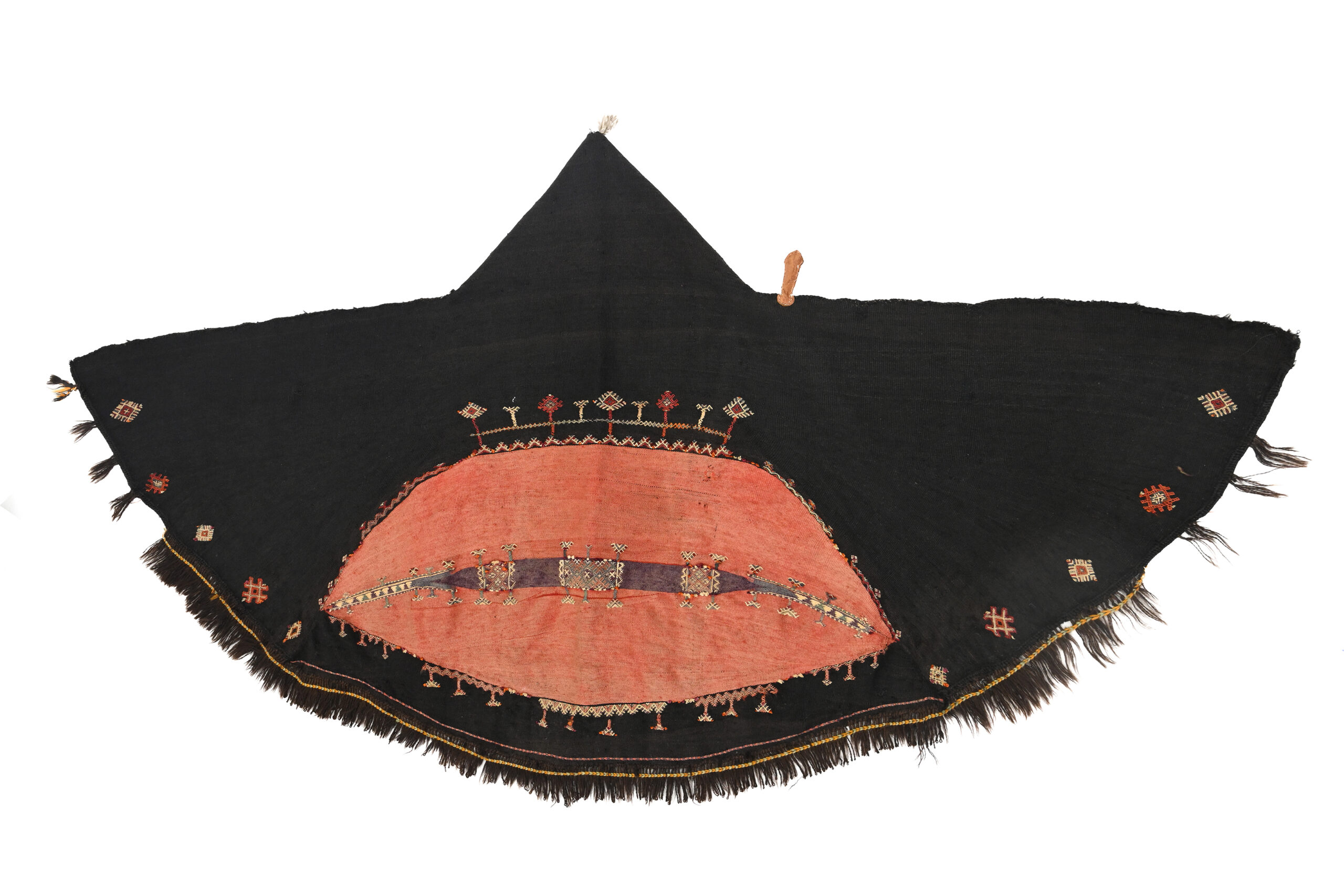
In the Amazigh world, any act of adornment is associated with a sense of protection and eternal return. The act of adorning, decorating, covering or decorating refers to a group’s status and identity. Far from being incidental, adornment, weaving and ceramics are essential, constituting a kind of physical or magical filter, a total device for protecting the body, the domestic space and, more broadly, the overall social space. From tattooed bodies to jewellery, domestic objects, veils or tent stretchers, house walls or doors, the same motifs, forms and symbols can be found everywhere. These are not just decorative, but play a triple role: aesthetic, of course, but also therapeutic and apotropaic, and as a social and gender marker. Certain boundaries in Amazigh social space are clearly signified, in various ways, by words, attitudes and figurations, but also by certain specific rituals around thresholds and doors, because they mark or establish borders between the outside world and the domain of the home, which remains essentially the preserve of women.
Around the exhibition
Interview with Salima Naji (DPLG architect and PhD in anthropology) and Alexis Sornin (director of the Yves Saint Laurent Marrakech and Pierre Bergé Berber Arts museums), exhibition curators
The term “Amazigh” is little known in France, where people tend to speak of “Berber” culture… Can you shed some light on these different terminologies?
Just as the word “Inuit” has replaced the term “Eskimo”, it’s a question of peoples naming themselves by names they themselves have chosen, so as to no longer be the “barbarian” of the Other. We know that the word “Berber” is derived from the word “barbarian”. So there’s the desire, in a decolonial claim, to better designate oneself, to better know oneself. In the exhibition, we speak of the Amazigh, in the feminine plural, as we wish to highlight the fundamental role of women. The mother goddesses from the Canary Islands, with their engraved triangles, demonstrate the use of what is also known as the fibula: it has a simple, graphic aesthetic and can be found on everything from the Canary Islands to Libya and Egypt, via Sardinia and the Azores. From skin to walls, from faces to weaves, it’s all about the same relationship with the world: in the face of hazards, in the face of uncertainty, protecting oneself from hunger and thirst, but also from any malicious intent. Protecting one’s home, protecting one’s loved ones, reconciling the close environment: that which nurtures, that which gives or takes life.
How have Amazigh oral and written traditions contributed to the transmission and evolution of this culture over time?
Amazigh culture is largely based on oral tradition, a key factor in its transmission and longevity since ancient times. This oral tradition has enabled know-how to be preserved and passed down through the generations. The exhibition aims to establish a link between this deeply-rooted past and contemporary expressions of recurring, protective motifs, notably through the work of artists such as Farid Belkahia (1934-2014) and Amina Agueznay.
The Amazigh script, tifinagh, is distinguished by its graphic and symbolic character. It has inspired contemporary alphabets in Algeria, Libya and Morocco, while in Niger it is still widely used, notably by artists such as the poet Hawad. In Algeria, Tassili park rangers use it in their daily communication.
Amazigh linguistic diversity also concerns the diaspora. In our research, we have identified “pan-Amazigh” words common to all Berber languages.
Terms such as aman (water) or aghrom (bread) bear witness to this linguistic unity.
The exhibition also highlights Tamazgha, a vast geographical area where these languages are spoken, stretching from the Canary Islands to western Egypt, including the Sahelian strip. Once criss-crossed by trade and transhumance networks, this region is today marked by the presence of Amazigh diasporas settled in major cities, reflecting a migratory history dating back over a century.
What do you consider to be the most outstanding pieces in the exhibition?
We’re delighted to be showing objects from the Canary Islands, for example, a little-known region that is so deeply Amazigh and has such a unique history. But in this exhibition, we were particularly keen to show links. Rather than focusing on one work or another, we prefer to show how a particular motif is prevalent in Morocco but also in Kabylia; how a particular gesture or skill has given rise to a grammar of forms that dress a weaving in Tunisia or Morocco, a pottery in Niger or Lybia. This heritage is incredibly rich, and we wanted to provide some keys to understanding it. The aim is to show how those who give birth, those who give life, in difficult contexts, are also those who adorn their daily lives with care and beauty. Headdresses, a synthesis of jewelry and the art of adorning hair and bust, mark the body with a singular aesthetic that both enhances and protects.
In what forms does Amazigh culture circulate in popular culture today?
What we wanted to emphasize in the Mucem’s unique museum of society is the diversity and evolution of societies. In the past, museums have sometimes fragmented and dispersed cultural ensembles, favoring an approach centered on the collection of objects, which may have obscured the fluidity of living practices. At the same time, these motifs and traditions have been reinterpreted by diasporas, becoming identity markers for communities far removed from their territories of origin.
Today, a renewed modernity is seizing on these cultural repertoires, replacing them in a new context.
in a dynamic of transmission and dialogue rather than in a logic of rupture or disappearance. In the exhibition, we highlight initiatives that promote the transmission of knowledge. Through her films, Myriem Naji documents and shares craft techniques, making them accessible to the public. Amina Agueznay collaborates with weavers to create a repertoire of signs integrated into her work. Finally, the presentation of contemporary tattoos and writing that resonate with ancestral practices illustrates the continuity and adaptability of these traditions.
What was your main discovery when researching this exhibition?
Complementarity! Preparing an exhibition with several people from different backgrounds is a joy, because the work of one person informs that of another. The collections of the Mucem and the Musée Yves Saint Laurent Marrakech also interact. What’s more, Mucem is taking a fresh look at how the collections were put together, by integrating theEncyclopédie berbère created by the archaeologist couple Gabriel (1927-2002) and Henriette Camps (1928-2015).
We would also like to mention the daughter of Mireille Morin-Barde (1916-2002), an ethnographer who carried out a remarkable work documenting Amazigh headdresses and finery in the pre-Saharan regions of Morocco. To hear her recall the years when her mother was writing her main work, the fruit of a complex investigation, was particularly moving. Her testimony reflects Mireille Morin-Barde’s attachment to the women she met in the field, as well as the difficulty of tracking them down in the 1980s, thirty years after her initial research. Unable to always resort to photography, she preferred drawing and painting, working in close collaboration with these women, in an approach that we would describe today as participative and imbued with an anthropological ethic that was still not widespread at the time.
These exchanges and encounters, essential to all research, are also the living material that nourishes the work of an exhibition.
Since the earliest myths, the matrix from which the birth of Amazigh culture is conceived has been feminine: the exhibition will open with the founding figures of the mother goddesses, symbolically associated with the fertile and protective figure of the circle. The exhibition will explore these notions of thresholds and protective circles, which lie at the heart of Amazigh culture and give it structure, before turning to the objects, surfaces, shapes and signs in which they are materially embodied: abstract and geometric signs, as well as figurative ones (turtle, fish, frog, ear of wheat, or an eye, anthropomorphic figure, etc.). Emphasis will be placed on the cyclical dimension of nature (the moon, the return of spring, the harvest) in connection with the gestures and skills of women (pottery, weaving, henna dyeing, basketry, tattooing, etc.) as well as those of men traditionally practising goldsmithing.
or eye, anthropomorphic figure, etc.). Emphasis will be placed on the cyclical dimension of nature (the moon, the return of spring, the harvest) in connection with the gestures and skills of women (pottery, weaving, henna dyeing, basketry, tattooing…) as well as those of men traditionally practicing goldsmithing.
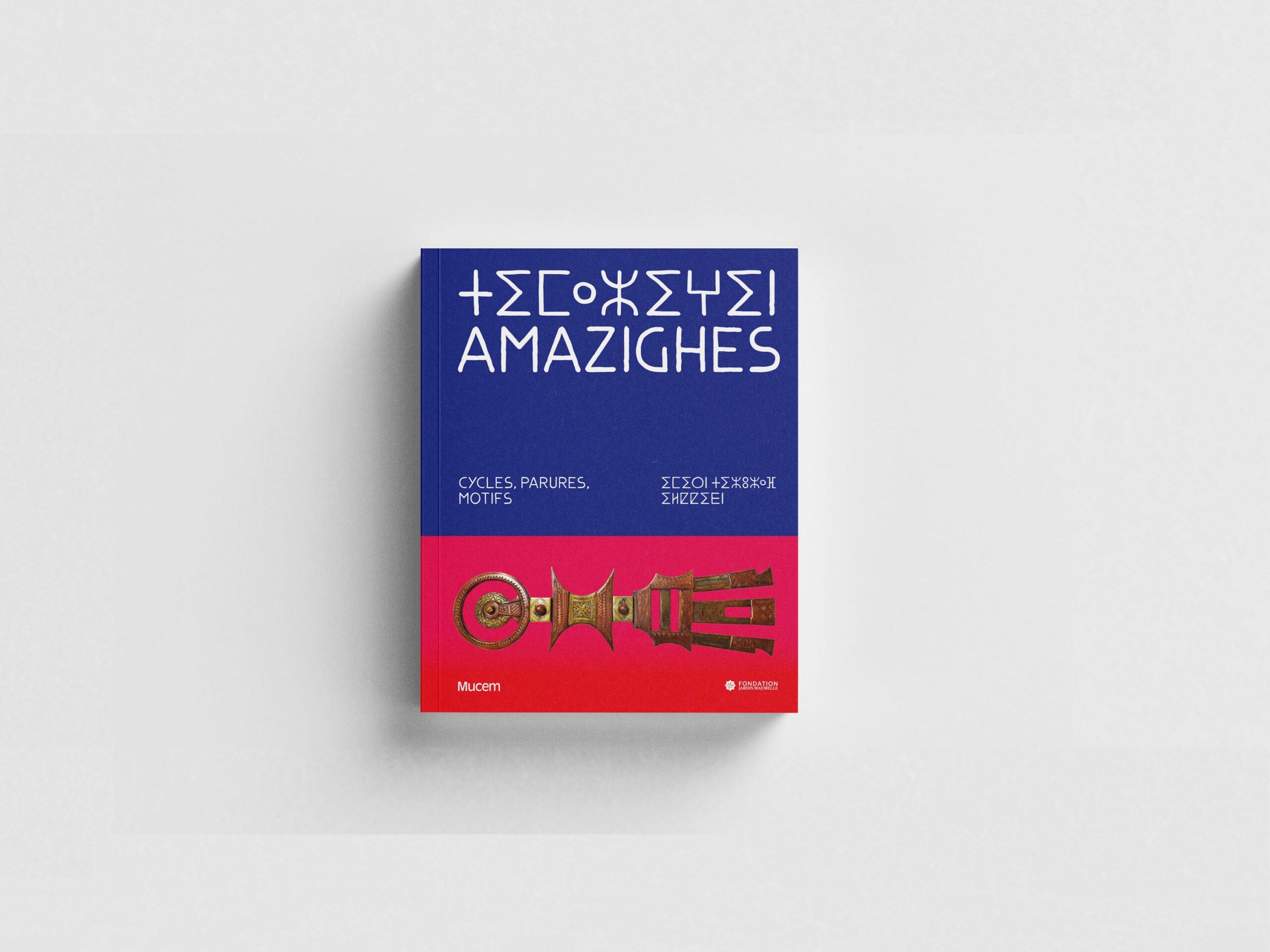
This exhibition will also provide an opportunity to examine the concept of “Berber permanence” and the contemporary transmission and circulation of this heritage within the large Amazigh diaspora, both in the field of artistic creation and in popular
cultures. Without forgetting, moreover, the appreciation or even cultural appropriation to which this heritage may be subject today.
Around 150 objects and works from the 19th century to the present day, as well as a few archaeological pieces, will be on display, including jewelry, ceramics, textiles, basketwork, sculptures, tools, photographs, videos, installations and archives, mainly from the collections of the Pierre Bergé Museum of Berber Arts at the Fondation Jardin Majorelle in Marrakech and those of the Mucem, but also from public and private collections in the Canary Islands, Morocco and France, as well as from artists.
Curators:
Salima Naji, architect DPLG and doctorate in anthropology
Alexis Sornin, Director of the Yves Saint Laurent Marrakech and Pierre Bergé Berber Art Museums
The Amazigh world, whose origins are diverse and still the subject of debate in the scientific community, has spread, since at least the Neolithic period, over a wide territory from Egypt to Morocco and even the Canary Islands, including the north of Niger, Mali and Mauritania. It shares a linguistic identity with Tamazight and a common script, tifinagh.
In the Amazigh world, any act of adornment is associated with a sense of protection and eternal return. The act of adorning, decorating, covering or decorating refers to a group’s status and identity. Far from being incidental, adornment, weaving and ceramics are essential, constituting a kind of physical or magical filter, a total device for protecting the body, the domestic space and, more broadly, the overall social space. From tattooed bodies to jewellery, domestic objects, veils or tent stretchers, house walls or doors, the same motifs, forms and symbols can be found everywhere. These are not just decorative, but play a triple role: aesthetic, of course, but also therapeutic and apotropaic, and as a social and gender marker. Certain boundaries in Amazigh social space are clearly signified, in various ways, by words, attitudes and figurations, but also by certain specific rituals around thresholds and doors, because they mark or establish borders between the outside world and the domain of the home, which remains essentially the preserve of women.
Bande Annonce de l'exposition "Amazighes"
Around the exhibition
Interview with Salima Naji (DPLG architect and PhD in anthropology) and Alexis Sornin (director of the Yves Saint Laurent Marrakech and Pierre Bergé Berber Arts museums), exhibition curators
The term “Amazigh” is little known in France, where people tend to speak of “Berber” culture… Can you shed some light on these different terminologies?
Just as the word “Inuit” has replaced the term “Eskimo”, it’s a question of peoples naming themselves by names they themselves have chosen, so as to no longer be the “barbarian” of the Other. We know that the word “Berber” is derived from the word “barbarian”. So there’s the desire, in a decolonial claim, to better designate oneself, to better know oneself. In the exhibition, we speak of the Amazigh, in the feminine plural, as we wish to highlight the fundamental role of women. The mother goddesses from the Canary Islands, with their engraved triangles, demonstrate the use of what is also known as the fibula: it has a simple, graphic aesthetic and can be found on everything from the Canary Islands to Libya and Egypt, via Sardinia and the Azores. From skin to walls, from faces to weaves, it’s all about the same relationship with the world: in the face of hazards, in the face of uncertainty, protecting oneself from hunger and thirst, but also from any malicious intent. Protecting one’s home, protecting one’s loved ones, reconciling the close environment: that which nurtures, that which gives or takes life.
How have Amazigh oral and written traditions contributed to the transmission and evolution of this culture over time?
Amazigh culture is largely based on oral tradition, a key factor in its transmission and longevity since ancient times. This oral tradition has enabled know-how to be preserved and passed down through the generations. The exhibition aims to establish a link between this deeply-rooted past and contemporary expressions of recurring, protective motifs, notably through the work of artists such as Farid Belkahia (1934-2014) and Amina Agueznay.
The Amazigh script, tifinagh, is distinguished by its graphic and symbolic character. It has inspired contemporary alphabets in Algeria, Libya and Morocco, while in Niger it is still widely used, notably by artists such as the poet Hawad. In Algeria, Tassili park rangers use it in their daily communication.
Amazigh linguistic diversity also concerns the diaspora. In our research, we have identified “pan-Amazigh” words common to all Berber languages.
Terms such as aman (water) or aghrom (bread) bear witness to this linguistic unity.
The exhibition also highlights Tamazgha, a vast geographical area where these languages are spoken, stretching from the Canary Islands to western Egypt, including the Sahelian strip. Once criss-crossed by trade and transhumance networks, this region is today marked by the presence of Amazigh diasporas settled in major cities, reflecting a migratory history dating back over a century.
What do you consider to be the most outstanding pieces in the exhibition?
We’re delighted to be showing objects from the Canary Islands, for example, a little-known region that is so deeply Amazigh and has such a unique history. But in this exhibition, we were particularly keen to show links. Rather than focusing on one work or another, we prefer to show how a particular motif is prevalent in Morocco but also in Kabylia; how a particular gesture or skill has given rise to a grammar of forms that dress a weaving in Tunisia or Morocco, a pottery in Niger or Lybia. This heritage is incredibly rich, and we wanted to provide some keys to understanding it. The aim is to show how those who give birth, those who give life, in difficult contexts, are also those who adorn their daily lives with care and beauty. Headdresses, a synthesis of jewelry and the art of adorning hair and bust, mark the body with a singular aesthetic that both enhances and protects.
In what forms does Amazigh culture circulate in popular culture today?
What we wanted to emphasize in the Mucem’s unique museum of society is the diversity and evolution of societies. In the past, museums have sometimes fragmented and dispersed cultural ensembles, favoring an approach centered on the collection of objects, which may have obscured the fluidity of living practices. At the same time, these motifs and traditions have been reinterpreted by diasporas, becoming identity markers for communities far removed from their territories of origin.
Today, a renewed modernity is seizing on these cultural repertoires, replacing them in a new context.
in a dynamic of transmission and dialogue rather than in a logic of rupture or disappearance. In the exhibition, we highlight initiatives that promote the transmission of knowledge. Through her films, Myriem Naji documents and shares craft techniques, making them accessible to the public. Amina Agueznay collaborates with weavers to create a repertoire of signs integrated into her work. Finally, the presentation of contemporary tattoos and writing that resonate with ancestral practices illustrates the continuity and adaptability of these traditions.
What was your main discovery when researching this exhibition?
Complementarity! Preparing an exhibition with several people from different backgrounds is a joy, because the work of one person informs that of another. The collections of the Mucem and the Musée Yves Saint Laurent Marrakech also interact. What’s more, Mucem is taking a fresh look at how the collections were put together, by integrating theEncyclopédie berbère created by the archaeologist couple Gabriel (1927-2002) and Henriette Camps (1928-2015).
We would also like to mention the daughter of Mireille Morin-Barde (1916-2002), an ethnographer who carried out a remarkable work documenting Amazigh headdresses and finery in the pre-Saharan regions of Morocco. To hear her recall the years when her mother was writing her main work, the fruit of a complex investigation, was particularly moving. Her testimony reflects Mireille Morin-Barde’s attachment to the women she met in the field, as well as the difficulty of tracking them down in the 1980s, thirty years after her initial research. Unable to always resort to photography, she preferred drawing and painting, working in close collaboration with these women, in an approach that we would describe today as participative and imbued with an anthropological ethic that was still not widespread at the time.
These exchanges and encounters, essential to all research, are also the living material that nourishes the work of an exhibition.
Since the earliest myths, the matrix from which the birth of Amazigh culture is conceived has been feminine: the exhibition will open with the founding figures of the mother goddesses, symbolically associated with the fertile and protective figure of the circle. The exhibition will explore these notions of thresholds and protective circles, which lie at the heart of Amazigh culture and give it structure, before turning to the objects, surfaces, shapes and signs in which they are materially embodied: abstract and geometric signs, as well as figurative ones (turtle, fish, frog, ear of wheat, or an eye, anthropomorphic figure, etc.). Emphasis will be placed on the cyclical dimension of nature (the moon, the return of spring, the harvest) in connection with the gestures and skills of women (pottery, weaving, henna dyeing, basketry, tattooing, etc.) as well as those of men traditionally practising goldsmithing.
or eye, anthropomorphic figure, etc.). Emphasis will be placed on the cyclical dimension of nature (the moon, the return of spring, the harvest) in connection with the gestures and skills of women (pottery, weaving, henna dyeing, basketry, tattooing…) as well as those of men traditionally practicing goldsmithing.
This exhibition will also provide an opportunity to examine the concept of “Berber permanence” and the contemporary transmission and circulation of this heritage within the large Amazigh diaspora, both in the field of artistic creation and in popular
cultures. Without forgetting, moreover, the appreciation or even cultural appropriation to which this heritage may be subject today.
Around 150 objects and works from the 19th century to the present day, as well as a few archaeological pieces, will be on display, including jewelry, ceramics, textiles, basketwork, sculptures, tools, photographs, videos, installations and archives, mainly from the collections of the Pierre Bergé Museum of Berber Arts at the Fondation Jardin Majorelle in Marrakech and those of the Mucem, but also from public and private collections in the Canary Islands, Morocco and France, as well as from artists.
Curators:
Salima Naji, architect DPLG and doctorate in anthropology
Alexis Sornin, Director of the Yves Saint Laurent Marrakech and Pierre Bergé Berber Art Museums
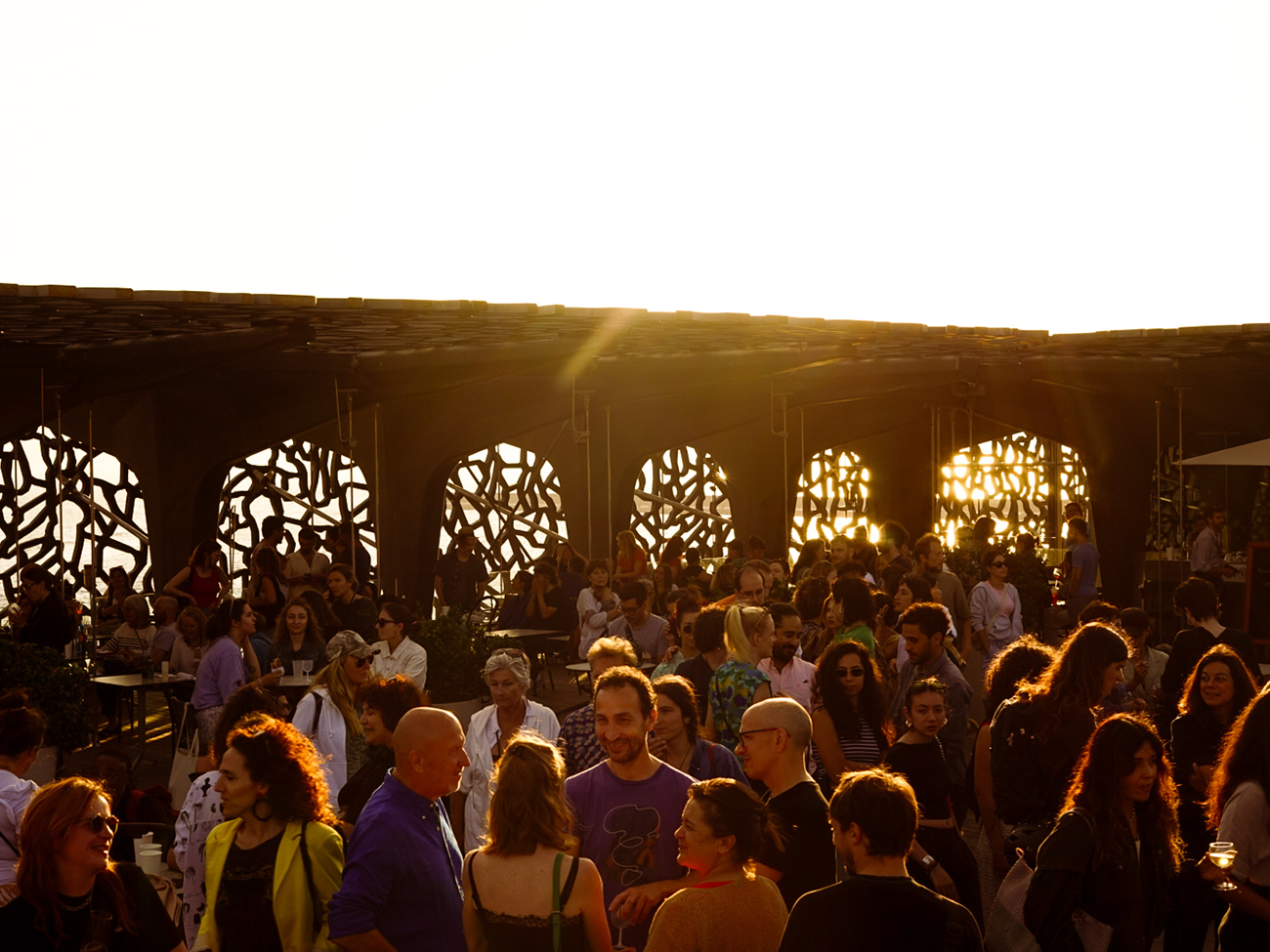
An exhibition designed in partnership with the Fondation Jardin Majorelle, the Pierre Bergé Museum of Berber Art in Marrakech.
An exhibition designed in partnership with the Fondation Jardin Majorelle, the Pierre Bergé Museum of Berber Art in Marrakech.

With the support of :

Media partners