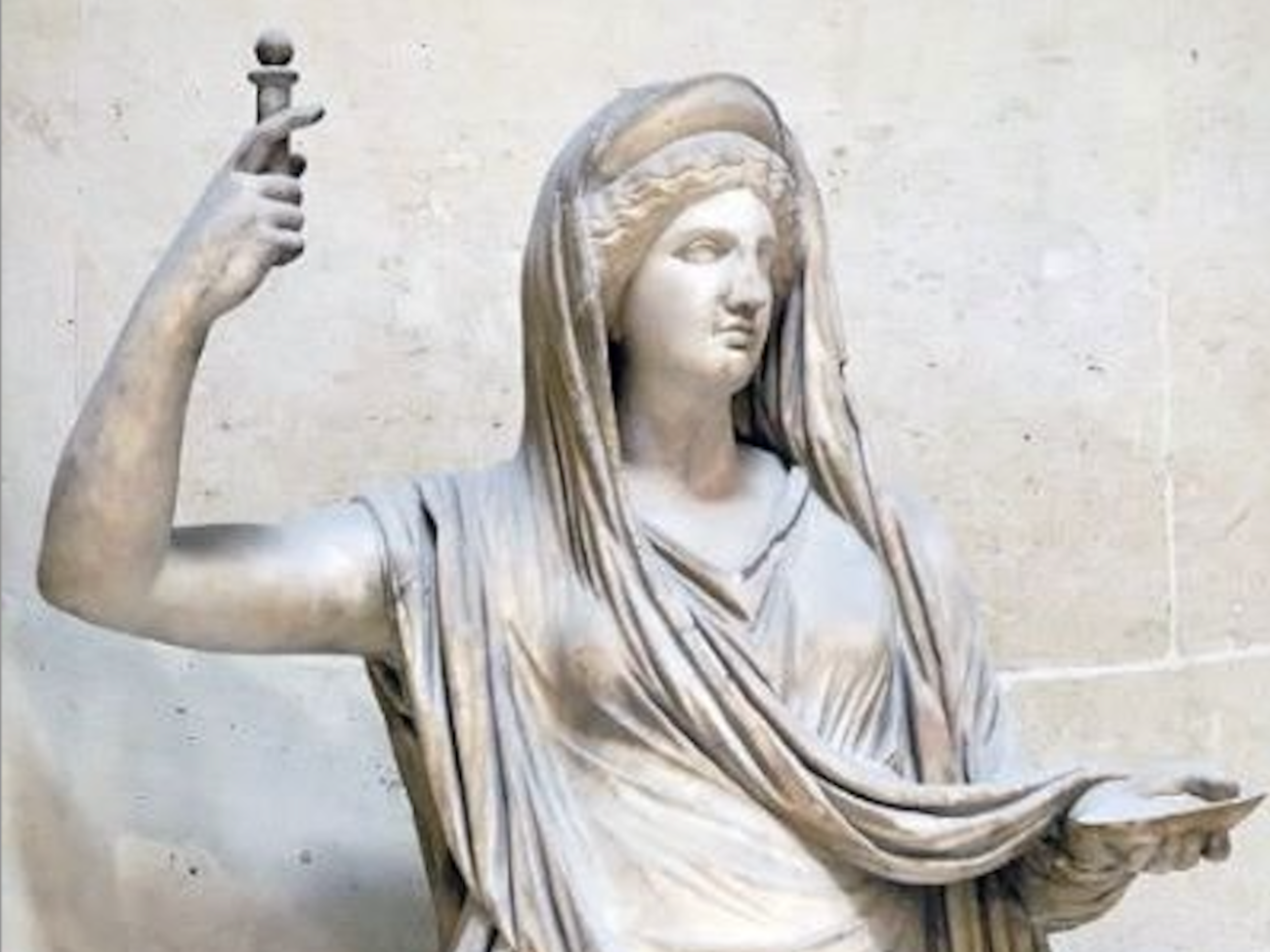
Was Greek art Greek?
Regional courses at the École du Louvre
Was Greek art Greek?
The Greek Arch as a civilizational phenomenon is still considered one of the most striking testimonies to the “Greek miracle”, a founding milestone in the history of Western societies. Impressed by its balance and sense of proportion, we sometimes forget that it is itself the fruit of a history full of ups and downs, made up of chosen heritages, confrontations and exchanges that have never ceased. This long journey began as early as the second millennium BC in the Aegean basin, with the extraordinary flowering of Cycladic and Minoan art. It continued in the first millennium BC, through an uninterrupted dialogue with the two other great maritime civilizations of the Mediterranean, the Phoenicians and the Etruscans. But Greek art was also to reach into the depths of Eurasia, giving rise to the unexpected synthesis of Greco-Scythian art.
A whole “other” world was thus involved in the development of a grammar of forms that centuries later we would call “Greek art”.
By Alexandre Asanovic, head of the library at the École française d’Athènes
Hédi Dridi, professor of ancient Mediterranean archaeology, Université de Neuchâtel
Morgan Belzic, research fellow, Institut national d’histoire de l’Art
Christian Mazet, doctoral student, École Pratique des Hautes Études
Julien Olivier, librarian in charge of the Greek coin collection at the Bibliothèque nationale de France
Program :
Greek-Scythian art, from Hellenes to Amazons
Monday, January 6, 2025 from 2:00 p.m. to 3:30 p.m.
By Alexandre Asanovic, head of the library at the École française d’Athènes
Phoenicians and Greeks: an unbroken dialogue
Monday, January 13, 2025 from 2:00 p.m. to 3:30 p.m.
By Hédi Dridi, Professor of Ancient Mediterranean Archaeology, University of Neuchâtel
Greek coins, imitated but never surpassed: Phoenicians, Persians, Carthaginians, Gauls, Romans
Monday, January 27, 2025 from 2:00 p.m. to 3:30 p.m.
By Julien Olivier, librarian in charge of the Greek coin collection at the Bibliothèque nationale de France
The representation of Greek myths in Etruscan art
Monday, February 3, 2025 from 2:00 p.m. to 3:00 p.m.
By Morgan Belzic, Research Fellow, Institut national d’histoire de l’Art
The representation of Greek myths in Etruscan art
Monday, March 3, 2025 from 11:30 a.m. to 12:30 p.m.
By Karine Casal
Was Greek art Greek?
The Greek Arch as a civilizational phenomenon is still considered one of the most striking testimonies to the “Greek miracle”, a founding milestone in the history of Western societies. Impressed by its balance and sense of proportion, we sometimes forget that it is itself the fruit of a history full of ups and downs, made up of chosen heritages, confrontations and exchanges that have never ceased. This long journey began as early as the second millennium BC in the Aegean basin, with the extraordinary flowering of Cycladic and Minoan art. It continued in the first millennium BC, through an uninterrupted dialogue with the two other great maritime civilizations of the Mediterranean, the Phoenicians and the Etruscans. But Greek art was also to reach into the depths of Eurasia, giving rise to the unexpected synthesis of Greco-Scythian art.
A whole “other” world was thus involved in the development of a grammar of forms that centuries later we would call “Greek art”.
By Alexandre Asanovic, head of the library at the École française d’Athènes
Hédi Dridi, professor of ancient Mediterranean archaeology, Université de Neuchâtel
Morgan Belzic, research fellow, Institut national d’histoire de l’Art
Christian Mazet, doctoral student, École Pratique des Hautes Études
Julien Olivier, librarian in charge of the Greek coin collection at the Bibliothèque nationale de France
Program :
Greek-Scythian art, from Hellenes to Amazons
Monday, January 6, 2025 from 2:00 p.m. to 3:30 p.m.
By Alexandre Asanovic, head of the library at the École française d’Athènes
Phoenicians and Greeks: an unbroken dialogue
Monday, January 13, 2025 from 2:00 p.m. to 3:30 p.m.
By Hédi Dridi, Professor of Ancient Mediterranean Archaeology, University of Neuchâtel
Greek coins, imitated but never surpassed: Phoenicians, Persians, Carthaginians, Gauls, Romans
Monday, January 27, 2025 from 2:00 p.m. to 3:30 p.m.
By Julien Olivier, librarian in charge of the Greek coin collection at the Bibliothèque nationale de France
The representation of Greek myths in Etruscan art
Monday, February 3, 2025 from 2:00 p.m. to 3:00 p.m.
By Morgan Belzic, Research Fellow, Institut national d’histoire de l’Art
The representation of Greek myths in Etruscan art
Monday, March 3, 2025 from 11:30 a.m. to 12:30 p.m.
By Karine Casal