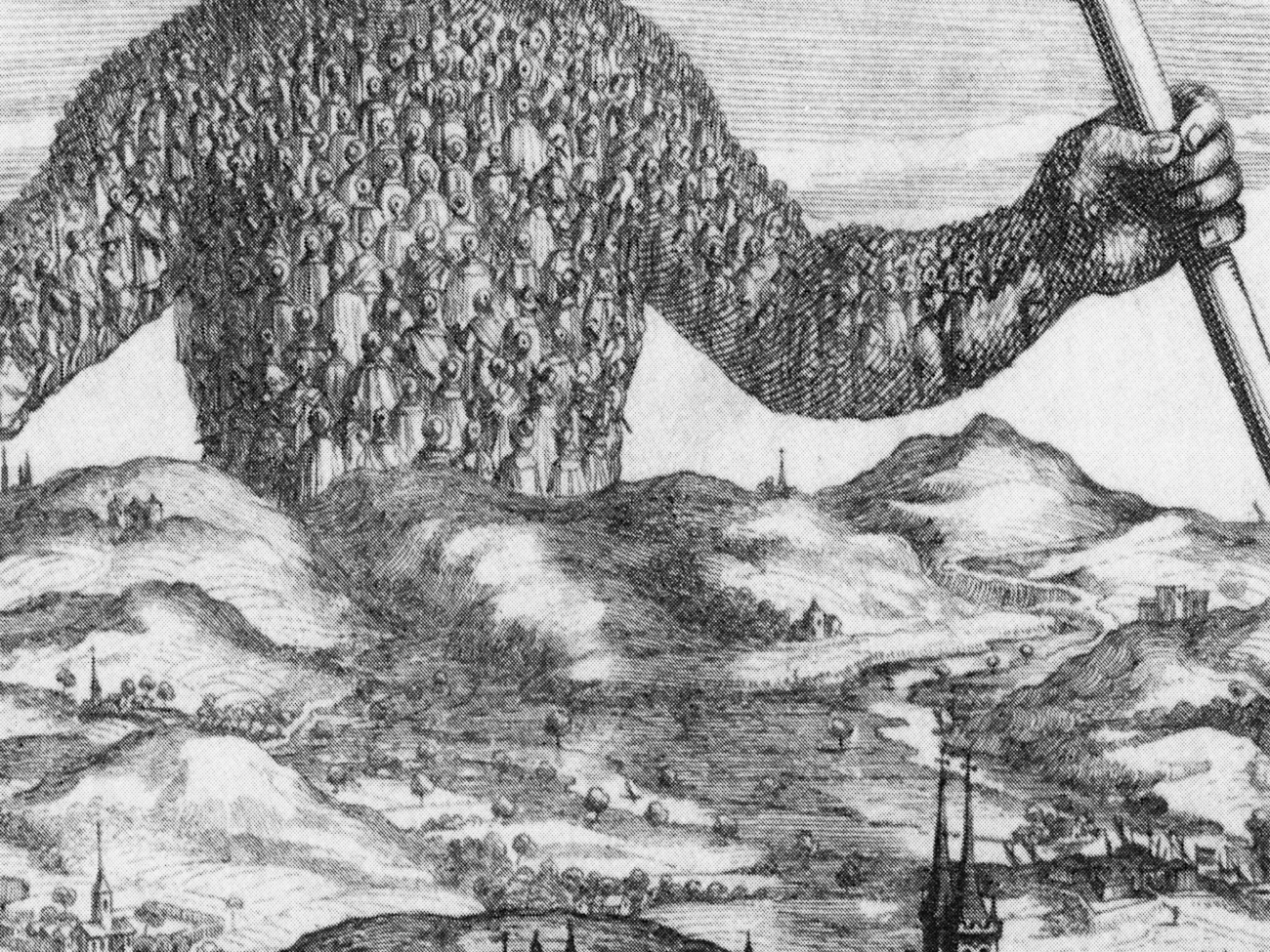
Visualizing the invisible hand
Performance-reading
By Romana Schmalisch and Robert Schlicht, researchers (artists and filmmakers)
This performance-reading examines the tension between the visibility and invisibility of the container, and by extension, of society in general. What does the image of an office, factory, warehouse or container reveal about the social relations at play? In the case of the container, its steel sheets conceal the goods and, even more so, the socio-economic relations in which it is involved or which it enables.
Globalization would not have been possible without the container, which has revolutionized not only port workflows and international trade flows, but also the capitalist economy as a whole. Container terminals today seem to be guided by an “invisible hand”, embodied in artificial intelligence that guides ships and plans loading and unloading, seemingly solving all problems by itself, and leaving humans as mere spectators of an ever-optimized flow.
In partnership with the Laboratoire d’économie et de sociologie du travail (LEST), the ANR project Le Grand Entrepôt, the Goethe-Institut Marseille, the Iméra Institut d’études avancées (IEA) of Aix-Marseille Université, the Mucem and Montévidéo. With the support of the Akademie der Künste and the Berlin Senate – Department of Culture and Social Cohesion. This project was made possible with the support of Seayard and the Port of Marseille Fos.
Performance-reading
By Romana Schmalisch and Robert Schlicht, researchers (artists and filmmakers)
This performance-reading examines the tension between the visibility and invisibility of the container, and by extension, of society in general. What does the image of an office, factory, warehouse or container reveal about the social relations at play? In the case of the container, its steel sheets conceal the goods and, even more so, the socio-economic relations in which it is involved or which it enables.
Globalization would not have been possible without the container, which has revolutionized not only port workflows and international trade flows, but also the capitalist economy as a whole. Container terminals today seem to be guided by an “invisible hand”, embodied in artificial intelligence that guides ships and plans loading and unloading, seemingly solving all problems by itself, and leaving humans as mere spectators of an ever-optimized flow.