Meriem Bennani
Art Explora Festival
For several years now, Meriem Bennani has been developing a protean practice of films, installations and immersive environments that interweave references to globalized popular culture with the vernacular representation of her native Moroccan culture and the visual aesthetics she captures with her iPhone. With a wry sense of humor and a subtle agility for diverting clichés from Middle Eastern culture, her work questions our contemporary society and its fractured identities, questions of gender and the omnipresent dominance of digital technologies. If she emerges as one of the most fascinating artists of her generation, it’s precisely because of her ability to deconstruct the dichotomies between what we expect from the Western world and what we expect from the global South, and to unveil the complexities of cultural productions, artistic disciplines and plural identities. In a globalized world increasingly divided by the identity politics of late capitalism, Bennani’s extensive and generous approach offers endless hope, or perhaps a foolish utopia, that what we have in common can surpass what divides us.
Ghariba (2017) is a playful and moving portrait of a few women in Morocco. Evoking reality TV, personal video and ethnographic film, its visual language is both intimate and whimsical, with the director’s digital manipulations alternately amplifying and undermining her subjects’ self-presentations. Bennani’s women discuss love and romance, dating and friendship, solitude and community, all against the terror of aging.
2 Lizards (2020) is an eight-episode animated series depicting a surreal vision of the first months of the Covid-19 pandemic.
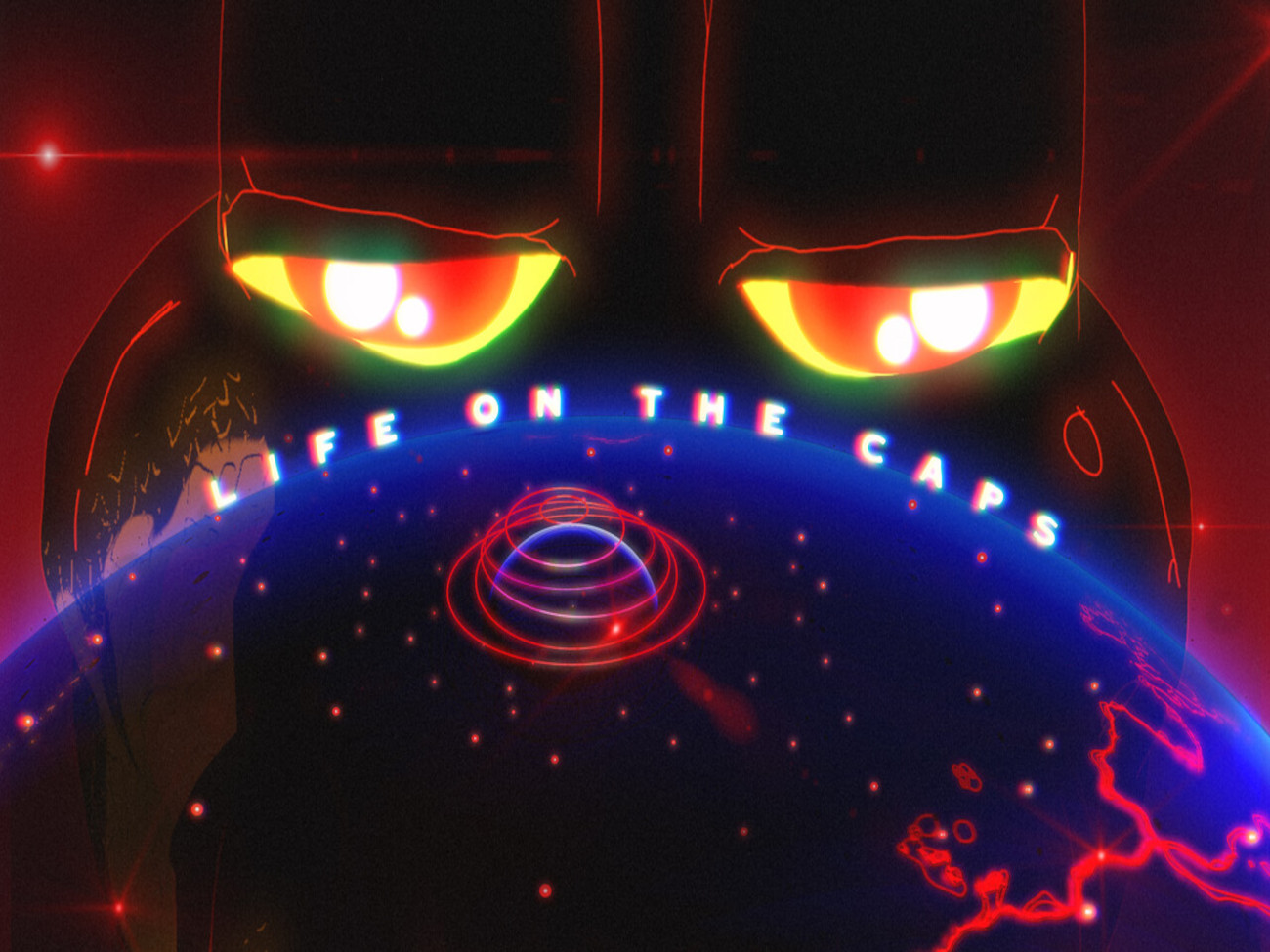
The Life on the CAPS trilogy (2018-2022) is set in a supernatural, dystopian future on CAPS, a fictional island in the middle of the Atlantic Ocean that houses migrants caught illegally teleporting and settled in animated enclaves. Superimposing live action sequences and computer-generated animations, Bennani intuitively adapts editing techniques that evoke documentary film, science fiction, telephone sequences, music videos and reality TV.
Meriem Bennani was born in Rabat, Morocco, in 1988, and now lives and works in New York. She is a graduate of The Cooper Union and the École Nationale Supérieure des Arts Décoratifs in Paris. Her work has been shown at the Whitney Museum, MoMA PS1, The Guggenheim Museum, Julia Stoschek Collection in Berlin, Fondation Louis Vuitton in Paris, Nottingham Contemporary, Renaissance Society in Chicago and Kamel Lazaar Foundation in Tunis.
Presented by Martha Kirszenbaum, curator and art critic, as part of the Art Explora Festival.
Marta Kirszenbaum
Marta Kirszenbaum is a curator and art critic based in Paris and Los Angeles. She curated the French Pavilion at the 2019 Venice Biennale represented by Laure Prouvost, and founded and directed Fahrenheit in Los Angeles. She has organized exhibitions at the ICA, Palais de Tokyo, Kistefos Museum, Beirut Art Center and Pejman Foundation.
For several years now, Meriem Bennani has been developing a protean practice of films, installations and immersive environments that interweave references to globalized popular culture with the vernacular representation of her native Moroccan culture and the visual aesthetics she captures with her iPhone. With a wry sense of humor and a subtle agility for diverting clichés from Middle Eastern culture, her work questions our contemporary society and its fractured identities, questions of gender and the omnipresent dominance of digital technologies. If she emerges as one of the most fascinating artists of her generation, it’s precisely because of her ability to deconstruct the dichotomies between what we expect from the Western world and what we expect from the global South, and to unveil the complexities of cultural productions, artistic disciplines and plural identities. In a globalized world increasingly divided by the identity politics of late capitalism, Bennani’s extensive and generous approach offers endless hope, or perhaps a foolish utopia, that what we have in common can surpass what divides us.
Ghariba (2017) is a playful and moving portrait of a few women in Morocco. Evoking reality TV, personal video and ethnographic film, its visual language is both intimate and whimsical, with the director’s digital manipulations alternately amplifying and undermining her subjects’ self-presentations. Bennani’s women discuss love and romance, dating and friendship, solitude and community, all against the terror of aging.
2 Lizards (2020) is an eight-episode animated series depicting a surreal vision of the first months of the Covid-19 pandemic.
The Life on the CAPS trilogy (2018-2022) is set in a supernatural, dystopian future on CAPS, a fictional island in the middle of the Atlantic Ocean that houses migrants caught illegally teleporting and settled in animated enclaves. Superimposing live action sequences and computer-generated animations, Bennani intuitively adapts editing techniques that evoke documentary film, science fiction, telephone sequences, music videos and reality TV.
Meriem Bennani was born in Rabat, Morocco, in 1988, and now lives and works in New York. She is a graduate of The Cooper Union and the École Nationale Supérieure des Arts Décoratifs in Paris. Her work has been shown at the Whitney Museum, MoMA PS1, The Guggenheim Museum, Julia Stoschek Collection in Berlin, Fondation Louis Vuitton in Paris, Nottingham Contemporary, Renaissance Society in Chicago and Kamel Lazaar Foundation in Tunis.
Presented by Martha Kirszenbaum, curator and art critic, as part of the Art Explora Festival.
Marta Kirszenbaum
Marta Kirszenbaum is a curator and art critic based in Paris and Los Angeles. She curated the French Pavilion at the 2019 Venice Biennale represented by Laure Prouvost, and founded and directed Fahrenheit in Los Angeles. She has organized exhibitions at the ICA, Palais de Tokyo, Kistefos Museum, Beirut Art Center and Pejman Foundation.