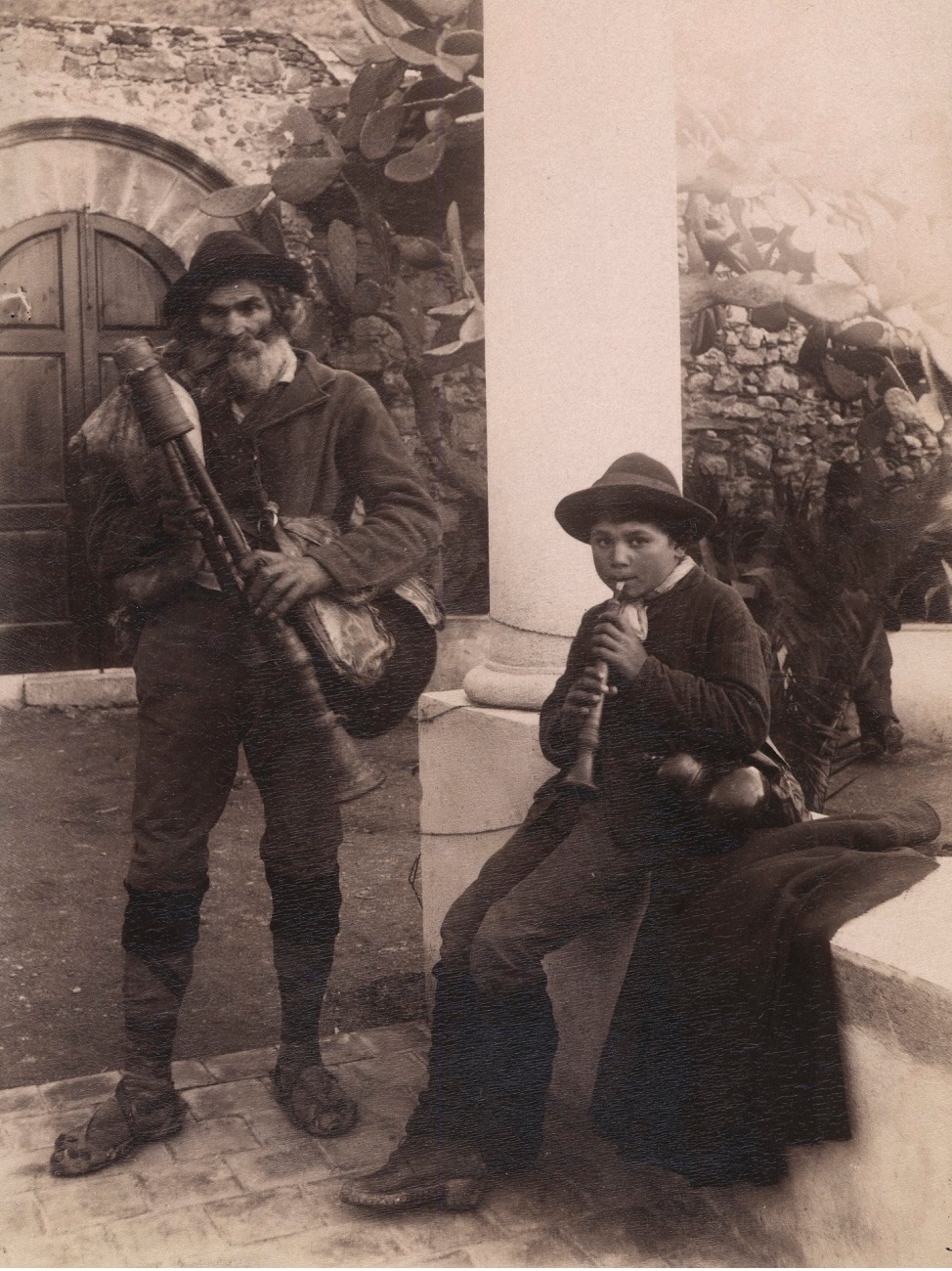
Mediterranean oboe and bagpipe traditions, from instrument making to musical practice
Round-table discussion with music (oboe-musette)
Throughout the Mediterranean region, the oboe and bagpipes occupy a singular and fundamental place in musical traditions. Both originating in the pastoral world, these twin instruments, whose timbre derives from the double reed, have traditionally been used for country, festive and liturgical music, and are often associated with each other.
Wherever this instrumental pairing has developed in its many local and historical variants (oboe and musette, zampogna and ciaramella, biniou and bombarde, gaita and gralla, mišnice and šurle, etc.), traditions of instrument making and musical interpretation are today suffering from modernization and standardization.
This meeting between musicologists, ethnologists and musicians, the first milestone in a survey-collection campaign, will approach the subject from the point of view of both musical construction and playing, in its historical aspects as well as in current fields.
Round table participants
Event partners:
Mucem, Iméra, CNRS
Lola Soulier doctoral student in musicology at Sorbonne-Université, and oboist
Lola Soulier is a recipient of the Mucem Méditerranée-Iméra residency, a doctoral student in musicology at Sorbonne-Université, and an oboist. She is interested in the historical construction of reeds and the reconstitution of early oboes. In collaboration with makers she has participated since 2014 in the production of oboe facsimiles for the Musée de la Musique-Philharmonie de Paris. Since 2019, she has been a member of the steering committee for the “Typologies du hautbois en France entre 1650 et 1765” project run by the Centre de musique baroque de Versailles and the Institut de Recherche en Musicologie. She taught music history at the American University of Armenia in 2023 and 2024. In 2023, she was awarded the Austrian PFS research prize for her master’s thesis on the oboe in France at the end of the 18th century, and published an article on historical wind instrument practice in Bärenreiter’s collective work Alte Musik heute: Geschichte und Perspektiven der Historischen Aufführungspraxis. Winner of the French Ministry of Culture’s call for projects “Recherche en musique 2023: collaborations entre jeunes chercheurs/chercheuses et artistes”, in spring 2024 she organized the exhibition “Conversations avec le roseau” at the Musée-Institut Komitas in Yerevan, in collaboration with the Franco-Armenian collective AHA. The exhibition is the result of two years of field research carried out in Armenia on the playing tradition and construction of Armenian oboes (duduk and zurna).
Peter Nahon C.N.R.S research fellow
A former student at the École des Chartes, agrégé de lettres classiques and Doctor of Linguistics, Peter Nahon has been a research fellow at the C.N.R.S. since 2023. He devotes his research to the study of language and cultural contacts in the French and Occitan space. He has worked particularly on the Jewish microcosms of southern France, conducting field research on their languages, texts, oral traditions, music and liturgies, about which he has published several books. From 2019 to 2023, he was a member of the Glossaire des patois de la Suisse romande (Neuchâtel), a research fellow in ethnolinguistics. He is now assigned to the Centre de musique baroque de Versailles, where he is leading a project on the circulation of French and Occitan song tunes between the oral tradition repertoire, scholarly practices and the liturgy of Provençal Jews in the Baroque period. Himself a musician and baroque musette player, he is leading a project with Lola Soulier on the reconstitution and practice of double-reed instruments (oboe, bassoon, court musette) between learned and popular practice in the 17th and 18th centuries.
Marie-Barbara Le Gonidec engineer, Ministry of Culture
Marie-Barbara Le Gonidec is a research engineer with the French Ministry of Culture. An ethnomusicologist, she is the author of a thesis on the symbolism of Bulgarian instruments. Now a member of the “Héritages” laboratory (CNRS-Cergy Université-Ministry of Culture), she was the last head of the ethnomusicology department at the Musée national des arts et traditions populaires (1937-2013). In 2009, the publication of the Mission 1939 archive made her realize the importance of publishing the ethnomusicological archives of the former museum-laboratory. Today, she devotes most of her professional activities to this undertaking, notably through electronic editions (https://les-reveillees.ehess.fr/).
Areas of expertise: ethnomusicology, pastoralism, symbolism, organology, taxonomic systems, museology, sound archives, institutional history of French ethnomusicology, soundscapes / Europe and in particular, France, Bulgaria, Brittany.Pierre Laurence head of the heritage department of the Conseil Départemental de l'Hérault
Pierre Laurence is head of the heritage department of the Conseil Départemental de l’Hérault, Pôle Culture-pierres vive, Direction des publics de la culture, having previously worked as a researcher for the Musica Nòstra association, then as head of the sound archives, in charge of the study and promotion of ethnological heritage for the Office départemental d’action culturelle de l’Hérault. Since 1983, he has been working on music, making an inventory of musical and song-making practices in eastern Languedoc, a project he is still pursuing. Drawing on a large corpus of oral history surveys, as well as a wealth of archives and regional works, he gradually turned his attention to the link between musical and festive practices, focusing on the figure of the popular oboe. This work has led to the publication of numerous articles, sound editions and temporary exhibitions. His work has also focused on pastoralism and oral memory in the Cévennes, as well as the techniques, uses and representations of bells.
Throughout the Mediterranean region, the oboe and bagpipes occupy a singular and fundamental place in musical traditions. Both originating in the pastoral world, these twin instruments, whose timbre derives from the double reed, have traditionally been used for country, festive and liturgical music, and are often associated with each other.
Wherever this instrumental pairing has developed in its many local and historical variants (oboe and musette, zampogna and ciaramella, biniou and bombarde, gaita and gralla, mišnice and šurle, etc.), traditions of instrument making and musical interpretation are today suffering from modernization and standardization.
This meeting between musicologists, ethnologists and musicians, the first milestone in a survey-collection campaign, will approach the subject from the point of view of both musical construction and playing, in its historical aspects as well as in current fields.
Round table participants
Event partners:
Mucem, Iméra, CNRS
Lola Soulier doctoral student in musicology at Sorbonne-Université, and oboist
Lola Soulier is a recipient of the Mucem Méditerranée-Iméra residency, a doctoral student in musicology at Sorbonne-Université, and an oboist. She is interested in the historical construction of reeds and the reconstitution of early oboes. In collaboration with makers she has participated since 2014 in the production of oboe facsimiles for the Musée de la Musique-Philharmonie de Paris. Since 2019, she has been a member of the steering committee for the “Typologies du hautbois en France entre 1650 et 1765” project run by the Centre de musique baroque de Versailles and the Institut de Recherche en Musicologie. She taught music history at the American University of Armenia in 2023 and 2024. In 2023, she was awarded the Austrian PFS research prize for her master’s thesis on the oboe in France at the end of the 18th century, and published an article on historical wind instrument practice in Bärenreiter’s collective work Alte Musik heute: Geschichte und Perspektiven der Historischen Aufführungspraxis. Winner of the French Ministry of Culture’s call for projects “Recherche en musique 2023: collaborations entre jeunes chercheurs/chercheuses et artistes”, in spring 2024 she organized the exhibition “Conversations avec le roseau” at the Musée-Institut Komitas in Yerevan, in collaboration with the Franco-Armenian collective AHA. The exhibition is the result of two years of field research carried out in Armenia on the playing tradition and construction of Armenian oboes (duduk and zurna).
Peter Nahon C.N.R.S research fellow
A former student at the École des Chartes, agrégé de lettres classiques and Doctor of Linguistics, Peter Nahon has been a research fellow at the C.N.R.S. since 2023. He devotes his research to the study of language and cultural contacts in the French and Occitan space. He has worked particularly on the Jewish microcosms of southern France, conducting field research on their languages, texts, oral traditions, music and liturgies, about which he has published several books. From 2019 to 2023, he was a member of the Glossaire des patois de la Suisse romande (Neuchâtel), a research fellow in ethnolinguistics. He is now assigned to the Centre de musique baroque de Versailles, where he is leading a project on the circulation of French and Occitan song tunes between the oral tradition repertoire, scholarly practices and the liturgy of Provençal Jews in the Baroque period. Himself a musician and baroque musette player, he is leading a project with Lola Soulier on the reconstitution and practice of double-reed instruments (oboe, bassoon, court musette) between learned and popular practice in the 17th and 18th centuries.
Marie-Barbara Le Gonidec engineer, Ministry of Culture
Marie-Barbara Le Gonidec is a research engineer with the French Ministry of Culture. An ethnomusicologist, she is the author of a thesis on the symbolism of Bulgarian instruments. Now a member of the “Héritages” laboratory (CNRS-Cergy Université-Ministry of Culture), she was the last head of the ethnomusicology department at the Musée national des arts et traditions populaires (1937-2013). In 2009, the publication of the Mission 1939 archive made her realize the importance of publishing the ethnomusicological archives of the former museum-laboratory. Today, she devotes most of her professional activities to this undertaking, notably through electronic editions (https://les-reveillees.ehess.fr/).
Areas of expertise: ethnomusicology, pastoralism, symbolism, organology, taxonomic systems, museology, sound archives, institutional history of French ethnomusicology, soundscapes / Europe and in particular, France, Bulgaria, Brittany.Pierre Laurence head of the heritage department of the Conseil Départemental de l'Hérault
Pierre Laurence is head of the heritage department of the Conseil Départemental de l’Hérault, Pôle Culture-pierres vive, Direction des publics de la culture, having previously worked as a researcher for the Musica Nòstra association, then as head of the sound archives, in charge of the study and promotion of ethnological heritage for the Office départemental d’action culturelle de l’Hérault. Since 1983, he has been working on music, making an inventory of musical and song-making practices in eastern Languedoc, a project he is still pursuing. Drawing on a large corpus of oral history surveys, as well as a wealth of archives and regional works, he gradually turned his attention to the link between musical and festive practices, focusing on the figure of the popular oboe. This work has led to the publication of numerous articles, sound editions and temporary exhibitions. His work has also focused on pastoralism and oral memory in the Cévennes, as well as the techniques, uses and representations of bells.