Globalization: other possibilities
Encounters around the “Une autre histoire du monde” exhibition.
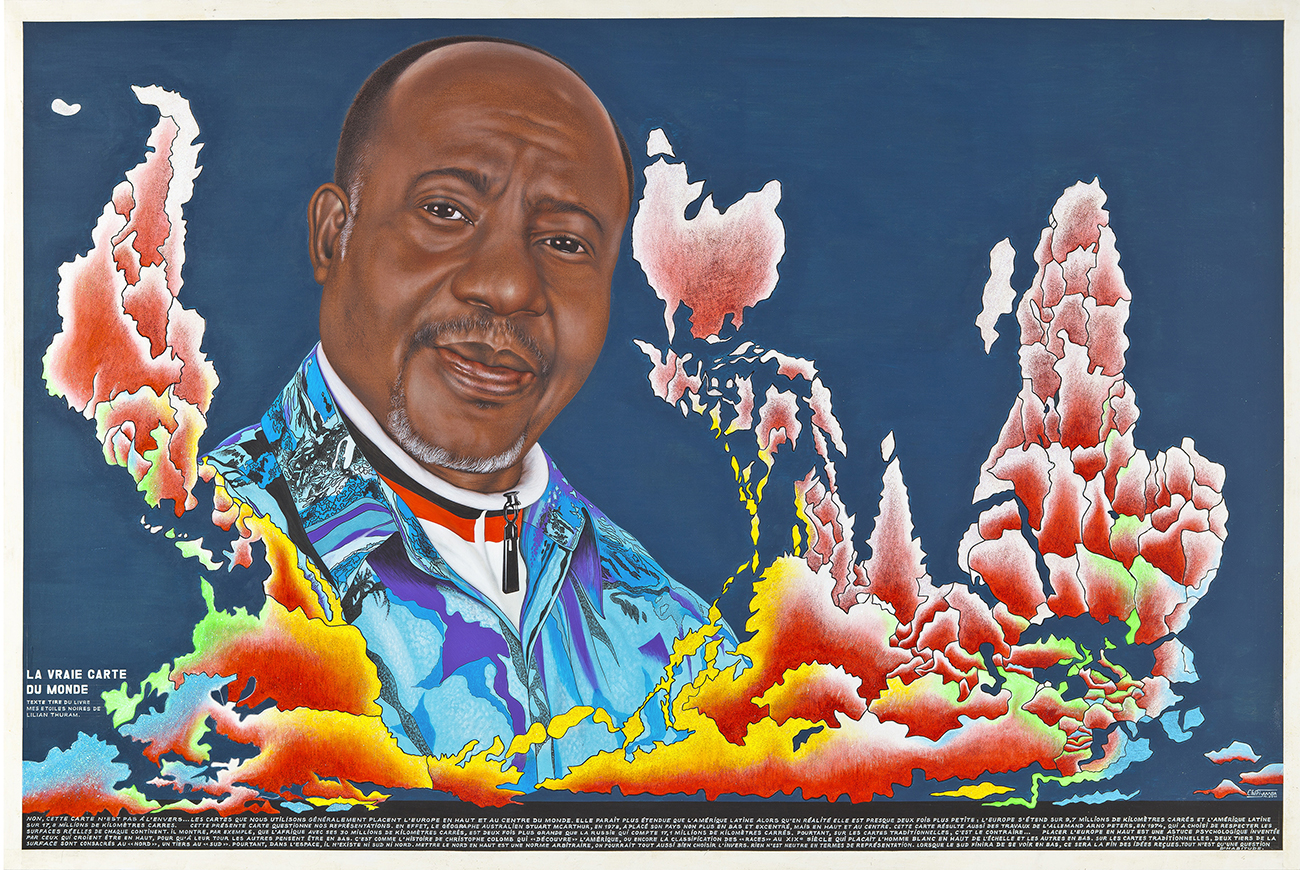
The “Une autre histoire du monde” exhibition at the Mucem invites you to read the world from the 13th to the 21st century: it does not claim to represent this history in its entirety, but seeks multiple perspectives and points of view to apprehend successive globalizations from non-European historical and cultural sources and constructs. The exhibition will be accompanied by two days of events (conferences, debates, screenings, tours) inviting you to explore alternative mundialities and narratives that are renewing scientific, artistic and museum conceptions and practices.
In partnership with the GlobalMed program (Maison méditerranéenne des sciences de l’homme), the Camargo Foundation, the Ancrages association and the Musée d’Histoire de Marseille.
Coordination Aude Fanlo, in collaboration with Camille Faucourt and Daniel Tödt
Tuesday, January 30, 2024
Outdoors (History Museum)
Wednesday, January 31, 2024
Mucem J4 (auditorium) – free admission
Thursday, February 1, 2024
MucemLab
Free admission with compulsory registration at mucemlab@mucem.org
Speakers’ biographies
6:00 pm - 8:00 pm: Round table Colonizations. Our history: from local to global
Round-table discussion, organized by the Ancrages association as part of the History Tuesdays program, held every two months in the auditorium of the Musée d’Histoire de Marseille and the Ancrages association, in partnership with the Mucem.
How to write the history of colonization, from global to local?
On the occasion of the recent publication of Colonisations. Notre histoire (Seuil), edited by Pierre Singaravélou, this round-table discussion revisits an age-old question that has been profoundly renewed by new epistemological approaches. These radically challenge national novels and traditional European-centric narratives, and promote the concept of a global micro-history.
The challenge also lies in the questions it raises among citizens and the “inheritors” of this history. The city of Marseille offers an emblematic illustration of the statuary, archival and institutional legacy of this questioning, and lies at the heart of the conflicting value of heritage inherited from colonization.
Pierre Singaravélou proposes a different approach to the history of globalization, one that looks “from below”, and takes a critical look at the production of knowledge during the colonial era, whose legacies remain powerful.
Guillaume Calafat looks back at the methodological and historiographical issues involved in bringing together a micro-analytical approach and a large-scale history.
These recent works allow us to shift our perspective and revisit our own history of colonization.
With historians Aurélia Dusserre (Iremam) and Catherine Atlan (IMAf), we evoke local history in the grip of colonial history through places and portraits, revealed by research carried out as part of the collective A*Midex Mars Imperium project, directed by Céline Regnard and Xavier Daumalin (AMU- Telemme).
Discover
9:15 a.m. Welcome 9:30 a.m. - 12:00 p.m.: Conferences and debates Looking ahead
The exhibition invites us not just to think about the world, but rather to “think with the world”, as Edouard Glissant put it.
Renewing ways of telling world history is a matter of mobility and agility: writing produced from several voices, from different schools of thought and diverse sources, the ability to move within one’s own categories and references, symmetry and reciprocity of narratives, attention to connections and interactions within a globalized world.
This approach is also a matter of optics: it’s the changes in perspective, focus, scale, framing and point of view that construct and modify our cultural representations. As a preamble to the presentation of the exhibition, this morning session invites specialists in history, art history and anthropology to discuss questions relating to the construction of knowledge, the imaginary and representations.
9:30 am Connected stories of the Mediterranean
Manuel Borutta (historian, University of Konstanz), Céline Regnard (historian, Aix-Marseille Université) and Mostafa Hassani Idrissi (historian, University of Rabat)
In discussion with Guillaume CALAFAT (Université Paris 1 Panthéon-Sorbonne)The Mediterranean, the median sea between lands, is the variable-geometry space of interconnections between three continents. It is often perceived as an abstract Western myth of the “cradle of civilization”, as a vector of exchange and influence, but also of rivalry and domination. How does this global perspective renew historical studies of the Mediterranean? How does it shed light on contemporary issues?
10:30 am Ethnography as a writing exercise: the example of wine mundialities
Boris Pétric (Centre Norbert Elias, CNRS)
Ethnography stands between singular experience at human level, and a globalized world. Producing alternative documentary writing is not just about translating research data, it’s about putting ourselves in the unstable position of telling a story, to turn it into a situation of inquiry.
11h00 Another history of the arts and artistic creation
Dialogue between Lea Saint Raymond (economist and art historian, École normale supérieure), Laurent Van Lancker (anthropologist and filmmaker, Chair of Excellence, Aix-Marseille University)
Moderation: Salima Tenfiche (Mucem, EHESS)How can we write a global history of artistic creation? Two proposals will be compared: a global history of the arts in “fragments”, based on the analysis of hybrid works or works with multiple influences, and a perspective on the standardization and globalization of the film industry.
12h00 Lunch 13h30 - 15h30: Conferences and debates Browse "Another history of the world".
Touring an exhibition is not the same as walking around it, or freezing its contours: the museographic tour is constructed as a stroll through the exhibition space, a visiting experience that is also a way of moving along, adopting a global “approach”.
1:30 pm Global history in five questions
Dialogue between Christian Grataloup (Université Paris Cité) and Richard Drayton (King’s College London), in discussion with Guillaume Calafat (Université Paris 1 Panthéon-Sorbonne)
In the introduction, two pioneers of globalization studies look back on their experience, while freely answering the five questions that guided the conception of the exhibition and mark out its course: When does history begin? What is time and space? Where does the story come from? Who discovers what? How did we become global? How do we deal with the theft of history, and how do we reappropriate it?
2:15 pm Behind the scenes of the "Another History of the World" exhibition
Presentation by curators Camille Faucourt (Mucem), Pierre Singaravélou (Université Paris 1 Panthéon-Sorbonne), Fabrice Argounès (Université de Rouen), Fanny Villez and Laurent Sick (KASCEN), in discussion with Sarah Ligner (Musée du quai Branly – Jacques Chirac), Nanette Snoep (Museum of Cologne) and Nathalie Bondil (Arab World Institute).
To prepare or extend your visit to the exhibition, the curators and scenographers take you step-by-step through the works and the exhibition itinerary, explaining the scientific and scenographic choices they have made, and discussing them with museum directors, so that together we can examine the museographic choices made, the rereading of the collections and the narratives produced by the museums.
3:30 pm Break 3:45 pm - 5:00 pm: Conferences and debates Philosophy of a different kind of mundiality
Lecture by Souleymane Bachir Diagne (philosopher of science, Columbia University)
Discussant : Pierre-Paul Zalio (Condorcet Campus)Souleymane Bachir Diagne is a philosopher of science, Islam and Africa. He is developing a reflection on the decolonization of knowledge, imaginations and cultures, which is a political and philosophical thought of plurality, placing the universal not as a European-centric notion, but as the common future horizon of a multipolar world.
After serving as Vice-Dean of the Université Cheikh Anta Diop in Dakar, he is now Professor in the French and Philosophy Departments at Columbia University, New York, where he also heads the Institute of African Studies. In 2023, he will be a visiting professor at the École Normale Supérieure. Distinguished by numerous awards, he has published works on logistician George Boole, poets Mohamed Iqbal and Léopold Sédar Senghor. Recent publications include En quête d’Afrique(s). Universalisme et pensée décoloniale (with Jean-Loup Amselle) (Albin Michel, 2018), La controverse. Dialogue sur l’islam (with Rémi Brague) (Stock, 2019), De langue à langue (Albin Michel, 2022).
Pierre-Paul Zalio is a sociologist and President of Campus Condorcet. In 2018, he founded “La Scène de recherche”, a working space for the arts and sciences at ENS Paris-Saclay. In 2023, he co-founded “L’Université en Exil” (UXIL), and in 2024 will launch the “Printemps des Humanités” festival in Aubervilliers, bringing together social science knowledge, social experiments and artistic proposals.
5:30-10:30 pm: evening of screenings and debates Kaléidoscope
To continue the encounter around the exhibition “Une autre histoire du monde”, a proposal of visual, sound or documentary creations, followed by a discussion with their authors, like a reflective kaleidoscope of possible narratives of the world.
5:30 pm What if Ganda had saved himself?
Radio drama by Chloé Despax. France. 31 mins.
Produced by Mondes nouveaux (French Ministry of Culture) and Radio Grenouille/Euphonia. Gold medal for Youth Fiction at the Radio New-York Awards 2023 and Youth Creation Prize at the Festival Longueurs d’ondes 2023.
Chloé Despax also created the sound installation on oral traditions for the “Une autre histoire du monde” exhibition.“Et si Ganda s’avait sauvé? is a radio drama based on the (real) passage of an Indian rhinoceros on the Ile d’If in 1516. Using this astonishing historical fact as a starting point, a group of children from Marseilles examined their relationship with the sea and large animals. Nourished by bathing in Frioul, an escapade at the Château d’If, animal observations at the Museum of Natural History and plant observations at Mucem, they questioned the forced voyage of the pachyderm in the 16th century. The result is a story of escape rooted in Marseille’s natural landscape.
Listening to the fiction will be followed by a discussion with radio author Chloé Despax, Nisrine El Hassouni (former general delegate of the association Peuple et Culture Marseille) and Yasmine Rakotondramanana, child participant in the workshop. Moderated by Aude Fanlo (Mucem).
6:30 pm The world in a painting: Caravaggio's comb
Documentary by Nicolas Autheman. France. 75 min.
Schuch Production and Arte France, in partnership with the Mucem.1598. Rome. Caravaggio depicts a most disturbing episode from the Gospel: the conversion of Mary Magdalene – a prostitute – to the Christian faith. Torn from the pleasures of earthly life, she is seized as her inner world is transformed. On the table, the symbol of her former life of vanity: an ivory comb with a broken tooth. But how could ivory have reached Rome in 1598? Who had made such a fine comb? And what did it really mean for the time? From Rome to Detroit, via Angola, we embark on a fundamental episode in our modern history: the incursion of Europeans into Africa.
Screening followed by a discussion with the director and historians Thomas Glesener (Aix-Marseille University) and Jérémie Foa (Aix-Marseille University).
8:30 pm We others
Film by Laurent Van Lancker . 89 mn. Belgium-France. 2022. Produced by Roue Libre, Mountain View and Zorn Productions.
Film presented and awarded at Cannes DocsThis film, oscillating between documentary and fiction, was created as part of a collaborative process with contemporary migrants who embody and appropriate the stories of European emigration from the past, and combine them with their own lived experiences. A poetic and political film, in which autobiographical stories, archives and dreams from the past and present blend to evoke a sensory and epic experience.
This film articulates many resonances between past and present migrations, revealing how historical amnesia is alive in our perception of migration.
With Angela Al Souliman, Aziz Temori, Abderraouf Hadi, Abeer Osman Khir, Fkadu Mussie, Babak Inanlou, Majid Almyar, Mehdi Juma.
Screening followed by a debate with the director, in discussion with Adelie Chevee (Institut Somum, Aix-Marseille Université, Mucem).
10:30 a.m. - 3:00 p.m.: Workshop Musées Mondes
Society museums are undergoing profound institutional and museographic overhauls. Offering new multicultural and connected narratives, as well as a critical look at their collections with their most controversial origins, particularly colonial, these institutions are today asserting their roles as forums open to a globalized world. This large-scale museological shift is in line with postcolonial studies and global history.
10:30-12:00 A global turning point for museums?
Nanette Snoep (Director, Cologne Museum), Nathalie Bondil (Director, Institut du monde arabe) and Sarah Ligner (Curator, Musée du Quai Branly – Jacques Chirac), in discussion with Camille Faucourt (Curator, Mucem), Souleymane Bachir Diagne (Columbia University).
How do these issues translate into museographic terms, and into the very role of these institutions? The experience of three museums will be discussed, with particular reference to the design of permanent or temporary itineraries (mobilization of perspectives “from below”, co-construction of the subject, historicization and contextualization of collection documentation and mediation tools, interplay of scales between global and local).
12h00 Lunch 14h00-14h30 A glocal story at the museum
Brinda Sommer (Humboldt Forum)
Discussant : Daniel Tödt (University of Konstanz)The “Berlin global” exhibition, opening in 2021, shows how the city and its inhabitants have been linked to the world throughout its history. The exhibition’s designer will show how the tour was conceived in this articulation between global and local, and what role the exhibition had in the context of the Humboldt Forum.
2:30 pm - 3:00 pm What stories are being written in museums?
Magali Nachtergael (Université de Bordeaux-Montaigne)
To conclude the debates, a reflection on the place that museums occupy in collective history, and on the way in which contemporary artistic creation and museum institutions compose narratives and counter-narratives.
Encounters around the “Une autre histoire du monde” exhibition.
The “Une autre histoire du monde” exhibition at the Mucem invites you to read the world from the 13th to the 21st century: it does not claim to represent this history in its entirety, but seeks multiple perspectives and points of view to apprehend successive globalizations from non-European historical and cultural sources and constructs. The exhibition will be accompanied by two days of events (conferences, debates, screenings, tours) inviting you to explore alternative mundialities and narratives that are renewing scientific, artistic and museum conceptions and practices.
In partnership with the GlobalMed program (Maison méditerranéenne des sciences de l’homme), the Camargo Foundation, the Ancrages association and the Musée d’Histoire de Marseille.
Coordination Aude Fanlo, in collaboration with Camille Faucourt and Daniel Tödt
Tuesday, January 30, 2024
Outdoors (History Museum)
Wednesday, January 31, 2024
Mucem J4 (auditorium) – free admission
Thursday, February 1, 2024
MucemLab
Free admission with compulsory registration at mucemlab@mucem.org
Speakers’ biographies
6:00 pm - 8:00 pm: Round table Colonizations. Our history: from local to global
Round-table discussion, organized by the Ancrages association as part of the History Tuesdays program, held every two months in the auditorium of the Musée d’Histoire de Marseille and the Ancrages association, in partnership with the Mucem.
How to write the history of colonization, from global to local?
On the occasion of the recent publication of Colonisations. Notre histoire (Seuil), edited by Pierre Singaravélou, this round-table discussion revisits an age-old question that has been profoundly renewed by new epistemological approaches. These radically challenge national novels and traditional European-centric narratives, and promote the concept of a global micro-history.
The challenge also lies in the questions it raises among citizens and the “inheritors” of this history. The city of Marseille offers an emblematic illustration of the statuary, archival and institutional legacy of this questioning, and lies at the heart of the conflicting value of heritage inherited from colonization.
Pierre Singaravélou proposes a different approach to the history of globalization, one that looks “from below”, and takes a critical look at the production of knowledge during the colonial era, whose legacies remain powerful.
Guillaume Calafat looks back at the methodological and historiographical issues involved in bringing together a micro-analytical approach and a large-scale history.
These recent works allow us to shift our perspective and revisit our own history of colonization.
With historians Aurélia Dusserre (Iremam) and Catherine Atlan (IMAf), we evoke local history in the grip of colonial history through places and portraits, revealed by research carried out as part of the collective A*Midex Mars Imperium project, directed by Céline Regnard and Xavier Daumalin (AMU- Telemme).
Discover
9:15 a.m. Welcome 9:30 a.m. - 12:00 p.m.: Conferences and debates Looking ahead
The exhibition invites us not just to think about the world, but rather to “think with the world”, as Edouard Glissant put it.
Renewing ways of telling world history is a matter of mobility and agility: writing produced from several voices, from different schools of thought and diverse sources, the ability to move within one’s own categories and references, symmetry and reciprocity of narratives, attention to connections and interactions within a globalized world.
This approach is also a matter of optics: it’s the changes in perspective, focus, scale, framing and point of view that construct and modify our cultural representations. As a preamble to the presentation of the exhibition, this morning session invites specialists in history, art history and anthropology to discuss questions relating to the construction of knowledge, the imaginary and representations.
9:30 am Connected stories of the Mediterranean
Manuel Borutta (historian, University of Konstanz), Céline Regnard (historian, Aix-Marseille Université) and Mostafa Hassani Idrissi (historian, University of Rabat)
In discussion with Guillaume CALAFAT (Université Paris 1 Panthéon-Sorbonne)The Mediterranean, the median sea between lands, is the variable-geometry space of interconnections between three continents. It is often perceived as an abstract Western myth of the “cradle of civilization”, as a vector of exchange and influence, but also of rivalry and domination. How does this global perspective renew historical studies of the Mediterranean? How does it shed light on contemporary issues?
10:30 am Ethnography as a writing exercise: the example of wine mundialities
Boris Pétric (Centre Norbert Elias, CNRS)
Ethnography stands between singular experience at human level, and a globalized world. Producing alternative documentary writing is not just about translating research data, it’s about putting ourselves in the unstable position of telling a story, to turn it into a situation of inquiry.
11h00 Another history of the arts and artistic creation
Dialogue between Lea Saint Raymond (economist and art historian, École normale supérieure), Laurent Van Lancker (anthropologist and filmmaker, Chair of Excellence, Aix-Marseille University)
Moderation: Salima Tenfiche (Mucem, EHESS)How can we write a global history of artistic creation? Two proposals will be compared: a global history of the arts in “fragments”, based on the analysis of hybrid works or works with multiple influences, and a perspective on the standardization and globalization of the film industry.
12h00 Lunch 13h30 - 15h30: Conferences and debates Browse "Another history of the world".
Touring an exhibition is not the same as walking around it, or freezing its contours: the museographic tour is constructed as a stroll through the exhibition space, a visiting experience that is also a way of moving along, adopting a global “approach”.
1:30 pm Global history in five questions
Dialogue between Christian Grataloup (Université Paris Cité) and Richard Drayton (King’s College London), in discussion with Guillaume Calafat (Université Paris 1 Panthéon-Sorbonne)
In the introduction, two pioneers of globalization studies look back on their experience, while freely answering the five questions that guided the conception of the exhibition and mark out its course: When does history begin? What is time and space? Where does the story come from? Who discovers what? How did we become global? How do we deal with the theft of history, and how do we reappropriate it?
2:15 pm Behind the scenes of the "Another History of the World" exhibition
Presentation by curators Camille Faucourt (Mucem), Pierre Singaravélou (Université Paris 1 Panthéon-Sorbonne), Fabrice Argounès (Université de Rouen), Fanny Villez and Laurent Sick (KASCEN), in discussion with Sarah Ligner (Musée du quai Branly – Jacques Chirac), Nanette Snoep (Museum of Cologne) and Nathalie Bondil (Arab World Institute).
To prepare or extend your visit to the exhibition, the curators and scenographers take you step-by-step through the works and the exhibition itinerary, explaining the scientific and scenographic choices they have made, and discussing them with museum directors, so that together we can examine the museographic choices made, the rereading of the collections and the narratives produced by the museums.
3:30 pm Break 3:45 pm - 5:00 pm: Conferences and debates Philosophy of a different kind of mundiality
Lecture by Souleymane Bachir Diagne (philosopher of science, Columbia University)
Discussant : Pierre-Paul Zalio (Condorcet Campus)Souleymane Bachir Diagne is a philosopher of science, Islam and Africa. He is developing a reflection on the decolonization of knowledge, imaginations and cultures, which is a political and philosophical thought of plurality, placing the universal not as a European-centric notion, but as the common future horizon of a multipolar world.
After serving as Vice-Dean of the Université Cheikh Anta Diop in Dakar, he is now Professor in the French and Philosophy Departments at Columbia University, New York, where he also heads the Institute of African Studies. In 2023, he will be a visiting professor at the École Normale Supérieure. Distinguished by numerous awards, he has published works on logistician George Boole, poets Mohamed Iqbal and Léopold Sédar Senghor. Recent publications include En quête d’Afrique(s). Universalisme et pensée décoloniale (with Jean-Loup Amselle) (Albin Michel, 2018), La controverse. Dialogue sur l’islam (with Rémi Brague) (Stock, 2019), De langue à langue (Albin Michel, 2022).
Pierre-Paul Zalio is a sociologist and President of Campus Condorcet. In 2018, he founded “La Scène de recherche”, a working space for the arts and sciences at ENS Paris-Saclay. In 2023, he co-founded “L’Université en Exil” (UXIL), and in 2024 will launch the “Printemps des Humanités” festival in Aubervilliers, bringing together social science knowledge, social experiments and artistic proposals.
5:30-10:30 pm: evening of screenings and debates Kaléidoscope
To continue the encounter around the exhibition “Une autre histoire du monde”, a proposal of visual, sound or documentary creations, followed by a discussion with their authors, like a reflective kaleidoscope of possible narratives of the world.
5:30 pm What if Ganda had saved himself?
Radio drama by Chloé Despax. France. 31 mins.
Produced by Mondes nouveaux (French Ministry of Culture) and Radio Grenouille/Euphonia. Gold medal for Youth Fiction at the Radio New-York Awards 2023 and Youth Creation Prize at the Festival Longueurs d’ondes 2023.
Chloé Despax also created the sound installation on oral traditions for the “Une autre histoire du monde” exhibition.“Et si Ganda s’avait sauvé? is a radio drama based on the (real) passage of an Indian rhinoceros on the Ile d’If in 1516. Using this astonishing historical fact as a starting point, a group of children from Marseilles examined their relationship with the sea and large animals. Nourished by bathing in Frioul, an escapade at the Château d’If, animal observations at the Museum of Natural History and plant observations at Mucem, they questioned the forced voyage of the pachyderm in the 16th century. The result is a story of escape rooted in Marseille’s natural landscape.
Listening to the fiction will be followed by a discussion with radio author Chloé Despax, Nisrine El Hassouni (former general delegate of the association Peuple et Culture Marseille) and Yasmine Rakotondramanana, child participant in the workshop. Moderated by Aude Fanlo (Mucem).
6:30 pm The world in a painting: Caravaggio's comb
Documentary by Nicolas Autheman. France. 75 min.
Schuch Production and Arte France, in partnership with the Mucem.1598. Rome. Caravaggio depicts a most disturbing episode from the Gospel: the conversion of Mary Magdalene – a prostitute – to the Christian faith. Torn from the pleasures of earthly life, she is seized as her inner world is transformed. On the table, the symbol of her former life of vanity: an ivory comb with a broken tooth. But how could ivory have reached Rome in 1598? Who had made such a fine comb? And what did it really mean for the time? From Rome to Detroit, via Angola, we embark on a fundamental episode in our modern history: the incursion of Europeans into Africa.
Screening followed by a discussion with the director and historians Thomas Glesener (Aix-Marseille University) and Jérémie Foa (Aix-Marseille University).
8:30 pm We others
Film by Laurent Van Lancker . 89 mn. Belgium-France. 2022. Produced by Roue Libre, Mountain View and Zorn Productions.
Film presented and awarded at Cannes DocsThis film, oscillating between documentary and fiction, was created as part of a collaborative process with contemporary migrants who embody and appropriate the stories of European emigration from the past, and combine them with their own lived experiences. A poetic and political film, in which autobiographical stories, archives and dreams from the past and present blend to evoke a sensory and epic experience.
This film articulates many resonances between past and present migrations, revealing how historical amnesia is alive in our perception of migration.
With Angela Al Souliman, Aziz Temori, Abderraouf Hadi, Abeer Osman Khir, Fkadu Mussie, Babak Inanlou, Majid Almyar, Mehdi Juma.
Screening followed by a debate with the director, in discussion with Adelie Chevee (Institut Somum, Aix-Marseille Université, Mucem).
10:30 a.m. - 3:00 p.m.: Workshop Musées Mondes
Society museums are undergoing profound institutional and museographic overhauls. Offering new multicultural and connected narratives, as well as a critical look at their collections with their most controversial origins, particularly colonial, these institutions are today asserting their roles as forums open to a globalized world. This large-scale museological shift is in line with postcolonial studies and global history.
10:30-12:00 A global turning point for museums?
Nanette Snoep (Director, Cologne Museum), Nathalie Bondil (Director, Institut du monde arabe) and Sarah Ligner (Curator, Musée du Quai Branly – Jacques Chirac), in discussion with Camille Faucourt (Curator, Mucem), Souleymane Bachir Diagne (Columbia University).
How do these issues translate into museographic terms, and into the very role of these institutions? The experience of three museums will be discussed, with particular reference to the design of permanent or temporary itineraries (mobilization of perspectives “from below”, co-construction of the subject, historicization and contextualization of collection documentation and mediation tools, interplay of scales between global and local).
12h00 Lunch 14h00-14h30 A glocal story at the museum
Brinda Sommer (Humboldt Forum)
Discussant : Daniel Tödt (University of Konstanz)The “Berlin global” exhibition, opening in 2021, shows how the city and its inhabitants have been linked to the world throughout its history. The exhibition’s designer will show how the tour was conceived in this articulation between global and local, and what role the exhibition had in the context of the Humboldt Forum.
2:30 pm - 3:00 pm What stories are being written in museums?
Magali Nachtergael (Université de Bordeaux-Montaigne)
To conclude the debates, a reflection on the place that museums occupy in collective history, and on the way in which contemporary artistic creation and museum institutions compose narratives and counter-narratives.