With Irène Bellier (anthropologist) and Alessandro Pignocchi (researcher and comic strip author)
Moderator: Paloma Moritz
With the participation of Justine Bohbote, heritage curator, in charge of the Sport and Health department at Mucem.
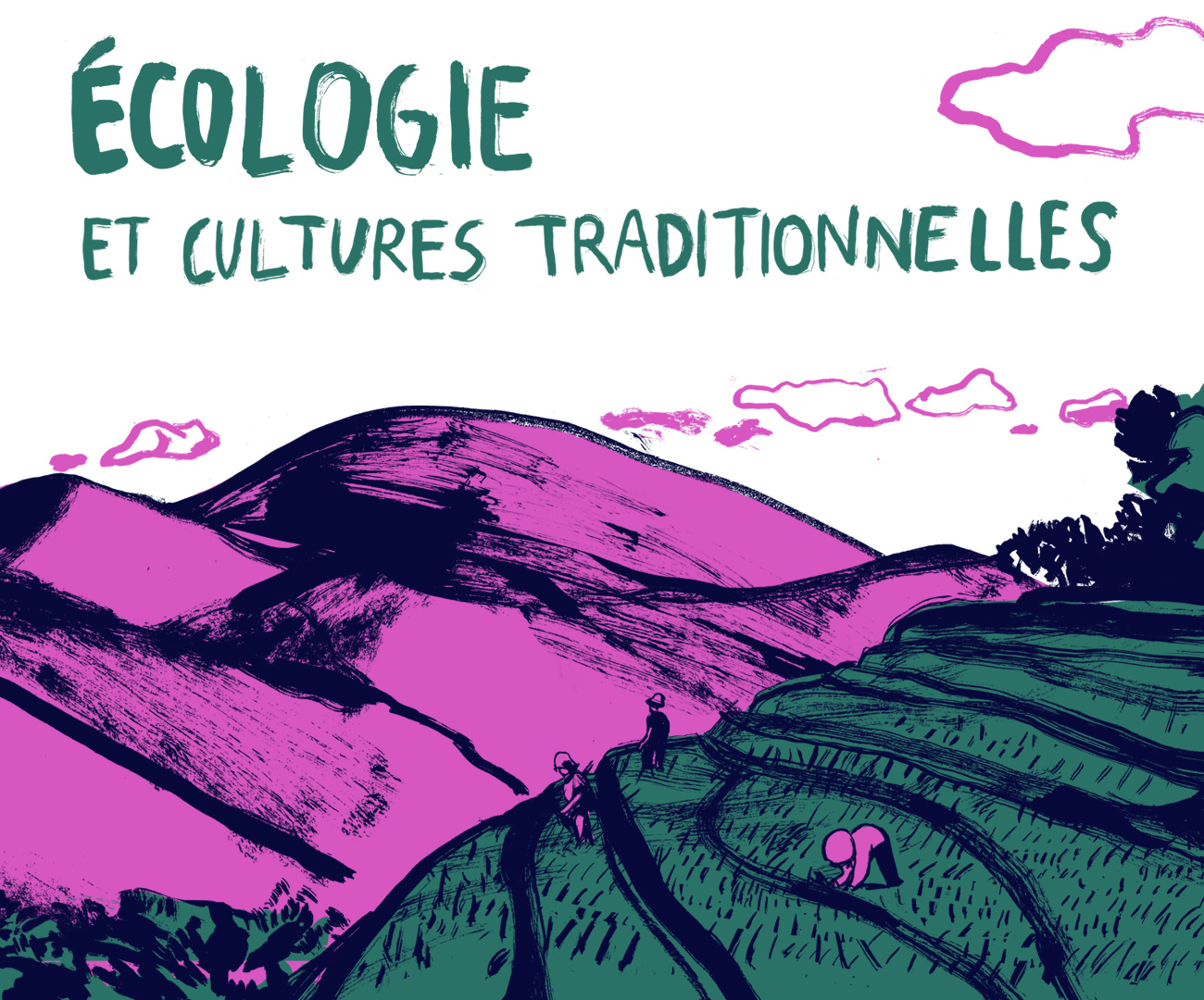
The opposition between nature and culture, theorized by the West, is showing its limits when it comes to preserving living things. In Africa, Oceania and even Europe, populations have managed to keep their traditional cultures alive, and maintain a strong link with nature and the Earth… What if we drew inspiration from their practices to acquire more ecological know-how that respects our planet?
Irène Bellier (anthropologist)
Irène Bellier is director of research at the CNRS, a political anthropologist specializing in globalization issues and the international indigenous peoples’ movement. Vice-President of the International Work Group for Indigenous Peoples.
Alessandro Pignocchi (researcher and comic strip author)
A former cognitive science researcher, Alessandro Pignocchi has launched his comic strip career with his puntish blog. He features politicians converted to Amazonian animism, punk chickadees and a Jivaro anthropologist studying the café at Bois-le-Roi station. His work is inspired by the struggles at Notre-Dame-des-Landes and those led by the Soulèvements de la terre. With Philippe Descola, he recently published a hybrid book combining political conversation and comic strips.
Paloma Moritz (journalist, director)
Paloma Moritz is a journalist and film-maker. She worked for four years for the independent media Spicee, where she developed an editorial line based on impact and solutions journalism. She produced a dozen reports and documentaries. Her favorite themes: the overhaul of our democracy, gender inequality and the ecological emergency.
Today, she runs the ecology section of the independent media outlet Blast, and every week she produces short videos, reports and interviews with personalities and scientists to help people better understand current events, political discourse and ecological issues: How can we adapt? How can we act? How can we reduce our emissions? How can we invent another, more sustainable and fairer society?
With Irène Bellier (anthropologist) and Alessandro Pignocchi (researcher and comic strip author)
Moderator: Paloma Moritz
With the participation of Justine Bohbote, heritage curator, in charge of the Sport and Health department at Mucem.
The opposition between nature and culture, theorized by the West, is showing its limits when it comes to preserving living things. In Africa, Oceania and even Europe, populations have managed to keep their traditional cultures alive, and maintain a strong link with nature and the Earth… What if we drew inspiration from their practices to acquire more ecological know-how that respects our planet?
Irène Bellier (anthropologist)
Irène Bellier is director of research at the CNRS, a political anthropologist specializing in globalization issues and the international indigenous peoples’ movement. Vice-President of the International Work Group for Indigenous Peoples.
Alessandro Pignocchi (researcher and comic strip author)
A former cognitive science researcher, Alessandro Pignocchi has launched his comic strip career with his puntish blog. He features politicians converted to Amazonian animism, punk chickadees and a Jivaro anthropologist studying the café at Bois-le-Roi station. His work is inspired by the struggles at Notre-Dame-des-Landes and those led by the Soulèvements de la terre. With Philippe Descola, he recently published a hybrid book combining political conversation and comic strips.
Paloma Moritz (journalist, director)
Paloma Moritz is a journalist and film-maker. She worked for four years for the independent media Spicee, where she developed an editorial line based on impact and solutions journalism. She produced a dozen reports and documentaries. Her favorite themes: the overhaul of our democracy, gender inequality and the ecological emergency.
Today, she runs the ecology section of the independent media outlet Blast, and every week she produces short videos, reports and interviews with personalities and scientists to help people better understand current events, political discourse and ecological issues: How can we adapt? How can we act? How can we reduce our emissions? How can we invent another, more sustainable and fairer society?
Related podcasts
View all available podcasts (0)
Les Procès du siècle — Oser l'utopie
Cette quatrième saison des Procès du siècle propose d’explorer les utopies concrètes et réelles, les nouveaux modèles à inventer pour avancer vers plus de démocratie, plus d’écologie, plus de solidarité.
Pour vivre mieux, ensemble.
Cette saison 4 parlera d’éducation, de soin, de numérique, d’économie, d’architecture, d’agriculture, de circulations, de respect, de consentement, d’intelligence artificielle, des arbres et des oiseaux. Nous essaierons même parfois d’en rire.
Les Procès du siècle — Luttes en partage
La saison 3 des Procès du siècle en podcast
Une série de rencontres imaginée et produite par le Mucem en collaboration avec Grégoire Ingold.
Un podcast produit et réalisé par Copie Carbone et illustré par Benoît Guillaume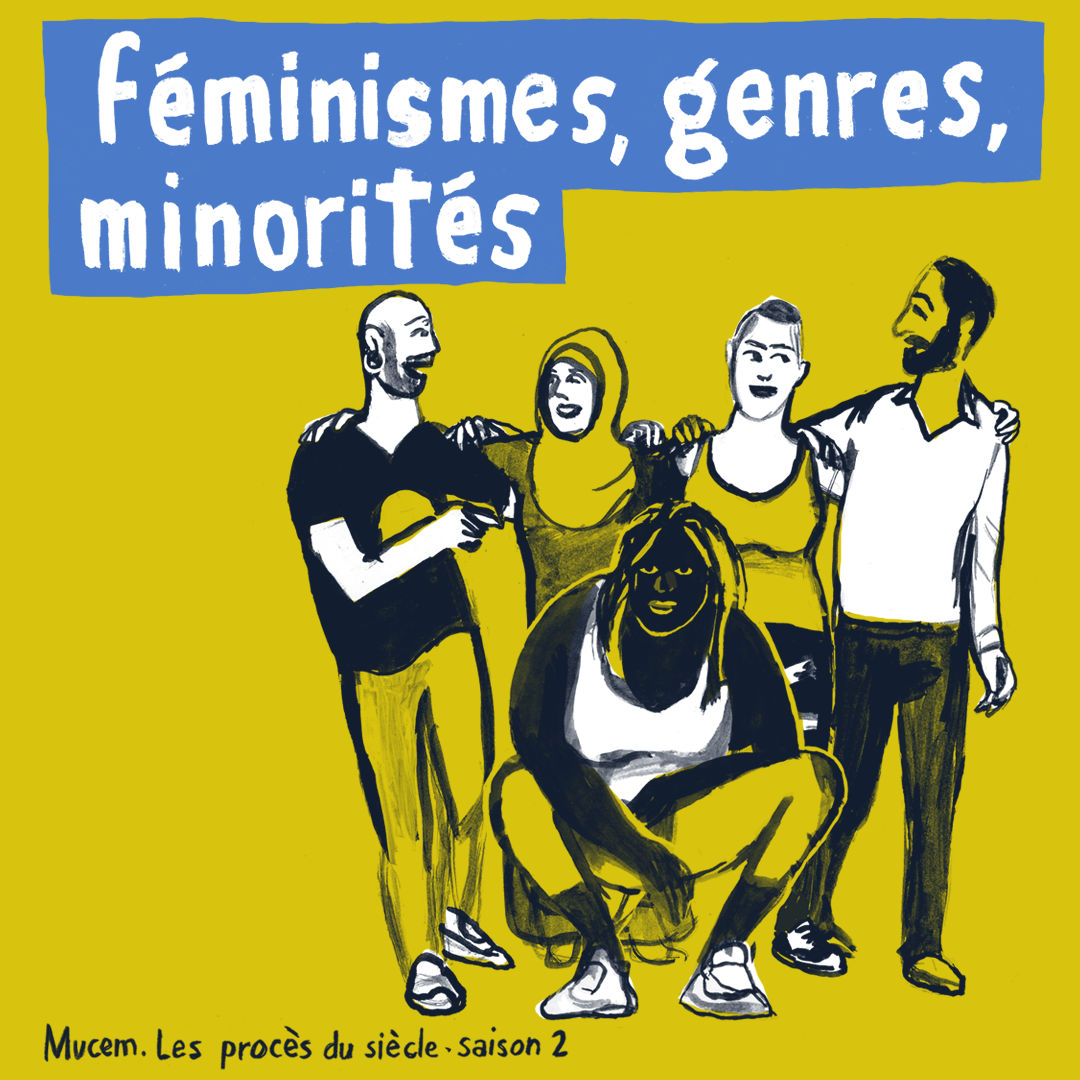
Les procès du siècle — Féminismes, genres, minorités.
Une série de rencontres imaginée et produite par le Mucem.
Réunissant témoins, spécialistes et pièces à conviction, Les Procès du siècle ouvrent un espace d’échanges citoyens.
Après une première saison consacrée aux questions environnementales, cette deuxième saison est dédiée aux minorités dominées, et à leurs manières de s’exprimer, de résister, de revendiquer leurs droits.