Corniche Kennedy
Ciné-dimanche
By Dominique Cabrera (France, 2016, 1:34)
With Lola Créton, Alain Demaria, Aïssa Maïga…
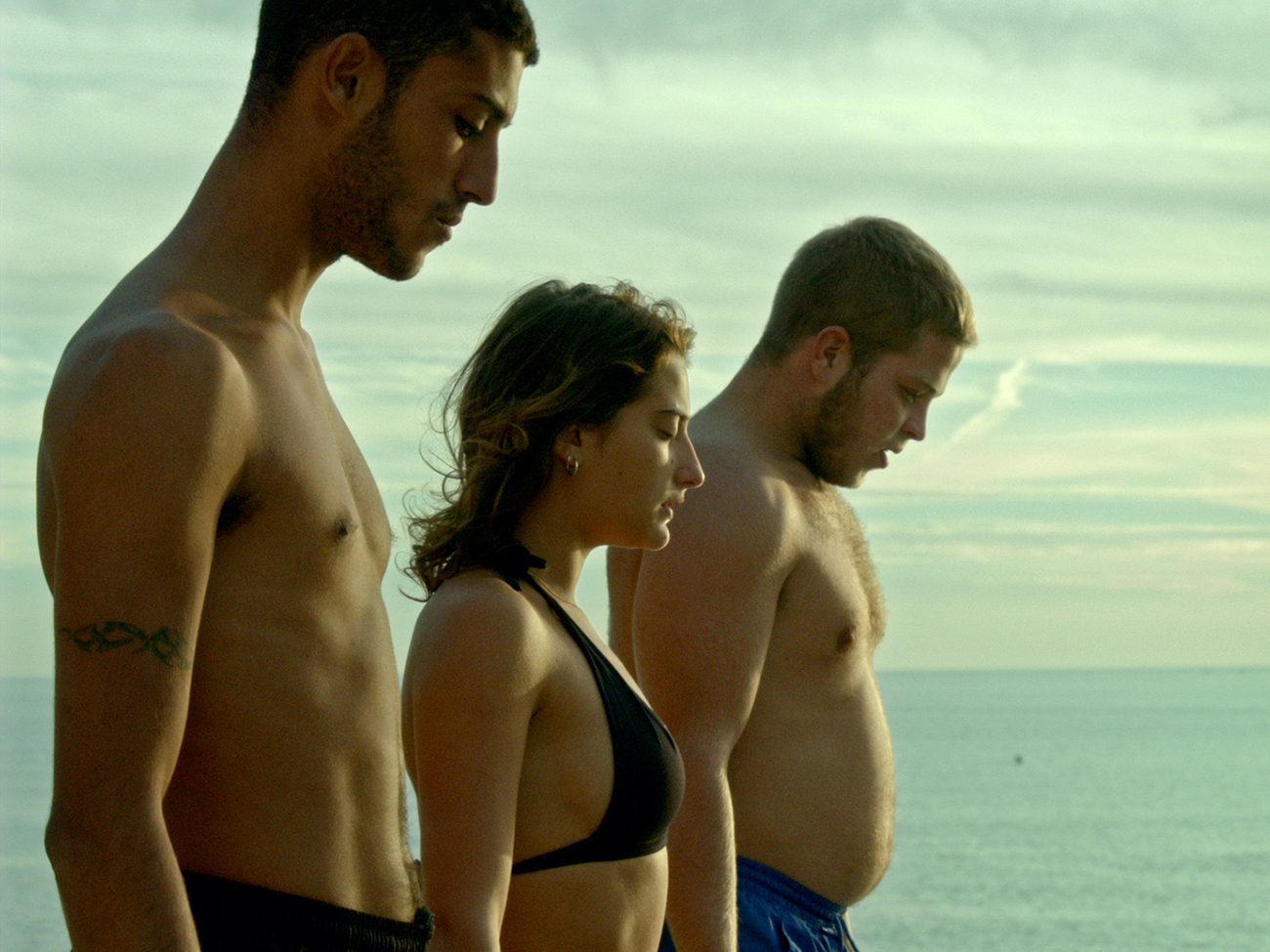
In the blue of the Mediterranean, at the foot of luxurious villas, Marseille’s youngsters defy the laws of gravity. Marco, Mehdi, Franck, Mélissa, Hamza, Mamaa, Julie: girls and boys dive, fly, take risks to live stronger. Suzanne devours them with her eyes from her chic villa. Their free bodies, their excesses. She wants in. She’s going to be.
Based on the novel by Maylis de Kerangal, a sensually beautiful work about adolescence, filmed like a leap into the void.
Screening followed by a discussion with director Dominique Cabrera and author Maylis de Kerangal, who will read a few pages from her book Corniche Kennedy.
Moderated by Antonia Naïm (programmer).
Buy your tickets
Dominique Cabrera
Born in Relizane, Algeria, into a pied-noir family repatriated to France in 1962, Dominique Cabrera graduated in literature, then entered IDHEC. In 1981, she directed her first short film, J’ai droit à la parole, and went on to make a number of documentaries, including Chronique d’une banlieue ordinaire, Une poste à la Courneuve and Rester là-bas.
Documentary and fiction blend in the cinema of Dominique Cabrera, who made her first feature film Demain et encore demain in 1995. His next films include L’Autre Côté de la mer (1997, starring Claude Brasseur), Nadia et les hippopotames (1999, presented at the Cannes Film Festival in the “Un certain regard” section), Le Lait et la tendresse humaine (2001, starring Patrick Bruel), Folle embellie (2004, starring Miou-Miou and Jean-Pierre Léaud), Ça ne peut pas continuer comme ça (2012), Grandir (2013) and Corniche Kennedy (2016).
Maylis de Kerangal
Born in Toulon, Maylis de Kerangal spent her childhood in Le Havre. She published her first novel, Je marche sous un ciel de traîne, in 2000, followed by La Vie voyageuse in 2003, and Ni fleurs ni couronnes in 2006. In 2008, her novel Corniche Kennedy was shortlisted for several literary prizes, including the Médicis and Femina awards. At the same time, she set up Editions du Baron perché, a publishing house specializing in children’s books, where she worked from 2004 to 2008, before devoting herself to writing. She won the 2010 Médicis prize for Naissance d’un pont, then the 2012 Landerneau prize for Tangentes vers l’est. In 2014, Réparer les vivants won the Prix Orange du livre, the Prix RTL-LIRE, the Prix Relay des voyageurs and the Prix des lecteurs de l’Express-BFM TV. The novel is adapted for film by Katell Quillévéré starring Tahar Rahim, Emmanuelle Seigner and Anne Dorval, in 2016. Corniche Kennedy was adapted for the screen in 2017 by Dominique Cabrera.
Antonia Naim
After studying cinema, Antonia Naim worked as a journalist and film critic, festival organizer, director and programmer of public and private cinemas (Lucernaire and Studio cinemas in Aubervilliers, Jacques Prévert in Gonesse, Gérard Philipe in Vénissieux). In 2013, she took part in the Mucem’s opening cultural program, designing the film cycle Méditerranée, une traversée en images. A member of professional juries and institutional commissions in the field of cinema, she is interested in the challenges of public and territorial policies in the field of image education and distribution.
By Dominique Cabrera (France, 2016, 1:34)
With Lola Créton, Alain Demaria, Aïssa Maïga…
In the blue of the Mediterranean, at the foot of luxurious villas, Marseille’s youngsters defy the laws of gravity. Marco, Mehdi, Franck, Mélissa, Hamza, Mamaa, Julie: girls and boys dive, fly, take risks to live stronger. Suzanne devours them with her eyes from her chic villa. Their free bodies, their excesses. She wants in. She’s going to be.
Based on the novel by Maylis de Kerangal, a sensually beautiful work about adolescence, filmed like a leap into the void.
Screening followed by a discussion with director Dominique Cabrera and author Maylis de Kerangal, who will read a few pages from her book Corniche Kennedy.
Moderated by Antonia Naïm (programmer).
Buy your tickets
Dominique Cabrera
Born in Relizane, Algeria, into a pied-noir family repatriated to France in 1962, Dominique Cabrera graduated in literature, then entered IDHEC. In 1981, she directed her first short film, J’ai droit à la parole, and went on to make a number of documentaries, including Chronique d’une banlieue ordinaire, Une poste à la Courneuve and Rester là-bas.
Documentary and fiction blend in the cinema of Dominique Cabrera, who made her first feature film Demain et encore demain in 1995. His next films include L’Autre Côté de la mer (1997, starring Claude Brasseur), Nadia et les hippopotames (1999, presented at the Cannes Film Festival in the “Un certain regard” section), Le Lait et la tendresse humaine (2001, starring Patrick Bruel), Folle embellie (2004, starring Miou-Miou and Jean-Pierre Léaud), Ça ne peut pas continuer comme ça (2012), Grandir (2013) and Corniche Kennedy (2016).
Maylis de Kerangal
Born in Toulon, Maylis de Kerangal spent her childhood in Le Havre. She published her first novel, Je marche sous un ciel de traîne, in 2000, followed by La Vie voyageuse in 2003, and Ni fleurs ni couronnes in 2006. In 2008, her novel Corniche Kennedy was shortlisted for several literary prizes, including the Médicis and Femina awards. At the same time, she set up Editions du Baron perché, a publishing house specializing in children’s books, where she worked from 2004 to 2008, before devoting herself to writing. She won the 2010 Médicis prize for Naissance d’un pont, then the 2012 Landerneau prize for Tangentes vers l’est. In 2014, Réparer les vivants won the Prix Orange du livre, the Prix RTL-LIRE, the Prix Relay des voyageurs and the Prix des lecteurs de l’Express-BFM TV. The novel is adapted for film by Katell Quillévéré starring Tahar Rahim, Emmanuelle Seigner and Anne Dorval, in 2016. Corniche Kennedy was adapted for the screen in 2017 by Dominique Cabrera.
Antonia Naim
After studying cinema, Antonia Naim worked as a journalist and film critic, festival organizer, director and programmer of public and private cinemas (Lucernaire and Studio cinemas in Aubervilliers, Jacques Prévert in Gonesse, Gérard Philipe in Vénissieux). In 2013, she took part in the Mucem’s opening cultural program, designing the film cycle Méditerranée, une traversée en images. A member of professional juries and institutional commissions in the field of cinema, she is interested in the challenges of public and territorial policies in the field of image education and distribution.