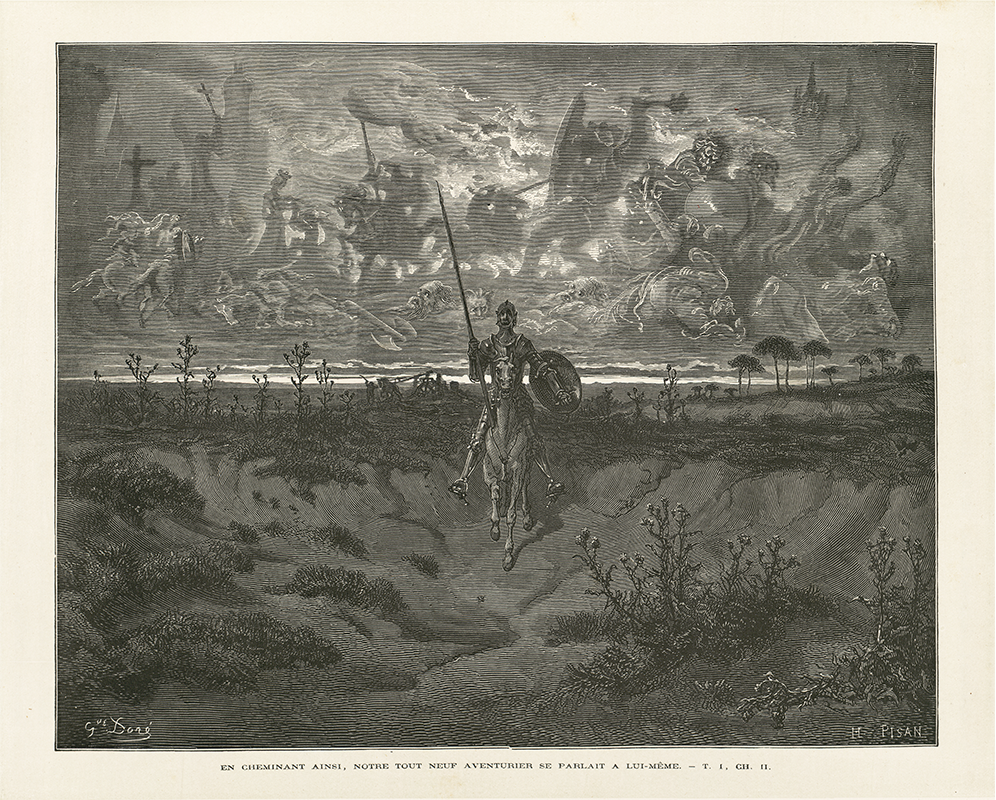
This cultural and scientific event brings together personalities from the worlds of literature, art, cinema and social sciences to discuss the "sad figure" of Don Quixote, as funny as he is moving.
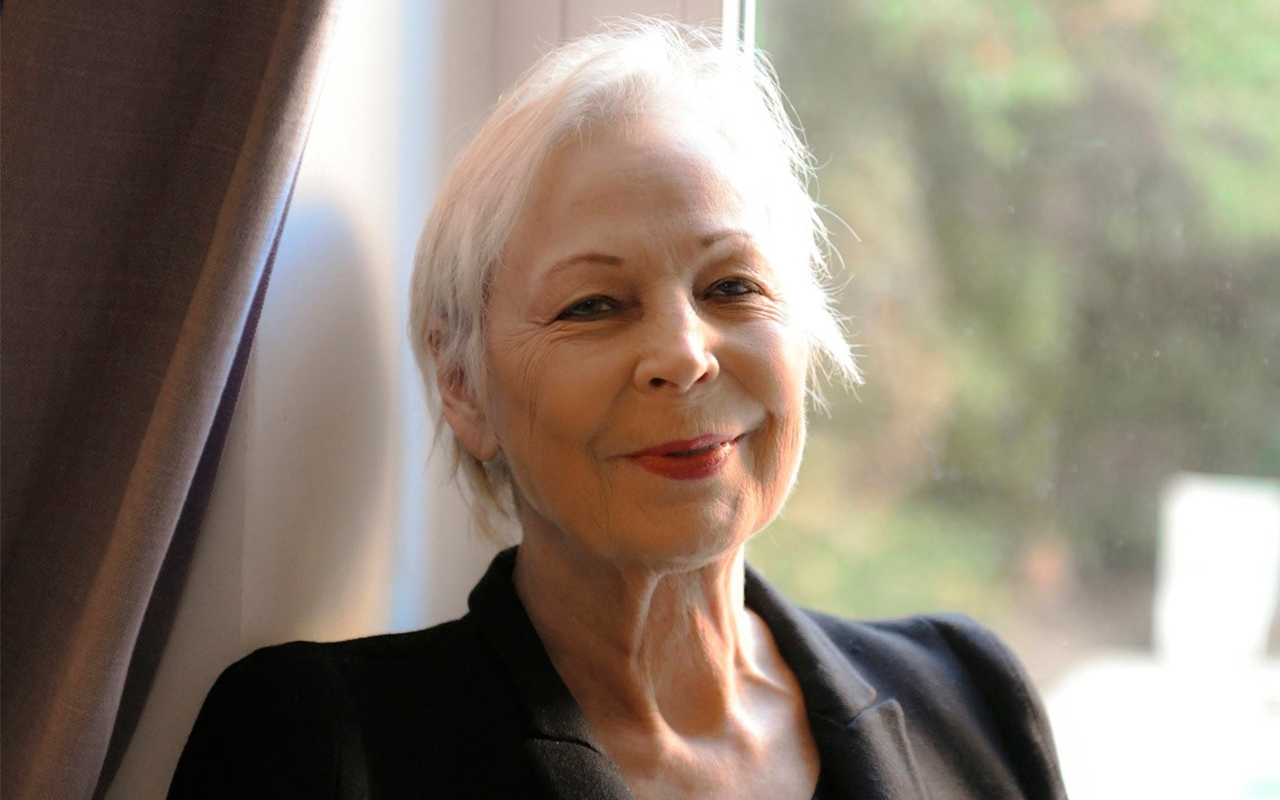
We’ll walk through the exhibition together, following some of the paths it takes, before a literary evening where we’ll dream on our feet in the company of writer Lydie Salvayre and all the day’s participants.
9:30am to 10:00am Don Quixote invites himself to the Mucem: exhibition presentation
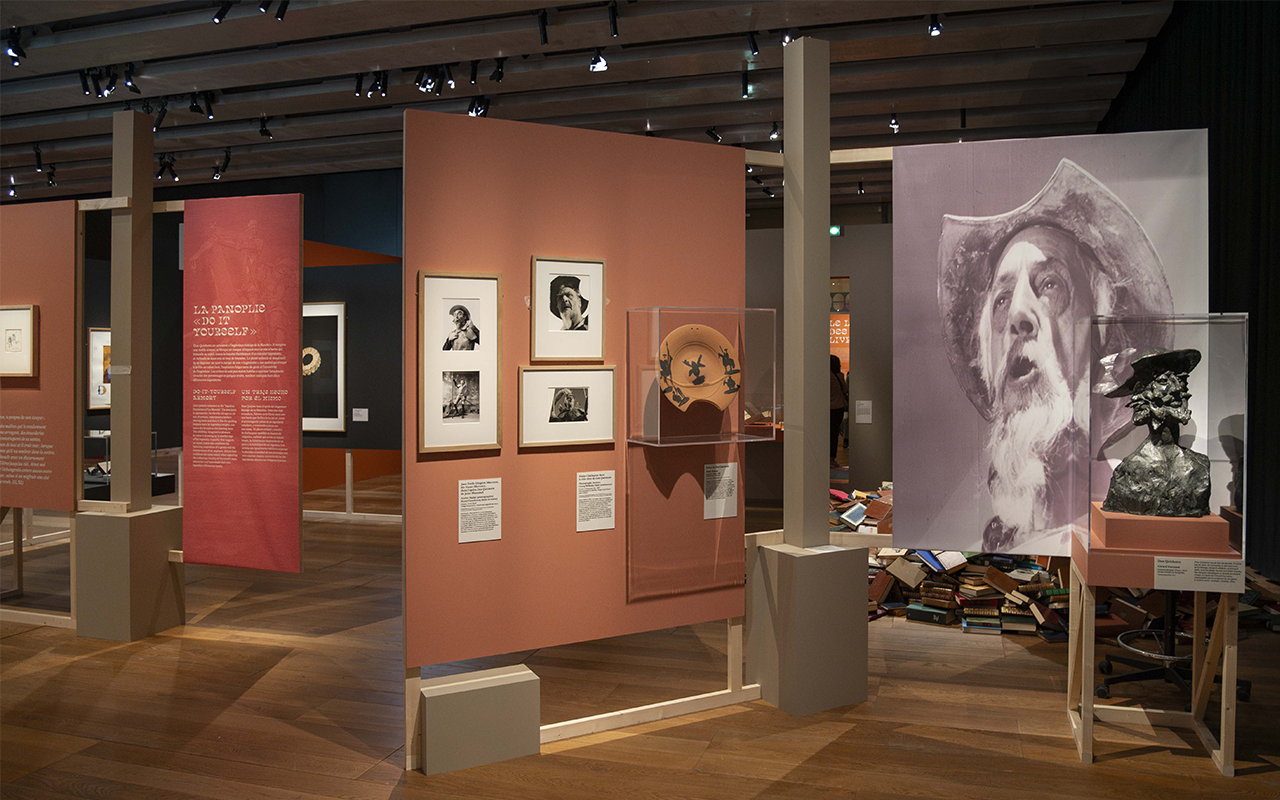
Welcome by Marie-Charlotte CALAFAT, Scientific Director of the Mucem, and presentation of the exhibition by curators Aude FANLO and Hélia PAUKNER.
Aude Fanlo is in charge of Mucem’s research department and Mucemlab, and curated Antoine d’Agata’s Psychodémie exhibition in connection with the “Vivre au temps du Confinement” collection she coordinated. Helia Paukner is in charge of Mucem’s Contemporary Art department, and curated the exhibitions Laure Prouvost (2025) and Clément Cogitore’s Ferdinandea (2026). Together, they curated the exhibition Don Quichotte at the Mucem.
10 a.m. to 10:45 a.m. Opening lecture -Why read Don Quixote today?
William Marx questions our times through the eyes of the visionary, mischievous hero that is Don Quixote.
William Marx is Professor of Comparative Literature at the Collège de France. He questions the notion of literature in favor of that of the “world library”, where Don Quixote takes pride of place. He is the author of the radio series “Un été avec don Quichotte” on France Inter (published in 2024 by Radio France/Editions des équateurs).
11 a.m. to 12:30 p.m. – Getting lost in history
The novel written by Cervantes in 1605, and the very life of its author, condense a cultural history at the crossroads of Europe and the Mediterranean.
11 a.m. to 11:45 a.m. - Cervantes without his strawberries? by José Manuel Lucía Megías
José Manuel Lucía MEGIAS is Professor of Literature and Philology at Madrid’s Complutense University, and a specialist in Cervantes, to whom he has dedicated numerous books and exhibitions. In 2025, he was scientific advisor for the Don Quichotte exhibition at the Mucem and for Alejandro Amenábar’s film Cervantès avant don Quichotte, and published Cervantes íntimo (Barcelona, Plaza y janes).
11:45 to 12:15 - Laughing in the face of history's violence, by Brian Sandberg
Brian SANDBERG is a historian at the University of Illinois, specializing in France, Europe and the Mediterranean in the modern era. He is currently Senior Fellow at the Institut Méditerranéen de recherches avancées (IMERA) on the Crusades.
He has published Warrior Pursuits: Noble Culture and Civil Conflict in Early Modern France (2010); War and Conflict in the Early Modern World (2016); The Grand Ducal Medici and their Archive (2016).
12:15 to 12:30 pm -Tarzan, Don Quixote and us.
screening of Hassen Ferhani’s short film, followed by an interview with the director
Hassen Ferhani is a feature film director (notably Dans ma tête un rond-point in 2015 and 143 rue du Désert in 2019). In 2013, he directed the short film Tarzan, Don Quichotte et nous (Une chambre à soi), a moving, madcap cinephile stroll through the Cervantès district of Algiers, presented in the exhibition
2:00 to 3:45 p.m. – To be a donkey or to become a goat?
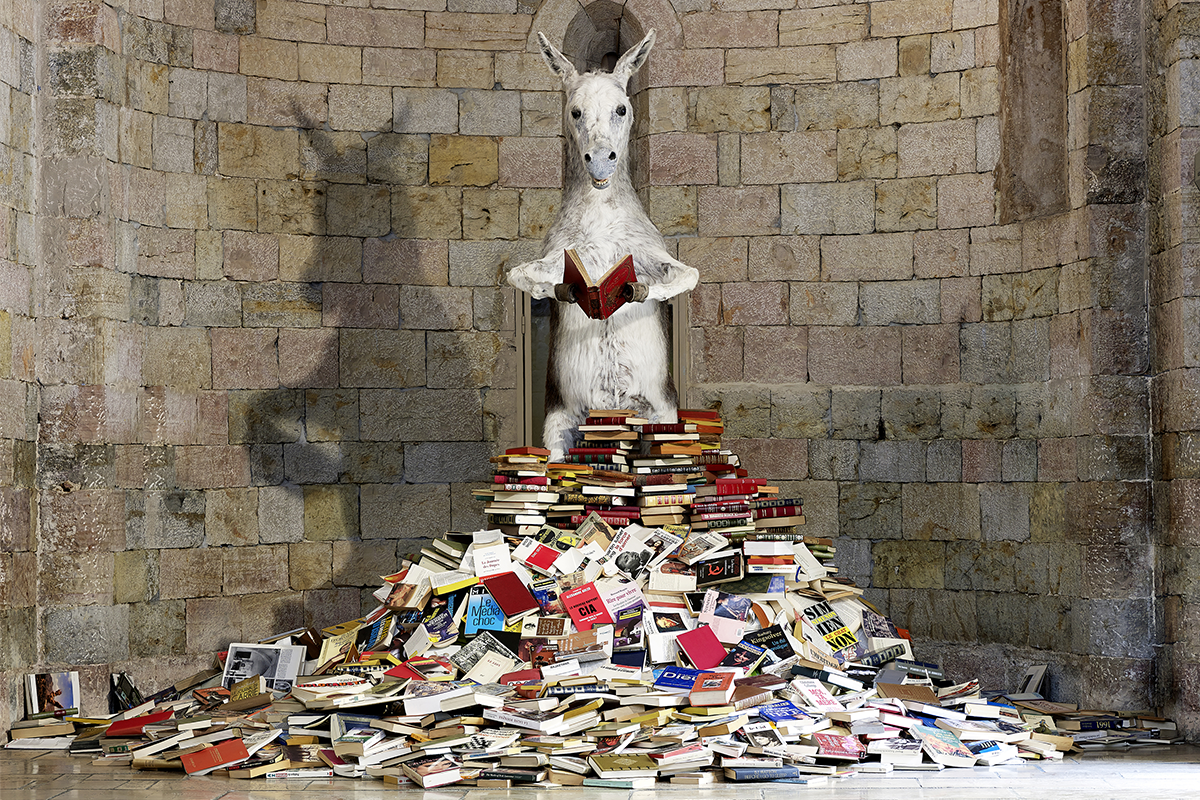
Don Quixote is funny, which means he’s both hilarious and bizarre. The laughter provoked by the knight’s extravagant illusions is complex, engaging and caustic: let’s laugh at him, let’s laugh with him, let’s laugh at ourselves and at the intelligence of being “stupid”!
2:00 pm to 2:30 pm - Le cheval, l'âne et la chèvre, a fable by Jean-Raymond Fanlo
Jean-Raymond FANLO is professor emeritus of Renaissance literature at the University of Aix-Marseille, philologist and translator. He translated Don Quichotte for the Livre de poche classique (Laure Bataillon prize in 2015) and is scientific advisor to the exhibition.
2:30 pm to 3:15 pm - Idiocy in art, a conversation with Pilar Albarracin and Morgan Labar, under the watchful eye of Francisco Goya.
Spanish artist Pilar ALBARRACIN presents her work Asneria in the exhibition, a satire of false erudition inspired by Goya’s Caprices. Morgan LABAR is an art historian and critic, specializing in the history of (assumed) stupidity in contemporary art. He is currently director of the Ecole nationale supérieure des Beaux-arts de Lyon.
3:15pm to 3:45pm - Beating the countryside with Abraham Poincheval
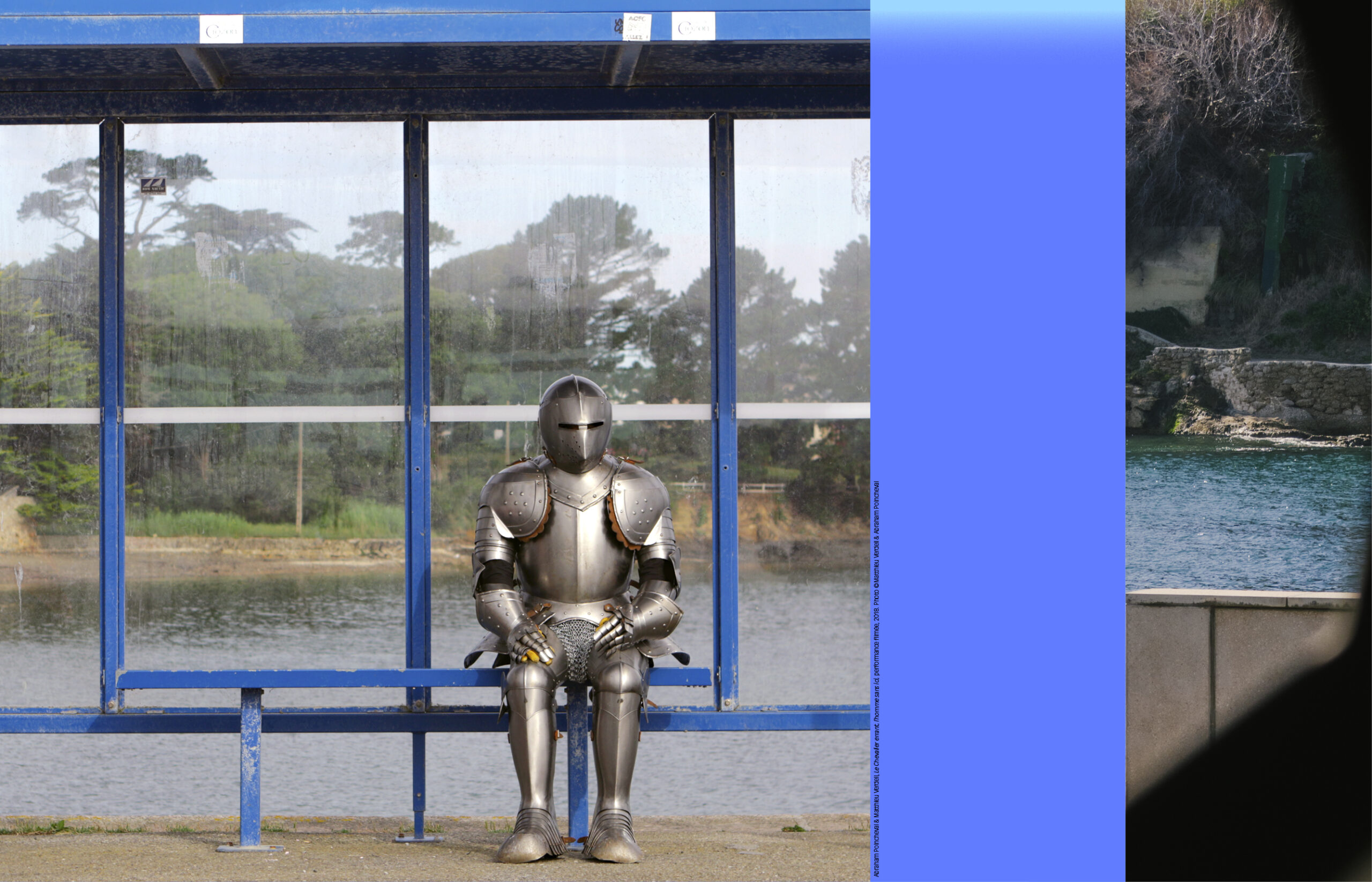
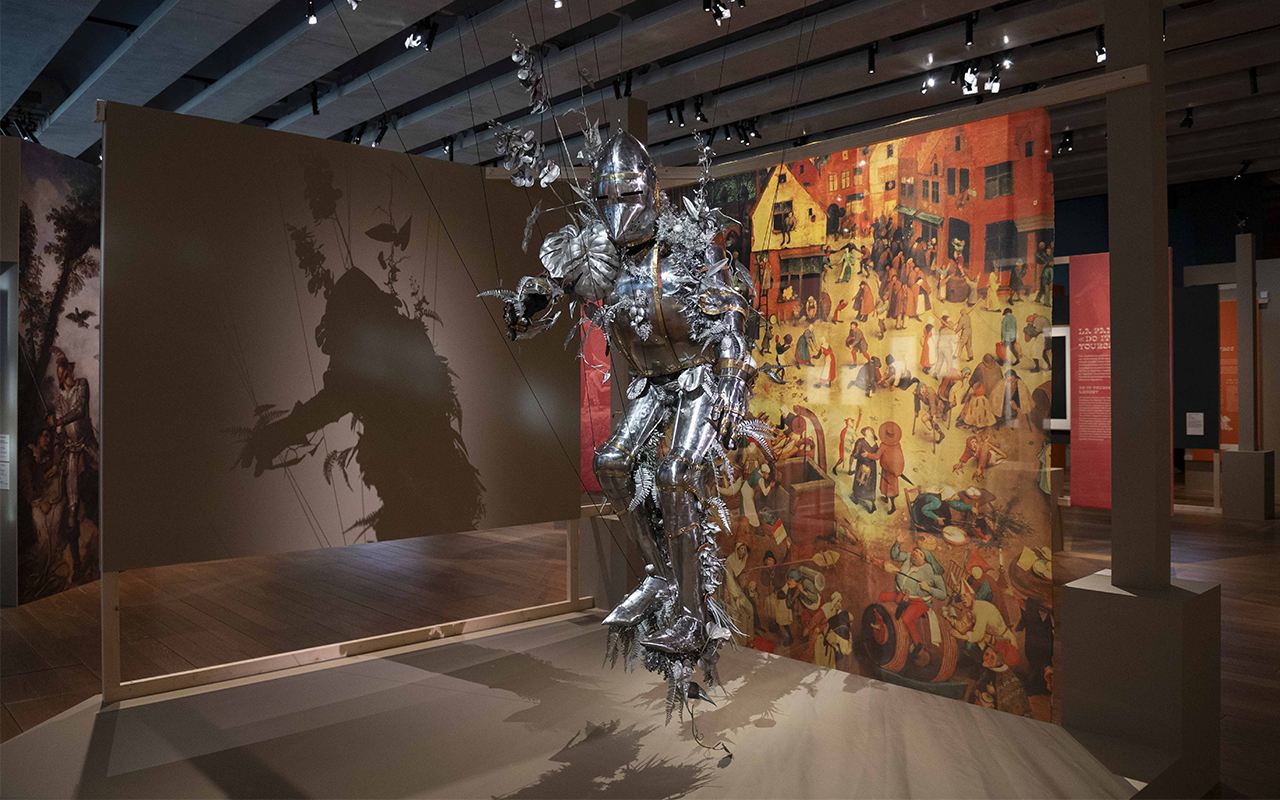
Abraham POINCHEVAL is a multi-disciplinary artist, who encloses himself in sculptures to conduct nomadic experiments. In 2018, he criss-crossed Brittany in a suit of armor for his performance Le Chevalier errant – l’homme sans ici, filmed by director Mathieu Verdeil (A7 production). The armor and film are presented in the exhibition.
4:00 pm to 6:00 pm – The author, between reality and fiction
World Copyright Day has been set for April 23, in homage to Cervantes. Yet no one has been more translated, plagiarized, hijacked and reinvented. We look back at the concrete and sometimes unexpected questions that the author’s authority poses for us, from the ingenuity of our hidalgo to the Artificial Intelligence of the 21st century.
4:00 to 4:30 pm - Who's first? Invention in the Renaissance, by Samir Boumedienne
Samir BOUMEDIENE is a historian of science and the arts at IRHIM (CNRS/Ecole normale supérieure), with a particular interest in the notion of discovery during the Renaissance, from both an intellectual and political perspective. His books include La colonisation du savoir. Une histoire des plantes médicinales du “Nouveau Monde” (1492-1750), Vaulx-en velin, Les éditions des mondes à faire, 2016 (republished by Folio Gallimard in 2022) and since 2025, he has led the seminar “Emboîtements – boîtes, épistémologie, capitalisme, images” at Mucemlab.
4:30 pm to 5:00 pm - Copyright from the 17th century to the present day, in conversation with Roger Chartier and Marie Anne Ferry-Fall
Roger CHARTIER is director of research at the EHESS and holds the “Ecrits et cultures” chair at the Collège de France, where he has given several lectures on the works of Cervantes. His research focuses on the history of books and reading. He has devoted several books and lectures to Cervantes, and has published Cardenio, entre Cervantes et Shakespeare (Gallimard, 2011) and Inscrire et effacer, Culture écrite et littérature (Xie-XVIIIe siècles (EHESS/Gallimard/Seuil, 2005). A lawyer by training, Marie Anne Ferry-Fall is Managing Director of ADAGP (Société des auteurs dans les arts graphiques et plastiques).
5.20pm to 6.10pm - From art brut to bestsellers, conversation with Baptiste Brun and Gisèle Sapiro
Baptiste BRUN is Professor of Anthropology of Contemporary Art at the University of Rennes II, at the intersection of artistic primitivism, psychiatry and postcolonial studies; he curated with Isabelle Marquette the Jean Dubuffet, un barbare en Europe exhibition in 2019 at the Mucem. Gisèle Sapiro is Director of Research at EHESS, specializing in the sociology of intellectuals, literature and translation. Her latest book, Qu’est-ce qu’un auteur mondial? (Seuil, 2024), analyzes the making of international fame in the 20th and 21st centuries. She has also written Peut-on dissocier l’oeuvre de l’auteur? Point 2024 and La responsabilité de l’écrivain (Seuil, 2011).
6:00 p.m. to 7:00 p.m. – Meet the authors in the Forum
Get together and sign books with the day’s authors and artists, authors from the Don Quichotte catalog and Lydie Salvayre.
In partnership with EHESS, IMERA and Université d’Aix-Marseille
This cultural and scientific event brings together personalities from the worlds of literature, art, cinema and social sciences to discuss the "sad figure" of Don Quixote, as funny as he is moving.
We’ll walk through the exhibition together, following some of the paths it takes, before a literary evening where we’ll dream on our feet in the company of writer Lydie Salvayre and all the day’s participants.
9:30am to 10:00am Don Quixote invites himself to the Mucem: exhibition presentation
Welcome by Marie-Charlotte CALAFAT, Scientific Director of the Mucem, and presentation of the exhibition by curators Aude FANLO and Hélia PAUKNER.
Aude Fanlo is in charge of Mucem’s research department and Mucemlab, and curated Antoine d’Agata’s Psychodémie exhibition in connection with the “Vivre au temps du Confinement” collection she coordinated. Helia Paukner is in charge of Mucem’s Contemporary Art department, and curated the exhibitions Laure Prouvost (2025) and Clément Cogitore’s Ferdinandea (2026). Together, they curated the exhibition Don Quichotte at the Mucem.
10 a.m. to 10:45 a.m. Opening lecture -Why read Don Quixote today?
William Marx questions our times through the eyes of the visionary, mischievous hero that is Don Quixote.
William Marx is Professor of Comparative Literature at the Collège de France. He questions the notion of literature in favor of that of the “world library”, where Don Quixote takes pride of place. He is the author of the radio series “Un été avec don Quichotte” on France Inter (published in 2024 by Radio France/Editions des équateurs).
11 a.m. to 12:30 p.m. – Getting lost in history
The novel written by Cervantes in 1605, and the very life of its author, condense a cultural history at the crossroads of Europe and the Mediterranean.
11 a.m. to 11:45 a.m. - Cervantes without his strawberries? by José Manuel Lucía Megías
José Manuel Lucía MEGIAS is Professor of Literature and Philology at Madrid’s Complutense University, and a specialist in Cervantes, to whom he has dedicated numerous books and exhibitions. In 2025, he was scientific advisor for the Don Quichotte exhibition at the Mucem and for Alejandro Amenábar’s film Cervantès avant don Quichotte, and published Cervantes íntimo (Barcelona, Plaza y janes).
11:45 to 12:15 - Laughing in the face of history's violence, by Brian Sandberg
Brian SANDBERG is a historian at the University of Illinois, specializing in France, Europe and the Mediterranean in the modern era. He is currently Senior Fellow at the Institut Méditerranéen de recherches avancées (IMERA) on the Crusades.
He has published Warrior Pursuits: Noble Culture and Civil Conflict in Early Modern France (2010); War and Conflict in the Early Modern World (2016); The Grand Ducal Medici and their Archive (2016).
12:15 to 12:30 pm -Tarzan, Don Quixote and us.
screening of Hassen Ferhani’s short film, followed by an interview with the director
Hassen Ferhani is a feature film director (notably Dans ma tête un rond-point in 2015 and 143 rue du Désert in 2019). In 2013, he directed the short film Tarzan, Don Quichotte et nous (Une chambre à soi), a moving, madcap cinephile stroll through the Cervantès district of Algiers, presented in the exhibition
2:00 to 3:45 p.m. – To be a donkey or to become a goat?
Don Quixote is funny, which means he’s both hilarious and bizarre. The laughter provoked by the knight’s extravagant illusions is complex, engaging and caustic: let’s laugh at him, let’s laugh with him, let’s laugh at ourselves and at the intelligence of being “stupid”!
2:00 pm to 2:30 pm - Le cheval, l'âne et la chèvre, a fable by Jean-Raymond Fanlo
Jean-Raymond FANLO is professor emeritus of Renaissance literature at the University of Aix-Marseille, philologist and translator. He translated Don Quichotte for the Livre de poche classique (Laure Bataillon prize in 2015) and is scientific advisor to the exhibition.
2:30 pm to 3:15 pm - Idiocy in art, a conversation with Pilar Albarracin and Morgan Labar, under the watchful eye of Francisco Goya.
Spanish artist Pilar ALBARRACIN presents her work Asneria in the exhibition, a satire of false erudition inspired by Goya’s Caprices. Morgan LABAR is an art historian and critic, specializing in the history of (assumed) stupidity in contemporary art. He is currently director of the Ecole nationale supérieure des Beaux-arts de Lyon.
3:15pm to 3:45pm - Beating the countryside with Abraham Poincheval
Abraham POINCHEVAL is a multi-disciplinary artist, who encloses himself in sculptures to conduct nomadic experiments. In 2018, he criss-crossed Brittany in a suit of armor for his performance Le Chevalier errant – l’homme sans ici, filmed by director Mathieu Verdeil (A7 production). The armor and film are presented in the exhibition.
4:00 pm to 6:00 pm – The author, between reality and fiction
World Copyright Day has been set for April 23, in homage to Cervantes. Yet no one has been more translated, plagiarized, hijacked and reinvented. We look back at the concrete and sometimes unexpected questions that the author’s authority poses for us, from the ingenuity of our hidalgo to the Artificial Intelligence of the 21st century.
4:00 to 4:30 pm - Who's first? Invention in the Renaissance, by Samir Boumedienne
Samir BOUMEDIENE is a historian of science and the arts at IRHIM (CNRS/Ecole normale supérieure), with a particular interest in the notion of discovery during the Renaissance, from both an intellectual and political perspective. His books include La colonisation du savoir. Une histoire des plantes médicinales du “Nouveau Monde” (1492-1750), Vaulx-en velin, Les éditions des mondes à faire, 2016 (republished by Folio Gallimard in 2022) and since 2025, he has led the seminar “Emboîtements – boîtes, épistémologie, capitalisme, images” at Mucemlab.
4:30 pm to 5:00 pm - Copyright from the 17th century to the present day, in conversation with Roger Chartier and Marie Anne Ferry-Fall
Roger CHARTIER is director of research at the EHESS and holds the “Ecrits et cultures” chair at the Collège de France, where he has given several lectures on the works of Cervantes. His research focuses on the history of books and reading. He has devoted several books and lectures to Cervantes, and has published Cardenio, entre Cervantes et Shakespeare (Gallimard, 2011) and Inscrire et effacer, Culture écrite et littérature (Xie-XVIIIe siècles (EHESS/Gallimard/Seuil, 2005). A lawyer by training, Marie Anne Ferry-Fall is Managing Director of ADAGP (Société des auteurs dans les arts graphiques et plastiques).
5.20pm to 6.10pm - From art brut to bestsellers, conversation with Baptiste Brun and Gisèle Sapiro
Baptiste BRUN is Professor of Anthropology of Contemporary Art at the University of Rennes II, at the intersection of artistic primitivism, psychiatry and postcolonial studies; he curated with Isabelle Marquette the Jean Dubuffet, un barbare en Europe exhibition in 2019 at the Mucem. Gisèle Sapiro is Director of Research at EHESS, specializing in the sociology of intellectuals, literature and translation. Her latest book, Qu’est-ce qu’un auteur mondial? (Seuil, 2024), analyzes the making of international fame in the 20th and 21st centuries. She has also written Peut-on dissocier l’oeuvre de l’auteur? Point 2024 and La responsabilité de l’écrivain (Seuil, 2011).
6:00 p.m. to 7:00 p.m. – Meet the authors in the Forum
Get together and sign books with the day’s authors and artists, authors from the Don Quichotte catalog and Lydie Salvayre.
In partnership with EHESS, IMERA and Université d’Aix-Marseille