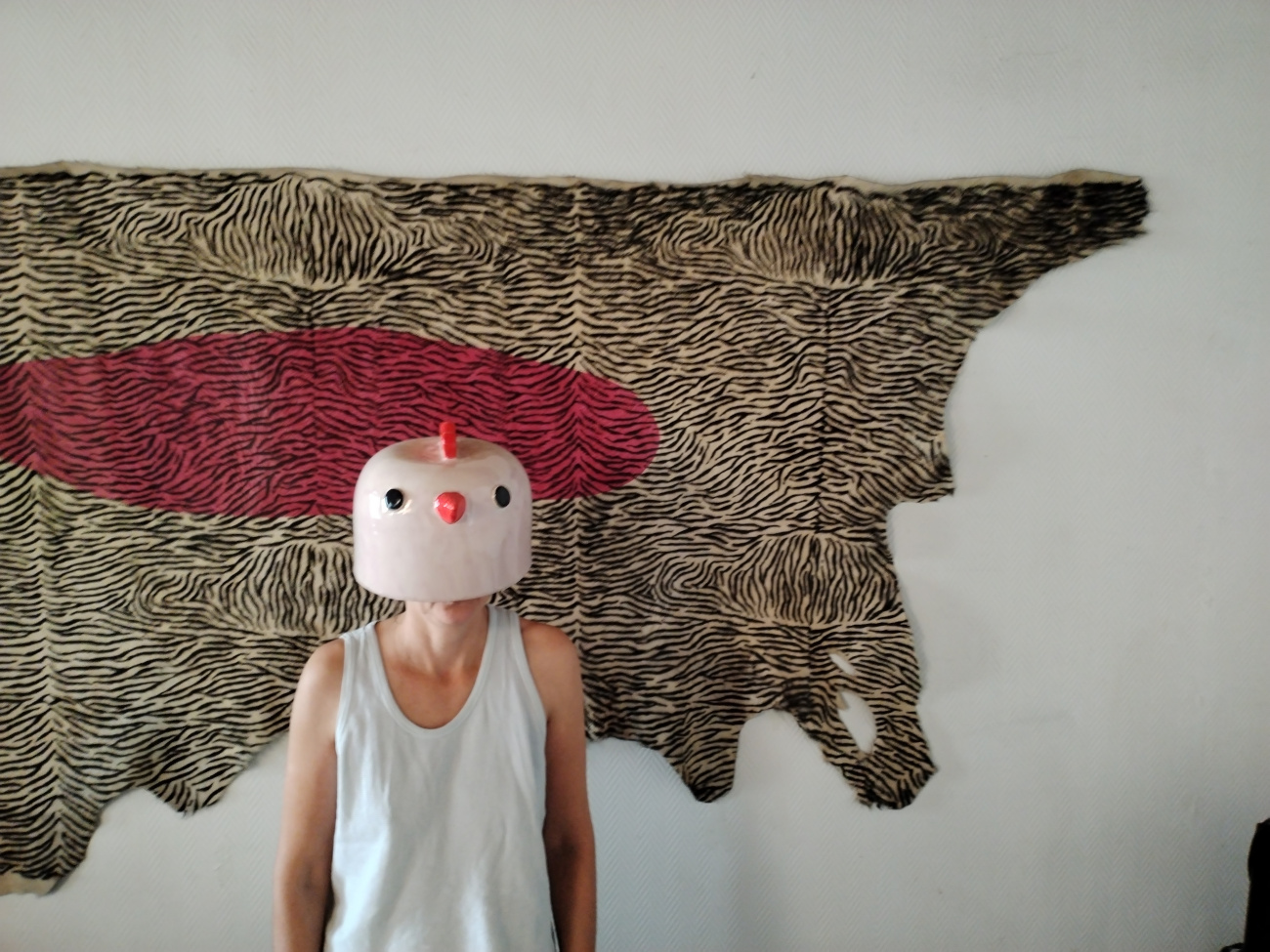
A day of meetings, performances and films
Marseille Festival
How does disability transform art, the art world and representations?
The Festival de Marseille has joined forces with the TRANSFORM! festival of contemporary queer creations to plan this day’s program from the perspective of crip theories. These theories reflect on the intersection of identities – for example, how disability intersects with other identities such as gender, race or sexual orientation – from the perspective of disability.
2:30 pm, Mucem J4 (auditorium) Workshop with Clément and Guillaume Papachristou
How does being disabled change our relationship to desire, sex and touch? What other relationships to bodies and “desirability” can we create when our own bodies are marked by different abilities?
And above all: how can we make room for our desires, and give them bold, joyful artistic form? Artists Guillaume and Clément Papachristou propose an art workshop to make room for these questions.
Open exclusively to adults with physical disabilities.
Free with registration (limited capacity): 04 91 99 00 27 or rp3@festivaldemarseille.com
5pm, Mucem J4 (auditorium) In my voice, other voices A film by No Anger
What is a voice? In the first definition we find, it’s sound, air, vibrating vocal cords. But for No Anger, this doesn’t work. His body short-circuits everything. For a long time, he was ashamed of it. His voice sounded like the rattle of a monster that had to be hidden. But other voices and other words came. So many experiences to appropriate. This is the story told by this feature film.
6pm, Mucem J4 (auditorium) How does disability transform art, the art world and representations? Round table discussion
With : No Anger and Lucie Camous (Ostensible_collectif), John Deneuve, Clément and Guillaume Papachristou
Moderator: Marie Astier
8pm, Mucem J4 (terrace) Tricot de peau A performance by John Deneuve
In this performance reading based on excerpts from his forthcoming new novel (Tricot de corps), John Deneuve addresses the invisibility of his disability, while questioning the injunction to conform to the norm.
The artists
Clément Papachristou is an actor, choreographer and stage director. Interested from an early age in inclusive choreographic practices aimed at excluded audiences, his work focuses particularly on the relationship between the body and collective history. After Almanach (2017), he will create Une tentative presque comme une autre with his brother Guillaume at the Festival de Marseille in 2020, followed by La Grotte in 2022.
Guillaume Papachristou is involved in performing arts projects in Marseille and Brussels. Guillaume has cerebral palsy and is a member of the mixed theater collective Les Arteliers, as well as the inclusive dance project Mixability, directed by choreographer Andrew Graham. For the past five years, he has worked regularly on stage with his twin brother Clément.
John Deneuve lives and works in Marseille. His work combines text, installation, performance, music, sound experimentation, video and painting. John Deneuve is developing a protean universe. Like the pseudonym she has adopted, she pokes fun at codes and conventions, parodying our society with power and seduction. Through her artistic approach, she questions the limits between art and non-art, between taste and bad taste, between codified references and assumed transgressions. John Deneuve is a member of TRANSFORM!
Since 2015, artist and author No Anger has maintained a blog entitled À mon geste défendant, which bears witness, based on his own experience, to a feminist and queer reflection on physical disability. No Anger is graduating in 2019 with a PhD in political science, where i-he analyzes how the worldview produced by television, cinema or advertising impacts the perceptions of women’s and LGBT+ people’s bodies and alienates their sexuality; and examines the ways in which this hegemonic reading can be contested. Through his artistic practice, which combines video art, performance art and literary writing, i-el develops a critical approach to validism. His performances have been presented at ENS Lyon, MAC VAL – Musée d’Art Contemporain du Val-de-Marne, Palais de Tokyo and Centre Pompidou. His work has been awarded the Utopi-e 2023 prize.
Lucie Camous is a researcher, artist and curator. She seeks to create spaces for discussion that enable us to think collectively about the ways in which artists, activists and researchers can devise aesthetic approaches and reading grids for thinking about and expressing antivalidist struggles.
Marie Astier is an artist-researcher. In 2018, she defended a thesis in Performing Arts entitled Présence et représentation du handicap mental sur la scène contemporaine française. Today, she is mainly interested in the question of shared practice between so-called “able-bodied” and “disabled” actors (workshops supported by the Théâtre National Wallonie-Bruxelles, “inclusive school troupe” initiated by the Théâtre de la Colline…).
With its quarterly festival and events, TRANSFORM! offers an international program of contemporary gender issues in Marseille. Multidisciplinary, it brings together artistic practices and queer, feminist and intersectional thinking.
How does disability transform art, the art world and representations?
The Festival de Marseille has joined forces with the TRANSFORM! festival of contemporary queer creations to plan this day’s program from the perspective of crip theories. These theories reflect on the intersection of identities – for example, how disability intersects with other identities such as gender, race or sexual orientation – from the perspective of disability.
2:30 pm, Mucem J4 (auditorium) Workshop with Clément and Guillaume Papachristou
How does being disabled change our relationship to desire, sex and touch? What other relationships to bodies and “desirability” can we create when our own bodies are marked by different abilities?
And above all: how can we make room for our desires, and give them bold, joyful artistic form? Artists Guillaume and Clément Papachristou propose an art workshop to make room for these questions.
Open exclusively to adults with physical disabilities.
Free with registration (limited capacity): 04 91 99 00 27 or rp3@festivaldemarseille.com
5pm, Mucem J4 (auditorium) In my voice, other voices A film by No Anger
What is a voice? In the first definition we find, it’s sound, air, vibrating vocal cords. But for No Anger, this doesn’t work. His body short-circuits everything. For a long time, he was ashamed of it. His voice sounded like the rattle of a monster that had to be hidden. But other voices and other words came. So many experiences to appropriate. This is the story told by this feature film.
6pm, Mucem J4 (auditorium) How does disability transform art, the art world and representations? Round table discussion
With : No Anger and Lucie Camous (Ostensible_collectif), John Deneuve, Clément and Guillaume Papachristou
Moderator: Marie Astier
8pm, Mucem J4 (terrace) Tricot de peau A performance by John Deneuve
In this performance reading based on excerpts from his forthcoming new novel (Tricot de corps), John Deneuve addresses the invisibility of his disability, while questioning the injunction to conform to the norm.
The artists
Clément Papachristou is an actor, choreographer and stage director. Interested from an early age in inclusive choreographic practices aimed at excluded audiences, his work focuses particularly on the relationship between the body and collective history. After Almanach (2017), he will create Une tentative presque comme une autre with his brother Guillaume at the Festival de Marseille in 2020, followed by La Grotte in 2022.
Guillaume Papachristou is involved in performing arts projects in Marseille and Brussels. Guillaume has cerebral palsy and is a member of the mixed theater collective Les Arteliers, as well as the inclusive dance project Mixability, directed by choreographer Andrew Graham. For the past five years, he has worked regularly on stage with his twin brother Clément.
John Deneuve lives and works in Marseille. His work combines text, installation, performance, music, sound experimentation, video and painting. John Deneuve is developing a protean universe. Like the pseudonym she has adopted, she pokes fun at codes and conventions, parodying our society with power and seduction. Through her artistic approach, she questions the limits between art and non-art, between taste and bad taste, between codified references and assumed transgressions. John Deneuve is a member of TRANSFORM!
Since 2015, artist and author No Anger has maintained a blog entitled À mon geste défendant, which bears witness, based on his own experience, to a feminist and queer reflection on physical disability. No Anger is graduating in 2019 with a PhD in political science, where i-he analyzes how the worldview produced by television, cinema or advertising impacts the perceptions of women’s and LGBT+ people’s bodies and alienates their sexuality; and examines the ways in which this hegemonic reading can be contested. Through his artistic practice, which combines video art, performance art and literary writing, i-el develops a critical approach to validism. His performances have been presented at ENS Lyon, MAC VAL – Musée d’Art Contemporain du Val-de-Marne, Palais de Tokyo and Centre Pompidou. His work has been awarded the Utopi-e 2023 prize.
Lucie Camous is a researcher, artist and curator. She seeks to create spaces for discussion that enable us to think collectively about the ways in which artists, activists and researchers can devise aesthetic approaches and reading grids for thinking about and expressing antivalidist struggles.
Marie Astier is an artist-researcher. In 2018, she defended a thesis in Performing Arts entitled Présence et représentation du handicap mental sur la scène contemporaine française. Today, she is mainly interested in the question of shared practice between so-called “able-bodied” and “disabled” actors (workshops supported by the Théâtre National Wallonie-Bruxelles, “inclusive school troupe” initiated by the Théâtre de la Colline…).
With its quarterly festival and events, TRANSFORM! offers an international program of contemporary gender issues in Marseille. Multidisciplinary, it brings together artistic practices and queer, feminist and intersectional thinking.