A blink of the eye and I die
The worlds of Laurent Gaudé
Musical reading “Un battement de cils et je meurs” in conjunction with the event “Les mondes de Laurent Gaudé”, with Laurent Gaudé and Keyvan Chemirani.
Embark on an exceptional musical journey to the Orient of Alexander the Great!
To the sound of the Persian zarb and the Indian santour of the talented multi-instrumentalist Keyvan Chemirani, Laurent Gaudé offers us, on stage, the recital of an unpublished text, entitled “Un battement de cils et je meurs”. In it, the novelist depicts the figure of Alexander the Great and the epic last days of the famous conqueror’s march eastwards… Will he give up his dreams of the end of the world?
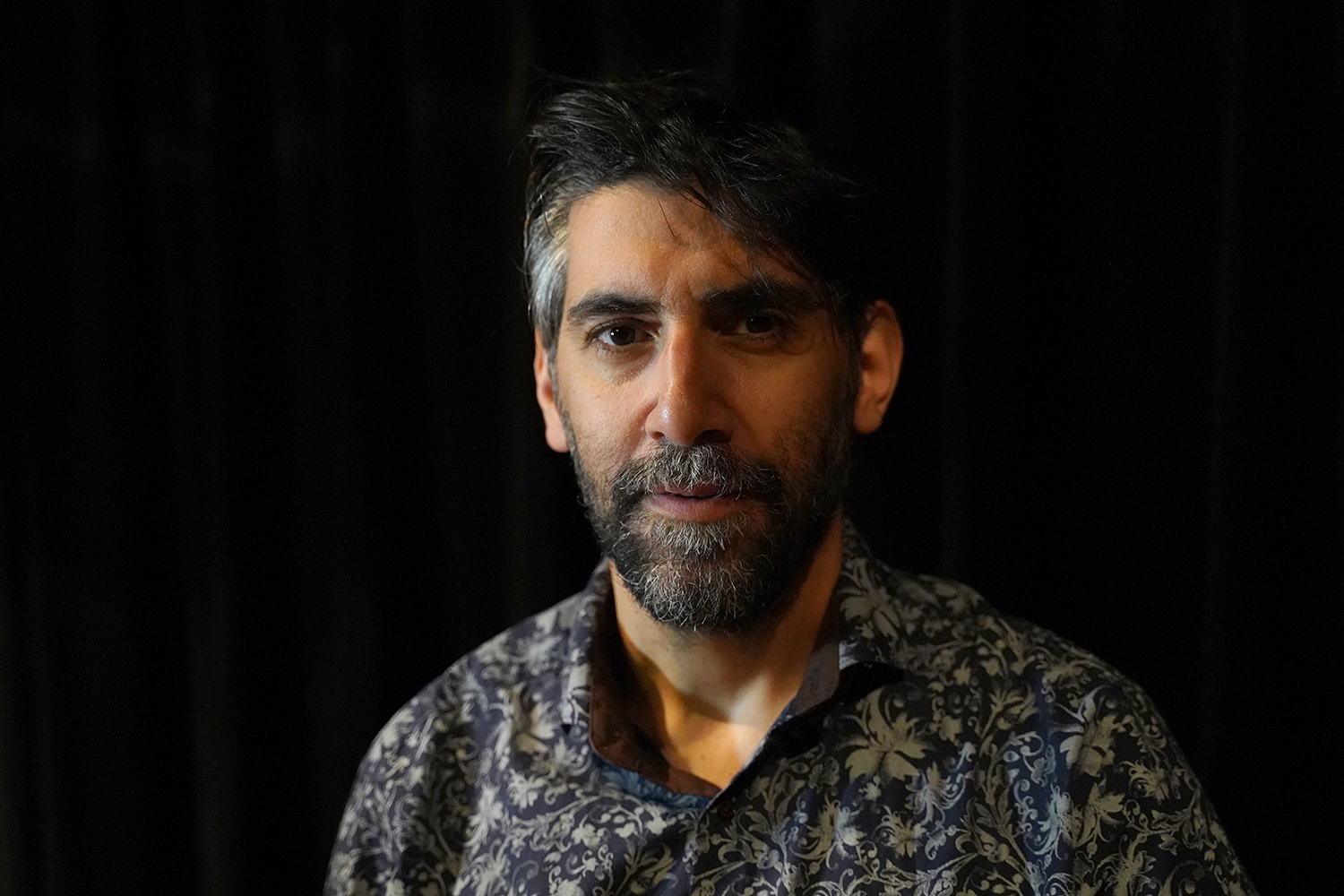
Keyvan Chemirani
Keyvan Chemirani grew up in the Alpes-de-Haute-Provence region of France, steeped in oriental and Mediterranean music. His father and master Djamchid passed on traditional knowledge to him. Keyvan plays the zarb, the percussion instrument used in Persian art music, and the Indian santour, a struck string instrument.
Together with his father Djamchid and brother Bijan, he formed the Chemirani Trio in the late ’90s, which has performed all over the world. While drawing on Persian poetry, the Chemiranis compose and develop modern forms that emphasize polyrhythms and the multiplicity of sounds; the trio unveils to its audience the infinite possibilities of Persian percussion.
A curious musician, Keyvan has toured the world’s music, improvising with numerous artists, singers and instrumentalists: Breton Erik Marchand, Irish-Cretan Ross Daly, South Indian Ragunathan, Sephardic Françoise Atlan, flamenco composer Juan Carmona and his brother Bijan. These improvisations grasp the particular characters of the different traditions and reveal astonishing similarities, showing how Iranian percussion can approach the sound of the Indian tabla, how the Breton language sounds almost Mediterranean. His various musical encounters (flamenco, Ottoman, Greek, Arabo-Andalusian, Carnatic, jazz) have enabled him to grasp both the particular characteristics and the similarities of these different traditions.
Musical reading “Un battement de cils et je meurs” in conjunction with the event “Les mondes de Laurent Gaudé”, with Laurent Gaudé and Keyvan Chemirani.
Embark on an exceptional musical journey to the Orient of Alexander the Great!
To the sound of the Persian zarb and the Indian santour of the talented multi-instrumentalist Keyvan Chemirani, Laurent Gaudé offers us, on stage, the recital of an unpublished text, entitled “Un battement de cils et je meurs”. In it, the novelist depicts the figure of Alexander the Great and the epic last days of the famous conqueror’s march eastwards… Will he give up his dreams of the end of the world?
Keyvan Chemirani
Keyvan Chemirani grew up in the Alpes-de-Haute-Provence region of France, steeped in oriental and Mediterranean music. His father and master Djamchid passed on traditional knowledge to him. Keyvan plays the zarb, the percussion instrument used in Persian art music, and the Indian santour, a struck string instrument.
Together with his father Djamchid and brother Bijan, he formed the Chemirani Trio in the late ’90s, which has performed all over the world. While drawing on Persian poetry, the Chemiranis compose and develop modern forms that emphasize polyrhythms and the multiplicity of sounds; the trio unveils to its audience the infinite possibilities of Persian percussion.
A curious musician, Keyvan has toured the world’s music, improvising with numerous artists, singers and instrumentalists: Breton Erik Marchand, Irish-Cretan Ross Daly, South Indian Ragunathan, Sephardic Françoise Atlan, flamenco composer Juan Carmona and his brother Bijan. These improvisations grasp the particular characters of the different traditions and reveal astonishing similarities, showing how Iranian percussion can approach the sound of the Indian tabla, how the Breton language sounds almost Mediterranean. His various musical encounters (flamenco, Ottoman, Greek, Arabo-Andalusian, Carnatic, jazz) have enabled him to grasp both the particular characteristics and the similarities of these different traditions.