About Mucem
In Marseilles, Mucem asserts itself as the leading museum dedicated to the Mediterranean
Mucem is unique in that it traces, analyzes and sheds light on the ancient foundations of this basin of civilization, and the tensions that run through it right up to the present day. To provide a forum for exchange on Mediterranean issues.
In both its exhibitions and its cultural programming, it offers a multi-disciplinary vision combining anthropology, history, archaeology, art history and contemporary art, to show the public the many facets of the Mediterranean world and its ongoing dialogue with Europe.
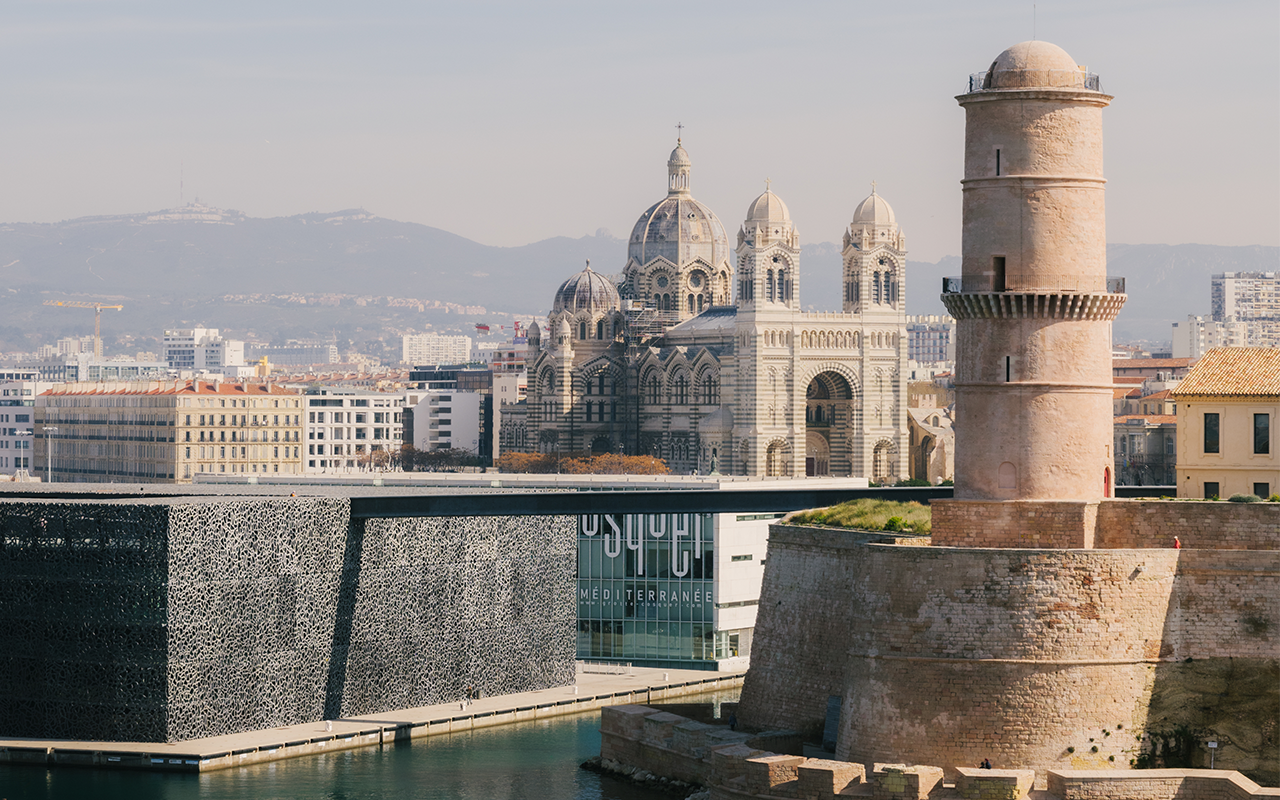
Its roots
As the first museum dedicated to the cultures of the Mediterranean, the Mucem is a first-of-its-kind museum. Born of the metamorphosis of a major social museum – the Musée des arts et traditions populaires created in 1937 in Paris – it represents the first true transfer of a national museum to the regions. Opened in Marseille in June 2013, the Musée des civilisations de l’Europe et de la Méditerranée (Mucem) joined the ranks of the world’s 50 most visited museums the following year.
A cultural city
Mucem focuses on the contemporary civilizations of Europe and the Mediterranean. Its collections comprise more than 350,000 objects, as well as a large documentary collection, corresponding to a total of one million works, documents and objects; an exceptional wealth showcased through an ambitious program of permanent and temporary exhibitions.
A museum for the 21st century, it aims to be a true cultural city covering a vast historical field, drawing on all the disciplines of the human and social sciences, and mobilizing artistic expression from both sides of the Mediterranean.
A crossroads in the Mediterranean
Its ambition is to promote Mediterranean heritage, to help create new exchanges in the region and, in a period of profound upheaval, to help lay the foundations for the Mediterranean world of tomorrow. In Marseilles, the Mucem is one of the places, on a national and international scale, where it is possible to better understand the Mediterranean.
One museum, three sites
Mucem is spread over three sites. On the seafront, at the entrance to the Old Port, the J4 building (the emblematic architectural gesture of Rudy Ricciotti and Roland Carta), and Fort Saint-Jean (a fully restored historic monument), with their two footbridges, perfectly embody the project to establish a link between the two shores of the Mediterranean. They host major exhibitions and artistic and cultural events. On the city side, in the Belle de Mai district, the Conservation and Resource Center (CCR) houses the museum’s collections. This unique facility enables the Mucem to expand its cultural offerings.
J4
16,500 m2 including 3,690 m2 of exhibition space
“One of the symbols of Marseille’s new face”.Since its inauguration in June 2013, the building designed by Rudy Ricciotti (in association with Roland Carta) has been one of the symbols of the new face of Marseille. This 72-metre cube of perfect mineral-square is encircled by a fine concrete mesh, a strong visual signature helping to elevate the Mucem to the status of an internationally recognized “objet-monde”.
Surrounded by docks, facing the sea, the J4 offers 360-degree panoramic views of Fort Saint-Jean and the Mediterranean, visible from the glass exhibition halls, the roof terrace, or the outdoor ramps that encircle the building. It is linked to Fort Saint-Jean by a 135-metre aerial walkway.
J4 is the real “heart” of Mucem, hosting major permanent and temporary exhibitions, as well as regular cycles and highlights of the artistic and cultural program.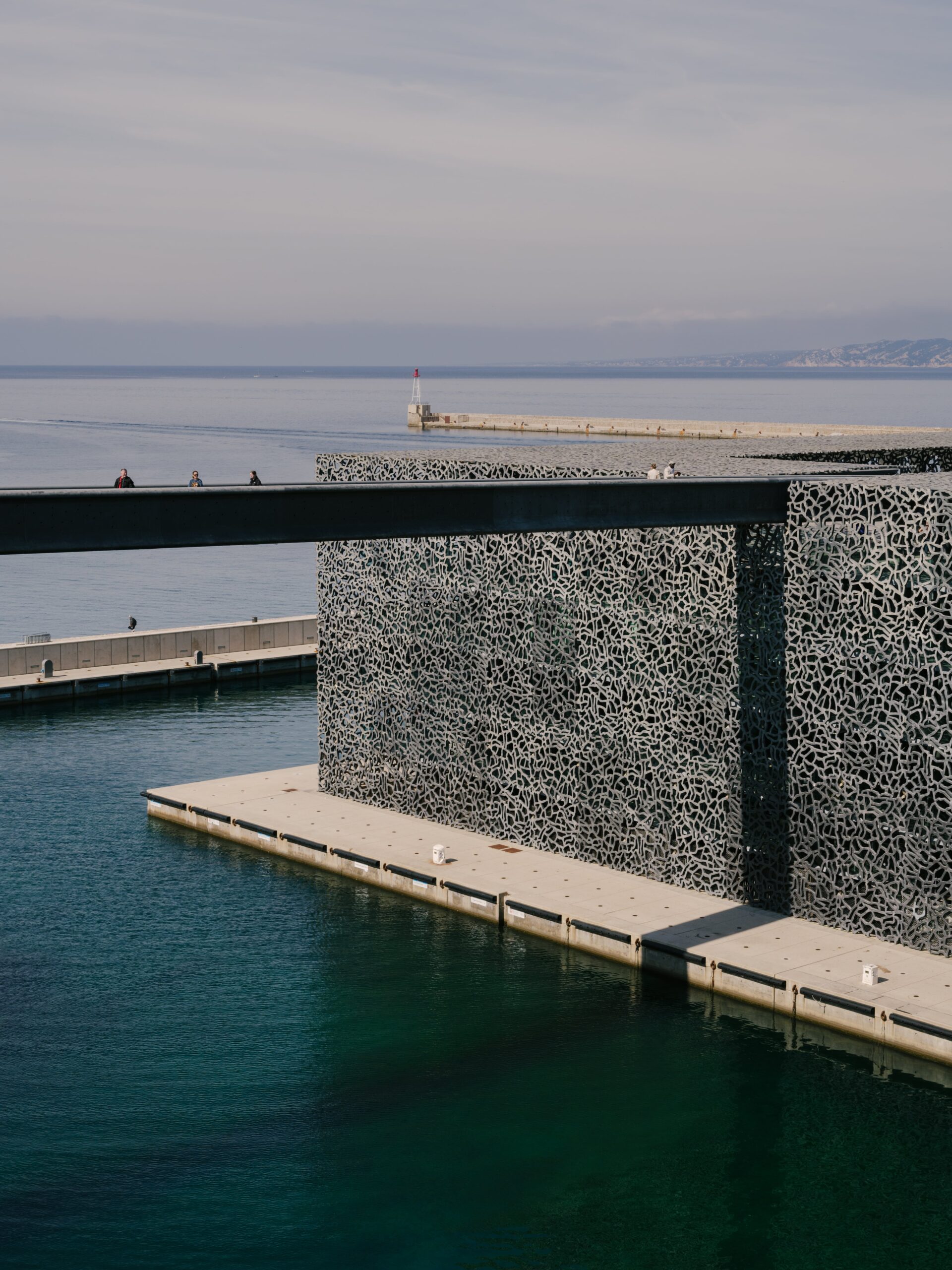
Discovery tour - © Maxime Verret Fort Saint-Jean
15,000 m2 including 1,100 m2 of exhibition space and 12,000 m2 of gardens
“A fully restored historic monument with free access”.Although Fort Saint-Jean traces its origins back to the 12th century, this former military fort, which is totally inaccessible to the public, has until now had the appearance of an impregnable fortress. In 2013, the fort was opened to the public for the first time in history: fully restored, it is now open free of charge to the people of Marseilles, who have immediately reclaimed the site as a new public space. While some of the buildings host exhibitions, Fort Saint-Jean is above all a new living space in the heart of Marseilles, offering a wide range of activities, from historical tours to botanical strolls through the Jardin des Migrations, and the discovery of spectacular, previously unseen panoramas.
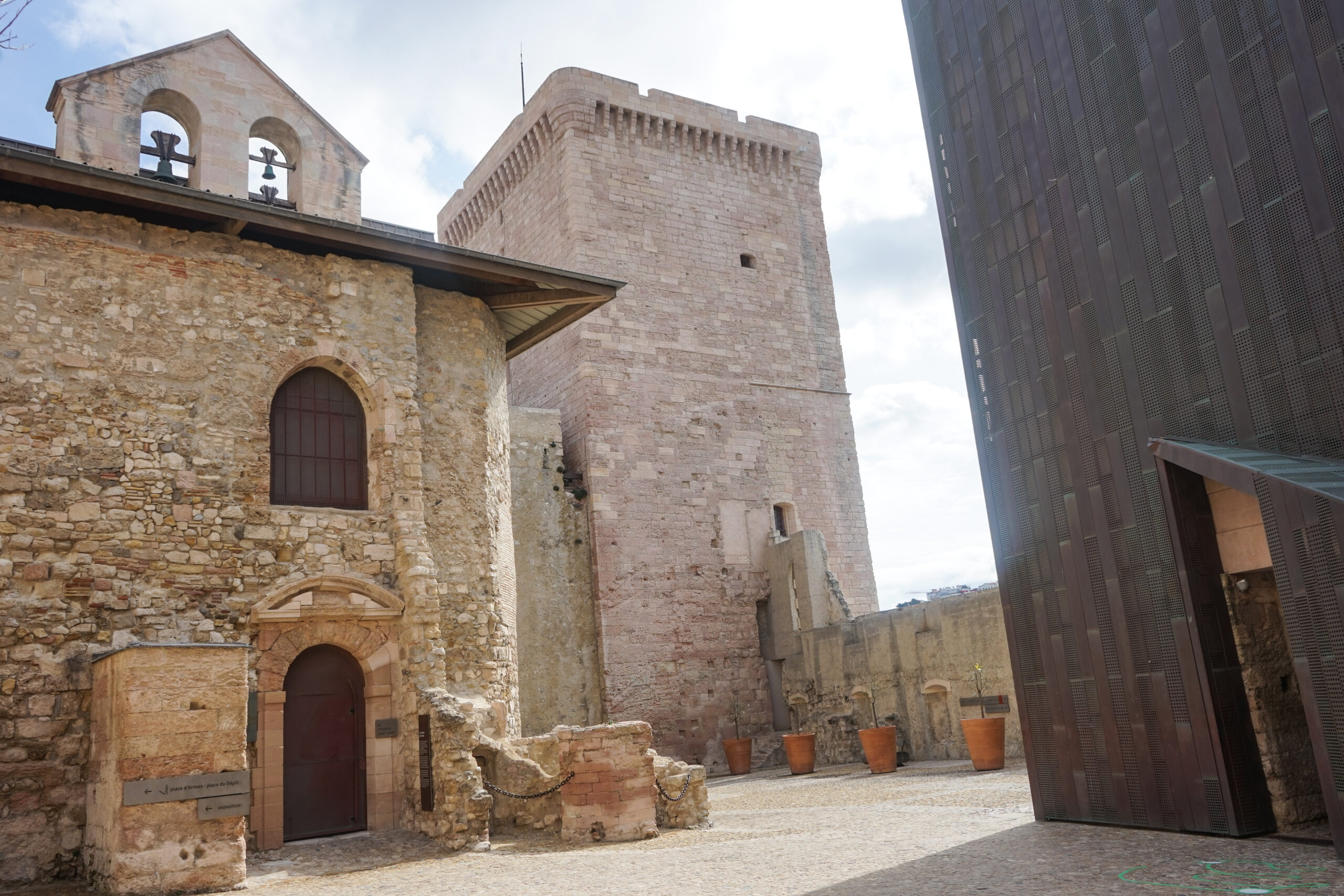
Mucem, Fort Saint-Jean, Cours de la commande, Tour du roi René, Chapelle © Julie Cohen The Conservation and Resource Centre
13,000 m2 including 7,000 m2 of storage space
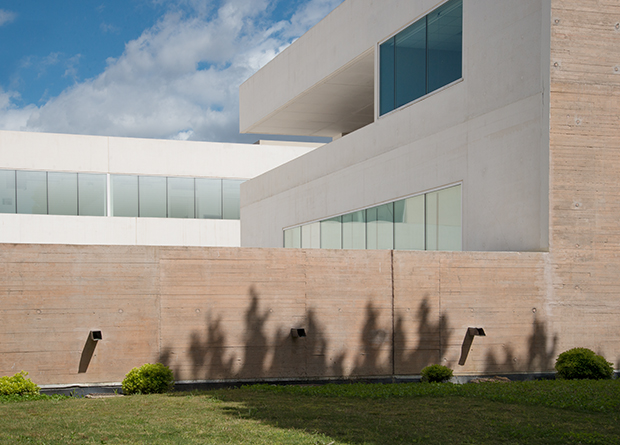
“Preservation and promotion of collections: this dual responsibility is the foundation of the JRC’s activities”.This large ochre-tinted monolith, designed by architect Corinne Vezzoni (in association with André Jollivet), houses the treasure trove of Mucem’s collections – over a million objects. It is responsible for the conservation, study and restoration of the collections, as well as, in a more original way, for their promotion. This dual responsibility is the foundation of the Conservation and Resource Center’s activity. Museum professionals, researchers, students, the simply curious and amateurs all have access to the entire collections, which can be consulted on site. A “show apartment” (a specially designed storeroom) and an exhibition room are also available for the general public to experience Mucem “behind the scenes”.
Mucem’s missions
The Mucem, as was emphasized when it was awarded the 2015 Council of Europe Museum Prize, is a “contemporary agora”. It is in this spirit, to bring this contemporary agora to life, that its cultural policy is built. This policy has several aims
1
The conservation, restoration, study and promotion of collections inherited from the Musée national des arts et traditions populaires, the “Europe” section of the Musée de l’Homme (deposited by the Museum national d’histoire naturelle), and acquisitions made since 2002 concerning the Mediterranean area. The Centre de conservation et de ressources (CCR) (Conservation and Resource Centre) is the tool used to carry out all these missions. Today, the policy of enriching the museum’s collections continues through purchases and surveys. These new acquisitions, more oriented towards the Mediterranean area, are made with a view to ensuring coherence with the themes of the former MNATP collection.
2
Make the collections accessible to the widest possible public through major exhibitions. Mucem’s collections can be seen in the semi-permanent exhibition, Galerie la Méditerranée, and also permeate all the temporary exhibitions: through the topical or social themes they address, or the artists they invite, these exhibitions offer a fresh look at the collections.
3
Design and implement educational and outreach initiatives to ensure equal access to culture for all: the establishment contributes to the national project for artistic and cultural education by developing a special offer for young audiences (schoolchildren, families, students).
In addition, a series of initiatives aimed at audiences “far removed” from culture are carried out in advance of the Mucem’s new exhibitions. On a general level, a number of measures ensure maximum accessibility to the museum’s cultural programming.
In addition, free access to the discovery walk in Fort Saint-Jean and the J4 building is a founding principle of Mucem’s policy: this free access establishes the museum in the continuity of the public space and generates a diversity of audiences unprecedented for a museum.
4
Contribute to the advancement and dissemination of knowledge and research.
The company’s research and training policy focuses on several areas: collaboration with Aix Marseille University and other French and international research centers, collaboration with French schools abroad, and collaboration with the Institut national du patrimoine.
With some forty scientific events hosted or organized each year (seminars, colloquia, study days), the Mucem is also a key venue for promoting research in the Mediterranean.
Last but not least, many of Mucem’s temporary exhibitions feature objects acquired as part of survey-collection campaigns involving large scientific teams, thus enabling the results of this research to be disseminated to the general public.
In addition to all these missions, which form the basis of the Mucem project, there is an active artistic and cultural program in the Germaine Tillion auditorium and outside areas of the museum. Connected to the major issues and international questions that cross the civilizations of Europe and the Mediterranean, it aims to be a cultural city in touch with the "time of the world".